Giant Donut Discs ® – Yule 2012
15. 12. 2012 | Rubriky: Articles,Giant Donut Discs
 [by Ken Hunt, London] When you get past a certain age (or succession of them) – usually they are pretty arbitrary but they come with a zero – you will be spoiled for musical nostalgia ideas. The one has a lot to do with thinking about rhymes, rhythms, mythologies and conversations. The music is from Lal Waterson, Peter Bellamy, Commander Cody & The LPA, Scarlett O’, Folk & Rackare. The Pogues, Muzsikás, Jiří Kleňha, Tom Waits and The Watersons. Last updated 28 September 2013.
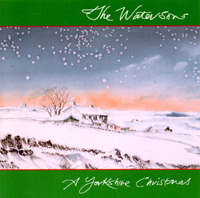 Christmas Is Now Drawing Near At Hand – Lal Waterson
The Watersons were one of the greatest groups to emerge from the English Folk Revival. Their singing had an uncanny surefootedness about it. This is solo performance by the youngest of the three siblings. “So proud and lofty do some people go,” she sings.
To this day, Lal’s singing remains a profound influence. There is a clear-sightedness to what does in this short piece. Here she sings unaccompanied on her own. It permits multiple glimpses or insights into what she could do alone. Usually she was an ensemble player. Here she just sings her stuff. A rich voice, a simple song with a moral born out of Christianity and socialism. It condemns showiness and pride, the latter not in a ‘before the fall’ sense, more in discovering humility and place. Its very simplicity speaks volumes. From A Yorkshire Christmas (Witchwood Media WMCD 2029, 2005)
Maria – Folk & Rackare
Folk och Rackare – Ulf Gruvberg, Jørn Jensen, Carin Kjellman and Trond Villa – were a Scandinavian folk band that concentrated on song rather than tune. That was unusual at the time. Also unusual was the fact that they were mixed-Scandinavian with both Norwegian and Swedish band members. Bernhard Hanneken, a decade a bit later the musical booker at Tanz&FolkFest Rudolstadt, first tipped off about them at the time of their Sonet (Sweden) LP Anno 1979, peculiarly released in 1979. Many years later, they reunited
Two years on, they released Stjärnhästen, meaning ‘Star horses’, from which Maria comes. It is a mixture of Christmastide and Yuletide material – it bridges the Christian and Yuletide. It is a remarkable treatment of seasonal song, reminiscent of the Watersons’ Frost And Fire. Ulf Gruvberg told me for the booklet notes to this 1996 anthology: “We had an influence. For instance, before each Christmas I get 10-15 phone calls from people singing in choirs wanting the staff-notated material of Stjärnhästen. I have to tell them that we don’t have that notated. We never notated our arrangements. We just sang until we liked what we heard. Then we froze that and went on.”
Stefan Nielsen adds the ice-crystal keyboards. The band temporarily reunited in 1996. And then they were gone. From Folk & Rackare – 1976-1985 (Resource Records RESCD 515, 1996)
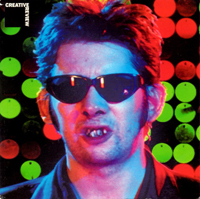 Fairytale of New York – The Pogues featuring Kirsty MacColl
The Philip Chevron-compiled The Pogues Box Set (Rhino, 2008) includes three demos of this song from 1986 (two with Elvis Costello in the producer’s chair) and 1987 that capture the arrangement coming together, with fluffs and touches inserted or tested out, and Kirsty MacColl turning into quite the vocal actress. This though is the bold final version.
In December 2011 this unlikely duet between Shane MacGowan and Kirsty MacColl was widely reported as being the most played festive song. The British licensing body PPL tallies plays in places such as shops, restaurants, gyms and pubs, in television plays and on radio. What a long way it’s come. A secular carol with no fake-spiritual message. From If I Should Fall From Grace With God (WEA 2292-44493-2, 1988)
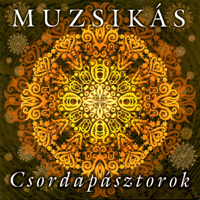
Karácsonyi kántálás – Muzsikás
An ensemble piece from the Hungarian folk band that acted as my primer in Hungarian folk music from their 2011 Christmas album. From Csordapásztorok (Grylus Kiadó GCD 114, 2011)
Daddy’s Drinking Up Our Christmas – Commander Cody And His Lost Planet Airmen
There was something so other about Commander Cody And His Lost Planet Airmen regaling us with this song about coming Christmas apart somewhere in the United States. It begins with a peal of pedal steel playing Silent Night. Daddy collects his pay, cashes the cheque and goes on a binge. Another mistake is taking the car. It ends with pedal steel decking the holly. Sorry, decking the hall with boughs of holly… The LPA’s John Tichy is the writer. From the single with Honeysuckle Honey (DOT DOA-17487, 1973).
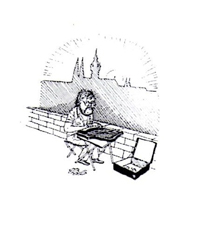
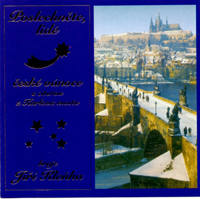 Tichá noc – Jiří Kleňha
Until 2006 Jiří Kleňha had a pitch on the eastern side of Prague’s Charles Bridge (Karlův most) from 16:00 to 19:00. He played an almost extinct and very obscure variety of chord zither called the Fischer’s Mandolinette. Over the years and on many occasions I stood and watched him play. His instrument was very weathered and frequently he did what buskers do and played enough to attract people’s attention, a short instrumental, and then took questions. There were always questions about the instrument. Over the years bought whatever recordings he had for sale. One time I walked David Harrington of the Kronos Quartet across the bridge from the castle side, hopeful that the musician would be there and he was, sat, as hoped, playing his Fischer’s Mandolinette in one of Prague’s great tourist traps.
This is the longest track – at 2:41 minutes – on the musician’s collection of Czech Christmas carol miniatures. Its grace and concision are astounding. In under three minutes he delivers everything that Silent Night should. It is a familiar tune and that is why his interpretation stands out all the more. After it, he finishes Poslechnčte lidé (‘Christmas songs’) with a half-minute of pealing bells – entitled simply Zvony (‘Bells’) – and those peals sound all the world like Christmas all over Europe. In the particular is a sense of the universal in a manner of speaking because they could be bells from so many continents.
For me, Kleňha was one of those street music surprises that we stumble upon. He wasn’t as flamboyant as tales of Moondog have it from those who encountered Moondog in New York City in his heyday – think about the tributes from Janis Joplin or Pentangle. Nor was he like Cologne’s Klaus der Geiger, a riveting street performer. He was the one and only Jiří Kleňha. I will never forget his brand of street music and his Fischer’s Mandolinette until my grey cells run dry. Long may he prosper. From Poslechnčte lidé (Own label, 1995)
For more information in Czech, English and Russian visit: http://www.aa.cz/citera/
Cancel Christmas – Scarlett O’ & Jürgen Ehle
No apologies about including a song of my own, a lyric set to music by Jürgen Ehle. It’s that time of the year. The lyric came in rush while driving to interview June Tabor for the Always boxed set notes. It was a bright sunny day, the narrow, two-lane cross-country roads were relatively traffic-free and I pulled over at an overtaking pull-in and scribbled down the refrain. Minutes later the rest gushed out and I pulled off the road again as soon as there was a safe place to park. A quick and painless delivery. Unlike the subject matter. It’s a song about bereavement, about the chasm between the bereaved and the unbereaved at the time of the first Christmas after the death of a loved one.
The movie it’s running is like watching the River Vltava flowing in your head while listening to the Vltava movement of Smetana’s Má Vlast and then getting some halfwit chattering inanely about the Bay City Rollers and their “sugar baby love”. It’s an overload of the unwanted. It’s that first Christmas in particular when prattling on flows noisily all around you.
There were two triggers. Scarlett O’ and Jürgen Ehle were putting together a project of material relating to Christmas. They mentioned wanting something original in English. That coincided with a friend’s death. I put two and two together, subtracted one and made three. From Gans ohne Tannenbaum (Electrocadero ELT001, 2005)
More information at http://www.scarlett-o.de/
and http://www.juergen-ehle.de/
Saint Stephen – Peter Bellamy
Ah, Peter Bellamy, the Marmite folksinger supreme. People loved his singing or loathed it. I fell into the first category. This is from the first solo album he released after the break-up of the Young Tradition (as opposed to his first solo album). It’s a song given the full Bellamy treatment with lyrics from here and melody from there. Saint Stephen is a ballad heard by the British engineer, politician, antiquarian and writer Davies Gilbert (1767-1839) in the town of Bodmin in Cornwall. He included it in what Bert Lloyd’s notes to this LP call “the pioneer modern carol compilation”, the 1822 Collection of Christmas Carols.
The internet gives its fuller title as Some ancient Christmas Carols, with the Tunes to which they were formerly sung in the West of England. Collected by D. Gilbert. To add to the confusion in the Oxford Dictionary of National Biography his entry by David Philip Miller it states, “Gilbert collaborated with William Sandys on a collection of Cornish ballad carols, part of the oral tradition which he saw in danger of disappearing. Their Christmas Carols Ancient and Modern (1822) set the agenda for the rediscovery of this ancient form.” No matter. It is the Peter Bellamy version here. From The Fox Jumps Over The Parson’s Gate (Topic 12T200, TSDL200, 2013)
New Year’s Eve – Tom Waits
This song has a full contingent of Waitsian characters. The first one we meet is Irvine, whose name happens to end-rhyme with the disturbing of the previous line. The narrator cannot find him and Irving figuratively exits stage right before he’s even entered this Fairytale of Hogmanay. Other characters get name-checked. Nick, Socorro, Candice, Ray, Fin and others. One would not be surprised if Mr Waits had not had a crafty tipple and a listen to Shane and Kirsty. But I’ve been wrong before. A Hogmanay carol with no houghmagandie (Scots: ‘fornication’) content that I can tell. From Bad As Me (Anti 87177-2, 2012)
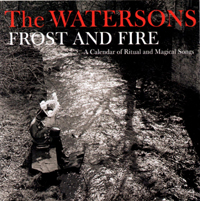 Here We Come A-Wassailing – The Watersons
This song concerns that mysterious folk custom of wassailing. The custom was puzzling enough when Frost And Fire came out in 1965. The album was subtitled “A Calendar of Ritual and Magical Songs” and its impact went far beyond folk circles. It profoundly affected more than one generation with its tales of ritual magic such as wassailing. In this midwinter song they are singing for their sup and plate and in return they bring luck and the hope of summer’s bounty.
It was an exceeding paradox how the Watersons did what they did. For one, it was extraordinarily hard to determine from the recordswho was doing what as they sang. Their singing foxed neat analysis with inversions from the expected or predictable. It was if the fox, rather than the hunters, was laying down a false trail. It only attained any degree of transparency when seeing them live. Lip-reading took on new importance. Only by watching them could you fathom who was singing what. Even then it was difficult. Lal, Mike and Norma shared what they sang. With Lal and Mike in particular that might even go so far as them making syllables that combined made a whole complete word.
“And we wish you, send you a happy new year.” From Frost And Fire (Topic TSCD563, 1965)
The copyright of all images lies with the respective photographers, companies and image-makers.