Giant Donut Discs ® – December 2010
5. 12. 2010 | Rubriky: Articles,Giant Donut Discs
[by Ken Hunt, London] Winter draws on in London but on the fictitious tropical island the sun is shining. Helping to banish gloom this month is a rather fine selection of music. Ladies and gentlemen, boys and girls, this month’s haul of traveller’s tales embraces Methera, Amy Rigby, Ida Kelarova, the Hallé Orchestra under Mark Elder, Dave Bartholomew, Bonnie Raitt & Was (Not Was), the Oysterband, Alim and Fargana Qasimov, The Byrds and Czech Philharmonic Orchestra under Rafael Kubelík.
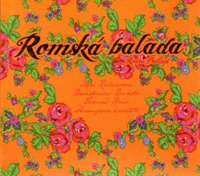 Bijav – Ida Kelarova
Romská balada (‘Roma Ballad’) is a collaboration between vocalists Ida Kelarova and Desiderius Dužda and the pianist Tomáš Kačo with the new line-up of the Škampa Quartet – Helena Jiříkovská and Daniela Součková on violins, Radim Sedmidubský on viola and Lukáš Polák on cello. One of the great joys of the work is its programming and overlapping tracks. The performances flow into one another, mood building on mood, song after song developing a narrative, a narrative that turns into a Czech Roma cycle. Kelarova, one of the great champions of Roma song and culture, is on top form. She turns Dužda’s song Bijav (‘Wedding’) into something utterly plaintive.
The CD comes with two booklets. One in Czech and English provides the context for Romská balada – “the ballad of sorrow, grief, pain and dark earth” – while the other provides the lyrics in Roma with Czech and English translations. Bijav begins, “I came home/Nobody was there”; as that opening might suggest, it is more elegiac than celebratory. It dodges cliché. It goes straight to the heart, even without knowing Roma. It is one of the finest pieces of this Roma jigsaw, predicated on the Roma proverb, “Don’t look at the man’s skin colour, look at the man’s heart.” The work in its entirety is nothing short of a landmark in contemporary Roma expression, artistry and creativity. From Romská balada (Indies Scope MAM474-2, 2010)
The Banks of Green Willow – Hallé Orchestra under Mark Elder (conductor)
In her talk, A Most Sunshiny Day at Cecil Sharp House in late October 2010, Shirley Collins played part of George Butterworth’s The Banks of Green Willow and it sparked a series of memories and meditations. It is another of his English Idylls (in all but name) and this version under Mark Elder hits all the right places. Apparently it was the last piece of his own music that Butterworth heard performed before he fell in the Great War. That adds a monstrous poignancy to the piece. It is a piece from a pre-gramophone age, a pre-instant retrieval era, generous to its source’s inspiration: England’s folk tradition. The Hallé do the piece proud.
Elsewhere English Rhapsody takes us into the realms of Frederick Delius and Percy Grainger, especially their takes on Brigg Fair before concluding with 39-second snatch of Joseph Taylor’s Brigg Fair, from a cylinder recording made in 1908. Like Butterworth’s Banks of Green Willow, a covenant with the past. From English Rhapsody (Hallé CD HLL 7503, 2008)
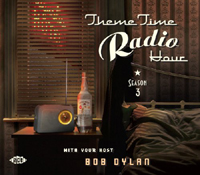 The Monkey (Speaks His Mind) – Dave Bartholomew
To declare an interest straightaway, I wrote one of the pocket essays that accompanies each track on this double-CD (in my case Elizabeth Cotten and Brenda Evans’ Shake Sugaree). But that was the extent of my involvement in this third anthology inspired by the Theme Time Radio Hour (with your host Bob Dylan). When the finished artefact arrived, on it went. This particular track from Show 97 Noah’s Ark is multi-valenced. It wittily upends Darwinian evolutionary orthodoxy. The tale is told from the viewpoint of three monkeys “sat in a coconut tree”. The monkey narrator tut-tuts his way through a shopping list of miscreant human behaviour. He ends, “Yes! man descended, the ornery cuss/But brother he didn’t descend from us.” A parable from the top of the coconut tree. From the various artists’ Theme Time Radio Hour – Season 3 (Ace Records CDCH2 1270, 2010)
Gower Wassail – Methera
Methera is the string quartet of Lucy Deakin (cello), John Dipper and Emma Reid (fiddles) and Miranda Rutter (viola). Their repertoire is a mixture of material from the certain European folk traditions – but specific, not scattergun – and original or borrowed compositions. An instrumental setting of the Gower Peninsula traditional folksinger Phil Tanner’s singing. Methera are really so very good. From Methera In Concert (Methera TAN002, 2010)
Baby Mine – Bonnie Raitt & Was (Not Was)
When Stay Awake, the album of Disney interpretations from which this track originally came, first appeared in 1988, one of its most haloed interpretations was this song. Any parent with a smattering of English worth their salt will connect with its sentiments. Back in the days, I put it on car tape and would regale the safety-belt trapped nippers in the back of the car with the track’s missing harmony vocal as we drove.
And now a word from Stay Awake‘s sponsor, Hal Willner: “The track is one of the highlights of the Disney record.” At one point certain people were playing silly buggers about granting permission for this track to be included. Thank heavens that it worked out well. This is such a choice piece. No apologies for two tracks from the same album. From the various artists’ Theme Time Radio Hour – Season 3 (Ace Records CDCH2 1270, 2010)
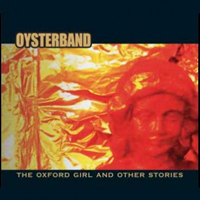 The Early Days Of A Better Nation – Oysterband
I have no quarrel with an act re-visiting its earlier repertoire on commercially released disc. How frequently does compartmentalising stuff work? This song by Ian Telfer and John Jones has an anthemic quality. “Work as if you were living in the early days of a better nation” is a line they thought they were half-inching from the Scots artist-writer Alasdair Gray, but they were eventually disabused. More within the CD booklet notes. From The Oxford Girl And Other Stories (Running Man Records RMCD6, 2008)
Mugham Bayati Shiraz – Alim and Fargana Qasimov
This track was recorded in August 2009 at the Morgenland Festival in Osnabrück in Germany. It is stupendous. No need for supporting testimony. Trust. From Intimate Dialogue (Dreyer Gaido CD 21060, 2010)
Goin’ Back – The Byrds
In Mole In A Hole (covered by Richard and Linda Thompson), its author Mike Waterson laid out his cards in the opening verse: “Like the flowers, like the bees/Like the woodlands and the trees/I like the Byrds on their LPs/And I’m a refugee.” It never felt like he was slave to end rhyme when he declared his interests. The Byrds’ cover of this Goffin-King song is the second track on what feels more like a song cycle than a mere LP. In 1968 it was head-spinning and time has only enhanced its majesty.
The preceding track, Artificial Energy, ends with them singing that they’re coming down off amphetamine. Goin’ Back was a song closely associated with Dusty Springfield and an unlikely inclusion, not so much because it was a cover. It was more the nature and associations of the song. Goin’ Back was followed by Natural Harmony and a remarkable sequence of songs.
Later, they clarified that its inclusion had a great deal to do with Springfield’s outspoken condemnation of apartheid. The Byrds turn it into a political song by dint of association. Those that saw beyond the camouflage understood. Those that hadn’t yet been alerted to the possibility of subterfuge afoot could just enjoy a piece of sublime Byrdish harmony vocals and instrumentation. From Notorious Byrd Brothers (Columbia/Legacy 486751-2, 1997)
Vltava – Czech Philharmonic Orchestra under Rafael Kubelík (conductor)
This CD reissue of a Supraphon album first released in 1990 is a live recording. The Czech Philharmonic Orchestra under Rafael Kubelík recorded it as the opening concert of the Prague Spring Festival on 12 May 1990. If any member of the audience didn’t tear over at some point in the CPO’s performance, I would be very surprised. After all, it was being performed a few hundred metres from the river of the title (also known as the Moldau amongst the more Germanically inclined) that this particular movement is named after, in the concert hall named after its composer – Bedřich Smetana (1824-1884) – in the art deco architectural masterpiece that is the Prague’s Obecní dům (‘Municipal House’). (Long sentence I know, but it works if you mark up the breaths.)
Most important of all, there was a spirit of freedom abroad, granting Má Vlast (‘My Country’) a still more heightened poignancy. There are several recordings to choose from. This is the one I plumped for. Artistically speaking, Má Vlast is a definition of Czech-ness to compare with painter Alfons Mucha’s Slovanská epopej (‘Slav Epic’). This piece of water music puts a lump in my throat – and, unlike the Mucha ‘canvas cycle’, I get no images of warfare or major trial and tribulation from it. From Má Vlast (Supraphon 11 1208-2 031, 2002)
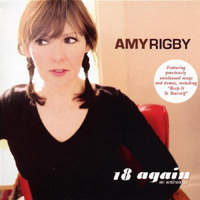 Keep It To Yourself – Amy Rigby
Deadpan witty, with a semblance of the almost dignified, and yet so very reasonable with it, this song of Amy Rigby came with a recommendation from a pal, Gavin Martin, the music critic of the Daily Mirror during a discussion. I can only thank him profusely. I checked it out and was captivated by the eloquence of her songwriting. She takes serious themes (as opposed to subject matter) and cloaks them in silliness. And vice versa. This album from which Keep It To Yourself comes groans with exemplary song matter. The concluding demo version of Magicians is yet another arresting end-of-the-relationship song. Thank you Mr Martin. From 18 Again – an anthology (Koch KOC-CD-8384, 2002)
The copyright of all other images lies with the respective photographers, companies and image-makers.