Giant Donut Discs® – January 2011 (2)
10. 1. 2011 | Rubriky: Articles,Giant Donut Discs
 [by Ken Hunt, London] Winter draws on in London but on the fictitious tropical island the sun is shining. Helping to banish gloom this month is a rather fine selection of music. Ladies and gentlemen, boys and girls, this month’s haul of traveller’s tales embraces Martin Simpson, Ella Ward, Yardbirds, Shashank, Don Van Vliet, David Lindley & El Rayo-X, Rickie Lee Jones, Swamy Haridhos & Party, Cyril Tawney and Anne Briggs.
 The Swastika Song – Martin Simpson
I never lived through a European war. Many people I loved and love did. I only knew the survivors. I have lived and worked with people of many nationalities who did survive wars. Some were fascist. Some were unrepentant and boasted. I’ve also lived with, and spoken to people who have lived under totalitarian regimes, sometimes more than once in their lives. I have heard tales from survivors and survivors’ children that will haunt me to my grey cells run dry. Martin Simpson’s song brings it all back home and to mind. “Don’t say it can’t happen/Say it can’t happen here.” A potent song. From FAF Tracks (while available, exclusively with fRoots issue 331/332, January/February 2011)
On The Banks of Red Roses – Ella Ward
Jean Ritchie and her husband George Pickow made this recording of Ella Ward, “a pretty young Edinburgh housewife and mother of two children” on a research jag funded by a Fulbright scholarship that sent them the Britain and Eire in late 1952. According to Ritchie’s booklet notes to the CD reissue, Ella Ward had learned the song from the School of Scottish Studies folklorist Hamish Henderson. It’s a song about woman’s love betrayed. Unto death. Ella Ward’s singing captures the narrative beautifully from being easily led astray to blind devotion, culminating in being stabbed to death and tumbled into a prepared grave. Oh, the power of traditional song! From Field Trip (Greenhays GR726, 2001)
 Hamsadhwani – Shashank
Hamsadhwani is a South Indian ragâm of great portability. In Shashank’s hands it flies. It is a ragām grounded in the natural world. Nature is, after all, a principal source of inspiration for human creativity. Whilst listening to this interpretation and thinking about swans, Raghuvir Mulgaonkar’s oils on paper portrait of a swan-necked woman popped into my head. The painting is called Untitled II. Mulgaonkar, who died in 1976, was an astonishingly prolific artist. Of him it was said he was “The artist whose brush never dried”. In this case, a related image flew in: that of the swan whose feathers never get wet. Shashank Subramanyam’s bamboo flute interpretation is a feast for the ears and the intellect. From Enchanting Hamsadhwani (Bamboo Records unnumbered, undated)
Evil Hearted You – Yardbirds
Between 1965 and 1968 The Yardbirds grew into one of Britain’s finest rock bands. For people who didn’t experience them at the time, their posthumous relationship probably was down to them having a succession of musicians who occupied that bloomin’ lead guitar chair – Eric Clapton, Jeff Beck and Jimmy Page – and what they did next. For anyone who experienced them at the time, a huge part of their appeal was the originality of their material, effects and tonal colours on their singles. The Graham Gouldman song Evil Hearted You was one such single.
This version, however, is a recording made for the BBC around August 1965. (The notes give only month and year.) Keith Relf’s voice is supple. Jim McCarty on drums and Chris Dreja on rhythm guitar support well. Paul Samwell Smith’s electric bass run is close to the single’s but not slavish. Beck is playing superlative guitar.
Above all, The Yardbirds have come to remind me of an old writer friend of mine, Comstock Lode‘s editor, John Platt (1952-2001). In 1983 the book he co-wrote with Jim McCarty and Chris Dreja about The Yardbirds was published. When I walk by Eel Pie Island at Twickerham, Platt – it was schoolboy surname stuff but we enjoyed it – often enters my thoughts. He wrote about the Eel Pie scene as well. Plus, as I write, there are posters up in town for The Yardbirds (featuring McCarty and Dreja) playing The Live Room at Twickenham Stadium on Friday 25th March 2011. From Yardbirds On Air (Band Of Joy BOJCC 200, 1991)
Philip Hoare’s obituary of John Platt of Wednesday, 23 May 2001 is at www.independent.co.uk/news/obituaries/john-platt-729142.html
Plus www.theyardbirds.com
 Fallin’ Ditch – Don Van Vliet
When Don Van Vliet died on 17 December 2010, there was an outpouring of obituaries. They concentrated on his time as Captain Beefheart. The coverage was pretty much predictable and it pretty much concentrated on his recordings, especially – and totally understandably – on Troutmask Replica (1969). It was one of those records that changes lives or divides minds. It is also one of those take-time-to-know-her-love’s-not-an-overnight-thing things. It had spent years in my head and it was good.
I learned that Don Van Vliet was attending the opening of his Waddington Galleries exhibition, held between 3-26 April 1986 in London’s Cork Street. A quick transatlantic call to my editor Mike Farrace at Pulse! secured a commission. As an upshot I got to spend several hours at the gallery opening with Don Van Vliet, prior to doing an interview the next day. What struck me was how approachable, open and forthcoming he was. Nothing whatsoever like the reputation that had preceded him.
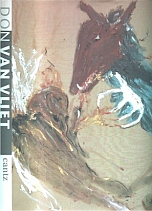
This recitation appears on the limited edition CD with the book published for a later exhibition. It was a travelling exhibition that peregrinated from Bielefeld in Germany (27 November 1993-16 January 1994) to Odense in Denmark (11 February-10 April 1994) and then to Brighton on England’s South Coast (3 September-13 November 1994). It and its other recitations capture his speaking voice, though it has aged slightly from the one I listened to in 1986.
Fallin’ Ditch opens, “When I get lonesome the wind begin t’moan/When I trip fallin’ ditch/Somebody wanna throw the dirt right down.” It’s a song lyric in itself. I reviewed the book in Mojo. PS: the Pulse! interview never happened but I had enough contemporaneous notes and quotes from him to write an article. From Stand Up To Be Discontinued in Don Van Vliet (Cantz Verlag Ostfildern, ISBN 3-9801320-3-X, 1993)
Autumn Leaves – Rickie Lee Jones
You think that wonderful song Chuck E.’s In Love in such a stripped back performance with only Rob Wasserman on bass is going to clinch it. Then she does Autumn Leaves, again with Wasserman. From Naked Songs (Reprise 9362-45950-2, 1995)
Mushika Vahana – Swamy Haridhos & Party
Over several decades I have listened to many recordings of bhajans – Hindu hymns – but Bengt Berger’s recording at Gita Govinda Hall in Bombay on 1 January 1968 capturing the South Indian-style of worship is one I count as one of the greatest and most natural I have ever heard. There is a real sense of presence and congregation as no other recording of this kind I have ever heard captures. It is articulate musically and radiates a presence. Mushika Vahana is but one example. Muthunathan Bhagvatar accompanies on harmonium, P.S. Devarajan on mridangam, K.V. Ramani on tabla and K. Shivakumar on violin. I would go so far as to say that anybody with an interest in Indo-Pakistani culture, religiosity or music should try to listen to this album. No caveats, quibbles or qualifying remarks. From Classical Bhajans (Country & Eastern CE14, 2010)
 Papa Was A Rolling Stone – David Lindley & El Rayo-X
It was towards the end of 2010. Gliding through Chinatown (just south of Shaftesbury Avenue and Soho), my esteemed colleague Tony Russell and I walked past Lee Ho Fook’s of Werewolves of London fame. You know those lines of Warren Zevon’s? “I saw a werewolf with a Chinese menu in his hand/Walking through the streets of Soho in the rain/He was looking for a place called Lee Ho Fook’s/Going to get himself a big dish of beef chow mein.” Well, Lee Ho Fook’s is gone now and the new restaurant no longer has that joyously fading sign in its window about Warren Zevon, Lee Ho Fook and Werewolves of London. Or indeed any sign about a piece of Anglo-American special friendship history. Dastards despoiling cultural history, say the grumblers. I digress because I can and got an Ordinary Certificate in Digression.
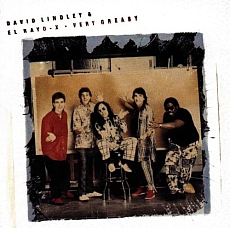
Anyway, that walk along Gerrard Street planted the seed of an urge to revisit Very Greasy‘s extraordinary rendition. But Werewolves got elbowed out by the track that precedes it. Papa Was A Rolling Stone has a nasty, dirty sound. In an interview with Richard Grulla in the December 1988 issue of Guitar World, it is mentioned that Lindley got his sound from a Supro lap steel through a Howard Dumble amp on both Papa and Werewolves. Probably true but Lindley is the Q-Ship of guitars and amps. (That’s an original line so credit me if you really must steal.) Play it soft, play it loud, the Lindley and El Rayo-X’s rendition of the James Brown soul hit genuinely adds new dimensions to the familiar song. Lindley, Jorge Calderón, Walfredo Reyes, Ray Woodbury and Wm ‘Smitty’ Smith are the X-Boys. From the Linda Ronstadt-produced Very Greasy (Elektra 960 768-2, 1988)
As Soon As This Pub Closes – Cyril Tawney
Cyril Tawney (1930-2005) was the sort of chap you could lose a day or three with. He was a marvellous raconteur and wit, by turn, droll, deadpan and erudite. He is best known for his own songs – such as Five Foot Flirt, Lean And Unwashed Tiffy and Sammy’s Bar – and his West Country traditional folksong repertoire. Sometimes, however, other writers’ songs snuck into his repertoire. This song is one by Alex Glasgow (1935-2001). It is a comical revolutionary song and Cyril sings it well. It is not just comical, it is heavily ironical. In a perverse sort of way, it deserves to be sung as a shaming song, which is how I receive it from Cyril. It deserves to be far more widely sung and not just in the run-up to closing time. From The Song Goes On (ADA Recordings ADA108CD, 2007)
 The Snow It Melts The Soonest – Anne Briggs
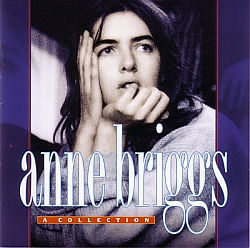
“Oh, the snow it melts the soonest when the winds begin to sing,” is how it begins. Anne Briggs remains a huge inspiration and mystery to succeeding generations. She just got it right. This is one of her signature songs. It is a layered one about love set firmly in the natural world. Its seasonal movements and references to wild life reflect her passions for Nature. She sings it unaccompanied, three seasons (autumn isn’t mentioned) distilled into four verses.
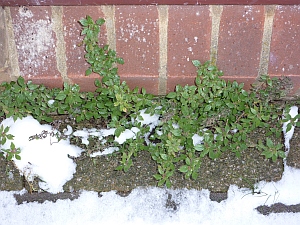
The image here is of a wild plant called pellitory of the wall (Parietaria officinalis) beside the Thames at Old Isleworth, Middlesex. It likes walls and, unless you have an eye for botany, it looks pretty nondescript. Anne and I have walked the upper stretches of the tidal Thames, an area rich in plant diversity. Rivers are wildlife highways and natives mix with all manner of species from other places and continents. The snow part-melted and this pellitory of the wall emerged. It was Annie who first identified the plant for me. From Anne Briggs – A Collection (Topic Records TSCD504, 1999)
The pellitory of the wall image is © 2011 Ken Hunt/Swing 51 Archives. The copyright of all other images lies with the respective photographers, companies and image-makers.