Many deaths touched me in 2025. These stand out.
27. 1. 2026 | Rubriky: Articles,Lives
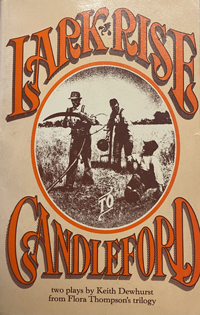 [by Ken Hunt, London] The English playwright and film and television scriptwriter, Keith Dewhurst (1931-2025) died on 11 January 2025. He was responsible for a number of important plays performed in the National Theatre. He brought Flora Thompson’s trilogy Lark Rise to life for the stage as Lark Rise and Candleford, performed as promenade plays in the Cottesloe (now Dorfman) Theatre. Directed by Bill Bryden and Sebastian Graham-Jones, the plays were a feat of the playwright’s skills because his source material was mainly description and very short on dialogue. Dewhurst developed a seasonal cycle from the books. One device he used to get round the lack of dialogue was by employing folksong and country dance music. The music directors were Ashley Hutchings and John Tams. The Albion Band supplied the music with such auxiliary singers such as Martin Carthy and Shirley Collins integrated into the cast. Born on 24 December 1931 in Oldham, Dewhurst rose from working as a reporter for the Manchester Evening Chronicle during the second half of the Fifties – which gave him a chance to exercise his passion for football and Manchester United. He went into scriptwriting, including for Z-Cars – a gritty television police series, set in northern England.
The multi-instrumentalist, especially keyboards and winds player, Garth Hudson (1937-2025) died on 21 January in Woodstock in upstate New York. He was the last founding member of the Canadian-American rock group, The Band. They burst upon the wider consciousness with their debut album, Music from Big Pink (1968). Hudson, who gave the other members of the group music tuition, took the album’s ‘Chest Fever’ and created an introductory keyboard overture. Hudson based it on Johann Sebastian Bach’s Toccata and Fugue in D minor. It developed into the showstopping ‘The Genetic Method’, credited solely to Hudson. It became a highlight of Band concerts with Hudson drawing on, for example, Anglican and Baptist hymnody, shape-note, polka, parlour song, jazz, R&B and early rock music. Their first two LPs redefined and revolutionised rock music. After their third album everyone, bar Hudson, succumbed to their personal demons. In 1967 the brothers Luxman and Purnachandra (‘Full moon’) Das Baul of the Bauls of Bengal visited The Band at their rented house, Big Pink in Woodstock. The Bauls are a community of historically itinerant minstrels following a syncretic faith that draws on elements from Sufism, mystic Hinduism and mystic Buddhism. Both brothers appear on the front cover of John Wesley Harding posing with Bob Dylan. The fourth man roped it was Charlie Joy, a local carpenter and stonemason) Hudson recorded them and the tapes were released commercially as Bengali Bauls at Big Pink on Buddah in 1968. Hudson’s solo debut The Sea to the North (2001) is a favourite and it included material from the Big Pink sessions. With its improvisations, Jazzwise commissioned me to review it in its pages. David Lindley told my friend Richard Hoare (1953-2019) that he was the most balanced musician he had ever met. On hearing on the phone that his studio basement, instruments and equipment were under water, he sighed and just said, “Oh, well.” There was nothing he could do on the other side of the nation. Rick Danko, Levon Helm, Richard Manuel and Robbie Robertson predeceased him.
The French singer and multi-instrumentalist Gabriel Yacoub (1952-2025) died on 22 January, at the age of 72, in Bourges in France. In the early Seventies he worked with the harpist Alan Stivell, who opened his mind to traditional Breton music. Yacoub was a leading figure in the French folk and folk rock band Malicorne. With his then-wife Marie Yacoub (née Marie Sauvet), he co-founded the group in the autumn of 1973. His 1978 solo album Trad. Arr., had the English fiddler Barry Dransfield as a guest. Named after Malicorne-sur-Sarthe (literally Malicorne on Sarthe), a town in the Pays de la Loire region in north-western France, Malicorne went through many changes. In a way it traditional and experimental phases, break-ups and reunions were a distillation of what commercial folk music went through in France.
The singer, actor and songwriter, Marianne Faithfull (1946-2025) died on 30 January. She was born Marianne Evelyn Gabriel Faithfull in the London district of Hampstead on 29 December. She achieved enormous popularity in the Sixties with a succession of chart hits including ‘As Tears Go By’, ‘This Little Bird’ and ‘Come and Stay with Me’. Her niche was somewhere between pop and folk-pop. She co-wrote ‘Sister Morphine’ and released it as a single in 1969. She subsequently had to fight for it to be credited to Mick Jagger, Keith Richards and herself. The Rolling Stones released it on Sticky Fingers in 1971. Often making headlines for the wrong reasons, she went through extremely bad times with years of drug dependency, living on the street and health problems. With the help and support of friends, she bounced back with her critically acclaimed LP, Broken English. Released in November 1979, it mixed punk, new wave and dance elements and synthesizers. Her interpretation of ‘The Ballad of Lucy Jordan’, Shel Silverstein’s tale of a suburban housewife’s disillusionment and burnout, took the tale into darker places than Dr. Hook & the Medicine Show had when they originally recorded it. Faithfull, as God, sang to Edina in a dream in the fourth season of Absolutely Fabulous. She was on the bill of TFF Rudolstadt 2005 where she made a guest appearance with the Chieftains. But the performance of hers that blew my socks off was on the Acoustic Stage at the 1999 Glastonbury Festival. Long based between Paris and Co. Wexford, she received one of France’s highest cultural honours, the Commandeur of the Ordre des Arts et des Lettres in 2011. She made the spoken word album She Walks in Beauty, named after Lord Byron’s poem. The work comprised recitations of such 19th-century British Romantic poets as Keats, Shelley, Tennyson and Wordsworth. Co-credited to Warren Ellis, it was released in May 2021. On it she was also joined by Nick Cave, Brian Eno and Vincent Segal as accompanists. The finest tribute to her that I read was written by her regular collaborator of twenty years, Warren Ellis in The Observer of 28 December 2025.
The singer and pianist Roberta Flack (1937-2025) died on 24 February in New York City. Born Roberta Cleopatra Flack on 10 February 1937 in Black Mountain, North Carolina, she had hits ‘The First Time Ever I Saw Your Face’, ‘Killing Me Softly with His Song’ and ‘Feel Like Makin’ Love’. The first of that trio won Record of the Year in the Grammys in 1972. It had been a track on her 1969 LP First Take. Clint Eastwood picked up on ‘The First Time Ever I Saw Your Face’ for his film Play Misty for Me in 1971. It led to the sleeper song reaching number 1 in the United States. The personal reason for her inclusion is that Roberta Flack having a hit with it gave an additional measure of financial security to Ewan MacColl, who had written it for Peggy Seeger, and his family. Both MacColl and Seeger have parts in my approved Martin Carthy biography in preparation, Prince Heathen and the Age of Martin Carthy.
The photographer and art director Herb Greene (1942-2025) died on 3 March, aged 82, in Maynard, Massachusetts. His cover artwork included Jefferson Airplane’s Surrealistic Pillow (1967) (photographed in front of Greene’s apartment’s hieroglyphic-graffitied wall), the Grateful Dead when they were still The Warlocks (November 1965) and the Dead’s In the Dark (1987), and Dylan & the Dead (1989). Also noted, the concept covers of David Crosby’s If I Could Only Remember My Name (1971) and Jerry Garcia’s first solo LP, Garcia. Greene captured some of the most iconic images of the San Francisco music scene of the Sixties.
The and songwriter Jesse Colin Young (1941-2025) died on 16 March in Aiken, South Carolina. Born Perry Miller on 22 November in New York City, he was a founding member and lead singer of the Youngbloods in the 1960s. Robert Plant covered his song ‘Darkness, Darkness’ on Dreamland (2002). It had originally appeared on the Youngbloods’ 1969 album Elephant Mountain.
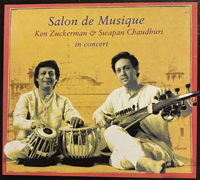 The US-born sarodist Ken Zuckerman (1954-2025) died on 26 March in his adopted hometown of Basle. He studied with sarod maestro Ustad Ali Akbar Khan who entrusted him to run Europe’s Ali Akbar College of Music branch in Switzerland. A dear friend, quietly spoken, enormously gifted. A treasured moment. At one of Ali Akbar Khan’s concerts in London, a recording device had been surreptitiously set up to record the concert without permission. Ken Zuckerman, who was going to play tanpura in the recital, spotted it and had it removed. Being thorough, he then ferreted out a much better hidden machine connected to the mixing desk.
The acoustic guitarist and vocalist ‘Wizz’ Jones (1939-2025) died on 27 April. He was the eldest of the four acoustic guitarists whose playing transformed the British folk scene and sent ripples out beyond the folk scene. He was born Raymond Ronald Jones on 25 April in Thornton Heath, near Croydon, in Surrey. BBC Television sent its roving reporter Alan Whicker down to Newquay to do a feature about beatniks. One person he interviewed was Wizz who was already modelling the bohemian image of Woody Guthrie and Jack Kerouac. Wizz later told me that Alan Whicker probably knew more about Kerouac than he did as he had only read On The Road at that point. He performed a self-composed song based on ‘Penny’s Farm’ about the ‘straight’ townsfolks’ reactions to their presence in the seaside resort. He provided a direct line between Big Bill Broonzy and, to a lesser extent, Ramblin’ Jack Elliott and the next generation that followed in Britain. He was one of the first folk-blues guitarists to scratch a living out of music, becoming a seminal influence for Eric Clapton and Keith Richards, amongst others. He was the first of the major acoustic and folk guitar stylists, followed, in age order, by Davy Graham, Martin Carthy and Bert Jansch to shape the future of acoustic guitar. Jones helped the rising singer-songwriter, folksinger and guitarist Steve Tilston at crucial points early in his career. Having been invited to support Sonic Youth at major East Coast shows in New York and Boston in 2001, Jones was poised for greater things and a breakthrough to a new audience. While his plane was in mid-air over the Atlantic, 9/11 happened. His flight was instructed to turn back to London. Naturally, Wizz Jones figures in Prince Heathen and the Age of Martin Carthy.
Brian Wilson (1942-2025) died on 11 June in Beverly Hills, California. The composer, singer and record producer was born Brian Douglas Wilson on 20 June in Inglewood, California, the state he was forever associated with. Having co-founded the Beach Boys, he messed with their winning formula of surf, hot rods and the Californian Dream in order something revolutionary. He hit the creative streak of Pet Sounds and ‘Good Vibrations’ in 1966 and ‘Heroes and Villains’ the next year. Every song raised their game. ‘God Only Knows’, co-written with lyricist Tony Asher, was unmatched vulnerability. Pet Sounds was a sublime vision, bringing in unusual instruments and soundscapes, intricate harmonies and layered recordings and a huge team of session musicians. In film Wilson would have been called a sound designer. Holland, released in January 1973, became a personal soundtrack to time that summer spent in the Netherlands. It was everywhere. Of note was Wilson’s multi-take vocal collaboration with Richard Ashcroft on ‘Nature Is the Law’, released on Ashcroft’s 2004 album Human Conditions.
The Argentine-American pianist, film and television composer, arranger and conductor, Lalo Schifrin (1932-2025) died on 26 June in Los Angeles. He was born Boris Claudio Schifrin on 21 June in Buenos Aires. He composed the startling theme music for TV series Mission: Impossible which launched in 1966. The Mission: Impossible film franchise (1996-2025) kept the instantly recognisable music. At the New York premiere of The Final Reckoning in May 2025, the leading man, Tom Cruise scotched rumours that there would be more: “The film is the final! It’s not called ‘final’ for nothing.”