Giant Donut Discs
 [by Ken Hunt, London] A long strange time with much written, little posted, too much heartache, death and separation. In other words: the usual. The backfill will appear. Work influences are, no apologies, rampant in these choices. It begins with Neil Young solo. It includes Mary Ann Carolan, Five Hand Reel, Paul Brady, Sakar Khan, Sam Lee & Friends, June Tabor, Barkatullah Khan, It’s A Beautiful Day and Wilson & Swarbrick.
This is a revised version which includes the full version of the Wilson & Swarbrick comments, dropped in on 4 October 2014.
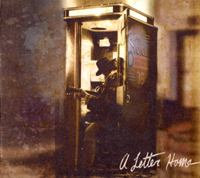 Needle of Death – Neil Young
Neil Young previewed this track at a sold-out concert at London’s Royal Festival Hall (RFH) called ‘A Celebration of Bert Jansch’ in December 2013. (BBC 4 televised highlights in The Genius of Bert Jansch: Folk, Blues and Beyond in March 2014.) We didn’t know it was preview though. Young wasn’t at the RFH bash but he did send a video of him performing this song of Bert Jansch’s. It was screened during the concert.
Young was a rock for Bert and Loren Jansch leading up to their deaths a month apart at the end of 2011. I did the last two major interviews of Jansch’s life, visiting them at home either alone or with Anne Briggs. Young booking Bert to open for him on North American tours during 2010 and 2011 was an act of rarest generosity and graciousness. Both Bert and Loren knew that their days were numbered, getting insurance to travel in North America was daunting and keeping their heads above water financially preyed on their minds. Those tours supporting Neil Young meant an enormous amount to them.
This is a song about narcotics. It was genuinely shocking when it appeared on Jansch’s self-titled debut LP in 1965. Young’s version was cut – the appropriate word – in Jack White’s restored Voice-O-Graph recording booth. It adds to the song’s grittiness. From A Letter Home (Reprise 9362-49399-5, 2014)
Arthur McBride And The Sergeant – Paul Brady
Andy Irvine and Paul Brady made their duo LP on the rebound from Planxty in 1976. It is that overused word: classic. Planxty had gone sour, they were shagged out and they needed the sort of musical succour that downsizing might provide. Off the treadmill the duo created one of the greatest folk albums that ever came out of Eire.
The story is excellent. Their version rings true. It is an Irish-located, anti-war polemic of a strength and kind that leaves an indelible mark of the sort that imprints where you first heard it. That strong a performance. Insert exclamation mark if you wish. My first brush with the album was at 70 New Oxford Street in London in a record shop called Collet’s. From Andy Irvine Paul Brady (Mulligan LUN CD 008, undated)
Further information at: http://www.andyirvine.com/albums/AndyPaul.html
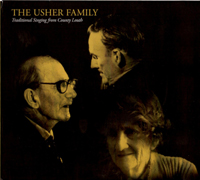 Laugh And Daft Half – Mary Ann Carolan
The Usher Family was a House of Usher of a different kind. County Louth is where the North’s Ulster Scots meets the South’s Anglo-Irish (as opposed to Irish Gaelic). Dónal Macquire made the recordings that appear on this CD in August 1974. The Usher Family on this album is Mary Ann, Pat and Petey (also rendered Petie sometimes). In 1966 the Irish folklorist and collector Seán Corcoran had met the family and, won over, spread the word about them and the family’s extraordinary repository of music. Other collectors followed.
Surely a song with “She talks like a parson/She sings like a nightingale” must whet the appetite. Mary Ann Carolan was a major Irish song-carrier and the Ushers just sang what moved them or they liked, as opposed to what the folklorists deemed was folk or not. The Usher Family just sang and, as this superlative collection makes plain, they did not give care whether what they sang was folksong, music hall, Child ballad, a John Sheil composition or songs of murky provenance. From The Usher Family’s Traditional Singing from County Louth (Rossendale Records MUS010, 2014)
Further information from rossrecords at talk21 dot com
A Man’s A Man For A’ That – Five Hand Reel
I only saw Five Hand Reel play once. It was at the time of their solitary LP release for Topic, in a venue close to Victoria Station in London. This song lent its name to their second LP for RCA released in 1977. It was an interesting period for folk rock. This song of Burns is a declaration of egalitarianism. Also known as Is There for Honest Poverty (grammatically it isn’t a question and hence no question mark is needed), Burns wrote it in the temper of the times – 1795 – and it anticipates later political developments. The Scots idiom ‘for a’ that’ – short for ‘for all that’ – means ‘in spite of that’. A Man’s A Man For A’ That started out as listening research for an article about Dick Gaughan. It stuck around well after the article was published. From Five Hand Reel/For A’ That/Earl O’ Moray (BGO Records BGOCD712, 2006)
Further information at: http://www.bgo-records.com/
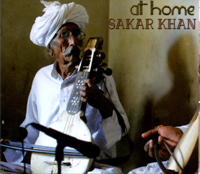
Hindoni – Sakar Khan
Rajasthan is a wondrous place. If you get away from the tourist places and sightseeing haunts, it has so much to offer. It combines modernity, ancient suavity and traditions that go back to a time of tolerance when Hindu and Muslim societies co-existed as if normalcy had nothing to do with faith or caste divides. That may be an outsider slightly romanticising matters.
Sakar Khan (1938-2013) was a Manganiyar, one of Rajasthan’s two principal Muslim hereditary musician clans. (The Langas are the other.) Although he was a master of the kamancha or kamaicha (other variants are available), it was largely only after his death that he came to wider recognition. This was despite him having appeared as one of the ten Rajasthani musicians and dancers who took part in the From the Sitar to the Guitar concerts in November 1995 that Yehudi Menuhin and Ravi Shankar put together in Brussels. (The DVD of the same name came out in 2006.) Menuhin sounded me out in some detail about the concerts, our having already worked together on a project. Twenty years on I have no memory why we didn’t follow up the conversation.
Kamancha is one of Rajasthan’s major bowed stringed instruments. It has a sound box generally covered with goat hide, three primary playing strings made of gut and 14 metal sympathetic strings. This track, on which Sakar Khan also sings, is a love letter from the past to the future. From At Home (Amarrass AMAR 006, 2012)
(An in-depth review of the album from which this comes is due to appear in issue 125 (Summer 2014) of Pulse) http://www.pulseconnects.com/
Further information at: http://www.amarrass.com/ UK distribution is through Harmonia Mundi.
Andrew Buncombe’s obituary of Sakar Khan from The Independent is at: http://www.independent.co.uk/news/obituaries/sakar-khan-musician-who-worked-with-shankar-menuhin-and-harrison-8810142.html
Rāg Bhupali – Barkatullah Khan
Barkatullah Khan of the Jaipur Senia Gharana is a name that rang no bells when I stumbled upon him. A gharana is in essence a school and style of playing rooted in a particular geographical location with prescribed approaches and specific characteristics which grew into a musical ideology through historical isolation. He was a sitarist that died in 1930 and this recording is said to be his only recording. He studied under Rajasthan’s acclaimed Jaipur Senia sitar player Amrit Sen (1813-1893). That is about the extent of my knowledge about him.
One of the consistently fascinating aspects of early recordings is how musicians adapted to, and coped with the limitations of, and new vistas offered by technology. It is a process that continues. It did not stop. It has not gone away. Listening to Hindustani musicians distilling the essence of a rāg into the time available can throw up remarkable insights. Barkatullah Khan’s Bhupali lasts around two minutes and twenty seconds and he isn’t finished playing before the cylinder runs out. It’s like a postcard turning up 100 years after posting. For more erudite material than this on the bigger subject, may I recommend some reading material? Try Timothy Day’s A Century of Recorded Music – Listening to Musical History (Yale University Press, 2000). This recording is something I would like to share with you. From http://india.tilos.hu/english_gh_jaipur.html (1904)
Further information about the gharana is at Steven Landsberg’s website: http://ragascape.com/
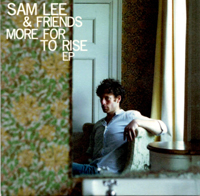 Airdog – Sam Lee & Friends
This is one of the four tracks on a ‘holding’ EP before Sam Lee makes his second CD. The song is learned from his de facto guru, Stanley Robertson – the Scots Traveller nephew of Jeannie Robertson. Stanley Robertson was very kind to me when I wrote his aunt’s entry for the Oxford Dictionary of National Biography. Traveller genealogies would fry the brains of anyone – sane or not.
 Airdog is such an unlikely title, given its context. It sounds like ‘hare dog’ (‘are dog) ought to fit better there. If this is a portent of what is to come, then that sounds jolly good. After all, a song that slip-slides so well between hunting imagery and sleeping all night in a tinker’s arms has to have depths to plumb. From More For The Rise EP (Nest Collective TNCR002CD, 2014)
While Gamekeepers Lie Sleeping – June Tabor
One of the first tranches of CD updates from Topic’s vinyl catalogue and originally released in 1976 this was an album that helped to cement her reputation. It is hard to express what she did to the British folk scene. She shook it up and afterwards it was never the same. She had a certain physicality that appealed but more pertinently she had an intellectual wherewithal that really engaged. Long, long before CD boxed sets were a twinkle in their daddies’ eyes (always a man always a man), I claimed first dibs when it came to writing the notes for her boxed set. And thus it came to pass. It is impossible to imagine the British folk revival without her. And this performance is one of the reasons why. From Airs And Graces (Topic Records TSCD 298, 1989)
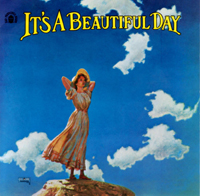 White Bird – It’s A Beautiful Day
This was the opening track of this San Francisco-based rock group’s debut LP from 1969. The song, co-written by Linda LaFlamme and David LaFlamme, captures a mood, just as its cover artwork did. Its artwork was designed by George Hunter while Kent Hollister’s cover painting supposedly was a lift from an old US housekeeping magazine. No matter what the deal was when it came to inspirations or lifting ideas, the LP cover tapped into fantasies of sunshine, blue skies and Californian misses. The vocal-violin-led performance stands up well.
The violinist Vanessa-Mae covered it years later but it felt like a managerial choice. From It’s a Beautiful Day (San Francisco Sound SFS 11790 DA, undated)
Red Rose Medley – Wilson & Swarbrick
I got a preview of this track during a break during an interview with Dave Swarbrick in August 2010. It combines Bob Burns’ My Love Is Like A Red, Red Rose’ and Rob Marley’s No Woman No Cry. It was a wow moment for its audacity. His and Jason Wilson’s vision is one that has only increased in stature. One of the most delightful aspects of this arrangement is that the Bevvy Sisters (in their then line-up of Lindsay Black, Heather Macleod and Kaela Rowan) do the I-Trees in most sumptuous and sensuous ways.
In a conversation with me, Swarbrick recalled Wilson approaching him: “I had an email from this guy called Jason Wilson – I’d never heard of him – and would I be interested in doing a fiddle on Matty Groves. He was putting together an album and wanted to do Matty Groves. I thought this all sounded a bit iffy. I get one or two requests like that and they’re never really very good. But when he sent me the track, I was completely and utterly devastated because I thought it was absolutely fantastic.
“One thing led to another and he asked if I’d come over and perform it in Toronto. By this time I was hooked. I thought he was a magical musician and magical arranger and I thought the whole band was fantastic. He said he wanted to arrange some things of mine and it just so happened that he picked the very first track on the very first album that I ever made. Just accidentally.” Wilson’s project turned into the Juno-winning album The Peacemaker’s Chauffeur (2008). Red Rose Medley was also a CD-single in 2011 but no bugger told me at the time. From Lion Rampant (Shirty SHIRTY4, 2014)
The copyright of all images lies with the respective photographers, companies and image-makers. The photograph of Sam Lee is © Santosh Sidhu/Swing 51 Archives.
31. 5. 2014 |
read more...
 [by Ken Hunt, London] This month’s selection is the product of one of most intense periods in career terms for several years . There was so much that could have reflected this month’s listening but for many reasons this is what, let’s say, is going to emerge. John Reilly, Robb Johnson, Leyla McCalla, The Home Service, Sam Lee, William Kimber, David Crosby & Graham Nash, John Coltrane and the Chumbas are, let’s call them, the chosen ones…
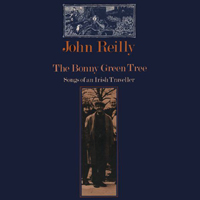 The Well Below The Valley – John Reilly
The Well Below The Valley tells a tale of deception, incest and infanticide. This particular performance – and a most remarkable one it is at that – was collected from the Irish Traveller John Reilly by the Irish folklorist Tom Munnelly. It originally appeared The Bonny Green Tree (Topic 12T359, 1977). One of the most intense songs ever to run through my little head. From O’er His Grave the Grass Grew Green – Tragic Ballads (Topic TSCD653, 1998)
Ken Hunt’s now-anonymised obituary entitled ‘Tom Munnelly: Irish folk music and folklore collector, singer and social historian’ published in The Scotsman is at http://www.scotsman.com/news/obituaries/tom-munnelly-1-918632
Be Reasonable – Robb Johnson
This is the opening track on this double CD. A commission came in about writing an article about political song in Britain and the album’s yellow spine sat winking at me like a little monkey. It is a full-tilt version of one of Robb Johnson’s most popular, rabble-rousingest songs. It has a catchiness, a singability that doesn’t take long for newcomers to the song to grasp and a message. In the album notes, Johnson adds some detail about the song: “Based on a good old Situationist slogan from Mai 68. I just translated ‘réaliste’ as the more English ‘reasonable’.” The idiom works marvellously.
Joining in on the anti-capitalist fun are Jim Woodland, Leon Rosselson, Frankie Armstrong, Ian Saville, Roy Bailey, and Reem Kelani. From Celebrating Subversion – The Anti-Capitalist Roadshow (Fuse Records CFCD 099, 2012)
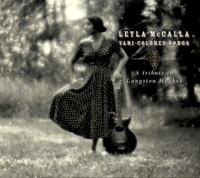 Too Blue – Leyla McCalla
Leyla McCalla first came to my attention as the cellist of the Carolina Chocolate Drops (with whose vocalist Rhianon Giddens she did a UK tour in early October which, alas I was unable to get to see because of the pressure of deadlines and life’s cookie jar – or as the British call it the biscuit tin – of conspiracies. To my mind, Vari-colored Songs is remarkable. McCalla mixes the poetry of Langston Hughes, Haitian folksongs (such as the Haitian Creole Kamèn Sa Fè? gleaned from Alan Lomax In Haiti 1936-1937 and the recording Ago Fixè’s Bal Band) and her own material. She creates music that is wholly hers and out there. Out there? Well, I don’t remember anything like this. This is way beyond The Secret Life of Bees (2008) in terms of cello – at the risk of sounding silly.
On this particular track she sings and plays tenor banjo. Luke Winslow-King accompanies on guitar and Cassidy Holden bass. From Vari-colored Songs – A tribute to Langston Hughes (Dixie Frog DFGCD 8752, 2013)
A Lincolnshire Posy – The Home Service
I lived through the recording of this album, the Home Service’s masterpiece. This is their take on Percy Grainger’s suite of songs that he gleaned from folksong collecting in Lincolnshire the the first decade of the Twentieth Century. A phenomenal piece of music. Cannot listen to it without thinking of their wind man Howard Evens ever. From Alright Jack (Fledg’ling FLED 3015, 1997)
 The Ballad of George Collins – Sam Lee
People can swagger, they can puff out their chests to outpoppingjay, er, poppingjays but if there is one thing to ground them, a good old-fashioned dose of something contagious is likely to do it. Life is a yet another sexually transmitted disease and traditional folksong got there well before the soundbites, as Sam Lee reminds with this song. (With apologies to William Kimber who follows…) From Ground of its Own (The Nest Collective Records TNCR001CD, 2012)
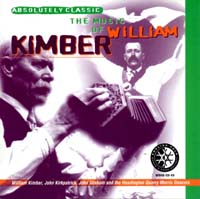 Country Gardens – William Kimber
This is a piece of music made famous by Percy Grainger. Generations of eager young musicians have played his setting of this morris tune, perhaps without even realising that it is morris tune, let alone a handkerchief dance, and a tune made for dancing and dancing to.
William Kimber (1872-1961) is one of the father figures of the first English Folk Revival. It was on account of Cecil Sharp seeing him play with the Headington Quarry Morris Dancers on Boxing Day 1899 that Sharp had his epiphany about England’s folk music and dance. This particular recording of Country Gardens was cut by the concertina player on 1 June 1948. HMV released it in August 1948, according to the excellent notes. From Absolutely Classic: The Music of William Kimber EFDSS CD 03, 1999)
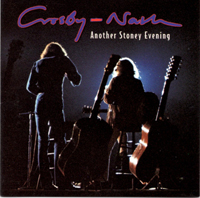 Laughing – Crosby-Nash
Bill Halverson made this recording in October 1971 at the Dorothy Chandler Music Center in Los Angeles. Stephen Barncard revisited the tapes in March 1997. This song was first released in 1971 on Crosby’s If I Could Only Remember My Name…. Crosby’s voice here is full of vigour and Nash adds some off-the-wall and/or plaintive harmonies. I reviewed the album this comes from in Mojo 1998 / 53, so the internet tells me. From Another Stoney Evening (Grateful Dead Records GBCD 4057, 1998)
Karuna Sevai – Sudha Ragunathan
Pāpanāsam Sivan (1890-1973) is one of the finest of Hindu hymnodists, renowned for his lyrics set to rāgam. This particular kriti – a form of Hindu hymn – is set in Hamsaddhwani. Sudha Ragunathan’s interpretation sails even if you have no notion of even which language she is singing in. From Pāpanāsam Sivan Kritis (Amutham Music Private Limited WS 014, 1999)
Ken Hunt’s The review for Pulse’s Winter 2013 issue of Sudha Ragunathan’s Darbar festival performance ‘Iconic Sitar to Mesmerising Carnatic Ragas’ is at http://www.pulseconnects.com/content/DarbarIconicSitarMesmerisingCarnaticRagas
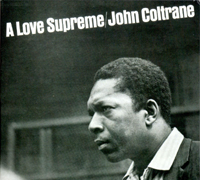 Part 1 – Acknowledgement – John Coltrane
Some music just arrives in your life and remains there embedded but slides into your life and cranium in a way that leaves no trace. When and how A Love Supreme arrived is lost. Actually it should be the flow of the three parts that make up A Love Supreme. From A Love Supreme – Deluxe Edition (Impulse! 314 589945-2, 2002)
Introduction → So Long, So Long – Chumbawamba
Oh, go on, go on, go on, lest we forget Margaret Thatcher’s death… From In Memoriam: Margaret Thatcher (no label, 2013)
The copyright of all images lies with the respective photographers, companies and image-makers. The photographs of Sam Lee are © Santosh Sidhu/Swing 51 Archives
31. 8. 2013 |
read more...
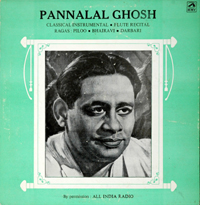 [by Ken Hunt, London] M.S. Gopalakrishnan, Barbra Streisand, The Byrds, Barbara Dickson, Martin Simpson, The Ex & Brass Unbound, Paul Horn, Duncan Wood & Guests, Pannalal Ghosh and the Grateful Dead provide the work- and life-related materials this month. Updated 21 October 2013.
Janani Ninnuvina – M.S. Gopalakrishnan
This is a composition by Subaraya Sastri. His pedigree as a composer-musician is unmatched as far as I know. (More informed readers than I, please correct if wrong.) He was the son of Syama Sastri (1762-1827), one of the Holy Trinity of Karnatic saint-composers and he also studied with the Trinity’s other two saint-composer Muthuswami Dikshitar (1776-1835) and Tyagaraja (1767-1847). This kriti or Hindu devotional hymn seeks the protection of the mother goddess.
A recording from 1978 taken from the NCPA Archives – the National Centre of Performing Arts in Bombay in July 1978. Kutralam Visvanatha Iyer accompanies on mridangam, the preeminent South Indian double-headed barrel hand drum. From M S Gopalakrishnan From The NCPA Archives (Sony Music (India) 88697 95855 2, 2011)
Ken Hunt’s obituary entitled ‘MS Gopalakrishnan: Revered Southern Indian violinist’ of 29 July 2012 in The Independent is at http://www.independent.co.uk/news/obituaries/ms-gopalakrishnan-revered-southern-indian-violinist-8501679.html
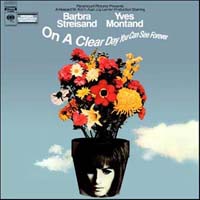 On A Clear Day (You Can See Forever) – Barbra Streisand
In this 1970 film Barbra Streisand plays the role of a young woman called Daisy Gamble. She has powers. The film’s opening sequence while the credits roll includes time-lapse film of flowers coming into bloom. You may well start thinking that this is all very good in a sub-David Attenborough sort of way. It emerges that Daisy can accelerate plant growth. She has other powers, including foreseeing when a telephone is going to ring, as Dr. Marc Chabot, played by Yves Montand, discovers when she goes to him in an attempt to break her nicotine habit through hypnosis.
Never having seen the film before, the notion had never crossed my mind that the title song feeds into the undercurrent about rebirth that emerges. It was a case of being too accustomed to this Alan Jay Lerner/Burton Lane song. Without any specific context, it had just washed over me. All that lodged was the central consolidation: “On a clear day/Rise and look around you/And you’ll see who you are/On a clear day/How it will astound you/That the glow of your being outshines ev’ry star.”
That and the ending lyrics: “On that clear day…You can see forever…And ever… And ever…And ever more!” ending, that whole context and drive of the song had never occurred to me. Getting disabused and having to reconsider a position (however tenuous, entrenched, pukka or inaccurate) once further context is supplied is one of life’s great joys and blessings. As much as anything, this is about reconsidering, re-evaluating or re-contextualising something that you thought you knew. From On A Clear Day You Can See Forever (1970)
Tribal Gathering – The Byrds
In January 1967 Golden Gate Park in San Francisco had its Gathering of the Tribes, something celebrated in this song by David Crosby and Chris Hillman. The song, recorded in August 1967, is of the moment, yet transcends its immediate birthplace and circumstances of its birth. It combines a West Coast jazz feel and a West Coast folk sound.
Over June and July I was doing interviews and writing an article about Rory McEwen for R2 and its September/October 2013 issue. The subject of the 1965 Keele Folk Festival, organised by Rory McEwen, had to be part of the narrative. It was a turning-point. McEwen fashioned a festival that truly was a gathering of the tribes, bringing together British traditional and revivalist musicians. The ‘gathering of tribes’ image had been in the article from before the day the article was commissioned.
Then two things happened.
A bunch of music critics were jawing about songs about childhood. The Notorious Byrd Brothers had this Goffin/King song on it, supposedly cut in solidarity with Dusty Springfield and her anti-apartheid stance. It is one of the most evocative songs about childhood. Then sitting in a pub proofreading the day’s copy and escaping the tyranny of the word machine Wasn’t Born To Follow from the same album came on. Out of this triad of connections came Tribal Gathering. From The Notorious Byrd Brothers (Columbia/Legacy 486751 2, 1997)
Baker Street – Barbara Dickson
This is the opening cut on Barbara Dickson’s 13-track project dedicated to the songs of Gerry Rafferty. The Scottish singer-songwriter Gerry Rafferty (1947-2011) came to a kind of prominence – in a low-key folk sort of way – as a member of The Humblebums with Billy Connolly between 1969 and 1971. Although I saw The Humblebums perform in 1970, no memory of their set whatsoever remains.
Between 1972 and 1975 Rafferty was one half of Stealers Wheel with Joe Egan. Thereafter his career came to a standstill temporarily, stranded in a legal desert with litigation vultures circulating. The breakout came in 1978 with City to City, produced by his old cohort Hugh Murphy. Its major song was Baker Street. It was an enormous hit and a staple of a certain kind of radio programming.
Barbara Dickson ran into Rafferty, she writes, “in the late 1960s, one Saturday, in the Scotia Bar in Glasgow”. Produced by Troy Donockley, the arrangement ingeniously replaces Raphael Ravenscroft’s distinctive alto saxophone solo on Rafferty’s original with low whistle – not that any saxophonist would attempt to replicate that solo. Barbara Dickson’s take on the song is a gem and really quite, quite original. From To Each & Everyone (Greentrax CDTRAX378, 2013)
Will Atkinson – Martin Simpson
This song of Martin Simpson’s tells the story of Will Atkinson (1908-2003), a remarkable traditional music-maker from the North-east of England. He put his stamp on Northumbrian music. In the notes to the song, Simpson reminds that he was still playing whilst he was in hospital two days away from dying. Atkinson also added to the tradition. One composition was Alistair Anderson’s Fancy, a reel named after one of the region’s finest.
Simpson’s songs were very much on my mind and casting my eyes across his albums, True Stories sprang to the forefront. Will Atkinson is one of Simpson’s finest songs musically; it is very English and lyrically a marvellous tribute to an inspirational musician who, for much of his life, music was a hobby and passion before it was a secondary income, however marginal. From True Stories (Topic Records TSCD578, 2009)
Further Simpsoniana at http://www.martinsimpson.com/
 Last Famous Words – The Ex & Brass Unbound
If I had to propose a list of the ten rhythmists that most keep me engaged and thinking, then, no sweat (on my behalf), Katherina Bornefeld would be in there like a shot. Her solutions to rhythm keep me on my toes. She challenges – please excuse that swelling cliché of a word. Her abilities to infuse songs with drum patterns are just extraordinary. She is a one-off. This, the first track on The Ex’s Enormous Door album, does it for me.
Last Famous Words – nice inversion – is one of those marvellously perfect pieces of music with the sort of wartiness which The Ex specialise in. The Ex are Kath Bornefeld (drums, vocals), Arnold de Boer (vocals, guitar, sampler), Terrie Hessels (guitar, baritone guitar) and Andy Moor (guitar, baritone guitar). Mats Gustafsson (baritone saxophone), Roy Paci (trumpet), Ken Vandermark (tenor and baritone saxophones, clarinet) and Wolter Wierbos (trombone) are Brass Unbound. This album was recorded in Posada Negro Studios in Lecce, Italy in June 2012. One of my most played albums of 2013 thus far. From Enormous Door (Ex Records EX138D, 2013)
More information at www.theex.nl
Raga Tilang – Paul Horn
Born in 1930 in New York, the flautist Paul Horn was one of the musicians that came together to play with Ravi Shankar on his Portrait of Genius (1964). This take on Tilang appeared on Paul Horn in India, subtitled “Ragas for flute, veena and violin”. From In India/Cosmic Consciousness – Paul Horn In Kashmir (BGO Records BGOCD1104, 2013)
More information at http://www.bgo-records.com/
Passchendaele/The Crow Steps Reel – Duncan Wood & Guests
Dave Swarbrick produced many of these new compositions in a flurry of creative energy. He had done a gig at the Edinburgh folk Club with Duncan Wood and Cathal McConnell and it led to a compositional jag. The 17 tracks and 36 compositions on this album are all tradition-based.
This particular composition opens with a 2/4 military march in a Scottish pipe vein. The title of the second piece, a reel, refers to the Scottish architectural feature called crow-stepped gables. This is a stair-step-like design at the triangular gable-end of a building, also known as a stepped gable or corbie step. (Corbie is Scots for crow.) From Swarbtricks – A Collection of New Melodies Purposely Composed for the Violin & Mandolin by David Swarbrick (Beechwood SWB121117, 2013)
October 2013 Coda: Dave Swarbrick asked me about this album after the Martin Carthy & Dave Swarbrick concert at Turner Sims Hall in Southampton on 19 October 2013. I started rabbiting and I cited this track. He looked blank when I mentioned the title. I thought I had fumbled it and went into apologies. Then he explained he was crap at titles – he cited one working title for a tune of this album as “Droopy Drawers” – and that Wood had weaved magic of another kind.
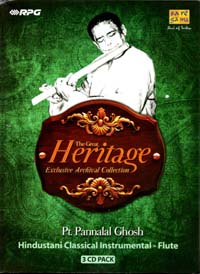 Kajri – Pannalal Ghosh
Pannalal Ghosh (1911-1960) is the Hindustani flautist who transformed the appreciation and status of the bansuri or bamboo flute. Kajri is the name of a folk form from the Indian region of Uttar Pradesh and is particularly associated with the city of Varanasi or Benares. This short piece closes the first disc of this triple set. This triple-CD set is the soundtrack to my article in Autumn 2013 issue of Pulse. From The Great Heritage (Saregama CDNF 150997-999, 2011)
Ken Hunt’s article about Pannalal Ghosh is in the Autumn 2013 issue of Pulse. More information at http://www.pulseconnects.com/
Turn On Your Lovelight – Grateful Dead
“And leave it on!” In memoriam: Bobby ‘Blue’ Bland (1930-2013). From Live/Dead (Warners, 1969)
The copyright of all images lies with the respective photographers, companies and image-makers.
PS Thank you for the feedback. Whatever else you may think – and what the troll-ridden comment corners that several newspaper propagate like Petrie dish cultures – many music critics in my experience operate in a response-free zone.
31. 7. 2013 |
read more...
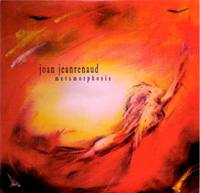 [by Ken Hunt, London] Oh, the wind, the rain and sun. This month Jyotsna Srikanth, Allman Brothers Band, Simon Thacker’s Svara-Kanti, Dunaj & Iva Bittová, Jefferson Airplane, Rosalie Sorrels Véronique Sanson, Joan Jeanrenaud, Martin Simpson, Fraunhofer Saitenmusik supply the umbrellas and the parasols.
 Brovabarama – Jyotsna Srikanth
This is the centrepiece of one of the finest Karnatic albums to cross my path thus far in 2013. Jyotsna Srikanth plays South Indian-style violin and this particular track is imagination distilled. From Call of Bangalore (Riverboat Records/World Music Network TUGCD1072, 12013)
Ken Hunt’s review of the album is in the online sampling of CD reviews in the summer 2013 issue of fRoots magazine at at http://www.frootsmag.com/content/issue/reviews/
Mountain Jam – Allman Brothers Band
In Prague, it turns out, under certain meteorological and optical conditions something strange happens. From the south, say from Braník, looking towards Hradkany – the castle – a mountain may heave into view just to the right of Hradkany. Ordinarily it isn’t there, isn’t visible. Yet the mountain is real and it has a name: Milešovka.
It is some seventy or so kilometres away. On being told this tale – and how rare it is to see it – Donovan’s There Is A Mountain immediately sprang to mind. It is a song that got referenced by both the Grateful Dead and the Allman Brothers Band in jams. “First there is a mountain…” and then there isn’t. That sort of stuff. And that transmuted into the Allman Brothers’ take on the song from 1971. And that is why Milešovka figures here in an aural form because during a break in the torrential rains that caused, amongst others, the Vlatava, Elbe, Danube and Saale to rise and flood, the air cleared and then there was a mountain. From Eat A Peach (Island Def Jam Music B0006795-02, 2006)
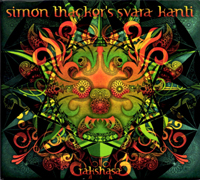 SwarAmant – Simon Thacker’s Svara-Kanti
Rakshasa, the Simon Thacker’s Svara-Kanti’s debut, succeeds on many counts and levels. They are a four-piece consisting of Japjit Kaur (vocals), Sarvar Sabri (tabla), Jacqueline Shave (violin) and Simon Thacker (classical guitar). What it weaves, it weaves with a dexterity and surefootedness that is astounding. It has an abundance of surprises to spring in its ability to wrong-foot expectations and paint smiles on listeners’ faces.
Its core musical fabric is spun from art music influences from the South Asian subcontinent, a little from the Far East and a pleasing amount from contemporary Western classical elements. The best exemplar for that last one is the US composer Terry Riley’s SwarAmant for guitar, violin and tabla. It is a nuanced composition to compete with Riley’s 2004 composition, The Cusp of Magic that the Kronos Quartet and the pipa player Wu Man recorded.
A review proper of the album appears in the August 2013 issue (177) of the London-based magazine Jazzwise. From Rakshasa (Slap The Moon Records STMRCD02 2013)
Loads more information at http://www.simonthacker.com/svara-kanti.htm
Dunaj – Dunaj & Iva Bittová
Dunaj means ‘Danube’ in Czech. Watching the Vlatava brought thoughts of the Danube and the flooding going on in Budapest. The energy of this track connected with images of the Danube in full spate. This record was first released in 1988. From Dunaj & Iva Bittova (Pavian Records PM0064-2, 2012)
 Escalay – Joan Jeanrenaud
This is a composition that translates as ‘Water Wheel’. Its composer is Hamza El Din, one of the musicians who revolutionised my mind. The Kronos Quartet have done a similar job on my head. This composition, here arranged for celli, figures on the Kronos album Pieces of Africa (1992), for which I wrote the CD booklet notes. It proved to be a project that opened people’s minds in ways that were totally unimaginable whilst putting together its music.
As part of the project I interviewed Hamza El Din (1929-2006) and we stayed in touch afterwards, with me writing about him in various places thereafter, up to and after his death. I wrote a UK national newspaper obituary about him.
Joan Jeanrenaud was the cellist on the Pieces of Africa recording. On Metamorphosis she revisits the composition. Over more than 17 minutes, she retells the story of Hamza’s water wheel from her own perspective. It is a candid performance to be put on replay and drunk like water from the well. From The Metamorphosis (jj23556, 2002)
Pretty As You Feel – Jefferson Airplane
This was a single for Jefferson Airplane in October 1971. It was one of the highlights of that year’s ho-hum album Bark. After their former drummer Joey Covington died on 4 June 2013, this was the first piece of music of theirs that got played. It is still taut and tense but shorter than remembered. Papa John Creach’s fiddle still thrills. From Jefferson Airplane Loves You (RCA 61110-2, 1992)
More at http://www.rollingstone.com/music/news/joey-covington-jefferson-airplane-drummer-dead-at-67-20130605
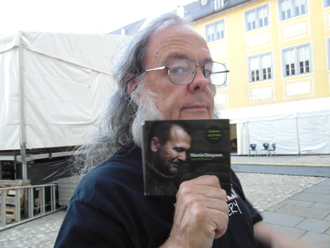 Jackie and Murphy – Martin Simpson
This is song by Martin Simpson about Jack Simpson Kirkpatrick (1892-1915), a donkey called Murphy and the Dardanelles. Jackie was a medical orderly, a volunteer with the 3rd Field Ambulance. Together with Murphy the donkey, he brought the wounded in. He died at Gallipoli and was nominated for a Victoria Cross for bravery. As Martin Simpson relates, the honour was turned down “because he was nominated ‘under the wrong category of heroism‘ [his italics]”. I first listened to this song whilst driving but there was no chance to pull over to read what Martin Simpson had written about the song’s inspiration, so I kept repeating the song, letting the song wash over me. The song came about as a thematic suggestion from June Tabor. From Vagrant Stanzas (Topic TXCD589, 2013)
Ragweed Ruth – Rosalie Sorrels
This song has a Ken Kesey lyric at its heart. It’s a song with a lot of words and Rosie Sorrels negotiates them well. Accompanying her vocal are Barbara Higbie on piano, Laurie Lewis on fiddle, Mitch Greenhill on guitar, Bruce Barthol on bass and Brent Rampone on drums. Another interesting song-story. On this occasion its choice was prompted by an ignoramus’ boorish and drunken rant about subjects he knew nothing about but felt quite prepared to snap out dismissive judgements about. He had never heard of Ken Kesey but that did not stop him. From Borderline Heart (Green Linnet GLCD 2119, 1995)
Bernard’s Song – Véronique Sanson
This is the opening track from the French singer Véronique Sanson’s fifth album released in 1977, in the middle of the period during which she was married to Steve Stills – that is, from 1973 to 1979. It has a US vibe and the sort of groove that Little Feat conjure (though it is not them backing her).
Bernard’s Song (Il est de nulle part) cheerfully breezed back into my life, courtesy of Channel 21 travelling through the Ardennes. Giant Donut Discs aren’t necessarily meant for forever. From Hollywood, 1977)
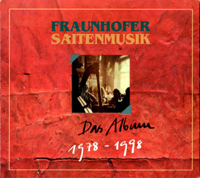 All mein Gedanken – Fraunhofer Saitenmusik
The news that Fraunhofer Saitenmusik’s co-founder Heidi Zink had died on 23 June 2013 struck me particularly hard. Heidi played several instruments but her main one was the Hackbrett, a variety of hammer dulcimer. She elevated the instrument to new heights. I truly believe that.
This particular piece – it translates as ‘All my thoughts’ – is a traditional song from 1460, according to notes to this career overview. This rendition has Richard Kurländer on harp and Heidi on Hackbrett is a throwback to the band’s earliest days when they were a duo performing in Munich venues under the name of »Heidi und Richard«. As Heidi Zink’s commentary on the track explains the arrangement has little to do with 1460. The performance is suffused with a romanticism as envisioned by its arranger Walter Götze. Exquisite. From Das Album 1978-1998 (Trikont US-0254, 1998)
The copyright of all images lies with the respective photographers, companies and image-makers. The Martin Simpson clutcher is David Lindley, July 2013 © Santosh Sidhu/Swing 51 Archives.
30. 6. 2013 |
read more...
 [by Ken Hunt, London] Noëmi Waysfeld & Blik, Marta Töpferová & Tomáš Liška, Bob Marley & The Wailers, The Weavers, Ali Akbar Khan, Škampa Quartet, Imani Winds, Z.M. Dagar & Z.F. Dagar and Lucy Ward, Bella Hardy, James Findlay and Brian Peters.
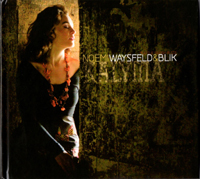 Shnirele Perele – Noëmi Waysfeld & Blik
One of those rare, very rare pieces of music that on first pass made the hair on the back of my neck stand up. The Yiddish of the title translates as ‘pearl necklace’ or, to go Glenn Miller, ‘string of pearls’. Both Noëmi Waysfeld & Blik and the album that this comes from were totally unknown quantities to me when work brought them to my attention. Once heard, never forgotten, this track got ‘unfairly’ stuck on repeat before moving through the rest of Kalyma.
Noëmi Waysfeld’s vocal register – quite different from much of her singing elsewhere on the album – and intonation fit the theme beautifully. This particular performance finds Noëmi Waysfeld & Blik augmented with David Krakauer’s clarion blasts and underpinnings on klezmer-style clarinet. This is a totally thrilling piece of music. An evocation or memory of good times.
Furthermore, this masterpiece’s packaging reinforces why the physical artefact can do things that a download never will. From Kalyma (AWZ Records CW895634, 2012)
More information at http://www.noemiwaysfeld-blik.com/
Single Girl – Hedy West
An unapologetic choice that requires the declaration of an interest. This reissue is the one for which I am most proud of having written the contextual notes in recent years. I listen to Hedy West (1938-2005) and am continually wowed by her performances. Single Girl is typical. It has a clarity and a vision to it. Her banjo is just right. Of the tradition, but just that little bit different without getting too modernistic. My most played album of 2012. Listen to this asserting of a woman’s rights and swoon. From Hedy West/Volume 2 (Vanguard VCD 79124, 2012)
PS Should any reader know the whereabouts of Hedy’s daughter Talitha, please do get in touch with me.
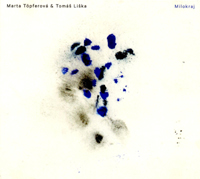
 Jabloň zapomněni – Marta Töpferová & Tomáš Liška
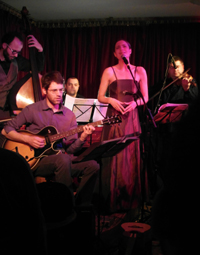
Marta Töpferová (lead vocals, cuatro), Tomáš Liška (double-bass), Stano Palúch (cimbalom), Marcel Comendant (violin) and David Dorůžka (guitars) did a few gigs in England in April 2013. They bowled me over. Truly one of the most impressive roots-based bands to emerge from the Czech Republic in a decade.
This particular tale – they translate the title as ‘The Apple Tree of Forgetting’ – took on a new form in concert and showed the prospect of new life. Tonally, it summons images from the Slovak-Hungarian border. Milokraj is pronounced something like ‘mi-lo-cry’. From Milokraj (Animal Music ANI 034-2, 2013)
Lively Up Yourself – Bob Marley & The Wailers
Just one of those connections that come out of somewhere. In May 2013 on the way to an interview I found myself driving down streets between Brixton and Denmark Hill on the border of the London postal districts SW9 and SE5 that I had known well in the early 1970s and had previously only walked back then. The Irish composer Seán Ó Riada died in King’s College Hospital in Denmark Hill on 3 October 1971.
The Wailers were still largely a Jamaican deal then. Catch A Fire, with its make-believe Zippo cigarette lighter cover, came out in 1973. But the music that was coming out of the tower blocks and terraced streets were their Jamaican recordings. I would hear them playing in nearly every street I walked down. What the streets rang with were the 45s from a record shop within Brixton’s covered market. That’s where you got directed. It was a phenomenal time to get into reggae. The streets were alive with the sound.
And then in May 2013 at the SE5 end of Coldharbour Lane Lively Up Yourself entered my head unbidden. From Natty Dread (Island, 1974)
Kisses Sweeter Than Wine – The Weavers
One of the most historic and finest of all live folk releases. It was recorded on 24 December 1955 at New York’s Carnegie Hall. The Weavers were Pete Seeger (tenor vocals and banjo), Ronnie Gilbert (alto vocals), Lee Hayes (bass-baritone), and Fred Hellerman (baritone and guitar).
It was an album that never touched me in the scheme of things. Ray Fisher reminisced fondly about it and the Australian composer Peter Sculthorpe wove a snatch of its melody into one of his string quartets that the Kronos Quartet released around 1982 on a cassette release. The combination of Fisher and Sculthorpe keeps returning me to this piece. Plus Jackson Browne and Bonnie Raitt revisited the song on Where Have All The Flowers Gone – The Songs of Pete Seeger (1998) and they are very good eggs.
The version up above is from an album that deserves and needs a proper, fully documented reissue. From At Carnegie Hall (Vanguard VMD-73101, 1988)
Pilu Baroowa – Ali Akbar Khan
A piece and a performance that insists on never leaving me. So, I’m not arguing with the inevitable. From Then And Now (AMMP CD9507, 1995)
Excerpts from The Rite of Spring – Imani Winds
The explanation says, “May 23, 2013 Imani Winds’ members play David to Igor Stravinsky’s imposing Goliath, as they shrink the massive Rite of Spring down to size in a rendition for just five wind instruments.”
The wind quintet presents a series of “Selections” from the ballet. They run, in order, Introduction; Augurs of Spring; Dances of the Young Girls; Ritual of Abduction; Spring Rounds; Dance of the Earth; and Sacrificial Dance: The Chosen One, all in arrangements by Jonathan Russell. A highly recommended, instructional and entertaining setting for clarinet (Mariam Adam), flute, piccolo (Valerie Coleman), bassoon (Monica Ellis), French horn (Jeff Scott) and oboe (Toyin Spellman-Diaz).
Read more, view and download it here: http://www.npr.org/event/music/186033005/imani-winds-tiny-desk-concert
From Imani Winds: Tiny Desk Concert, 2013
 Miyan ki Todi – Z.M. Dagar & Z.F. Dagar
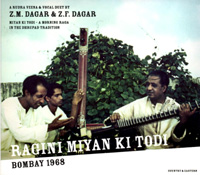
The death of Zia Fariduddin Dagar on 8 May 2013 brought home the importance of the Dagar Family’s lineage. On this particular release, recorded in Bombay in February 1968 by Bengt Berger, the founder of the Swedish label, Country & Eastern, he duets with his elder brother Zia Mohuddin Dagar in a vocal and rudra vina dialogue.
This particular performance of the variant of râg Todi attributed to Miyan Tansen of the court of the Mughal Emperor Akbar. It is a popular piece but also demanding in its way – a senior musician’s performance piece, as it were. This duet approaches an hour in duration. Note by note, syllable by syllable they tease out the composition’s delights. The performance is the equivalent of slow food rather than fast food with the ingredients – note and syllable and word – added like master chefs. One of the greatest recorded interpretations of Miyan ki Todi. From Ragini Miyan ki Todi (Country & Eastern CE19, 2011)
String Quartet No. 1 – Škampa Quartet
There I was sitting in Zürich Airport bridlimg at the usurious, retina-detaching prices charged for a beer or a coffee. After the first injury to the wallet, there was no chance that there would be a second occurrence. So, I settled down to listening to Pavel Fischer’s String Quartet No. 1. And a spirit of Moravian good vibes settled upon me and all was good in the world, except for Swiss usury. From Morava (Supraphon SU 4092-2, 2012)
 The Moon Shines Bright – Lucy Ward, Bella Hardy, James Findlay and Brian Peters
The album from which this song comes is subtitled “A Selection of Songs from The New Penguin Book of English Folk Songs (2012). This book is a successor to one of crucial books about English folksong: The Penguin Book of English Folk Songs (1959), edited by Ralph Vaughan Williams and A.L. Lloyd. The 2012 selection is courtesy of Steve Roud and Julia Bishop. In the wake of the publication of the 1959 book came a succession of recordings and The Liberty To Choose approaches the 2012 book in like manner.
This song is from Emily Bishop of Ledbury in the English county of Herefordshire (another county, like Somerset – Coates used to declare in their adverts – where the cider apples grow). Peter Kennedy recorded her in the 1950s. Brian Peters explains in the notes how “this New Year carol includes verses common to many May Day songs. The church seemed reluctant that people should celebrate the seasons without a strong does of ‘memento mori’ – a message found also in songs like The Life Of A Man [not on The Liberty To Choose] – but this is a pretty song, nonetheless, with which to close.”.
Theirs is a marvellous unaccompanied rendition of a song that acts as a reminder to remember one’s place. After all, Death is peeping just around the corner. From The Liberty To Choose (Fellside FECD257, 2013)
The copyright of all images lies with the respective photographers, companies and image-makers. The image of Marta Töpferová and the band is © Ken Hunt/Swing 51 Archives.
18. 6. 2013 |
read more...
 [by Ken Hunt, London] Another month filled with a bunch of work-related listening patterns. Catherine Ennis and Liam O’Flynn, Country Joe and the Fish, The Who, Any Old Time, Cyminology, Chumbawamba, Uncle John’s Band, Bisserov Sisters, Rais Khan and The Home Service
 Easter Snow – Catherine Ennis and Liam O’Flynn
This piece of music is a piece of passion. It is a duet that connives to bring together two remarkable musicians performing a composition that is a piece of common ground. Catherine Ennis, here playing organ, is the daughter of the superlative uilleann piper (and much, so very much more) Séamus Ennis (1919-1982). Liam O’Flynn, a musician deeply affected by her father, here is playing uilleann pipes.
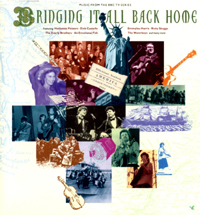
Easter Snow was one of Séamus Ennis’ favourite traditional airs. This particular performance just send chills it is so good. The combination of organ and pipes is not one that people would immediately think of. The recording itself starts out with O’Flynn stating the melody. Then Ennis comes in underneath him. There is a passage with the organ’s bass register that adds new meaning to drone. Then they flip the coin and the pipes support the organ. It’s just such an unexpected piece of music. Above all else, it honours the tune. From Bringing It All Back Home (BBC CD 844, 1991)
I Made A Big Mistake – Any Old Time
Any Old Time has remained one of all-time favourite string bands since first hearing their LPs on Arhoolie and Bay back in the day. This is an English-language version of a song called Gros Erreur (‘Big mistake’) from the singing of Iry LeJeune. When Sue Draheim died on 11 April 2013, the LPs came out to be played. Genny Haley sings lead, with Draheim on fiddle, Mayne Smith on pedal steel, Barbara Montoro on bass and Don Slovin on drums. From “I Bid You Goodnight” (Arhoolie 433, 1996)
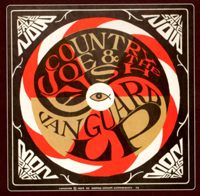 Bass Strings – Country Joe and the Fish
This studio album was a rite of passage for what I believe modern young people call stoners. It speaks of the time – 1967 – but also to an always when people opt for, or go searching for altered states. Joe McDonald (lead vocals and rhythm guitar), Barry Melton (lead guitar), David Cohen (organ) Bruce Barthol (electric bass) and Chicken Hirsch (drums) turned this into one of finest morsels ever to emerge from the San Francisco Bay Area.
This track is a-swirl with explicit references and, spatially, the air is dense. Its opening statement is, “Hey partner, won’t you pass that reefer round?” Alec Paleo’s notes include, Joe McDonald’s admission, “At a certain point in 1966, when we performed ‘Bass Strings’, I thought we were gonna get busted for singing a song about smoking marijuana. Those really were times that are unimaginable in 2013.”
A historical digression. Its spoken outro was already kitsch by the time this album came out in Europe in 1967 or so – on Fontana in Britain. Intoning “LSD” was destined for pretty much instant obsolescence. The Who did something similar with rather more wit on their third LP, The Who Sell Out, roughly contemporaneous with Electric Music for the Mind and Body and their second LP. In similar fashion The Who included commercials, radio jingles and an upside-down version of ‘product endorsement’ with, for example, Roger Daltrey dallying in a tub of baked beans on the cover of The Who Sell Out.
This double-CD reissue includes both the mono and stereo mixes. Paleo’s exceptional booklet notes and the tales accompanying the song-by-song notes (with lyrics) remind about the value of the physical artefact in an era of digital downloads. Still one of my all-time 20 Desert Island Discs. From Electric Music for the Mind and Body (Vanguard VMD2 79244, 2013)
Pictures of Lily – The Who
Then flaming well one thing leads to another… In this case it led to one of The Who’s most imagination-fired narratives. It concerns conjuring memories, through photographic assistance, to banish sleeplessness. The narrator gets help from his dad. He produces pictures of Lily who solves his insomnia. Things turn out badly, dashing hopes for meeting his “pin-up”. (Such a marvellous expression.) The rub is that Lily has been dead for a fair few years, as his father explains, since 1929. It is one of the performances that reminds why John Entwistle was such an inspiration as a bass player – and the power of storytelling. A 1967 single anthologised on… The Who – Thirty Years of Maximum R&B, Polydor 521 751-2, 1994)
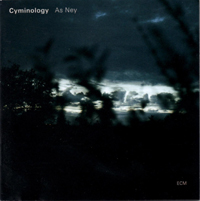 As Ney – Cyminology
This particular piece of writing by Rumi, the Persian mystic poet was the first poem of his to enter my consciousness, thanks to Richard & Linda Thompson. It is ‘The song of reed flute’ – ney meaning flute – and it set me off on a voyage of Sufi discovery. Linda Thompson gave enough of a steer for the next stage of the voyage. The main public library in Sutton had some books that contained writings about Jalāl ad-Dīn Muhammad Rūmī (1207-1273) and Rumi’s writings in translation. Thanks to Kavi Alexander, the head and body of Water Lily Acoustics, I was pointed to Coleman Barks’ interpretations.
Cyminology is a jazz quartet based in Germany, led by Cymin Samawatie, a German-born, bilingual singer of Iranian blood. The group was founded in Berlin in February 2002. The band’s recorded projects have included settings in non-traditional arrangements of medieval Persian mystical poets – not only Rumi but also Hafiz – through to the Farsi-language poetess Forugh Farrokhzād (1935-67) whose work was banned after the Islamic Revolution of the 1970s. Cyminology recontexualises As Ney beautifully. From An Ney (ECM 2084, 2009)
The Story That The Crow Told Me – Uncle John’s Band
This song originates from the Carolina Buddies and was later covered by the New Lost City Ramblers. The band here is John Cohen (vocal, banjo), Sue Draheim (fiddle), David Grisman (crow call) and Jody Stecher (guitar). After Draheim died, I listened to a lot of her recordings. This particular recording captures the silliness of life. And something about Sue Draheim’s fun side. From Stories The Crow Told Me (Acoustic Disc ACD-34, 1998)
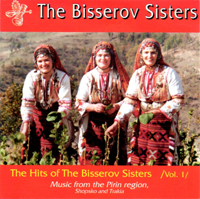
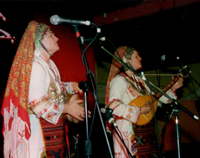 Elenko Mome Malenko – Bisserov Sisters
Of all the Bulgarian folk acts that it has been my unalloyed pleasure to see perform live, the Bisserov Sisters were the most inspiring. That may sound slightly heretic because there were acts with far bigger names, as far as most listeners would be concerned.
There was something about these three sisters – Lyubimka, Neda and Mitra – singing together that transfixed from the time they first crossed my path in the summer of 1991. Their vocal blend on this album is still chilling. From The Hits of The Bisserov Sisters/ Volume 1 (Bisserov Sisters & Co, no number, 1998)
Folk Dhun – Rais Khan
This recording of an unidentified folk air (dhun) performed by Rais Khan and his son Farhan Khan, each playing sitar, with Bashir Khan accompanying on tabla, is the final track on the sixth CD of a 12-CD boxed set of music from Pakistan’s art music community, a much neglected and undervalued segment of Pakistan’s arts. To a large extent, that strand of Pakistani art music has been almost totally overwhelmed by people’s fixation on qawwali as representing the nation’s art music.
This boxed set is an eye-opener. Even though this performance is folk-flavoured and is cut short (after two rāg performances), it captures Rais Khan, one of the greatest, most mellifluous sitarists of our age going strong and tastefully. From Indus Raag (Tehzeeb Foundation of Pakistan ISBN 978-969-97-46-00-0, 2012)
For more about the Tehzeeb Fundation visit http://tehzeebfoundation.org/
Snow Falls – The Home Service
This is one of the songs that I shall take to my grave. Its tune is a saucy steal – a glorious take on a variant of Dives and Lazarus – and its lyrics capture eras and generations of connections. It happened that back in 2012 I had to think really, really hard about this song overnight and what its lyrics and tune meant. I wrote a translation, but not just a translation but a singable translation of the song into German.
In doing that it meant not only translating the words and the sentiments but also trying to capture the folkloric associations that John Tams captured in his original lyrics. It is astonishing how the sharp-focussing by way of translation could heighten the impact of a song I had known for decades.
This is a recording made at the Cambridge Folk Festival in 1986. The Home Service was Jonathan Davie (electric bass and vocals), Howard Evans (trumpet and band glue), Andy Findon (saxophone, clarinet and flute), Michael Gregory (kit drums and percussion), Steve King (keyboards), John Tams (lead vocals, guitar strumming), Graeme Taylor (lead guitar, vocals) and Roger Williams (trombone). They made the most uplifting racket, though Snow Falls captures the silence of snow falling and Tams’ reflections about his grandmother. From Live 1986 (Fled’gling Records FLED3085, 2011)
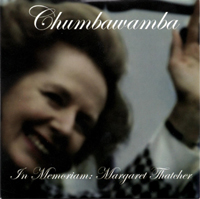 So Long, So Long – Chumbawamba
Made long ago, hence its vagueness in discographical terms, this seven-track piece of mischief was a prepaid subscription release that we bought as an act of blind faith, but bought as an act of hope. Frankly, it’s not the best song in the Chumbawamba canon, but it warmed the cockles of my heart.
This subscription release was sent out on the day that Margaret Thatcher died – 8 April 2013 – and arrived as an antidote to Creep Street and Parliament’s mealy-mouthed gushings about her. Let’s remember her this way.
In the meanwhile the Chumbas folded their hand (as mentioned in the March 2013 Giant Donut Discs)… From In Memoriam: Margaret Thatcher (No label, no number, undated [2013])
The copyright of all images lies with the respective photographers, companies and image-makers. The second Bisserov Sisters’ photograph is from their 1996 concert at The Spitz (1996-2007), near Old Spitalfields Market in London © Ken Hunt/Swing 51 Archives.
30. 4. 2013 |
read more...
 [by Ken Hunt, London] Another month filled with bunch of work-related listening patterns.
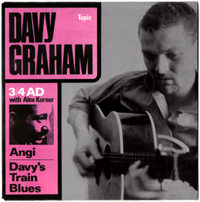 Angi – Davy Graham
Frequently the circumstances of hearing a particular piece of music are burned into our craniums, with a heavy dressing of associations. Angi (as it is spelled here) is an important piece of music in my life and yet I have not the foggiest notion of when I first heard Davy Graham’s performance. Almost certainly I heard it in a record shop and most likely it would have been either Collet’s or Dobell’s in London, the former an immense part of my musical education both in terms of what I fetched away from Collet’s both physically and intellectually. Where else was I going to get a chance to listen to Harry Cox or Anne Briggs or the Pinder Family? No high-street record shop stocked that stuff.
The vinyl EP 3/4 A.D. was still around for much of the 1960s. Indeed, it was re-pressed several times and, uniquely, for Topic issued with three different sleeves. All are reproduced in this EP’s inner artwork, though the only person I ever met (and I include Davey Graham himself here) who had all three was Gill Cook, the manageress of Collet’s folk department. Graham’s rite of passage for guitar was covered by Bert Jansch and Paul Simon. It’s probable that I heard their versions first. Angi launched many versions from many guitarists out to prove their prowess.
The limited edition vinyl reissue of Alexis Korner and Davy Graham’s 3/4 A.D. EP (originally Topic TOP 70, 1962) celebrates Record Store Day on 20 April 2013. Founded in 2007 in the States, the UK version of Record Store Daywas launched in 2013. It concentrates on the Britain’s independent record companies. This is one of the one-off vinyl and CD releases made exclusively for the day. In addition the celebration includes musicians making personal appearances and performances and other activities. More information at http://www.recordstoreday.co.uk
From 3/4 A.D. (Topic STOP2013, 2013)
Raga Marwa – Pannalal Ghosh
This is a studio recording from 1968 from Pannalal Ghosh, the flute player that transformed the place of the bansuri or transverse bamboo flute in Hindustani classical music. Put at its most simple, he recalibrated people’s appreciation of what the instrument could do and its consequent standing. And this Marwa interpretation of his gives of the raga’s essence so sweetly.
This particular recording originally appeared on the Odeon imprint of the Gramophone Company of India’s The Magic Flute of Pannalal Ghosh (MOAE 5006, 1968). From Greatest Flute Maestro (Saregama CDNF 150607, 2005)
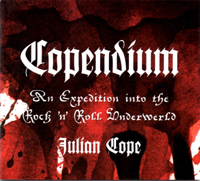 Einladung – A.R. & Machines
Julian Cope kicks off this triple-CD compilation with a piece by Lord Buckley (Supermarket from Way Out Humour, recorded in 1959) and that designates him immediately as a citizen of the Land of the Good Egg.
The same first disc includes a sequence of tracks under the suite name Einladung (‘Invitation’ or, more colloquially, ‘invite’). The “A.R.” of the title is Achim Reichel, a Hamburg-based musician whose music is totally to be admired. He is known to those of the Beatle-ish disposition as a major character in the tale of the Rattles, one of Hamburg’s great red-light district, the Reeperbahn’s beat combos, and a contemporary of the Beatles in their Hamburg daze..
This particular stream of tracks is a different sort of testimony to Hamburg and what goes on there. It is a stream of psychedelicised consciousness from 1972 that passed me by. It has a flow and energy to it that bespeaks its time at the beginning of the early 1970s. The suite has six sections, each with a title in German. Their titles here have English translations, some of which bear scant resemblance to the German. Those paraphrases may have been on the LP, Echo (1972) on which they originally appeared.
I met Achim Reichel only once – back in 2007. It was at a do after he was awarded a RUTH – der deutsche Weltmusikpreis (the German world-music prize, where Ruth is a ‘root’ soundalike) at Tanz&FolkFest Rudolstadt. His music director Frank Wulff blagged me in. He and I had collaborated on the booklet notes for the reissue of four of his previous folk band Ougenweide’s LPs for Bear Family and had been corresponding and fact-checking. Frank was aware of my Hamburg connections, introduced us and having lit the blue touch-paper gracefully retired.
Hamburgerisch is a strange concoction. It is not even a dialect in any usual sense of the word being a regional variant of a language. It is a language, the bedrock of which is Low German (Plattdeutsch), over which is laid High German (Hochdeutsch) – a philologically related yet different German language. These combine to make one of Germany’s major dialects but unusually they are born out of two separate languages. As Achim Reichel and I spoke, Hamburgerisch flecked with Platt swam to the surface. Some things or thoughts are, for example, easier to say and/or express in Platt. Others in Hochdeutsch... Hamburgerisch is particularly good after a skinful. Musically Einladung strikes me the same way, though that may sound silly or fanciful because there are no words here. It sounds Hamburg. I digress… Cope’s choice here is inspirational.
This is from triple-CD, organised – that should be the word – and marketed by Ace Records. Not sure about this release’s precise status, but I sincerely thank Julian Cope for introducing me to A.R. & Machines, a branch of Reichel’s musical back pages previously unknown to me. Warning: Drugs may have been consumed in creating this music and flying this plane… From Copendium (Faber and Faber, COPE 001, 2012)
Who Knows What Tomorrow May Bring? – Traffic
Not intentionally work avoidance while penning an article about The Watersons, but Disc II of the album’s expanded edition stayed playing in the background while writing. Before ‘anyone’ knew it this, live version, recorded at the Fillmore East, in November 1970 was playing. It would have been rude to stop it. From John Barleycorn Must Die (Universal-Island 533 241-1, 2011)
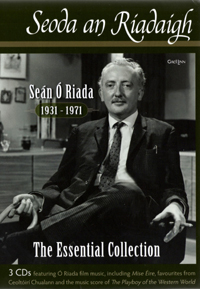 Mná na hÉireann – Ceoltóirí Chualann
This is arguably Seán Ó Riada’s best-known composition. Ó Riada (1931-1971) reinvigorated perceptions of what Ireland’s music could represent in an art music. Through the Chieftains this composition, the title of which translates as ‘Women of Ireland’, grew wings. This is an earlier interpretation with words. Seán Ó Sé sings. Research for another article under way… From Seoda an Ríadaígh (Gael Linn oriadacc06, 2011)
The Day The Nazi Died – Chumbawamba
This is a performance from one of Chumbawamba’s final performances, just before they called time on the endeavour. This is a cautionary tale about the slow-creep of the ultra-right. It was particularly well received by the audience in the Heine Park in Rudolstadt. It was an open-air venue and this song was particularly well received. As they sang, the connection between the Nazis suppression of Heine’s of Heine (rendering his poetry ‘Anon’) and the sentiments of this song were overpowering for me.
In the queue for watching is the Chumbas’ Going Gone (No Masters NMDVD01, 2013), filmed at Leeds City Varieties on Hallowe’en Night 2012 – “the last ever UK show”.
From TFF Rudolstadt 2012 (heideck HD20121, 2012)
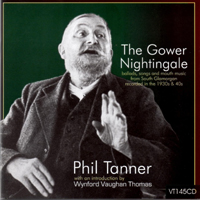 The Gower Wassail – Phil Tanner
This is a piece of music to which to return to recharge the glass. The clarity and clear-sightedness of Phil Tanner’s singing remains a source of wonderment and is a perennial reminder of how astonishing traditional songsters could be.
As an aside, the words “Within sound…” from The Gower Wassail supplied the title for the Shirley Collins’ boxed set of the same name released by Fledg’ling, released in 2002 and long since unavailable. From The Gower Nightingale (Veteran VT145CD, 2003)
To read more, the reprint of Doug Fraser’s appreciation of Phil Tanner, ‘Gower Garland – Phil Tanner, 1862-1950’ from the February/March 2000 edition of Taplas, the Voice of Folk in Wales go to http://www.folkwales.org.uk/arcgopt.html – that link links to further, er, links.
Oobe – The Orb
One of two pieces recorded in May 1992 (the other being titled No Fun). Listening to this ambient music was brought on by listening to Einladung, thinking about woodland birdcall along the Thames and that Lark In The Clear Air. It includes birdsong samples, too… (Rounding off this trawling from John Peel’s BBC archives are Montagne D’Or and Valley from February 1995.) From The Peel Sessions (Strange Fruit SFRCD138, 1996)
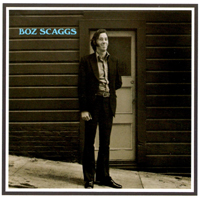 I’ll Be Long Gone – The Boz Scaggs
Boz Scaggs was not long out of the Steve Miller Band when this solo album emerged in 1969. It was recorded at Muscle Shoals Sound Studio in Sheffield, Alabama. Boz Scaggs predates his better-known, slicker hit albums such as Moments. Of which Charlie Burnham wrote when concluding its review in Rolling Stone in April 1971: “At any rate, since Moments, it is now my firm belief that when I die and go to heaven, floating on a cloud somewhere between Jimmie Rodgers and Mississippi John Hurt will be Boz Scaggs, singing the blues.”
Boz Scaggs slumbered, so to speak.
Purple prose to the rear, it was on this album that Boz Scaggs whipped the top off the tin. The accompanists were the cream of the crop. On this particular track, the background vocals of Jeannie Greene, Mary Holiday and Donna Thatcher (later Godchaux) were bolstered by Joyce Dunn, Tracy Nelson, Irma Routen. The album’s basic crew included Duane Allman on guitar, dobro and slide guitar, Barry Beckett on keyboards, Roger Hawkins on drums, and David Hood on electric bass. This particular song, a Scaggs original, is lyrically simple but the swell that they create caresses the heart strings. Beckett’s keyboard playing is majestic. (Like several members of the Muscle Shoals team he later did time in Traffic, but that is a story for another time.) From Boz Scaggs (Atlantic 19166-2, 1978)
The Lads In Their Hundreds – Quercus
Quercus – the Linnaean name for the oak genus – is the trio of June Tabor (vocals), Iain Ballamy (saxes) and Huw Warren (piano). This gem was recorded in concert in March 2006 and sat unreleased for years. This particular track leapt out at me. It is Ballamy’s arrangement of George Butterworth’s setting of A.E. Housman’s poem A Shropshire Lad (1887). It was a poem in my second-hand copy of Collected Poems (1939) and the rendition I knew was Benjamin Luxon’s from Six Songs from A Shropshire Lad… (Decca 468 802-2, 2001) with Sir Neville Marriner and Academy of St. Martin-in-the-Fields.
I chose The Lads In Their Hundreds for my political song column RPM for the March 2011 issue of R2. That short essay was written over the turn of the year in winter sunshine by the Thames. Part of the research entailed walking, as Butterworth had done, downriver from Richmond to Kew along the Thames. Just downstream from Isleworth Ait by Old Deer Park there are still the remnants of the medieval tidal and flood defences. On the opposite bank in what is Syon Park there are still some of the last unspoilt reed beds alongside the Thames with streams and rivulets that are more like leaks emptying into the river. Looking across, it felt much as it would have when Butterworth walked that stretch to Kew with a head full of Housman.
In the same period the Irish musician Christy Moore and I were doing one of our periodic interviews, on this occasion for an article that also appeared in that magazine’s same issue. In a sort of ‘what-you-been-up-to?’ way, I talked about Butterworth, dead at 31 in 1916, and Housman and tree creepers, nuthatches and ring-necked parakeets in the woodland along the Thames. Later in the interview proper, he spoke of rambling near to where he had grown up with a friend. “We were well into the heart of the bog and we lay down. We had a flask of tea and some sandwiches. We lay there in the gorse and we heard lark song. A lark was singing and it was the first time I’d ever heard a lark.”
All this was going through my head while listening to this most poignant interpretation. Quercus’ version is the icing on the cake and the first occasion of listening to it is already mentally logged and catalogued (unlike Angi). But it is a piece of music that later this year will be taking the same walk between Richmond and Kew along the Thames with a battered copy of Collected Poems that somebody probably loved before me. There will be a stop at Richmond Green and tanother at Kew Green for refreshment and some reflections about other lads “that will never be old”. And sundry associations. You get my drift. From Quercus (ECM 2276, 2013)
The copyright of all images lies with the respective photographers, companies and image-makers.
31. 3. 2013 |
read more...
 [by Ken Hunt, London] Another month filled with a musical diet of work-related listening with a smidgeon of lateral listening ideas and needs, preparation for future writings.
Happiness Is Drumming – Diga Rhythm Band
 February’s entire listening could easily have tilted into a rhythmic extravaganza. A great deal of related listening was done while writing an article about Pandit Kamalesh Maitra and wallowing in the beauty of tabla tarang.
This particular performance is an instrumental, wordless version of a song that the Grateful Dead made into Fire On The Mountain. From Diga Rhythm Band (Rykodisc RCD 10101, 1988)
Raga Charukeshi- Kamalesh Maitra
This live recording was made at the Haus der Kulturen der Welt (House of the Cultures of the World) on John-Foster-Dulles Allee in Berlin on 5 November 1993. On a visit to that arts centre’s shop, this album just sat winking at me from the music rack. Kamalesh Maitra (1924-2005) was a master musician. It is no disservice to either him or the man who employed him at critical stages in his development to say that he came out of the Uday Shankar school of playing.
Uday Shankar was one of the people who wrenched Indian dance and Indian music into the Twentieth century. He painted the backdrops against which many trained musicians learned to deliver traditional music in a new age for people with no grounding or appreciation of traditional styles of dance or music. A Bengali classical item might be programmed one away from a Rajasthani folk dance or melody. That slightly pan-Indian approach wasn’t taboo. Yet many would have believed it was athwart approved ways. This is an adopted South Indian ragam performed in the northern manner on tuned percussion in a melodic style. Kamalesh Maitra was phenomenal.
This was listening material while writing an article about Kamalesh Maitra and the tabla tarang – ‘wave of tabla’ – for the Spring 2013 issue of Pulse. From Tarang (Kamalesh Productions CD 9802, 1998)
Rusty – The Bonzo Dog Band
This hommage – a Frenchification any Bonzo Dog-ist would delight in pronouncing – to this song’s eponymous hero first appeared on Let’s Make Up And Be Friendly – never waste a pun – which was the Bonzos’ reunion/last throes. That album forms a substantial part of their retrospective collection Cornology on the album known as Dog Ends (dittoly punning). Enough of history.
Listening to this again was brought on by belatedly discovering that their guitarist Anthony White, known as Bubbles, truncated to Bubs, had died on 19 January 2013 in Coventry. A send-off from Coventry is something few would wish – being sent to Coventry is bad enough. One is reminded of Dave Swarbrick waking up to learn of his obituary in the Daily Telegraph and his quip – pretty good for a dead man – that “It’s not the first time I’ve died in Coventry.”
Lest this appear a gratuitous name-dropping or simply Telegraph-baiting, it was Swarbrick, one of musicians in Stinkfoot at the Bloomsbury Theatre in London – one of Viv Stanshall’s later stage scampers – who introduced me to the Blessed St. Viv. Swarb had vanished before the sweat of our handshake – Stanshall’s and mine – had had a chance to evaporate. Enough of perspiration.
Fabbo CD booklet notes from Brian Hogg. From Cornology (EMI 0777 7995952 5/CD DOG 1, 1992)
And not forgetting Neil Innes of the Bonzos: http://www.neilinnes.org/bonzo.htm
In the spirit of the Bonzos, please remember the annual festival of the beloved Father Ted: http://www.tedfest.org/
 Yār Pōi in rāgam Tōdi – T. Brinda
The South Indian classical vocalist T. Brinda is perhaps best known for her pupils such as the vocalist Aruna Sairam and the chitravina (or gottuvadyam) maestro Chitravina Ravikiran. That was recommendation enough to explore her recorded artistry. The search was not easy. This is one of several volumes of T. Brinda’s recorded legacy that eventually came to light on the internet.
This particular piece is a padam. The form is pretty austere. It is quite unlike most Karnatic performances that you will ever listen to. The first time I consciously can recall hearing the form in was on Aruna Sairam’s Inde du Sud: Padam, le Chant de Tanjore/South India: Padam, Tanjore Style of Singing (Ocora, 2000, reissued 2007). Padams are a form perfected in the Seventeenth Century CE by Kshetragna and are rather like slowed down kritis.
This music is back-listening after delivering an article about Chitravina Ravikiran and the chitravina for the Winter 2012 issue of Pulse. It’s a hangover of the recommendable kind. From Padams & Javalis (Swati Soft Solutions SA385, 2008)
Wooly Bully – Ry Cooder
A choice from a review in progress for fRoots. You review five, bordering on five-and-a-half hours of music at a trot and you may well have the expression ‘review in progress’ ringing round your head. That was then reinforced by watching the film Made In Degenham in which the original film.
Ry Cooder’s performance is from his 4 February 2011 performance at the Freight & Salvage Coffeehouse in Berkeley, CA. It was the first of three nights celebrating the 50th anniversary of Arhoolie Records – one of the great, great labels when it came to firing people’s imaginations and opening their heads.
It’s a crowd-pleaser, the sort of morsel that David Lindley, a long-time Cooder cohort, made his own after Sam The Sham And The Pharaohs had done with the song. From They All Played For Us (Arhoolie CD 540, 2012)
 The Partisan – Leonard Cohen
If not from the Sham ridiculous to the sublime, then to the political. This particular choice is a huge conflation of singer and song identities. It is a song that Cohen learned from a songbook on his second LP. It was one of the songs in The People’s Song Book (Boni and Gaer, New York, 1948), one of the primary texts in the blossoming of the North American political song movement.
One of the reasons for this choice of song was reading Sylvie Simmons’ I’m Your Man – The Life of Leonard Cohen (Jonathan Cape, London, 2012) for review. She adds an anecdote about producer Bob Johnston sloping off at one point in the recording sessions, only to reappear with the French-sounding vocalists and accordion section in the can. Cohen was impressed. It turned out that Johnston had gone to Paris. Cohen was sore that he hadn’t gone, too. Who would not have been cross?
Neither the album’s reissue nor I’m Your Man give personnel credits for the French musicians on this track. From Songs From A Room (Columbia/Legacy 88697 04740 2, 2007)
Comfort of Strangers – Beth Orton
Beth Orton was a discovery from following a trail from Bert Jansch. I’m not yet ready to write about, as in expound upon her. That time will come. This particular release includes another take of this song on the bonus five-track supplement called Comfort of Strangers # 9. I’m still dithering between the two. And that’s no bad thing. From Comfort of Strangers (EMI 353 401 2/094601 2 9, 2006) http://beth-orton.net/
 Zapiskej – Iva Bittová
Naturally, I’m biased. This is part of catching up with Iva Bittová’s 2012 releases. This particular track wraps up one of her performance pieces in a different setting with the Prague Philharmonic. The translation of the title is given as ‘Play My Pipe’. From Zvon (Animal Music ANI 032-2, 2012) http://www.bittova.com/
The Future – Leonard Cohen
Who wants to break the spell that music sometimes conjures? No over-thinking. No analysis. Surf the lines and revel in the Webb Sisters’ backing vocals and one of those arrangements that’s so natural and uncluttered. “When they said, ‘repent, repent,’ I wonder what they meant.” From Live In London Sony Music 88697405022, 2009)
 Rawlinson End – The Bonzo Dog Band
One thing leads to another. One of those remarkably obvious remarks sent to plague the living and keep the dead from moving on. Of all Viv Stanshall’s many comic creations nothing beat that which was to follow from this track. It grew and grew into the shades of Sir Henry at Rawlinson End. From a track on Let’s Make Up And Be Friendly and a nurturing by the broadcaster John Peel and an LP record and a film in 1980 starring the actor Trevor Howard as Sir Henry it just blooming well grew and blooming well grew. This is where it was born and weaned.
Stanshall’s tone and timing is to die for. “A livid ivy of broken veins stretched autumnal on his cheeks…” That is the over-proof poetry of parody.
Years ago, my old friend Michael Moser sent me a privately compiled set of the Rawlinson radio adventures from the BBC broadcasts. It is one of the greatest tragedies imaginable in this head of mine that Stanshall’s inspired idiocy has never been commercially released to my knowledge. It is the recipe for laughter of a strength to render a driver incapable of driving safely and to make other passengers on a train to move away.
I probably forgot to mention Brian Hogg’s fabbo CD booklet notes for Cornology whence this cometh. Hogg Minor credits our mutual friend John Platt (1952-2001) and his article about Stanshall in Comstock Lode as a source. Platt reckoned it was one of the finest interviews he ever did. But he was so full of blarney that he had to leave England for foreign shores the year after Cornology as released. He fetched up a migrant worker in the Untitled States. Now read on… From Cornology (EMI 0777 7995952 5/CD DOG 1, 1992)
…More reading in Lucian Randall and Chris Welch’s Ginger Geezer – The Life of Vivian Stanshall (Fourth Estate, London, 2001).
Roy Kelly’s obituary of John Platt from the Guardian of Friday, 18 May 2001 is at http://www.guardian.co.uk/news/2001/may/18/guardianobituaries
The copyright of all images lies with the respective photographers, companies and image-makers.
27. 2. 2013 |
read more...
 [by Ken Hunt, London] Once again it is that time of the year when thoughts of Robert Burns o’erflow, when conflations of memories evoking Cilla Fisher, Ray Fisher, Hamish Imlach, Dick Gaughan, Eddi Reader, Ewan MacColl and their kind flood in. Some of these choices have nothing to do with Burns or Burns Night on 25 January but all have a great deal to do with love, fond memory, the touch of the little death, ongoing work and work preparation and what survives.
 The Russian Jew – Elizabeth Stewart
An introduction from the singer Sam Lee during one of our conversations, the choice of this particular piece was nudged along by attending Tate Britain’s exhibition Pre-Raphaelites: Victorian Avant-Garde in January with an old friend (and occasional contributor to this website) Phil Wilson. One item in the exhibition, not the Jimmy Page loan of wall tapestries, was a piece of furniture painted with scenes from the Chaucer tale mentioned below.
This double CD by Elizabeth Stewart is full-proof Scots Traveller culture. Elizabeth Stewart, according to Alison McMorland’s extensive CD booklet notes, was born in May 1939 in Aberdeenshire in Scotland. She was raised in a hothouse environment for lore and music. She has a commanding voice, full of drive and energy.
This particular song is an upbeat one and in the grand old tradition of mishearing or misunderstanding something that has been sung instead of the less attractive and grand old tradition of anti-Jewish sentiment typified by The Prioress’s Tale in Chaucer’s Canterbury Tales or accounts involving Little Saint Hugh of Lincoln, such as Sam Lee’s singing of The Jew’s Garden on his notable Ground of its Own (2012).
The Russian Jew veers onto different tracks based on a mishearing of a mixed English and Scots Gaelic line. “Says I, ‘Ciamar a tha sibh an diugh?'”(“Says I, ‘How are you today?'”) got turned into “Says, ‘Here come a Russian Jew’.” Elizabeth Stewart’s is a lovely rendition.
Part of the initial research for an article to be written for publication later in 2013, itself feeding into a still longer-term project. From Binnorrie (Elphinstone Institute/University of Aberdeen EICD002, 2004)
Jamie Come Try Me – Eddi Reader
After a bit of introductory chinwaggery, Eddi Reader launched a fair few gigs around 2003 with this song. The particular rhetorical device in this song is that Burns is a little monkey speaking through the voice of a woman essentially asking for a male lover to enjoy her treats. As dissembling tricks go, it is rather good. As a song it is a phenomenal piece of theatre for a female singer and Eddi Reader gives it her very all. Her interpretation remains my most favourite. Plus I have never met a woman who did not enjoy the subterfuge and complicity of Burns’ song. It is great literature in a microcosm.
Eddi Reader improvises around these lyrics:
“Jamie, come try me,
Jamie, come try me!
If thou would be my love, Jamie
If thou would kiss me, love,
Wha [who] could espy thee?
If thou would be my love
Oh Jamie, Jamie, Jamie…”
And that is not even the end of the amorous musings.
The ensemble on this album is Reader on vocals and guitar, Christine Hanson on cello and vocals, Graham Henderson on accordion, whistle, mandolin, guitar and vocals, Boo Hewardine on guitar and vocals, John McCusker on fiddle and whistle and Colin Reid on guitar. From Live: London, UK 05.06.03 (Kufala KUF 3039, 2003)
Reading Liz Lochhead’s piece My Hero – Robert Burns might help to condense much about Burns: http://www.guardian.co.uk/books/2013/jan/25/my-hero-robert-burns-lochhead Aside from being appointed Scots Makar – the national poet for Scotland, she also worked with Mike Marra, one of those knotty Scots songwriters of the best sort. Her tribute appeared in the printed newspaper’s Review section on 26 January 2013 on page 5 if you wish to be pernickity.
La Muerte Chiquita – Kronos Quartet
From Burns to the ‘little death’.
David Harrington: “La Muerte Chiquita was something we recorded during the sessions for Kronos Caravan not intending that it would be on the album at all. Café Tacuba, the Mexican band, was releasing an album and asked us to be a part of it. So Osvaldo [Golijov] made an arrangement. We loved that piece so much and thought the sound of the arrangement and the melody line were so great. John [Sherba] and I were driving home from the recording session and we had this tape of some of the things that were going to be on the album. We took a tape of a run-through of La Muerte Chiquita and inserted it and it just worked perfectly. That’s how that ended up on the album.” – interview with Ken Hunt, 19 February 2000.
Of all the Kronos albums I never wrote CD booklet notes for, Nuevo remains the one I would most have loved to write them for. Just for the ride, for the education. From Nuevo (Nonesuch 7559 79649-2, 2002)
 What You Do With What You’ve Got – Eddi Reader
This particular choice is a huge conflation of singer and song identities. Dick Gaughan performed this song of Si Kahn’s at a folk club gig in Twickenham in November 2012. His performance summoned floods of memories.
The song articulates so much about how we view our fellows, how we treat them, and the unspoken how they view us. Si Kahn’s song has the strength, wisdom, humility and humanity of Burns. Wordy, yes, but not something said lightly. From the Dear John single (Blanco Y Negro 4509-98200-2, 1994)
Swing 51 – The David Grisman Quintet
The David Grisman Quintet at this point – circa 1977 – was Bill Amatneek (string bass), Darol Anger (violin), David Grisman (mandolin), Todd Phillips (mandolin) and Tony Rice (guitar). Tony Rice composed this tune and it affected me so much that I named a magazine after it. That magazine lasted for ten years. This tune has lasted far longer.
This particular version of the tune was one of the tracks cut between October and December 1976. Listening to the album wafts me back to other times and other people, especially Artie Traum who composed its Fish Scale. Swing 51’s title reconnects with Django Reinhardt compositions with titles such as Swing 39. The music of the David Grisman Quintet connected with so many acoustic music traditions. From The David Grisman Quintet (Kaleidoscope Records K-5, 1977, 1986)
 La Gitana – Banda Citta Ruvo Di Puglia
This CD has survived house moves, house clearances, deaths, freelance poverty and scratching to pay supermarket bills. I reviewed it at the time of its release for a now-defunct monthly called Classical CD. La Gitana (The Gypsy) is from Verdi’s Il Trovatore and it is a demotic instrumental interpretation of the aria. The album had preyed on my mind for a long while. Reading Alex Ross’ essay ‘Verdi’s Grip: Opera as Popular Art’ in Listen To This (Fourth Estate, 2010) was the catalyst for finally plucking this magnificent piece of Italian musical literature from the shelf. It still inspires. From La Banda (Enja ENJ 9326 22, 1997)
La Noviola – La Còr de la Plana
This magnificent band re-entered my life in 2011. They sing in Occitan – a language with ancient roots and a terroir that takes in the modern-day nations of France, Spain, Italy and Monaco. The band’s name – Lo Còr De La Plana – I take to mean ‘the heart of [Marselha’s] La Plaine [neighbourhood or quarter]’. ‘Heart’ rather than ‘choir’ – more cour than chour, if you wish. Marselha is Marseilles.
A knowledge of Occitan is not necessary. Or no more necessary than Les Charbonniers de l’enfer from Canada. Both are two of the finest practitioners of vocal interweavings and booted rhythmicality. From Tant Deman (Buda 3017530, 2007)
 The Spawn of Tony Blair – Robb Johnson
Robb Johnson sang this song, the opening blast from this album, at the Twickfolk folk club in Twickenham on 13 January 2013. In the time between cutting the song (at some unspecified date in 2012) and performing it live, it had grown far more muscular and assured. But this version from a limited edition release will have to do for now. Until a better one comes along.
Many people expected it of the Conservative Party. What Tony Blair and his island of Dr Moreau misbegottens did and do remains a stain on generations. The spawn of Tony Blair indeed. From Bah! Humbug! (Irregular Records, no number, 2012)
Love Is Strange/Stay – Jackson Browne & David Lindley
This pairing was a highlight of the concert tours that Jackson Browne and David Lindley with Tino on percussion. From Love Is Strange (Inside Recordings INRS111-0, 2010)
 Gonna Be An Engineer – Peggy Seeger
Peggy Seeger calls this arch little dart her “albatross” but that’s nobody’s fault but her own. (The chorus in the minor key is “No sympathy…”) After all, she made this song so good. This particular recording eluded me to the extent that I didn’t know of its existence. Generally I pride myself that I stay on track about what Peggy Seeger is doing. But 2012 was one of those strange years. The fact that it was in the air and flying about went way under my radar.
Gonna Be An Engineer remains the sort of statement that only a woman can deliver with true feeling. It’s about the Pigeon-hole Principle (distant relation to the Peter Principle). It’s about men dictating what women can do – though, if someone buys into the lie, it can no doubt be a self-inflicted wound. It is not inconceivable that a woman can wield the wounding instrument as well. Quite when this song entered my consciousness is long gone. Writing a feature article about her brought many things back into focus. By then we had had many conversations. Maybe the resultant article for R2 shows that. Maybe not. That’s for the readers eventually to judge.
This recording is from a fund-raiser for the Nelson Women’s Centre in Nelson, New Zealand on 27 February 2010 on the occasion of my mother’s birthday – though I suspect that was not planned. It was for a worthy cause. Fire and smoke had damaged the centre. From Live (Appleseed Recordings APR CD 1129, 2012)
More information at http://www.nelsonwomenscentre.org.nz/ and www.AppleseedMusic.com
The copyright of all images lies with the respective photographers, companies and image-makers.
31. 1. 2013 |
read more...
 [by Ken Hunt, London] When you get past a certain age (or succession of them) – usually they are pretty arbitrary but they come with a zero – you will be spoiled for musical nostalgia ideas. The one has a lot to do with thinking about rhymes, rhythms, mythologies and conversations. The music is from Lal Waterson, Peter Bellamy, Commander Cody & The LPA, Scarlett O’, Folk & Rackare. The Pogues, Muzsikás, Jiří Kleňha, Tom Waits and The Watersons. Last updated 28 September 2013.
 Christmas Is Now Drawing Near At Hand – Lal Waterson
The Watersons were one of the greatest groups to emerge from the English Folk Revival. Their singing had an uncanny surefootedness about it. This is solo performance by the youngest of the three siblings. “So proud and lofty do some people go,” she sings.
To this day, Lal’s singing remains a profound influence. There is a clear-sightedness to what does in this short piece. Here she sings unaccompanied on her own. It permits multiple glimpses or insights into what she could do alone. Usually she was an ensemble player. Here she just sings her stuff. A rich voice, a simple song with a moral born out of Christianity and socialism. It condemns showiness and pride, the latter not in a ‘before the fall’ sense, more in discovering humility and place. Its very simplicity speaks volumes. From A Yorkshire Christmas (Witchwood Media WMCD 2029, 2005)
Maria – Folk & Rackare
Folk och Rackare – Ulf Gruvberg, Jørn Jensen, Carin Kjellman and Trond Villa – were a Scandinavian folk band that concentrated on song rather than tune. That was unusual at the time. Also unusual was the fact that they were mixed-Scandinavian with both Norwegian and Swedish band members. Bernhard Hanneken, a decade a bit later the musical booker at Tanz&FolkFest Rudolstadt, first tipped off about them at the time of their Sonet (Sweden) LP Anno 1979, peculiarly released in 1979. Many years later, they reunited
Two years on, they released Stjärnhästen, meaning ‘Star horses’, from which Maria comes. It is a mixture of Christmastide and Yuletide material – it bridges the Christian and Yuletide. It is a remarkable treatment of seasonal song, reminiscent of the Watersons’ Frost And Fire. Ulf Gruvberg told me for the booklet notes to this 1996 anthology: “We had an influence. For instance, before each Christmas I get 10-15 phone calls from people singing in choirs wanting the staff-notated material of Stjärnhästen. I have to tell them that we don’t have that notated. We never notated our arrangements. We just sang until we liked what we heard. Then we froze that and went on.”
Stefan Nielsen adds the ice-crystal keyboards. The band temporarily reunited in 1996. And then they were gone. From Folk & Rackare – 1976-1985 (Resource Records RESCD 515, 1996)
 Fairytale of New York – The Pogues featuring Kirsty MacColl
The Philip Chevron-compiled The Pogues Box Set (Rhino, 2008) includes three demos of this song from 1986 (two with Elvis Costello in the producer’s chair) and 1987 that capture the arrangement coming together, with fluffs and touches inserted or tested out, and Kirsty MacColl turning into quite the vocal actress. This though is the bold final version.
In December 2011 this unlikely duet between Shane MacGowan and Kirsty MacColl was widely reported as being the most played festive song. The British licensing body PPL tallies plays in places such as shops, restaurants, gyms and pubs, in television plays and on radio. What a long way it’s come. A secular carol with no fake-spiritual message. From If I Should Fall From Grace With God (WEA 2292-44493-2, 1988)
Karácsonyi kántálás – Muzsikás
An ensemble piece from the Hungarian folk band that acted as my primer in Hungarian folk music from their 2011 Christmas album. From Csordapásztorok (Grylus Kiadó GCD 114, 2011)
Daddy’s Drinking Up Our Christmas – Commander Cody And His Lost Planet Airmen
There was something so other about Commander Cody And His Lost Planet Airmen regaling us with this song about coming Christmas apart somewhere in the United States. It begins with a peal of pedal steel playing Silent Night. Daddy collects his pay, cashes the cheque and goes on a binge. Another mistake is taking the car. It ends with pedal steel decking the holly. Sorry, decking the hall with boughs of holly… The LPA’s John Tichy is the writer. From the single with Honeysuckle Honey (DOT DOA-17487, 1973).
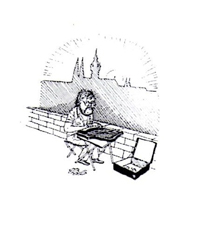
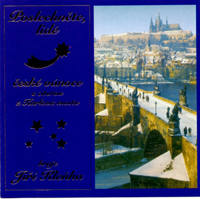 Tichá noc – Jiří Kleňha
Until 2006 Jiří Kleňha had a pitch on the eastern side of Prague’s Charles Bridge (Karlův most) from 16:00 to 19:00. He played an almost extinct and very obscure variety of chord zither called the Fischer’s Mandolinette. Over the years and on many occasions I stood and watched him play. His instrument was very weathered and frequently he did what buskers do and played enough to attract people’s attention, a short instrumental, and then took questions. There were always questions about the instrument. Over the years bought whatever recordings he had for sale. One time I walked David Harrington of the Kronos Quartet across the bridge from the castle side, hopeful that the musician would be there and he was, sat, as hoped, playing his Fischer’s Mandolinette in one of Prague’s great tourist traps.
This is the longest track – at 2:41 minutes – on the musician’s collection of Czech Christmas carol miniatures. Its grace and concision are astounding. In under three minutes he delivers everything that Silent Night should. It is a familiar tune and that is why his interpretation stands out all the more. After it, he finishes Poslechnčte lidé (‘Christmas songs’) with a half-minute of pealing bells – entitled simply Zvony (‘Bells’) – and those peals sound all the world like Christmas all over Europe. In the particular is a sense of the universal in a manner of speaking because they could be bells from so many continents.
For me, Kleňha was one of those street music surprises that we stumble upon. He wasn’t as flamboyant as tales of Moondog have it from those who encountered Moondog in New York City in his heyday – think about the tributes from Janis Joplin or Pentangle. Nor was he like Cologne’s Klaus der Geiger, a riveting street performer. He was the one and only Jiří Kleňha. I will never forget his brand of street music and his Fischer’s Mandolinette until my grey cells run dry. Long may he prosper. From Poslechnčte lidé (Own label, 1995)
For more information in Czech, English and Russian visit: http://www.aa.cz/citera/
Cancel Christmas – Scarlett O’ & Jürgen Ehle
No apologies about including a song of my own, a lyric set to music by Jürgen Ehle. It’s that time of the year. The lyric came in rush while driving to interview June Tabor for the Always boxed set notes. It was a bright sunny day, the narrow, two-lane cross-country roads were relatively traffic-free and I pulled over at an overtaking pull-in and scribbled down the refrain. Minutes later the rest gushed out and I pulled off the road again as soon as there was a safe place to park. A quick and painless delivery. Unlike the subject matter. It’s a song about bereavement, about the chasm between the bereaved and the unbereaved at the time of the first Christmas after the death of a loved one.
The movie it’s running is like watching the River Vltava flowing in your head while listening to the Vltava movement of Smetana’s Má Vlast and then getting some halfwit chattering inanely about the Bay City Rollers and their “sugar baby love”. It’s an overload of the unwanted. It’s that first Christmas in particular when prattling on flows noisily all around you.
There were two triggers. Scarlett O’ and Jürgen Ehle were putting together a project of material relating to Christmas. They mentioned wanting something original in English. That coincided with a friend’s death. I put two and two together, subtracted one and made three. From Gans ohne Tannenbaum (Electrocadero ELT001, 2005)
More information at http://www.scarlett-o.de/
and http://www.juergen-ehle.de/
Saint Stephen – Peter Bellamy
Ah, Peter Bellamy, the Marmite folksinger supreme. People loved his singing or loathed it. I fell into the first category. This is from the first solo album he released after the break-up of the Young Tradition (as opposed to his first solo album). It’s a song given the full Bellamy treatment with lyrics from here and melody from there. Saint Stephen is a ballad heard by the British engineer, politician, antiquarian and writer Davies Gilbert (1767-1839) in the town of Bodmin in Cornwall. He included it in what Bert Lloyd’s notes to this LP call “the pioneer modern carol compilation”, the 1822 Collection of Christmas Carols.
The internet gives its fuller title as Some ancient Christmas Carols, with the Tunes to which they were formerly sung in the West of England. Collected by D. Gilbert. To add to the confusion in the Oxford Dictionary of National Biography his entry by David Philip Miller it states, “Gilbert collaborated with William Sandys on a collection of Cornish ballad carols, part of the oral tradition which he saw in danger of disappearing. Their Christmas Carols Ancient and Modern (1822) set the agenda for the rediscovery of this ancient form.” No matter. It is the Peter Bellamy version here. From The Fox Jumps Over The Parson’s Gate (Topic 12T200, TSDL200, 2013)
New Year’s Eve – Tom Waits
This song has a full contingent of Waitsian characters. The first one we meet is Irvine, whose name happens to end-rhyme with the disturbing of the previous line. The narrator cannot find him and Irving figuratively exits stage right before he’s even entered this Fairytale of Hogmanay. Other characters get name-checked. Nick, Socorro, Candice, Ray, Fin and others. One would not be surprised if Mr Waits had not had a crafty tipple and a listen to Shane and Kirsty. But I’ve been wrong before. A Hogmanay carol with no houghmagandie (Scots: ‘fornication’) content that I can tell. From Bad As Me (Anti 87177-2, 2012)
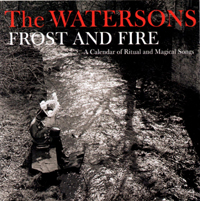 Here We Come A-Wassailing – The Watersons
This song concerns that mysterious folk custom of wassailing. The custom was puzzling enough when Frost And Fire came out in 1965. The album was subtitled “A Calendar of Ritual and Magical Songs” and its impact went far beyond folk circles. It profoundly affected more than one generation with its tales of ritual magic such as wassailing. In this midwinter song they are singing for their sup and plate and in return they bring luck and the hope of summer’s bounty.
It was an exceeding paradox how the Watersons did what they did. For one, it was extraordinarily hard to determine from the recordswho was doing what as they sang. Their singing foxed neat analysis with inversions from the expected or predictable. It was if the fox, rather than the hunters, was laying down a false trail. It only attained any degree of transparency when seeing them live. Lip-reading took on new importance. Only by watching them could you fathom who was singing what. Even then it was difficult. Lal, Mike and Norma shared what they sang. With Lal and Mike in particular that might even go so far as them making syllables that combined made a whole complete word.
“And we wish you, send you a happy new year.” From Frost And Fire (Topic TSCD563, 1965)
The copyright of all images lies with the respective photographers, companies and image-makers.
15. 12. 2012 |
read more...
« Later articles
Older articles »