Giant Donut Discs
 [by Ken Hunt, London] The glories of work-related listening and escaping from the same know no bounds. This month’s special deliveries come from Abdulkarim Raas & Kuljit Bhamra, Joan Armatrading, The Fraser Sisters, Katy Carr, Sam Lee, Bert Jansch, Roy Bailey, Sandy Denny, The Owl Service and Miya Masaoka & Joan Jeanrenaud.
 Hobey Hobey Heleyoy – Abdulkarim Raas & Kuljit Bhamra
As befits its main participants’ mixture of Somali, Punjabi and Indian expat East African elements, Hobey Hobey Heleyoy (‘Come Sing And Dance’), the opening track of one of the albums released in 2012 that has given me the most food for thought, delivers an assortment of Punjabi and Somali elements. It brings together two diaspora cultures – well, two-and-a-half or three – that have settled to the west of London in Southall.
Its completely joyous sound reminds why, of all the limited number of countries I have ever visited, Britain’s albeit flawed or blemished multiculturalism continues to inspire me. Southall is Little Punjab meets Little Mogadishu. What it will become is another matter altogether.
The colourful front cover artwork has party images – a few balloons on strings with a background of a blue sky with whispy cloud. Its design could function sadly like some warning avoidance signal. Actually, don’t be daunted or put off. Just stick a brown bag over the packaging and rejoice in the music within. Just go with Hobey Hobey Heleyoy. A more detailed appraisal of Somali Party Southall appears in the Winter 2012 issue of Pulse. From Somali Party Southall (Keda KEDCD33, 2012)
Love And Affection – Joan Armatrading
There I was keying minor corrections to an article with the television on and the volume way, way down. Not a top tip, despite the low volume hint, unless you’ve learned to filter out distractions.
Mariella’s Book Show from the 2012 Cheltenham Literary Festival was on. Mariella Frostrup announced that Joan Armatrading was going to sing. In due course she did, picking this fine song to sing solo to her own guitar accompaniment.
Down the years I have not been sedulous about following Armatrading’s career. It’s been reviewing commissions that have kept me apace with her work – and they have left big gaps in my knowledge of her career’s trajectory. This particular version of her well-known songs was one of two live performances on the figurative B-side of a CD single. More Than One Kind of Love and Good Times were the lead, figurative A-side tracks.
Its Love And Affection was recorded at the Hammersmith Odeon on 1 October 1988. It is a band version and the band has a very big sound. It’s not my favourite version so just blame Mariella Frostrup and Joan Armatrading and the effect of their voices. From the More Than One Kind of Love single (A&M AMCD 561, 1990)
 Mała Little Flower/Mała, mały Kwiatuszek – Katy Carr
The London-based songwriter Katy Carr was born in Nottingham (of Sherwood Forest, Robin Hood, Anne Briggs and Roy Harris fame) to a Polish mother and Anglo-Scottish father. She and I met about a decade ago at a Record Collector do in Ealing to the west of London. We spoke a fair bit. At that point she had released either one or two albums or was between Screwing Lies (2001) and Passion Play (2003). Beyond those albums’ good lines in erotic themes and dreams, her songs handled the aforementioned subtly, tastefully and naughtily.
Paszport, her fourth album, with its Anglo-Polish and macaronic English and Polish songs, did not soar out of the blue because its Kommander’s Car was trailed on Coquette (2009). It was a song that she wrote as a consequence of meeting Kazimierz ‘Kazik’ Piechowski. He had escaped Auschwitz in 1942 masquerading as a German officer.
Mała Little Flower works beautifully. Mała meaning ‘small’ acts as a form of emphasis (in a small, small way), works as a macaronic trick and allows a mała/flower rhyme. From Paszport (Deluce Recordings MDL 414, 2012)
More at www.katycarr.com where you will also learn more about Mała Little Flower itself.
A Stitch In Time – Fi Fraser and Jo Freya
This is one of the finest interpretations of a Mike Waterson song that grew legs. Rescued from oblivion by his brother-in-law Martin Carthy, since Mike was rather slapdash about remembering his own songs, happily singing them, then often moving on to another song and completely forgetting what he’d previously composed, this is tale supposedly based on a real-life incident. It is about wife-beating and a wife’s revenge.
Frequently I write many, many months in advance of anything appearing in print. Depending on when you read this, this song was or will be an example of that. Fi Fraser and Jo Freya’s version of the song was one of those deals. After Carthy the song went on to be covered by Peggy Seeger, Grace Notes, Chumbawamba, Christy Moore, My Prior & The Girls, Lucy Ward and, no doubt, still more interpreters that currently skip my mind. This interpretation is definitely from The Fraser Sisters (No Masters NMCD12, 1998)
 Go Your Own Way My Love – Sandy Denny
Here Sandy Denny records a version of Annie Briggs’ song on this 75-track, 4-CD boxed set, itself extracted from the earlier 19-CD boxed set called Sandy Denny (illustrated here), released in 2010 in an edition of 3000 copies. This is the 2012 release. The artwork on both Sandy Denny (2010) and The Notes And The Words (2012) summons a combination of Mucha and Kelley-Mouse.
Anne Briggs was an important influence on Sandy Denny. Denny later wrote the song The Pond And The Stream about her. It was an important relationship for both of them. Denny’s performance is pretty faithful to Annie Briggs’ own on her Anne Briggs (Topic, 1971). Bert Jansch was one of the first musicians to cover this song helping it to gain wider currency. The pivotal line – and clearly Denny and Jansch recognised this from their delivery and the accentuated tone of their voice – was “I want to die…” From The Notes And The Words – A Collection of Demos And Rarities (Island Records 371 246-9, 2012)
On Yonder Hill – Sam Lee
One continues to follow Sam Lee’s progress and development with interest, doesn’t one? He is tackling traditional Anglo-Scottish material in a most interesting fashion – nothing arch intended by the use of ‘interesting’. This is one of the British tradition’s many hare songs. Here though the hare is not a sexual metaphor of the Bonny Black Hare form.
Sam Lee’s arrangement strays from what most would consider the traditional with trumpet (Steve Chadwick) and tuned tank drums (Saul Eisenberg). It makes for a most excellent sound from one of the albums of 2012. From Ground of its Own (TNCR001CD, 2012)
Upcoming musical activities from Sam Lee and James McDonald can be read at www.songcollectorscollective.co.uk
 Fine Horseman – The Owl Service
This song was pretty irresistible. It is a song written by Lal Waterson, a voice I miss beyond anything I’m prepared to put on the historical record. That applies to her singing as a member of the Watersons, the Waterdaughters, working with her brother Mike Waterson or her son Oliver Knight. Or Lal just phoning to chitchat about the weather or talk about mutual friends, folk music or recipes.
The Rif Mountain Collective and The Owl Service disbanded in 2012. They were a musical collective I never had the opportunity to listen to, let alone review. This album arrived out of the blue. This is their take on a song that Annie Briggs filched brazenly from under Lal Waterson’s nose before Lal had even finished writing it. The Owl Service does it well, keeping close to Lal and Mike Waterson’s arrangement on Bright Phoebus (Trailer, 1972).
Stone Tape Recordings is Steven Collins’ new endeavour. From Garland Sessions (Stone Tape Recordings STR-002, 2012)
More information at http://www.stonetaperecordings.co.uk/
Old Man’s Tale – Roy Bailey
This is a song from the pen of Ian Campbell (1933-2012). It is a sociological document knitting together the yarn of fragmented memories. This very British lattice takes the form of individuals recalling what happened to their families beginning with the Boer War to some point in the late Twentieth Century. There were two Boer Wars which pitted the British Empire against the Afrikaans settlers of South Africa between 1880-1881 and 1899-1902, hence their alternative title of Vryheidsoorloë, meaning ‘freedom wars’ in Afrikaans. Old Man’s Tale takes in the consequences of war, chronicling the Depression, the rise of fascism, the poverty and imperialism boomerangs and the freedom wars, some real, most not that never or only partially deliver what the all-purpose, panacea-promising politicians try to sell them as.
Roy Bailey told me that Ian Campbell had put the song together after talking to people who shared their memories with him. His trick was to take the factual and make it into one family’s story. The truth is in the fiction. Accompanying and realising the truth are John Kirkpatrick on squeezy instruments, Martin Simpson on guitar, Donald Grant on fiddle and Andy Steward on bass. Bailey sings with his typical understated passion and intellectual growl. From Below The Radar (Fuse Records (Sheffield) CFCD407, 2009)
More information at http://roybailey.net/
 For Birds, Planes & Cello – Miya Masaoka & Joan Jeanrenaud
This 54:25 ambient sound cycle brings together bird song under the flight path in San Diego and the former Kronos Quartet cellist Joan Jeanrenaud. Currents flow through these columns, sometimes deliberate, sometimes subconscious. This falls into the former category.
The field recordings were made by Marcos Fernandes and Miya Masaoka in March 2004 and the piece was premiered that month at the Heathlands Center for the Arts in Sausalito, just north of the San Francisco Bay Bridge. Jeanrenaud’s cello draws on the actuality recordings and draws out the timbres from the recordings.
For previous avian-aeronautical-musical connections from the Giant Donut Discs treasury of recorded sound, try Giant Donut Discs’ Exhibit A – Singing Nightingales and RAF Bombers from August 2012. From For Birds, Planes & Cello (Solitary B SB-002, 2005)
More information at http://www.miyamasaoka.com
And http://kenhunt.doruzka.com/index.php/giant-donut-discs-%c2%ae-august-2012/
Strolling Down The Highway – Bert Jansch
Bert Jansch died on 5 October 2011. One year on from his death, untold thousands of words have been written about him and his music. This was one of Bert’s best known songs. It’s a young man’s song and reflects a different era, a time when rambling was all in vogue, when a young man could hitch from Edinburgh to London for a gig or from one side of Europe to the other and when it was pretty much safe to do so. It was a song in the Woody Guthrie, Alex Campbell and beat mould, from a time when we were believing hard, from his debut LP recorded by Bill Leader in 1965. A very good young man’s song. Alex Campbell sang it as well. From Bert Jansch (Castle CMRCD204, 2001)
Ken Hunt’s obituary of Bert Jansch from The Independent of 6 October 2011 can be read at http://www.independent.co.uk/news/obituaries/bert-jansch-guitarist-whose-style-influenced-his-peers-across-five-decades-2366017.html
The copyright of all images lies with the respective photographers, companies and image-makers.
30. 11. 2012 |
read more...
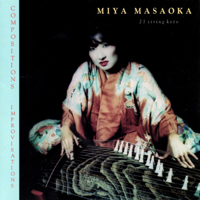 [by Ken Hunt, London] Miya Masaoka, The Chieftains, Getatchew Mekuria & The Ex & Friends, Harpo Marx, Gee En Tong, Barb Jungr, the Carolina Chocolate Drops, Josef Režný, Serafina Steer and Kala Ramnath are the musicians who conjure and provide the fun this month, as ever much of it work-related or work avoidance-related.
 Come Sunday – Miya Masaoka
Her website biography begins: “Miya Masaoka, musician, composer, performance artist, has created works for koto, laser interfaces, laptop and video and written scores for ensembles, chamber orchestras and mixed choirs. In her performance pieces she has investigated the sound and movement of insects, as well as the physiological responses of plants, the human brain, and her own body. Within these varied contexts of sound, music and nature, her performance work emphasizes the interactive, live nature of improvisation, and reflects an individual, contemporary expression of Japanese gagaku aural gesturalism.”
This is Miya Masaoka from a long time ago, interpreting the Duke Ellington composition Come Sunday “written for Mahalia Jackson inspired by the twenty-third Psalm”. For non-Christians, that is the golden oldie beginning “The Lord is my Shepherd I shall not want./He maketh me to lie down in green pastures: He leadeth me beside the still waters.”
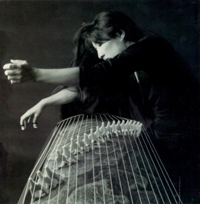
Miya Masaoka interprets it for solo koto. The notes explain: “The solo follows the harmonic structure of the piece.” Her interpretation goes deep, like applied gagaku, like wine rolled round the mouth. Visit Miya Masaoka’s website’s homepage for a better mental picture of her instrument’s visual splendour. It is the same instrument as Kim Stringfellow photographed for the album artwork. Miya Masaoka’s music was a tip-off the US guitarist and improviser Henry Kaiser, an introduction for which I thank him most profoundly. From Compositions + Improvisations (Asian Improv Records AIR00014, 1993)
More information about Miya Masaoka at http://www.miyamasaoka.com/
Kim Stringfellow’s evocative imagery of Miya Masaoka and her koto on this album was a really big help – that is not faint praise – in weighing up what was before me then and is before me now. Her website is at http://www.kimstringfellow.com/
The Foxhunt – The Chieftains
When I hopped on the ride between The Chieftains 3 (1971) and The Chieftains 4 (1973), the Chieftains’ merry-go-round had been spinning for a fair few years. This particular track from their pre-Derek Bell line-up is a fantasia on the theme of fox-hunting put together by their uilleann piper and tin-whistle player Paddy Moloney. His suite races across tough terrain in a most marvellous way. From The Chieftains 2 (Claddagh/Atlantic 83322-2, 1969)
Bati – Getatchew Mekuria & The Ex & Friends
This is not the most obvious track to select from this liaison of musical derring-do. (The most obvious one would probably be Tezeta.) Yet Bati captures the coiled musical tensions and strainings at the leash that this marvellous musical collaboration produced.
Getatchew Mekuria plays tenor saxophone in a mid-tempo Ethiopian groove that The Ex support and deliver so sinuously. It is a masterpiece of empathetic playing.
Given the ripples that run through The Ex’s personnel, The Ex on this album are: Arnold de Boer (trumpet), Andy Moor (guitar), Terrie Hessels (guitar) and Katherina Bornefeld (drums).
In December 2012 The Ex celebrates their 33⅓ Anniversary with three bespoke Ex fests in London, Paris and Amsterdam.
From Y’Anbessaw Tezeta (Terp Records AS 21/22, 2012)
More information at www.theex.nl and www.terprecords.nl
Harpo Woogie – Harpo Marx
Yes, the same Harpo Marx, the one in the dubious fright wig, the one who communicated wordlessly with horn honking, harp and bulging eyes in motion pictures! This is a headlong dash of a piece (with added xylophone) from the Mercury album Harpo At Work! long-player. (Or was that Harpo At Work? – it varied.) In his autobiography, Harpo Speaks he wrote, “When I sit down to play the harp in the Marx Brothers films, you are seeing the real Harpo Marx.”
An exhilarating rush of a piece from a marvellous triple-disc anthology of harp music that also includes Germany’s Rüdiger Oppermann, Brazil’s Christa Braga, Burma’s Saw Takah Wah, Ireland’s Paul Dooley, Paraguay’s Félix Pérez Cardozo and Brittany’s Alan Stivell. From Magic Harp (NoEthno 1012-14, 2011)
More information at www.noethno.de
 Oo Hoo Yu (Parts 1 and 2) – Gee En Tong
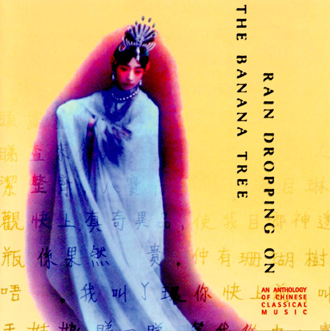
Strange are the paths… Reviewing this album at the time of its release, I loaned its CD booklet and all sorts of artwork to Classic CD, only to have the magazine go down the tube. Consequently, never got any of the artwork back. Without this booklet’s notes, along went the details of what was on this album of recordings made between 1902 and 1930 in China and the United States. Eventually, I located a second copy of the album.
This particular piece of music dates to around 1928. Its title translates as ‘Wandering the five lakes’ and it has a modern classical feel to it. Admittedly that may be down to technological restrictions. The notes do not explain much. Its musicians are from Amoy province (a name borrowed for condiments) to the west of Guangzhou to the northwest of modern-day Hong Kong. (Guangzhou was also known historically as Canton or Kwangchow and is one of China’s largest cities as well as the capital of the Republic’s Guangdong province.)
Part 1 in particular has a processional rather than a pilgrimage feel to it. The instrumental continues in Part 2, picking up in tempo. What is not so much disappointing as intriguing is how the recording simply cuts off. It is in contrast to the British Raj-era recordings of instrumentalists and singers that have come down to us. In them the musicians turn the track – maybe an entire raga exposition – around within the confines and capabilities of 78 rpm technology. Here it simply gets chopped mid-note. Maybe that speaks about the greenness of the performers before the microphone. Maybe that is to do with the recordists or technicians. No matter, it is the music that counts. From Rain Dropping On The Banana Tree (Rounder CD 1125, 1996)
Old Man – Barb Jungr
In his autobiography, Waging Heavy Peace (2012), Neil Young observes that he wrote the song about his ranch foreman Louis Avila on the Broken Arrow Ranch. “…I wrote the song Old Man about Louis. My dad thought it was written for him, and I never told him it wasn’t, because songs are for whoever receives them.” It’s one of those songs that grew wings and flew.
Barb Jungr is a true vocal artist of the kind where the singer does not get in the way of the song. The song’s the thing. This particular interpretation places “keyboard queen” Jenny Carr’s piano well to the fore in the mix. Neville Malcolm’s double-bass and Rod Youngs’ drums (with a good deal of brushwork) provide the understated underpinning. She wears her influences lightly even when she adds harmonica. From Stockport To Memphis (Naim Audio Ltd naimcd179, 2012)
Country Girl – Carolina Chocolate Drops
“Rhiannon wrote this after traveling all over the world with the Chocolate Drops and not finding anything better than her home turf in North Carolina she still lives in the town she was born in, Greensboro.” That was way the track is described in the booklet notes.
It is one of the finest original compositions in the Choc Drops’ current repertoire. (The complete credits are Rhiannon Giddens, Lalenja and Adam Matta.) It’s an evocation and unapologetic celebration of homeways, family and roots. Judging by their performance of it at the Shepherds Bush Empire in October 2012, in concert it is getting ever more muscular and nuanced. From Leaving Eden (Nonesuch 7559-78627-1, 2012)
 V Strakonicich Za Voltářem – Josef Režný
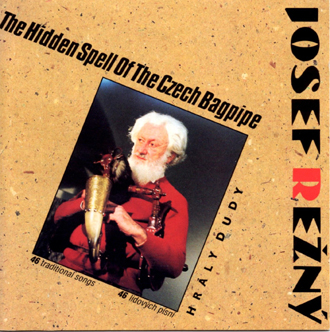
The Czech bagpipe player Josef Režný was one of many musical introductions effected through Petr Dorůžka. As he handed me the then-new, now out-of-print CD, he redubbed it The Hidden Smell of the Czech Bagpipe. The cut of his jib and his schoolboy humour appealed to me instantly and immensely. We signed a blood pact on the spot that should anyone ever invent the internet that we would co-host a website (whatever that was). And thus it came to pass. Pivo (beer) and toasts may have been involved.
Born in February 1924, Josef Režný is one of the very most important pipers to come out of Europe. He has been a trailblazer not only for dudy – Czech for bagpipes – but the wider dissemination of bagpipe music across Europe. Notably this has been through his work at and for the International Bagpipe Festival – Mezinárodní dudácký festival – held every other year in the Southern Bohemian town of Strakonice. He also appears in the 2007 film Call of Dudy: Bohemian Bagpipes Across Borders, co-directed by Radim Spacek, Jeffrey Brown and Keith Jones.
This particular piece of Strakonice-rooted music finds him accompanying a female choir. His filigree playing is a wonder, especially during the instrumental introduction and valediction. At under two minutes in length it distils so much as I understand it of Bohemian folk music. From The Hidden Spell of the Czech Bagpipe/Hrády Dudy (Bonton 71 0129-2 711, 1993)
 Skinny Dipping – Serafina Steer
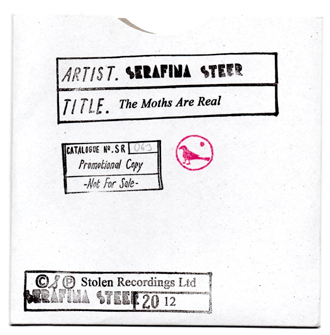
The title track of the upcoming album produced by Jarvis Cocker. Never heard Serafina Steer before. Never heard of her before. No idea if this music will stick around. That’s part of the thrill. She plays harp and sings. Since it is a white label advance copy the bigger picture eludes. So far, so good. Right now it is the combination of voice and harp and lyrics that intrigue. From The Moths Are Real (Stolen Recordings SR 063, 2013)
More information at http://www.serafinasteer.com/
Bhatiyar – Kala Ramnath
This is the ‘concluding’ performance in a two-CD companion set of raga recordings that trace a cycle of dawn to dusk and dusk to dawn. This particular raga concludes the four to six am shift. On it the Hindustani violinist is accompanied by Subhankar on tabla. Kala Ramnath’s is a most spirited performance – enough to wake the dead. From Aavartan – Musical Odyssey- 2 Dusk to Dawn (Kalashree no number, 2012)
More information at http://www.kalaramnath.com/
The copyright of all images lies with the respective photographers, companies and image-makers.
30. 10. 2012 |
read more...
 [by Ken Hunt, London] Séamus Ennis, Yasmin Levy, Maria Doyle Kennedy, Peter Bellamy, David Crosby & Graham Nash, Crosby, Stills & Nash, The Everly Brothers, Marty Robbins, the Grateful Dead and Leonard Cohen populate the isle this month.
Reels: The Mountain Lark/The Sligo Maid’s Lament/The Flax In Bloom – Séamus Ennis
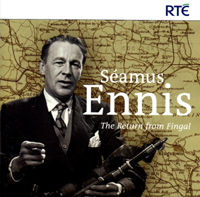 Along with Paddy Moloney of the Chieftains (born 1938) and Willy Clancy (1918-1973), Séamus Ennis (1919-1982) was the musician most instrumental in turning me on to uilleann pipes – Ireland’s elbow pipes or píobaí uilleann so named since an elbow pumps the bellows. They started me on a voyage of discovery that continues to the present day that has involved looking backwards to Leo Rowsome (1903-1970) and forwards to Liam O’Flynn (born 1945).
I chanced upon this album of vintage recordings captured between 1940 and 1978 in December 2005. Wandering around Limerick the day after interviewing Christy Moore and Declan Sinnott, I went into the curiously named Empire Music – well, that’s how it sounded to me. There sat in one of one of racks was The Return from Fingal just smiling at me and bent on beckoning the euros out of my wallet. It was not a bad exchange. Quite the contrary. It brought what I consider the finest album – two CDs’ worth thereof – into my life. This medley is one of those Ennis performances that so typically uplifts the spirits, grabs the attention and haunts the memory. Séamus Ennis died on 5 October 1982. From The Return from Fingal (RTÉ RTED199, 2004)
Firuze – Yasmin Levy
Firuze (a name, possibly Turquoise) is one of the outstanding tracks on Yasmin Levy’s October 2012 release, produced by Ben Mandelson. Much of the album, recorded in Tel Aviv, has big production numbers. Prominent in the mix on this particular track are Yechiel Hasson’s nylon-strung guitar, a post-Egyptian film music-style string section and percussion. It is a gem of a piece. Ben Mandelson produced. From Libertad (World Village 450023, 2012)
More information at http://www.yasminlevy.net/
The Most Beautiful People Are Broken – Maria Doyle Kennedy
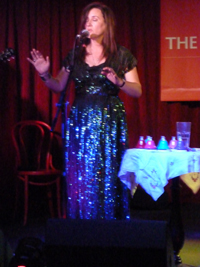
Maria Doyle Kennedy is a singer and actor born, raised and based in Eire. Before seeing her perform at the Half Moon in Putney in south-west London on 4 September 2012 supporting Martin Carthy & Dave Swarbrick, I knew little more than nothing about her acting and singing. Sean McGhee, the editor of R2 had alerted me about her and reeled off a list of acting appearances in The Commitments, Queer as Folk, The Tudors and Downton Abbey. In the spirit of adventure and most especially Father Ted, I deliberately did no research before the gig. It was going to be a blank-canvas concert.
She performed this song at the gig. It has this great opening lyrical gambit, “She was a diamond/He was a miner…” She announced the song with the words, “Life is not perfect but that’s OK.” I have no idea what sparked writing and fashioning this song. Neither did I ask her or her husband Kieran Kennedy – who was accompanying her – afterwards. Yet even on first pass I read several layers of interpretation into this song born out of personal life experiences. May well have been wrong, especially if I misheard words. We all mine songs for personal meaning or sometimes we just let the sound flow over us. Once a song’s sung it’s set free and starts a new life. I like the life in this song.
The photograph of Maria Doyle Kennedy isn’t much, but it captures the concert’s mood. From Sing (Mermaid Productions MPCD23, 2012)
Tommy – Peter Bellamy
Pete Bellamy made the original Barrack Room Ballads in 1977, an album of Rudyard Kipling settings that Bill Leader produced. He recorded this particular song accompanying himself on Anglo-concertina. It was the first of his ‘Rud the Kip’ settings that turned my head. Pete made me think again about Kipling and rethink about how I had pigeon-holed him in some post-imperial box.
This song makes me think about soldiering and soldiers. It is a song about how the members of the public view and, more importantly, treat the armed services that politicians send off to war in our name. Which is, parenthetically, why many will never forgive Tony Bliar who dispatched so many.
One resurrected US soap Dallas made use of a glib platitude: “I don’t believe in the war but I believe in the warrior.” Kipling’s soldier is Tommy Atkins the Cipher. The Tommy of this song is the precursor of Buffy Sainte-Marie’s Universal Soldier. But Kipling’s is a transferrable, sadly ever more transferrable text and truth. It could refer to a veteran from any number of wars. Tommy’s omni-directional sentiments could also stand for those that went out to Algeria, Vietman, the Falklands, Iraq, Afghanistan and ever onwards. Above all, Tommy is about double standards.
Pete Bellamy wrote, “This song highlights the hypocrisy of a society which despised its soldiers in peace-time and would cheer them from the rooftops in time of war. The tune is a combination of folk and music-hall influences.” From Barrack Room Ballads (Fellside Recordings FECD253, 2012)
 What Are Their Names – David Crosby & Graham Nash
It’s an unaccompanied live rendition of the song that originally appeared on If Only I Could Remember My Name (1971). The Occupy This Album album doesn’t specify where its particular recording comes from. It’s short, pared down, fragment-like.
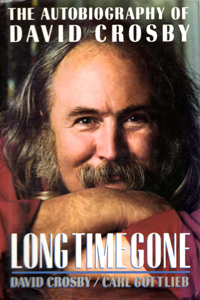
It’s not a pointed song in a European political song sense. It plays on the vagueness of the word ‘they’, an idiom with a vagueness that travels well. David Crosby discusses who the particular they in his mind were in his and Carl Gottlieb’s Long Time Gone – The Autobiography of David Crosby (1988). More about Crosby, Nash, Occupy & Uncle Scam upcoming in R2 issue 37. From Occupy This Album (Music For Occupy 7 93018 33462, 2012)
Déja Vu – Crosby, Stills & Nash
This song originally lent its name to Crosby, Stills, Nash & Young’s album debut in 1970 – CSNY being the successor to the trio’s self-titled album of the previous year with the original core members expanded to four with the inclusion of Neil Young.
This live version recorded at the Performing Arts Center in San Luis Obispo, California on 22 April 2012 is one of DVD/CD set’s highlights. Additional to the trio, there is Todd Caldwell on Hammond B3 organ, Steve DiStanislao on drums, Shane Fontayne on guitars, Kevin McCormick on electric bass and James Raymond on keyboards. From 2012 (CSN Records 409-5, 2012)
Illinois – The Everly Brothers
Roots, the 1968 Lenny Waronker-produced album that this track comes from, opens and closes with Everly Family recordings made in 1952. They were from, the notes said, “a tape made in their home town of Brownie, Kentucky – once a small mining village, now reduced to smokestacks.” The centre image on the back cover was of Don and Phil Everly in country cover outfits franking their parents, Ike and Margaret Everly. The music inside was a revelation. It was a real stepping stone for listeners previously switched off by the irony-free posturing, the rhinestone dandyisms and reactionary conservatism of the Nashville country music industry. Apparently, it sold poorly at the time of its release – not helped by it clocking in at under 40 minutes.
This song is from the pen of Randy Newman. The Everlys spin its facets around as if it were a gem. A miniature, it lasts under two and a half minutes. Its uncredited pianist holds the whole thing together instrumentally with a rhythm section so good in the lightness of its touch it is astonishing. It’s not a hugely well known song in Newman’s canon but it is a vivid travelogue cum portrait with its images of Illinois prairie and grain fields contrasting with the lights, skyline and stockyards of Chicago. Meanwhile, there was the turn of the seasons. From Roots (Warner Brothers 7599 26927-2, 1968)
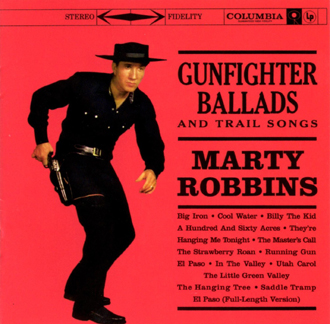 El Paso (Full Length Version) – Marty Robbins
This version recorded in April 1959 is a bonus track on the CD reissue. At over four and a half minutes in length, it wasn’t the one that occasionally got played on the radio in Britain. It is one of Marty Robbins’ country and western songs – and indeed his most famous one. He tells El Paso as a first-person narrative about a moonstruck cowpoke who falls for Feleena (Felina) “out in the West Texas town of El Paso”. She is the Mexican beauty in Rosa’s cantina who casts a spell over the unnamed cowboy. He gets jealous about her paying attention to a “handsome young stranger” and guns him down. He runs and steals a horse and makes off for the Badlands of New Mexico.
But there is a but. Like normal – because this is a movie, right? He still misses Feleena and returns to El Paso (“tonight nothing’s worse than the pain in my heart”).
As he rides in, he spots mounted cowboys and before he knows it, “something is dreadfully wrong for I feel a deep burning pain in my side”. (Bobby Sykes and Jim Glaser of the Glaser Brothers add the lifting harmonies at the end of the line.) I won’t spoil the ending for anyone who doesn’t know the tale… But next time you listen to it, listen to it one time just listening to Grady Martin’s Spanish guitar that runs through the song. A top tip to end on. From Gunfighter Ballads And Trail Songs (Columbia/Legacy OK 65996, 1999)
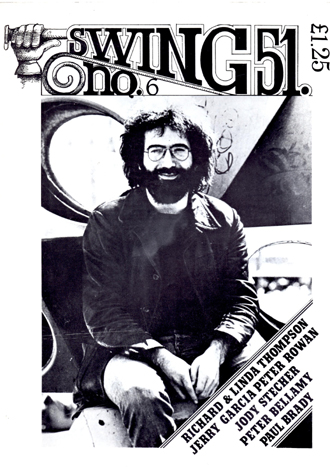 Dark Star – Grateful Dead
This is the 2:45 45 rpm single version. It distils the essence of the song that became the Dead’s most anticipated psychedelic excursion over the course of their voyage into the unknown. So anticipated that it enjoyed periods of retirement.
In one of the interviews that I did with Jerry Garcia, he touched on this single and its inclusion of banjo. “Actually then I used a tape, an old tape I found somewhere, that had me playing banjo for a banjo lesson I think I was giving to somebody. That tape is from ’62 or something like that. So, I found this old tape and threw it on the end of Dark Star just for the Hell of it, just to bring it up during the fade for the Hell of it. Completely unrelated.” From Live/Dead (Warner Brothers/Rhino R2 74401-E, 2001)
Hey, That’s No Way To Say Goodbye – Leonard Cohen
This recording is from the August 1970 IOW Festival. It was the first time that I saw him in concert. Looking at the accompanying photos in the Live At The Isle of Wight 1970 CD/DVD package is transporting. In the period shots, he has tousled hair. It is not the hairstyle on the almost passport or identity card likeness of Songs of Leonard Cohen of 1967 (he is not staring straight enough into the camera for that). Neither is it the neat grey trim and jaunty titfer of Live In London from 2009. It is another time…
Cohen’s songs were borderline Edna O’Brien. Like her writings, his songs were more than the pangs, the naughty bits and the traps that he laid in his lyrics. (Or his poems or prose.) They shared similar energies and levels of energy. This particular song is a slow dance for the minutes leading up to midnight. It is a pulling song as much as it is a valediction. From Live At The Isle of Wight 1970 (Columbia/Legacy 8697-57916-2, 2009)
The copyright of all images lies with the respective photographers, companies and image-makers.
30. 9. 2012 |
read more...
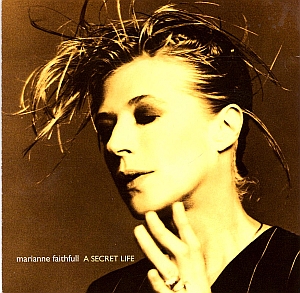 [by Ken Hunt, London] Nightingales serenade and sing us back home. In between come Hedy West, Joni Mitchell, Marianne Faithfull, Chavela Vargas, Radhika Mohan Maitra and Mike Seeger. This is, to some extent, a confluence of memories, dreams, reflections and applied coincidence inspired by Marianne Faithfull and her 2007 book (with David Dalton) entitled memories, dreams & reflections.
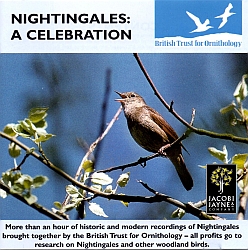 Londonderry Air – Beatrice Harrison
This is a famous and historical recording. The cellist Beatrice Harrison discovered that when she played in her garden in Oxted in Surrey her local nightingale would sing along. The nightingale was a wild bird. It wasn’t caged like a canary and recorded as it sang – as had previously been the case with recordings of wild bird song. This recording made on 3 May 1927 captured one of their musical conversations. The booklet notes state: “She eventually persuaded Lord Reith [of the BBC] that this was worth broadcasting. These BBC broadcasts started in 1924 and carried on for 12 years until she moved.” The Londonderry Air is also known as Danny Boy.
“Let memory of mortgages, loans and property sales/Dissolve into the cries of nightingales…” as was said twenty years after this recording was made. From Nightingales: A Celebration (British Trust for Ornithology ISBN 0 903793 91 1, undated [circa 1997])
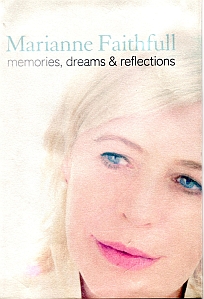 Love In The Afternoon –Marianne Faithfull
This choice came out of a highly enjoyable conversation with the Folker and more photographer Ingo Nordhofen. He and I relaxed under a canopy in the shade at a music festival, toasted our hosts Regina and Rainer and chatted over a couple of drinks in that taking-a-break-from-work-before-returning-to-work way. The conversation turned to Marianne Faithfull and a performance of hers not too far from Weimar that we had both attended. That conversation set in train thoughts that led to picking this song by Angelo Badalamenti and Marianne Faithfull.
Unlike the romantic comedy of the same name from 1957 featuring Gary Cooper, Audrey Hepburn and Maurice Chevalier, this is an altogether different kind of affair going on. The emotional fulcrum changes as the narrative unfolds. By the second verse she is singing, “Don’t fall in love with me/Too much to lose.”
All this plopped on top of writing articles about Little Feat for R2 and Bass Guitar Magazine – their September and November 2012 issues – and that line of Lowell George’s getting conjured: “Of all the things I had to do/I had to fall in love” in Cold, Cold, Cold. And the deliciousness of thinking about the power to resist in its song manifestations. Futility and ambiguity are lovely bedfellows. From A Secret Life (Island CID8036, 1995)
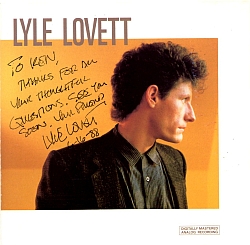 You Can’t Resist It – Lyle Lovett
One thing, well, led to another when thinking about resisting, wearing thin or being worn thin or beaten down. I connected Marianne Faithfull’s Love In The Afternoon and Lyle Lovett’s You Can’t Resist It. John Goin plays lead electric guitar and Roseanne Cash sings backing vocals on this song.
Next thing I knew the Summer 2012 issue of Penguin Eggs was on the doormat and the cover article was Roddy Campbell’s interview with Lyle Lovett. Catch him right and Lyle Lovett is one of the best interviews in the music business. Studied journalism and all that. Campbell captures him in top form and Lovett is really illuminating about songcraft’s strange little ways.
Anyway, I got to remembering Lyle Lovett and an interview we did in June 1988. I left that interview to head off to one of the music critic’s least favourite tasks – the slog of transcribing the interview. Next thing I knew I had Lyle rushing down the stairs after me pointing me out to his manager. Panicky memories of a Zigzag colleague being forced to wipe the interview that he had just done with a rock bigwig flashed through my head. Lyle calmed me and told me he only wanted to introduce me to his manager and explained that I had extracted all sorts of things from him that he had not intended to talk about.
But I never revealed the sinless pleasures of the lad from Klein, Texas talking about watching Star Trek in German in some foreign hotel with a German dictionary. Nor the kindnesses bestowed on my 13-year-old son, when we went to see him at Woburn Abbey opening for Dire Straits on 20 June 1992. I left my lad in the secure backstage, green room area, guarded over by security while I worked, and with access to unlimited, juices, soft drinks and barbeque. When Lyle and I returned from watching Was (Not Was), there was Tom was sitting chatting over, no doubt, his umpteenth plate of food and umpteenth juice or soft drink to John Illsley and his parents. From Lyle Lovett (MCA Records/Curb MCAD-5748, 1986)
You’ve Changed – Joni Mitchell
A frivolous thought entered my head. It occurred in a dream. I woke and wrote it down. What would Joni Mitchell do with her hands if she didn’t have a cigarette and/or a paint brush in her hands?
Wayne Shorter is the featured saxophonist on this track, a song by Bill Carey and Carl Fischer in an orchestrated arrangement. From Both Sides Now – or, as I would prefer from the CD spine, Both Sides Now – Reprise (Reprise 9362 47620 2, 2000)
For The Roses – Joni Mitchell
Again one thing leads to another. Dreaming about Joni Mitchell is like dreaming in the English manner after an evening of Stilton, water biscuits and port. Very moreish and pleasantly hallucinogenic.
This is not a standard tale about success or the worship or brickbats that some encounter. There are many ways that a musician – actor, poet, author, continued overleaf – might respond. “I heard it in the wind last night/It sounded like applause.” I wish more people would cover it. It remains one of the finest expositions on pros and contras of fame and success and money I have ever heard. From For The Roses (Elektra/Asylum 7559-60624-2, 1972)
Bageshree – Pandit Radhika Mohan Maitra
Pandit Radhika Mohan Maitra (1917-1981) is a musician known more by association and reputation than the music he made in his lifetime. This is a recording of the sarod maestro made in 1957 with a young Shankar Ghosh accompanying on tabla.
His playing style has a bedrock of rabab ang – rabab style, the rebab being the sarod’s folk predecessor – learned from his first guru Md. Amir Khan and a dhrupad-based style of playing combining vina and sursringar forms from studying with Dabir Khan and studying sitar with Enayat Khan. I came to him from backtracking from his disciple, the sarod maestro Buddhadev Dasgupta. Eventually, some old recordings came into my possession and they illuminated my understanding of Buddhadev Dasgupta’s performance style.
After listening to this excellent performance of the late night raga much more about Buddhadev Dasgupta’s distinctiveness made sense. This recording follows the pattern of alap, jor and slow and fast gat compositions. From Moments (Bihaan Music CD-BMC-74, 2005)
Go to http://www.raga.com/interviews/210int1.html to read Ira Landgarten’s marvellous interview with Buddhadev Dasgupta that goes into his relationship with his guru.
More information about Bihaan Music’s exceedingly interesting catalogue of the subcontinent’s music is here: http://www.bihaanmusic.com
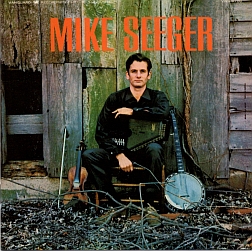 Waterbound – Mike Seeger
Mike Seeger (1933-2009) made a considerable number of albums, but this was his solo debut and for far too long it was out-of-print in both its US and UK editions (for Vanguard and Fontana respectively). This particular song is “a Virginia play-party piece with melodic reminiscences of Golden Slippers and Skip To My Lou”, according to D.K. Wilgus’ original sleeve notes from 1964.
John Crosby describes it in the reissue’s notes as “a mid-tempo song with a haunting vocal over the rhythmic drone on a strummed dulcimer accompaniment.”
That’s more or less my job done for me. But for saying that the recording has a delightful atmosphere and a real sense of wood, as in acoustic music, and microphone to it. It is also one of the reissues of 2012 thus far.
“The old man’s mad [angry] and I don’t care/The old man’s mad and I don’t care/ The old man’s mad and I don’t care/So long as I get his daughter…!” From Mike Seeger (Vanguard VCD 79150, 2012)
Tony Russell’s obituary ‘Mike Seeger: Versatile singer and multi-instrumentalist at the heart of the US folk music revival’ from The Guardian of Monday 10 August 2009 is at http://www.guardian.co.uk/music/2009/aug/10/obituary-mike-seeger
Ken Hunt’s obituary ‘Mike Seeger: Folk musician who influenced Bob Dylan and the Grateful Dead’ from The Independent of Saturday 22 August 2009 is at http://www.independent.co.uk/news/obituaries/mike-seeger-folk-musician-who-influenced-bob-dylan-and-the-grateful-dead-1775851.html
La Llorona – Chavela Vargas
La Llorana (‘The Woman That Weeps’) comes from Julie Taymor’s film about the Mexican artist and muse Frida Kahlo. Chavela Vargas (1919-2012) appears in the film as Death and sings this song. Dulces suenos, Chavelita. From the film Frida (2002)
I read several obituries of Chavela Vargas. The one I liked best was from an anonymous fellow hack at http://www.telegraph.co.uk/news/obituaries/culture-obituaries/music-obituaries/9456735/Chavela-Vargas.html
Bury Me Not On The Lone Prairie – Hedy West
If I ever were to feel that I had tired of Hedy West, I know that I shall be hovering over, and looking down on my own lifeless husk. Hedy West (1938-2005) was one of the most transformative interpreters of the Anglo-American folk condition. This is another song about one of the signature events in anyone’s life: death.
Bury Me Not On The Lone Prairie comes from her debut solo LP, Hedy West accompanying herself on the 5-string banjo (1963). She accompanies herself on banjo. There is nothing affected about her delivery, nothing extraneous by way of ornamentation, nothing out of place in the arrangement. Even in death, there are twists going on in this song. I am proud that Ace Records asked me to write the CD booklet notes for this reissue of her first two solo albums. Ace also squeezed three never-issued tracks onto this single-CD release.
All these decades later Hedy West remains a lodestone. From Hedy West accompanying herself on the 5-string banjo plus Hedy West Volume 2 (Vanguard Masters VCD 79124, 2012)
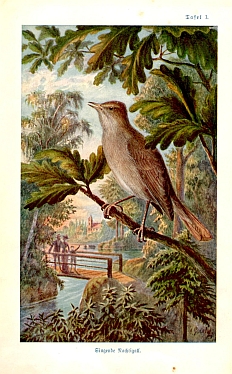 Singing Nightingales and RAF Bombers
This is a very famous recording. The BBC recorded it on the night of 19 May 1942 from the same wood as the Londonderry Air that begins this month’s Giant Donut Discs. The original intention was to broadcast the Oxted wood recording live. It begins in sylvan peace but then gradually a distant growl approaches. That growl was the engines of Royal Air Force (RAF) bombers – Wellingtons and Lancasters – on their way to bomb Germany. The notes say the target was Mannheim. It is a phenomenal piece of history. The recording engineer realised that German radio operatives would get forewarning that a raid was being mounted and pulled the live broadcast. The land-line preserved the recording, however. Eleven of the raid’s 197 bombers failed to return.
The illustration of the nightingale is from Leopold Scheidt’s Vögel unserer Heimat (‘Birds of our homeland’) published in 1902 – a gift given to me in July 2012 from the library of Harry Frank (1928-2012). I started reading the book deep in the heart of Thuringia (Thüringen) and as I did memories of this recording me came flooding back to me.
A triangulation occurred with Down by the Riverside, the old gospel song that includes the line, “Ain’t gonna study war no more…” From Nightingales: A Celebration (British Trust for Ornithology ISBN 0 903793 91 1, undated [circa 1997])
The copyright of all images lies with the respective photographers, companies and image-makers.
24. 8. 2012 |
read more...
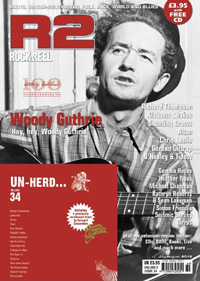 [by Ken Hunt, London] Woodrow Wilson ‘Woody’ Guthrie (1912-1967) was born the day before my father. He was born on 14 July 1912 and Leslie Hunt wasn’t, so to speak. Both of them were hugely influential figures in my musical, creative and political development. Here’s a celebration of Guthrie’s work, with a little help Cisco Houston, Neil Young with Crazy Horse, Madeleine Peyroux, Billy Bragg and Utah Phillips.
How much? How long? – Woody Guthrie
Rather than fling ourselves into the Woody Guthrie song collection, let’s get familiar with his speaking voice and his anecdotage. This wire recording from 1949 was made in front of an audience at the Jewish Community Center in Newark, New Jersey. You get a feel for his accent, his spoken voice, his voice’s cadences and how he sounded. And how given a question or two he could yak.
Wrote his daughter Nora Guthrie, “In 2001, the Woody Guthrie Archives received two antique wire recordings documenting a 1949 performance […] moderated by his wife, my mother, Marjorie Mazia.” He talks for a quarter of an hour, could clearly talk the hind legs off a donkey. From The Live Wire (Woody Guthrie Foundation, 2007)
Ingrid Bergman – Billy Bragg
This was one of the pieces of left-over wordery that Billy Bragg set to music. He performs the song straight to acoustic guitar accompaniment. The lyric is saucy and it could have been done in any number of ways. It is that kind of song. Bragg’s approach and delivery invest the lyrics with something that I hesitate to say that Guthrie himself would have done. There is neither Leer, nor Lurkio here – not the merest hint of Frankie Howerd, so to speak.
I consider this to be one Billy Bragg’s absolutely finest creations. If you listen to it, you will realise how easy it could have tipped into something else, though not parody. Bragg’s far better than that. From Mermaid Avenue – The Complete Sessions (Nonesuch 7559-79628-0, 2012)
Tom Joad – Woody Guthrie
One of Woody Guthrie’s great pieces of re-writing, it condenses John Steinbeck’s Grapes of Wrath character, Tom Joad into 16 or so verses. This particular version is from a 1949 live performance made at the Jewish Community Centre in Newark, New Jersey and captures his speaking voice in all its anecdotal charm – and that of his then-wife Marjorie, a dancer with the Martha Graham Dance Company.
Tom Joad is a song that I also associate with Joe McDonald. He included it on his album Country Joe McDonald thinking of Woody Guthrie (reissued in the UK as Vanguard VMD 6546 in 2011). It was an album originally released in 1969 and it was an important one because McDonald gave new validation to Guthrie’s songs in a way that sounds impossible now. Back then, relatively little of Woody Guthrie’s work was available in Britain. In 1969 it would have been impossible to imagine how much in the way of Guthrie recordings could have been around… From The Live Wire (Woody Guthrie Foundation, 2007)
Ship In The Sky – Cisco Houston
Cisco Houston (1918-1961) was one of the great popularisers of Guthrie’s songs. His early death meant that he is less remembered than he should be in the Guthrie narrative. He was close to Guthrie and shipped with him in the merchant marine on Atlantic convoy duties once the United States entered the Second World War. Jimmy Longhi’s Woody, Cisco & Me (1997) describes those times.
Talking in July 2011, Arlo Guthrie praised that book as nailing his father as he remembered him. This is an exclusive extract from that interview: “There were tie-ins to things I had remembered at home. My Dad had created these things called ‘hoodises’. A ‘hoodis’ was a contraption made up of junk that he either glued or nailed or stapled or somehow tied together that was like a sculpture. Like a modern art sculpture. He had made one on the ship that they were on during the Second World War. He had put it on the back of this ship and all the sailors were saying, ‘What’s that?’ He was, ‘Ahhh, it’s goin’ to make the ship go faster.’ They said, ‘Well, it can’t possibly make the ship go faster.’ And yet while it was up, the ship was making another two to three knots faster than they’d ever been able to go before. Now, I’d not saying that Woody is a scientific inventor: I’m only pointing out that maybe somehow or other… Somebody took it down and the ship went back to its normal speed. Is that real? I don’t know. But that’s Jimmy Longhi telling his story.” Read the book. From The Folkways Years 1944-1961 (Smithsonian Folkways SFCD 40059, 1994)
This Land Is Your Land – Woody Guthrie
A glass acetate recording and an alternative take made in April 1944 for Asch Records. Track 14 on The Asch Recordings Vol. 1 (Smithsonian Folkways SFW CD 40112, 1999)
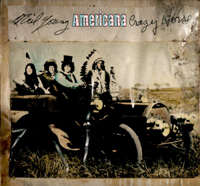 This Land Is Your Land – Neil Young with Crazy Horse
And then there is Neil Young and Crazy Horse’s version.
Incidentally, the Woody Guthrie cover article in R2 examines the background to, and context of This Land Is Your Land as you are unlikely ever to have realised it might be. From Americana (Reprise 9362-49508-5, 2012)
Going Down The Road Feeling Bad – Woody Guthrie, Cisco Houston and Sonny Terry
A much travelled song. This version was cut in April 1944.
Madeleine Peyroux: “I heard my father [actor and teacher Rip Peyroux] sing it and it’s one of the few songs he would sing. He was not a singer by any means, but he would sing when he was especially emotional. It always brought him to tears. My father grew up down in Texarkana, born in New Orleans, and he had a rough childhood down there with a lot of alcoholism in the family. He grew up to be a rough kind of guy. He could get pretty mean, so hearing him sing a song like that meant a lot – not only because he could be a mean old man [laughter] but also because he grew up in the Jim Crow South.
“It was Woody Guthrie’s presence in the world, the singing of this kind of song – and probably other songs that were anti-fascist – that made my Dad sympathise and helped express feelings that my Dad had as a young boy in the South. My Dad hated the racism of the South and grew up fearing that the world was an unfair place. It turned him into a mean old man [laughter] but he did cry when he sang that lyric, ‘I ain’t gonna be a-treated this-a way…’ I think he knew it meant more than just one person’s problem. Somebody like Woody Guthrie could sing a song like this and make you understand that it was about poor white men’s rights and black people’s rights and everybody’s human rights. To make you feel that in however few words you have in that one verse. ‘I ain’t gonna be a-treated this-a way…’ That meant a lot.”
Track 11 on The Asch Recordings Vol. 1 (Smithsonian Folkways SFW CD 40112, 1999)
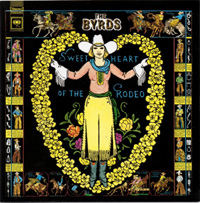 Pretty Boy Floyd – The Byrds
Had to choose this particular performance. It ushered in a whole new appreciation of Guthrie’s work – and country music – for many people, even though Sweetheart was much maligned at the time of its release in 1968 as not being Byrds enough, at least in Britain, and far too country.
Like Happy Traum tells it so well in R2 issue 34 (July/August 2012), it distils the story of the good guy outlaw fiction beautifully. From Sweetheart of the Rodeo (Columbia/Legacy CK 65490, 1998)
Snow Deer – Woody Guthrie
Recorded in April 1944, this song also known as My Pretty Snow-Deer, captures another side of Guthrie. It is an unabashed piece of romanticism or plain old hokum. This isn’t the political agitator putting the world to rights. This is a man making music to pay for the next hamburger or whisky or something towards next month’s alimony.
The excellent notes explain that Ernest Thompson had first recorded it in 1924 and recorded it as a voice, guitar and harmonica cut – contender for the first commercial recording using a harmonica rack – as popularised by Bob Dylan and Neil Young. Track 22 on The Asch Recordings Vol. 4 (Smithsonian Folkways SFW CD 40112, 1999)
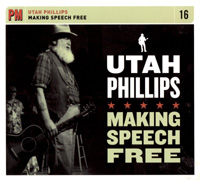 This Land Is Not Our Land – Utah Phillips
Utah Phillips (1935-2008) was one of a kind and also one of many. “The lost verses to This Land Is Your Land…”, as he begins his introduction to this performance, is a piece of rewriting very much in the spirit of Woody Guthrie. His rethink about This Land Is Your Land – a song that Guthrie himself rejigged to fit prevailing situations and circumstances and recorded in varying forms – is just a tiddler of a text but it captures the presence and the wit of the man.
I interviewed Utah once for an article. The interview was very, very good. Afterwards, the periodical got cold feet about its political content. Imagine! Utah Phillips talking about politics! Well, I never! The piece got shunted in the sidings. I’ll get that interview run someday somewhere. (Offers on a postcard to this address.)
This Land Is Not Our Land was recorded in May 1999 “as part of a Free Speech Teach-In. “Don’t mourn: organise!” From Utah Phillips’ Making Speech Free (PM Audio Series PMA 0016-2/DIRT-CD-0063, 2011)
Ken Hunt’s obituary of Utah Phillips ‘U. Utah Phillips: Folk singer-songwriter’ appeared in The Independent long ago in Bethlehem: http://www.independent.co.uk/news/obituaries/u-utah-phillips-folk-singersongwriter-841357.html
Ken Hunt’s article Universal truth – Woody Guthrie remembered appears in the July/August 2012 issue of R2 magazine. It is based on a conversation with Arlo and Nora Guthrie. Its companion piece has a cast of notables picking a song of Guthrie’s and reminiscing about, or responding to it. The cast comprises Wizz Jones, Robb Johnson, Rhiannon Giddens, Dave Goulder, Eliza Carthy, Judy Collins, Happy Traum, Christy Moore, Cerys Matthews, Anne Briggs, Barb Jungr and Madeleine Peyroux.
http://www.rock-n-reel.co.uk/
All interview material is © Ken Hunt. Usual permissions and attribution rules apply. The copyright for the images lies with the respective photographers, companies and image-makers.
Lots more information about Woody Guthrie at:
http://www.woodyguthrie.org/
14. 7. 2012 |
read more...
[by Ken Hunt, London] Another month with varying degrees of noise and loads of work-related choices. This month summons Jackson Browne, Mehdi Hassan, Jefferson Airplane, James ‘Iron Head’ Baker, The Radiators from Space, Neil Young, Sam Lee, Rokia Traoré, Country Joe & The Fish and back to Jackson Browne to do their bit to keep a freelance music writer sane.
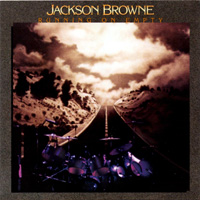 Running On Empty – Jackson Browne
You know what it’s like when you seek solace in music? This month this one hit home mainly on account of those miles rushing by under the wheels and exhaustion – and most important of all because Jackson Browne and his magnificent seven lift the spirits.
Let’s hear it for David Lindley (guitar and lap steel), Russell Kunkel (drums), Leland Sklar (bass), Craig Doerge (keyboards), Danny Kortchmar (guitars) and, on vocals, Doug Haywood and Rosemary Butler. From Running On Empty (Elektra/Rhino8122-78283-2, 2005)
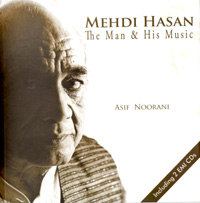 Gulon mein rang bhare – Mehdi Hassan
The Pakistani vocalist Mehdi Hassan (1927-2012) recorded hundreds upon hundreds of songs but above others, Gulon mein rang bhare (“Let the blossoms fill with colour”) became his signature song. The poem itself was from the pen of the left-wing poet Faiz Ahmad Faiz (1911-1984). One of Mehdi Hassan’s older brothers, Ghulam Qadir set the poem to music, choosing raga Jhinjhoti as its vehicle of transportation. It is a perfect example of the magical connection that can occur between lyricist, composer and interpreter.
The first of two CDs that come with Asif Noorani’s biography includes this rendition, recorded in concert. Sheer joy. The book implies that this is a recording made at EMI (Pakistan)’s Lahore studio in 1976. (Sometimes these things aren’t clear.) There is a real atmosphere to this recording of one of Mehdi Hassan’s signature pieces. Contained within Asif Noorani’s book Mehdi Hasan:The Man and His Music (Liberty Books, Pakistan, ISBN 978-969-9502-00-2, 2010)
Ken Hunt’s obituary of Mehdi Hassan from the Independent of 16 June 2012 is at http ://www.independent.co.uk/news/obituaries/mehdi-hassan-musician-hailed-as-the-maestro-of-the-ghazal-7855063.html
Ishtiaq Ahmed’s tribute to him from Pakistan’s Daily Times of 17 June 2012 is at http://www.dailytimes.com.pk/default.asp?page=2012%5C06%5C17%5Cst ory_17-6-2012_pg3_3
For illuminations about Gulon mein rang bhare itself, visit http://urdustuff.blogspot.co.uk (and then track to 2007/04/faiz-gulon-mein-rang-bhare). Highly recommended. Deewaan, its blogger, does not re-poeticise Faiz’s ghazal. (No idea who Deewaan is.) The blog offers explanations of what is going on and going down.
Pretty As You Feel – Jefferson Airplane
This version of the song is the 45 rpm single edit. Recorded in sessions over December 1970 and January 1971 (the CD set’s booklet’s notes tell us), it has a similar sound quality to David Crosby’s If Only I Could Remember My Own Name.
Joey Covington sings lead. Grace Slick and Paul Kantner contribute backing vocals. Jack Casady is on electric bass. Jorma Kaukonen plays electric guitar. And Papa John Creach plays violin. In addition to those members of the Airplane, the performance has Carlos Santana on electric guitar and Michael Shrieve on kit drums. There was something about its atmosphere that felt just right this month… From Jefferson Airplane Loves You (RCA 02863 61110-2, 1992)
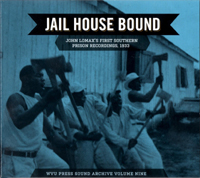 My Yellow Gal – James ‘Iron Head’ Baker with vocal accompaniments
This particular recording was made at Central State Prison Farm in Texas in December 1933 at the end of a collecting trip that John A Lomax (1867-1948) and his son Alan Lomax (1915-2002) made between July and December of that year. Baker sings with R D Allen and Will Crosby singing back-ups. It is a prison lament, a memory of loss, a multiracial memory from, hands down, easily the month’s most played CD.
When the Lomaxes recorded these prisoners, surely the My Yellow Gal singers could never have imagined in their wildst dreams that people would still be listening to their voices so many years later. The anthology from which this is taken was compiled and annotated by Mark Allan Jackson, the author of Prophet Singer: The Voice and Vision of Woody Guthrie (University Press of Mississippi, 2008) – a book I have never seen. From Jail House Bound – John Lomax’s First Southern Prison Recordings, 1933 (West Virginia University Press/Global Jukebox WVU GJ1012, 2012)
www.wvupress.com and www.globaljukeboxrecords.com
Morning Dew – The Radiators from Space
This interpretation of Bonnie Dobson’s song – I refuse to add another name to the credits – derives from the arrangement that the Irish band Sugar Shack came up with in 1968.
The Rads are Johnny Bonnie (drums and percussion), Philip Chevron (vocals, guitars and more), Pete Holidai (vocals, lead guitar, keyboards and more), Steve Rapid (vocals, synth) and Enda Wyatt (bass). Anita Bonnie adds backing vocals on this particular track.
A glorious throw-back of a track from an album that flaunts The Radiators from Space’s Irish credentials, past and present. From Sound City Beat (Chiswick CWK 3022, 2012)
God Save The Queen – Neil Young with Crazy Horse
The best part of the diamond wotsit ‘celebrations’ was listening to this as a balance and cultural assault from the Dominions. The segue into My Country ‘Tis Of Thee is special. From Americana (Reprise 9362-49508-5, 2012)
 My Ausheen My Old Shoes – Sam Lee
This is the final track from the debut album of the London-based singer of traditional songs Sam Lee. This particular song is a Scots Traveller morsel that he gleaned from Stanley Robinson (1940-2009). It is delivered as an aural collage, one that includes Jane Turriff singing What Can A Young Lassie Dae Wi An Auld Man? (“What can a young girl do with an old man?”) to piano accompaniment (recorded by Bill Leader and courtesy of Topic Records), some swifts calling in aerial ballet (or aerial, little-swift-making naughtiness) and a recording of a half-muffled peal of bells from Bisley. And then there is the music… Oh, the music! He multi-tracks vocals and plays a little shruti box drone while Gerry Diver adds piano, fiddle and auto-harp.
In an unpublished interview with me that we did in May 2012, Sam Lee spoke of Stanley Robertson: “I think what Stan represented for me was a sense… I’ll start again. I’ll start with a quote I’ve only recently come across. You picked up on it in my email, the Mahler quote about tending the flame. I think what Stanley represented was that there were fires out there burning and this was a living tradition and not a dead and revived or re-enacted musical form. Not to take away from the beauty of it, this music was intrinsically related to a certain group of people and that as much as I had seen music really on a living basis in the hands of a privileged few living a comfortable and modern lifestyle.”
Sam Lee is a singer with a true clarity of vision with a gift for communicating the living fire of traditional music – cold and heated fire both. From Ground of its Own (TNCR001CD, 2012)
Ken Hunt’s obituary ‘Stanley Robertson: Storyteller and folk singer who chronicled Scots Traveller history’ from The Independent of 25 November 2009 is at http://www.independent.co.uk/news/obituaries/stanley-robertson-storyteller-and-folk-singer-who-chronicled-scots-traveller-history-1826875.html
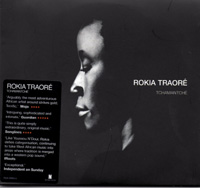 Dounia – Rokia Traoré
“Chaque aurore annonce un nouveau jour…” – “each dawn announces a new day” – is how this song begins. Once upon a time, many years ago, David Harrington of the Kronos Quartet asked what I thought of Rokia Traoré and I simply answered that she was fab. I get little chance to listen to music from Africa nowadays because I am focussed elsewhere musically. This Malian vocalist-composer is one of those musicians that I cannot imagine ever wishing to give up following, however. She represents a spirit of adventure and danger. From Tchamantché (Nonesuch 7559-79934-5, 2008)
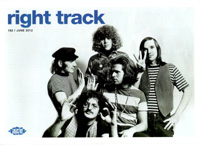 Janis – Country Joe & The Fish (“Orchestra conducted by Country Joe”)
This is one of the surprises that John Crosby’s luscious 4-CD boxed set documenting the roots history of the US-based Vanguard Records label springs upon listeners. It is an instrumental version of the Joe McDonald song about Janis Joplin released on a Vanguard single in 1967. Can’t recall ever hearing about the single before, unless it was from John Crosby himself back in the day when he was compiling the set. (In which case I have forgotten that conversation.) From Make it your sound, make it your scene – Vanguard Records & the 1960s musical revolution (Vanguard VANBOX 14, 2012)
The image is from Ace Records’ Right Track (June 2012): www.acerecords.co.uk/
Stay – Jackson Browne
The concluding track from the album that kicked off this month’s selections. It was first released in 1977 and the vocal combination of Rosemary Butler and David Lindley on falsetto still brings a smile to my face. From Running On Empty (Elektra/Rhino8122-78283-2, 2005)
The copyright of all images lies with the respective photographers, companies and image-makers.
11. 7. 2012 |
read more...
[by Ken Hunt, London] No blurb, just straight into this month’s music. This month summons Mahsa & Marjan Vahdat, Al Andaluz Project, Hedy West, The Ex, Scissor Sisters, George Mraz and Iva Bittová, Fairport Convention, Big Mama Thornton, Bill Monroe with Pete Rowan and Little Feat. As usual, loads of work-related currents. There’s a greater element of noise than usual this month. That’s down to other currents flowing around the fictitious island.
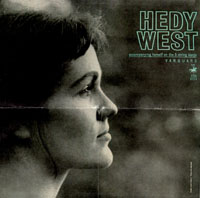 The Brown Girl – Hedy West
Hedy West was one of the most impressive musicians to emerge from the US folk scene in the early 1960s. For me, it is a marvel that so few people are aware of her massive contribution. The first album of her I heard was Ballads (Topic, 1967) and I bought a white-label test-pressing of the album at a folk record shop on New Oxford Street in London that I used to frequent.
It was the sort of place that a parade of folkies slouched towards as if it was Folk Bethlehem. The slouchers included Sydney Carter and the Young Tradition, Anne Briggs and Bert Jansch and later Jerry Garcia and Allen Ginsberg. I digress. Hans Fried who used to work at Collet’s – the afore-mentioned New Oxford Street record shop – joined us at Dave Arthur’s book launch do for his Bert – The Life and Times of A.L. Lloyd (Pluto Press, ISBN 978 0 7453 3252 9).
This particular song is from her pre-Topic days when she was recording for the New York-based Vanguard label. It is a supurb reading from her first full-length solo album for that label. Hans and I jawed about her Vanguard Years in the intermission. He is still a hero of mine. In the 1960s he helped me to focus my mind and put my feet on other paths – ones that perhaps determined where I am now. From Hedy West accompanying herself on the 5 string banjo (Vanguard VRS 9124, 1964)
Crane – Mahsa & Marjan Vahdat
Mahsa & Marjan Vahdat are sisters. The instrumentation is setar (the Persian long-necked lute many believe evolved into the sitar in the South Asian subcontinent), ney (end-blown flute) and daf (frame drum), supplied, respectively by Atabak Elyasi, Pasha Nanjani (whose overture to Crane is exquisite) and Ali Rahimi (also credited with the other percussion).
This track is a poem by the painter-poet Mohammad Ebrahim Jafari and it is set to a melody from Iran’s Khorasan Province. From Twinklings of Hope (Kirkelig Kulturverksted FXCD 376, 2012)
http://www.mahsavahdat.com/
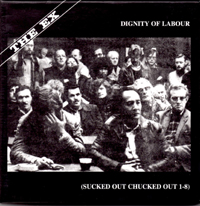 Sucked Out Chucked Out #3 – The Ex
“In 1960 the paper company Van Gelder decided to expand its product range with plastic. Van Gelder formed together with the US compagny [sic] Crown Zellerbach a joint venture Crown van Gelder PFI (Plastic Film Industry) for coating of paper with polyethylene and cast co-extrusion films. In 1980 the compagny [sic] became a 100% sister company of Van Gelder Papier and the name changed into Van Gelder PFI.
“In 1982 the American multinational Borden Inc. acquired the company and it continued under the name Borden PFI (Plastic Film Industry). During that period the product range and the capacity grew…” From www.afpholland.com/history-afp.html
There is something about the industrial nature – pun intended – of this particular Ex project “recorded at the Van Gelder ruins” that scratches the spot. It originally appeared as one of four 7-inch singles on VGZ Records in March 1983. Very agitprop. Magnificent noise as protest and socially engaged utterance. From Dignity of Labour (Sucked Out Chucked Out 1-8) (EX 010/013D, 1995)
Meet On The Ledge – Fairport Convention
“We used to say…,” wrote Richard Thompson in this magnificent vision of youthful writing, “That come the day/We’d all be making songs/Or finding better words…” before deflating optimism or pomposity with, “These ideas never lasted long…” Still haunting after all these years. From By Popular Request (Matty Grooves MGCD051, 2012)
Hijaz – Al Andaluz Project/Abuab Al Andalus
This track concludes the CD part of this CD/DVD release. The Andaluz Project/Abuab Al Andalus project is an examination of Moorish-era Iberian emancipation and tolerance. Three female vocalists front this band – namely, Morocco’s Iman al Kandoussi, Spain’s Mara Aranda and Germany’s Sigrid Hausen. The Project has at its core, those members of, respectively, Aman Aman, L’Ham de Foc and Estampie. I’m not sure where they are going but I am enjoying the ride and, no doubt, the ride will make more sense after seeing them live. From Live In München (Galileo GMC050, 2012)
http://www.galileo-mc.de
http://www.ojo-musica.com
Fire With Fire – Scissor Sisters
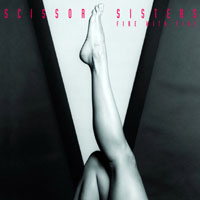 The death of Donna Summer caused me to think beyond the music she had made and beyond the music I generally listened to. Disco meant zilch to me musically but it was there. After her death, a number of commentators said that it had the important ability to unite people of different skin colours, sexualities and politics. I hadn’t done that before.
In September 2010, Scissor Sisters – an outfit that wears its disco colours on its sleeve – appeared on BBC’s Later with Jools Holland. My son hadn’t been able to get to any of concert venues. Thanks to a journo pal of mine – Ian Wade, credit where credit is due – who was doing press for Later, my son and I got to go to the filming. Scissor Sisters were toured out or hadn’t rested enough. Whatever it was, it was something that I recognised. The band or the director’s booth called for a re-take. Nearly everybody bar film crew left but we stayed to watch them do another take. Their lead vocalist Jake Shears’ professionalism was taxing to watch. It was another view from the other side of this life – to cue Fred Neil. A side of performing that few punters get to see or don’t get in the sense of realising what it takes to go out on stage and do it in public. From Night Work (2010)
Polajko – George Mraz and Iva Bittová
Polajko, the Czech name for the pennyroyal plant, popped into my head during a conversation with Sam Lee about folksong and herblore. He has an interest in both.
It is a Czech folksong that hinges on the unsaid, something that I like a great deal. No matter that it is a song-story of fine tunefulness, its better appreciation hinges on one element. Polajko is a plant, an infusion of which was used in traditional medicine to promote menstrual flow and therefore to induce a natural abortion.
This version has jazz lacings. Emil Viklicky (piano) and Laco Tropp (drums) shine. For me, Moravian Gems has a heightened poignancy, one that only five years on, I can express. At the time when Petr Dorůžka and I were working on the CD booklet notes, it was also a time when my mother was dying and I had moved back to become her carer. Moravian Gems was one of the albums I associate with that period. Only now can I listen to it again. And enjoy it in ways other than I did then. Only now it is stripped of pain. From Moravian Gems (Cube-Metier MJCD2736, 2007)
 The Walls of Time – Bill Monroe with Pete Rowan
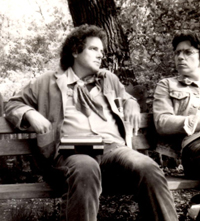
Before I met Hans Fried at the Bert – The Life and Times of A.L. Lloyd launch, I had wandered up the road to Cecil Sharp House with the writers Tony Russell and Phil Wilson. My hitherto unpublished photograph captures an unguarded moment between Pete Rowan and Tony Russell during the course of the first interview with Pete Rowan for Swing 51 that began in issue 4. Neither of them will have ever seen the shot before.
It reminds me not so much of a period of scratching together money in order to put out a small magazine – Tony was publishing Old Time Music and I was publishing Swing 51 – than the egoless desire to write for the ‘competition’. We were all part of the same cause.
Peter Rowan had a similar mindset. He knew Gill Cook who was working at Collet’s at that point and Tony had also done time behind the Collet’s counter… The Walls of Time reminds me of that period in an eidetic way. It represents something else starting to happen to bluegrass… In linear development terms, from this song you can arrive at Old And In The Way. From Make it your sound, make it your scene – Vanguard Records & the 1960s musical revolution (Vanguard VANBOX 14, 2012)
Ball And Chain – Big Mama Thornton
This track also comes from the John Crosby-compiled and -annotated 4-CD boxed set that Ace released in 2012. This is the song popularised by Janis Joplin, to whom Thornton pays tribute in her opening remarks. It first appeared on Willie Mae Thornton’s album Jail (1975). Tracks from this marvellous, five-outta-five-star compilation of Vanguard recordings compilation will figure for as Giant Donut Discs for a long time. Make it your sound, make it your scene was long, long in the making and will not be going away. This is the sort of project that Ace does so peerlessly. One of the anthologies of 2012. Ah! Big Mama Thornton. From Make it your sound, make it your scene – Vanguard Records & the 1960s musical revolution (Vanguard VANBOX 14, 2012)
www.acerecords.co.uk/
 Spanish Moon – Little Feat
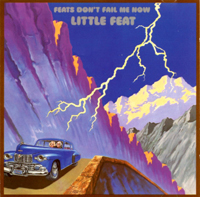
This woebegone tale of Lowell George’s is one of the bestest things that Little Feat ever committed to vinyl back in the day. It first emerged on their album Feats Don’t Fail Me Now (1974) where it appears almost like a wraith sketch at three minutes and one paltry second in length. It remains a song with hugest potential, both musically and lyrically. The lyrics place it in Brecht/Weill territory but for me the one element that holds it together is Kenny Gradney’s bass playing. It adds a storytelling dimension, the like of which few bassists will ever come close to delivering during their careers. The sinuous, sinewy elasticity of his bass line is a joy. Writing a piece about him for Bass Guitar Magazine gave me the financial incentive to distil many of my ideas about this song and, importantly, Kenny Gradney’s contribution to Little Feat into words. From Waiting For Columbus (Warner Brothers R2 78274, 1978)
http://www.littlefeat.net/
The copyright of all images lies with the respective photographers, companies and image-makers.
18. 6. 2012 |
read more...
 [by Ken Hunt, London] No blurb, just straight into this month’s music. This month summons the shades of The Band, Julie London, John B. Spencer, Andy Irvine & Dónal Lunny’s Mozaik, Khameesu Khan, Judy Collins, the Kronos Quartet, Emily Portman, Andy Irvine and the Bonzo Dog (Doo Dah) Band.
Tears of Rage – The Band
Dwelling on Levon Helm’s death on 19 April 2012 threw me into the kind of reflective mood that rarely occurs to me at least. The music that he played had been part of my growing. Like you do, I played a number of recordings that he appeared on while re-reading slabs of his autobiography, This Wheel’s on Fire: Levon Helm and the Story of the Band, co-written with the esteemed Stephen Davis. In it Helm fulminates about the divisions that occurred, prompted by the Band’s business affairs. He is also keen to credit the contributions of fellow band members Rick Danko, Garth Hudson and Richard Manuel – like himself overshadowed somewhat by Robbie Robertson.
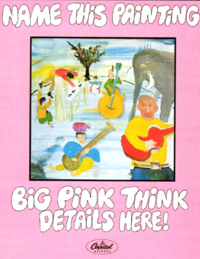
After a death it is frequently the right time to consider burying hatchets. This song sung by Richard Manuel and written by Manuel and Bob Dylan opened their debut LP in 1968. Dylan’s cover painting graced the front cover and on a European hitchhiking trip with stop-offs in Amsterdam I bought the US import version of album with the Klappcover – the double sleeve – which meant that Dylan’s painting had no text on it, though that wasn’t the point. (The figure in the foreground playing sitar with a red hot water bottle on his head did tickle my fancy.) Tears of Rage remains one of the finest opening tracks on any album ever made. From Music From Big Pink (Capitol 7243 5 25390 2 4, 2000)
Phil Shaw’s obituary in The Independent of 21 April 2012 is here: http://www.independent.co.uk/news/obituaries/levon-helm-drummer-and-soulful-singer-at-the-heart-of-the-band-7665825.html
Cry Me A River – Julie London
This track is the final track of the two dozen tracks on Trikont’s collection celebrating emancipated or less than emancipated women. It picks selected songs by Pearl Bailey (You Can Be Replaced), the Boswell Sisters (Everybody Loves My Baby), Mae West (A Guy What Takes His Time), Josephine Baker (C’est lui), Mitzi Gaynor (The Thrill Is Gone) and Marlene Dietrich (Hot Voodoo). The credit for this superlative anthology’s “compilation and concept” goes to Renate Heilmeier.
Renate Heilmeier writes of this track: “Not only the recording is legendary, but the scene in the movie The Girl Can’t Help It as well. Artistic agent Tom (Tom Evell) comes home drunk at night, puts on a record and opens a beer. Julie London appears to him as a singing version of the embodied sadness. The fifties cult movie by Frank Tashlin is set in the music scene of its day, and lots of guest stars show up: Little Richard, Fats Domino, Eddie Cochran, Gene Vincent and Julie London as herself. The leading female part is performed by Jayne Mansfield, one more strong woman.”
For me, this song is less about Jayne Mansfield and 1954 as something that wafts me back to Davey Graham and him playing it in Ken Russell’s 1959 documentary Hound Dogs and Bach Addicts: The Guitar Craze. From Head Over High Heels – Strong & Female 1927-1959 (Trikont US-0401, 2010)
www.heilmeier.de
 Forgotten The Blues – John B. Spencer
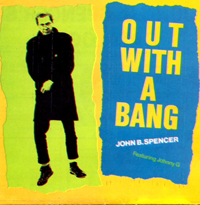
As part of my RPM column about political song/music in R2 I listened to this album by John Spencer and this track sang out. It had nothing to do with the task at hand. It’s just a superlative piece of writing. Forgotten The Blues was also taken up by Martin Simpson. From Out With A Bang (Round Tower Music RTMCD 36, 1993)
O’Donoghue’s – Andy Irvine & Dónal Lunny’s Mozaik
For me, writing any musician’s obituary involves periods of complete silence, apart from the sound of a keyboard or the sound of me reading aloud what I’ve written and blasts of music. While writing Barney McKenna’s obituary for Sing Out! and Penguin Eggs, this song of Andy Irvine blew through my mind, enhanced by recordings by the Dubliners and some Pogues. O’Donoghue’s is a song set in the bar of the same name in Dublin’s Merrion Row and involves a cast of characters associated with that pub between 1962 and 1968 (with a note of apology in the CD booklet to those who didn’t make it into the song). Most prominent among its cast of musicians is Barney McKenna.
When Andy Irvine played The Ram Club in Thames Ditton in Surrey on 4 May 2012, we chatted during the intermission and I mentioned including different references to O’Donoghue’s in the two obituaries I had written. He concurred that that was important. I corrected him that I meant his song – he had played it in the first half – and a surprised look crossed his eyes. It is a superb song from one of the finest musicians to have ever emerged from the Irish folk scene. One of those ‘we are custodians of what we love’ songs. From Changing Trains (Compass Records 7 4468 2, 2008)
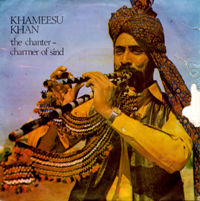 Pahari Dhun – Khameesu Khan
Occasionally it is necessary to remember the wonders of vinyl as in the case of this EMI (Pakistan) subsidiary label’s EP. Khameesu Khan played the alghoza – “a double-fluted blow instrument of the desert regions of Pakistan” as Ikram Azam’s notes described it. Alghoza is a double-ducted folk instrument with one pipe acting as melody pipe and the other as a drone. This recording came with the imprint of the NCA-FRC, the National Council of the Arts, Folklore Research Centre on it. This particular piece is delivered as a folk air.
Long out of print, like the hugest proportion of EMI (Pakistan)’s folk and light classical recordings, it might be as well to point out that, under the variant name Khamisu Khan, he also had a CD released on the French Arion label called L’Art de l’Alghoza du Sind (1999). Alghoza is one of those instruments worth listening to before you die. Any further information about this musician gratefully received. From Khameesu Khan – The Chanter – Charmer of Sind (Columbia EKCE 20024, 1973)
The Blizzard – Judy Collins
Perhaps not the most obvious recording of this song of hers. It is, however, closer to the way she is doing it in her live show of 2012, even if this particular variant first came out in 1995. It is a reflection on a breakdown of a relationship set in a snowy Colorado landscape. Stories need settings, well, usually if particularising an image is the intention. She comes off the road to stop for coffee as the weather deteriorates. Looks like there might be a blizzard tonight…” The song uses the theatrical device of talking to a stranger – somewhere between baring her soul and spilling the beans – about the relationship. It works brilliantly. She sang The Blizzard as part of a suite of songs for her solo piano at this From Voices (Delta Deluxe 4724041, 2003)
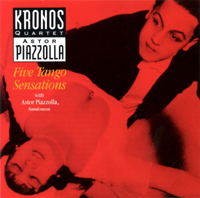 Loving – Kronos Quartet
It really does not seem like this mini-album came out in 1991. The music on it still sounds timeless and yet taking tango somewhere else. The Kronos Quartet – back then David Harrington and John Sherba on violins, Hank Dutt on viola and Joan Jeanrenard on cello – was a different beast. It was no less a curious beast as it rootled out new music to tackle but its antennae were taking it in new flavoursome directions. One of those directions was world music.
One time in London David Harrington and I got into another of our serious discussions about what music was turning us on. In the grand manner of the forgetful, I slipped a date (November 1990) into my booklet notes to this five-movement suite composed by Astor Piazzolla (1921-1992). Piazzolla also plays bandoneon on this recording. It was the second piece that Piazzolla wrote for the Kronies (the first being Four, For Tango), but talking to him for the notes was never on the cards because his health was declining.
In order he titled the ‘Sensations’ Asleep, Loving, Anxiety, Despertar and Fear. He roils the waters with undercurrents of all sorts. It was a period of seeking in my life and Piazzolla’s suite connected so much and this became a soundtrack to my life. It still abides. From Five Tango Sensations (Elektra Nonesuch 7559-79254-2, 1991)
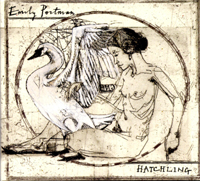 Hollin – Emily Portman
Hollin is the second track on Emily Portman’s Hatchling. She describes it as “An ode to the joys of wild living.” The wild living is more to do with “green leaves” before misjudgements set root. The arrangement makes excellent use of Lucy Farrell’s viola, Rachel Newton’s harp and Lucy Deakin’s cello.
Parenthetically, it is so refreshing to see Portman sparking off the likes of Angela Carter, Orlando Gibbons, sundry belief systems, Tim Van Eyken and Sandra Kerr on this album. The artwork on this album is by Olivia Lømenech Gill – the cover illustration is to do with the Leda legend, the subject matter of the album’s opening track Hatchlings. From Hatchling (Furrow Records FURR006, 2012)
More information at www.emilyportman.co.uk
The Close Shave/East At Glendart – Andy Irvine
This first of these two pieces is a song by Bob Bickerton with the clear and unambiguous intention to out-do the tradition. The beloved tradition has a legion of songs on the subject of the happy man on shore leave, furlough and so on who gets separated from his money. In them the tinker, tailor, sailor, soldier and maybe spy wakes to find himself – always a him – distanced from their purse. Vile trickery is involved of the Cherchez la femme type. We smile and/or yawn along at the gullible folk of olden days. No doubt though, somewhere over the internet rainbow, a tale is brewing about an internet scam along modernistic lines – that urgent bank transfer to get over some mishap abroad and so on.
Bob Bickerton’s song adds a twist to the tale and relocates the action to a New Zealand gold strike. One verse begins, “When I awoke next morning no trousers could I find…” and what was left behind was, the verse ends, “a woman’s dress, a yellow wig and a shaving kit not mine…” It’s a great example of storytelling in song. But that is what so much of Andy Irvine’s live repertoire is about. He engages you with his folk and worse tales.
This particular version with Irvine singing and on mandola and harmonica, Dónal Lunny on bouzouki and Máirtín O’Connor on accordion concludes with an instrumental outro. From Abocurragh (AK-3, 2010)
More information at www.andyirvine.com
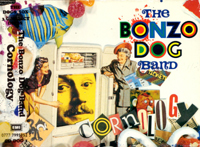 Mickey’s Son And Daughter – Bonzo Dog (Doo Dah) Band
A couple of years ago, Tom Constanten, a chap who once tinkled the ivories with the Grateful Dead, and I enjoyed a conversation over an extended and leisurely peregrination in the fair city of London. We caught up and chatted a day away on a day off in London whilst touring with Jefferson Starship. Our walk took in a variety of culturally intriguing landmarks, amongst them Ewan MacColl’s memorial tree in Russell Square, sundry blue plaques commemorating where people had once lived, and a pleasant selection of pubs with musical, literary, political, lexicographical and courtesan histories.
At one point I asked if there had been an act on a billing that had really caught his fancy and with the old time machine revved up which one would it be if he could go back and really concentrate on that act. Without hesitation he declared it to be the Bonzos who had opened for the Dead in San Francisco.
Jack-in-the-box thoughts sprung, an intense period of memories of the Bonzos and Viv Stanshall’s Rawlinson’s End scripts followed – the latter with its lovable cast of characters including Scrotum the Wrinkled Retainer. Mickey’s Son And Daughter is a different kind of Disneyfication. It first appeared on Gorilla in 1968 and this little piece of heaven’s nostalgia still makes me smile. From Cornology (EMI 0777 7995952 5/CD DOG 1, 1992)
The copyright of all images lies with the respective photographers, companies and image-makers.
18. 5. 2012 |
read more...
 [by Ken Hunt, London] More music for a balmy life on the fictional desert island. April’s selections come courtesy of Christy Moore with Declan Sinnott, Madeleine Peyroux, Gangubai Hangal, Janis Joplin, Santana, The Spook of the Thirteenth Lock, Chumbawamba, Sheila Smith, the Grateful Dead and The Animals. Lots of Irish thoughts and thoughts about Ireland ripple through this month’s selections.
Gortatagort – Christy Moore with Declan Sinnott
 John Spillane wrote Gortatagort (The Farm) about the place in Bantry, Co. Cork where his mother came from. Christy More imparts a real sense of presence to this song, though it took me seeing him perform it in concert for the song’s fuller magic to be uncorked.
The 6 April 2012 issue of The Irish Times carried Derek Scally’s article ‘Bucolic bliss drives Germany’s Heimat sensation’ and it prompted me to write a letter to the editor that I knew would never be run. Heimat is a concept that Irish people should understand better than many European peoples. It is not synonymous with Vaterland (Fatherland) or any of that trashy totalitarian stuff for a start. As Scally stated, it means ‘homeland’ and more. More particularly, it captures a sense of a place of belonging. When Christy Moore and Declan Sinnott performed Gortatagort at London’s Royal Festival Hall on 4 April 2012, what I also heard was an evocation of Heimat Irish-style.
Spillane recalls touchingly in his blog – at http://www.myspace.com/johnspillane/blog/431058506 – how Moore visited the site and soaked up its vibe.
From Listen (Columbia (Ireland) 88697 480002, 2009)
For more information about Christy Moore and John Spillane visit http://www.christymoore.com/ and http://www.johnspillane.com/ and http://www.johnspillane.com/gortatagort-the-farm
Wild Card In The Hole – Madeleine Peyroux
This is Madeleine Peyroux’ setting of a Woody Guthrie lyric dated to around 1949. It is an especial favourite among the album’s dozen tracks. Peyroux sings. Tony Scherr (guitar), Darren Beckett (drums) and Rob Wasserman (bass) provide the accompaniment. It is a tale about survival, most particularly what people do to survive in a world where it doesn’t matter one iota “who wins office/In that Big house on the hill.”
Talking to me in March 2012 in this outtake from an upcoming article in R2, Madeleine Peyroux said, “A lot of people have to really work hard to understand that something is a political message. I sing jazz songs, torch songs. You think it’s just a love song but it can also be a political statement ’cause anything you say about who you are is part of the community you live in. If you’re a woman saying you are in a relationship that is abusive and you sing about that in the blues, well, now people are aware that that’s a political issue. But back then ‘we’ didn’t think about it. Well, I think Woody and Pete Seeger knew probably more than anybody. Movements that have music and politics at the same time are when people get together.”
From the Woody Guthrie and Rob Wasserman ‘collaboration’ Note of Hope (429 Records FTN17844, 2011)
 Raga Adana – Gangubai Hangal
This rendition in the ‘Masterworks from the NCPA Archives’ series – India’s National Centre Performing Arts – from April 1974 illustrates over and over again what a consummate vocalist she was. Here she is accompanied by Sultan Khan on sarangi and Shesh Giri Hangal on tabla. Krishna Hangal adds the second vocal line. This performance gets off to a ropey start in audio terms but the performance far outweighs any initial hesitations about the recording.
You settle into, and luxuriate in sheer vocal distinctiveness. From Ragas Ahir Bhairav, Adana & Yaman (Sony Music 88697 95834-2, 2011)
Get It While You Can – Janis Joplin
The US soul singer and songwriter Howard Tate first recorded this Jerry Ragovoy song in 1966. His recording was picked up on by Janis Joplin (1943-1970) for Pearl, rush-released in its original 10-track form after her death. The song could be construed as an unveiled hymn to hedonism. In her hands – and it is one of the best performances on what turned out to be her finest and final album – she reveals the song’s inner heart as being far more fragile. Over the years, talking to people who knew her and the Full Tilt Boogie Band has prompted how much a tragedy her death was the band. I steer towards the more romantic fragility of her vulnerability of this interpretation. Whooping it up may have been her public face but whooping it up she isn’t here.
There is yet another edition of Pearl but I cannot be arsed to keep chasing the whims of the marketeers. From Pearl (Columbia Legacy COL 515134.2, 2005)
Waves Within – Santana
The album’s opening track Eternal Caravan of Reincarnation begins with cheeping crickets and saxophone musings and functions like a trek across the Thar Desert. Its drums fade and in comes Waves Within, one of the finest instrumental pieces in the early Santana canon. Caravanserai was a marked departure from the Santana of Oye Como Va and Black Magic Woman/Gypsy Queen and on its release it apparently caused some consternation. The group split after this album. One faction, represented by keyboardist Gregg Rolie (who co-composed Waves Within with guitarist Douglas Rauch) and guitarist Neal Schon, formed Journey. Lead guitarist Carlos Santana and drummer Michael Shrieve on the other hand took the music into jazzier realms.
The music on Caravanserai was quite unlike the Santana that I had listened to perform in an inhospitable concrete shell, sorry, concert hall in Hamburg in 1971. It had a depth of intensity that was heartening. From Caravanserai (Columbia Legacy 511128 2, 2003)
 The Brutal Here And Now (Part I) – The Spook of the Thirteenth Lock
Barney McKenna’s death on 5 April 2012 at the age 72 must have awakened many thoughts in many people’s minds. The last of the original Dubliners, his group ranks as an omnipresent force in Irish roots music and their influence ripples outwards through Planxty, the Pogues and Mozaic to The Spook of the Thirteenth Lock – and many points between – in the grand tradition of non-harmless noise.
The Spook of the Thirteenth Lock is a four-piece band. On The Brutal Here and Now, the album from which this track comes, Enda Bates plays bass, sings, adds electronics, acoustic and electric guitars, banjo and accordion. Allen Blighe, their lyricist, sings and plays banjo, electric guitar and esraj. Donnchadh Hoey plays guitars and piano, toots tin whistle and sings. Brian O’Higgins drums and plays percussion.
The Brutal Here And Now (Part I) captures the fieriness of the Dubliners and recontextualises that fieriness. Hear it if you get the chance. From The Brutal Here and Now (Transduction TDR012, 2012)
http://thirteenthlock.net/
Add Me – Chumbawamba
A tale about the sort of friend that you really don’t want on social media. “Would you like to add me as a friend? Add me. Add me.” The album that this cut comes from is one of their most thought-provoking works. Jo Freya makes a guest appearance on saxophone.
“I don’t like people but I think I could pretend…” Great warped line. From The Boy Bands Have Won (No Masters NMCD28, 2008)
 Dear Father, Pray Build Me A Boat – Sheila Smith
Sheila Smith was seven when Peter Kennedy recorded her in Laughton, not far from Lewes in the southern English county of Sussex in November 1952. Her singing is infused with Gypsy spirit and marvellously nuanced. She has a confidence and surefootedness to her delivery that is astounding in someone so young.
Shirley Collins, the compiler of this volume, observes, “This is a real gem, surely one of the most delightful field recordings of all time.” At her talk at the launch of the four new Voice of the People volumes at the EFDSS’s Cecil Sharp House on 15 March 2012, she played Sheila Smith’s Dear Father, Pray Build Me A Boat and it was as if there were ripples running through the room. From the various artists’ I’m A Romany Rai (Topic Records TSCD672D, 2012)
 Morning Dew – Grateful Dead
Bonnie Dobson’s song featured as a core repertoire item over the Dead’s lifetime (1965-1995). There are any number of interpretations that have emerged in the form of archival recordings over the years. This version appeals to me strongly. The band is bang on the money. It’s one of those recordings where you can pick an element to concentrate on.
Thinking about this song of dark times in another period of dark times, I sat in the Prince’s Head on Richmond Green in Surrey on St. Patrick’s Day – 17 March 2012 – and, writing, listened intently to Mickey Hart and Bill Kreutzmann drumming in the service of the song. My focus was occasionally marred by particularly choice passages of Phil Lesh’s electric bass. From Live At The Cow Palace – New Year’s Eve 1976 (Rhino R2 74816, 2007)
 We’ve Gotta Get Out Of This Place – The Animals
Disaffection, frustration and welling rage bottled into a far from ordinary pop song from the 1960s, but then the Animals were far from ordinary.
Listening again to this track was brought upon by hearing that there was a new edition – “Updated And Expanded” in banner headlines of the trade – of Sean Egan’s biography of the group Animal Tracks: The Story of The Animals, Newcastle’s Rising Sons.
A whole series of thoughts about the brooding atmosphere of this track – and It’s My Life in particular – flowed into my head. This is one of the finest working-class songs hymning migration. The leave-taking in this case tells a grittier story than most. From The Complete Animals (EMI CDS 79 46132, 1990)
The images of Christy Moore are © Santosh Sidhu/Swing 51 Archives. The copyright of all other images lies with the respective photographers, companies and image-makers.
23. 4. 2012 |
read more...
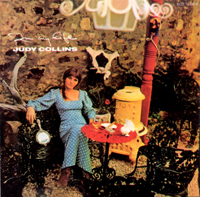 [by Ken Hunt, London] Sometimes life gets in the way of unpaid writing and technical (internetmabob) matters in the way of uploading. Hence skipping a month. Not that February 2012 was so bad a month. More like the hours got rationed and paying work intruded. This month’s selections are from the UK-based band Durga Rising, the Czech vocalist-violinist Iva Bittová and Wilmar de Visser (bassist with the Nederlands Blazers Ensemble), the Carolina Chocolate Drops’ Rhiannon Giddens, Wizz Jones, El Hachemi Guerouabi, Shamim Ahmed Khan, Judy Collins, Phoebe Smith, Celia Hughes, Belinda O’Hooley and Heidi Tidow. Slaap zacht.
Go Down Easy – Durga Rising
Kuljit Bhamra (percussion), Russell Churney (piano) and Barb Jungr (vocals, harmonium, mandolin) deliver this album. Smoochy, sultry, saucy and sexy – it’s the way Barb J. baits, tells and sells them. This is one of the tours-de-force from this now-reissued album. From Durga Rising (Keda KEDCD46, 2011)
Jabúčko – Iva Bittová and Wilmar de Visser
 Wilmar de Visser and Iva Bittová played this at their joint concert at Amsterdam’s Muziekgebouw aan ‘t IJ – that steel, glass and wood structure on Piet Heinkade, one tram stop out from Centraal Station. The tram’s lady conductor and I bantered a bit on the way to the venue. I had never seen Iva and the Nederlands Blazers Ensemble (NBE) perform, though their Ples Upírů (‘Dance of the Vampires’, Indies Records MAM169-2, 2002), a live recording from Den Haag in April 2000, attests to a long-lived musical partnership. By the way, Ples Upírů is translated as ‘Dance of the Vampires’. Apparently, vampires are very popular nowadays, so mentioning vampires a few times may bring vampire-lovers to unexpected discoveries at non-vampiric websites. I digress.
The first word of proper Czech I ever consciously learned, thanks to my esteemed co-host of this site, was jablkoň (‘apple tree’) in 1991. There was nothing Biblical to my first lesson in Czech: it was the name of the Czechoslovakian acoustic music group, Jablkoň – formed in 1977 and still going strong. I watched in amazement – and amazement is apposite – on a little stage beside the main pedestrian street, today’s Boulevard, at TFF Rudolstadt in July 1991. Grasping the grammatical implications of the pip diminutive form jabúčko (‘little apple’) from jablkoň, the tree, would take many years and many lessons more.
This piece figured prominently in Iva Bittová and the NBE’s concert on 25 January 2012. I knew, if nothing else, that this concert marked a turning-point in my professional life. Iva was about to record one or two of our collaborative compositions in a week or so later in Switzerland. After that, for reasons of probity I would be withdrawing from writing about her work in the usual music critic sense. But I loved this performance because it reminded me of the concert.
This is from a DVD/CD rush-release from the NBE bash on 1 January 2012 at Amsterdam’s Concertgebouw at which Iva Bittová was one of the guests. The title Vreemde Vogels communicates the sense of ‘strange birds’ or ‘foreign birds’ in a rara avis sense. From Vreemde Vogels (NBE NBECDO30, 2012)
PS That same day, 25 January 2012, back in England my friend and work colleague Robert Maycock died in a car accident. Keith Potter’s obituary of Robert Maycock appeared in The Independent of 9 February 2012.
http://www.independent.co.uk/news/obituaries/robert-maycock-classical-music-critic-for-the-independent-6671390.html
Pretty Bird – Carolina Chocolate Drops
I count the Carolina Chocolate Drops as one of the great darling hopes of contemporary US roots music. This is a solo performance by their Rhiannon Giddens of a song by Hazel Dickens. No huge text or exegesis needed. Just love it. This track concludes their album. Hazel Dickens would be tickled, I suspect. From Leaving Eden (Nonesuch Records 7559-7967-1, 2012)
Ken Hunt’s obituary of Hazel Dickens from The Independent of 3 June 2010 is at
http://www.independent.co.uk/news/obituaries/hazel-dickens-pioneering-bluegrass-singer-whose-songs-championed-the-working-class-2292347.htmll
Massacre At Beziers – Wizz Jones
Wizz Jones remains one of the most insightful guitarists of our era. However, his prowess on the acoustic guitar has unfairly overshadowed his abilities as a song interpreter. Alan Tunbridge’s song about the Cathars, the eminently transferrable Albigensian Crusade and a Marvyn Gaye-like what’s going on? tale. This recording was made in Huldenberg, Brussels on 18 March 2006. From Huldenberg Blues (Sunbeam Records SBRC5085, 2011)
El Harraz – El Hachemi Guerouabi
The title’s English-language translation has it as ‘The Fierce Doorman’. Any song with that title must be smuggling something under the radar. This performance is in the chaabi style, meaning ‘of the people’. This particular double-CD set is a cornerstone of my non-rai Algerian music experience.
From Trésors de la musique algérienne (Institut du Monde Arabe 321.054.055, 2003)
If ever in Paris, do please visit Institut du Monde Arabe (Museum of the Arab World) at 1 Rue des Fosses St.-Bernard (5th arrondissement), 75236 Paris for further insights.
Janasanmodini – Shamim Ahmed Khan
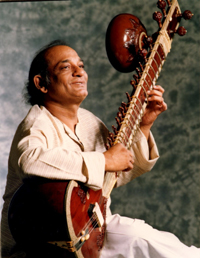 Shamim Ahmed (1938-2012) had such a mellifluous voice on the sitar, totally his but utterly bearing the stamp of his guru Ravi Shankar. This particular Hindustani-style raga composition of his guru’s came about in 1947 apparently (according to the notes). Shankar sounded out various people whether it already existed in the South Indian ragam firmament where mathematically speaking musically anything possible might be said to have been already catalogued or anticipated, so to speak. (I know: a nastily complex sentence.) This is a performance by a musician whose playing that has coloured my life. Shamim Ahmed’s interpretation has a joyful succulence to it. From ShankaRagamala – A Celebration of the Maestro’s Music by his Disciples (Music Today CD-A-04200B of CD-A-04200A-C, 2005)
Ken Hunt’s obituary of Shamim Ahmed Khan from The Independent of 7 March 2012 is at http://www.independent.co.uk/news/obituaries/shamim-ahmed-khan-sitar-player-taught-by-shankar-7542206.html
In My Life – Judy Collins
This Lennon/McCartney song had a fragrance to it when it emerged into the world back in the 1960s. Judy Collins’ In My Life interpretation had a willowy, plaintive quality that inspired me in 1967 and in its austerity it is still impressive. “But of all these friends and lovers, there is no-one compares with you…” is such a jejeune and inexperienced statement. It shouts inexperience. It has also become a song about aging. “Some are dead and some are living…” A magnificent song and a magnificent performance. My colleague Peter Doggett’s notes illuminate this reissue. Fifth Album & In My Life (Elektra/Rhino 8122 73392, 2006)
A Blacksmith Courted Me – Phoebe Smith
This is one of the most perfect songs in the English language. This is a recording made by Peter Kennedy in July 1956. Shirley Collins compiled and annotates this volume in Topic’s second (2012) tranche in its Voice of the People series. Quite properly, it concludes the first CD on this double set. Phoebe Smith’s is a performance that transports. She was one of the most mesmerising of the English Gypsy singers. From the various artists’ I’m A Romany Rai (Topic Records TSCD672D, 2012)
Jealousy Thoughts – Celia Hughes
This is a variant of Worcester City, with coughing, voices off and voices on. And it has a presence that is gooseflesh palpable.
“Too young to court, too young to marry,
Too young to court of a wedding day.
For when you are married, you’re bound for ever
And when you’re single, you’re sweet liberty.”
Celia Hughes’ voice has a clarity like few others. It is her only track on this second volume of Peter Kennedy’s recordings. From the various artists’ I’m A Romany Rai (Topic Records TSCD672D, 2012)
The Tallest Tree – O’Hooley & Tidow
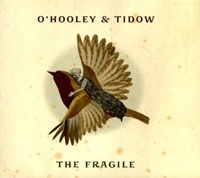 Belinda O’Hooley and Heidi Tidow are pretty self-contained as groups go but they are utterly in the spirit of the No Master’s Co-operative – the Northern England-based co-operative that now, amongst others, includes O’Hooley & Heidi Tidow, Coope Boyes & Simpson, Chumbawamba in that spirit of organise to survive. This is a track from their second album, recorded between September and October 2011.
It’s not big or clever to pick the opening track from an album. Sequencing albums is no little art in itself. This song has a few bird references – “The robin calls, the robin sees, the robin flies to the tallest tree” – with “crows in pinstriped uniform” as baddies bent on “the commoner’s nest egg…” Call me an old-fashioned naturalist but I connect those images with E.A. Armstrong’s 1958 The Folklore of Birds in Collins’ New Naturalist series and folklore wrenched into the present. Don’t be beguiled by the voices: heed the words. From The Fragile (No Master’s NMCCD39, 2012)
More information at http://www.nomasters.co.uk
The image of Iva Bittová at the after-concert at Muziekgebouw aan ‘t IJ is © Ken Hunt/Swing 51 Archives. The copyright of all other images lies with the respective photographers, companies and image-makers.
19. 3. 2012 |
read more...
« Later articles
Older articles »