Giant Donut Discs
 [by Ken Hunt, London] The batch of donuts has a great deal, on one hand, to do with current commissions; and on the other, choosing music that had nothing to do with work. The music is courtesy of Bessie Smith, The Kossoy Sisters with Erik Darling, Damien Barber & Mike Wilson, Rosa Imhof, Ida Schmidig-Imhof and Frieda Imhof-Betschart, Nusrat Fateh Ali Khan & Party, Martin Hrbáč, The Notting Hillbillies, Mobarak and Molabakhsh Nuri, Vishwa Mohan Bhatt & Musicians of Rajasthan and Peter Case.
Frosty Morning Blues – Bessie Smith
 This performance from January 1924 has a bare-bones accompaniment. Jimmy Jones (piano) and Harry Reser (guitar) do the honours. E. Brown’s slow blues starts out lyrically as a quite predictable tale, the sort of blues terrain where you can see the rhymes coming. It’s one of those songs where the man that she loves has vamoosed and left her alone. “Did you ever wake up on a frosty morning and discover your good man’s gone?” is the question she asks. Then she starts recalling how he wasn’t handsome and reminiscing. Her fire isn’t burning, for instance. She ends philosophically stating plainly that when you lose a man, he’s as good as dead. A perfect little vignette, packed with detail, with frost (rather than frostiness) as a metaphor. From The Complete Recordings Vol. 1 (Columbia Legacy C2K 47091, 1991)
I’ll Fly Away – The Kossoy Sisters with Erik Darling
This was recorded in August 1956 and released later that year. The New York-based twins Ellen and Irene Kossoy – Irene Saletan and Ellen Christenson, as they became – were three months past 17 years old when they made their debut album for Tradition of southern mountain material, singing close harmonies and accompanying themselves on banjo and guitar. On the album Erik Darling came in to beef up their sound. This most moreish track is a stand-out.
What sets them apart are their harmony vocals on this sacred song. The album notes say they had learned it from the singing of James and Martha Carlson. Listening to the album in 2002, their previous activities were blank pages. They turned out to be yet more of Pete Seeger’s children, having attended a summer camp at which he had, by all account, performed. After Bowling Green, they played the first Newport Folk Festival in 1959. There was further festival appearances, marriages, parenthood and minimal recording activity.
But something else did happen and that was it appearing in Joel and Ethan Coen’s O Brother, Where Art Thou? (2000), renewing interest in the sisters and I truly hope the arrival of new pension plan in the form of royalties from that film. From Bowling Green (Tradition TCD 3007/1, 2002)
More information is at http://www.kossoysisters.com/
 The Old Songs – Damien Barber & Mike Wilson
The title song of this duo’s album it may be, but it shoots me back to old friendships with its authors, Pete Bellamy and Bob Copper. Bob wrote the words and Pete the tune. According to the album notes, Pete sent it to the Wilson Family and few decades later it popped out in this form – “A twenty to thirty year gestation period for a Wilson Family song, is not unusual.”
It condenses many of Bob’s most heartfelt themes and takes in the longevity of the old songs (and gormlessness of modern ones), good ale and being glad to be alive. Yes, it gets cod in places but both Pete and Bob must have had twinkles in their eyes when they put the song together. Bob liked a spot of Sleepy John Estes and Pete had moments of rapture to the Rolling Stones.
Damien Barber and Mike Wilson net that quality of knowingness and even get a bit of post-Bellamy bleating in, too. From The Old Songs (DBS004, 2011)
Trois Jüüzli – Rosa Imhof, Ida Schmidig-Imhof and Frieda Imhof-Betschart
Rosa Imhof and Ida Schmidig-Imhof are sisters and Frieda Imhof-Betschart is their sister-in-law. This recording was made in Alois Imhof’s alpine pasture hut at Sali in the Muotatal district of the Swiss canton of Schwyz in June 1979. Muotatal historically was remote from mainstream Swiss society. In isolation a form of vocal music called Juuz evolved. Jüüzli is its diminutive form with vowel change and the Swiss-German -li diminutive suffix and refers to a kind of yodelling. It defies expectations of what yodelling sounds like.
The three women weave wordless vocal lines and harmonies in ways that, three decades on, still trounce expectations. The pieces last just over three minutes in total. The first, Dr Nägelibärgler, is named after the ;Nägelibärgler mountain the second, Höch Turä Jüüzli’, another mountain called Höch Turä and the last, Z’Butzener’s (At the Butzener’s), after a surname. Returning to this collection, first released in 1979, came about because of back-researching Switzerland’s roots-based music traditions for R2‘s article about Nørn that appeared in its November/December 2011 issue. From “Jüüzli” – Jodel du Muotatal (Le Chant du Monde LDX 274 716, 1990)
 Allah hoo, Allah hoo, Allah hoo – Nusrat Fateh Ali Khan & Party
The Party weaves lead and call-and-response vocal parts on this hamd – a qawwali praise song form directed at God/Allah – set in the light ‘mixed’ (mishra) raga ‘Mishra Khamaj’. Recorded at the Kufa Gallery on 14 December 1989, it is era-defining. It is Nusrat Fateh Ali Khan before all the bally-hoo. From Traditional Sufi Qawwalis – Live in London – Vol. I (Navras NRCD 0016, 1993)
Suchovské hudecké – Martin Hrbáč
The Moravian folk tradition of the Czech Republic is astonishingly vibrant and the notes to this particular track explain that Martin Hrbáč has been viewed as a successor to the Horňácko ([Moravian] Highlands) bandleader Jožka Kubik. A bandmaster himself, Hrbáč is a superb fiddle player of the ‘first violin chair’ kind, a bass player and vocalist. This instrumental performance is driving melodically with under-melodies glimpsed like petticoats to the dancing main melody. It captures the elemental force of Moravian village band music. The track originally appeared on his 1995 album, Horňácký hudec on the Gnosis label. From the various artists’ compilation Antologie moravské lidové hudby/Traditional Folk Music in Moravia – Horňácko (Indies MAM 486-2, 2011)
 Feel Like Going Home – The Notting Hillbillies
The Notting Hillbillies were Brendan Croker, Guy Fletcher, Mark Knopfler and Steve Phillips and they put on a very good show. No idea how much they worked together. My memory was that it was just their Missing … Presumed Having A Good Time album and its supporting tour. But I was wrong. Apparently they continued to do occasional gigs into the late 1990s.
They weren’t a spin-off of Dire Straits, as some suggested. They were, if memory serves me well, a gathering of three old friends – Brendan Croker, Mark Knopfler and Steve Phillips – augmented by Guy Fletcher on keyboards, who co-produced the album with Knopfler. They started out in Holbeck – an area of Leeds I got to know some later that decade when my son was living there. The street he lived on is now gone – well, Runswick Place is probably still there but his place certainly isn’t. It was bulldozed.
Clearly, as far as Knopfler was concerned, there was no financial imperative to play. He was sitting pretty. The story I recall hearing was that he had done it out of the kindness of his heart, friendship and the chance to play and record with some mates. The consequent trip had put Croker and Phillips on a secure footing financially. Anyway, that was the story I remember.
At one of their gigs supporting the album, they signed the CD artwork – hence the defaced cover. Before the gig I interviewed Guy Fletcher for an article in the El Cerrito-based Keyboard. The concert review – for another magazine – was grossly manhandled. One subbed change replaced ‘claque’ with ‘clique’ but worse was to occur. It was the infant days of computer spell-checking and jettisoning dictionaries.
Feel Like Going Home was a Charlie Rich credit and typical of the kind of repertoire that Brendan Croker was plying outside the Hillbillies with the 5 O’Clock Shadows – one of the most entertaining and illuminating rock bands on the pub-rock circuit during the 1980s. This song freeze-frames several periods in my life. What most affects me about this track is the tastefulness of the arrangement, the power of Brendan’s voice and the sentiments of the song. Feel Like Going Home was a parting glass on the album – and in concert. From Missing … Presumed Having A Good Time (Phonogram/Vertigo 842 671-2, 1990)
 Qalandari Tune – Mobarak and Molabakhsh Nuri
This untitled, rhythmically driving instrumental is from Baluchistan and the Sufi Qalandar tradition. Those of this tradition tread a profoundly Sufi path and pursue (if that’s quite the word) a way of life that often clashes with the orthodoxies of mainstream society. Mobarak plays the benju, a stringed instrument that cannibalises typewriter parts, though the times are a-changing and there is no knowing how the supply of manual typewriters will stand up. This tune sways rhythmically like shifting sands. The double-CD from which it comes is a complete joy and essential listening for anyone interested in the wider extent of Sufi music, beyond qawwali in other words, in South Asia. From the various artists’ anthology Troubadours of Allah – Sufi Music from the Indus Valley (Wergo SM 1617 2, 1999)
Helo mharo suno – Vishwa Mohan Bhatt & Musicians of Rajasthan
The Rajasthani “Helo mharo suno” translates as ‘Hear me calling you’ or ‘Hear my entreaty’. It is a praise song to the medieval holy man Baba Ramdev, one of the region’s most revered Hindu deities and Islamic pirs (saints). His modern-day is concentrated in today’s Rajasthan and Gujarat but stretches to Madhya Pradesh and Sind in Pakistan. He is a great unifying figure, famed for bringing together people of different religions, sects and castes.
The Rajasthani classical maestro, Vishwa Mohan Bhatt plays the classical guitar hybrid, Mohan vina on this album and his instrumental lines weave together marvellously well with the folksier regional instruments and vocals. I wrote the notes for Desert Slide and it remains one of my favourite recording projects of his. I have never stopped playing it. In fact it is the album of Vishwa Mohan Bhatt’s that I have played the most, even more than his and Ry Cooder’s Meeting By The River for which they earned a Grammy. It came back into steady rotation whilst working on an article about Sufi music. From Desert Slide (Sense World Music 085, 2006)
More Than Curious – Peter Case
Got to interview Peter Case a couple of times down the years. This particular track on his eponymous solo debut was one of the tracks produced by T-Bone Burnett and Mitchell Froom. The production has a real presence – notably the drum and the electric guitar sound. It stands out.
But it is the song itself that does it for me. “I’m the kind/That’s always takin’ things apart…” the song begins (and concludes). “If I could tonight/I’d take a look in your heart.” Ordinarily I couldn’t have afforded a Japanese import at the time of this album’s CD release but I was the London correspondent for Tower Records’ Pulse! magazine and got staff discount for this one. From Peter Case (Geffen (Japan) 32XD 812, 1986)
The copyright of all images lies with the respective photographers, companies and image-makers.
9. 1. 2012 |
read more...
 [by Ken Hunt, London] The one has a lot to do with thinking about loss and renewal, life and the end of life. The music is provided by Anoushka Shankar, David Crosby, Jayanti Kumaresh, Judy Collins, Chumbawamba, Franz Josef Degenhardt, Sultan Khan and Manju Mehta, Ági Szalóki and Gergő Borlai, Davy Graham and Federico García Lorca.
Bulería con Ricardo – Anoushka Shankar
This comes from Anoushka Shankar’s debut for Deutsche Grammophon, a fusion affair that travels the continents from modern-day north-west of the Indo-Pakistani subcontinent to the Iberian peninsula. Anoushka Shankar plays sitar, Pedro Ricardo Mieo piano, Juan Ruiz adds unspecified “Spanish percussion” and Bobote and El Eléctrico palmas (hand claps). It’s a feast of fun and should Anoushka Shanka, also a trained pianist, gets to collaborate with the flamenco pianist David Peña Dorantes there is no knowing where things might go. From Traveller (Deutsche Grammophon 477 9363, 2011)
Tamalpais High (At About 3) – David Crosby
I slid my nail through the shrink-wrapped LP in 1971 in Itzehoe. I had splurged good West German marks on an import copy from a record shop in Hamburg. It was one of the best purchases of my life. Crosby’s first solo album was and remains a gem.
I had no idea what had inspired his Tamalpais High (At About 3) musical adventure. I know now, but that is irrelevant. That is not the point of music. The point of music is the seeds it sows. We can review and change our thoughts about a piece of music as we age. We can also hold more than one interpretation. Many years later, I was sitting with a friend of my son’s age in San Rafael looking up to Mount Tamalpais. I told him a story about a friend’s son having died at the top of Tamalpais. I wept and let years of bottled up emotion pour out, as we talked about David Crosby, Los Lobos and the Pogues. One of the most cathartic experiences of my life. From If I Could Only Remember My Name (Atlantic/Rhino R2 73204, 2006)
Mysterious Duality – Jayanti Kumaresh
This is the title track from one of my albums of the year. The vainika (vina or veena player) Jayanti Kumaresh has the senior Karnatic violinist Lalgudi Jayaraman as a maternal uncle while her aunt is Padmavathy Ananthagopalan, with whom she studied vina. She also studied with S. Balachander (1927-1990), contender for firebrand vainika of recent times. This project is where so much comes together and where she reveals herself as one of the most promising vainikas of our day. Very Twentieth-first century with a few generations of musical glory as back-up. From Mysterious Duality (EarthSync ES0038, 2010)
 My Father – Judy Collins
My Father originally appeared on Judy Collins’ Who Knows Where The Time Goes (1968). The arrangements and overall feel were a departure, for gathered around her were musicians capable of delivering folk-rock arrangements. There was something special about the sound of David Anderle’s production, just as there had been with Mark Abramson’s Wildflowers. On this track she was joined by Michael Melvoin on piano, Stephen Stills on electric guitar, Chris Etheridge on electric bass and James Gordon on percussion. She plays electric piano.
Reading her autobiography, Trust Your Heart (Houghton Mifflin, Boston, 1987) recently, I came to an appreciation of this song that I had never had hitherto. I love the way she conflates her family’s history (she is the eldest of four siblings, not the youngest) in this Parisian fantasy. A key discovery, however, was reading that her dad had been blind. My Father’s poignant lines “And watch the Paris sun/Set in my father’s eyes again” took on new meaning. From Wildflowers & Who Knows Where The Time Goes (Rhino 8122 73393-2, 2006)
Salt Fare, North Sea – Chumbawamba
This song of Chumbawamba’s that uses a vocal sample from Lal Waterson’s Some Old Salty re-entered my imagination because it opens their Readymades – a project that I view as, crudely put, Britain’s answer to Beck’s visiting of the Alan Lomax Archives, but with the good manners to ask first. I was listening to it for as background research for an article about Davey Graham – whose Anji is prominent in the next track Jacob’s Ladder and somehow I wound up playing Salt Fare, North Sea and Jacob’s Ladder over and over. Chumbawamba continually tickle my fancy. One day I shall write about them properly. From Readymades (Mutt Records LC-12157, 2002) http://www.chumba.com/
 Café nach dem Fall – Franz Josef Degenhardt
Flying back from Prague via Frankfurt am Main to London had been hellacious. Fog blanketed Ruzyně airport (PRG) and the Lufthansa plane permitted to fly out of the fog banks took on a bunch of people from a cancelled flight to Munich. At some point I unfolded the Frankfurter Allgemeine and let out a cry on discovering that Franz Josef Degenhardt had died. His death was on the front page of the newspaper.
Franz Josef Degenhardt shaped my expanding worldview and consciousness about politically engaged song when I first discovered him in my bosom buddy, Michael Moser’s record collection in Itzehoe in 1971. Later Franz Josef and I corresponded, put in touch with each other by his sister-in-law, the illustrator Gertrude Degenhardt. Many songs could have hit me in the aftershock of learning that he had died. This was the one. I love the sweep of his vision. It’s a list song multiplied many times. He’s a shameless old name-dropper and I love this suite all the more for it. He ranges from “Karl & Groucho Marx, Che Guevara & Bill Gates” (straightaway introducing the café’s nay-sayer, the garlic-eater (Knoblauchfresser) to the Rolling Stones and the Beatles. And it just goes on and on. (Many thanks to the Lufthansa crew on that fraught flight, too.) From Café nach dem Fall (Polydor 543 615-2, 2000)
Ken Hunt’s FJD obituary in The Independent of 23 November 2011 is at http://www.independent.co.uk/news/obituaries/franz-josefdegenhardt-musician-and-hero-of-the-counterculture-6266187.html
Rāg Kaunsi Kanada – Sultan Khan and Manju Mehta
I first met the sarangi maestro Sultan Khan when he did an all-nighter cushion concert with the father and son tabla maestros, Alla Rakha and Zakir Hussain in London in 1981. I first met the sitar virtuoso Manju Mehta, the sister of Vishwa Mohan Bhatt, at the Harballabh in Jalandhar in 2008. This is a duet recording from the 2004 Saptak Festival in Ahmedabad in Gujarat. After Sultan Khan’s death on 27 November 2011 I listened again and again to Soja Re (Go To Sleep) from the now out-of-print compilation Rough Guide To India as I started writing his obituary. Then I looked at the pile of Sultan Khan CDs beside me. I decided that this remarkable interpretation of Kaunsi Kanada was what I needed to listen to… From Umeed (Sense World Music 104, 2008)
 Vörösbor – Ági Szalóki and Gergő Borlai
Kishúg is a marked departure for Ági Szalóki. On this album she lights out for, for her, new rock and world music territory. Much of the keyboard- and drum-saturated sound of Kishúg, in what seems to me, as the former London correspondent for El Cerrito, CA’s Keyboard magazine, to champion a retro vibe in an unapologetic way that you don’t hear much nowadays.
Listening through to this album I would suspend judgement and put this track on repeat (the way reviewers do) in order to mull over what was in the mix. I took me weeks for me to puzzle why this track did it for me. It was the Latin style percussion reminding me of the tasteful frenzy of Gene Clark’s masterpiece No Other and Ági Szalóki’s vocal. Maybe the track is more of a vibe than a song. Doesn’t matter.
Vörösbor (Red wine) shows off her vocal talent splendidly, a talent that is not reliant on understanding a word of Hungarian. (There are no translations of the lyric.) Powerful voice. Effervescent stuff. From Kishúg (Folk Európa Kiadó FECD 053, 2011)
More information at http://szalokiagi.hu/index-main.html
Photo © 2011 András Hajdu, courtesy of Ági Szalóki
She Moved Through The Fair – Davy Graham
This is one of those before-and-after performances. What was before? What flowed afterwards? It appears as the fourth track on this Dave Suff-compiled double-CD anthology – essential if you have never heard the wonders that were Davy (later, Davey) Graham. I cannot say that I knew him well but I did know him for a fair few years, interviewed him and corresponded with him over many years. This is one of his performances that remains for me a demonstration of his uniqueness.
My Davey Graham entry is in the January 2012 edition of the Oxford Dictionary of National Biography. This is the sort of music that guaranteed him a place in that history of British culture told through biography. From A Scholar and a Gentleman (Decca 532 263-1, 2009)
 Zorongo gitana – Federico García Lorca and La Argentinita
I had forgotten that Lorca (1898-1936) had recorded music, let alone flamenco, although I knew of his flamenco connections and advocacy. I found this CD in a second-hand record shop. The last four tracks of this album have him accompanying the Buenos Aires-born Encarnacín López ‘La Argentinita’ (1895-1945) on piano in 1931. La Argentinita sings and adds hand and foot percussion, but her flamenco is diaspora flamenco and a signpost to later diaspora musical movements.
I have no idea about the availability of this recording, but for me, Lorca is one of my borrowed ancestors.
This is one of those tiny treasures. From In Memoriam (EMI (Spain) CDM 5 66783 2, 1998)
Ági Szalóki’s portrait is by András Hajdu and appears courtesy of Ági Szalóki. The copyright of the other images lies with the respective photographers, companies and image-makers.
5. 12. 2011 |
read more...
 [by Ken Hunt, London] This month’s batch has a lot to do with thinking about rhymes, rhythms, mythologies and conversations. Bert Jansch, Hedy West, La Piva Dal Carner, Grateful Dead, Jagjit Singh & Chitra Singh, Laura Marling, Marvin Gaye, Rapunzel & Sedayne, David Lindley y Wally Ingram, and Ali Akbar Khan supply this month’s inspirations.
 Nottamun Town – Bert Jansch
No apologies for returning to Bert Jansch’s 1966 album once again. It was playing as the news broke on the morning of 5 October 2011 that he had died in the wee small hours. I have known and extolled Jack Orion since the year of its release. It had depths and darknesses unlike any of his two previous solo releases, in part because of his embracing of traditional material. Even the LP’s design signalled a bleakness or austerity with its matt black cover when laminating LP sleeves was the norm in Britain.
Nottamun Town’s narrative is mysterious. Still, that’s hardly a revelation. Its rhetorical contradictions and impossibles still captivate. It still communicates its otherworldliness. No wonder its Old Weird Europe tripped a switch in Dylan. From Jack Orion (Castle Music CMRCD304, 2001)
Ken Hunt’s obituary of Bert Jansch from The Independent of 6 October 2011 is to be found at http://www.independent.co.uk/news/obituaries/bert-jansch-guitarist-whose-style-influenced-his-peers-across-five-decades-2366017.html
Brother Ephus – Hedy West
This innocent, light-hearted banjo and vocal piece peopled with characters with names like Moses and Ephus is addressed to “revenant sisters”. It made its first appearance on Hedy West’s debut Topic album called Old Times & Hard Times – Ballads And Songs From The Appalachians (1965). She learnt this version of the song, which she attributed probably to minstrel song origins. It is full of fun with observations about such as angels’ footwear (“What kind of slippers do the angels wear?/Golden slippers to speed on air/They wear fine slippers and wear fine socks/And drop every nickel into the missionary’s box…”) and the trustworthiness of preachers (“Some folks say a preacher won’t steal/But I caught two in my water-melon field…/A-preachin’ and a-prayin’ and singin’ all the time/Snippin’ water-melons off the vine…”). From Ballads and Songs from the Appalachians (Fellside FECD241, 2011) More information at http://www.fellside.com/
 Al Confini d’Ungheria – La Piva Dal Carner
In music everything starts from somewhere and nothing starts from nowhere – whether in alignment with, or opposition to what has gawn before. The Italian folk band B.E.V. (Bonifica Emiliano Veneta) alerted me to this remarkable album focussing on music from Emilla, the region way up north in Italy. It was part of their back pages, their roots and it was part of what they were carrying forward. Piva is an Italian term for bagpipes. Loving the buzz, advice taken, I back-tracked.
This still remains one of my very most played albums to emerge from the Italian Folk Revival. There is a floatiness and earthiness about what they play. Sky and earth. White and grey clouds. Greenery and reds – wine, that is. Everything here is drenched in a Northern Italian sensibility. It remains one of the finest tip-offs of my life.
“La pecora alla mattina bela e alla sera balla.” Or “The sheep bleats in the morning and dances in the evening.” What a metaphor for life! This music is like meeting a stranger on the road – a handsome man, a beautiful woman – needing to share a basket of bread, cheese and olives and a couple of bottles of cheeky reds begging to be uncorked, exhale and be enjoyed.
The band was Claudio Pesky Caroli on double-bass, vocals and piano, Walter Rizzo on French bagpipes – which the album misspells as Frech, German for ‘cheeky’, though that sounds fitting too -, Galician bagpipe, Renaissance shawm, Breton oboe, recorders and vocals, Paolo Simonazzi on hurdy-gurdy, two-row melodeon, vocals and spoons and Marco Mainini on vocals, soprano sax, clarinet and guitars.
This courting song’s title translates as ‘To Hungary’s border’ and harkens back to a time when Hungary – a personification of the Austro-Hungarian Empire’s sheer expanse – amounted to the limit of people’s imagination in terms of distance and separation. “Voglio andare tanto lontano, dagli amici e dai parenti/Voglio fare i miei lamenti, qualcheduno mi sposera…” The translation the notes give is, “I want to go very far away, from my friends and my relations/I want to make my lamentations, somebody will marry me…” I know that parenti looks like ‘parents’ but let’s steer clear because the region’s dialect does not obey Standard Italian rules. From La pegrà a la mateina, la bèla e a la stra labala – Canti e balli d’Emillia/Songs and dances from Emilia (Dunya 217506735 2, 1995)
More information at www.felmay.it and about Bonifica Emiliano Veneta at http://www.bonificaemilianaveneta.it/
Dark Star – Grateful Dead
The so-called Europe ’72 tour was probably the Dead’s finest sallying forth. They had an abundance of tip-top new compositions, a corpus of old and new work of a quality they would not surpass, only add to. It was also the last innings of Ron ‘Pigpen’ McKernan (organ, harmonica, percussion and lead vocals) who died in March 1973. He joined Jerry Garcia (electric guitars and vocals), Donna Jean Godchaux (vocals), Keith Godchaux (keyboards), Bill Kreutzmann (drums, percussion), Phil Lesh (electric bass guitar) and Bob Weir (rhythm electric guitar, vocals).
This version of their singular and signature voyage into new space is from the Bickershaw Festival in May 1972. They had so much to play for. It gets weepy at times but it soars and rides the up-draughts beautifully. From Europe’72 Vol. 2 (Grateful Dead Productions R2 528639, 2011)
More information about this and other releases from the 1972 European tour archives at http://www.dead.net/
Aaye Hain Samjhane Log – Jagjit Singh & Chitra Singh
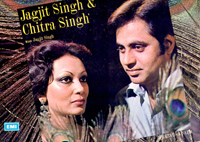 This LP must have been reissued many times over. This is the original vinyl version from the husband and wife duo that redefined ghazal (and nazm), in their case, the Urdu-language version of ghazal in particular. Neither had ghazal to the fore in their cultural backgrounds. Jagjit was born in Bikaner State, now modern-day Rajasthan of Sikh parents while his wife Chitra had been born in Bengal. There were only two duet tracks on this, their breakthrough LP. One finished each side of the album. This track concluded one of the most revolutionary albums in the history in Indian popular music. So much flows from this work. It was also the sound of sluice gates opening and if others failed to maintain standards, for the most part Jagjit Singh & Chitra Singh did. From The Unforgettables (Gramophone Company of India ECSD 2780, 1977)
Ken Hunt’s obituary of Jagjit Singh from The Independent of 13 October 2011 is to be found at http://www.independent.co.uk/news/obituaries/jagjit-singh-singer-hailed-as-the-maestro-of-indian-ghazal-2369631.html
Don’t Ask Me Why – Laura Marling
 To have a singer-songwriter to excite the imagination as much as Joni Mitchell prowling the earth is a very good thing indeed. Yes, Laura Marling’s been hailed another folk darling, especially given how she’s been taken to so many people’s bosoms. She is one of those musicians who summon images and memories of people before her while their voice sounds totally their own. The sound she makes is splendid. Plus, from reading a few interviews with her around the time of A Creature I Don’t Know‘s release I realise that there are currents and undercurrents to much of her material that are engaging. Just as I do when listening to Joni Mitchell or Jackson Browne or Judee Sill, I am willing to wait and have meaning imparted (or not). I mean that as high praise. From A Creature I Don’t Know (Virgin Records CDV3091, 2011)
What’s Going On – Marvin Gaye
Really, really tried to pin-point when the album or this track entered my life. It was recorded in May 1971. So for 40 years it has been part of the framework of my life. Still going strong. From What’s Going On (Motown 013 404-2, 2002)
Porcupine In November Sycamore – Rapunzel & Sedayne
 As an opening flourish, this track is pretty damn good. The album notes say it’s “our old field holler in the Javanese Pelog mode, inspired by the North American Tree Porcupine in Blackpool Zoo…” Rapunzel & Sedayne recorded this album between January and February 2011. Some of Sedayne’s vocal phrasing carries of echoes of those who have gone before in the folk revival. To these ears, some of the stresses and glides in Blackwaterside sound Anne Briggs-like while True Thomas has a smack of June Tabor about it in its phrasing. Doesn’t matter one iota. Learn from the best and make what was theirs your own. Rapunzel & Sedayne keep a lot of air in their arrangements. I like that. From Songs From The Barley Temple (Folk Police FPR 001, 2011)
More information at http://www.folkpolicerecordings.com/rapunzel–sedayne.html
When A Guy Gets Boobs – David Lindley y Wally Ingram
People develop strategies, diversions or bad habits before hitting the microphone. This one’s not big, it’s not clever but a few years back I start singing this John Lee Hooker-mated-with-Woody Allen song of David Lindley’s before going on stage. Now I’m not given to singing in public but greeting the public with a smile is no bad thing.
It begins, “When a guy gets boobs it don’t look so good…” – something few would deny – and it just takes off and descends into a world of lardy butts, giant donuts, burgers and fries, blood vessels a-clogging and bits a-drooping. It was recorded somewhere in Europe in 2003. It works for me, oh yes. From Live! (no name, no number, 2004) http://www.davidlindley.com/
 Rāg Durgā – Ali Akbar Khan
No apologies for the inclusion of another track from this album after October’s Rāg Hemant. It’s a priceless album and a combination of artistic wellspring and whirlpool and culturally the deepest of musical pools to dive into.
Durga is the embodiment of divine female strength. The Goddess Durgā is generally depicted riding a tigress or lioness. From Indian Architexture (Water Lily Acoustics WLA-ES-20-SACD, 2001)
For more information about Water Lily Acoustics visit http://waterlilyacoustics.com/main.htm
The image of the Durgā mandir (temple) in Jalandhar at night is © Santosh Sidhu/Swing 51 Archives. The copyright of all other images lies with the respective photographers, companies and image-makers.
1. 11. 2011 |
read more...
 [by Ken Hunt, Gaienhofen am Bodensee] Purposeful drifting might conjure images of lying on a lilo – one of those air mattresses – on a lake, floating where the breeze, current or tide take you but that would be well wrong, John. These driftings all link up, even if the connections may not cry out. Ten selections from the Bosnian vocalist Amira, the Welsh group Fernhill, the largely forgotten British faux-folk slash singer-songwriter Mick Softley, the never-to-be-forgotten singer and guitarist Ramblin’ Jack Elliott, the maestro of Hindustani maestros Ali Akbar Khan, the Karnatic vina maestro Balachander, the koto player Nakahsahi Gyōmu, the Kinks who turned office workers into heroes of the everyday, Cilla Fisher and Artie Trezise, the Gaelic singer Alyth McCormack… Louring over this batch of music and jumble of emotions was the death of Ray Fisher balanced with the consolation of time spent with dear friends at Lake Constance (Bodensee) and an overdue reunion with Hermann Hesse.
Oj Ti Momče Ohrigjanče – Amira
 Amira Medunjanin really entered my field of vision with her London concert debut supporting Taraf de Haïdouks in June 2007. Petr Dorůžka and I, your genial hosts here, went to the concert together. At that point the only recording of hers that I knew was Amira’s first album, Rosa (2004). Seeing her live enabled me to make greater sense of what she was doing. Since then, Amira’s progress has been a wonder to behold.
On this splendid track, a Macedonian song of grief from a man’s point of view, from her fourth album, Amulette she is joined by Bojan Z (Zulfikarpašić) on piano, Nenad Vasilić on string bass, Bachar Khalife on percussion with guest Vlatko Stefanovski on guitar. The vibe is Macedonian folk-jazz. The notes say, “This time the sorrow of loneliness and yearning belongs to a man. He walks by the lake and cries for his loved one. ‘Come back to me, here by the lake I await you.'” The separation could be the aftermath of an affair, a broken relationship or a bereavement. You get the drift. From Amulette (World Village 450018, 2011)
For more information visit www.amira.com.ba
Diddan – Fernhill
There are many exhilarating things to say about Fernhill’s work. Their music speaks to me even though nearly all of the little Welsh I ever had long ago slipped away through lack of use and practice. Nevertheless, there is something about the language’s sound that continually draws me back. Without entering the misty realm of cliché, it is a language of musicality with the sort of gruff, guttural leanings that contrast so well.
Fernhill is Christine Cooper (fiddle, voice), Tomos Williams (trumpet, flugelhorn), Ceri Rhys Matthews (guitar, flute, voice) and Julie Murphy (voice, sruti). Canu Rhydd (‘free poetry’), the minimalist album notes tell, was recorded in the last days of the Dartington College of Arts “before the college left its Devon home for good”. To my mind, Diddan’s style of arrangement – sweeping one moment, intimate the next – crystallises so much about Fernhill that engages so much. It captures their energy so very, very well with Julie Murphy’s soaring over driving fiddle underpinned with understated brass and guitar.
For those more inclined to the English, Forest – their take on the carol also known as Down In Yon Forest or the Corpus Christi Carol with the recurring lines “The bells of Paradise I heard them ring/…/And I love my Lord Jesus above any thing”- is also superb. From Canu Rhydd (Disgyfrith CD02, 2011)
For more on the history of Dartington Hall, track down Victor Bonham-Carter’s Dartington Hall – The History of an Experiment (Phoenix House, London, 1958)
More information about Fernhill at www.fernhill.info
Love Colours – Mick Softley
Back in 1971 Pete Frame interviewed Mick Softley for Zig Zag, the magazine that counts as one of turning-points in the appreciation of what was going on musically in Britain (and elsewhere) at the time. At times it was like a divining rod. Parts of Frame’s interview are included in the notes to this release of Softley’s Sunrise (1970) and Street Singer (1971). Another old friend, Nigel Cross, founding editor of Bucketfull of Brains supplies the contextual essay that accompanies the rest of this package.
Mick Softley had seen a small measure of success when his colleague Donovan covered his Gold Watch Blues on his debut LP and The War Drags On on the EP The Universal Soldier. As Nigel Cross reminds, both got into the UK Top Ten. Softley and Mac MacGann were going to go on tour with Donovan as part of his backing band and got as far as the Isle of Skye – not a sign of no sense of direction, more to do with it being Donovan’s home – but it never happened and they returned to St. Albans. Softley and MacLeod parted ways and Softley went solo.
Parenthetically, Mac MacGann went on to marry the US expatriate singer Dorris Henderson (how many times must she have been asked about the story of her singing on that wonderful Lord Buckley album?) and made loads of local music in Middlesex and Surrey, and settled in the Ealing-Richmond-Isleworth triangle; he died in Isleworth in 2011, by which time he and I had ample opportunities to talk about the flora and the fauna, especially the birdlife, of the upper tidal Thames and its environs.
Love Colours is an Indian-inflected, impressionistic piece from Sunrise with Lyn Dobson on sitar, Ned Balen on and tabla and Chris Lawrence on bass. Sue and Sunny (Wheatman), Lesley Duncan and Gringo add backing vocals. Very much in the stamp of the times, it just keeps growing. Pentangle’s Tony Cox produced. From Sunrise/Street Singer (BGO Records BGOCD66O, 2005)
Phil Davison’s obituary ‘Mac McGann: Folk musician in the vanguard of the singer-songwriter movement’ is worth reading at http://www.independent.co.uk/news/obituaries/mac-mcgann-folk-musi cian-in-the-vanguard-of-the-singersongwriter-movement-2264847.htm
 Mo Run An Diugh Mar an De Thu (Hi Horó ’S Na Hòro Eile) – Alyth McCormack
This is from an album by Jonny Hardie (fiddle and guitar), Brian MacAlpine (piano and keyboards), Alyth McCormack (vocals) and Rory Campbell (pipes, whistles and vocals) and grew out of a commission by the Highland Festival, the notes say, for a programme of music celebrating Captain Simon Fraser’s Airs and Melodies peculiar to the Highlands of Scotland and the Isles of 1816. Fraser (1773-1852) had had Nathaniel Gow as his violin teacher and Gow’s sensibilities must have coloured his approach when laying down this collection’s tunes, many taken from the singing of his father and grandfather. However, such was the political climate of the day that he felt it politic to omit the words.
Nevertheless, the collection sold out. In an ill-starred move he recycled the profits into republishing the book in India and the American colonies. He fell foul of knavery. A portent of illegal downloading – and a reminder that things keep coming around – his book had already been pirated in the colonies and his printing failed to recoup his outlay.
This song – it translates as ‘My love today as heretofore’ – reunites the words with a melody that is seared into my cranium. It is the tune, the slow air wedded to Robert Burns’ Ae Fond Kiss (for example, on Eddi Reader’s sublime Sings The Songs of Robert Burns (Rough Trade, 2003)). Alyth McCormack sings this song so beautifully, bringing out its pathos. She returned to the song, its title shortened to Hi Horó, on her solo album An lomall/The Edge (Vertical, 2000) with beats and a greater rhythmicality.
If even a handful of listeners or visitors to this site back-track to the earlier Captain’s Collection version it would make an already happy man happier still. Either way, Alyth McCormack is a most marvellous talent championing the Gaelic arts. From The Captain’s Collection (Greentrax CDTRAX 187, 1999)
More information at http://www.greentrax.com/ and http://alyth.net/
Connection – Ramblin’ Jack Elliott
Originally released in 1968 on Reprise, Young Brigham was Ramblin’ Jack’s debut album for a major label. This Jagger/Richards song first appeared on the Stones’ Between The Buttons and would prove to be a song that he really took to heart and would regularly revisit. From Young Brigham (Collector’s Choice Music CCM-198-2, 2001)
 Raagam-Taanam-Pallavi in Shri – S. Balachander
Balachander was a knotty character who rarely shied away from musical unconventionality. He could have been written off as an iconoclast or a renegade but for one thing. Balachander possessed a musicality that his critics could only envy. In South Indian music, it is the norm for a ragam to receive a short, crisp exposition, although there is a sparingly deployed sequence comparable to the longer renditions familiar from Hindustani concerts. That is called a raagam-taanam-pallavi. From Veena Chakravarthy S. Balachander In Concert (Swathi’s Sanskriti SA138, 2010)
Rokudan – Nakahsahi Gyōmu
A solo koto piece that swells and develops so beautifully through a set of variations from the third volume of the 1941 KBS recordings that World Arbiter has released. I know nothing about Nakahsahi Gyōmu – and never went googling – but to these ears he has a fine touch to the koto in a gagaku setting, gagaku being a courtly music style placing great weight on not only the notes but also the spaces surrounding them. A note therefore is not only released but framed. Rather than cramming in notes, the musician liberates the notes so each can be, as it were, held up to the light and their facets examined before the next arrives. Of course, that doesn’t always happen. A flurry may deliver a package of notes, so to speak. From Japan: Koto – Shamisen – 1941 (World Arbiter 2012, 2011)
Waterloo Sunset – The Kinks
It’s not just one of those songs, it’s one of those perfect London songs. From Something Else By The Kinks (Universal/Sanctuary 273 214-1, 2011)
For more information about this song, track down Nick Hasted’s You Really Got Me: The Story of The Kinks (Omnibus Press, 2011) and his highly recommended taster article ‘Ray Davies – How a lonely Londoner created one of the great Sixties songs’ from The Independent of 26 August 2011: http://www.independent.co.uk/arts-entertainment/music/features/ra y-davies–how-a-lonely-londoner-created-one-of-the-great-sixties- songs-2343826.html
Fisher Lassies – Cilla Fisher and Artie Trezise
This Ewan MacColl song opened the Topic LP, The Fisher Family (1966) and sits in fourth place in the running order of Cilla Fisher and Artie Trezise’s album, ranked as Melody Maker‘s Folk Album of the Year in 1979. At Ray Fisher’s farewell send-off at Whitney Bay on 12 September 2011 her sisters sang this song. Fittingly, it was blue skies above, clouds skittering across the sky in the direction of the North Sea and a hurricane blowing up and rocking the overspill attendees standing outside the crematorium. It was the sort of contradictory weather that Ray would have revelled in. So, no apologies for including her baby sister and her husband’s version of, to give it its fuller title Come All Ye Fisher Lassies. Rick Lee delivers the piano parts. This was such a great album. Maybe Cilla Fisher and Artie Trezise will one day take time out from their Singing Kettle incarnation to make another folk album. From Cilla & Artie (Greentrax CDTRAX 9050, 1998)
More information at http://www.greentrax.com/

 Rāg Hemant – Ali Akbar Khan
Winter draws on so it’s time for a winter rāg and Hemant is an obvious choice. Water Lily’s Kavi Alexander enjoyed a fine friendship with the sarod maestro Ali Akbar Khan and it is not fanciful to suggest that their mutual respect contributed to the Indian Architexture‘s remarkableness. Accompanied by Swapan Chaudhuri, he laid down four pieces that, in the order of presentation, were Alam Bhairav (his own once-titled rāg composition Alamalaya Smriti), Hemant, Megh-Sarang and Durgā. But this is winter and years of returning to this recording have only made it more austere, more luscious. Ali Akbar Khan’s music is a wellspring to which I continually return. From Indian Architexture (Water Lily Acoustics WLA-ES-20-SACD, 2001)
The image of Ken Hunt interviewing Ali Akbar Khan in his home study cum shrine room from 1993 is © Santosh Sidhu/Swing 51 Archives. The copyright of all other images lies with the respective photographers, companies and image-makers. Hermannn Hesse’s first home in Gaienhofen from 1904 to 1907 was the next-door house on Kapellenstraße. Without getting sentimental or romantic, it felt like a place where the past and present connects.
Ken Hunt’s obituary of Ray Fisher from The Independent of Friday, 9 September 2011 is at http://www.independent.co.uk/news/obituaries/ray-fisher-singer-who-established-herself-as-one-of-the-most-important-figures-in-the-british-folk-revival-2351551.html
3. 10. 2011 |
read more...
 [by Ken Hunt, London] The one has a lot to do with thinking about rhymes, rhythms, mythologies and conversations. The music from Panta Rhei, Ornette Coleman, Dick Gaughan, Pentangle, Traffic, Talking Heads, Márta Sebestyén, Martin Simpson (with Dick Gaughan), Steve Tilston and Aruna Sairam.
 Nachts – Panta Rhei
This particular performance isn’t typical of the East German jazz-rock Panta Rhei, lazily rather than waggishly labelled the Chicago of the East. Back in the day they proved to be the birthing ground of many of the most important Ostrock bands with personnel streaming out all over the place. Members went on, for example. to Karat and Lift. Overwhelmingly though, the band’s image was shaped by its two lead vocalists Herbert Dreilich and Veronika Fischer.
Nachts is a Dreilich composition sung by Fischer. It begins with an opening electric guitar statement. Drums with telling cymbal work enter and the instruments fall into place. The arrangement features prominent piano and flute and keyboard washes. The mood created is romantic. Vroni Fischer is singing solo. “Perhaps you also think of me/of hours full of happiness/That I’ll finally come to you/Back to you.”
Nachts translates as ‘nights’ (in its adverbial sense) and is a wistful torch song of longing and imagining a lover’s return or reunion. The song is much anthologised whether on Amiga reissue compilations or the touchy-feely anthology Abendstimmung (‘Evening mood’). It first appeared as the B-side of Panta Rhei’s Hier Wie Nebenan (‘Here like next-door’) (Amiga 4 55 880) in 1972 but was elbowed off the band’s debut LP.
Amiga was the only deal in town and it was a small miracle for any East German rock group to get to record, let alone get an album released. Everything was scrutinised, nothing was left to chance or deemed coincidence when officials wielded their mighty, all-powerful red pens. This is not to say that Nachts is anything subversive but its lyrics could allow the ‘wrong’ sort of interpretation – “Slowly the night passes/A new day is beginning…” Said day is full of sunshine, it continues for the twitchy-pen censor. Long before technology brought in CCTV and surveillance cameras, the German Democratic Republic was a state that never slept for the night had a thousand eyes, paid and volunteer.
It eventually ended up on Panta Rhei’s Die frühen Jahre (‘The Early Years’) LP for Amiga in 1981. On Abendstimmung the argus-eyed will note that their name changed from Panta Rhei (Greek for ‘Everything flows’) to Pantha Rhei. It could have been a proofing error, a dumbing-down or a confusion with Panther. Let’s not speculate, though. It was a mistake, an honest one and nobody wants the inquisition to burst in. From Die frühen Jahre or Abendstimmung etc
Tom Paine’s Bones – Dick Gaughan
Wandering around Lewes in West Sussex, I made not so much a pilgrimage as a visit to the place where Tom Paine, a political polestar by day or night, lived. Looking up at the stout-timbered house on the high street, Graham Moore’s tribute, as sung by Dick Gaughan, kept running through my head.
It lodged in my head for months with its “I will dance to Tom Paine’s bones/Dance to Tom Paine’s bones/Dance in the oldest boots I own/To the rhythm of Tom Paine’s bones…” Then in July Barbara Dane and I had an email exchange, thanks to Leon Rosselson, that touched on Paine. We evoked him as a mutual inspiration. In August Aruna Sairam and I got chatting about the importance of visiting places with an artistic connection. By then, Dick Gaughan’s magnificent interpretation of the song was clearly not going away. From Outlaws & Dreamers (Greentrax CDTRAX 222, 2001)
More information at http://www.dickgaughan.co.uk/
 Theme From A Symphony (Variation One) – Ornette Coleman
Dancing In Your Head (A&M Horizon, 1977) was a turning-point in free-form jazz and the reason it made such a strong impression on me, I thought, was Midnight Sunrise, recorded in January 1973 in Jajouka, Morocco. It included the Master Musicians of Jajouka. Midnight Sunrise also connected with Coleman’s two Themes From A Symphony and their harmolodics. (“This means the rhythms, harmonies, and tempos are all equal in relationship and independent melodies at the same time.” When I first encountered it, the album’s three tracks seemed like some gooey, honey-based delectable confectionary with nuts stirred in. Listening back to it, this track proved to be the key. Familiarity can breed new insights. From Dancing In Your Head (Verve 543 519-2, 2000)
I’ve Got A Feeling – Pentangle
One of Pentangle’s finest songs, originally part of their double-LP Sweet Child (1968). From Sweet Child (Sanctuary CMDDD132, 2001)
 The Low Spark of High-Heeled Boys – Traffic
The post-hit band Traffic incarnation was one of their finest. Their music distilled so much as they crammed all those ideas into their music. This particular song from Steve Winwood and Jim Capaldi from their 1971 album of the same name does wonderful things with tensions. Those tensions apply to both the music and the lyrics. From The Low Spark of High-Heeled Boys (Island 314 548 827-2, 2002)
Once In A Lifetime – Talking Heads
And then one thing leads to another. Same as it was. From Sand In The Vaseline (Sire Records 0777 7 80466 2 2, 1992)
Bú-küldöző – Márta Sebestyén
On this album, Márta Sebestyén sings (as well as playing tin-whistle and drum) as part of a trio, with Balázs Szokolay Dongó contributing bagpipes, shepherd’s flutes, fujara, tárogató (Hungary’s indigenous ‘clarinet), saxophone and vocals, and Mátyás Bolya playing koboz (fretless lute) and zithers. This particular suite, Bú-küldöző (‘Sending Off Sorrow’) banishes misfortune so gloriously. It begins with Mikor kend es Laci bátyám… (If You Too, Laci…) into Kecskés tánc (Goat-like Dance) into Ihogtatás (A Rhythmic Yell). A piece of musdic that came out of this August’s conversation with Aruna Sairam. From Nyitva látám mennyeknek kapuját/I Can See the Gates of Heaven (SM 001, 2008)
More information in Hungarian and English at http://sebestyenmarta.hu/
Brother, Can You Spare A Dime? – Martin Simpson
Brother, Can You Spare a Dime? is a song birthed in the Great Depression. Yip Harburg’s lyrics, set to music based on a remembered Russian lullaby by Jay Gorney in 1931 captured the mood of an age. Its title is so economical it is staggering. Rudy Vallée recorded it. Bing Crosby sang it (his was the version I first remember). Tom Waits cut it, though his cover did not do much for me. George Michael included it in his Symphonica tour repertoire, a tour that started at Prague’s State Opera House in late August 2011.
Martin Simpson does this song solo in concert. But albums do not need to be ‘concert captures’. This version showcases Dick Gaughan singing and he is on great blooming marvellous form. The whole construct is a gem to stick on repeat play. . From Purpose + Grace (Topic Records TSCD584, 2011)
More information at http://www.martinsimpson.com/
Ijna (Davy Ji) – Steve Tilston
This concluding track from Steve Tilston’s 2011 album is his tribute to Davy Graham. It’s a piece for solo guitar and it uses the groove and tonalities of Graham’s playing as its launch pad. It’s not a flashy composition. It could have been. It sets out to capture the essence of the man and his guitar playing. The ‘Davy Ji’ in brackets is an Indian suffix connoting respect and, of course, Davy was a great questing individual who loved the Pandora’s box that raga opened up. It coincided with proofing galleys for Davey’s entry in an upcoming supplement to the Oxford Dictionary of National BiographyFrom The Reckoning (Hubris Records HUB 006, 2011)
More information at http://www.stevetilson.com
 Kalinga Nartana – Aruna Sairam
There are several accounts of this story. Let’s stick to one of those ‘Once upon a times’. Once upon a time, Kalinga or Kāliyā, a nāga or serpent being, had driven into exile in the River Yumuna and taken up residence at Vrindavan – in the modern-day Indian state of Uttar Pradesh. Garuda, ferocious eagle-kin foe of snakes, had driven him into exile and he was not a happy nāga. He was very cross. However, Garuda could not touch him in Vrindavan because he had riled somebody so royally that he had a workable curse placed on him, ensuring Vrindavan was somewhere he could not go. So there Kalinga – we will stick to his name in this song – was safe in the knowledge that he could spread his foul poison. With 110 hooded heads – imagine a multi-headed king cobra with attitude and then some – Kalinga had venom to share. He decimated the area for leagues around. The local humans were terrified and steered clear of Kalinga’s lair.
 One day some children were playing ball and the ball landed in the Yamuna. One boy went in after it and Kalinga rose from his lair at the commotion and wrapped the child in his coils. The child fought back and turned the tables, for it was Krishna. Venom was flying and the child Krishna grew so huge that Kalinga ran out of snake, so to speak, and had to let him go. Then Krishna danced with the weight of the world on Kalinga’s heads and bested him. His life was spared at his wives’ intervention by their worshipping Krishna. Krishna spared him and allowed him to leave, a chastened nâga.
This is the story with which Aruna Sairam concluded her concert at London’s Royal Albert Hall on 27 July 2011. This is a recording on the same thillana – a rhythmic form kin the north’s tarana form from 2002. Kalinga Nartana is by the 18th-Century C.E. composer, Ootukkadu Venkatasubba Iyer – the first part of his name is a typical Karnatic geographical reference, in this case to Oottukkadu, a village near Kumbhakonam in modern-day Tamil Nadu. Aruna Sairam invests it with the sublime. It is phenomenal. From December Season 2002 (Charsur Digital Work Station CDWL067D, 2002)
The image of Aruna Sairam from Darbar 2009 is © Santosh Sidhu/Swing 51 Archives. The copyright of all other images lies with the respective photographers, companies and image-makers.
16. 9. 2011 |
read more...
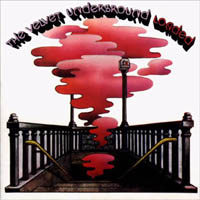 [by Ken Hunt, London] June Tabor & Oysterband, Lady Maisery, Mike Waterson, Nørn, Bahauddin Dagar, Peter Bellamy, Bob Weir and Rob Wasserman, the Home Service, Aurelia and the Velvet Underground. And lots to do with work, the spirits of Rudyard Kipling, Robert Mitchum, Bob Hoskins and the summer 2011 music festival season.
Love Will Tear Us Apart – June Tabor & Oysterband
The Oysterband – Ray ‘Chopper’ Cooper (cello, mandolin, bass guitar, harmonium, vocals), Dil Davies (drums, cajón), John Jones (lead vocals, melodeon), Alan Prosser (guitars, kantele, fiddle, vocals), and Ian Telfer (fiddle) – reunites here with June Tabor to splendid effect..
June Tabor and John Jones invest this song of Joy Division’s with an enormous dignity and pathos. “Why is the bedroom so cold?/You turn away on your side…” is a pretty haunting image of a love going wrong. The cello-led arrangement captures a chill wind blowing no-one any good. No need to explain any more. It is a masterpiece of an interpretation of a great song beautifully captured from one of the most glorious albums of 2011 thus far. From Ragged Kingdom (Topic TSCD585, 2011)
More information, tour dates and all that jazz at http://www.oysterband.co.uk/
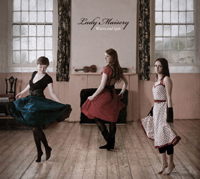 Sleep On Beloved – Lady Maisery
Lady Maisery is the trio of Hazel Askew (of the Askew Sisters), Hannah James and Rowan Rheingans. Folk trio, I guess you’d say. Their debut reveals a remarkable palette of of assimilated influences and inspirations. They include Pete Bellamy’s setting of Rud the Kip’s My Boy Jack, the witchy Willie’s Lady (Martin Carthys and Ray Fishers passim), a pairing of labajalg (“an Estonian flat-footed waltz,” and don’t shoot the messenger) and a polska (“written especially for singing by the Swedish vocal group, Kraja”), a music hall piece (from George Fladley of Derbyshire via Muckram Wakes of Derbyshire) and this lowering-down hymn from the Sankey songbook. This particular piece chimed because of thinking about Mike Waterson. It is a wonderful album. From Weave & Spin (RootBeat Records RBRCD09, 2011)
http://www.ladymaisery.com and http://www.rootbeatrecords.co.uk/
Tamlyn – Mike Waterson
Remember Mike however you wish. If you fancy a bit of parody right now, even if it’s under 60 seconds in length, his solo album had Bye Bye Skipper. Right now, a deeper draught is called for. Miss the photograph of Mike pushing the wheelbarrow on the original LP. Scandalously The Times failed to run an obituary of Mike Waterson so in revenge we barbecued the pigeon that brought the news to the desert island. Another Murdoch organ mishap. From Mike Waterson (Topic Records TSCD516, 1999)
Derek Schofield and Ken Hunt’s obituaries of Mike Waterson are, respectively, at http://www.guardian.co.uk/music/2011/jun/22/mike-waterson-obituary
http://www.independent.co.uk/news/obituaries/mike-waterson-singer-and-songwriter-with-the-watersons-luminaries-of-the-english-folk-scene-2301867.html
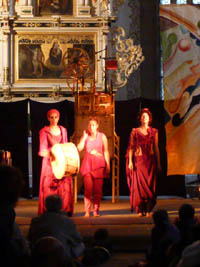 Ossemanidesh – Nørn
Last month’s GDDs included this fantastical Swiss vocal trio’s Lahillè – a track from their debut album, Fridj – and a suggestion that updates would follow. Here is the first bulletin. Ossemanidesh is from their third album Urhu, their musical programme about time.
They sing in an imaginary language they call Nørnik, so there’s no sense to be had from what they sing but masses of feeling to draw upon. It is the equivalent of abstract painting. Imagine Alexandre Calame and Caspar Wolf crossed with Joan Miró. Compounding these confusions, live they bring to bear a remarkable sense of musical theatre, certainly evinced by their performance at TFF Rudolstadt in July 2011, combined with phenomenal musicianship. This track from the same programme as the album it comes from, was recorded in the winter of 2010. Exceptional stuff that allows the listener to make all manner of judgements about the music uninfluenced by semantics. From Urhu (no name, no number, no date)
More information at www.norn.ch
Puriya Kalyan- Bahauddin Dagar
The death of Indian film-maker Mani Kaul (25 December 1944-6 July 2011) provoked a stream of associations, mainly of the dhrupad kind. The rudra vina player Bahuddin Dagar features in his music documentary film Dhrupad (1982) and his rumpy-pumpy-and-parrot drama The Cloud Door (1995). Additionally, the death of the rudra vina player Asad Ali Khan (1937-14 June 2011) was on my mind. This is an especially fetching and memorable exploration of the well-known evening raga. Recorded in March 2000 in Bombay, it reaches the parts, so to speak… From Rudra Bin (India Archive Music IAM CD 1077, 2005)
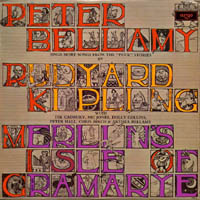 Puck’s Song – Peter Bellamy
I think about Peter Bellamy a great deal and for many reasons. For his music, of course. That goes without saying. But also for his enthusiasm, enthusiasms and enthusiastic phone calls coming out of the blue. For championing Rudyard Kipling (this was his second album of Kipling settings) when many casually put Kipling obsession down as antediluvian or imperialistic and irrelevant.
And most of all, after the music and the man, and probably not karmically healthy, I kick his arse for taking his own life.
Most recently on account of so many people discovering and locating Bellamy’s music. A new generation of listeners and a new wave of interest. If it is possible to look down and say, “I told you so!” then Pete is saying it now.
Wrote Peter Bellamy for this album’s original release in 1972, “The Run of the Downs is a lyric tour of Sussex, in the manner of such traditional pieces as A Tour of the Dales. The tune is taken from the English country dance Morris On which also lent itself to Cornish Floral Dance.” The Downs in question are the South Downs of Sussex. Nic Jones provides the fiddle accompaniment. From Merlin’s Isle of Gramarye (Talking Elephant TECD178, 2011)
Click on for the label website, http://www.talkingelephant.co.uk/
The Winners – Bob Weir and Rob Wasserman
“Sing the heretical song I have made…” quotes Bob Weir in his setting of the Rudyard Kipling poem. Thinking about Rud the Kip prompted memories of this performance, recorded in the autumn of 1988. One time after doing an interview, we chinwagged and talk turned to Rudyard Kipling and Peter Bellamy. It emerged that Weir had his Kipling moments, too. But that should be a story for another time. The line “He travels the fastest who travels alone!” is one of my favourite travel tips. From Live (Grateful Dead Records GDCD 4053, 1997)
The Kipling Society is at http://www.kipling.org.uk/
Alright Jack – Home Service
Alright Jack is a song that became and stands as a cornerstone of the Home Service’s repertoire. There are many things I could say about this song and this performance and the song’s transferability. Suffice it to say that I shall delegate the job to Bob Hoskins, given what he said in The Gurudian (sorry, another poor joke). Asked “Which living person do you most despise, and why?” Hoskins answered splendidly. He said, “Tony Blair – he’s done even more damage than Thatcher.” And that is the reason why John Tams’ song lives on and is still so cogent, pertinent and resonant. Bliar was enough to have brought out and bring out the intemperate and agricultural language in anyone. Bob Hoskins’ reply was a model of restraint. PS And Bliar’s patronising piece on Durham in British Airways’ flight mag for July 2011 is a model of hypocritical cant. From Live 1986 (Fledg’ling FLED3085, 2011)
Bob Hoskins’ full interview appeared in The Guardian of Saturday, 18 June 2011. Read Rosanna Greenstreet’s excellent Q&A at http://www.guardian.co.uk/lifeandstyle/2011/jun/18/bob-hoskins-interview-neverland
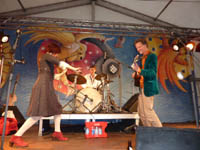 Vous et Nous – Aurelia
Aurelia is Aurélie Dorzée (violin and voice in particular), Stephan Pougin (percussion and kit drums) and Tom Theuns (guitar and voice in particular). Aurelia are still pretty much unknown beyond Belgium. I never got – and never is a big word – the casual dismissing of Belgium as a cultural birthing ground and environment. Belgium’s roots music scene is spectacular. Maybe it is the linguistic factors – three national languages, Flemish, French and German – with each language group accorded their own parliament under the Belgian constitution. Maybe that puts off monoglot nations or one-language minds and prompts petty cultural sniping. Love the way that Theuns, a mainstay of the Flemish band Ambrozijn, switched from Flemish to French for love.
The Hour of the Wolf, the title comes from Ingmar Bergman, is another side of bringing it all back home. It is remarkable, one of the finest albums to come out of Belgium in the last five to ten years. Live, they transform themselves into something else: a band playing music for dancers, quite unlike this album’s music. Aurelia is a major addition to Belgium’s roots music scene. From The Hour of the Wolf (Home Records, 2011)
http://wwww.homerecords.be/francais/aurelia/wolf.php
http://www.aurelia-feria.com/
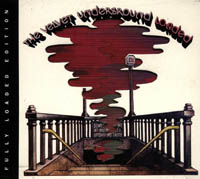 Rock & Roll – Velvet Underground
Around the turn of the year – 1971 into 1972 – thanks to the cartoonist Paddy Morris (IT, Cozmic Comics and later Northern Lightz), I fell in with Dez Allenby, Martin and Adrian Welham, collectively the psychedelic folk group Forest. (They had a couple of albums called Forest and Full Circle to their name on Harvest.) The associations and links piled up. Arguably, the one that bound us together the most was Loaded. We played it constantly. Its references were wide both musically and lyrically. ‘I Found A Reason’ had a tongue-in-cheek streak. ‘New Age’ had that wonderful opening gambit of faded glamour and fandom as well as name-checking Robert Mitchum. (He had given a monstrously humorous interview to Rolling Stone in 1971, anecdotes from which we still chuckled over. One anecdote gave a new insight to the expression ‘dog’s bollocks’.) I digress.
And there was Rock & Roll with that bass line. “Jenny said when she was just five years old/There was nothin’ happenin’ at all/Every time she puts on the radio/There was nothin’ goin’ down at all/Not at all…” is how it starts.
The lyric continues, “Then one fine mornin’ she puts on a New York station/She don’t believe what she heard at all/She started shakin’ to that fine, fine music/You know, her life was saved by Rock’n’Roll.”
Sometimes we all need to blow away the cobwebs. If one fine mornin’ you realise nothing’s happening, blast away the cobwebs with Rock & Roll. Elemental stuff. From the ‘Fully Loaded Edition’ of Loaded (Rhino 8122-72563-2, 1997)
The image of Nørn and Aurelia from TFF Rudolstadt 2011 are © Santosh Sidhu/Swing 51 Archives. The copyright of all other images lies with the respective photographers, companies and image-makers.
1. 8. 2011 |
read more...
 [by Ken Hunt, London] The Calder Quartet, Cyril Tawney, Nørn, Sharan Rani, Hedy West, Trembling Bells, Arlo Guthrie with the Thüringer Symphonikern Saalfeld-Rudolstadt, Tine Kindermann and the Home Service. And lots to do with work.
Allegro Moderato from the String Quartet in F – The Calder Quartet
I love music that carries me across bridges. I respect that sort of music like I would respect a figurative guru who imparted something and transported me somewhere else, somewhere beyond, maybe out of my safe place into unknown territory. For me, the string quartet provided and provides the key to western classical music.
Here the Calder Quartet reveals Ravel’s string quartet’s textures and colours intensely. This opening movement lays out the table. Its concision of ideas really gets to me, similar to the way an alap – opening movement – gets to me in a raga. Benjamin Jacobson and Andrew Bulbrook (violins), Jonathan Moershel (viola) and Eric Byers (cello) are the Calder Quartet. From The Calder Quartet (No name, no number, 2007)
More information at www.calderquartet.com
The Oggie Man – Cyril Tawney
 Oggie, sometimes rendered oggy, is a word that occurs in Cornwall and Devon. It is a dialect word for pasty – typically a meat and vegetable wrap – from the south-west of England. The joy of Cyril Tawney’s song is that it uses everyday ingredients to tell a story about encroachment long before Tescoification or McDonaldsisation. If for no other reason, listen to this song if your community is resisting the arrival of Tesco in Budapest or whichever hamburger chain wants an outlet in your town.
Cyril wasn’t being far-sighted or clairvoyant in this song. He was singing a lament. In his album notes to his Argo album, A Mayflower Garland, Cyril wrote, “To generations of Devonport sailors the Oggie Man, a lone vendor of Cornish Pasties who had his humble pitch outside the Albert Gate, was a minor institution. It would have been reasonable to assume that as long as there was a Royal Navy there would be an Oggie Man.”
This is a great song. It was originally released in 1969. While I was writing his entry for the Oxford Dictionary of National Biography I had the old Argo LP propped up beside me and would look at Cyril in his prime. His entry is one of the late 2010 batch of new entries. What I really, really liked about Cyril the man was that he was more yea-sayer than nay-sayer. From A Mayflower Garland (Talking Elephant TECD176, 2011)
A coda
Writing obituaries is usually a hell-or-heaven-for-leather thing. In the heat of writing Cyril Tawney’s for the Independent of 27 May 2005 I added a mondegreen of my very own when writing about Sammy’s Bar and turned “my real love” into Marina. Spookily, Marina was the name of his nurse while he was dying. http://www.independent.co.uk/news/obituaries/cyril-tawney-526297.html
Lahille – Nørn
The Norns were the dísir – a race of supernatural female entities – that wove the twine or thread of fate. They ran the thread of fate and time through their fingers and thumbs. Nørn is unaccompanied vocal trio from the French-speaking part of Switzerland. I cannot understand a word of what Anne-Sylvie Casagrande, Edmée Fleury and Gisèle Rime are singing. And nor will you. That is the very point. They sing in a made-up language of their own devising. It is the sound of the words that conveys their ‘meaning’.
Sometimes there are found sounds on this album’s tracks. Maybe the sound of dripping water, for example. Such textures are incidental to the matter at hand. The triumph lies in their singing. If they sounded this good in 2004, how must they sound now? Updates will follow. From Fridj (no name, no number, 2004)
More information at www.norn.ch
 Bageshri – Sharan Rani
June was one of those months. One of those months that buzzes, excites and ignites what’s around. Driving through London traffic on the way to pick up Arundhati Roy, I played Sound of Sarod to relax my mind. The first three tracks happened to take up the entire journey as if timed to coincide perfectly with my arrival at the destination. Leaving this, the fourth track, a rendition of Bageshri from 1969, after dropping her back that evening.
Sharan Rani belonged to the Maihar Gharana and was one of that school of playing’s most eloquent sarodists – a statement made in full knowledge of its other sarodists and her place in the lineage. Sarod had historically been associated with male musicians and she earned her name Sarod Rani (Queen of the Sarod). Apparently she also authored a book that I have never seen called The Divine Sarod: An ancient Indian musical instrument (antiquity, origin and development from circa 200 B.C.).
Again, it’s that word: concision. Sharan Rani is on sarod and Alla Rakha is on tabla. What sets this Bageshri apart? Well, her playing is so economical, nuanced and flavoursome. This is 22 minutes or so of deep space. And I love it to pieces. Now it’s reinforced with an overlay of memories to do with Arundhati Roy and a car journey spent talking to a large extent about Hindustani râg and musicians. I stumbled upon this reissued CD album by fluke in a record shop in Chandigarh in Punjab. It is the stuff to swoon to and over. A jewel of a performance and a jewel of an album. From Soul of Sarod (Saregama CDNF 150853, 2008)
The image is of her 1966 French long-player release Sharan Rani – Musique Classique Indienne (Vogue CLVLX 119).
Little Sadie – Hedy West
Hedy West (1938-2005) was a transformative force. I first discovered her music at Collet’s on New Oxford Street in London in the 1960s. I bought a white label Topic test pressing of Ballads. I think it was that one. It had no jacket, no track information, no nothing but musically it was an eye-opener. This is a later voice and banjo interpretation of the traditional American murder ballad. It is a story, told solo, propelled by her driving banjo. It is everything that traditional song should be and have. From Hedy West and Bill Clifton’s reissued Getting Folk Out of The Country (Bear Family BCD 16754 AN, 2010)
Ken Hunt’s obituary of Hedy West is at http://www.independent.co.uk/news/obituaries/hedy-west-501214.html
All My Favourite Mistakes – Trembling Bells
It’s big, bold and brassy – with a grungy production – but if you don’t get the point that’s OK too. Maybe you didn’t get the point of The Notorious Byrd Brothers or the Byrds’ Lady Friend either. This is a song that they worked up through goodness knows how many gigs. “Love came a hit me like a sucker punch.” From The Constant Pageant (Honest Jon’s HURCDD155, 2011)
 This Land Is Your Land – Arlo Guthrie with the Thüringer Symphonikern Saalfeld-Rudolstadt
This is Arlo Guthrie singing his father, Woody Guthrie’s song with a bunch of orchestral players and a conductor. It was a fabulously uplifting live experience. There is a zing and a zen about his performances. Plus he carries off droll in masterly fashion, as to the manner born. My brother-in-law heard this song and got enlightened. Apparently somebody called Bruce Springsteen plopped his head in the same apple-dunking barrel and pulled out this song as well. This comes from an entire album of Arlo Guthrie material on the festival’s souvenir release. He laces stories and songs together so well. So very well. Well, like a natural… From TFF Rudolstadt 2010 (heideck HD 20106, 2010)
Can’t Help Falling In Love – Arlo Guthrie with the Thüringer Symphonikern Saalfeld-Rudolstadt
Introduction. Tønder Festival. Elvis Presley. Pete Seeger. The spirit.
“Wise men say…” “Would it be a sin…?”
This is why we go to music festivals, gigs and live performances – just in order to catch the moment and moments of specialness. Woody Guthrie’s boy dun put in his thumb and pulled out a plum again. Another one from TFF Rudolstadt 2010 (heideck HD 20106, 2010)
 Sterben Ist Eine Schwere Buss – Tine Kindermann
Tine Kindermann is steeped in Märchenkeit. (I think I may have made up that word: like fairy-storyness. It’s a fairy story world sometimes rendered a bit more otherworldly by her singing saw accompaniments and Marc Ribot’s guitar. True to the darker and grimmer aspects of Märchen, its title translates as ‘Dying is a hard kiss’. She is a tradition-bearer like Dagmar Krause and Patti Smith. There! I’ve said it. And live, she is better still. From Schamlos schön – ‘Shamelessly beautiful’ (in your actual Deutsch) – (Oriente RIEN CD 67, 2008)
Snow Falls – Home Service
This album is set of songs unearthed from the Cambridge Folk Festival in 1986. This is a song by John Tams that rips me apart. It began as a reflection triggered by thoughts about his grandmother. Snow Falls feels like my early manhood, my middle age and my old age rolled into one. It is life in death and death in life. One of the most important songs in my life. “Cruel winter cuts through like the reaper…” is how it starts. The band plays a blinder. From Live 1986 (Fledg’ling FLED3085, 2011)
The image of Arlo Guthrie and Tine Kindermann from TFF Rudolstadt 2010 are respectively © Santosh Sidhu/Swing 51 Archives and Ken Hunt/Swing 51 Archives. The copyright of all other images lies with the respective photographers, companies and image-makers.
4. 7. 2011 |
read more...
 [by Ken Hunt, London] More folk, blues and beyond dreams from Judy Collins, Jyotsna Srikanth, Carol Grimes, Ágnes Herczku, Szilvia Bognár and Ági Szalóki, Eliza Carthy, Kirsty MacColl, A. Kanyakumari, Odetta and Zoe & Idris Rahman. Stranded on the island, sometimes you pine for female company. And then this image of Peter Rowan swept in, not in drag, just showing his vulnerable side.
 Pretty Polly – Judy Collins
This is a track from one of the finest folk-rock albums ever produced. It is not just a song. It is nasty narrative from one of the pivotal albums in the annals of folk-rock. Michael Sahl plays organ and Van Dyke Parks electric piano. Stephen Stills and James Burton play electric guitar. Buddy Emmons plays pedal steel and Chris Ethridge electric bass. She plays acoustic guitar and James Gordon drums. To hear this in 1968 was to fall in love with the form. The way she clipped ‘diggin’ your grave’ may well have been unintentional, but it worked. Of course, this concluding track from Who Knows Where The Time Goes should have been longer – rendered and delivered longer, that is – but such were the physical restrictions of the LP timewise. It’s still a wonderful track for unpicking its participants’ voices and the following May – 1969 – she was gracing the cover of Life magazine. From Wildflowers & Who Knows Where The Time Goes (Rhino 8122 73393-2, 2000)
Folk Dreams – Jyotsna Srikanth
Violin is so central to the South Indian (‘Carnatic’) musical firmament that it is hard to unpick this European introduction from the southern musical mindset. Violin lends itself well to art and fusion music. This ragam- and folk fusion-infused album can stand proud in the long line of varied slash Indo-jazz crossovers. This is such a good track and Jyotsna Srikanth is a solid and promising player in the Karnatic tradition. From Carnatic Jazz (Swathi Soft Solutions SA552, 2011)
 Your Blues – Carol Grimes
I don’t care. Your Blues may be a list song. It may catalogue slash name-check – to re-shuffle without re-prioritising its order – Ray Charles, Kind of Blue, Otis Redding, Marvin Gaye, Nina Simone, Edif Piaf and Thelonius Monk. Carol Grimes has one of those voices that shoots up the spine, hitting the heart before lodging in the brain. Scary stuff in a very good sense. This unaccompanied track is from her betwixt and between 2000 portrait essaying a variety of musical styles. The track is quite different from its bed-fellows. Not better for that, just very different in the way it shows off her voice – one of Britain’s most supple voices. From Eyes Wide Open (Voiceprint LCVP120CD, 2000)
Sem eso – Tuzugrás – Ágnes Herczku, Szilvia Bognár and Ági Szalóki
Given the trio of Ágnes Herczku, Szilvia Bognár and Ági Szalóki’s heady accomplishments on Szájról szájra (‘From mouth to mouth’) – the album this comes from – it was plain that this ensemble was destined to do something really astonishing, something that would take traditional Hungarian folk music another step on. That is not exaggeration for effect. It is a dreadful old cliché but that won’t stop me using it: the world was their oyster and they were strewing pearls before cognoscenti. Indeed, one of the finest Hungarian music experiences of my life was seeing the trio perform live during the H’ART Festival at Centre of Contemporary Art on Sauchiehall Street in Glasgow in November 2008. Then, Bad Hungarians, they buggered everything by disbanding, leaving only memories like this. One of the best ensembles I ever saw. From Szájról szájra (FolkEurópa Kiadó 2007)
 War – Eliza Carthy
Next time you have to eat road miles in the driving seat, put Neptune on and revel in its sheer variety. Every track brings something different. Every track adds a piece to the jigsaw puzzle. And when you put them all together and have the complete image before you, you’ll just know that it’s a 3D deal and you haven’t yet grasped the whole picture. Neptune is a keeper and one of the revelations of 2011.
This is the album’s second track. It swaggers and twirls its cane in ways that Kirsty MacColl might be said to have presaged back in 2001. Meet da girls on the battlefront. It shifts tempo, eels most seductively and has claws out to kill. From the insouciant Neptune (Hem Hem HHR001CD, 2011)
In These Shoes? – Kirsty MacColl
Speaking of whom… And fashion parades… In memoriam of one of sauciest voices of our times but cross-linked with Warren Lamb, the Movement Pattern Analysis fellow. From Tropical Brainstorm (Instinct INS557-2, 2001)
Visweswara – A. Kanyakumari
This composition in a South Indian-styled Sindhubhairavi – as it is spelled on the album – has a delicious otherness to it. It is credited to Swathi Thirunal, Swathi Thirunal Rama Varma (1813-46) in full, the Maharaja of the state of Travancore, to be fuller still. It is a composition full of twists and turns in Kanyakumari’s hands. Sumathi Rammohan Rao and Sukanya Ram accompany on mridangam (double-headed, hand-struck barrel drum) and ghatam (tuned clay pot) respectively. Visweswara is a gorgeous miniature at four minutes and thirty seconds in length. From Violin Trio (Nadham Music Media CDNMM 243, 2006)
Lass of the Low Country – Odetta
Odetta was one of the greatest voices of the US Folk Revival. This particular song, she describes in the album notes, was one she “originally thought came from Scotland, but later found that this version was by John Jacob Niles” – which as twists go is delightfully tangled on several levels. It’s a longing over the tracks song. Which as a metaphor works on far too levels works to even begin start thinking about. From her delivery, it’s hard to begin guessing where she thought the song derived from. It screams John Jacob Niles. And there is nothing wrong with that. From At The Gate of Horn (Tradition TCD 1063, 1997)
 O Nodi Re – Zoe & Idris Rahman
How do you say that something exceeds expectations and has proved itself so beyond belief without getting gushy? This is the sound of the river flowing to the sea. Add your own subtitles as Zoe Rahman plays piano and her brother Idris adds clarinet. So good it was a must for inclusion on The Rough Guide to the music of India (2010). (Of which I am very proud.) The celebration of Rabindranath Tagore to which they contributed – ‘Flying Man: Poems for the 21st Century’ – at the Conference Centre, British Library in London with William Radice, Mukal Ahmed and Munira Parvin on 17 May 2011 was remarkable. Thank goodness for simulcast on the desert island. (Is that still a word?) From Where Rivers Meet (MANUCD004, 2008) and The Rough Guide to the music of India (World Music Network RGNET1231CD, 2010)
Break My Heart Again – Peter Rowan
Just happens to be one of the best songs on the planet on the subject of the damage that love can wreak on the human brain. As Maggie Holland once eyed me all wet-eyed: those chords! From Peter Rowan (Flying Fish FF 700071, 1989)
The copyright of all other images lies with the respective photographers, companies and image-makers.
6. 6. 2011 |
read more...
 [by Ken Hunt, London] Darndest thing happened after drinking some fermented coconut juice. Passed out, woke up and I had been transported back to England and the only music I could hear was stuff with Martin Carthy on it. Still stranger it happened to coincide with his 70th birthday on 21 May 2011. Such a delightful coincidence. Truth is stranger than fiction. No, sorry, Ruth is stranger than Richard. Always get that wrong after a sea of reviving coconut cocktails.
 The Rainbow – Martin Carthy
The Rainbow first appeared on disc on Martin Carthy and Dave Swarbrick’s 1969 masterpiece Prince Heathen. This is a solo version from 1978 that emerged out of the woodwork in 2010. Travelling over the North Yorkshire Moors on the way to interviewing Martin Carthy – or, in seadog terms, bearding him in his den – in Robin Hood’s Bay The January Man – Live in Belfast 1978 was a travelling companion.
The Rainbow, a tale of two maritime nations – Spain and England – at war, opens the Sunflower Folk Club set. But that isn’t why it leapt out. It leapt out because of its visual impact. This is harrowing stuff about no quarter given and, to introduce an anachronism, it is television for a pre-television age. From The January Man – Live in Belfast 1978 (Hux Records HUX119, 2010)
The Harry Lime Theme – Martin Carthy
Imagine the scenario. Anton Karas (1906-1985), who has shlepped his zither around to entertain his Wehrmacht comrades and officers, gets a gig in post-war Vienna. He comes to the attention of the British film director Carol Reed. He is making the film The Third Man. Reed hears the instrument’s far-fetched sound, probably has no flipping idea what a zither is, and hires Karas. The Harry Lime Theme becomes the film’s signature tune. Try unimagining that. It is so integral to the film’s atmosphere. Many years later, Carthy remembers and sets zither to guitar. Flaming brilliant. From Waiting For Angels (Topic TSCD527, 2004)
 Bonny Kate – Martin Carthy and Dave Swarbrick
The title of this tune was in my head when we named our daughter. It was more influenced by Shirley Collins’ recording, though. This EP had long been out of catalogue by then. It was later missed off the Selections anthology even though most of No Songs appeared there. From No Songs (Fontana TE 17490, 1967)
Company Policy – Martin Carthy
One of Martin’s originals. When did war and warfare ever go out of fashion? This one concerns an extreme post of British outreach. “As an avid stamp collector when I was a little boy,” wrote Carthy in the notes, “I was, for some reason, fascinated by the Falkland Islands, and I remember first hearing the name Malvinas during the fifties and then approximately every ten years after that.” Yet another conflict that had nothing to do with oil. Oh, hang on, there was oil there as well. From Right of Passage (Topic TSCD 452, 1988)
 The Maid And The Palmer – Brass Monkey
Can’t imagine life on this infernal island without this everyday story of incest and damnation, originally released in 1983. I think of this track and I conjure memories of my friend, Howard Evans who played trumpet and flugelhorn in Brass Monkey. And I picture a young girl dancing to this track. Her dad said of Brass Monkey, “It was the most exciting thing I’d heard in ten years.” Her name was Roseanne Lindley. Mostly I think of Howard. And him talking about Martin staying at their house in Carshalton and waking in the early hours to the sounds of “flaming Carthy” still playing his guitar downstairs long after everybody else had turned in, working on bedding in a piece instead of going to bed. From The Complete Brass Monkey (Topic TSCD467, 1993)
Rave On – Steeleye Span
Originally released as a single, this unaccompanied cover of the Buddy Holly song garnered some notoriety. At one point the needle sticks. The record player duly gets a knock and continues. Other territories, the Netherlands, for example, were not in on the vocal joke and therefore excised the offending ‘a-wella-a-wella’ ‘stuck’ section. After all, no sane person was going to release a faulty record deliberately. From the Carthy Contemporaries volume of The Carthy Chronicles (Free Reed FRQCD-60, 2001)
Byker Hill – Martin Carthy
A song that only got better. From Life and Limb (Special Delivery SPDCD1030, 1990)
 Famous Flower of Serving Men – Martin Carthy
This studio recording fixes Carthy’s grafting of a tale on a tune half-inched from Hedy West. Its meaning and shifting meanings reinforce the latent potencies and potentialities of traditional song. He revisited the song on Waiting For Angels. From Shearwater (Castle Music CMQCD1096, 2005)
Stitch In Time – Martin Carthy
Martin Carthy popularised this song by his brother-in-law Mike Waterson. This is a live version recorded in December 1987 by Edward Haber, Natalie Budelis and Ilana Pelzig Cellum. It’s a morality tale about domestic violence. From the Carthy Contemporaries volume of The Carthy Chronicles (Free Reed FRQCD-60, 2001)
 Prince Heathen – Martin Carthy and Dave Swarbrick
It is frankly impossible to imagine the impact, to put oneself back in those bygone shoes, of hearing Prince Heathen back in 1969. It felt like this song’s subject matter was just too outré to be sung aloud even though it derived from a published Child ballad. It concerns a battle of minds and wills. It involves non-consensual sex, marital rape and extraordinary cruelty. Carthy boldly and logically ditched the text’s happy ending in order to retain the force of this psycho-drama.
I first heard it in Collet’s at 70 New Oxford Street in London a week or two after its release. Hans Fried played the album to me and I had to have it. I bought my brand-new Fontana copy of Prince Heathen on the spot. It was an instance of financial recklessness that I have never regretted because this song has stayed with me ever since and with the passage of the years I have come to understand and appreciate it in different ways, for example, variously as a feminist, political and philosophical statement. This psychological drama is like a full-length feature film. From Prince Heathen (Topic TSCD344, 1994)
Small print
The image of Brass Monkey from the Goose Is Out, Dog Kennel Hill, London on 15 February 2009 is © Santosh Sidhu. The copyright of all other images lies with the respective photographers, companies and image-makers.
2. 5. 2011 |
read more...
 [Ken Hunt, London] It can be really beastly to be separated from kith and kin on the treasured island. But then one casts one’s eye around and one realises that those waterside plants aren’t all hemlock water dropwort, mugworts, figworts etc. There are the mangoes, for example. And the flamingos don’t always get away with raiding the mango orchard, though barbecued flamingo can grow fair tiresome. Instead one dons the fiesta clobber and dances like a demented chap to the music of Aruna Sairam, Robb Johnson, Tommy McCarthy, Dresch Quartet, Lily Allen, Bhimsen Joshi, Rendhagyó Prímástalálkozó, Françoise Hardy, Traffic and Robb Johnson again. It keeps the flaming, raiding flamingos out the orchard if nothing else.
Kārthikēya – Aruna Sairam
One of the most consistently coruscating female vocalists in the South Indian tradition, Aruna Sairam presents a master-class in melody matched to vocal rhymicality on this double CD. The piece is set in Valaci and in the ādi rhythm cycle. Her performance is brilliantly understated and is accompanied by Embar Kannan on violin, P. Sathish Kumar on mridangam (double-headed barrel drum) and Dr S. Karthick on ghatam (tuned clay pot). The violin ornamentations and solo responses are superb. That said, this entire release is inspiring. From Gāyāka Vāggēyakārās (Rajalakshmi Audio RACDV 08249/50, 2008)
Not an advert but a recommended source for South Indian music is Celextel Enterprises Pvt. Ltd. in Chennai – www.celextel.com – which greatly undercuts prices outside India where prices ratchet up scandalously.
 The Young Man With The Girlfriend & Guitar – Robb Johnson
Richard Williams’ obituary of Suze Rotolo in The Guardian set me off a spiralling train of thought. Coincidentally I had only begun reading her autobiography, A Freewheelin’ Time (2008) a fortnight before. I did copy-editing on Robb Johnson’s Clockwork Music: maybe that’s why its lyrics are deeper within me than many of his other albums. The title gives the scenario away. He sings, “She’s hanging on his arm & every word/Like they were poetry/Just like Suze Rotolo in 1963.”
It struck me as fascinating that an album cover image had done and meant so much. Then Bonnie Dobson sent me a link to something one of her friends, Susan Green had written about Suze Rotolo called ‘Fifty-Two Years and Countless Cats: Good-Bye, My Friend.’ So, this song sparked a concatenation of associations sealed with a farewell kiss. From Clockwork Music (Irregular IRR048, 2003)
Susan Green’s memories of her friendship with Suze Rotolo are at: http://www.criticsatlarge.ca/2011/03/fifty-two-years-and-countless-cats-good.html
Down That Road – Tommy McCarthy
At Prague’s Khamoro 2003: World Roma Festival I had the chutzpah to do a talk about Scottish Traveller culture within the quite separate Roma (Gypsy) context. It was a talk that arced between Scotland’s intertwined yet different Roma and Traveller cultures with a few Punjabi linguistic connections strewn here and there. I cannot say whether I would have expanded the talk and taken it further afield to Ireland had I known about Tommy McCarthy. I might have spoken more about John Reilly, an unaccompanied singer based largely in Co. Roscommon in Éire whose LP The Bonny Green Tree (1978) on Topic remains one of my twenty most favourite LPs of traditional music ever to emerge from the British Isles in its geographical, as opposed to geo-political sense.
My old friend Hans Fried, the son of the Austrian poet Erich Fried, was the first person to hosanna Tommy McCarthy in my earshot. After five decades of friendship and ping-ponging cultural inspirations to and fro I figure he still knows more than me. So, anyway, Hans said to listen and so I did. This is the first song on the album and it jumped out and lit a powder trail to explosive future discoveries. Ron Kavana produced and engineered. From Round Top Wagon (ITCD 001, 2011)
Bánat, Bánat – Dresch Quartet
Nigh on ten minutes of Hungarian folk-jazz with a J.S. Bach beat on a theme of ‘Sorrow, Sorrow’, originally released on their album Révészem, Révészem (‘Ferryman, My Ferryman’). For the sheer vibe they capture. From A Népzenétől a Világzenéig 2 From Traditional to World Music (Folk Európa Kiadó FECD 037, 2010)
 The Fear – Lily Allen
It’s a great, joyful, rip-snorting song that distils so much about contemporary society. It’s about packing plastic and not caring about consequences (“And I’ll take my clothes off and it will be shameless/Cause everyone knows that’s how you get famous”). It’s about fame, no longer knowing or caring about reality (“And I don’t know how I’m meant to feel anymore”) and riding roughshod over anyone in the way of achieving those goals. The wit of the lyrics is counterbalanced musically, once the nylon-strung guitar fades out, by the (I hope), deliberately jejune sound palette and relatively uncomplicated mix. But there again I’ve been wrong before. No matter, lyrically it is nuanced and amusing. From It’s Not Me, It’s You (Redial 5099969427626, 2009)
Yeh Tun Mundna – Bhimsen Joshi
I have no idea where Bhimsen Joshi released this gem. It is a poem by Kabir, the weaver, philosopher and mystic. In its aphoristic simplicity it ranks as one of the finest pieces on the human condition, the cycle of life and death and treating others ethically. In rough translation, it goes something like this:
“The body is brittle [transient]
One day you will be one with the dirt.
Says dirt to the potter,
‘Why do you dig me?
The day will come when I shall bury you.’
The wood says to the carpenter,
‘Why do you put holes in me?
The day will come when I shall burn you.'”
Any steer on where Bhimsen Joshiji recorded this masterpiece gratefully received.
From http://www.youtube.com/watch?v=fVFl9u_ZkTs
Ken Hunt’s obituary of the singer from The Independent of Tuesday, 25 January 2011 is at: http://www.independent.co.uk/news/obituaries/bhimsen-joshi-singer-widely-regarded-as-the-greatest-exponent-of-indian-classical-vocal-music-2193228.html
Három széki dal – Rendhagyó Prímástalálkozó
The piece’s title translates as ‘Three songs from Szék’ and the ensemble’s name as ‘Primas Parade’. Ágnes Herczku and Éva Korpás are the vocalists singing solo or together. Róbert Lakotos plays viola and violin, Mihály Dresch flutes, László Mester viola and Róbert Doór double-bass. The piece is earthy and there is dirt under the nails of these musicians. In a good sense. From A Népzenétől a Világzenéig 3 From Traditional to World Music (Folk Európa Kiadó FECD 052, 2010)
 L’amour ne dure pas toujours – Françoise Hardy
The first happiness of the day gave way to regrets that love doesn’t last all in one year. Françoise Hardy delivered both Le premier bonheur du jour and L’amour ne dure pas toujours in 1963. (Of course, it’s a cheap link…) Whether it was a Golden Age of Francophone pop music or not is immaterial. It was a time when a generation stepped on the merry-go-round. Including Bob Dylan who penned a poem with her in mind for his Another Side of album. A Hammond B-3 extravaganza as well. Blink and you’ll miss the entire song at under two and a half minutes in total. From The Vogue Years (BMG Buda Musique 3017530, 2001)
Every Mother’s Son – Traffic
Re-visiting the DeLuxe reissue of Traffic’s John Barleycorn Must Die rammed home how psychologically complex this composition by Steve Winwood and Jim Capaldi is. It goes from the brooding to the ecstatic. It is taut, tense and plaintive in different ways on the live version recorded at the Fillmore East in New York City in November 1970. One of my albums of all time. But this is the original studio version. From John Barleycorn Must Die (Island 533 241-1, 2011)
 The Day We All Said Stop The War – Robb Johnson
On 15 March 2003 Central London got snarled up with protesters of every hue, faith, class and political persuasion. Well, nearly – “We even got a Liberal or two.” This was Robb Johnson’s response to the Stop the War march. Fittingly, he wrote it in Ilmenau in old East Germany. In the song he says, “We got […]/Placards that make you angry/Placards that make you laugh…” One of the banners that got the biggest laugh and the biggest response said, “I wish I was French!” On account of the cheese-eating surrender monkeys’ refusal to participate. And now there is another war with no discernible exit strategy and the French are participating. Plus ça change, plus c’est la même chose. The more it changes, the more it’s the same old deal. From Clockwork Music (Irregular IRR048, 2003)
The copyright of all other images lies with the respective photographers, companies and image-makers.
�
3. 4. 2011 |
read more...
« Later articles
Older articles »