Giant Donut Discs
Most months’ choices reflect deadlines and commissions with a pinch of music for pleasure. This month’s choices are Wenzel & Band, Martin Carthy, Javed Bashir, Sophie Harris and Ian Belton, Carol Grimes, Bob Dylan, Wasifuddin Dagar and Bahauddin Dagar, Alistair Anderson, Kaushiki Chakrabarty and Jackson Browne. As ever, they are in no particular order. Their only link is that none of them would go away. This month’s selections deliberately sidestep the Best of 2009 polls, even though it is that time of the year for such musings for December and January titles.
2. 11. 2009 |
read more...
Ken Hunt looks back on a month’s listening reflecting music influenced by work, travel and returning home. The moments are supplied this time by Cass Meurig and Nial Cain, Angelika Weiz & GVO, Ravi Shankar, Judee Sill, the Velvet Underground, the Young Tradition, Johnny Jones, Roy Nathanson, Asha Bhosle and Rahul Dev Burman and Ewan MacColl. As ever, the ten selections are in no particular order. Their only link is that over the month none of them did a bunk.
28. 9. 2009 |
read more...
Ken Hunt looks back on a wonderful month in music, advanced somewhat because of travel, provided by Amira Medunjanin and Merima Ključo, Bea Palya, Mike Seeger, Sachal Studios Orchestra, Tim Buckley, Faustus, Martina Musters-Musters, Johanna Huygens-Musters and Suzanna de Vos-Musters, Fernhill, Bai Hong and David Crosby. As ever, the ten selections are in no particular order and the only link is that none of them would go away.
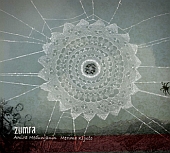 Karanfil Se Na Put Sprema – Amira Medunjanin and Merima Ključo
Amira’s London debut in 2007 at the Barbican was memorable. “Amira was born at a time when the popularity of traditional music in the former Yugoslavia was at high tide,” it says on her website. On this recording – Zumra means ‘Emerald’ – the mood is largely sombre. The Bosnian tune Karanfil Se Na Put Sprema is an exception. Elsewhere Ključo’s accordion evokes comparisons with the splendid American avant-garde composer Pauline Oliveros.
In my head, the cover artwork connected with photojournalist Valdrin Xhemaj’s images from Kosovo of traditional Torbesh wedding customs in which the bride’s face is painted to fend off bad luck.
From Zumra (Gramofon GCD1017, 2008)
www.gramofon.ba
www.amira.com.ba
 Mindenkinek Kurványja – Bea Palya
Coiled energy. Bea Palya sashays, sways, stamps and sings on this track. Its title translates as ‘To Hell with everyone’. A fiery reflection on past mistakes and miscreant married men. In it she consigns the latter to Hades, entreating them, to paraphrase Kurt Vonnegut’s oft-overlooked Hungarian period, to take a flying fuck at a donut. Welcome to the trials of life, Benedek – a Hungarian arrival on 8 August 2009. From Egyszálének/Justonevoice (Sony Music Entertainment Hungary 88697536052, 2009)
http://www.palyabea.hu/en/
Did You Ever See The Devil, Uncle Joe? – Mike Seeger
Very often the pattern was that you first heard a piece of folk music performed by a revivalist, then you backtracked. I first heard Uncle Joe on Buffy Sainte-Marie’s I’m Gonna Be A Country Girl Again in 1968. Mike Seeger’s marvellous version is a long journey, him first having heard it as a fiddle tune performed by Field Ward (vocals/guitar) and Wade Ward (banjo). His version here on jew’s harp and voice reminds why he was such an inspirational musician. Hearing him gulping down air rather than multi-tracking his vocal part really earths the performance. From True Vine (Smithsonian Folkways SFW CD 40136, 2003)
http://mikeseeger.info/
Ken Hunt’s obituary of Mike Seeger:
http://www.independent.co.uk/news/obituaries/mike-seeger-folk-mus ician-who-influenced-bob-dylan-and-the-grateful-dead-1775851.html
Take Five – Sachal Studios Orchestra
The 5:42 version. “I was ten years old when I first heard Take Five in Lahore (Pakistan) courtesy of the music centre of the United States Information Service,” writes Izzat Majeed in the notes to this CD single. There is a symmetry to the Sachal Studios Orchestra’s choosing to indianise the Dave Brubeck hit.
Brubeck kicked so much off when it came to Indo-jazz fusion. In 1958, the Dave Brubeck Quartet – courtesy of the US State Department and the Eisenhower Fund – did a whistle-stop, international tour that took them to England, West Germany and Poland, Turkey, Iran and Iraq, India, Pakistan, Afghanistan and Ceylon.
The trip seeded a number of compositions, most famously the ‘oddly metered’ – 9/8 (2+2+2+3=9) – Blue Rondo a la Turk (Time Out, 1959) but also the impressionistic Calcutta Blues (Jazz Impressions of Eurasia, 1958) with the band’s rhythmist Joe Morello mimicking tabla with his hands.
This version of the 1959 Brubeck hit has Ballu Khan on tabla, Nafees Ahmad Khan on sitar, Tanveer Hussain on Spanish guitar and sarod, Asad Ali on Spanish guitar and bass, Chris Wells on drums and huge string section of violins, violas and cellos. Interestingly, Paul Desmond, its composer, bequeathed its royalty income to the American Red Cross – a good model when it comes to will writing for posterity. (CD single, Sachal Music SM005, 2009)
http://www.sachal-music.com/
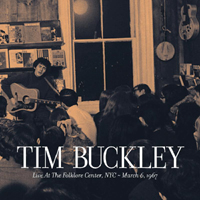 Troubadour – Tim Buckley
Two versions of the same song to illustrate how songs change and mature. The Folklore Center version, recorded by the Center’s Izzy Young, is Tim Buckley (1947-1975) alone with his guitar. The Queen Elizabeth Hall concert from 10 July 1968 finds him and his guitar accompanied by David Friedman on vibraphone, Lee Underwood on guitar and Pentangle’s Danny Thompson on double bass.
The 1967 version is faster and tauter lyrically. The 1968 one has a medium tempo, less advanced lyrics and a middle section with “Sing songs for pennies/Tip my hat couldn’t get many/All around the city are the troubadours”. The earlier Folklore Center cut has no reference to any sort of troubadour at all.
Buckley has been the subject of biography, bootlegs and archival trawlings since his death. The 1967 recording parts the veil to offer a glimpse at Buckley’s folk troubadour period. The QEH concert version is more folk-rock with folk-jazz shadings. He was 20 and 21 when he made these two recordings. And dead at 28. From Live At The Folklore Center, NYC – March 6, 1967 (Tompkins Square TSQ2189, 2009) and Dream Letter – Live In London 1968 (Enigma Retro/Straight 7 73507-2, 1990)
www.timbuckley.net
www.tompkinssquare.com
Ballina Whalers/The 8th of July – Faustus
Faustus are Paul Sarlin (of Bellowhead), Benji Kirkpatrick (of Bellowhead and Seth Lakeman) and Saul Rose (of Waterson Carthy). Their Ballina Whalers is taken from Nic Jones’ The Humpback Whale on his masterpiece Penguin Eggs. Actually, its proper title is The Ballina Whalers and it’s from the pen of the Scots-born Australian songwriter, Harry Robertson (1923-1995). Faustus pitch their delivery with an undercurrent of feeling that accords with whalers out on the ocean and a long way from home. After a couple of feints, the tune The 8th of July emerges. From Faustus (Navigator 5, 2008)
www.myspace.com/faustustrio
For more about Nic Jones and Penguin Eggs, a certain Canadian magazine has a little history at www.penguineggs.ab.ca/peggs.php?page=nicjones
Een jeugdig schoon bloem was uitgegoan – Martina Musters-Musters, Johanna Huygens-Musters and Suzanna de Vos-Musters
The title translates as ‘A lovely young blossom went out’. Hand on heart, Onder de groene linde (‘Under the green linden [tree]’) gives me the shivers because it defies expectations and is such a declaration of Dutch culture. I began with the Dutch Folk Revival, thanks to Wolverlei. Top tip: always try to start at the top.
This folksong has roots and branches in many Western European cultures where languages blur into each other and intergrades abound. The Musters sisters, recorded here in March 1968 in Ossendrecht, sing a song which combines beery and winey talk, deception and a broadmindedness that shames the bawdiness associated with such matters in many cultures’ folkways. Best of all, they sing like a dream. From volume 4, Van een Heer die in een Wijnhuis sat (‘About a Lord who sat in a Wine-house’) of Onder de groene linde (Music & Words MWCD 4900, 2008)
Bredon Hill – Fernhill
Divadlo na prádle is one of Prague’s theatre venues and Czech Radio (Český rozhlas 3) captured the Welsh trio there on 9 March 2006. Bredon Hill opens with acoustic guitar from Ceri Rhys Matthews before Julie Murphy sweeps in with a magisterial vocal. With consummate restraint the arrangement bides its time before Tomos Williams adds droplets of trumpet before a fuller flood of notes pours out.
Bredon Hill is a musical setting from A.E. Houseman’s 1896 book of verse, A Shropshire Lad. They tweak the poem at one point – to my mind for the better. In the verse “The bells would ring to call her/In valleys miles away:/’Come all to church, good people; Good people come and pray.’ But here my love would stay”, they substitute her with us opening up the lyric.
PS Czech pub and place names are a continual source of joy. Divadlo na prádle means ‘Theatre at the laundry’. From Na prádle (Beautiful Jo Records bejocd-51, 2007)
www.myspace.com/fernhillmusic
www.bejo.co.uk
Listen Up – Bai Hong
In the 1930s the Shanghai (“The Hollywood of the East”) hothouse created music that ranks alongside Bollywood in terms of making use of whatever was around and dropping it into the melting-pot. Only Shanghai predates Bombay, as even a cursory comparison of the two centres’ output from the 1930s swiftly shows.
Bai Hong (1919-1992) sings a Mandarin (don’t quote me) lyric over a slow drag that would do Cab Calloway proud. The piano and horn parts are derivative. (Spot the stolen melodic motif that the piano plays about 50 seconds in and then never repeats, a theft as chutzpah as anything Bollywood pulled off.) What she creates is magnificent. In revolutionary times Bai’s back-catalogue was out of bounds yet, a true survivor, she negotiated herself a continuing career in theatre. It’s life-affirming that this music survived at all.
The pointless 2003 remix (“Disc 1: Shanghai Lounge Divas – Original 1930’s (sic) Sessions Remixed For Today”), on the other hand, has about as much integrity as a pail of shit – and is of far less use. Judgemental, moi? From Shanghai Lounge Divas (EMI Music (Hong Kong) 7243 4 73058 25, 2004)
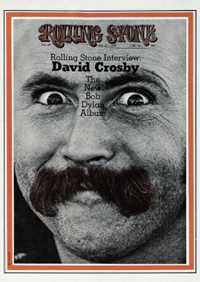 David Crosby – Cowboy Movie
In 1971 the Bundespost brought a COD (cash on delivery) package from a Hamburg record shop. Inside was If Only I Could Remember. Track two was Cowboy Movie.
It opens with some blasts of Neil Young guitar. Less than a minute in, a second electric guitar emerges in the mix. That guitar is Jerry Garcia’s. Sonically what was there not to love? On a historical note, trainspotters tell me it was the only time they were recorded and released duetting.
All the while, Crosby is singing some tale about cowboys. However, clearly this is no hippy idyll. Allegory rules and Crosby roars. Apparently, it concerns Crosby, Nash, Stills & Young. In this here cowboy flick Crosby is ‘Old Weird Harold’ (I sang the wrong words for years), Nash is the Dynamiter, Stills is Eli and Young is Young Billy. & the Indian lass, it turned out, was Rita Coolidge. Well, I’ll be darned. From If Only I Could Remember My Name (Atlantic/Rhino R2 73204, 2006) and Voyage (Atlantic/Rhino 8122-77628-2, 2006)
26. 8. 2009 |
read more...
[by Ken Hunt and Peter Bellamy: London] In 1986 after one of his concerts the English folksinger Pete Bellamy and I formulated the idea of Giant Donut Discs ®. It came out of a conversation about the wish to create a mutant version of Roy Plomley’s Desert Island Discs BBC radio programme – http://www.bbc.co.uk/programmes/b006qnmr – for the magazine Swing 51.
Instead of the stranded person coming up with tracks to take to the proverbial desert island, Pete and I wanted something capricious, totally of the moment, something that was ten pieces of music that were filling people’s heads right then and now – not the considered weightiness of someone stranded on the BBC’s desert island.
The principle was first thoughts, best thoughts – the old Beat adage. At the heart of the choices were the moment and passion (however fleeting), perhaps tinged sometimes with a few things packed into the old kit bag. It was a massive success.
Some people explained, some people just gave a list of the here and now. Giant Donut Discs continues in memory of Peter Franklyn Bellamy (8 September 1944-21 September 1991).
To give an idea of how it worked and why it worked, here is an annotated version of Peter Bellamy’s choices from Swing 51 issue 13/14. Peter had a fairly bare-boned approach to the column. And, although I encouraged him to expand on his selections, he never did. Hence the annotations and updates here.
Sidewalk Blues – Jelly Roll Morton’s Red Hot Peppers
The Australian Broadcasting Corporation transcription.
Ken Hunt: From a 1984 Australian Broadcasting Corporation anthology that also included King Oliver & his Dixie Syncopators, Ma Rainey, J.C. Cobb & His Grains of Corn and others – Robert Parker’s now-deleted second volume of jazz classics in ho-ho-ho “digital stereo”. No doubt he encountered it on some Australian tour.
Raglan Road – Van Morrison & The Chieftains
Ken Hunt: From Van Morrison & the Chieftains’ Irish Heartbeat (Exile/Polygram, 1988, reissued 1998).
 Wild Man In The City – Manu Dibango
He’s a saxophonist from Cameroon. From the LP, O Boso.
Ken Hunt: From Manu Dibango’s O Boso (London Records DL 3006, 1972).
Worried About You – Rolling Stones
Ken Hunt: “Sometime I wonder why you do these things to me/Sometime I worry, girl that you ain’t in love with me/Sometime I stay out late, yeah I’m having fun/Yes, I guess you know by now you ain’t the only one.” It would be impossible to say which recording Pete had in mind when he chose this track from Tattoo You (1981). He adored the Stones and took great delight in their, ahem, obscurer recordings.
 Drown In My Own Tears – Ray Charles
– From 1959. Live.
Ken Hunt: Live was new in 1987. Pete liked the sound of good, old gutbucket blues.
The Mountain Streams Where The Moorcock Crow – Paddy Tunney
Ken Hunt: Currently available on Paddy Tunney’s Man Of Songs (Folk-Legacy CD-7). From a field recording by Diane Hamilton.
These Memories of You – The Trio
The Trio being Dolly Parton, Linda Ronstadt and Emmylou Harris.
Ken Hunt: The Trio (1987) was another brand new album when he chose this track. A simply astonishing album, Robert Christgau reviewed it in the July 1987 issue of Playboy saying, “By devoting herself to Nelson Riddle and operetta, Sun City stalwart Linda Ronstadt has made boycotting painless; but her long-promised hookup with Dolly Parton and Emmylou Harris, Trio (Warner), will be hard to resist for those with a weakness for the vocal luxuries of the mainstream record biz. An acoustic-country album meandering from Farther Along and Jimmie Rodgers to Kate McGarrigle and Linda Thompson, Trio is a literally thrilling apotheosis of harmony – three voices that have thrived and triumphed individually engaged in heartfelt cooperation. Free of tits, glitz and syndrums for the first time in a decade, Parton’s penetrating purity dominates the album as it once did country-music history. The only one of the three who’s had the courage of her roots recently, Harris sounds as thoughtful up front as she does in the backup roles that are her forte. And while Ronstadt’s big, plummy contralto will always hint of creamed corn, she’s a luscious side dish in this company.” Review lifted from www.ronstadt-linda.com
Rabbit And Log – The Stanley Brothers
Ken Hunt: The title should have been Rabbit In A Log.
Everybody Needs Somebody To Love – Wilson Pickett
Ken Hunt: Pete was no more catholic in his musical tastes than many other singers on the British folk scene. He would descend on record collections at places he was staying and demand fixes of the familiar or the unknown. I can imagine him getting in from a performance or sitting at home making up a cassette compilation and singing along (in accent) to this: “Sometimes I feel, I feel a little sad inside/When my baby mistreats me, I never, never have a place to hide, I need you!”
 I Was Born To Preach The Gospel – Washington Phillips
Ken Hunt: Washington Phillips cut a handful of records in Dallas, Texas over five sessions from 1927 to 1929. The correct title in fact is I Am Born To Preach The Gospel. Most likely, Peter had it – or had taped it – from Songsters & Saints – Vocal Traditions on Race Records Vol. 1 released on the UK Matchbox label in 1984.
The song is currently available on The Key To The Kingdom (Yazoo 2073). There is an excellent discography of Washington Phillips compiled by Stefan Wirz at http://www.wirz.de/music/philwfrm.htm
(c) 1989, renewed 2009 Swing 51
From that same issue here are mine with annotations and updates:
 Don’t Tempt Me – Richard Thompson
The opening track from Amnesia. For its astonishing vocal performance.
Ken Hunt: Richard Thompson remains a constant ingredient in any balanced musical diet. Lest we forget.
Pride of Cucamonga – Grateful Dead
For the tune, the lyrics and John McFee’s pedal steel part.
Company Policy – Martin Carthy
It may be another song about the Falklands but it taps into the human element superbly. From the long overdue Right of Passage.
Ken Hunt: It had been some while since Martin Carthy had made a solo album.
The 1982 Falklands business – also known as the Guerra de las Malvinas – was still preying hard on people’s minds. Martin Carthy’s song about the “company store” was one of the great songs, like John B. Spencer’s Acceptable Losses (reissued on Three-Score-And-Ten (TOPIC70, 2009)), that came out of the war.
 Eight Miles High – The Byrds
From Never Before. A tenser, rawer reading than the Fifth Dimension cut.
Ken Hunt: The Byrds were and remain a continual reference point.
Devil’s Right Hand – Webb Wilder & The Beatnecks
A fabulous song by Steve Earle that Peter Case introduced to me in a private moment. For the opportunity to namedrop too.
Me And Billy The Kid – Joe Ely
For its lyrics. Love the line about shooting their mutual girlfriend’s chihuahua.
Calvary – The Alabama State Sacred Harp Convention
From the 1960 album White Spirituals, the fourth volume in Atlantic’s Southern Folk Heritage series. A hymn as mighty as the ocean. “My thoughts that often mount the skies/Go, search the world beneath/Where nature all in ruins lies/And owns her sovereign – Death!”
Ken Hunt: This was an introduction by Gill Cook from Collet’s – whose obituary I later wrote. A very good friend and a source of inspiration and solidarity.
My obituary of Gill Cook from The Independent:
http://www.independent.co.uk/news/obituaries/gill-cook-524805.html
Tony Russell’s from The Guardian:
http://www.guardian.co.uk/news/2006/feb/07/guardianobituaries.artsobituaries
The King of Rome – June Tabor
For its triumph over adversity.
Ken Hunt: Nearly two decades on, I did the song-by-song interviews and wrote the booklet notes to June’s career retrospective Always (Topic Records TSFCD4003, 2005) – on which this also appears.
 Even A Dog Can Shake Hands – Warren Zevon
For anybody who has ever been fleeced and has considered taking somebody to the Small Claims Court. From the strangely titled Sentimental Hygiene.
Ken Hunt: The magazine was going through a hard time financially and though various people rallied round and helped fund issue 13/14, the losses of the previous years I had absorbed proved too much to sustain and survive. The magazine went under. (The cumulative amount owed by companies that had defaulted on payment or themselves went under would have paid for another issue.) That was the background to choosing this remarkable track. RIP Warren William Zevon (24 January 1947-7 September 2003).
Pharaoh – Richard Thompson
The closing track from Amnesia. For its lyrics.
Ken Hunt: See Don’t Tempt Me above.
(c) 1989, renewed 2009 Swing 51
24. 8. 2009 |
read more...
Ken Hunt’s month in music – the stuff in no particular order that either wouldn’t let go or wouldn’t go away.
31. 7. 2009 |
read more...
« Later articles