Feature
 [by Ken Hunt, London] 2016 proved to be, to soundbite Elvis Costello, a particularly good year for the roses. Well, the artistic ones at least. (Brexit notwithstanding, in England the garden roses and the garden as a whole suffered somewhat thanks to the English climate’s vagaries of rain and sunshine.) Nevertheless, it truly was a year to remember musically. That was assisted by chance musical encounters that made me stop and stare and listen. The busker playing chromatic harmonica down below at Waterloo underground station one day in September was utterly spellbinding. A party bash outside the National Theatre in Prague celebrating a Czech national holiday was uplifting. A few days later hanging out with Czech friends and my son in a pizza parlour in Malá Strana in Prague 1 I was listening to a slice of tramping (Czech and Slovak uses the same word as English) that I had fondly associated with Czechoslovakia’s communist-era (and before) outdoors movement. It was something I had only ever read about. It sounded like a singalong joy and was an unfettered hoot. And one dank, dismal day towards the end of 2016 there was a Roma accordion duo performing in Kingsland in London to brighten things up. They caused me to stop and stare. If ever you have a little money to spare, put some into a street musician’s collection box, hat or case.
 In the year that included the deaths of David Bowie and George Michael amongst others, the illness and death of Dave Swarbrick aged 75 on 3 June 2016 in Aberystwyth, Ceredigion in Wales overshadowed the first half of the year. In Dave’s obituary in the autumn 2016 issue of Canada’s folk magazine of record, Penguin Eggs I wrote, “Arguably no single folk musician ever had a greater impact across Europe.” I meant it. I could have expanded massively with examples but that is the nature of word counts. In actual fact it was to be a year of losses. The German singer-songwriter and guitarist Werner Lämmerhirt died on 14 October, aged 67. Amongst others, he had worked with Wizz Jones, Tom Paxton and Hannes Wader. On 7 November Leonard Cohen died at the age of 82 with his troubling (in a good way) end-of-life You Want It Darker already on the year’s playlist. On 15 November musician-composer Mose Allison died at the age of 89, followed a week later by arguably the most influential male vocalist of the South Indian classical tradition in Dr Balamurali Krishna. He died on 22 November in Chennai aged 86 The US experimental composer, electronic music pioneer and wayward spirit Pauline Oliveros died on 25 November, aged 84. And Martin Stone of, amongst other bands, Mighty Baby and Chilli Willi and the Red Hot Peppers died on 9 November 2016 on Versailles in France. Reading his anonymously written obituary in The Daily Telegraph introduced me to a part of his life about which I had had no idea: his book hunting and dealing exploits.
To two events in music that made me the happiest. The first was the re-emergence of Shirley Collins with her Lodestar album and, similarly important, her limited live performance before an audience for BBC Radio 4’s Mastertapes series at the end of the year. The other was Aruna Sairam receiving the Bharat Ratna Dr. M.S. Subbulakshmi Centenary Commemoration Special Award on 13 September 2016. It was conferred on her by the Shanmukhananda Sangeetha Sabha, Mumbai. (To clarify the Bharat Ratna at the front refers to M.S. Subbulakshmi as the recipient, not to Aruna Sairam receiving India’s highest civilian award.) I like positivity. Furthermore, three big anniversaries happened in 2016. In the Celtic realm Eire’s Tulla Céilí Band turned 70 and the Welsh folk group Ar Log turned 40. And fRoots produced its 400th issue with Lucy Farrell on the cover (she of various Emily Portman band permutations, including, see below, the Coracle Band, and the Furrow Collective). I must have written in most of those, even if many times my byline didn’t and doesn’t appear beside the contribution. My article about Aruna Sairam appears in its January/February 2017 issue.
 In other artistic, non-musical news, after years of being thwarting I finally got to see Alfons Mucha’s cycle of monumental paintings fittingly called the Slovanská epopej (Slav Epic). When I first started cooking up plans to view it, it was on exhibition in Moravský Krumlov in southern Moravia. Iva Bittová and I even discussed finding time to visit when we were both in Moravia but it never happened. Then in 2012 amid some very strange goings-on the 20 canvasses were shipped to Prague. Even then temporary closures and annoyingly non-updated web information thwarted me when I was in the city. Veletržní palác was where I finally tracked it down. It is one of the galleries forming the so-called National Gallery in Prague (Národní galerie v Praze) over multiple sites. (I mention this merely to save readers future aggravation because the National Gallery is not only in one place.) The sheer scale of the paintings bowled me over. Having my son, Tom with me, ramped up the experience. And, thanks to Bożena Szota, working at the Ethno Port Poznań Festival in Poland set me on several paths. Dr Wojciech Mania of the Poznań Tourist Organisation’s guided tour of the city fed my head with ideas and planted thoughts about how two kindred Slav cultures – the Polish and the Czech – have assimilated their pre-Christian pasts. In the Czech Republic – and Mucha’s Slav Epic – the pagan deities appear. For example, bottles of Radegast beer carry an image of its eponymous Slav deity. In Poland and talking to Polish friends in Britain, it seems as if the country’s pre-Christian past was not taught beyond alluding to conversion and Christianisation.
And to conclude on a Banksy note (incidentally name-checked in the first episode of that marvellous television drama, The Young Pope), the Banksy near Hounslow railway station gets defaced periodically. What happened to it in 2015 is another of this year’s images. Banksy’s gal got hijabed. That got cleaned off. Came a clean, came a new bunch of idiots, came a new bunch of spray tags and halfwit defacings.
Sorry to be garrulous.
New releases
 Leonard Cohen / You Want It Darker / Columbia
Furrow Collective / Wild Hog / Hudson Records
Home Service / A New Ground / Dotted Line
Karl Jenkins / Cantata memoria – For the Children/Er mwyny plant / Deutsche Grammophon
Kayhan Kalhor, Aynur, Salman Gambarov & Cemîl Qoçgirî / Hawniyaz / Harmonia Mundi
Alana & Leigh Cline / Alana & Leigh Cline / Scimitar Records
Kitty Macfarlane / Tide & Time / TCR Music
Leyla McCalla / A Day For The Hunter, A Day For The Prey / Jazz Village
Amira Medunjanin / Damar / World Village
Christy Moore / Lily / Columbia
Polkaholix / Sex & Drugs & Sauerkraut / Monopol Records
Anoushka Shankar / Land of Gold / Deutsche Grammophon
Mr Martin Simpson & Mr Don Flemons / Proudly Present A Selection of Ever Popular Favourites / Fledg’ling
Strom & Wasser / Reykjavík / Traumton Records
Simon Thacker & Justyna Jablonska / Karmana / Slap The Moon Records
Three Cane Whale / Live At The Old Barn, Kelston Roundhill / Kelson Records
Trio Dhoore / Momentum / Appel Records
Värttinä / Viena / Westpark
Bob Weir / Blue Mountain / Columbia Legacy
Jason Wilson / Perennials / Wheel Records
 Historic releases, reissues and anthologies
Anne Briggs / Four Songs / Fledg’ling [forgive the plug: this vinyl EP release includes my liner notes in the style of Bert Lloyd’s Hazards of Love Topic EP notes]
Grateful Dead / Dave’s Picks Volume 19 / Grateful Dead/Rhino
Pentangle / Finale / Topic
Pete Seeger / In England / Lake Records
Various / Indus Raag 2 / Tehzeeb
Various / laut yodeln / Trikont
Various / Magic Flute / NoEthno
Various / Refugees For Refugees / Muziekpublique
Various / Rudolstadt Festival 2016 / heideck
 Events of 2016
In some cases a stronger performance ousted another by the same act
Oysters3 / The Stables, Milton Keynes / 22 January 2016
Imagining Ireland / Royal Festival Hall / 29 April 2016
Kronos Quartet / Barbican Hall, London / 9 May 2016
Zakir Hussain’s tabla concerto Peshkarwith the BBC Concert Orchestra / Alchemy Festival, Royal Festival Hall, London / 20 May 2016
Eliza Carthy’s Generations / The Sage, Gateshead / 4 June 2016
Vardan Hovanissian & Emre Gültekin Adana / Great Hall, Ethno Port Poznań Festival / 17 June 2016
Karolina Cicha & Shafqat Ali Khan / Castle Courtyard, Ethno Port Poznań Festival / 17 June 2016
Debashish Bhattacharya and Sanju Sahai / Castle Courtyard, Ethno Port Poznań Festival / 18 June 2016
Lo Còr de la Plana / Castle Courtyard, Ethno Port Poznań Festival / 18 June 2016
Moh! Kouyaté / Scene on the grass, Ethno Port Poznań Festival / 19 June 2016
MeNaiset / Neumarkt, Rudolstadt Festival / 8 July 2016
Anoushka Shankar, Land of Gold / Größe Bühne, Heinepark, Rudolstadt Festival / 9 July 2016
 MeNaiset, Gottesdienst (church service), Stadtkirche St Andreas, Rudolstadt Festival / 10 July 2016
Emily Portman & The Coracle Band / Heidecksburg, Rudolstadt Festival, / 10 July 2016
Gangstagrass / Markt, Rudolstadt Festival / 10 July 2016
Vishwa Mohan Bhatt & Desert Slide / Union Chapel, London / 29 July 2016
Peggy Seeger and Sam Greaves / Cecil Sharp House, London / 16 September 2016
Aruna Sairam & Jayanthi Kumaresh / Darbar Festival, Royal Festival Hall, London, 17 September 2016
Parissa + the Meshk Ensemble / Royal Festival Hall, London / 1 October 2016
Anoushka Shankar, Land of Gold / Royal Festival Hall, London / 13 October 2016
Furrow Collective / Cecil Sharp House, London / 1 November 2016
Ar Log / Community Hall, Dinas Mawddwy / 4 November 2016
Shirley Collins with Ian Kearey, Dave Arthur and Pete Cooper / Mastertapes radio recording session about Love, Death & the Lady / BBC Maida Vale, London / 26 November 2016
Iva Bittová and Abraham Brody / Vortex Jazz Club, London / 6 December 2016
 A baker’s dozen of past music projects, released in 2015 or earlier. Either they were newly introduced journeys of exploration or ones which returned to inspire over the course of writing in 2016
Ar Log / Goreuon Ar Log/The Best Of Ar Log / Sain Records, 2007
Lautari / vol. 67 – live 2014 / Wodzirej, 2015
MeNaiset / Kelu / Aania, 2010
Fairport Convention / Live At The BBC / Island/Universal, 1996
Peter Graham / Wabi / Rosa s.r.o., 2014
Muzykanci / a na onej górze… / Wydawnictwo Jana Słowińskiego, 2002
Nawa / Ancient Sufi Invocations & Forgotten Songs from Aleppo, Sacred Voices of Syria, Vol. 1 / Lost Origin Sound Series/Electric Cowbell Records, undated [2014]
Pauline Oliveros / Accordion & Voice / Lovely Music, 1982
Projekt.Kolberg / In Fidelis / Karrot, 2014 https://pl-pl.facebook.com/projekt.kolberg/
Paul Robeson / Freedom Train and the Welsh Transatlantic Concert / Folk Era Records, 1998
Aruna Sairam, Noureddine Tahiri and Dominique Vellard / Trialogue / Glossa, 2012
Dave Swarbrick / raison d’être / Shirty, 2010
Swarb’s Lazarus / Live & Kicking / Squiggle, 2006
From top to bottom the images are Iva Bittová and Abraham Brody; street musicians in Kingsland; in the year of Bob Dylan being awarded the Nobel Prize for Literature the image of previous Nobel Literature winner Rabindranath Tagore used to advertise Kājal-Kāli ink from a 1945 Indian almanac (© lost in the mists of time); the Furrow Collective’s Alasdair Roberts; Anne Briggs (© Al Atkinson/Fledg’ling Records); Ar Log’s Dafydd Roberts playing telyn deires, the Welsh triple harp; and the Furrow Collective’s Emily Portman. Concluding, the Banksy with a burqa. Unless otherwise stated, images are © Ken Hunt/Swing 51 Archives.
A biography of the author is regularly updated here: https://www.linkedin.com/in/ken-hunt-261b7bb
31. 12. 2016 |
read more...

[by Ken Hunt, London] As years go, 2015 was one of the finest. Over and over again it plucked some remarkable rabbits out the magician’s hat. It’s stuff like that that keeps me keeping on.
A note on the process when it comes to these decisions. Part of it is to do with whittling. Some ‘holding entries’ logged were gone by the end of the year. Some albums remain here because even though they did not necessarily overwhelm, in the long run they stayed on the play list. An example might be Los Lobos’ Gates of Gold. In their canon it may be a “a fair to middling album” (according to my fRoots review) but I played it so much without making that special connection with the majority of its tracks.
The festival season brought further discoveries, consolidations and winnowings. It is no coincidence that live performances outnumber all the other entries combined. A special year for music.
2015 also brought a number of deaths in music circles that affected me. To name but a significant few, these included J P Bean (author of Singing From The Floor: A History Of British Folk Clubs), Bill Keith, Sabri Khan, John Renbourn, Bruce Rowland, Christof Stählin and Andy M. Stewart. Thankfully it was the year in which the fewest really close musician friends died in several years. Lemmy’s death reminded me of interviewing Steve Reich slightly confused by being in the same hotel as a whole lotta Motörhead fans.

New releases
The Casey Sisters / Sibling Rivalry / Old Bridge Music
Eviyan / Nayive / Animal Music
Archie Fisher / A Silent Song Greentrax
Ghazalaw / Ghazalaw / Marvels of the Universe
Rhiannon Giddens / Tomorrow Is My Turn / Nonesuch
Jahnavi Harrison / Like A River To The Sea / Mantrology

Zakir Hussain / Distant Kin / Moment
Los Lobos / Gates of Gold / Proper
Mahsa Vahdat / Traces of An Old Vineyard / Kirkelig Kulturverksted
Plainsong [Iain Matthews • Andy Roberts • Mark Griffiths] Reinventing Richard / Fledg’ling
Emily Portman / Coracle / Furrow
Tom Russell / The Rose of Roscrae – A Ballad of the West / Proper
Buffy Sainte Marie / Power In The Blood / True North Records
Simpson • Cutting • Kerr / Murmurs / Topic
Jyotsna Srikanth / Bangalore Dreams / Theme Music
Stick In The Wheel / From Here / From Here
Richard Thompson / Still / Proper
Steve Tilston / Truth To Tell / Hubris
Trembling Bells / The Sovereign Self / Tin Angel Records
Tritonus / urbanus / Zytglogge
Marry Waterson and David A. Jaycock / Two Wolves / One Little Indian

Historic releases, reissues and anthologies
Bob and Ron Copper / Traditional Songs from Rottingdean / Fledg’ling
Bonnie Dobson / She’s Like A Swallow and Other Folk Songs / Big Beat
Incredible String Band / Wee Tam & The Big Huge / BGO
Kronos Quartet / One Earth, One People, One Love – Kronos Plays Terry Riley / Nonesuch
Lead Belly / The Smithsonian Folkways Collection / Smithsonian Folkways
John Renbourn / The Attic Tapes / Riverboat
Buffy Sainte Marie / Many A Mile / Ace/Vanguard Masters
Various / Don’t Panic! We’re from Poland (promotional CD) / dontpanic.culture.pl
Various / Rudolstadt 2015 / heideck

Events of 2015
Martin Simpson / Kings Place, London, 20 February 2015
Ashok Pathak • Ravikiran & Shashank (Shashank Subramanyam) • Nishat Khan Journée Inde – Fête de Holi (‘India Journey – Festival of Holi’) / Théâtre de la Ville, Paris / 22 March 2015
Iva Bittová / Fiddles on Fire, The Sage, Gateshead / 3 May 2015
Peggy Seeger with Calum MacColl & Neill MacColl / The Stables, Waverdon, Milton Keynes / 10 June 2015
Emily Portman Trio / Riverhouse Arts Centre, Walton-on-Thames, Surrey / 21 June 2015
Simpson, Cutting & Kerr / The Stables, Wavendon, Milton Keynes / 23 June 2015
9Bach / TFF Rudolstadt, Heidecksburg / 3 July 2015
Rojda Şenses / TFF Rudolstadt, Heidecksburg / 3 July 2015

Rhiannon Giddens / TFF Rudolstadt, Große Bühne, Heinepark / 3 July 2015
Trollmusikken (Silje Hegg, Geir Egil Larsen, Ingvild Lie and Tom Willy Rustad) / TFF Rudolstadt, Neumarkt / 5 July 2015
Peppe Voltarelli Band / Jazz Dock, Prague / 6 July 2015
Bahauddin Dagar – Morning Bliss / Darbar Festival, The Front Row at Queen Elizabeth Hall, Southbank, London / 20 September 2015
Martin Carthy & Dave Swarbrick / Folk at the Foundling, The Foundling Museum, London / 9 October 2015
Emily Portman Sextet / Folk at the Foundling, The Foundling Museum, London / 6 November 2015
Blood & Roses: The Songs of Ewan MacColl / Barbican, London / 9 November 2015
David Dorůžka Trio / Jazz Dock, Prague / 16 November 2015
Iva Bittová a PKP [Iva Bittová and the Prague Philharmonia] / Forum Karlín, Prague / 17 November 2015
Marry Waterson and David A. Jaycock / Green Note, London / 26 November 2015
Come Together with Barb Jungr & John McDaniel / Studio, St. James Theatre, London / 27 November 2015
Herzberg60 – André Herzberg, Pankow and others / Kesselhaus, Berlin / 28 December 2015
Past music projects that returned to haunt

Ornette Coleman / Dancing In Your Head Verve/A&M
k d lang and the BBC Concert Orchestra / Live In London / Universal
Kronos Quartet with Asha Bhosle / You’ve Stolen My Heart / Nonesuch
Kronos Quartet and Terry Riley / Requiem For Adam / Nonesuch
Scotty Stoneman with the Kentucky Colonels / Live in L.A. / Sierra/Rural Rhythm Records
Grateful Dead / Workingman’s Dead / Warner Brothers
The image at top of 9Bach at TFF Rudolstadt is © Santosh Hunt/Swing 51 Archives. The images of Iva Bittová rehearsing before Fiddles on Fire and Carthy, Swarbrick & Handel coming down after their Foundling gig are © Ken Hunt/Swing 51 Archives. Otherwise the images are © their image-makers, photographers and designers.
In memory of Fred McCormick (18 November 1946-15 November 2015)
31. 12. 2015 |
read more...
 [by Ken Hunt, London] Like some old fart’s misbegotten mantra, I typically say that the year started slow. Happens year after year after year after blooming year. For 2014 that applied particularly in terms of live performances. In the annual polls to which I contribute I am fully aware that what my bread-and-butter music diet will rarely register in anything anywhere apart from here.
To explain, as part of the whittling process, long-list ‘holding entries’ from the spring were largely gone by the summer and autumn. The summer festival season brought discoveries, consolidations and further winnowings. It is no coincidence that live performances numerically balance the recorded music entries. When all was done and dusted, it was live events – concerts and suchlike – that made 2014 so special.
 New releases
9Bach / Tincian / Real World
Sam Amidon / Lily-O / Nonesuch
Olga Bell / Krai / One Little Indian
The Bevvy Sisters / Plan B / Interrupto Music
Iva Bittová / Entwine/Proplétám / Pavian
Country Joe Band / Entertainment Is My Business / Secret Records
Jackson Browne / Standing In The Breach / Inside Recordings
Martin & Eliza Carthy / The Moral of the Elephant / Topic
The Furrow Collective / At Our Next Meeting / Furrow Records
Bonnie Dobson / Take Me For A Walk In The Morning Dew / Hornbeam
Kronos Quartet / A Thousand Thoughts / Nonesuch
Sam Lee & Friends / More For To Rise EP / The Nest Collective
Thomas McCarthy / Herself and Myself / ITCD
Amira Medunjanin / Silk & Stone / World Village
Nachthexen [Scarlett O’, Dunja Averdung, Jürgen Ehle & Jörg Nassler] / Nachthexen / electrocadero
Nishtiman / Kurdistan – Nishtiman / Accords Croisés
Robert Plant and the Sensational Space Shifters / lullaby and… THE CEASELESS ROAR / Nonesuch Records
Oysterband / Diamonds On The Water / Navigator
Peggy Seeger / Everything Changes / Signet Music
Kavita Shah / Visions / Naïve
Tiburtina Ensemble & David Dorůžka Trio / Apokalypsis / Animal Music
Wilson & Swarbrick / Lion Rampart / Shirty
 Historic releases, reissues and anthologies
CSNY 1974 / CSNY/ Rhino
Ron and Bob Copper / Traditional Songs from Rottingdean
/ Fledg’ling
Grateful Dead / Wake Up To Find Out – Nassau Coliseum concert in Uniondale, NY • 3/29/90 / Grateful Dead Productions
Ravi Shankar / A Night At St. John the Divine / East Meets West
Various artists / The Flax In Bloom / Topic
Various artists / Magic Kamancheh / No Ethno
Various artists / Orkney – Traditional Dance Music from Orkney / Topic
Various artists / Songs of the Spanish Civil War / Smithsonian Folkways
Various artists / TFF Rudolstadt 2014 / heideck
 Events of 2014
Kronos Quartet with Bryce Dessler, Jarvis Cocker and David Coulter and Mariana Sadovska (Chernobyl. The Harvest) / Barbican Hall, London / 13 May 2014
Explorations: The Sound of Nonesuch Records – Session Four – Iarla O’Lionáird and The Crash Ensemble; Kronos Quartet featuring Rhiannon Giddens, Olivia Chaney, Sam Amidon and Natalie Merchant / Milton Court, Guildhall School of Music & Drama, London / 18 May 2014
Sam Lee & Friends / Queen Elizabeth Hall, London / 29 May 2014
Kiran Ahluwalia / The Jazzcafe Camden, London / 6 July 2014
Marta Topferová & Tomáš Liška’s Milokraj / Crossroads, Ostrava, Czech Republic / 17 July 2014
Lo Còr De La Plana / Colours of Ostrava, Ostrava / 18 July 2014
 Vé Zou Via / Colours of Ostrava, Ostrava / 19 July 2014
9Bach / Colours of Ostrava, Ostrava / 19 July 2014
Robert Plant and the Sensational Space Shifters / Colours of Ostrava, Ostrava / 19 July 2014
Nishtiman / Glatt & Verkehrt, Krems an der Donau, Austria / 27 July 2014
This Is Not Black (Ceci n’est pas Noire) – Alesandra Seutin featuring Ayanna Witter-Johnson / Purcell Room, London / 12 September 2014
A Time and Place: Musical Meditations on the First World War – featuring The Unthanks, Sam Lee and others / Barbican Hall, London / 18 September 2014
Dhrupad and Shock of the New – Jyoti Hegde and Abhishek Raghuram / Darbar Festival / Purcell Room, London / 20 September 2014
Best Then, Better Now – Prabha Atre / Darbar Festival / Queen Elizabeth Hall, London / 21 September 2014
Zakir Hussain – Masters of Percussion / Barbican Hall, London / 18 October 2014
Harry Manx / Borderline, London / 30 October 2014
Vishwa Mohan Bhatt / Bharatiya Vidya Bhavan, London / 8 November 2014
Jim Page and Dick Gaughan / TwickFolk, The Cabbage Patch, Twickenham / 9 November 2014
Kronos Quartet / Rudolfinum, Dvořákova síň [Dvorak Room], Prague / 13 November 2014
 Five past music projects that returned to haunt
Kiran Ahluwalia / Aam Zameen: Common Ground / Kiran Music
Grateful Dead / Workingman’s Dead / Warner Brothers
Nic Jones / The Enigma of Nic Jones / Topic Records DVD
Chris Wood / Trespasser / RUF Records
Various / Lovely In The Dances / Osmosys Records
This year’s street art is from Prague, should you be wandering the pedestrian alleyways in the vicinity of Řetězová, Prague 1. This cannabis love token image is © Ken Hunt/Swing 51 Archives.
The image to the right of Events of 2014 is of L-R Jiři Plocek, Ben Mandelson and Grit Friedrich taken on our visit to to visit the extraordinary instrument maker Vít Kašpařík in Velké Karlovice in the Carpathians. The Assurd – Enza Pagliara female contingent of Vé Zou Via shot is from Colours of Ostrava. Both are © Ken Hunt/Swing 51 Archives.
The image of Kiran Ahluwalia at The Jazzcafe Camden, London is © Santosh Hunt/Swing 51 Archives.
Otherwise the images are © their image-makers, photographers and designers.
31. 12. 2014 |
read more...
 [by Ken Hunt, London, updated 18 February 2017] It is a warm, sunny afternoon in September 2004. I am sitting on the steps outside Brno’s railway station scrutinising each tram because one will bring my interpreter, Irena Přibylová. Trams come and trams go. As always, I am writing and observing. I scribble “The drunks hang round the station/Each begs his ‘daily bread’.”
It is now late July 2014 and I am crossing the tram and bus station outside Vienna’s Praterstern station. I start doing something I have never done in my life before. I start singing one of my own songs. It begins, “The drunks hang round the station.” That song – Paper Cone – represents a ten-year journey. In Brno I was sitting on those steps as a music critic specialising in improvised and non-Western classical music about to interview Iva Bittová. Her intoxicating music has engaged my brain since the late 1980s. At her home her hospitable enquiry about tea or coffee results in her and the non-Czech speaker – that’s me, friends – trading one-word wordplays in Czech. Mine ends with sýkory (titmice in British English or chickadees in American English) and Iva bursts into birdsong.
 It is now October 2006 in Prague. Iva and I meet the morning after her appearance in Don Juan in Prague – its title is in English. Each tells the other what we are doing, about what’s happening with our families and our plans. I tell Iva about writing lyrics for several rather good (litotes, litotes, litotes) musicians. Those brown eyes of hers ask whether. That afternoon at U Osla v Kolébce (At the donkey on the griddle) over lunch and three beers I write the lyrics for our first two collaborations. It marks the start of something new. A body of songs specifically for her in English.
So Paper Cone (although my fuller title is Paper Cone of Cherries) is a favourite child. It is the lyric I started before I had any suspicion that Ivuška [an intimate form of Iva] and I would ever compose together. She is the sister I never had. As we say in Indian classical music, she is my sister in music. Who could ask for anything more? Who could ask for anyone better? Trust me, I’m not biased in any way.
Paper Cone figures in the live repertoires of Eviyan – the trio of Bittová, Gyan Riley and Evan Ziporyn – and the Czech band Čikori. It appears on Eviyan Live (Les Disques Victo, 2013) and Eviyan (Animal, 2015), as well as on Čikori’s At Home (Pavian, 2016).
The Czech-language version of this article appears in the 16 September 2014 issue of the Divadelní noviny (‘Theatre news’).
The photographs of Iva Bittová are © Santosh Sidhu/Swing 51 Archives and were taken during the back-to-back interviews for fRoots and The Strad on 10 September 2004.
A recommended source of all Czech and Slovak music (and nothing else) “at Czech prices” is: http://www.cdmusic.cz/ or if you’re in Prague, stay on the 22 Tram until the Pohořelec stop and go to Široký dvůr, Loretánské náměsti 4, 118 00 Praha 1 Hradčany. The shop is convenient to the castle. The shop is close to the Klášterní pivovar Strahov or Strahov Monastic Brewery http://www.klasterni-pivovar.cz/ and a place where I have written for decades, U Zavěšenyho Kafe (‘At The Hanging Coffee’), down the hill in the direction of the castle (Hradčany) at Loretánská 13, 118 00 Praha 1 (meaning ignore obsolete references on the internet to the address it used to be at: Úvoz 6, 11800 Praha 1).
10. 9. 2014 |
read more...
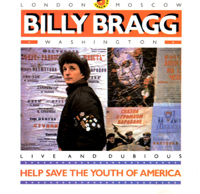 [By Ken Hunt, London] The Summer of 2013 saw the 30th Anniversary Edition of Billy Bragg’s Life’s A Riot With Spy Vs Spy. It counts as a landmark release in the history of British political song, even though its most enduring morsel in the wider popular consciousness is A New England – a song that Kirsty MacColl covered so well and took into the UK Top Ten in 1985. At the time of its release Margaret Thatcher was at the helm of her ship but hell-bent on stormy weather ahead. In 1984 the seismic Miners’ Strike would forever reshape Britain’s political contours.
Less prominent in the brouhaha following her death on 8 April 2013 was Chumbawamba’s In Memoriam: Margaret Thatcher – a limited edition EP release celebrating good riddance to the Iron Lady sent out to subscribers the next day. Many had paid their money long ago and had for waited years. Bragg’s measured and thoughtful Facebook posting recognised infirmity. Like an echo of I Dreamed I Saw Joe Hill Last Night, it read “Don’t celebrate – organise!”
Political song in Britain is in rude health. Part of its healthy state derives from its performers and song-makers looking both backwards and forwards. Its deliverers span the generations. Epitomising that principle is the Anti-Capitalist Roadshow and its souvenir, the double CD Celebrating Subversion (2012). Fielding Frankie Armstrong, Roy Bailey, Robb Johnson, Reem Kelani, Grace Petrie, Peggy Seeger and others, it describes itself as “a collective of singers and songwriters, plus one magician” – the last-mentioned being “socialist magician” Ian Saville.
 Grassroots in nature and orientation, the country’s network of folk clubs is still the bread-and-butter provider for a good share of people’s livelihoods. In general terms, the folk scene accommodates the overlapping folk revival, acoustic music and political song factions pretty neatly. The same club will book guests of any of those persuasions. Nevertheless, there often seems to be a sort of glass door between the various factions. Perhaps as a by-product of this, a scattering of alternative, parallel venues has sprung up. These cater to “the underground of the underground”, as R2‘s editor Sean McGhee calls it. Some have strong folk-punk or punk-rock leanings but the principle is to provide platforms. That works for established performers such as Attila the Stockbroker or the next wave such as Louise Distras.
The folk club scene acting as a hotbed for politically inspired songwriters is nothing new. Once upon
a time, as far as most people on the British folk scene were concerned – and it was the widely held consensus view – the whole damned folk scene was leftie, liberal or worse. It was a fallacy but never a complete fallacy. The plain fact was that, in terms of voting habits, the colours nailed to the folk scene’s mast were multicoloured. That freedom encouraged, say, the Tory-voting songwriter (and naval historian) Cyril Tawney to write exquisite songs of social observation.
Britain’s unique folk club scene truly bred, or acting as midwife to, political and topical song-making. When Pete Seeger visited in the 1950s he encountered a folk scene that astounded him. One message he took back home concerned a song movement of hugest vigour and punch. Typically, Johnny Handle, Stan Kelly and Leon Rosselson spearheaded this revelation. While certain writers were operating under the influence of Francophone chanson, others used dialect,
occupation or regionality to channel social commentary.
“These Americans came over,” remembers Rosselson, “and heard me perform, and other people, at some event and I remember how impressed they were by the fact that there were these topical, as they would call them, songs being written over here. There was no equivalent over there. This is way before ‘Protest’ started. All that flow from Woody Guthrie had stopped. People weren’t writing songs anymore. The songwriting revival happened here before it happened in America.”
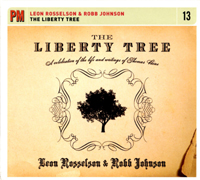 Into this songwriting melting-pot came other inspirations. Chartism – a British working-class movement for political reform – was one. Another major one was what was the satirical movement, a movement given national prominence through That Was The Week That Was, the two short-lived BBC series televised in 1962 and 1963. Again looking backwards and forwards, Rosselson and Johnson’s The Liberty Tree (2010) takes as its inspiration that “atheistic and traitorous scoundrel” Tom Paine, the author of Rights of Man (1791) and The Age of Reason (1793-94) and the man who fed ideas into the French and American Revolutions.
Between May 1979 and November 1990, Thatcher and her Tory administration were in power. It made her both an emblematic and popular figure for vilification, one by-product of which was her achieving a kind of reverse Muse status for political songwriters. She inspired the opposition. After all, oppression can do wonders and make writers more resourceful. The Scottish Trades Union Congress famously underwrote Dick Gaughan’s 1986 album of songs about miners and mining, True and Bold as part of an awareness-raising drive.
The trades union movement, once so active from the 1960s through to the 1980s, is now largely off the arts radar, though in a neat twist, in October 2013 the ever-prolific and teaching professional, Robb Johnson put together a limited edition release to support the Brighton & Hove National Union of Teachers’ hardship fund “to support teachers for whom striking causes particular financial problems”.
The loathsome Tony Bliar, as he is accurately mis-spelled, and New Labour eventually followed Thatcher. Holding office from May 1997 and June 2007, Bliar succeeded in mobilising hundreds of thousands of Stop the War protesters in marches and demonstrations throughout Great Britain. The Hyde Park rally brought central London to a standstill and Robb Johnson’s We All Said Stop The War on Clockwork Music (2003) memorialises its across-the-generations, faith and political spectrum supporters.
But the reasons for setting political thoughts to music go on and on. Tony Benn (1925-2014) was a noted old-school Labour Party left-winger. He used to attend the Glastonbury Festival where one area is devoted to political and anti-war debate and music, and also toured with one of Britain’s finest politically engaged singers, Roy Bailey. In an interview with Stephen Moss in The Guardian in October 2013, he made a shrewd observation that transfers well to social activism as well as songs of social justice and solidarity generally: “As I got older I came to see that the most important thing to do was to try to influence public thinking.”
Of course, one aspect of political songwriting – and the UK variety is no different to its counterparts anywhere else – is that song-makers who deal in political or socially engaged song are frequently accused of preaching to the converted. Fulminating against politicians and the men and women who run the land is not the only way to go about matters. Raising awareness and influencing public thinking remains vital. Britain’s increasingly troglodyte neo-Nazi bands would agree with that.
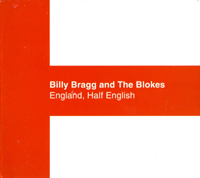 Billy Bragg’s dedication in The Progressive Patriot (2006), his book about cultural identity, is to The Clash – “the flame you lit is still burning bright”. The title track of Billy Bragg and The Blokes’ England, Half English (2002) addresses issues of cultural identity. Similarly, but differently Joe Strummer & The Mescaleros’ Global A Go-Go ‘Bhindi Bhagee’ (2001) – bindi (okra or ladies’ fingers) and bhaji (fritters) – referenced one of the planet’s universal currencies. Food is a basic political drive, along with water, warmth and shelter. Both songs cleverly sent messages by special delivery – music. Maybe both prompt even casual listeners to think
about what Britishness and living in a multicultural society mean.
When Louise Distras recited We Are All Pussy Riot! – forgive a political poem rather than a political song creeping into the narrative – on the eve of Pussy Riot’s sentencing, and we all know the gist, if not the specifics, of the sentence handed down, her litany of named or anonymous inspirations from disparate cultures and eras delivered.
To mis-tweet (it is post-modern) a line from the Australian art critic Robert Hughes: What would you prefer? A song that struggles to change the social contract and fails? Or a song that seeks to please and amuse and succeeds?
The image of Louise Distras is © Mike Distras and courtesy of Louise Distras.
Ken Hunt writes the long-running political song column RPM in the UK-based, bimonthly magazine R2 http://www.rock-n-reel.co.uk/ A German-language version of this article appeared in Folker at the beginning of 2014. https://www.folker.de/
17. 8. 2014 |
read more...

 [by Ken Hunt, Ostrava, Vienna and London] A fortnight before the yearly festival happened, The Prague Post informed readers that Colours of Ostrava was “the Czech Republic’s top summer music event”. Impressions from attending the festival serve to confirm that indisputably it is. Ostrava is in the top right of the country. Poland is 15 km away and the Slovak Republic 55 km distant. Inevitably therefore it is a festival that attracts an international audience. Ten years after the festival’s founding, that is, in 2012 this “multi-genre music festival” switched locations across the city. Since then has taken place in Ostrava’s Vítkovice district. Its new setting is one of preserved industrial ‘dereliction’ – aka a UNESCO heritage site. And to mangle the Four Seasons’ comeback hit, ‘Oh, what a site!’
My first impressions of the site with no festival crowd inside it were mixed. A real ‘What the fuck!’ deal. Treat that fruity remark in the sense of judging a book by its cover. Even from the outside its industrial landscape is imposing but its architecture gives little away about the sheer scale and size of what is behind the site’s fences and outer rim of buildings. Within the festival grounds is a Metropolis set (think Fritz Lang) seemingly for the Twentieth Century more than the Twenty-first Century. It is made of steel, rust, pipes, chimneys, towers, more rust, greenery growing in walkways eight meters above our heads and, a favourite, a gasometer converted into a conference centre with venue (Colours’ Vítkovice Gong Stage). Initially orientation appeared impossible. Gradually dots joined up. But given the size of the site, musical inclinations, temperatures in the high 30s and musical curiosity, there were corners of the festival grounds upon which Kenneth never clapped eyes. Two shallow excuses would be I wound up doing a couple of, for me, interesting conversations with musicians before audiences of a few hundred festival-goers on the Gong Reflex Stag. Mine were with Iceland’s Emilíana Torrini and a Welsh group called 9Bach to which the singer-songwriter Bonnie Dobson had drawn my attention before their signing to Real World and making their second album Tincian. In part, another excuse for not seeing acts was also down to the English-language festival programme being shakier about Czech and Slovak acts than its Czech-language edition, though I may be doing that programme a disservice as I failed to pick up a copy.
 Some festival-goers choose to fly around a festival sampling as much nectar from as many flowers as possible. As it were, the catch-a-few-songs-here and the half-a-set-there approach. My approach is to catch entire sets in order to get a bigger picture. It’s not necessarily better, just a different approach, but it suits me and my legs and my head better. Years of experience of TFF Rudolstadt’s multi-stage character – and mountain-goating it there – have counselled me in this more leisurely, more intense approach. One unmissable act had to be Lo Còr De La Plana, one of France’s greatest folk-flavoured bands. They come from the People’s Republic of Marselha, elsewhere known as Marseilles. They are a male sextet and combine polyphony and percussion. That Saturday evening on the Drive Stage, in the time they performed they were without question the best band on the planet. They exceeded themselves and initiated a set of ring dances that swept through the tented venue. Social dance was not something I was expecting at Colours of Ostrava and nor would I have expected to join in. However, it would have been churlish not to join in. Handsome men and beautiful women held out hands to strangers and whisked the next stranger into the ring dance.
 At concert’s end, Lo Còr De La Plana announced their next day’s collaboration with the Naples-based female quartet Assurd. It was hymned as Vé Zou Via (that is, a pun on Vesuvius) and it
would have been rude to decline the invitation. The next afternoon they sang like the choir on Olympus. Stupid me, I was so carried away by their vocal swell that when the amplification and lighting dropped out and they sang unamplified I fancied it was part the Vé Zou Via act. Hey, without getting fazed or skipping a beat, nine musicians went acoustic, peered into the packed tent in front of them and continued singing their hearts out. The electricity returned at some point and they resumed their electric set. Seldom has electrifying professionalism seemed so unaffected and natural.
Sunday’s other, earlier highlight was 9Bach. They are doing things for Welsh music that are revelatory and live they proved themselves to be a world-class folk-themed band. Returning to the hotel late that evening, a gentleman got off the same tram and rushed up to me. He engaged me energetically, saying he had gone along to the 9Bach conversation on spec that morning, not knowing a thing about Wales or Welsh music, let alone 9Bach. I had asked Lisa Jên to sing a Welsh folksong unaccompanied as part of the talk and she sang deliciously. The stranger had enjoyed her singing so much and his curiosity was so piqued by the discussion that he went to the concert. For him and me alike, 9Bach’s performance on the Gong Vítkovice Stage was one of Colours’ ear-openers. With that he rushed off in the opposite direction. The exchange lasted little more than two minutes but, for me, it reaffirmed what festivals can do in allowing acts to talk to festival-goers.
I have jumped ahead a day. Looming over the festival was Saturday night’s Ostrava return for Robert Plant and The Sensational Space Shifters on the Česká Spořitelna Stage. They did not disappoint. Even though their lullaby and… THE CEASELESS ROAR was as yet unreleased, they were holding a hand of trumps since Plant needs no education when it comes to constructing a set. Plus he can rely on choice morsels from the Led Zeppelin hostess trolley. Plant is savvy enough to juggle old and new material to please and tease. They did the upcoming album’s Little Maggie and Rainbow. They revealed them to be new tours-de-force in waiting. Looking backwards, Whole Lotta Love – which also skirted Quicksilver Messenger Service’s take of Bo Diddley’s Who Do You Love? – was pure deliciousness. The set revealed aspects of the band’s essence with psychedelia, some world music and a wholesome serving of rock.
 For me, two extra-musical strands added credence to the line about Colours of Ostrava being “the Czech Republic’s top summer music event”. I’ll give credit to the festival’s director, Zlata Holušová.
 In order to arrive in good time for a front-row position for Lo Còr De La Plana, I wandered well ahead of time across the site to get a beer and write at a table in the nearby beer tent. Close to the Drive Stage where they were appearing, there was a whole crew of graphic artists – street, graffiti or otherwise – creating festival-temporary works of art. They were ‘under construction’. Over the course of the festival I returned to see how they had progressed. I have no notion of the names of who did what but the vibrancy and excitement of their art impressed – that and the decision to include it as a feature. Here’s hoping it is a regular occurrence.
 The most subtle, unobtrusive and mysterious non-musical element was a post-revelry one. Saturday’s headlining act happened on the Česká spořitelna stage. After Robert Plant and the Sensational Space Shifters finished their set, the audience dispersed. (Basille were coming on 90 minutes later after midnight.) Above the mixing tower facing the stage, the sound of clock chimes rang out – ones of the kind that chime the quarters but, more specifically the fourth quarter. Public clocks do it all across Europe. Perhaps, the Czech Republic’s most famous one is the astronomical clock in Prague’s Staroměstské náměstí. In the ‘Old Town Square’ you have The Walk of the Apostles and sundry fixed figures doing particular things as the quarters sound. It makes for spectacle. Go past it enough times and the experience gets diminished, dimmed or downgraded. It’s like a Londoner hearing the Cambridge Quarters struck by ‘Big Ben’ yet another time.
After Robert Plant and the Sensational Space Shifters had done their bestest, the glory that Colours of Ostrava had put on and Cia La Tal’s Carillo had created was probably missed by a good chunk of the audience exiting that field of dreams. You had to be in the right place and right frame of mind to experience what the tower was producing. Bożena Szota, the festival director of Ethno Port Poznań in Poland and I gazed up in a state of wonderment. The penny dropped when realising that it wasn’t mechanical figures but human mannequins now putting on a further, visual show. On several levels I bet it went over many people’s heads. We stood there absorbed.
Colours of Ostrava is like no music festival I have ever experienced anywhere in Europe.
Further information about Colours of Ostrava is at: http://www.colours.cz/en/
Further information about Cia La Tal | Compañía de Teatro Internacional in English, Spanish and Catalan is at: http://cialatal.com/>
All photographs © Ken Hunt/Swing 51 Archives. The hay stooks are from a trip into the Carpathians with Grit Friedrich, Ben Mandelson, Jiři Plocek and Benjamin Taubkin to visit the extraordinary instrument maker Vít Kašpařík in Velké Karlovice. But that’s a story for another time.
1. 8. 2014 |
read more...
 [by Ken Hunt, London] It started off as a slow year, especially in terms of concerts or talks that stood out. Disquietingly slow. Then it just got better and better, particularly when it came to concerts, and less so in terms of fees.
 New releases
Iva Bittová / Iva Bittová / ECM
Brass Monkey / The Best of Live – 30th Anniversary Celebration / Park Records
Katy Carr / Paszport / Deluce Recordings
Chumbawamba / In Memoriam: Margaret Thatcher / [no label]
The Furrow Collective / At Our Next Meeting / Furrow Records
Arun Ghosh / A South Asian Suite / Camoci
Kayhan Kalhor & Erdal Erzincan / Kula Kulluk Yakışir Mı / ECM
Lisa Knapp / Hidden Seam / Navigator
Laura Marling / Once I Was An Eagle / Virgin Records
Leyla McCalla / Vari-colored Songs / Dixie Frog
Quercus / Quercus / ECM
Martin Simpson / Vagrant Stanzas / Topic
Jyotsna Srikanth / Call of Bangalore / Riverboat Records
Jody Stecher / Wonders & Signs / own label
Simon Thacker’s Svara-Kanti / Rakshasa / Slap The Moon Records
The Ex & Brass Unbound / Enormous Door / Ex Records
Linda Thompson / Won’t Be Long Now / Topic Records
Marta Topferová & Tomáš Liška / Milokraj / Animal Music
Noëmi Waysfeld & Blik / Kalyma / AWZ Records
Duncan Wood & Guests / Swarbtricks – A Collection of New Melodies Purposely Composed for the Violin & Mandolin by David Swarbrick / Beechwood
 Historic releases, reissues and anthologies
Eliza Carthy / Wayward Daughter / Topic
Country Joe & The Fish / Electric Music for the Mind and Body / Vanguard
Grateful Dead / Sunshine Daydream – Veneta, Oregon, 8/27/72 / Grateful Dead Productions/Rhino
Paul Horn / In India/Cosmic Consciousness – Paul Horn In Kashmir / BGO Records
Ravi Shankar / The Living Room Sessions Part 2 / East Meets West Music
Dave Van Ronk / Down In Washington Square / Smithsonian Folkways
Lal Waterson / Teach Me To Be A Summer’s Morning / Fledg’ling
Young Tradition / The Young Tradition/So Cheerfully Round/Galleries/Chicken On A Raft EP / BGO Records
Young Tradition / Oberlin 1968 / Fledg’ling
 Events of 2013
Shirley Collins: ‘The Outskirts of Culture’ (talk) / Purcell Room, London / 2 February 2013
Milokraj featuring Marta Topferová & Tomáš Liška, Green Note, London / 10 April 2013
Martin Simpson & Ariev Azhar / Alchemy Festival, Purcell Room, London / 17 April 2013
Rory McEwen / Art exhibition – The Colours Of Reality / Kew Gardens / 11 May to 22 September 2013
Iva Bittová, David Dorůžka, Aneta Majerová and Peter Nouzovský / Libeňská synagoga, Praha 8 – Libeň / 31 May 2013
Landfall – Laurie Anderson & Kronos Quartet / Barbican Hall, London / 28 June 2013
Noëmi Waysfeld & Blik / Tanz&FolkFest Rudolstadt, Stadtkirche / 6 July 2013
Mariana Sadovska / Tanz&FolkFest Rudolstadt, Theater / 7 July 2013
 Sam Lee & Friends / Tanz&FolkFest Rudolstadt, Burgterrasse / 7 July 2013
David Lindley / Tanz&FolkFest Rudolstadt, Heidecksburg / 7 July 2013
Jyotsna Srikanth and Dr. V. Krishna (performance/talk) / Nehru Centre, London / 30 August 2013
Arun Ghosh featuring Zoe Rahman – ‘A South Asian Suite’ launch / PizzaExpress Jazz Club, Soho, London / 29 September 2013
Sudha Ragunathan / Darbar Festival, Purcell Room, London / ADD
Bright Phoebus Revisited / Barbican Centre, London / 11 October 2013
Martin Carthy & Dave Swarbrick / Turner Sims Hall, Southampton / 19 October 2013
Robb Johnson + Roy Bailey + Barb Jungr + Jude Abbott + Jenny Carr + John Forrester – Gentle Men: A family history of the First World War / The Tabernacle, Notting Hill, London / 7 November 2013
A Celebration Of Bert Jansch / Royal Festival Hall, London / 3 December 2013
 Ten music projects that returned to haunt
Martin Carthy & Dave Swarbrick / Prince Heathen / Topic Records
The Chieftains / 4 / Claddagh Records
Shirley Collins / Within Sound / Fledg’ling
Pannalal Ghosh / The Great Heritage / Saregama
Fraunhofer Saitenmusik / Das Album – 1978-1998 / Trikont
Dick Gaughan / Handful of Earth / Topic Records
Home Service / Alright Jack / Fledg’ling
Louis Killen / Ballads and Broadsides / Topic Records
Yusef Lateef / Eastern Sounds / Prestige
Kamalesh Maitra / Tabla Tarang – Melody on Drums / Smithsonian Folkways
Images: Smile x 2, September 2013 © Samita Vakani/Swing 51 Archives; Noëmi Waysfeld images at TFF Rudolstadt © Santosh Sidhu/Swing 51 Archives; Iva Bittová at Libeňská synagoga and John Tams of the Home Service at the Half Moon © Ken Hunt/Swing 51 Archives; Lal Waterson from Teach Me To Be A Summer’s Morning courtesy of © Fledg’ling.
Smile is now attributed to Banksy, according to an article in the Evening Standard of 20 August 2007. See http://www.standard.co.uk/goingout/exhibitions/smile-please-its-a-banksy-6607227.html
31. 12. 2013 |
read more...
 [by Ken Hunt, London] Another fine year for music. The evidence of this list to the contrary, much of 2012 flashed by in a blur owing to illness in the family that wiped out most of the year’s listening hours. As to recorded music, the pile of unlistened to music grew, thanks to having to prioritise paid reviewing work. Yes, strange though it may seem, if one’s livelihood depends on paid writing, it is astonishing how a paying commission focuses the mind.
 New releases
Al Andaluz Project / Live In München 2011 / Galileo
Carolina Chocolate Drops / Leaving Eden / Nonesuch
Eva Quartet & Hector Zazou / The Arch / Elen Music
Getatchew Mekuria & The Ex & Friends / Y’Anbessaw Tezeta / Terp Records
Maria Doyle Kennedy / Sing / Mermaid Productions
Sam Lee / Ground of its Own / The Nest Collective
Little Feat / Rooster Rag / Rounder
The Owl Service / Garland Sessions / Stone Tape Recordings
Tom Paley’s Old-Time Moonshine Revue / Roll On, Roll On / Hornbeam Recordings
Emily Portman / Hatchling / Furrow Records
Abdulkarim Raas & Kuljit Bhamra / Somali Party Southall / Keda Records
Kala Ramnath / Aavartan: A Musical Odyssey – 1 Dawn to Dusk / Kalashree
Kala Ramnath / Aavartan: A Musical Odyssey – 2 Dusk to Dawn / Kalashree
Ravi Shankar / Living Room Sessions Part 1 / East Meets West Music Inc
Jenny M Thomas And The System / Bush Gothic / Fydle Records
Wu Man and Master Musicians from the Silk Route / Borderlands / Smithsonian Folkways
Neil Young With Crazy Horse / Psychedelic Pill / Reprise
 Historic releases, reissues and anthologies
Peter Bellamy / Barrack-Room Ballads of Rudyard Kipling / Fellside Recordings
Dorota Barová / feat. Dorota Barová / Indies
Sandy Denny / The Notes And The Words – A Collection of Demos And Rarities / Island Records
Grateful Dead / Dave’s Picks Volume Three – Auditorium Theatre, Chicago, IL 10/22/71 / Grateful Dead Productions
A L Lloyd / Bramble Briars and Beams o the Sun / Fellside Recordings
Sarah Makem / As I Roved Out / Musical Traditions
Sarah Makem / The Heart Is True / Topic
Gil Scott-Heron / The Revolution Begins – The Flying Dutchman Masters / Ace
Various Artists / Antologie moravské lidové hudby/Traditional Folk Music in Moravia – Dolňácko II / Indies
Various Artists / Antologie moravské lidové hudby/Traditional Folk Music in Moravia – Valašsko, Lašsko / Indies
Various Artists / Celebrating Subversion – The Anti-Capitalist Roadshow / Fuse Records
Various Artists / Copendium – An Expedition into the Rock ‘n’ Roll Underworld / Ace Records
Various Artists / I’m A Romany Rai – Songs by Southern English Gypsy Traditional Singers / Topic
Various Artists / Jail House Bound / WVU Press Sound Archive
Various Artists / Make it your sound, make it your scene – Vanguard Records & the 1960s musical revolution / Vanguard/Ace
Various Artists / You Never Heard So Sweet – Songs by Southern English Traditional Singers / Topic
Hedy West / Hedy West/Volume 2 / Vanguard/Ace
Dominique Vellard – Ken Zuckerman / Indian Ragas & Medieval Song / Glossa
 Events of 2012
Iva Bittová and the Nederlands Blazers Ensemble / Groete Zaal, Muziekgebouw aan ‘t IJ, Amsterdam / 25 January 2012
Aruna Sayeeram/Aruna Sairam / Théâtre de la Ville, Paris / 12 April 2012
Brass Monkey / The Goose Is Out, East Dulwich, London / 27 April 2012
Andy Irvine / The Ram Club, Thames Ditton, Surrey / 4 May 2012
Little Feat / Islington Assembly Hall, London / 2 July 2012
Oumou Sangare & Béla Fleck / Tanz&FolkFest Rudolstadt, Heinepark / 6 July 2012
Hannes Wader / Tanz&FolkFest Rudolstadt, RUTH-Verleihung, Heidecksburg / 7 July 2012
Alistair Anderson / Tanz&FolkFest Rudolstadt, Stadtkirche / 8 July 2012
Chumbawamba / Tanz&FolkFest Rudolstadt, Heinepark / 8 July 2012
Jyotsna Srikanth Project / London International Arts Festival, Redbridge Town Hall, Ilford / 11 August 2012
Dr M. Balamuralikrishna / London International Arts Festival, Redbridge Town Hall, Ilford / 11 August 2012
Chitraveena Ravikiran / Darbar Festival, Purcell Room, London / 29 September 2012
Shujaat Khan & Swapan Chaudhuri / Darbar Festival, Purcell Room, London / 30 September 2012
Carolina Chocolate Drops / O2 Shepherd’s Bush Empire / 9 October 2012
Dick Gaughan / Twickfolk, Twickers, Middlesex / 25 November 2012
One additional live act sounded more than promising from catching them doing a support spot at The Goose Is Out and that was Kit & Cutter. The close-of-festival cameo performance by Strom & Wasser featuring The Refugees at TFF Rudolstadt was also really impressive.
Images: Iva Bittová botanising with an improvised palm tree hat (from bark donated by staff) at De Hortus Botanicus Amsterdam – Amsterdam’s Botanical Gardens – taken 25 January 2012 © Ken Hunt/Swing 51 Archives. Otherwise the images are © their image-makers, photographers and designers.
31. 12. 2012 |
read more...
 [by Ken Hunt, London] What a year for music! The number of events of 2011 on this list is greedy by most annual polls’ standards. One of the continual difficulties for me is that, because I am writing in a variety of periodicals and newspapers across a variety of musical genres for a number of territories, wonderful stuff just gets continually squeezed out. I mean, in this brave new world of world music, nobody wants ten roots-based Czech or Hungarian albums or Indian classical or English or even European folk albums…
2011 was marked by losses in the world of music. It started off with the deaths of the singers Bhimsen Joshi and Suchitra Mitra. Keeping to that subcontinental frame of mind, as the year crunched on, the rudra vina virtuoso Asad Ali Khan, the film-maker Mani Kaul, the ghazal and more maestro Jagjit Singh, Assam’s treasure Bhupen Hazarika and the sarangi player Sultan Khan died. Mauritania’s songstress supreme, Dimi Mint Abba and the Cape Verdean singer Cesária Évora, and the song creators Franz Josef Degenhardt and Ivan ‘Magor’ (Madman) Jirous died. And particularly heartfelt for me, there were the deaths of three mainstays of the British folk revival and scene – Mike Waterson, Ray Fisher and Bert Jansch (and then Loren Jansch). And last, there was Václav Havel’s death, not long after Ivan Jirous’s death.
 New releases
Amira / Amulette / World Village
Asha Bhosle & Shujaat Khan / Naina Lagaike / Saregama
Kristian Blak & Yggdrasil / Travelling / Tutl
Eliza Carthy / Neptune / Hem Hem
Andrew Cronshaw / The Unbroken Surface of Snow / Cloud Valley Music
Steve Earle / I’ll Never Get Out Of This World Alive / New West Records
Arun Ghosh / Primal Odyssey / Camoci
Jayanthi Kumaresh / Mysterious Duality / EarthSync
Laura Marling / A Creature I Don’t Know / Virgin
Tommy McCarthy / Round Top Wagon / ITCD http://www.tinfolkmusic.com/www.tinfolkmusic.com/Thomas_McCarthy.html
Christy Moore / Folk Tale / Sony Music (Ireland)
Nørn / Urhu / own label / www.norn.ch
Llio Rhydderch and Tomos Williams / Carn Ingli / Flach
Mike Seeger and Peggy Seeger / Fly Down Little Bird / Appleseed
Jyotsna Srikanth / Carnatic Jazz / Swathi Soft Solutions
Ági Szalóki and Gergő Borlai / Kishúg / Folk Európa Kiadó
June Tabor / Ashore / Topic
June Tabor & Oysterband / Ragged Kingdom / Topic
Trembling Bells / The Constant Pageant / Honest Jon’s
 Historic releases, reissues and anthologies
Peter Bellamy / Merlin’s Isle of Gramarye / Talking Elephant
Z.M. & Z.F. Dagar / Ragini Miyan ki Todi / Country & Eastern
Grateful Dead / Europe ’72 Vol. 2 / Grateful Dead Productions
Grateful Dead / Europe ’72: The Complete Records – Wembley Empire Pool, London, England 4/8/72 / Grateful Dead Productions
Home Service / Live 1986 / Fledg’ling
The Kinks / Something Else By The Kinks / Sanctuary
Muzsikás / Fly Bird Fly / Nascenti
Ravi Shankar / Reminiscence of North Vista / East Meets West Music
Ravi Shankar / Orchestral Experimentations / East Meets West Music
Leon Rosselson / The World Turned Upside Down / PM Press/Fuse Records
M.S. Subbulakshmi / Surdas Bhajans / Charsur Digital Workstation
Traffic / John Barleycorn Must Die (Deluxe) / Universal
Various Artists / The Complete Pakeezah / Saregama
Various Artists / The Rough Guide to English Folk / World Music Network
Various Artists / Antologie moravské lidové hudby/Traditional Folk Music in Moravia – Horňácko / Indies
Various Artists / Antologie moravské lidové hudby/Traditional Folk Music in Moravia – Dolňácko I / Indies
Various Artists / A Népzenét‹l a Világzenéig 1 From Traditional to World Music / Folk Európa Kiadó / Folk Európa Kiadó
Various Artists / A Népzenét‹l a Világzenéig 2 From Traditional to World Music / Folk Európa Kiadó
Various Artists / A Népzenét‹l a Világzenéig 3 From Traditional to World Music / Folk Európa Kiadó
Hedy West / Ballads and Songs from the Appalachians / Fellside
 Events of 2011
‘The Contenders’ – Sam Lee, Emily Portman, Massie and Alex Nielson / Queen Elizabeth Hall, London / 14 January 2011
Archie Fisher / Twickfolk, The Cabbage Patch, Twickenham, Middlesex / 15 January 2011
‘A Tribute to Ustad Ali Akbar Khan’ – Alam Khan / Darbar Festival, Hall One, Kings Place, London / 23 April 2011
Marry Waterson & Oliver Knight / Royal Oak, Lewes, Sussex / 5 May 2011
The Folk Jukebox / Royal Festival Hall, London / 7 May 2011
‘Flying Man (Pakshi-Manab): Poems for the 21st Century’ – Mukal Ahmed, Munira Parvin, William Radice, Idris Rahman and Zoe Rahman / Conference Centre, British Library, London / 17 May 2011
Ravi Shankar / 21 June 2011 / Barbican Hall, London
Nørn / Tanz&FolkFest Rudolstadt, Stadtkirche, Rudolstadt / 3 July 2011
Aruna Sairam / BBC Proms Prom 17: World Routes Academy, Royal Albert Hall, London / 27 July 2011
‘Masters of Percussion’ – Zakir Hussain (tabla) with Rakesh Chaurasia (bansuri), Ganesh Rajagopalan (violin), Sridar Parthasarathy (mridangam and kanjira), Navin Sharma (dholak) and T.H.V. Umashankar (ghatam) / London Jazz Festival, Royal Festival Hall, London / 11 November 2011
Peggy Seeger / Folk Union, Hall Two, Kings Place, London / 18 November 2011
Images: Aruna Sairam and Hari Sivanesan on vina © Santosh Sidhu/Swing 51 Archives. Otherwise the images are © their image-makers, photographers and designers.
31. 12. 2011 |
read more...
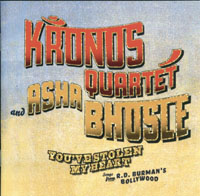 [by Ken Hunt, London] The Rahul Dev Burman story actually begins eight years before his birth on June 27, 1939, in Calcutta; new chapters continue to be added years after his death in Bombay on January 4, 1994. The Indian film business was revolutionized in 1931 by the arrival of the nation’s first talkie, Alam Ara (Light of the World). This groundbreaking film was the first to use music to create an egalitarian lingua franca that united paying audiences in a nation divided by linguistic abundance.
Filmi sangeet – filmi for short, or “film song” – became became India’s popular music. Burman was part of that first generation for whom silent films were only historical flickers. He grew up with filmi as the soundtrack to his life. Across India, film was the most popular form of mass entertainment, and Burman’s exposure to “pictures” (as movies were known) and filmi began very early on. It helped his future composing career that he was born into a Bengali family with music in its bloodstream. The Bengali heartland is the modern-day Indian state of West Bengal and Bangladesh, and during his boyhood and adolescence he could not help but be acutely aware of Bengali culture’s literary and musical pedigree.
R.D. Burman was the only child born to Sachin Dev and Meera Burman. His grandfather had been a classical vocalist specializing in dhrupad, a stately classical genre demanding slowly unfolding, spontaneous composition ruled by raga (as the subcontinent’s sequences of notes are known). Spiritual in nature, dhrupad depends on allegory, multilayered symbolism, and poetic meaning. The surface meaning regularly hides deeper truths. It is not accidental that similar traits ripple through the lyrics that R.D. Burman set to music.
S.D. Burman (1906-1975) was part of the generation that took classical and folk elements into the brave new world of box-office gold. S.D. graduated from singer-actor to “music director” in Bombay, the city that during the war years of the 1940s became the Indian film industry’s most money-spinning regional centre and the centre for Hindi-Urdu pictures. As R.D. Burman grew up, composers, musicians, actors, and artistic types of all sorts were in and out of the family home. On one occasion, the screen idol Ashok Kumar eavesdropped on the young man repeating “panchama” over and over to himself. Thus the fifth note of the Indian musical scale gave rise to R.D.’s lifelong nickname, Pancham. Both parents groomed Pancham for a musical life, though he also received a thorough grounding in raga and tala (rhythm cycle) from several prominent classical musicians, including sarod virtuoso Ali Akbar Khan.
All across the Indian subcontinent, that vast landmass that includes present-day India, Pakistan, Bangladesh, Nepal, and Sri Lanka, “music director” did not just mean “film composer” in the sense generally understood in the Western film industry. The profession was lumbered with a job description that exceeded anything found in any other film industry. It was an umbrella term for a package that could include composer, singer/musician, arranger, conductor, and session organizer. With his father’s blessing, Pancham left school in 1955 before matriculating, already set on starting his apprenticeship as a music director.
R.D. Burman brought his own set of influences to composition. Unlike his father, Pancham’s strong suits were never Bengali folk music or traditional Baul music. Sometimes he integrated Hindustani classical music, notably in the film Amar Prem (1971), but Pancham was better at allowing his ear to be grabbed by new sounds. He kept abreast of developments in popular music, not least of all because he was an avid record collector. His tastes ranged widely. He absorbed and assimilated elements from musicians like Stan Kenton, Quincy Jones, Sergio Mendez, and Santana.
Asha Bhosle, who was both his muse and his wife, recalls how in the studio Pancham intuitively knew when to stop rehearsing and go for the take. Recording sessions were highly pressurized affairs. It was not uncommon to rehearse, learn, and tweak an entire film soundtrack in the morning and have the whole session wrapped by the late afternoon or evening. Sought-after playback singers were known to do morning, afternoon, and evening sessions for three different films in three different studios in one day. These sessions were miracles of timing, organization, and budget restraints with musicians coming and going.
In this hectic environment Pancham created his innovative music for India’s picture palaces. Yet the theatres in which his music would be heard did not have brand-new sound systems. Time and time again he had to achieve effects that had, in Western terms, the startling aural impact of Jimi Hendrix’s stereo track-panning – only in mono, by thoroughly engaging his listeners’ imaginations.
In an industry that breeds superlatives, Pancham was celebrated as the most ingenious music director of his generation, at a time when the genre seemed pretty much mined to exhaustion. Though Western film may only have achieved limited penetration across India, people who were vague about which one was Michael Caine and which one was Sean Connery recognized the musical James Bond references Pancham would slip in. Listening to Pancham’s compositions gives only a hint of his voracious listening habits and ability to assimilate for Indian tastes.
Pancham also became enthused about original sound effects. Rather than resorting to the commonly used pre-recorded effects from commercial sound libraries, he experimented with his own recordings. For the original version of Ekta Deshlai Kathi Jwalao (Light a Match), for example, he did take after take of matches being struck until he got the sound that pleased his ear. In a non-verbal, non-musical way, that sound is a poignant reinforcement of the song’s lyrical theme. Similarly, the percussive, one-note introduction to Chura Liya Hai Tum Ne (You’ve Stolen My Heart), the one that sounds like a glass being tapped, is just that; it is not a gratuitous effect. Once “picturized” – in Bollywood jargon in the Western-style cocktail party scene in Yaadon Ki Baraat (Memories of the Bridegroom’s Procession, 1973), that clinking makes sense and adds to the dramatic narrative.
Towards the end of his life, Burman fell foul of his own success. Bollywood routinely employs copyists, and film-makers found sound-alike composers prepared to pastiche Burman’s signature style at bargain rates. Nevertheless, he rallied with the gorgeously melodic songs for the award-winning blockbuster 1942: A Love Story (1994), even if its success proved posthumous. On his death in 1994 he left behind hours of unreleased music, compositional fragments, and works-in-progress. Since his death, the clamour for his work has not diminished. Arguably he is now reaching a greater audience than in his lifetime. Technology is playing a part in that: websites, fan clubs, remixes, and karaoke recordings are all spreading his music. Through his music, with all its extraordinary vigour and inventiveness, he continues to be a part of youth culture in ways he would have chortled over.
This section constitutes the opening section of the booklet notes to You’ve Stolen my Heart – Songs from R.D. Burman’s Bollywood Nonesuch 7559-79856-2, 2005. You know what it’s like? You keep finding rotters have uploaded your writings without ever seeking permission. And you get to thinking…
Further reading: Anirudha Bhattacharjee & Balaji Vittal’s R.D. Burman – The Man, The Music (HarperCollins (India), 2011)
20. 6. 2011 |
read more...
Older articles »