Lives
 [by Ken Hunt, London] In person Pete Seeger was, much like you’d imagine, physically pretty spindly, pretty lanky but with a muscularity. Born on 3 May 1919 in Manhattan, he had an air of another era about him. He had a personable gentlemanliness quality, if it doesn’t sound too foolish, a real Pete Seeger-ness to him.
The obituaries will rightly talk about his lion-heartedness facing down the House Un-American Activities Committee in 1955, blacklists and censorship, principles and running the gauntlet because of his involvement in the Civil Rights movement, his antiwar stance, his ecological activities and so on. There will be talk of songs such as Where Have All The Flowers Gone, Turn! Turn! Turn! (To Everything There Is A Season), We Shall Overcome and his antiwar parable Waist Deep In The Big Muddy. There was also the matter that he married Toshi, a woman of Japanese-American extraction, in 1943, at a time when the United States was beset with anti-Japanese fever.
In 1998 he was at a wedding in upstate New York. He had hunkered down with his banjo and John Herald had his guitar and they were leading a rough-and-ready jam session in the small marquee. The temperature dropped and a downpour came and the tent thinned out. A young man with a guitar sat facing Pete and he played something. Pete paused him, complimented him and asked him to show what he had just played. The young man with the guitar practically levitated with pride afterwards, like it was one of those tell-the-grandchildren experiences. That was Pete Seeger-ness personified. He radiated kindness, energy and engagement. He showed another side as the rain continued. When Toshi called him in, in a ‘Yikes!’ moment, he cocked a deaf ear and pretended he couldn’t make out what she was saying. And played on.
He died at the not-for-profit, non-sectarian New York-Presbyterian Hospital on 27 January 2014. Toshi Seeger died on 9 July 2013.
5. 2. 2014 |
read more...
 [by Kate Hickson, Powys, Wales] These remembrances remain in a state of flux as news comes in, details get corrected, information emerges and useful weblinks appear.
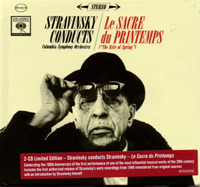
23 May – On this date in 1913, Le Sacre du printemps (‘The Rite of Spring’) received its premiere at the Théâtre des Champs-Élysées on the avenue Montaigne in Paris’ 8th arrondissement. Its music is by Igor Stravinsky: its choreography by Vaslav Nijinsky: its performers the Ballets russes company under Serge Diaghilev. It was the sensation of the company’s 1913 season.
25 May – The Tamil playback singer T.M. Soundararajan , born on 24 March 1922 in Madurai in the Madras Presidency, died aged 91 in Chennai.
30 May – Proinsias Ó Conluain, the RTÉ broadcaster, documentary-maker (subjects include the singer Eddie Butcher and the folksong collector Capt. Francis O’Neill, among others) and folksong collector (notably from the singer Róise Bean Uí Ghrianna) died at the age of 93.
15. 6. 2013 |
read more...
 [by Kate Hickson, Powys, Wales] These remembrances remain in a state of change as and when updates arrive, details get corrected, information emerges and useful weblinks appear. Updated 12 June 2013.
7 April – The US film-maker Les Blank died at the age of 77 in the Berkeley Hills area of the San Francisco Bay. Born on 27 November 1935 in Tampa, Florida, he made film portraits of Clifton Chenier, Mance Lipscomb and Lightnin’ Hopkins among other subjects.
The Guardian published Les Blank’s obituary in its edition of Friday, 10 April 2013: http://www.guardian.co.uk/film/2013/apr/12/les-blank-dies-documentary-music
11 April – The Oakland, California-born violinist Sue Draheim died aged 63 in Berea, Kentucky.
The Independent published Ken Hunt’s obituary in its edition of Wednesday, 29 May 2013: http://www.independent.co.uk/news/obituaries/sue-draheim-widely-admired-folk-violinist-8635048.html
17 April – One of the breakthrough female vocalists of Zanzibar Bi Kidude died. Graeme Ewens’ Guardian obituary of her, ‘Bi Kidude, one of Zanzibar’s greatest singers, dies – Enigmatic performer of taarab music and one of the first Zanzibari women to sing in public’ is recommended reading: http://www.guardian.co.uk/music/2013/apr/17/bi-kidude-dies
15. 5. 2013 |
read more...
 [by Kate Hickson, Powys, Wales] These remembrances remain in a state of flux as news comes in, details get corrected, information emerges and useful weblinks appear. Last expanded 1 May 2013.
7 March – Born 5 February 1923, in Keithville, Louisiana, the country singer and songwriter Claude King died at the age of 90 in Shreeveport, Louisiana. He was a member of the Louisiana Hayride radio and television show and was famed for his song, Wolverton Mountain, co-written with Merle Kilgore.
Further reading from the Los Angeles Times is here: http://www.latimes.com/news/obituaries/la-me-passings-20130308,0,3695361.story
20 March – The animator Jack Stokes died. Born in Leigh-on-Sea on the Essex coast on 2 April 1920, he was instrumental in animating the Beatles’ Yellow Submarine (1968), a film the stature of which has grown with deeper appreciation of what the film achieved. Stokes also worked on the film Wonderwall of that same year – the visual counterpart of George Harrison’s album of the same name. Click on Spencer Leigh’s obituary entitled ‘Jack Stokes: Animation director behind Yellow Submarine’ from The Independent of 12 April 2013 here: http://www.independent.co.uk/news/obituaries/jack-stokes-animation-director-behind-yellow-submarine-8569201.html
27 March – The US magazine publisher, writer and author Paul Williams died in Encinatas, San Diego, California. He founded the magazine Crawdaddy. Pierre Perrone’s obituary ‘Paul Williams: Founder of the hugely influential Crawdaddy! magazine’ from The Independent of 15 April 2013 is here: http://www.independent.co.uk/news/obituaries/paul-williams-founder-of-the-hugely-influential-crawdaddy-magazine-8572481.html
27 March – Singer and pianist Gordon Stoker of The Jordanaires died. Named after Jordan Creek near Springfield in Missouri (rather than as often assumed the river in the Holy Land), this white gospel quartet became mainstays at the Grand Ol’ Opry and sang with a tally of artists tallied to number over 2000 in number. After a jicky start, when Stoker was picked to sing, at producer Chet Atkins’ direction, over the whole group, the Jordanaires backed Elvis Presley for 14 years.
28 March – Robert Zildjian died at the age of 89. His name was synonymous with cymbals and things that go crash in the night. ‘Robert Zildjian – Cymbal-maker whose hi-hats, rides and sizzles are used by rock’s top drummers’ (that is, a different title to the internet) appeared in The Daily Telegraphof 3 April 2013. Read it here: http://www.telegraph.co.uk/news/obituaries/culture-obituaries/music-obituaries/9967693/Robert-Zildjian.html
30 March 2013 – Phil Ramone died in Manhattan at the age of 79. Born on 5 January 1934, the South African-born, US American recording engineer, record producer, composer and musician. Over the course of a phenomenal career, he produced records by, to give but an incomplete list, Burt Bacharach, The Band, Ray Charles, Chicago, Bob Dylan, Aretha Franklin, Billy Joel, Elton John, B.B. King, Madonna, Barry Manilow, Liza Minnelli, Sinéad O’Connor, Peter Paul and Mary, Carly Simon, Paul Simon (receiving his first production Grammy for the 1975 album Still Crazy After All These Years), Rod Stewart, James Taylor and Stevie Wonder.
15. 4. 2013 |
read more...
 [by Kate Hickson, Powys, Wales] These remembrances remain in a state of flux as news comes in, details get corrected, information emerges and useful weblinks appear. Latest update: 12 April 2013.
4 February – Pat Halcox died at the age of 82. He born on 18 March 1930 in the London district Chelsea. Trumpet player with the Chris Barber Jazz Band from 1954, he replaced trumpet and band leader Ken Colyer of the Ken Colyer Jazz Band when the band rebranded itself on Colyer’s departure.
His obituary from The Daily Telegraph of 7 February 2013 is here: http://www.telegraph.co.uk/news/obituaries/9853652/Pat-Halcox.html
4 February – The Jamaican musician Alva Lewis died. Born on 16 April 1949, he worked with Bob Marley and the Hippy Boys amongst others.
His obituary, anonymous as ever from The Daily Telegraph, appears here: http://www.telegraph.co.uk/news/obituaries/culture-obituaries/music-obituaries/9972648/Alva-Lewis.html
11 February – Trevor Grills, singer with Port Isaac’s Fisherman’s Friends – purveyors of shanties and sea song – and builder died at St George’s Hospital in Tooting, South London after an on-stage accident at Guilford, G Live. Two days earlier their manager Paul McMullen had died in the same accident. Grills was 54.
Robin Denselow’s obituary from The Guardian is here: http://www.guardian.co.uk/music/2013/feb/12/trevor-grills
21 February – US blues singer and guitarist Magic Slim (1937-2013), born Morris Holt, died.
25 February – Dan Toler (1948-2013) died. He had been a member of Dickey Betts & Great Southern, the Gregg Allman Band and the Allman Brothers Band.
26 February – Bob Frídl (born Josef Frídl), the Czech singer-songwriter and “Czech Bob Dylan”, died aged 66.
8. 3. 2013 |
read more...
 [by Kate Hickson, Powys, Wales] These remembrances remain in a state of flux as news comes in, details get corrected, information emerges and weblinks appear. This month’s includes the centenary of the birth of Indo-Hungarian artist Amrita Sher-Gil.
Last updated: 27 February 2013
3 January – The Karnatic violinist M.S. Gopalakrishnan died, aged 81, in Chennai.
Ken Hunt’s obituary ‘MS Gopalakrishnan: Revered Southern Indian violinist ‘ from The Independent of 20 February 2013 is here: http://www.independent.co.uk/news/obituaries/ms-gopalakrishnan-revered-southern-indian-violinist-8501679.html
15 January – The singer and guitarist Shirley Douglas died, aged 73, in Benissa, Spain. She sang with the Chas MvDevitt Skiffle Group, replacing Nancy Whiskey (who left for personal reasons) in 1957 at the height of the skiffle boom. She would work extensivelt with McDevitt whom she married in 1959. Spencer Leigh’s obituary ‘Shirley Douglas: Singer and guitarist who helped lead the skiffle boom’from The Independent of 2 February 2013 is here: http://www.independent.co.uk/news/obituaries/shirley-douglas-singer-and-guitarist-who-helped-lead-the-skiffle-boom-8477876.html
17 January – the Iranian classical violin soloist, highly respected accompanist (for, amongst others, Marzieh, Hayedeh, Mohammad-Reza Shajarian) and composer-songwriter Homayoun Khorram died, aged 72.
19 January – the Pakistani light classical and playback singer Mehnaz Begum, died aged 55 in Bahrain.
On the same date Anthony ‘Bubs’ White died, aged 68, in Coventry in England’s Midlands region. He was the guitarist with the Bonzos (Let’s Make Up and Be Friendly period), Big Grunt, Quite Riot and more. Of his first brush with adulation and worship with the Bonzos, he recalled, “I was playing a big guitar solo, and suddenly a massive cheer went up. I remember thinking; this is what it’s like to be famous then. That was until I turned around and spotted The Who’s iconic drummer Keith Moon who had come on stage!” Andy Roberts’ memories entitled ‘Anthony ‘Bubs’ White – a tribute’ from his website: http://www.andyrobertsmusic.com/news-bubs-white.html
27 January – The Irish film-maker, broadcaster, writer and musician Éamon de Buitléar (pictured) died at the family home in Delgany, Co Wicklow at the age of 83. He was already involved with Irish traditional music before he met Seán Ó Riada and in 1960 became a founding member of the breakthrough Irish traditional music group Ceoltóirí Chualann, the immediate forerunner of the Chieftains. In the 1970s he founded Ceoltóirí Laighean (Musicians of Leinster), a folk-orchestra for different times.
He will be most remembered for his film work and the massive contributions he made to awakening Ireland to its natural history and the conservation of its countryside and coastal waters. The, as ever, uncredited obituary ‘Film-maker, musician and conservationist’ from The Irish Times of 2 February 2013 is here: http://www.irishtimes.com/newspaper/obituaries/2013/0202/1224329560546.html
30 January – The painter Amrita Sher-Gil was born in Budapest to to Umrao Singh Sher-Gil Majithia, an aristocrat and scholar from Amritsar in Punjab, and Marie Antoniette Gottesmann of Jewish Hungarian stock. The trajectory of her paintings and their subject matter reflects her travels and where she settled. Her images of women are beyond superb. She died in disputed circumstances on on 6 December 1941 in Lahore, then part of British India and today part of Pakistan.
15. 2. 2013 |
read more...
 [by Kate Hickson, Powys, Wales] As ever these remembrances are fluid and will get changed as news and information comes in and weblinks emerge. Please feel free to send links pertinent to this website’s continent for possible inclusion. Death is a state in flux.
5 December – The US jazz pioneer and early incorporator of world music and non-western classical elements Dave Brubeck died aged 92 in Norwalk, Connecticut. Steve Voce’s obituary ‘Dave Brubeck: Pianist and composer hailed as a major figure of 20th century jazz’ from The Independent of 5 December 2012 is here: http://www.independent.co.uk/news/obituaries/dave-brubeck-pianist-and-composer-hailed-as-a-major-figure-of-20th-century-jazz-8386994.html
9 December – the “Diva de la Banda” and antidote to the male posturing prevalent in many Mexican and Mexican-American music forms, Jenni Rivera died aged 43 in a plane crash.
10 December – the Bohemian Czech dudy (Czech bagpipes) musician and folklorist Josef Režný died aged 87.
11 December – Ravi Shankar died aged 92 in La Jolla, San Diego, California. Of all the many tributes and obituaries, Andrew Robinson’s in The Independent of 12 December remains the front-runner: ‘Ravi Shankar: Sitar virtuoso and composer whose work introduced Indian music to Western audiences’ is at http://www.independent.co.uk/news/obituaries/ravi-shankar-sitar-virtuoso-and-composer-whose-work-introduced-indian-music-to-western-audiences-8412002.html
20 December – The blues singer and songwriter Jimmy McCracklin died aged 91. Tony Russell’s ‘Jimmy McCracklin obituary – Versatile blues singer and songwriter whose compositions included Tramp, recorded by Otis Redding and Carla Thomas’ from The Guardian is at http://www.guardian.co.uk/music/2012/dec/28/jimmy-mccracklin
26 December – Fontella Bass, soul and gospel singer and songwriter, died St Louis, Missouri aged 72. Pierre Perrone’s obituary ‘Fontella Bass: Singer famed for her powerful interpretation of the million-seller ‘Rescue Me” from The Independent of 28 November 2012 is here: http://www.independent.co.uk/news/obituaries/fontella-bass-singer-famed-for-her-powerful-interpretation-of-the-millionseller-rescue-me-8432763.html
27 December – the Bangladeshi Nazrul Sangeet specialist, master vocalist and teacher Sohrab Hossain, aged 91, in Dhaka.
28 December – the US jazz poet Jayne Cortez, aged 78, in Manhattan. Alongside Amiri Baraka, Charles Bukowski, John Cage and Allen Ginsberg, she appeared in Ron Mann’s documentary film, Poetry in Motion (1982).
30 December – the Vienna-born US arts director associated with the Japan Society and Asia Society Beate Sirota Gordon, aged 89, in Manhattan. Ken Hunt’s obituary ‘Beate Sirota Gordon: Human rights reformer who helped draft Japan’s constitution’ from The Independent published on paper on 18 January 2013 is here: http://www.independent.co.uk/news/obituaries/beate-sirota-gordon-human-rights-reformer-who-helped-draft-japans-constitution-8456493.html
15. 1. 2013 |
read more...
 [by Kate Hickson, Powys, Wales] These remembrances are not fixed. They are in a state of flux cum backfill as news comes in, as details get corrected, information emerges and weblinks appear.
3 November – Kingston, Jamaica-born sound system pioneer Duke Vin (properly Vincent George Forbes) died aged 84. Chris Salewicz’s obituary ‘Duke Vin: ‘Soundman’ who brought sound systems to Britain’ from The Independent of 21 November 2012 is here: http://www.independent.co.uk/news/obituaries/duke-vin-soundman-who-brought-sound-systems-to-britain-8336228.html The same day Doogie Paul, bassist with James Yorkston from 2001, died. Yorkston’s tribute ‘RIP Doogie Paul’ is at: http://www.dominorecordco.com/uk/news/06-11-12/rip-doogie-paul/
14 November – the original fiddle player with the Irish band the Chieftains, Martin Fay died in Dublin aged 76. Ken Hunt’s obituary Ian Campbell: Musician whose politically charged band led the British folk revival of the 1960s’ from The Independent of 4 December 2012 is here: http://www.independent.co.uk/news/obituaries/martin-fay-foundermember-of-the-chieftains-8324180.html
24 November – The founder of the Ian Campbell Folk Group, Ian Campbell died in Birmingham in the British Midlands. Ken Hunt’s obituary ‘Martin Fay: Founder-member of the Chieftains’ from The Independent of 17 November 2012 is here: http://www.independent.co.uk/news/obituaries/ian-campbell-musician-whose-politically-charged-band-led-the-british-folk-revival-of-the-1960s-8376327.html
25 November – Ken Regan, Bronx-born photographer who amongst other subjects captured Dylan’s 1975 Rolling Thunder tour and before that the Beatles, Muhammad Ali and Robert Redford. An enigmatic character by several accounts. The Times of 8 December 2012 ran an obituary enitled ‘Ken Regan – American photographer whose reputation for discretion gave him rare access to many of the great names in pop, rock, cinema and sport’ – but you need to subscribe for access to that anonymous piece of writing.
27 November – Mickey Baker, with Sylvia Robinson, one half of duo Mickey & Sylvia, died near Toulouse in France, aged 87. Their Love is Strange was a crossover hit in 1956. Other covers included ones by Lonnie Donegan, the Everly Brothers, Peaches & Herb, Wings and Jackson Browne and David Lindley. Tony Russell’s ‘Mickey Baker obituary – Versatile American guitarist who had a million-selling hit with Love Is Strange’
from The Guardian is here: http://www.guardian.co.uk/music/2012/dec/02/mickey-baker
30 November – the Malian balafon maestro died aged approximately 81. He worked with a wide range of Malian musicians including Les Ambassadeurs (and later their vocalist Salif Keita after he went solo), Amy Koita and Tata Bambo. Jon Lusk’s obituary ‘ Keletigui Diabate: Master of the Malian balafon’ from The Independent of Saturday, 19 January 2013 is here: http://www.independent.co.uk/news/obituaries/keletigui-diabate-master-of-the-malian-balafon-8458106.html
15. 12. 2012 |
read more...
 [by Ken Hunt, London] Aged 50, Joe Strummer died of a suspected heart attack at home in Broomfield in Somerset on 22 December 2003. In the warm glow and cold slab reality of his death, he seemed to have changed people’s perceptions of ‘reality’ more than most ever do. He was never the Bob Dylan figure that some claimed him to be after his death, though. Mind you, he did get to guest on Dylan’s Down In The Groove (1988).
 The son of Ronald Mellor, a British civil servant in the Foreign Office who went where the diplomacy of the day posted him, he was born John Graham Mellor in Ankara, Turkey on 21 August 1952. Strummer, as he later ‘became’, had a wider understanding of other cultures than most Brits of his, or indeed previous, generations. He expressed it gloriously, dressing it in a nicely multicultural guise, in the fractured syntax and humorously dubious orthography of the Bhindi Bhagee song on Global A Go-Go (2001). (Ordinarily it would be bindi (ladies’ fingers or okra) and bhaji (fritter).) In this truly amusing ‘list song’, a Kiwi seeking the authentic taste of “mushy peas” asks him where he can locate the grey-green mush that has passed for pea heaven for generations of Britons. The New Zealander gets a stream of gastronomic consciousness for his trouble. From akee (Caribbean dried fish), lassi (Indian yogurt drink), Somali wacky baccy (quite likely an illegal substance) and onwards, Strummer arcs across to music and the sort of nutrients in his musical plate. He and the Mescaleros proclaim their tastes as ragga, bhangra, “two-step tanga”, mini-cab radio and a few etceteras. By now, with years of worthy, well-intentioned cod-reggae pieces/reggae codpieces – Big Youth’s Screaming Target or Toots Hibbert’s Pressure Drop anyone? – and Rock Against Racism gig sensibility behind him, Strummer had become something of a mouthpiece for a multicultural Britain. He was far from the only one, thank goodness. For a taste of that, try and imagine Billy Bragg and The Blokes’ English, Half English (2002) without him. And then the others.
Mellor said he adopted his Strummer moniker because he felt, with a nicely self-deprecating touch, the word fitted his guitar-playing prowess. Supposedly an earlier interlude had him masquerading as Woody Mellor in homage to Woody Guthrie. True or not, it fitted because Guthrie knew how to thrash a guitar better than most when it was needed. And when the time came around he pawned his guitar with the ‘This Machine Kills Fascists’ slogan…
Art flirtations behind him, Strummer played with the 101ers, a damn average pub rock group. Early pre-Clash recordings by Joe Strummer and the 101ers appeared as the album Elgin Avenue Breakdown (Revisited) (2005). The title alluded to the number of the house in which they squatted. Back in the day, that district of West London was one of London’s many squatting hotbeds offering rebellion as soon as the social security giro came. During Strummer’s tenure, the group released one single. Elgin Avenue Breakdown… comprised an unreleased studio session with live recordings with the approval of Strummer’s widow, Lucinda. The 101ers had been a fairly standard pub rock doing R&B covers until the Sex Pistols supported them at the Nashville Rooms in West London but the experience shaped Strummer’s approach and led in time to The Clash.
The Clash happened when two members of the London SS – the group’s guitarist Mick Jones and bassist Paul Simonon – whisked Strummer away. They needed a new name and the name they chose was The Clash.
 Punk was a movement full of kidding on about rage and nihilism while wallowing in hedonistic complacency. (The rebellion begins when the social security cheque arrives, this pub closes and the like.) When it came to the disdainful matter of politics or any semblance of political insight, there was only one real exception to the punkish rule and The Clash was it. They rescued the punk movement from its fashion statement manifesto and manipulation in ways that Malcolm McLaren and the Sex Pistols could only dream of, fantasise over, or have nightmares about. When it came to going through the butter of society, the Sex Pistols, the Buzzcocks and Damned were the hammer and The Clash the hot knife.
The Clash had an authentic voice, not some posturing snide snarl or curled identikit lip for the crowd’s benefit. Punk swiftly degenerated into something else once a waft of dosh maced the young hopefuls. White Man In Hammersmith Palais howled about “turning rebellion into cash” and in Lost In The Supermarket they became the “special offer”. (As ever shall be, once ground smooth by the star-making machinery, wry amen.) Yet surely, if Mick Jones’ power chords count for anything, The Clash showed off a bar sinister genealogy that pointed to the Kinks as much as punk or reggae.
Parenthetically, John Lydon emerged post-punk, post-PIL as truly one of the most articulate, engaging and though-provoking interviewees of them all after his Johnny Rotten phase.
After Strummer’s death, Billy Bragg, one of many launched on the wings of The Clash, called Strummer “the political engine of the band.” (In the spurious link twilit zone, the working title for Combat Rock (1982) was Rat Patrol From Fort Bragg.) Good soundbite. More accurately, William, Strummer was the fuel that drove the movement’s only political engine. And The Clash only got better, got proficient, and got better at rock than at punk. And got good at humour: Julie’s In The Drug Squad still tickles.
Like most bands, The Clash’s five albums between 1977 and 1982 were downright variable in quality. The one that stood out was London Calling (1979). Try the strongly recommended three-CD The Clash On Broadway (1991) for a better career overview. It contains the stuff that elevated them above the ranks. Plus. Between its live Lightning Strikes (Not Once But Twice) with its Loaded Velvet Underground raucousness, its Sandinista! outtake Every Little Bit Hurts and the unedited Straight To Hell (which does what the Kinks’ Lola failed to pull off, thanks to the BBC’s worry-warts, namely, including the unexpurgated alternative to ‘cherry cola’), The Clash On Broadway captures the band’s essence better than pages of words (and I include these). The group disbanded in dragged-out silliness, drugged-out stupidity and low-life recriminations in 1985. It still took years for Strummer to admit his mistake about firing his songwriting partner Jones from the band in 1983. At least Strummer had the graciousness to do the decent thing and make amends.
To say that Strummer went on to do a lot of nothing for several years is only partially true. There was a lot of darkness and much foolishness after The Clash folded its hand. He worked on several film projects of varying quality. He racked up work with films such as Walker, Mystery Train, Lost In Space and Sid And Nancy – either/and/or acting/doing the music. There were other picture palace credits but they don’t matter. He filled in with the Pogues for Shane MacGowan for a while. Bless him and most of all, Strummer had the integrity not to do retreads of Should I Stay Or Should I Go (on the back of that jeans advert hit), This Is Radio Clash or Rock The Casbah for the king’s ransom offered to participate in a Clash reunion tour.
Instead, he put together one of Britain’s great bands of the turn of the Millennium – Bragg and the Blokes rank there too – and they were the Mescaleros. They first emerged in 1999. The songs told great stories, perhaps sung through a distorting prism, but worthy to sit beside the Bill Kirchen-led Moonlighters’ own mescal visions. Rock, Art and the X-ray Style was good. It was wonderful to see song credits going to Pablo Cook, Tymon Dogg, Scott Shields, Martin Slattery and Strummer. It said volumes about the organic creative process that happens in bands. The Mescaleros’ collective credits were just another reason to hope they were making music for a New Age.
Strummer did something else that brings him into the Grateful Dead class. Over the Dead’s thirty-year history, San Francisco’s finest did more benefits and raised and distributed more funds than arguably any music act had in history. Strummer shared a similar spirit. In his last month, he was working with Bono – U2 had been massively influenced by The Clash – and Dave Stewart on a track for a Nelson Mandela-driven project to do with awareness of AIDS in Africa. He also did a firefighters’ union benefit at Acton to the west of the metropolis at which Mick Jones, the man he had had sacked in 1983, joined him on stage.
This Life is an edited and expanded and revised version of an obituary that appeared in the Canadian magazine Penguin Eggs after Strummer’s death. In the meanwhile, we have Chris Salewicz’s Redemption Song (HarperCollins, 2006) to cast further light on Joe Strummer and there is Strummerville
For about Strummerville go to http://www.glastonburyfestivals.co.uk/areas/strummerville/.
2. 7. 2012 |
read more...
 [by Ken Hunt] Ahmet Ertegun will predictably be most remembered for the big acts and platinum hit-makers. He and Nesuhi Ertegun also pay-rolled a project of immense significance for the worlds of US vernacular music – folk, blues, gospel, work song and beyond. That project was Atlantic’s Southern Heritage Folk Series (1960), seven LPs, also released in Britain, culled from 80 hours of field recordings made sometimes under the most arduous, sometimes the most exhilarating of circumstances. It was the work of the white Texan folklorist, author and broadcaster Alan Lomax (1915-2002) and the Sussex-born folk singer Shirley Collins. Collins’ America Over The Water (2004) and her Arts Council-supported multi-media talk of the same name home in on that 1959 field trip.
In her book she recalls Lomax’s growing desperation of getting the project off the ground. Columbia Records wanted them to send a Union engineer along with them, quite contrary to Lomax’s style and flexible approach.
“Alan went to Neshui and Ahmet Ertegun. To our joy, those two heroes came up with an offer to back the entire trip.”
In 1993 Lomax discussed Collins’ role with me,
“She was, of course, the perfect person to take into the field because she absolutely loved every single minute of it. Took wonderful notes. And was a huge help, was great with all the people and a perfect, perfect field companion. She helped me in hundreds of ways I don’t even know being an unobservant, busy male.”
In Lomax’s introduction to Atlantic’s four-CD reinstatement of the 1960 albums, Sounds of the South (1993), he observed,
“The set reflects, to some extent, what the Erteguns felt might best reach their pop audience. Yet some of the songways date back to ancient European or African origins. Others were created in the pioneer period. The whole collection is a testament to the creativity of the South, where country folk – people of African and British descent – continue to shape the deep songs of this country.”
The music they captured from the mouths and hands of Estil C. Ball, Bessie Jones, Ed Lewis, the Mountain Ramblers, Alameda Riddle, Hobart Smith and Lonnie and Ed Young remains one of the greatest treasuries of America’s folkways ever heard. To hear Calvary and the full flood of the Alabama Sacred Harp Singers’ white gospel is as mighty a religious experience as Sid Hemphill and Lucius Smith panpipe-and-drum Come On, Boys, Let’s Go To The Ball is elemental. Recording Mississippi Fred McDowell doing Keep Your Lamps Trimmed And Burning and Been Drinkin’ Water Out Of A Hollow Log lifted him out of Cora, Mississippi and into a recording career and on to stages round the world. Material from Southern Heritage Folk Series artists entered the repertoires of many acts and actual performances grace the Coen Brothers’ acclaimed O Brother, Where Art Thou? And it was the Erteguns that made it happen. In so doing they transformed many, many people’s lives.
This is a piece written directly after Ahmet Ertegun’s death discovered in the archives that apparently never ran.
18. 6. 2012 |
read more...
« Later articles
Older articles »