Lives
 [by Ken Hunt, London] In January 1963 Bob Dylan was in Europe, flitting between London and Rome, bankrolled by an appearance as a folksinger in the BBC television drama, Madhouse on Castle Street. In London he fell into the company of, amongst others, the British folksingers Martin Carthy, Bob Davenport and Rory McEwen – like Eric von Schmidt, another exceptional painter, notably in McEwen’s case of botanical subjects – and was reunited with some compatriots, the songwriter and novelist Richard Fariña, Ethan Signer of the Charles Valley River Boys, and the musician and illustrator Eric von Schmidt.
On 14 January Fariña and von Schmidt went into the basement of Dobell’s on Charing Cross Road to start making Dick Fariña & Eric von Schmidt (1963) for the Folklore label, a side-venture of Dobell’s record shop. The resultant LP attained a certain discographical and Dylanological luminescence once it leaked out that its ‘Blind Boy Grunt’ – stoned aliases, the morning after and all that – was Dylan then under contract to Columbia Records.
Guitarist, singer, songwriter and graphic artist, von Schmidt was born in Westport, Connecticut on 28 May 1931. Ten years Dylan’s senior and a major figure and mentor to many on the East Coast folk scene, he co-authored one of the finest accounts of any folk scene anywhere. Baby, Let Me Follow You Down – The illustrated story of the Cambridge folk years (1979) captured its critical mass. Its co-author, Jim Rooney told me: “He was older than us by a generation really. He’s of [Ramblin’] Jack Elliott’s generation. He had a great record collection. He had a lot of the Library of Congress recordings which he himself had gone and got at the Library of Congress.” He continued, “Eric had this material and was way ahead of us. Informed about what existed. He also had the Harry Smith collection, the Anthology of American Folk Music that Folkways put out.”
In von Schmidt’s essay for the reissued Anthology of American Folk Music (1997), he described the process and impact of “Folk Thrall”: “We were romantics. I had named a boat I had built The John Hurt, after [blues musician] Mississippi John. Geoff Muldaur was planning to find the grave of Blind Lemon Jefferson and sweep it ‘neat and clean’ as Jefferson had plaintively requested on a Paramount 78. Most of the smitten folkies were in their late teens, and though ten years older, I was still mourning the fact that Lead Belly had died before I could meet him.”
Around 1948 he had heard a Leadbelly song on the radio and he knew it was for him. Over the next years he took up banjo and guitar and, by the time he moved to Cambridge, Massachusetts in 1957, he was a figure of influence for East Coast folkies. His early song Joshua Gone Barbados became highly popular and was covered by such acts as Johnny Cash, Brendan Croker & The 5 O’Clock Shadows, Tom Rush and Martin Simpson. The Dylan connection would follow von Schmidt, beginning with him being name-checked as his source for Baby, Let Me Follow You Down on Dylan’s self-titled début (1962) while the artfully posed cover photograph for Bringing It All Back Home (1965), with its accoutrements of hip and having-made-it, positioned von Schmidt’s 1963 LP The Folk Blues of Eric von Schmidt atop albums by Dylan’s Columbia label mates Lotte Lenya and Robert Johnson.
Von Schmidt grew up in Westport, Connecticut. His father, Harold von Schmidt (1892-1982) was a painter and magazine illustrator, noted for his painting of the Old West. His son – the subject of his painting ‘Ric’, a rare image of a beardless von Schmidt – followed in his footsteps. After coming out of the army, von Schmidt eventually obtained a Fulbright grant and spent 18 months in Italy studying and painting. He developed several distinctive graphic and pictorial styles. His work embraced Indian ink line drawing and cartoon, children’s book, songbook and album jacket artwork, and large-scale canvasses depicting historical events, the nature of which titles such as The Ballad of Lewis and Clark and Storming of the Alamo – the latter is 23 feet wide – give away. He also had a fluid calligraphy-like hand which helped him gain plentiful poster and album commissions. His cover painting for Eric von Schmidt and The Cruel Family (1977) (the illustration shown) was especially eye-catching with himself at the centre of a modern-day garden of earthly delights playing a skillet. He did illustrations for albums from people as diverse as Joan Baez, James Baldwin, The Blue Velvet Band (which included Rooney in their number), Rev. Gary Davis, Cisco Houston, Geoff and Maria Muldaur, John Renbourn and Dave van Ronk. His collage-like painting Cambridge Tapestry 1950-1959 is peopled with folk scene luminaries including Baez, Bill Monroe, Odetta, Peter Rowan, Jackie Washington and Josh White. And, of course, Dylan. He was, in short, one of the greatest multi-talents of American music.
Eric von Schmidt died in Fairfield, Connecticut on 2 February 2007.
23. 8. 2010 |
read more...
 [by Ken Hunt, London] “When I met him,” says Mike Heron of the Incredible String Band of Nazir Ali Jairazbhoy, “he was working at the School of Oriental and African Studies, I think. He was teaching there. How I came across him was that [Elektra record producer] Joe Boyd introduced us to odd songs and things and Robin [Williamson] suggested we might have a sitar player on Mad Hatter’s Song. He actually played on Mad Hatter’s Song credited as ‘Soma’ because he asked not to have his name used, I don’t really know why. He probably had some contractual thing going. It says sitar by Soma but it’s actually him.”
N.A. Jairazbhoy’s nom de sitar – Soma – on the Incredibles’ 5000 Spirits or The Layers of the Onion (1967) derives from a Hindu holy drink and a Hindu lunar deity. If you wish to get obscure about it and the period, Soma in another context was also a track by Dantalian’s Chariot on Chariot Rising (1967) – the UK band that included Zoot Money and future Police guitarist Andy Summers.
Nazir Ali Jairazbhoy, the musicologist, film-maker and musician, who died in Van Nuys, California on 20 June 2009, was more than a session musician. He had a status of sufficient stature to warrant an entry in the New Grove Dictionary of Music and Musicians. He won his inclusion by having established his reputation in ethno-musicological circles through writings, recordings and film. For example, alongside Ravi Shankar’s My Music, My Life (1969), Gopal Sharman’s Filigree In Sound (1970) and Reginald & Jamila Massey’s The Music of India (1976), his book The Râgs of North Indian Music (1971) fed the imagination and intellectual aspirations of connoisseurs of North Indian music and aspirants alike.
Nazir Ali Jairazbhoy was born on 31 October 1927. His father, Cassamally Jairazbhoy, was a published author who, by 1916, was Vice-President of the Moslem League’s Bombay Branch. His mother Khurshid Rajabally Janmohamad reflected a frequently overlooked yet major aspect of the Indian diaspora, having been born in Burma of Indian parents. Whilst his mother was pregnant, his parents were travelling and she gave birth in Clifton, Bristol. As a babe-in-arms he was taken back to Bombay. Over the course of his life, he lived in India, England and North America and taught widely, including stints in Ontario, Delhi and California, retiring from the UCLA Department of Ethnomusicology in 1994.
As a boy there he began tuition in sitar with Madhav Lal. By the time he guested on The Mad Hatter’s Song, he was studying at the University of London’s School of Oriental and African Studies (SOAS) – having already studied at the University of Washington with the eminent Dutch ethnomusicologist Arnold Adriaan Bake, about whom he later contributed an essay in the book Comparative Musicology and Anthropology of Music: Essays on the History of Ethnomusicology (1991).
Jairazbhoy led directly to the Incredible String Band expanding their instrumental palette. At Williamson’s nudging, Heron took up the sitar and took lessons at Jairazbhoy’s Northwood, London home. Although Jairazbhoy himself didn’t appear on Mike Heron’s Smiling Men With Bad Reputations (1971) – a musically catholic beanfeast that included such anointed guests as John Cale, Elton John, Keith Moon, Jimmy Page, Dudu Pukwana, Richard Thompson and Pete Townsend – he did recruit the south Indian musicians for the track Spirit Beautiful.
For The Râgs of North Indian Music (Faber, 1971), he obtained the services of the acclaimed sitar maestro Vilayat Khan for the first edition’s flexidisc recording. Jairazbhoy’s connection with the family was reinforced when, for example, he contributed liner notes to Vilayat’s brother, Imrat Khan’s Surbahar/Sitar (India Archive Music IAM CD 1005, 1991) featuring Raga Puriya Dhanashri.
The scholar also contributed to a number of record releases. In 1955 he recorded the primer Classical Music of India for Folkways Records (which appears to be retitled Nazir Jairazbhoy Explains the Theory of the Classical Hindusthani Music of India in the Smithsonian Folkways catalogue). Lyrichord’s Folk Music of India (Orissa) consisted of recordings he had made himself during 1963-1964 and concentrated on Tribals’ music from, among others, the Bonda, Paraja and Saora). In the case of Nonesuch Explorer’s Classical Music of India Featuring Renowned Soloists (1969), the credit was “Annotations by John Levy and Nazir Ali Jairazbhoy”; incidentally, the “Renowned Soloists” included rudra vina player Zia Mohiuddin Dagar, the jalatarang player Chintamani Jain and the bamboo flute player Devindra Murdeshwar.
Jairazbhoy was a pioneer in the use of film technology when documenting folkways. As early as 1973, he was arguing that Bollywood film was worthy of serious academic scrutiny and study, hardly a commonly held view. He produced all manner of publications – whether print and/or audio and video – about the culture of the subcontinent. The subjects included Pakistani folk music, Rajasthani puppet theatre, the music of the Sidi people (an African diaspora people settled in India, especially in the state of Gujarat) and filmed biography about the South Indian classical violinist T.N. Krishnan amongst others.
Rather than presenting his cases as straightforward ethnomusicology, he also blurred factual and fictive elements in Hi-Tech Shiva and Other Apocryphal Stories: an Academic Allegory (1991) and in the fake documentary film Retooling A Tradition (1994). Much of his work appeared on his and his third wife, Amy Catlin-Jairazbhoy’s Apsara Media for Intercultural Education.
10. 8. 2010 |
read more...
[by Ken Hunt, London] The Benares-style tabla artist Chandrakant Shantaram Kamat was one of the mainstays of radio and recital in Pune. Between 1956 and 1991 he was an All India Radio (Pune) staff musician and he also did 50 years’ service at the Sawai Gandharva festival. Over the course of his career, he accompanied successive generations of top-notch principal vocalist, instrumentalist and dancers.
17. 7. 2010 |
read more...
[by Ken Hunt, London] Lucy Loes, the well-known Ostend dialect folksinger and the so-called ‘Queen of the Fisherman’s Song’ (‘de Koningin van het Visserslied’) died on 17 June 2010 in Bredene in the Belgian province of West Flanders at the age of 82. She was born on 24 January 1928 in Ostend (Oostende) on the Belgian coast where she grew up imbibing the local songs sung in the local dialect. The region had yet to become the hub of the tourism or a major Channel ferry port with fishing as a major local industry.
21. 6. 2010 |
read more...
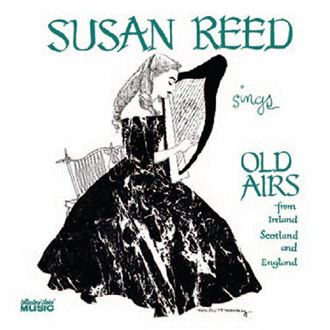 [by Ken Hunt, London] Folk music everywhere goes through changes of style and presentation. Little is immune to change. That applies whether we are considering traditional or revivalist forms. After all, everything starts from somewhere before going somewhere else. Very little is fixed in a stone. The US folksinger Susan Reed, who died on 25 April 2010 in Long Island, New York State, had a relatively short-lived but important part to play in the East Coast folk scene of the second half of the 1940s into the 1950s.
Born Susan Catherine Reed in Columbia, South Carolina on 11 January 1926, she grew up in a theatrical family. Her father, Daniel was in the film industry while her mother, Isadora was a theatrical publicist. From an early age she and her brother Jared – three years her senior – imbibed folk music and folklore the way that many left-leaning families did but they also came into contact in person with the likes of folklorist Carl Sandburg, whose influential The American Songbag was published the year after her birth.
Susan Reed became a folksinger in the then-current American mode. She never had folksong in her blood like her later Elektra label stablemate Jean Ritchie of the Singing Ritchies of Kentucky, but was not the point. She was projecting something else, something more citified, whether she was singing American folksongs or Irish songs gleaned from members of Dublin’s Abbey Theatre Company. By the time she gave her major public debut at NYC’s Town Hall in 1946, she had several years of experience when it came to singing in public in clubs, churches and, like Austria’s Trude Mally, for the war-wounded.
She recorded a flurry of albums, including Folk Songs for Columbia Masterworks (a 12-inch album on the other side of which were 7 Songs of the Auvergne taken from Joseph Canteloube) and I Know My Love for RCA Victor. She also became an early member of the Elektra roster alongside Jean Ritchie, Ed McCurdy, Cynthia Gooding, Oscar Brand and their kind – a prelude to its folk explosion in the early to mid Sixties with Judy Collins, Tim Buckley and their kind. Jac Holzman bows to bollocks (cliché) and calls her “an art singer with a silky voice kissed by Irish mist” in Follow Me Down – The Life and High Times of Elektra Records in the Great Years of American Pop Culture (1998).
As folk became a four-letter word in the 1950s, she came under scrutiny of the US authorities and, like Pete Seeger and the Weavers, found herself blacklisted. These events coincided with her style of folk music losing its popularity. Increasingly, she was relegated, like Richard Dyer-Bennet and John Jacob Niles to a folk hinterland, once the new wave of ‘more authentic’ performers blew into town and onto the airwaves. If only they had been of the calibre of Jean Ritchie! When the bubble burst, Susan Reed did other singing and moved on. She also ran an antique shop in Nyack, NY.
But the next time you hear or sing Black Is The Colo(u)r, Go (A)’Way From My Window, If I Had A Ribbon Bow, (S)He Moved Through The Fair or Must I Go Bound, remember others went before.
7. 5. 2010 |
read more...
 [by Ken Hunt, London] Vienna is a hothouse of regional musical idioms. And Trude Mally, who died on 4 June 2009, aged 81 in the Austrian capital, mastered two of the Vienna region’s three principal indigenous and typically Viennese folk forms. She sang Weanalieder (Wienerlieder in standard German, literally ‘Viennese Songs’ or songs sung in Viennese dialect) and Dudler, namely, the Viennese variant of yodelling. The third form, incidentally, is Schrammelmusik, an instrumental and vocal form named after the family that originated it.
She was born Gertrud Barbara Mally on 21 January 1928 in Neukettenhof – nowadays absorbed into Vienna’s southeastern suburban sprawl – and took to singing and playing the piano whilst still a child. She was something of a child prodigy and was performing on stage with her Dudlerin aunt Ady Rothmayer (1893-1975) – the word Dudlerin is the female form for a Dudler – by the age of ten.
During the Second World War Rothmayer was assigned to engagements and she took along her niece to sing a mixture of folksongs and Wienerlieder in an Austrian equivalent of Vera Lynn-style morale-boosting concerts for Axis troops in Norway, on the Russian Front or in field hospitals. After the war came to a close, Mally was singing for radio, on the musical programmes at cinemas – this was the era in which live music was a normal part of a cinema presentation along with (pre-television-in-every-room) newsreels – and touring with the likes of Hans Moser. She even appeared as a featured vocalist in films. By 1951 her life had aligned with the Matauschek Family – a family associated with Wienerlieder – whose son Fritz (1917-1977) she was married to between 1953 and 1960.
Mally’s career continued onwards and upwards, notably with the musician Karl Nagl (1922-1994) with whom she turned the so-called ‘Nagl-Stüberl’ into a major centre of the Viennese vernacular music arts. She went on to broadcast and record extensively. For many her fleeting, almost ghost appearance on Chris Strachwitz and Johnny Parth’s Folk Music of Austria (Arhoolie CD 454/455, 2009) singing Unterm Lindenbaum (‘Under the Linden Tree’) might be their introduction to her art. I hab di gar so gern (‘I love you so much’) Fischrecords 013, 2008) arguably serves her the best. Partially recorded at her 80th birthday bash on 21 January 2008, it is fleshed out with archival live recordings made between 1948 and 2003
Christina Zurbrügg’s out-of-print book Orvuse on Oanwe – Dudlerinnen in Wien. Die Lebensgeschichten von Poldi Debeljak, Luise Wagner und Trude Mally sowie der singenden Wirtin Anny Demuth (1996) and the documentary film spin-off, the Christina Zurbrügg- und Michael Hudecek’s film (and DVD) «Orvuse On Oanwe» Die letzten Dudlerinnen Wiens (1998) tell the tale.
More information in German at www.fischrecords.at
25. 1. 2010 |
read more...
 The “greatest sarod maker” – sarod maestro Amjad Ali Khan
[by Ken Hunt, London] The Indian instrument maker and repairer Hemendra Chandra Sen died at his south Kolkata (Calcutta) home on 2 January 2009 at the age of 87. From apprentice to master craftsman, over the course of more than sixty years he made tanpuras, sitars and sarods for many of the most illustrious Hindustani instrumentalists of the age. He also bridged the generations. Although a sitar player himself, he became especially associated with the sarod, the short-necked, fretted lute.
His customers included the sitar and surbahar player Annapurna Devi, her brother, the sarodist Ali Akbar Khan and their cousin, the sarodist Bahadur Khan, the sitarist Ravi Shankar, the sarodist player Rajeev Taranath, the sarodist Amjad Ali Khan and Amjad Ali Khan’s sarod-playing sons Amaan Ali Bangash and Ayaan Ali Bangash. He was working at his trade until hours before his death, working into the night on an instrument before suffering a fatal cardiac arrest the next morning.
Hemendra Chandra Sen had been based in Calcutta since the 1940s and it was natural that the customers for his instruments included the cream of the generation of fiery young Bengali instrumentalists then making names for themselves. In time, his shop cum workshop, Hemen & Co in the Deshapriya Park area of south Kolkata became a place of nigh-pilgrimage for musicians bringing in instruments for repair and servicing or arriving to commission new beauties that Sen made to measure to suit the client’s build and tastes.
The family connection with Amjad Ali Khan was especially important. Just as the US blues musician BB King named his guitar Lucille, the sarodist has long had the habit for naming his instruments. He named his favourite, completed by Sen in 1976, Ganga (Ganges). Others included Saaz and Brahmaputra. All three are pictured in Amaan Ali Bangash and Ayaan Ali Bangash’s biography of their father Amjad Ali Khan (Roli Books, 2002). In honour of his father, the sarod pioneer Hafiz Ali Khan, Amjad Ali Khan inaugurated the Hafiz Ali Khan Award in 1985. The Indian Prime Minister Atal Bihari Vajpayee presented the award to Sen in Gwalior in 2003.
Hemendra Chandra Sen is survived by two sons and two daughters. His sons Tapan and Ratan are following the family trade.
12. 1. 2010 |
read more...
 [by Ken Hunt, London] In 1959 the impresario Albert Grossman told the journalist Robert Shelton, “The American public is like Sleeping Beauty, waiting to be kissed awake by the prince of folk music.” Who he meant if not himself is moot. That year the black folk-blues artist Josh White terminated his management contract with Grossman. Bob Dylan, whom he managed from 1962, was still stuck in Minnesota with the Minneapolis blues, yet Grossman was set on changing things in the folk business. A few years on, Grossman had his fingers stuck in many pies, folk, blues and beyond.
Months before contractually adding Peter, Paul and Mary – Peter Yarrow, Noel ‘Stook’ Stookey and Mary Travis – to his roster in January 1962, he predicted they were going to be “one of the top commercial groups”. Grossman was right.
Mary Allin Travers, who was born in Louisville, Kentucky on 9 November 1936. Her parents were politically progressive journalists. Shortly after her birth, they moved to Albany, NY. With war impending, her father joined the US merchant marine (merchant navy) and mother and daughter moved to the Lower Manhattan district of Greenwich Village. As a girl, she attended the Sunday children’s concerts at the Village Vanguard and saw Josh White and musician and social activist Harry Belafonte.
As a teenager she gravitated to nearby Washington Square where folkniks and undesirable bohemian and racial types mingled by the fountain to sing and fraternise. Her voice carried her into the Song Swappers and singing on several 1955 Folkways releases – although the fine detail of personnel credits was absent – and twice performing at Carnegie Hall. In April 1958, as Mary Allin Travers, she appeared in the folk-singing cast of the short-lived Broadway musical The Next President.
Mary Travers was one of the most physically striking figures launched onto the US – and international – folk scene during the 1960s. Now, without resorting to cliché and heedful of beauty, while Brigitte Bardot had cornered the international male-sighing market with her Gallic blonde looks during the 1950s, Mary Travers had a Nordic blondeness that was the opposite of Joan Baez’s jet-black hair – though similarly/no less arresting.
The trio’s début entitled Peter, Paul and Mary (1962) topped the US Billboard pop album chart from 20 October to 30 November 1962 generating two US Top 40 hits with Lemon Tree and If I Had a Hammer (The Hammer Song). The LP Moving (1963) included the Top 5 hit Puff (The Magic Dragon), a pension plan for life for its writers, Leonard Lipton and Yarrow. By July 1963 Peter, Paul and Mary’s latch-lifting, smooth-harmony cover of Dylan’s Blowin’ In The Wind had sold over a million copies and with the Byrds introduced his writing to a domestic and, importantly, an international audience. It topped the Billboard Easy Listening chart and reached no. 2 in the Billboard all-genre Hot 100. It and Don’t Think Twice, It’s All Right – another Top 5 hit – spurred that year’s LP In the Wind to the top spot and helped that third album win a Grammy in 1964. I Dig Rock and Roll Music and John Denver’s Leaving On A Jet Plane from one of their finest albums, Album 1700 (1967), were Top 10 hits in 1967 and 1969 respectively. They were a folk phenomenon.
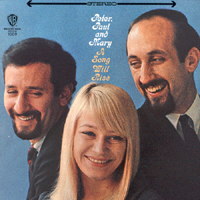 PP&M’s performances entered the Anglophone popular consciousness and became karaoke staples to this day. In Britain Blowin’ In The Wind reached the Top 20 in 1963, Tell It On The Mountain and The Times They Are A-Changin’ the Top 50 in 1964 – earning them an appearance on the UK’s foremost TV programme of the day, Ready, Steady, Go! (way cooler than the BBC’s Top of the Pops) – and Jet Plane the UK Top 5 in 1970. Paradoxically, their best-known song Puff (The Magic Dragon) never did chart in Britain, yet it remains a continual source of parody and cartoon. Marlene Dietrich ducked Mary Travers’ high-soaring notes on her languid Paff, der Zauberdrachen – rechristened because in German Puff means brothel – but the song remains the same.
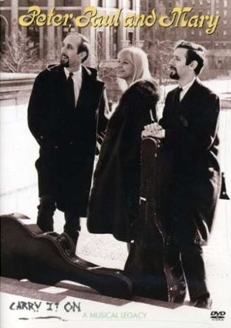 “I never wanted to be a professional singer,” Travers told Barry Alfonso in an interview for PP&M’s boxed set Carry It On (2003). “To me, folk music was more a social thing you did. It was great fun to sing, but it was not something I wanted to do for a living.” In mid 1960 Grossman signed Yarrow initially with a view to him performing as a soloist before convincing Yarrow that in the right group he would have immediate success. Visiting Izzy Young’s Folklore Center early in 1961, Grossman and Yarrow clocked Travis’ picture and, even before hearing her astonishing voice, decided she was right.
At this point Travis was on the way to divorcing her first husband – a writer whose name has been struck from the historical record – with a tiny daughter and living on Greenwich Village’s MacDougal Street. When Yarrow finally met her at her apartment things did not click personally or musically. Early in 1961 Grossman had tried to interest the stand-up comedian and musician Noel ‘Stook’ Stookey in joining this vision of a group he was attempting to put together – ‘manufacture’ would not be too strong a word. Stookey turned the idea down flat, only to have it reactivated about three months later when Travis rang to ask if she could bring somebody over to sing. Harmonizing on Mary Had A Little Lamb they discovered a vocal chemistry and that was how the trio’s ‘Paul’ came to complete the line-up.
After a few months’ rehearsals, they did a one-off public appearance at Folk City, then an extended engagement at the Bitter End club. Gambling, Grossman brokered a no-advance contract with Warner Bros. Records in January 1962 and by March 1962 their album was in the shops. Reviewing that eponymous début in the UK monthly magazine Gramophone, Charles Fox called them “a very well-drilled group” “sounding closer to the conventional close-harmony trio than to a folk ensemble. [T]he group must be praised for not spoiling the songs with gimmicks or jokes – as, for instance, the Kingston Trio are inclined to do.” Peter, Paul & Mary’s In Concert (1964) redressed any such omission by including Stookey’s stand-up routine, PaulTalk.
 That “run-of-the-mill LP” sold over two million copies and became their calling-card. In 1963 they sang for JFK’s inauguration anniversary and at the Lincoln Memorial prior to Martin Luther King giving his I Have A Dream speech. (“We knew we were listening to history,” she said later. The trio toured incessantly, championed Dylan’s work, played civil rights bashes and anti-war and pro-peace benefits, received bomb threats and abusive letters. Nevertheless, gradually rifts appeared, professionally and personally, leading to the decision to split in October 1970.
Stookey had become a born-again Christian in 1967 and, to the other two members’ annoyance, had taken to preachifying his glad tidings from the stage. Musically, Yarrow was into “music as a vehicle for stopping the [Vietnam] war” and in March 1970 pleaded guilty to “taking immoral and indecent liberties” with a 14-year-old girl. “Terrible for the image,” Travers said archly in a 1978 interview. The trio went its own ways.
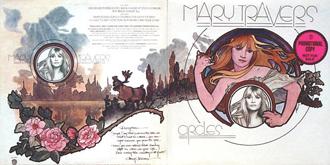
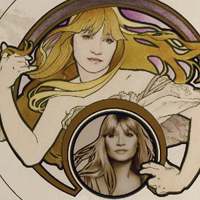
Between 1970 and 1978 – when PP&M reformed – Mary Travers made five solo albums, most notably the first Mary (1971) and Circles (1974), the latter with a post-Alfons Mucha cover. After 1978 when PP&M reunited, she sang with them until 2006 when ill-health stopped her performing.
Travers’ marriages to “a writer”, the photographer Barry Feinstein and next National Lampoon and Spy publisher Gerald Taylor ended in divorce. “They weren’t mistakes, but attempted relationships,” she drolly admitted. Her daughters Erika and Alicia are from her first two marriages. In 1991 she married Ethan Robbins. She died in Danbury, Connecticut on 16 September 2009.
Paul Vitello’s obituary of Barry Feinstein in The New York Timesof 21 October 2011 is at: http://www.nytimes.com/2011/10/21/arts/music/barry-feinstein-photographer-of-defining-rock-portraits-dies-at-80.html?ref=obituaries
3. 12. 2009 |
read more...
[by Ken Hunt, London] On 6 October 2009 Punjab’s Chief Minister Parkash Singh Badal announced that the State Government would pay for the medical expenses of the Punjabi poet, lyricist, singer and man of letters Inderjit Singh Hassanpuri. It is a feature of the Indian state’s policy of recognising people who have made outstanding contributions towards the promotion of Punjabi culture. In Hassanpuri’s case, it was for his contributions to language and literature in particular. Two days later, on 8 October 2009, he died in the Ludhiana hospital to which he had been admitted.
2. 11. 2009 |
read more...
“When a society is afraid of its poets, it is afraid of itself. A society afraid of itself stands as another definition of hell.” – Lenore Kandel
 [by Ken Hunt, London] The Beat poet and counter-culture activist Lenore Kandel died on 18 October 2009 aged 77 in her adopted home town of San Francisco. There is a lazy default setting to think of the Beat movement as being primarily a male preserve. Yet women were also actively involved not only as muses but also as writers and activists. Kandel was doubly important in that regard because she was part of California’s Beat movement and its hippie movement.
She was born in New York City on 14 January 1932; she was taken as a babe-in-arms to California where her writer father busied himself writing fiction and Hollywood screenplays. (Amongst others, Aben Kandel was responsible for the 1957 horror I Was A Teen-Age Werewolf – and therefore was possibly indirectly responsible for The Cramps’ I Was A Teen-Age Werewolf as well.) With a handful of slim books of poetry to her credit, Lenore Kandel went north to San Francisco to visit in 1960 and never quite left – although she did waver between San Francisco and Hawaii at certain points.
In San Francisco she fell in with the poetry scene centred in the North Beach district of the city, meeting the likes of Gary Snyder and Kerouac – who put her into his 1962 novel Big Sur under the alias Romana Swartz. There he described her as “a big Rumanian monster beauty of some kind I mean with big purple eyes and very tall and big (but Mae West big)” before going on, clearly captivated by her intelligence and urbanity, to describe her non-physical attributes.
Her physical attributes and mind brought her lovers and into contact with the poetry demi-monde of San Francisco. Her unique selling point was the mysticism and unabashed erotic nature of her poetry. Reading her poetry now, its likelihood to shock is plain. Or arouse. Yet presciently she also wove in elements of South Asian and Asian mysticism and belief systems.
When her limited-edition, four-poem, eight-page chapbook The Love Book (1966) appeared it became a target for censorship. 1966 was the year that Ronald Reagan was tilting for power as Governor of California and was righteously calling down showers of brimstone on student protesters, welfare wastrels, society’s undesirables and suchlike ‘politically’ soft targets. He worked the stage so well or well enough for him to be elected in 1967. This, after all, was the actor who recorded Ronald Reagan Speaks Out Against SOCIALIZED MEDICINE (1961) – the capitals are from the record’s artwork, not this author’s – for a handful of shekels from the right side of medicine.
The Love Book‘s poems celebrated sexuality and eroticism – more importantly in some cases the divine nature of sexuality – and did not stint on using words of no ambiguity whatsoever. That explicit language was its downfall, for in the process her poetic candour was treated as pornographic. It occasioned what became the then-longest running obscenity trial in San Franciscan history. When found guilty it went to appeal. The California Supreme Court upheld the obscenity ruling in 1967. The book effectively disappeared. In fact it had considerable merit and was before its time in addressing the erotic through alternative and contemporary prisms.
Between writing poetry that was about to be banned and poetry readings, Kandel was also an early member of San Francisco’s Diggers – a loose-knit organisation that was there in San Francisco to dispense free food, poetry, non-party community politics and anarchy to the district’s drop-out influx when the Summer of Love occurred in 1967. The Diggers also engaged with the up-and-coming bands like Jefferson Airplane and the Grateful Dead to play for free. Kandel continued writing, having Word Alchemy published in 1967.
Quite how her poetry would have changed or was changed is speculative, for in 1970 she was involved in a motorcycle accident that changed her life. The crash left her with a crushed spine and even though she continued writing she never had another book published. She did, however, continue to give poetry readings – at least until 2007 when she read at the Jewish Cultural Center in San Francisco – and through Sore Dove Press published a signed broadside poem as part of the Meat/Beat Broadside project. The lack of further books of poetry is a shortcoming apparently to be remedied, for a collected works-like volume containing The Love Book, Word Alchemy and hitherto unpublished poetry has long been under way.
2. 11. 2009 |
read more...
« Later articles
Older articles »