Lives
 [by Ken Hunt, London] The US record producer, engineer and mixer Greg Ladanyi, who worked with, amongst others, Jackson Browne, Fleetwood Mac, Jeff Healey, Don Henley, Los Jaguares, David Lindley and Warren Zevon, died on Cyprus on 29 September 2009. He died of the consequence of an accident on stage whilst touring with the Greek Cypriot singer Anna Vissi whose album Apagorevmeno (2008) he had co-produced.
Ladanyi won a Grammy Award for ‘Best Engineered Recording – Non-Classical’ with his co-engineered Toto IV in 1982 – a period that found the session musician spin-off band Toto at a peak of their critical and commercial success. He was also nominated for production or engineering work on Don Henley’s The Boys Of Summer in 1986 and, at the 1st Annual Latin Grammy Awards in 2000, Los Jaguares’ Bajo el Azul de Tu Misterio.
He first came to the attention of people who scrutinise the small print of record sleeves with his credits on Warren Zevon’s Bad Luck Streak in Dancing School (Elektra, 1980) – which he co-produced with Zevon – and Zevon’s live album Stand in the Fire (Asylum, 1980) – which contained many of the hallmarked songs with which Zevon was closely identified including Excitable Boy, Mohammed’s Radio, Werewolves of London, Poor Poor Pitiful Me and I’ll Sleep When I’m Dead at this stage of his career.
In 1980 he also landed his first credit – as co-producer – with another Asylum act, Jackson Browne, on his Hold Out (1980) (having begun work with Browne on The Pretender (1976)). The following year he and Browne co-produced David Lindley’s raucous and refined debut El Rayo-X (Asylum, 1981). Other work he was associated with included Zevon’s The Envoy (1982), Browne’s Lawyers in Love (1983), Henley’s Building the Perfect Beast (1984) and The End of the Innocence (1989), The Jeff Healey Band’s See The Light (1988) and Clannad’s Sirius (1987) and Fleetwood Mac’s Behind the Mask (1990).
7. 10. 2009 |
read more...
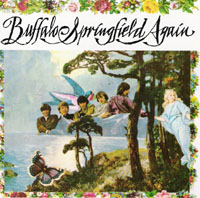 [by Ken Hunt, London] Neil Young once stated, “The great Canadian dream is to get out.” It was certainly what three fifths of Buffalo Springfield did when they joined the California-based rock group’s US contingent, Stephen Stills and Richie Furay. In 1966 Young and Bruce Palmer – the band’s original bassist – had headed south in a 1953 Pontiac hearse with Ontario plates. Minds set on forming a rock group and already working up Young’s Nowadays Clancy Can’t Even Sing, Furay and Stills famously spotted the Canadians driving in the opposite direction on Sunset Boulevard. (Stills had already met Young in Thunder Bay, Ontario and had been taken.) Furay executed some nifty pursuit-chase driving and caught up with them before they hit the highway to head home. Four fifths of Buffalo Springfield were in place.
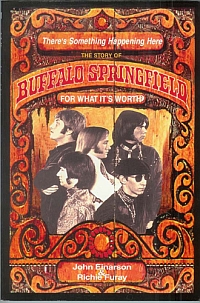 Dewey Martin completed the line-up in April 1966. It was widely believed he was American too. In fact he had been born Walter Milton Dewayne Midkiff in Chesterfield, Ontario on 30 September 1940 – ‘Dewey’ was a longstanding nickname and Midkiff was a mouthful – and grew up in Ottawa. He had already embraced the Great Canadian Dream and emigrated to the States. After US national service, he fetched up in Nashville at the beginning of the 1960s. He strove to break into its country scene, drumming on sessions and in touring bands. By 1963 he was playing with Faron Young and when the tour got to Los Angeles he liked the place so much he stayed. On the West Coast he played with Sir Raleigh and the Coupons (another of those bogus British Invasion groups), The Sons of Adam, the Modern Folk Quartet, the Standells and the Dillards.
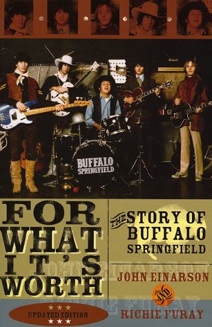
Buffalo Springfield were pretty volatile. They landed an engagement as the temporary house band at the Whisky a Go Go on Sunset Strip. Yet when they performed at the 1967 Monterey Pop Festival, Young was not on stage. Stills and Young continually vied for supremo status – and made no real effort to contribute to the band’s biography, For What It’s Worth: The Story of Buffalo Springfield. At one point Martin beat off a coup to be replaced and there were factions and fractiousness from very soon after the band’s founding.
 Buffalo Springfield (1966) and Buffalo Springfield (1967) – originally with the working title Stampede – were the only true albums released during their lifespan. By May 1968 they had imploded and Last Time Around (1968) was a sellotaped-together, contractual obligation affair.
The 4-CD boxed set Buffalo Springfield (2001) contained much good stuff but failed to live up to expectations or hopes. It lacked all trace of what had come down by repute and word-of-mouth as their forte: fiery live exchanges and stage jamming. It may count as one of the lamest box sets ever released. It failed to deliver, hence its popularity in second-hand record shops.
Despite post-Springfield forays with, for example, Dewey Martin’s Medicine Ball and various Buffalo Springfield spin-offs and tribute bands, Martin set music aside for a livelihood as car mechanic. A Buffalo Springfield reunion involving the original quintet collapsed and Palmer’s death in 2004 put the seal on that hoped-for project.
Dewey Martin died in Van Nuys, California on 31 January 2009.
Further reading: John Einarson and Richie Furay’s For What It’s Worth: The Story of Buffalo Springfield (1997, revised 2004)
25. 8. 2009 |
read more...
 [by Ken Hunt, London] The Dutch counter-culture poet, writer and painter Simon Vinkenoog died in Amsterdam on Saturday, 12 July 2009, a few days before his 81st birthday. Born on 18 July 1928 in Amsterdam, Vinkenoog was the child of a lone parent family raised in the De Pijp part of Amsterdam’s Oud-Zuid (Old South) district.
As a writer, he became part of the Netherlands’ post-war flowering of small literary titles, editing the short-lived magazine Blurb followed by the bloemlezing (anthology) Atonaal – a manifesto of intent of the literary collective self-styled ‘atonal poets’ known as the Vijftigers (50ers). Coinciding with this Dutch and Belgian (Flemish) movement’s emergence, from 1948-56 he lived in Paris – as ever a literary magnet of a place but especially then in the post-Second World War years. He was very much a reflection and an advancement of the times.
In the 1960s he was part of the new wave of writers influenced by what was going on around them. For example, he wrote about LSD and made his first record with the Dutch singer Frank Boudewijn de Groot, collaborating on the single Captain Decker b/w Steps Into Space. In June 1965 he appeared at London’s Royal Albert Hall in the glad company of Gregory Corso, Lawrence Ferlinghetti, Allen Ginsberg, Christopher Logue, George Macbeth, Adrian Mitchell, Alexander Trocchi and others.
His works ran from Wondkoorts (1950) via Jack Kerouac in Amsterdam and Moeder Gras (both 1980) through the Ginsy-inspired Me and my peepee (2001) to Am*dam Madmaster (2008). In the Noughties he collaborated on disc with Spinvis, the one-man-band on Ja! (2006) and 2000-copy limited edition Ritmebox (2008). He also campaigned for the legalisation of cannabis. Superlatively, without stooping to Dutch cliché, from 2004 he was the Netherlands’ Dichter des Vaderlands (‘Poet of the Fatherland’), equivalent to Britain’s Poet Laureate.
Further reading: http://www.iisg.nl/collections/vinkenoog.php
7. 8. 2009 |
read more...
 [by Ken Hunt, London] The Scots composer and musicologist David Johnson died on 30 March 2009 at the age of 66. Born David Charles Johnson in Edinburgh on 27 October 1942, his focus both as a composer and a musicologist was profoundly shaped by Scottishness.
Over the course of his life he composed over 50 works, amongst them five operas. Two of them were inspired by so-called Border ballads, namely his All There Was Between Them (1969) and Thomas the Rhymer (1976). Others drew on other Scottish elements including Music For Hallowe’en (1960) and Piobaireachd (1976) – piobaireachd is the traditional pipe music of the Highlands of Scotland also known as Ceňl Mňr -, both works for solo recorder. Literary influences also informed his composing. The Mortal Memory drew on Robert Burns while God, Man and the Animals (1983-88) for soprano, cello, harpsichord and recorder took Die Lebensdauer (Lifespan) from the fairytales of the Brothers Grimm as its text and starting point. This last work is one of the compositions on Animal Heaven (Metier MSV CD92036, 2001) alongside ones by, amongst others, Sally Beamish, Lyell Cresswell and Kenneth Leighton.
His musicological writings included Music and Society in Lowland Scotland in the Eighteenth Century (1972) and Scottish Fiddle Music in the Eighteenth Century (1984).
13. 5. 2009 |
read more...
 [by Ken Hunt, London] John Pearse died on 31 October 2008 in Besigheim in Germany aged 69. A wine lover – he wrote the book Cooking With Wine (1987) – it was wine that crooked its little finger at him and brought him to that Swabian wine region where he died. Born John Melville Pearse in Hook in the East Riding of Yorkshire on 12 September 1939, he grew up in the north Welsh seaside torn of Prestatyn in Denbighshire where the family ran a hotel.
Pearse supposedly took up the acoustic guitar in 1957, the clincher being getting fired up by Big Bill Broonzy – the US bluesman who toured the UK that year as part of a European tour and whose tour excited a whole generation of folk musicians including Pearse’s fellow Yorkshire musicians, The Watersons.
Pearse was a musician and inventor of any number of musical gizmos, accoutrements and basics – notably strings that were marketed under his name – and the people that used and endorsed his products over the years were a veritable Who’s Who of the music business. Amongst those who were proud to specify John Pearse strings as part of their kit were the Dobro player Cindy Cashdollar, King Crimson’s Robert Fripp, the folk-blues maestro Wizz Jones, Bill Kirchen formerly of Commander Cody & His Lost Planet Airmen, the violinist Tim Kliphuis, the Dixie Chicks’ Emily Robison and the guitar maestro Doc Watson. His business arrangements with his second wife, Mary Faith Rhoads survived their divorce. (Mary Faith Rhoads-Lewis’ obituary of her ex-husband appeared in the March/April/May 2009 edition of Sing Out!.)
Nevertheless, he will primarily be remembered by the public at large for his ‘how to’ guides to making music that were published in Britain, the United States and Germany. He championed acoustic stringed instruments in books and on television and not merely the ubiquitous guitar. His musical terrain also included ukulele, mandolin, dulcimer, balalaika and the Indian sarod.
Beginning in the 1960s, Pearse created a body of literature targeted at people of varying levels of instrumental expertise, but especially beginners and particular styles such as blues, ragtime and folk. Pearse’s Hold Down A Chord (1968) – the power of a good, direct title! – was an acoustic guitar folk standard and became to folk guitar what Bert Weedon had been to a generation of guitarists the previous decade. Pearse ranked alongside Pete Seeger and Bert Weedon when it came to instrument tuition books. But Hold Down A Chord also had the power of television behind it and was an early successful example of a television series and book tie-in. The enduring success of the series led to the original black-and-white series being remade in colour in Australia in 1982. Pearse also presented similar programmes on German and US television. And elsewhere.
He also worked for a time as a record producer for the Capitol, RCA and Warner Brothers labels though he recorded comparatively little over the years. Yet as early as 1966 he recorded with the duo of Colin Wilkie and Shirley Hart. Colin Wilkie’s recollections of their wild-eyed innocence abroad in Germany before either of them had settled there are at
Pearse himself blogged in later life, notably after suffering a dreadful accident in 1983 that left him paralysed from the neck down and wheelchair-bound. He blogged about disability issues, especially about disability access whether at trade fairs or in hotels, and making music. Against the odds, he came back to continue making music and recorded Live In Kutztown (2002).
He is survived by his second and third wives, Mary Faith Rhoads-Lewis and Linda Pearse, respectively, and his stepson Bill.
27. 4. 2009 |
read more...
 [by Ken Hunt, London] Uriel Jones was one of the largely unsung heroes of popular music. His drumming added the muscle and sinew to many of the great hits that came out of his birthplace and hometown, Detroit, for he was a leading member of the Motown house-band, the Funk Brothers. He played on sessions that became international hits including Marvin Gaye’s I Heard It Through The Grapevine, Stevie Wonder’s For Once In My Life, the Temptations Ain’t To Proud To Beg, I Can’t Get Next To You and Cloud Nine, Marvyn Gaye & Tammy Terrell’s Ain’t No Mountain High Enough and Smokey Robinson & The Miracles’ I Second That Emotion during a period when Motown was an essential element in the soundtrack to people’s lives.
Born in Detroit, Michigan on 13 June 1934, it looked as if he would choose the trombone as his instrument. However, boxing and trombone embouchure did not mix and under the sway of the jazz drummer Art Blakey in particular he took up the drums seriously. In due course he fell into the orbit of Detroit’s rising pop label Motown.
Motown was a production-line hit factory and the house band backed whichever act was in the ‘snake pit’ (as the house studio was nicknamed) that day, up to six days a week. It was like a Bombay film studio with its succession of name playback singers following each other to lay down vocal tracks backed by the same session musicians. Yet while the likes of The Supremes, Marvyn Gaye & Tammy Terrell, the Four Tops and Smokey Robinson & The Miracles got the kudos and the glamour and became household names, the backing musicians were anonymous, uncredited on the singles or album jackets and on weekly salary. This was still seen as disposable music – ‘culture’ would not have had a look-in – and it was decades later that Uriel Jones and his fellow session musicians received overdue credit for their sterling work and contribution to popular culture.
Jones was not the only Motown drummer yet those song credits give a flavour of his achievement. The Funk Brothers, as they became anointed, had been part of Berry Gordy’s hit machine from the label’s inception in 1959. Benny Benjamin and Richard Allen preceded Jones but, with sales increasing and Benjamin’s efficiency diminishing, Jones joined the team in 1964. His entrance was timed to perfection for the great upswing in Motown’s fortunes. He was more a session musician though because he also went on the road with Motown acts on occasion.
Uriel Jones and the Funk Brothers got their belated recognition with director Paul Justman’s documentary film Standing In The Shadows of Motown (2002). Its tagline said, “The best kept secret in the history of pop music”. In 2004 the Funk Brothers received a Grammy Lifetime Achievement award with a citation acknowledging that they had had a hand in “more No. 1 hits than the Beatles, Elvis Presley, the Beach Boys and the Rolling Stones combined”. He died in Dearborn, a part of Detroit, on 24 March 2009.
1. 4. 2009 |
read more...
 [by Kate Hickson, Berriew, Wales] In the 1980s Swing 51 magazine would occasionally receive small packages from the United States containing cassette tapes merely identified as ‘Citizen Kafka’. It felt like the sort of deception the musical prankster Hank Bradley might perpetrate. However, Bradley’s looked and sounded different. Infuriatingly, the sender’s mailing address was missing and the US postal service was clearly in on the wheeze because every postmark came smudged to illegibility by bureaucracy. It felt a bit like a twofold conspiracy at the time. Prague folk might call it bonus Kafka-esque.
Citizen Kafka, it finally emerged, was an alias of one Richard Shulberg. He also rejoiced in the noms de télégraphie – wireless or radio aliases – Sid Kafka and The Citizen. As Johnny ‘Angry Red’ Weltz (the alias of fiddlin’ Kenny Kosek) wrote, The Citizen died – “(changed dimensions), (flipped incarnational polarity)” – on 14 March 2009 of a heart attack at his Brookyn home. He was aged 61. Richard Stephen Shulberg was born in the Bronx on 20 November 1947 and raised in Brooklyn.
He produced and presented broadcasts on the Pacifica Foundation’s WBAI-FM station for The Citizen Kafka Show, naturally under his main alias. Later he did The Secret Museum of the Air with Pat Conte for the same station and subsequently for WFMU. Secret Museum in turn produced spin-off anthologies for Yazoo (but they were too diffuse to hit the spot for me). In one 2000 article in The New York Times, Shulberg claimed to have done time as “an opal prospector, a film projectionist, a theremin player and an antiques vendor”. Not only did he collect records, evidently he collected jobs.
However, it was as a musician that he came into Swing 51‘s orbit. Richie Shulberg first entered the overseas consciousness as the central figure in one of New York’s finest musical collectives, the rather good Wretched Refuse String Band. Just as the Bonzo Dog Doo-dah Band were The Bonzos, they were The Wretcheds. WBAI’s Ed Haber was the Wretcheds’ champion. (Before each Citizen Kafka Show Haber would caution, “This show contains frank language.”) They played bluegrass and what was then being called newgrass. It was Ed Haber who sent a copy of the Wretched Refuse String Band’s Welcome To Wretched Refuse (Beet Records BLP-7003) to the magazine around ’80 or ’81. Their music had a manic vibe about it. In their playing was – and is – all the joy of life. It also had a cryptic reverence masquerading as irreverence that combined to create a true listening experience. And humour, lashings of humour.
And that woebegone name? It comes from the writer Emma Lazarus’s sonnet The New Colossus (1883) welcoming émigrés to the New World symbolised by the Statue of Liberty. She says,
“Give me your tired, your poor, Your huddled masses yearning to breathe free, The wretched refuse of your teeming shore. Send these, the homeless, tempest-tost to me. I lift my lamp beside the golden door!”
Fittingly in a very Wretched Refuse String Band way, the poem has been twisted into parody verse and worse.
The Wretcheds’ ‘only-child’ LP was reissued in 1994 in an expanded CD edition. (They also made appearances on a couple of albums on the Biograph label from the Fox Hollow Lodge String Band Festival but they don’t count.) Its track listing and composing credits makes for interesting reading. The CD includes material credited to the tradition, tunes by the father of bluegrass Bill Monroe and his electric guitar-wielding newgrass shadow Jon Sholle, a Thumbelina turned Hans Christian Andersen renegade, Andy Statman, Kenny Kosek, Roger Mason, Richard Shulberg’s party piece The Wheels of Karma and Statman’s Shulberg in Vilnus. Founding and/or/into later Wretcheds included banjoist Marty Cutler, drummer and percussionist Larry Eagle, guitarist Bob Jones, fiddler Alan Kaufman, bassist Roger Mason and mandolinist Barry Mitterhoff.
The Wretcheds polarised opinion. But listen to The Wretched Refuse Theme or The Wheels of Karma and you get a measure of their impact, why Richie Shulberg fit right in and why they made more people smile and groove than they ever hacked off. They remain one of a kind. Just like Citizen Kafka was one of a kind.
Wretched Refuse String Band Alcazar 117 (1994)
For services past, present and future thanks to Ed Haber and Ellen Jones.
Larry Eagle has posted videos of the Wretcheds in all their grainy glory from their 30 May 2008 gig at the Jalopy in Brooklyn. They give a flavour of the band and The Citizen. Watch, marvel and laugh along.
The Wretched Refuse Theme
http://www.youtube.com/watch?v=1l__lUsg1Fo
The Wheels of Karma
http://www.youtube.com/watch?v=c1_pYskx7Rg
Redwing
http://www.youtube.com/watch?v=SD9NIiQvaPM
22. 3. 2009 |
read more...
 [by Ken Hunt, London] One of the great European jazz musicians of the Twentieth Century died at the age of 81 on 20 February 2009 in Hoei (Huy in French) in the western Belgian province of Luik (Liege). The Belgian multi-instrumentalist, arranger and composer Sadi, actually Sadi Lallemand (he took Sadi as his name because he didn’t like something about the sound of his surname), linked many post-war developments in jazz and popular music.
Born in Ardenne in the northwestern Belgian province of Namen on 23 October 1927, he was drawn to jazz through hearing Louis Armstrong on record as a boy circa 1938 and, his musicality stirred, he took up the vibraphone, the instrument with which he was particularly associated, in 1941. During the German Occupation he built up his playing and was good enough to get work on the lucrative US military base circuit after the end of hostilities. After the War he also played with various Belgian bop bands.
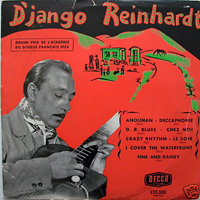
In due course he moved to Paris – one of the post-war magnets for jazzers and especially expatriate black US jazz musicians. From 1950 he found work there in the city’s thriving jazz clubs and played alongside top names such as Kenny Clarke, Sacha Distel, Stéphane Grappelli and Django Reinhardt. Sadi played on Reinhardt’s last Decca sessions on 8 April 1953. The session comprised, Charles Delaunay wrote in his early biography Django Reinhardt, Le Soir (‘The Evening’), Chez Moi (‘At [My] Home’), I Cover The Waterfront and Deccaphonie. Soon after Reinhardt was dead. The guitarist died at Samois-sur-Seine, near Fontainebleau in France on 16 May 1953.
Sadi, also nicknamed Fats (for example, on the Reinhardt session), was extraordinarily versatile and also played in orchestral settings, notably the orchestra of Michel Legrand and after his return to his Belgian homeland in 1961 with RTB (Belgium’s equivalent of BBC), Henri Segers Orchestra and the Kenny Clarke-Francy Boland Big Band. He recorded as a soloist and bandleader in his own right from 1953 for Vogue, Manhattan, Polydor and Palette.
12. 3. 2009 |
read more...
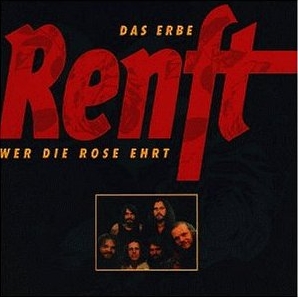
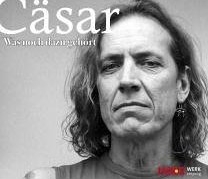 [by Ken Hunt, London] One of the former German Democratic Republic’s most notable and most famous rock musicians, guitarists and bandleaders Peter ‘Cäsar’ Gläser died in Leipzig on 23 October after a long illness. Gläser was born in Leipzig on 7 January 1949 and came to people’s attention as a member of the Klaus Renft Combo. Having joined them as a founding member in 1967, he was called up soon after to do national service in the army and he rejoined them afterwards in 1969. Peter ‘Cäsar’ Gläser (the nickname says a great deal) might be described as Renft’s shadow. After Renft effectively got banned for social criticism in 1975 (helped along by singing the lyrics of Gerulf Pannach who found himself exiled to the West), Gläser co-founded the splinter band Karussell. In 1976 it was largely seen as the legitimate successor of the Klaus Renft Combo. Gläser finally gave up the Karussell ghost in 1983, worn down by balancing fans’ expectations and trying not to cross the Stasi and state authorities. He became part of the Amiga Blues Band.
 The “Amiga” part of their name was a nod towards the VEB’s pop, rock and folk record label. Essentially there was no other game in town in the GDR. Either one recorded for Amiga or for nobody; similarly for overseas acts – whether Phil Collins or Billy Bragg, Paul Robeson or Ravi Shankar – Amiga was the only conduit through which their recordings could appear. It should be pointed out that the GDR’s other record labels such as the classical music label Eterna and the literary and spoken word label Litera were merely subsidiaries of the VEB monopoly.
Before the political changes – the Wende in German, that earth-shattering period from the autumn of 1989 to the spring of 1990 – Gläser founded his first band with Cäsar in the name, with Cäsars Rockband in 1984. A succession of various line-ups and variant names with the word ‘Cäsar’ in them followed over the years. He also led other combinations with Spieler (Players) in their name and worked with his musician sons. He gave his last concert in December 2007 but in his final performance days he also gave readings from his 2007 autobiography Wer die Rose ehrt (‘Whoever honours the rose’). Fittingly, the title came from one of the Renft-era’s biggest hit songs.
5. 12. 2008 |
read more...
 [by Ken Hunt, London] The German writer Peter Maiwald died on 1 December in Düsseldorf. Born in Grötzingen in the West German state of Baden-Württemberg on 8 November 1946, he gravitated to the left. He moved to Munich in 1968 before moving to Neuss in 1970. During this period he was establishing himself as a freelance writer before going on to co-found the magazine Düsseldorfer Debatte. Parenthetically, one has only to think of the Putney Debates during the English Revolution for a sense of the meaning of debate.
Maiwald’s writings were in part under the sway of the Brechtian model and he wrote agitprop poetry, songs and lyrics for Kabarett ensembles such as the Düsseldorf-based Kom(m)ödchen and Stuttgart’s Renitenz-Theater. Over the subsequent years he would produce a body of work that expanded to include translation, screenplays, essays and plays and talks for radio. The turning-point came with Maiwald’s Balladen von Samstag auf Sonntag (‘Ballads from Saturday till Sunday’, 1984). On its publication Marcel Reich-Ranicki, the important literary critic of the Frankfurter Allgemeine Zeitung, heaped praise on it calling it nothing short of an “event” (Ereignis) as well as hailing him as belonging to the year’s first rank of poets.
From 1975 until the end of his life Maiwald was responsible for a score or so of books, amongst them Geschichten vom Arbeiter B. (‘Stories from Worker B.’, 1975), Wortkino (‘Word cinema’, 1993), 100 Geschichten (‘100 Stories’, 2004) and a book of poems for children co-authored with Hildegard Müller von Hanser, Die Mammutmaus sieht wie ein Mammut aus (‘The Mammoth Mouse looks like a Mammoth’, 2006).
5. 12. 2008 |
read more...
« Later articles
Older articles »