Articles
 [by Ken Hunt, London] The outstanding, trail-blazing Hindustani violinist Vishnu Govind Jog, usually known more simply as V.G. Jog, died in Kolkata (Calcutta) on 31 January 2004. He had been born in Bombay (now Mumbai), then in the Bombay Presidency (nowadays Maharashtra) in 1922. He received his early music training from several notables, amongst them, S.C. Athavaic, Ganpat Rao Purohit and Dr. S.N. Ratanjarkar, but where he differed from most of his contemporaries was his espousal and championing of the violin played in Indian tuning. To the north of the subcontinent, the European violin had little status. Professor V.G. Jog was a major force in correcting violinistic misperceptions. In Hindustani music the violin had (and has) to compete with the sarangi, an instrument of rare subtlety, capable of splitting the microtonal atom, as it were.
In 1938 he met the multi-instrumentalist Allauddin Khan in Lucknow who became his guru, as he was to, amongst others, his son Ali Akbar Khan, his daughter Annapurna Devi, his eventual son-in-law Ravi Shankar and the sarodist Sharan Rani. In 1982 the violinist Jog was awarded India’s highest honour in the field, the Padma Bhushan, the nation’s third highest civilian award. By then he had changed people’s perception of the instrument in the Hindustani realm.
 To give a few entry points, try his out-of-print jugalbandi (duet) with the shehnai (shawm) maestro Bismillah Khan for EMI’s ‘Music From India Series’. More readily available are his duets with the guitarist Brijbhushan Kabra for the German Chhanda Dhara label (1988) and the santoor player Tarun Bhattacharya for Nataraj Music (1993). In a solo sphere, his renditions of his namesake raga – Jog – for Moment (1991), his 1981 recording of Kirwani and Kajri for Navras (1996) or his All India Radio-derived recordings in T Seroes’ Immortal Series are good entry points. Anybody interested in the violin’s potential should listen to him. One of the great, great masters.
11. 7. 2011 |
read more...
 [by Ken Hunt, London] The Calder Quartet, Cyril Tawney, Nørn, Sharan Rani, Hedy West, Trembling Bells, Arlo Guthrie with the Thüringer Symphonikern Saalfeld-Rudolstadt, Tine Kindermann and the Home Service. And lots to do with work.
Allegro Moderato from the String Quartet in F – The Calder Quartet
I love music that carries me across bridges. I respect that sort of music like I would respect a figurative guru who imparted something and transported me somewhere else, somewhere beyond, maybe out of my safe place into unknown territory. For me, the string quartet provided and provides the key to western classical music.
Here the Calder Quartet reveals Ravel’s string quartet’s textures and colours intensely. This opening movement lays out the table. Its concision of ideas really gets to me, similar to the way an alap – opening movement – gets to me in a raga. Benjamin Jacobson and Andrew Bulbrook (violins), Jonathan Moershel (viola) and Eric Byers (cello) are the Calder Quartet. From The Calder Quartet (No name, no number, 2007)
More information at www.calderquartet.com
The Oggie Man – Cyril Tawney
 Oggie, sometimes rendered oggy, is a word that occurs in Cornwall and Devon. It is a dialect word for pasty – typically a meat and vegetable wrap – from the south-west of England. The joy of Cyril Tawney’s song is that it uses everyday ingredients to tell a story about encroachment long before Tescoification or McDonaldsisation. If for no other reason, listen to this song if your community is resisting the arrival of Tesco in Budapest or whichever hamburger chain wants an outlet in your town.
Cyril wasn’t being far-sighted or clairvoyant in this song. He was singing a lament. In his album notes to his Argo album, A Mayflower Garland, Cyril wrote, “To generations of Devonport sailors the Oggie Man, a lone vendor of Cornish Pasties who had his humble pitch outside the Albert Gate, was a minor institution. It would have been reasonable to assume that as long as there was a Royal Navy there would be an Oggie Man.”
This is a great song. It was originally released in 1969. While I was writing his entry for the Oxford Dictionary of National Biography I had the old Argo LP propped up beside me and would look at Cyril in his prime. His entry is one of the late 2010 batch of new entries. What I really, really liked about Cyril the man was that he was more yea-sayer than nay-sayer. From A Mayflower Garland (Talking Elephant TECD176, 2011)
A coda
Writing obituaries is usually a hell-or-heaven-for-leather thing. In the heat of writing Cyril Tawney’s for the Independent of 27 May 2005 I added a mondegreen of my very own when writing about Sammy’s Bar and turned “my real love” into Marina. Spookily, Marina was the name of his nurse while he was dying. http://www.independent.co.uk/news/obituaries/cyril-tawney-526297.html
Lahille – Nørn
The Norns were the dísir – a race of supernatural female entities – that wove the twine or thread of fate. They ran the thread of fate and time through their fingers and thumbs. Nørn is unaccompanied vocal trio from the French-speaking part of Switzerland. I cannot understand a word of what Anne-Sylvie Casagrande, Edmée Fleury and Gisèle Rime are singing. And nor will you. That is the very point. They sing in a made-up language of their own devising. It is the sound of the words that conveys their ‘meaning’.
Sometimes there are found sounds on this album’s tracks. Maybe the sound of dripping water, for example. Such textures are incidental to the matter at hand. The triumph lies in their singing. If they sounded this good in 2004, how must they sound now? Updates will follow. From Fridj (no name, no number, 2004)
More information at www.norn.ch
 Bageshri – Sharan Rani
June was one of those months. One of those months that buzzes, excites and ignites what’s around. Driving through London traffic on the way to pick up Arundhati Roy, I played Sound of Sarod to relax my mind. The first three tracks happened to take up the entire journey as if timed to coincide perfectly with my arrival at the destination. Leaving this, the fourth track, a rendition of Bageshri from 1969, after dropping her back that evening.
Sharan Rani belonged to the Maihar Gharana and was one of that school of playing’s most eloquent sarodists – a statement made in full knowledge of its other sarodists and her place in the lineage. Sarod had historically been associated with male musicians and she earned her name Sarod Rani (Queen of the Sarod). Apparently she also authored a book that I have never seen called The Divine Sarod: An ancient Indian musical instrument (antiquity, origin and development from circa 200 B.C.).
Again, it’s that word: concision. Sharan Rani is on sarod and Alla Rakha is on tabla. What sets this Bageshri apart? Well, her playing is so economical, nuanced and flavoursome. This is 22 minutes or so of deep space. And I love it to pieces. Now it’s reinforced with an overlay of memories to do with Arundhati Roy and a car journey spent talking to a large extent about Hindustani râg and musicians. I stumbled upon this reissued CD album by fluke in a record shop in Chandigarh in Punjab. It is the stuff to swoon to and over. A jewel of a performance and a jewel of an album. From Soul of Sarod (Saregama CDNF 150853, 2008)
The image is of her 1966 French long-player release Sharan Rani – Musique Classique Indienne (Vogue CLVLX 119).
Little Sadie – Hedy West
Hedy West (1938-2005) was a transformative force. I first discovered her music at Collet’s on New Oxford Street in London in the 1960s. I bought a white label Topic test pressing of Ballads. I think it was that one. It had no jacket, no track information, no nothing but musically it was an eye-opener. This is a later voice and banjo interpretation of the traditional American murder ballad. It is a story, told solo, propelled by her driving banjo. It is everything that traditional song should be and have. From Hedy West and Bill Clifton’s reissued Getting Folk Out of The Country (Bear Family BCD 16754 AN, 2010)
Ken Hunt’s obituary of Hedy West is at http://www.independent.co.uk/news/obituaries/hedy-west-501214.html
All My Favourite Mistakes – Trembling Bells
It’s big, bold and brassy – with a grungy production – but if you don’t get the point that’s OK too. Maybe you didn’t get the point of The Notorious Byrd Brothers or the Byrds’ Lady Friend either. This is a song that they worked up through goodness knows how many gigs. “Love came a hit me like a sucker punch.” From The Constant Pageant (Honest Jon’s HURCDD155, 2011)
 This Land Is Your Land – Arlo Guthrie with the Thüringer Symphonikern Saalfeld-Rudolstadt
This is Arlo Guthrie singing his father, Woody Guthrie’s song with a bunch of orchestral players and a conductor. It was a fabulously uplifting live experience. There is a zing and a zen about his performances. Plus he carries off droll in masterly fashion, as to the manner born. My brother-in-law heard this song and got enlightened. Apparently somebody called Bruce Springsteen plopped his head in the same apple-dunking barrel and pulled out this song as well. This comes from an entire album of Arlo Guthrie material on the festival’s souvenir release. He laces stories and songs together so well. So very well. Well, like a natural… From TFF Rudolstadt 2010 (heideck HD 20106, 2010)
Can’t Help Falling In Love – Arlo Guthrie with the Thüringer Symphonikern Saalfeld-Rudolstadt
Introduction. Tønder Festival. Elvis Presley. Pete Seeger. The spirit.
“Wise men say…” “Would it be a sin…?”
This is why we go to music festivals, gigs and live performances – just in order to catch the moment and moments of specialness. Woody Guthrie’s boy dun put in his thumb and pulled out a plum again. Another one from TFF Rudolstadt 2010 (heideck HD 20106, 2010)
 Sterben Ist Eine Schwere Buss – Tine Kindermann
Tine Kindermann is steeped in Märchenkeit. (I think I may have made up that word: like fairy-storyness. It’s a fairy story world sometimes rendered a bit more otherworldly by her singing saw accompaniments and Marc Ribot’s guitar. True to the darker and grimmer aspects of Märchen, its title translates as ‘Dying is a hard kiss’. She is a tradition-bearer like Dagmar Krause and Patti Smith. There! I’ve said it. And live, she is better still. From Schamlos schön – ‘Shamelessly beautiful’ (in your actual Deutsch) – (Oriente RIEN CD 67, 2008)
Snow Falls – Home Service
This album is set of songs unearthed from the Cambridge Folk Festival in 1986. This is a song by John Tams that rips me apart. It began as a reflection triggered by thoughts about his grandmother. Snow Falls feels like my early manhood, my middle age and my old age rolled into one. It is life in death and death in life. One of the most important songs in my life. “Cruel winter cuts through like the reaper…” is how it starts. The band plays a blinder. From Live 1986 (Fledg’ling FLED3085, 2011)
The image of Arlo Guthrie and Tine Kindermann from TFF Rudolstadt 2010 are respectively © Santosh Sidhu/Swing 51 Archives and Ken Hunt/Swing 51 Archives. The copyright of all other images lies with the respective photographers, companies and image-makers.
4. 7. 2011 |
read more...
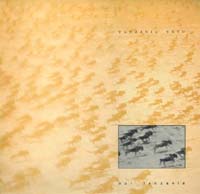 [by Ken Hunt, Berlin] On 30 December 2003, Tanzania’s internationally best-known musician, Hukwe Zawose died at home in Bagamoyo, his musical base for many decades, at the age of 65. Tanzanian music never had much of an international profile outside of ethnography until Hukwe Zawose but when it arrived it arrived in style.
 Born in 1938 in Doduma, a rural district in central Tanganyika, as it was then known, he had an active recording career outside his homeland, recording for Real World, the Tokyo-based Seven Seas/King Record Co, Triple Earth (the London-based label that brokered and oversaw his international breakthrough) and WOMAD Select (notably the Mkuki Wa Rocho (A Spear To The Soul) album, 2002). Even if most people never bothered to learn about Wagogo as opposed to Tanzanian culture, Zawose became the one name that people remembered when it came to Tanzania’s folkways or, cynically mumbled, its ‘World Music’.
In 1961 the British granted Zawose’s homeland independence. In the spirit of President Julius Nyerere’s socialist-inspired Arusha Declaration of 1967, the nation extolled self-reliance and social equality. As a by-product of nurturing national and rural resources, as opposed to rubber-stamping international exploitation, Tanzanian culture thrived. Zawose was of an age and was sufficiently rooted in his home-culture for him to find a niche as a musician in the new state. His father had steeped him in the Wagogo people’s traditional folkways and had given him a grounding in several traditional instruments. These included the iseze family of stringed instruments encountered in a variety of strung and sized forms, and marimba and its diminutive form known as chirimba, a metal-tongued instrument plucked with the thumbs, hence the generic English-language name ‘thumb piano’. (Elsewhere in Africa the instrument is known variously as sanza, mbira, kalimba and so on.) Zawose also developed into a singer of gifted sensitivity with a vocal range that went from a natural speaking range to a throaty falsetto.
Tanzania’s economy affected domestic commercial recording activities. There was no real recording industry in any ‘developed nation’ sense. What was released was typical cassette fare. Iain Scott remembers that Zawose was first recorded privately by Tanzania’s future Minister for Sport and Culture, Godwin Z. Kaduma (though he only ever heard about these recordings by repute). As happened in the Eastern European bloc, Tanzania had nurtured folkloristic ensembles as expressions and emblems of pan-Tanzanian culture. These performed an acceptable brand of people’s art, often mixing and matching traditions and straddling the linguistic and cultural divides in the creation of a national sensibility (and unity). It was in two such ensembles that Zawose made his first impressions on the international consciousness. These were the Bagamoyo College of Arts – a pan-Tanzanian cultural troupe – and the Tanzanian National Dance Troupe – a typical socialist state, folkloristic ensemble.
What turned Zawose’s life around was his appearance at the 1984 Commonwealth Institute’s ‘Africa, Africa’ programme in London because Iain Scott was so moved by the Bagamoyo College of Arts that he arranged for them to go into a studio. They were recorded on an 8-track, one-inch machine. The sessions resulted in Tanzania Yetu (Our Tanzania) (1985), one of the greatest East African albums ever. It became the inaugural release on Scott’s visionary Triple Earth label, giving him the confidence to record his likewise inspired work with Najma Akhtar and Aster Awake. It was, as I have written elsewhere, the first step in Zawose’s colonisation of the non-African mind. Ultimately everything streamed from those Chiswick, West London sessions.
Zawose went from strength to strength, working round the world at festivals, for example, WOMAD’s Mersea Island festival in 1985, and recording. Triple Earth’s Mateso (1987), an album (bolstered on CD by some tracks from Tanzania Yetu), received strong airplay in Britain, although back then, as now, that was a tiny proportion of airtime. In Scott’s opinion, its fortunes were turned about by Charlie Gillett and Andy Kershaw playing tracks from it. Unfortunately, Tanzania Yetu has never received a CD reissue in its entirety – nothing added, just left alone – that it deserved.
Zawose contributed to Music of Tanzania (1987), one of the Tokyo-based Seven Seas/King Record Co’s extensive World Music Library volumes. Zawose worked hard and over the following years, he consolidated and built his reputation. After his breakthrough work with Triple Earth, he fell into the Real World orbit. He recorded Chibite (1995) and Assembly (2002), a collaboration with Canada’s Michael Brook. In 2002 his nephew Charles Zawose and he supported Peter Gabriel on his ‘Growing Up Tour’ and their collaborative composition Animal Nation appeared in the soundtrack to animated The Wild Thornberrys Movie (2002).
27. 6. 2011 |
read more...
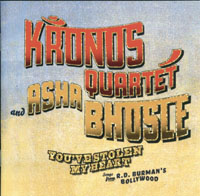 [by Ken Hunt, London] The Rahul Dev Burman story actually begins eight years before his birth on June 27, 1939, in Calcutta; new chapters continue to be added years after his death in Bombay on January 4, 1994. The Indian film business was revolutionized in 1931 by the arrival of the nation’s first talkie, Alam Ara (Light of the World). This groundbreaking film was the first to use music to create an egalitarian lingua franca that united paying audiences in a nation divided by linguistic abundance.
Filmi sangeet – filmi for short, or “film song” – became became India’s popular music. Burman was part of that first generation for whom silent films were only historical flickers. He grew up with filmi as the soundtrack to his life. Across India, film was the most popular form of mass entertainment, and Burman’s exposure to “pictures” (as movies were known) and filmi began very early on. It helped his future composing career that he was born into a Bengali family with music in its bloodstream. The Bengali heartland is the modern-day Indian state of West Bengal and Bangladesh, and during his boyhood and adolescence he could not help but be acutely aware of Bengali culture’s literary and musical pedigree.
R.D. Burman was the only child born to Sachin Dev and Meera Burman. His grandfather had been a classical vocalist specializing in dhrupad, a stately classical genre demanding slowly unfolding, spontaneous composition ruled by raga (as the subcontinent’s sequences of notes are known). Spiritual in nature, dhrupad depends on allegory, multilayered symbolism, and poetic meaning. The surface meaning regularly hides deeper truths. It is not accidental that similar traits ripple through the lyrics that R.D. Burman set to music.
S.D. Burman (1906-1975) was part of the generation that took classical and folk elements into the brave new world of box-office gold. S.D. graduated from singer-actor to “music director” in Bombay, the city that during the war years of the 1940s became the Indian film industry’s most money-spinning regional centre and the centre for Hindi-Urdu pictures. As R.D. Burman grew up, composers, musicians, actors, and artistic types of all sorts were in and out of the family home. On one occasion, the screen idol Ashok Kumar eavesdropped on the young man repeating “panchama” over and over to himself. Thus the fifth note of the Indian musical scale gave rise to R.D.’s lifelong nickname, Pancham. Both parents groomed Pancham for a musical life, though he also received a thorough grounding in raga and tala (rhythm cycle) from several prominent classical musicians, including sarod virtuoso Ali Akbar Khan.
All across the Indian subcontinent, that vast landmass that includes present-day India, Pakistan, Bangladesh, Nepal, and Sri Lanka, “music director” did not just mean “film composer” in the sense generally understood in the Western film industry. The profession was lumbered with a job description that exceeded anything found in any other film industry. It was an umbrella term for a package that could include composer, singer/musician, arranger, conductor, and session organizer. With his father’s blessing, Pancham left school in 1955 before matriculating, already set on starting his apprenticeship as a music director.
R.D. Burman brought his own set of influences to composition. Unlike his father, Pancham’s strong suits were never Bengali folk music or traditional Baul music. Sometimes he integrated Hindustani classical music, notably in the film Amar Prem (1971), but Pancham was better at allowing his ear to be grabbed by new sounds. He kept abreast of developments in popular music, not least of all because he was an avid record collector. His tastes ranged widely. He absorbed and assimilated elements from musicians like Stan Kenton, Quincy Jones, Sergio Mendez, and Santana.
Asha Bhosle, who was both his muse and his wife, recalls how in the studio Pancham intuitively knew when to stop rehearsing and go for the take. Recording sessions were highly pressurized affairs. It was not uncommon to rehearse, learn, and tweak an entire film soundtrack in the morning and have the whole session wrapped by the late afternoon or evening. Sought-after playback singers were known to do morning, afternoon, and evening sessions for three different films in three different studios in one day. These sessions were miracles of timing, organization, and budget restraints with musicians coming and going.
In this hectic environment Pancham created his innovative music for India’s picture palaces. Yet the theatres in which his music would be heard did not have brand-new sound systems. Time and time again he had to achieve effects that had, in Western terms, the startling aural impact of Jimi Hendrix’s stereo track-panning – only in mono, by thoroughly engaging his listeners’ imaginations.
In an industry that breeds superlatives, Pancham was celebrated as the most ingenious music director of his generation, at a time when the genre seemed pretty much mined to exhaustion. Though Western film may only have achieved limited penetration across India, people who were vague about which one was Michael Caine and which one was Sean Connery recognized the musical James Bond references Pancham would slip in. Listening to Pancham’s compositions gives only a hint of his voracious listening habits and ability to assimilate for Indian tastes.
Pancham also became enthused about original sound effects. Rather than resorting to the commonly used pre-recorded effects from commercial sound libraries, he experimented with his own recordings. For the original version of Ekta Deshlai Kathi Jwalao (Light a Match), for example, he did take after take of matches being struck until he got the sound that pleased his ear. In a non-verbal, non-musical way, that sound is a poignant reinforcement of the song’s lyrical theme. Similarly, the percussive, one-note introduction to Chura Liya Hai Tum Ne (You’ve Stolen My Heart), the one that sounds like a glass being tapped, is just that; it is not a gratuitous effect. Once “picturized” – in Bollywood jargon in the Western-style cocktail party scene in Yaadon Ki Baraat (Memories of the Bridegroom’s Procession, 1973), that clinking makes sense and adds to the dramatic narrative.
Towards the end of his life, Burman fell foul of his own success. Bollywood routinely employs copyists, and film-makers found sound-alike composers prepared to pastiche Burman’s signature style at bargain rates. Nevertheless, he rallied with the gorgeously melodic songs for the award-winning blockbuster 1942: A Love Story (1994), even if its success proved posthumous. On his death in 1994 he left behind hours of unreleased music, compositional fragments, and works-in-progress. Since his death, the clamour for his work has not diminished. Arguably he is now reaching a greater audience than in his lifetime. Technology is playing a part in that: websites, fan clubs, remixes, and karaoke recordings are all spreading his music. Through his music, with all its extraordinary vigour and inventiveness, he continues to be a part of youth culture in ways he would have chortled over.
This section constitutes the opening section of the booklet notes to You’ve Stolen my Heart – Songs from R.D. Burman’s Bollywood Nonesuch 7559-79856-2, 2005. You know what it’s like? You keep finding rotters have uploaded your writings without ever seeking permission. And you get to thinking…
Further reading: Anirudha Bhattacharjee & Balaji Vittal’s R.D. Burman – The Man, The Music (HarperCollins (India), 2011)
20. 6. 2011 |
read more...
 [by Ken Hunt, London] More folk, blues and beyond dreams from Judy Collins, Jyotsna Srikanth, Carol Grimes, Ágnes Herczku, Szilvia Bognár and Ági Szalóki, Eliza Carthy, Kirsty MacColl, A. Kanyakumari, Odetta and Zoe & Idris Rahman. Stranded on the island, sometimes you pine for female company. And then this image of Peter Rowan swept in, not in drag, just showing his vulnerable side.
 Pretty Polly – Judy Collins
This is a track from one of the finest folk-rock albums ever produced. It is not just a song. It is nasty narrative from one of the pivotal albums in the annals of folk-rock. Michael Sahl plays organ and Van Dyke Parks electric piano. Stephen Stills and James Burton play electric guitar. Buddy Emmons plays pedal steel and Chris Ethridge electric bass. She plays acoustic guitar and James Gordon drums. To hear this in 1968 was to fall in love with the form. The way she clipped ‘diggin’ your grave’ may well have been unintentional, but it worked. Of course, this concluding track from Who Knows Where The Time Goes should have been longer – rendered and delivered longer, that is – but such were the physical restrictions of the LP timewise. It’s still a wonderful track for unpicking its participants’ voices and the following May – 1969 – she was gracing the cover of Life magazine. From Wildflowers & Who Knows Where The Time Goes (Rhino 8122 73393-2, 2000)
Folk Dreams – Jyotsna Srikanth
Violin is so central to the South Indian (‘Carnatic’) musical firmament that it is hard to unpick this European introduction from the southern musical mindset. Violin lends itself well to art and fusion music. This ragam- and folk fusion-infused album can stand proud in the long line of varied slash Indo-jazz crossovers. This is such a good track and Jyotsna Srikanth is a solid and promising player in the Karnatic tradition. From Carnatic Jazz (Swathi Soft Solutions SA552, 2011)
 Your Blues – Carol Grimes
I don’t care. Your Blues may be a list song. It may catalogue slash name-check – to re-shuffle without re-prioritising its order – Ray Charles, Kind of Blue, Otis Redding, Marvin Gaye, Nina Simone, Edif Piaf and Thelonius Monk. Carol Grimes has one of those voices that shoots up the spine, hitting the heart before lodging in the brain. Scary stuff in a very good sense. This unaccompanied track is from her betwixt and between 2000 portrait essaying a variety of musical styles. The track is quite different from its bed-fellows. Not better for that, just very different in the way it shows off her voice – one of Britain’s most supple voices. From Eyes Wide Open (Voiceprint LCVP120CD, 2000)
Sem eso – Tuzugrás – Ágnes Herczku, Szilvia Bognár and Ági Szalóki
Given the trio of Ágnes Herczku, Szilvia Bognár and Ági Szalóki’s heady accomplishments on Szájról szájra (‘From mouth to mouth’) – the album this comes from – it was plain that this ensemble was destined to do something really astonishing, something that would take traditional Hungarian folk music another step on. That is not exaggeration for effect. It is a dreadful old cliché but that won’t stop me using it: the world was their oyster and they were strewing pearls before cognoscenti. Indeed, one of the finest Hungarian music experiences of my life was seeing the trio perform live during the H’ART Festival at Centre of Contemporary Art on Sauchiehall Street in Glasgow in November 2008. Then, Bad Hungarians, they buggered everything by disbanding, leaving only memories like this. One of the best ensembles I ever saw. From Szájról szájra (FolkEurópa Kiadó 2007)
 War – Eliza Carthy
Next time you have to eat road miles in the driving seat, put Neptune on and revel in its sheer variety. Every track brings something different. Every track adds a piece to the jigsaw puzzle. And when you put them all together and have the complete image before you, you’ll just know that it’s a 3D deal and you haven’t yet grasped the whole picture. Neptune is a keeper and one of the revelations of 2011.
This is the album’s second track. It swaggers and twirls its cane in ways that Kirsty MacColl might be said to have presaged back in 2001. Meet da girls on the battlefront. It shifts tempo, eels most seductively and has claws out to kill. From the insouciant Neptune (Hem Hem HHR001CD, 2011)
In These Shoes? – Kirsty MacColl
Speaking of whom… And fashion parades… In memoriam of one of sauciest voices of our times but cross-linked with Warren Lamb, the Movement Pattern Analysis fellow. From Tropical Brainstorm (Instinct INS557-2, 2001)
Visweswara – A. Kanyakumari
This composition in a South Indian-styled Sindhubhairavi – as it is spelled on the album – has a delicious otherness to it. It is credited to Swathi Thirunal, Swathi Thirunal Rama Varma (1813-46) in full, the Maharaja of the state of Travancore, to be fuller still. It is a composition full of twists and turns in Kanyakumari’s hands. Sumathi Rammohan Rao and Sukanya Ram accompany on mridangam (double-headed, hand-struck barrel drum) and ghatam (tuned clay pot) respectively. Visweswara is a gorgeous miniature at four minutes and thirty seconds in length. From Violin Trio (Nadham Music Media CDNMM 243, 2006)
Lass of the Low Country – Odetta
Odetta was one of the greatest voices of the US Folk Revival. This particular song, she describes in the album notes, was one she “originally thought came from Scotland, but later found that this version was by John Jacob Niles” – which as twists go is delightfully tangled on several levels. It’s a longing over the tracks song. Which as a metaphor works on far too levels works to even begin start thinking about. From her delivery, it’s hard to begin guessing where she thought the song derived from. It screams John Jacob Niles. And there is nothing wrong with that. From At The Gate of Horn (Tradition TCD 1063, 1997)
 O Nodi Re – Zoe & Idris Rahman
How do you say that something exceeds expectations and has proved itself so beyond belief without getting gushy? This is the sound of the river flowing to the sea. Add your own subtitles as Zoe Rahman plays piano and her brother Idris adds clarinet. So good it was a must for inclusion on The Rough Guide to the music of India (2010). (Of which I am very proud.) The celebration of Rabindranath Tagore to which they contributed – ‘Flying Man: Poems for the 21st Century’ – at the Conference Centre, British Library in London with William Radice, Mukal Ahmed and Munira Parvin on 17 May 2011 was remarkable. Thank goodness for simulcast on the desert island. (Is that still a word?) From Where Rivers Meet (MANUCD004, 2008) and The Rough Guide to the music of India (World Music Network RGNET1231CD, 2010)
Break My Heart Again – Peter Rowan
Just happens to be one of the best songs on the planet on the subject of the damage that love can wreak on the human brain. As Maggie Holland once eyed me all wet-eyed: those chords! From Peter Rowan (Flying Fish FF 700071, 1989)
The copyright of all other images lies with the respective photographers, companies and image-makers.
6. 6. 2011 |
read more...
 [by Ken Hunt, London] When Joep Bor of the Rotterdam Conservatorium first conceived of a project that would take a selection of those “complex and abstract musical entities” known as ragas and present them in an accessible form, he had no idea how many years would flash by. By 1990 Bor was in partnership with the Monmouth, Welsh Border-based Nimbus label. What was little more than a pipe dream in 1984 eventually became The Raga Guide, a 4-CD, 196-page package, the product of a collaboration between traditional Indian musicians, the Rotterdam Conservatorium and Nimbus Records. It was launched at the High Commission of India’s Nehru Centre in London in April 2001.
 Over that period team coalesced. Hariprasad Chaurasia, Buddhadev DasGupta, Shruti Sadolikar-Kalkar and Vidyadhar Vyas were the principal musicians, providing instrumental and vocal portraits of particular ragas – the full list is given below. The shapes in the smoke slowly took on tangible form and substance. But one of the major breakthroughs was the inclusion of song texts, where appropriate, provided in Devanāgarī script with English translations (although no transliterations for steering purposes).
At the turn of the century the Indian musicologist V.N. Bhatkhande (1860-1936) compiled a standard work on Hindustani, that is, Northern Indian ragas. Much has been published since but his raga manual remains an essential textbook. However, raga is, as Bor eloquently describes it, “a dynamic concept”. In subsequent books, one component was usually absent – the sound portrait. Add sound and microscopic detail, tone and expressiveness come alive. A unifying concept behind this raga manual for the next millennium became, as Robin Broadbank of Nimbus put it, to present “raga music from a performer’s perspective.”
Presenting each raga in a form that could be assimilated had been an early decision. As far back as 1984 Dilip Chanda Vedi had worked on brief raga outlines capturing the soul of the raga. The four musicians who finally accepted the mission impossible took over his work on his death. The first musician to begin recording these six-minute maximum raga sketches was the vocalist Shruti Sadolikar-Kalkar in 1991. The sarodist Buddhadev DasGupta, the flautist Hariprasad Chaurasia and the male vocalist Vidyadhar Vyas completed the line-up. One thing had been clear from the very beginning. This was to be a guide to Hindustani ragas, not a guide to Hindustani music making. Therefore, although instruments such as tabla and sarangi (a stringed instrument often used to shadow and accentuate a vocal line) feature in an accompanying guise, there is no attempt to have, say, sarangi, sitar or shehnai (a double-reeded, shawm-like instrument) as principal instruments.
“You have to make a choice,” Bor explained to me at the time of its launch. “You have to have very good musicians. I would have loved to have sarangi. I asked Ram Narayan, my teacher, but he just didn’t want to do it. At the end of the day the instruments are not that relevant. It’s the rāgs, it’s the interpretation of the rāgs which give a clear picture.”
This is an investment for every raga collection. Indispensible. If you see it, grab it.
The Raga Guide, Nimbus Nimbus NI 5536/9
 Disc One
1. Abhogi (Hariprasad Chaurasia)
2. Adana (Buddhadev DasGupta)
3. Ahir bhairav (Buddhadev DasGupta)
4. Alhaiya bilaval (Shruti Sadolikar-Katkar)
5. Asavari (Hariprasad Chaurasia)
6. Bageshri (Buddhadev DasGupta)
7. Bahar (Buddhadev DasGupta)
8. Basant (Hariprasad Chaurasia)
9. Bhairav (Hariprasad Chaurasia)
10. Bhairavi (Hariprasad Chaurasia)
11. Bhatiyar (Shruti Sadolikar-Katkar)
12. Bhimpalasi (Shruti Sadolikar-Katkar)
13. Bhupal todi (Hariprasad Chaurasia)
14. Bhupali (Hariprasad Chaurasia)
15. Bibhas (Vidyadhar Vyas)
16. Bihag (Buddhadev DasGupta)
17. Bilaskhani todi (Hariprasad Chaurasia)
18. Brindabani sarang (Buddhadev DasGupta)
Disc Two
1. Chandrakauns (Vidyadhar Vyas)
2. Chayanat (Buddhadev DasGupta)
3. Darbari kanada (Buddhadev DasGupta)
4. Desh (Hariprasad Chaurasia)
5. Deshi (Shruti Sadolikar-Katkar)
6. Dhani (Shruti Sadolikar-Katkar)
7. Durga (Shruti Sadolikar-Katkar)
8. Gaud malhar (Buddhadev DasGupta)
9. Gaud sarang (Shruti Sadolikar-Katkar)
10. Gorakh kalyan (Vidyadhar Vyas)
11. Gujari todi (Shruti Sadolikar-Katkar)
12. Gunakri (Vidyadhar Vyas)
13. Hamir (Buddhadev DasGupta)
14. Hansadhvani (Vidyadhar Vyas)
15. Hindol (Vidyadhar Vyas)
16. Jaijaivanti (Buddhadev DasGupta)
17. Jaunpuri (Buddhadev DasGupta)
18. Jhinjhoti (Buddhadev DasGupta)
Disc Three
1. Jog (Buddhadev DasGupta)
2. Jogiya (Hariprasad Chaurasia)
3. Kafi (Hariprasad Chaurasia)
4. Kamod (Buddhadev DasGupta)
5. Kedar (Buddhadev DasGupta)
6. Khamaj (Buddhadev DasGupta)
7. Kirvani (Hariprasad Chaurasia)
8. Lalit (Hariprasad Chaurasia)
9. Madhuvanti (Shruti Sadolikar-Katkar)
10. Malkauns (Hariprasad Chaurasia)
11. Manj khamaj (Hariprasad Chaurasia)
12. Maru bihag (Shruti Sadolikar-Katkar)
13. Marva (Vidyadhar Vyas)
14. Megh (Vidyadhar Vyas)
15. Miyan ki malhar (Vidyadhar Vyas)
16. Miyan ki todi (Vidyadhar Vyas)
17. Multani (Shruti Sadolikar-Katkar)
18. Nayaki kanada (Shruti Sadolikar-Katkar)
19. Patdip (Shruti Sadolikar-Katkar)
20. Pilu (Hariprasad Chaurasia)
Disc Four
1. Puriya (Vidyadhar Vyas)
2. Puriya dhanashri (Hariprasad Chaurasia)
3. Puriya kalyan (Hariprasad Chaurasia)
4. Purvi (Vidyadhar Vyas)
5. Rageshri (Buddhadev DasGupta)
6. Ramkali (Shruti Sadolikar-Katkar)
7. Shahana (Buddhadev DasGupta)
8. Shankara (Vidyadhar Vyas)
9. Shri (Vidyadhar Vyas)
10. Shuddh kalyan (Buddhadev DasGupta)
11. Shuddh sarang (Shruti Sadolikar-Katkar)
12. Shyam kalyan (Buddhadev DasGupta)
13. Sindhura (Buddhadev DasGupta)
14. Sohini (Vidyadhar Vyas)
15. Sur malhar (Buddhadev DasGupta)
16. Tilak kamod (Shruti Sadolikar-Katkar)
17. Tilang (Shruti Sadolikar-Katkar)
18. Yaman (Shruti Sadolikar-Katkar)
30. 5. 2011 |
read more...
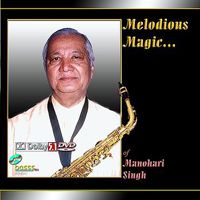 [by Ken Hunt, London] Cast your mind back to 1971 and the film Caravan. That ever-risqué delight Helen is commanding the screen. A slinky saxophone croons over an electric bass guitar line with vibraphone in underlying support. Within a minute electric piano, trumpet and a splash of drums comes on the way eggs and flour get folded in gently when making a pudding. A spy flick tune emerges and then dissolves away. Helen pleads, “Lover, come to me now.” We are listening to Piya Tu Ab To Aaaja (‘Lover, Come to Me Now’, first line as title) with Asha Bhosle putting the words on Helen’s lips – with occasional cries of “Mon-i-kkka!” from the song’s composer Rahul Dev ‘Pancham’ Burman.
This is not only the demi-monde of the Indian film Cabaret Song: this is the world of Manohari Singh – multi-instrumentalist, session musician, arranger, composer and shaper to the Bombay film industry. His saxophone plays such a small yet vital role in building the song’s sultry sexy charge, the embodiment of less being more. As an example of musical restraint, it has few peers in popular music. No wonder that Manohari Singh was such a massively important facilitator of R.D. Burman’s visions.
Born in Calcutta on 8 March 1931, Manohari Singh’s father had also played saxophone with the Calcutta police marching band. Like his father before him, Singh junior took up the ‘key flute’ (to differentiate it from the bansuri or bamboo flute) and saxophone. And because he played saxophone, he played clarinet because the two went together and saxophonists were expected to double up. The epitome of versatility, he performed with the Calcutta Symphony Orchestra and in jazz combos before moving, at music director Salil Chowdhury’s suggestion, to Bombay in 1958. The Bombay film industry was yet to gain its Bollywood sobriquet but whether you were a Bengali musician or a Punjabi music director (composer) and so on, you knew which side of the roti the ghee was buttered and where to gravitate in order to make some rupees and a reputation.
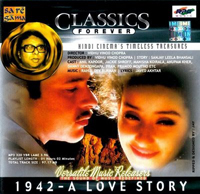 In Bombay he fell in with music director S.D. Burman’s son, Pancham. Eight years Singh’s junior, they would work together until Burman’s death on 4 January 1994 and co-create a phenomenal body of work, with many of Bollywood’s best-loved songs to their credit. Their ‘final’ collaboration was on Burman’s posthumous smash hit, 1942: A Love Story (1994). Whether he appeared as an anonymous session musician or under permutations of his name like Manohri Singh or Manhori, he was a musician of choice if saxophone or keyed flute were called for.
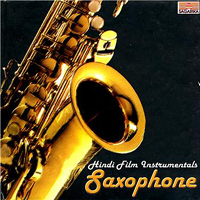 Parallel with his session work, Singh developed a public face, releasing albums under his own name. He brought the gift of being able to sight-read and being able to transpose into another key without having to write the notes out again to fit the new key. It is something, for instance, that Albert-system clarinettists learned to do intuitively when sight-reading clarinet music done by a Böhm/Boehm-system clarinettist. Following his death, Asha Bhosle told me, “Asha Bhosle explained: “Manohari could play a song in a different key without rewriting the notation. He knew every music part of thousands of songs by heart.”
He died in Mumbai on 13 July 2010
Ken Hunt’s obituary of Manohari Singh from The Independent of 23 September 2010 is at: http://www.independent.co.uk/news/obituaries/manohari-singh-saxophonist-who-made-his-instrument-central-to-bollywood-scores-2085593.html
23. 5. 2011 |
read more...
 [by Ken Hunt, London] The songwriter and singer Tim Rose died aged a day over 62, on 24 September 2002 in London just before a string of concerts.
Rose was born Timothy Alan Patrick Rose in Washington on 23 September 1940 and fetched up in Chicago where he became the sort of chap that might figure in one of Pete Frame’s family trees through his involvement in a folk group called the Triumvirate. They subsequently changed their name to the Big Three, a group that included Cass Elliott who went on to fame with the Mamas and the Papas.
In Greenwich Village he came to wider attention, playing the Bitter End and the Night Owl, before landing a contract with Columbia. Rose’s eponymous 1967 debut remains a classic of its kind. He would continue to release albums, albeit sporadically, until 1997, though after his death more emerged.
With a certain twist of fate however, it would be for two covers that he is best remembered. Namely, Hey Joe (a song also picked up on by Love and Jimi Hendrix) and Morning Dew (an underhand hijacking of Bonnie Dobson’s song that went into the repertoires of , amongst others, the Grateful Dead, Jeff Beck, Lulu, Einstürzende Neubauten, Ralph McTell and Robert Plant). Fatefully, Them and Judy Collins’ cover of Come Away, Melinda, another anti-war song and another song associated with Rose, also had a contested provenance.
He is buried in Brompton Cemetery in South-west London.
16. 5. 2011 |
read more...
 [by Ken Hunt, London] The Royal Oak is home to one of the finest folk clubs in the south of England. It epitomises so much about the English folk club set-up. It takes place on Thursdays while not far away the Elephant & Castle at White Hill in Lewes hosts the weekend Lewes Saturday Folk Club. The Royal Oak’s guests regularly include the cream of established of artists. Between March and May 2011 bills featured Tom Paley, Martin Carthy & Chris Parkinson, Jez Lowe and Tim Laycock as the main guests. Yet it is one of those clubs, like Sheila Miller’s Cellar Upstairs folk club in Camden in north London, that balances established and new acts so well. This night the honours fell to Marry Waterson and Oliver Knight.
 Interestingly, this sister and brother duo’s newly released debut The Days That Shaped Me formed only part of their live repertoire, though its songs were like the string running through a necklace. Their opening gambit had Marry Waterson – “one of the unbeatable Waterson Family voices,” announced Vic Smith, the club’s master of ceremonies – sing their mother, Lal Waterson’s Fine Horseman from Lal and Mike Waterson’s Bright Phoebus (1972). It is a cryptic song etched into many people’s memories, maybe from Anne Briggs’ early purloining of the unfinished song for her The Time Has Come (1971) or interpretations by the Silly Sisters and Dick Gaughan through to King Creosote and The Owl Service. Tellingly, Marry’s languid rendition just told a story written in her mother’s hand the way her mother would have told it. She did the same with Flight of the Pelican from Once In A Blue Moon (1996) – Lal and Oliver Knight’s first joint venture on disc. It was once an anti-Thatcher song with heraldic imagery implicit. In 2011 its relevance is less Thatcher’s regime than its gnawing aftermath, summed up in the closing lines, “We who dreamed young and were silent this autumn/Your children’s children’s rights have gone.” If you vote silence in, you bequeath blame.
The second song of the first set, and the first from The Days That Shaped Me, is a hymn to female hormonal fluctuations, Curse The Day. It was followed by a run on that album’s bank with Windy Day, The Gap (always good to have a Doris Day name-check), Another Time (“an early one”) and Revoiced. Revoiced came across as the most Lal-like of the batch. Unlike the album (and later engagements on the tour), its arrangement was a stripped bare approach. No Kathryn Williams harmonies, just the basic unit of Marry’s vocal and Oliver’s guitar. It felt like it might have if they’d been singing in a car or rehearsing round the kitchen table. Marry’s unaccompanied Welcome Sailor from the Watersons’ For Pence and Spicy Ale (1975) was actually introduced as “a song learnt around the kitchen table”. The first set concluded with Memories, the song that gave title to Lal Waterson & Oliver Knight’s Bed of Roses, released the year after Lal’s death in September 1998.
 The second set took other routes. Two in, Oliver did solo guitar piece combining a little brick from the Pink Floyd’s The Wall and his own Train To Bay – the title clips the definite article Yorkshire-fashion – again from Bed of Roses. The last London-bound train curtailed the experience but the inclusion of three new songs was highly promising. The first, the opener is summed up in the title. Love Song To A Lyric is Marry’s declaration of the besotting strength of writing. I Won’t Hear proved more oblique on first hearing but seemed to be about shutting out and shutting in voices figuratively or literally. (Of course, I have been wrong many times before.) Rosie, one of the ones that melds lyrics from Marry and Lal, had one of those trademark family lines – “Rosie had a tea cosy” – running into crochet. Ah, their mother’s spirit lives on…
Further listening
The Days That Shaped Me (One Little Indian Records TPLP1087CD, 2011)
Small print
The images, apart from the artwork for The Days That Shaped Me, are © Ken Hunt/Swing 51 Archives.
Marry Waterson and Oliver Knight’s website is at http://watersonknight.com/
For more about Folk at the Royal Oak, go to http://www.users.globalnet.co.uk/~tinvic/ and http://www.myspace.com/royaloakfolklewes
16. 5. 2011 |
read more...
[by Ken Hunt, London] Record shops held a particular status in the cultural to-and-fro of earlier times in ways that would be impossible to explain in the internet age. It was pretty much in order to go to a shop with minimal cash (remember, this is pre-plastic) and listen to a whole LP with only the flimsiest justification or intention of purchasing it.
9. 5. 2011 |
read more...
« Later articles
Older articles »