Articles
 [by Ken Hunt, London] This month a raft laden with new provisions landed. It would have been rude not to, as they say, that is, not to have included some. In no particular order, ladies and gentlemen, here’s the Peter Rowan Bluegrass Band, Flora Purim, Jody Stecher and Kate Brislin, Laurie Anderson, Alastair Hulett and Dave Swarbrick, Jenna and Bethany Reid, Bill Kirchen, Wargaren, Annette Pinto and Diva Reka. It’s not entirely new stuff because, as ever, it reflects other work going on during the month.
Jailer Jailer – Peter Rowan Bluegrass Band
Peter Rowan has a body of great songs behind him and a cadre of collaborators that really takes some beating. Bands of the calibre of Earth Opera, Seatrain, Muleskinner and Old And In The Way provide a pretty fine array of calling-cards to come wooing with. And that’s before factoring in his apprenticeship of bluegrass fire playing with Bill Monroe.
So what sets this new outfit apart and amongst the finest he has ever performed and recorded with? The musicianship is a given. After all, he has Paul Knight on bass and vocals, Keith Little on banjo and vocals and, especially, Jody Stecher on mandolin and vocals. But Legacy – the album this comes from – is a parcel of astonishing new Rowan compositions. Jailer Jailer may not be everybody’s favourite but it touches the hem of the Sufi garment like in the way it dishes up its paradoxes. “My cage is better than your cage” is followed by “You know my god is better than your god” and “My truck is better than your truck”. But to get a completer inkling about the jailer’s role in this tale you will have to listen to the song yourself. This song is like lowering clouds on the horizon drawing ever closer. From Legacy (Compass Records 7 45432, 2010)
Stories To Tell – Flora Purim
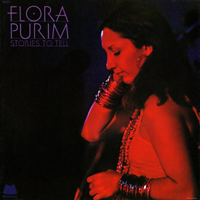 This is the title track from Flora Purim’s album Stories To Tell, originally released in 1974 on Milestone Records M-9058. The instrumentation is as richly hued as her voice. The core band on the album is George Duke on keyboards and synthesisers, Earl Klugh on guitar, Airto Moreira on percussion and King Errisson on congas with the song’s co-composer (with Purim and Mario Capolla), Miroslav Vitous on electric bass. It’s very much of its time when jazz and jazz-funk was reaching out into new weird territory. Listen to the electric guitar to hear a foretaste of the licks and effects that Jerry Garcia would employ on the Grateful Dead’s studio album Shakedown Street released in November 1978. From Stories To Tell (BGP CDBGPM 218, 2010)
Fine Horseman – Jody Stecher and Kate Brislin
I was a long way from home and got to reminiscing about Lal Waterson – whose song this is – and when I arrived back home Jody Stecher and Kate Brislin’s new album was waiting for me like a perfect homecoming present. Lal’s line about strange dreams running through her head is about as typical a Lal line as one could imagine. She juxtaposes that thought with the everyday sensuousness of somebody toying with her hair. I’ve written it before of Lal’s songs but you just learn to sing them in the hope that the meaning will come. Mostly, the meaning will never work if you stick a pin through it, as if it were some sort of specimen moth. Remarkable song. Remarkable rendition. I love the final harmony that Kate adds at the end of the song. From Return (no name, no number, 2010)
Only An Expert – Laurie Anderson
Laurie Anderson’s Homeland is a fragmentary work that figured in my mind since seeing her perform it at TFF Rudolstadt in 2007. I should hasten to add that ‘fragmentary’ refers to the suite’s development. Only An Expert (Can Deal With The Problem) as presented here is a much transformed piece of work since the last two occasions I saw her perform it. It has metamorphosed into a different beast.
And, quite frankly, this is one of those shape-shifting compositions that can support changes in tempi, lyrics, grooves and instrumentation. Lyrically speaking, it is timeless. There will always be somewhere or someone needing to justify something and who better to call on than experts and consultants? They understand. And they have ‘solutions’ crawling like aces up and down their sleeves. It’s a humorous song with a serious heart. It fits Homeland perfectly. From Homeland (Nonesuch 524055-2, 2010)
Don’t Sign Up For War – Alastair Hulett and Dave Swarbrick
 You get what it says in the title. Yet the song tells a story about the repercussions of putting rhetoric into practice. As experienced by John Maclean who got to know the rough end of the Defence of the Realm Act five times between 1915 and 1920. This album by Alastair Hulett (15 October 1951-28 January 2010) and Dave Swarbrick passed me by on its release. It really is a marvellous piece of music and historical document. Hulett’s detailed booklet notes are erudite yet impassioned. From Red Clydeside (Red Rattler RATCD005, 2002)
Jan’s March – Jenna and Bethany Reid
This is the opening track of a suite of tradition-based compositions celebrating the Shetland Bus, a clandestine operation during the Second World War connecting the Shetlands and fascist-occupied Norway. Its hero is a member of the Norwegian resistance called Jan Siguard Baalsud (1917-1988). The musicians named above play fiddle and in Bethany Reid’s case piano on the album. James Thomson plays flute and pipes, Iain Sandilands percussion and James Lindsay double-bass on the album. This is a composition by Jenna Reid. It’s a lilting overture of a piece played by the ensemble. It’s one of those melodies that you can’t quite place but feel as if you’ve known it forever. From Escape (Lofoten Records LOFCD001, 2010)
More information at www.jennanandbethanyreid.co.uk
I Don’t Work That Cheap – Bill Kirchen
Yes, yes, yes, it’s a shameless blag from Dylan but it has plenty of allusions to Blighty. Plus it has George Frayne, the ol’ Commander, pounding the ivories. From Word To The Wise (Proper PRPCD053, 2010)
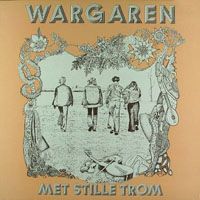
Er Zou Er Een Meisje Gaan Halen Wijn – Wargaren
 Wargaren was a relatively short-lived Dutch folk band. Its predecessor Pitchwheel finagled a couple of tracks onto the Folk Centre Utrecht’s scene sampler FCU (1969). In 1976 Met Stille Trom (Universe hot103) appeared, from which this performance derives. It was Wargaren’s solitary LP and by the time it appeared they had broken up. The most signal aspect of Er Zou Er Een Meisje Gaan Halen Wijn is the voice of Rina de Heus. She sings here over a bed of gentle acoustic instrumentation.
Her understated voice gets me every time I listen to this piece of music. It never gets in the way of the story. The band’s Kees van der Poel went on to form Wolverlei. Its Rob Smaling went on to be active in many Dutch musical endeavours. Jurek Willig also joined Wolverlei and later worked as a sound engineer, for example, on a 2009 release of Ernst Krenek’s Lamentatio Jeremiae Propheta. And Rina de Heus supposedly gave up singing – a tragedy for the Dutch folk scene – and emerged as an actress in the early 1980s. From the Matthija Linnemann-compiled Dutch Rare Folk: 43 Lost Classics From The Golden Age Of Nederfolk 1967-1987 (Food For Thought FFT7060157, 2007)
Sobit Rupnem – Annette Pinto
It should be rammed down people’s throats over and over again that, when it came to world music, the Indian subcontinent’s film industry knew a great deal about head starts. The album that Sobit Rupnem comes from homes in on ‘Music From Goa/Made in Bombay’. Much of it could be called an amalgam of anywhere-Indian filmi sangeet (film song) elements spiced with Latino elements in a transplanted Iberian peninsula kind of way. Not derivative, more like true colours. It was with enormous regret that the album that this track comes from, arrived after the closing date for updates to my ‘East-West Fusions’ chapter of the Rough Guide to World Music (2009). From Konkani Songs (Trikont 0395, 2009)
www.trikont.de
Prochu se Nayden – Diva Reka
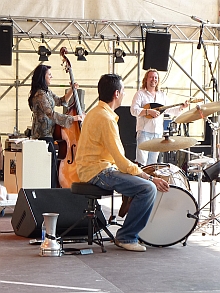 Diva Reka proper is Kostadin Genchev on kaval (an end-blown wooden flute), Dimitar Hristov on tambura (a long-necked lute), Stela Petrova on string bass and Petar Mitov on percussion. But after seeing them perform at TFF Rudolstadt in July 2010 and listening to their eponymous debut, it is the interplay of the quartet and its guests that puts the stamp on their achievement. Prochu se Nayden is Bulgarian folk-jazz. It opens with guest Valentin Vassev setting the mood on piano. Then Evelina Hristova, the lead vocalist on this track, another guest, joins in. The band folds around them. A slow into medium-tempo, slow-build air, it encapsulates the joy and majesty of Diva Reka, the finest new Bulgarian band to come my way in a long time. From Diva Reka (Gega New GD 353, 2010)
Diva Reka at TFF Rudolstadt 2010, photograph (c) Ken Hunt
More information at the Sofia-based label’s website: www.geganew.com
31. 8. 2010 |
read more...
 [by Ken Hunt, London] The Scots Gaelic song tradition had a relatively hard time of it during the twentieth century what with a diminishing mother-tongue population, a massive decline in Gaelic literacy and the steady encroachment of Scots and English. Seonag NicCoinnich, that is, Joan MacKenzie in the English, was one of four daughters born into a community where Gaelic was the first language – in Point on the Isle of Lewis in the Western Isles on 2 September 1929.
The spoken and sung language was strong and it was here that she developed her taste and love for Gaelic song. She and her sisters studied in Stornoway where she made her public singing debut as a schoolgirl. She went off to Glasgow to study to become a primary school teacher. She won the traditional singing contest at the Royal National Mod for four consecutive years from 1951. In 1955 she won a Gold Medal at the Mod, presented to her by the Queen Mother with the Queen Elizabeth in attendance.
Her prominence and reputation in Scots Gaelic circles led to her recording for Gaelfonn – she made but two 45s her entire career and they appeared on this small Scottish label – and broadcasting on the BBC’s Scottish service. The School of Scottish Studies at the University of Edinburgh also supplied her with a tape recorder to capture the voices of Lewis for its archives.
Fittingly therefore it was the School of Scottish Studies that oversaw the release of an album of archival recordings. It drew mainly on the School’s recordings with some material from BBC sources and became Joan MacKenzie – Seonag NicCoinnich, volume 19 in the Scottish Tradition Series (Greentrax CDTRAX9019, 1999). It captures her singing between 1955 and 1961 at the height of her powers. Its stand-out performance from 1961 – stand-out for her vocal clarity and control, expressiveness and emotion charge – is the traditional lament Ailein Duinn o hi (‘Dark-haired Alan’ with ‘o hi’ being meaningless vocables). The closing song An till mi tuilleadh a Leodhas? from the BBC archives was composed in exile by a relative on her father’s side – Uilleam MacCoinnich (or William MacKenzie) – whilst living in Ontario where he died in 1908. It translates as ‘Will I ever return to Lewis?’ In 1956 she married Roddy Macleod with whom she had three sons. She died in Edinburgh on 13 May 2007.
30. 8. 2010 |
read more...
 [by Ken Hunt, London] In January 1963 Bob Dylan was in Europe, flitting between London and Rome, bankrolled by an appearance as a folksinger in the BBC television drama, Madhouse on Castle Street. In London he fell into the company of, amongst others, the British folksingers Martin Carthy, Bob Davenport and Rory McEwen – like Eric von Schmidt, another exceptional painter, notably in McEwen’s case of botanical subjects – and was reunited with some compatriots, the songwriter and novelist Richard Fariña, Ethan Signer of the Charles Valley River Boys, and the musician and illustrator Eric von Schmidt.
On 14 January Fariña and von Schmidt went into the basement of Dobell’s on Charing Cross Road to start making Dick Fariña & Eric von Schmidt (1963) for the Folklore label, a side-venture of Dobell’s record shop. The resultant LP attained a certain discographical and Dylanological luminescence once it leaked out that its ‘Blind Boy Grunt’ – stoned aliases, the morning after and all that – was Dylan then under contract to Columbia Records.
Guitarist, singer, songwriter and graphic artist, von Schmidt was born in Westport, Connecticut on 28 May 1931. Ten years Dylan’s senior and a major figure and mentor to many on the East Coast folk scene, he co-authored one of the finest accounts of any folk scene anywhere. Baby, Let Me Follow You Down – The illustrated story of the Cambridge folk years (1979) captured its critical mass. Its co-author, Jim Rooney told me: “He was older than us by a generation really. He’s of [Ramblin’] Jack Elliott’s generation. He had a great record collection. He had a lot of the Library of Congress recordings which he himself had gone and got at the Library of Congress.” He continued, “Eric had this material and was way ahead of us. Informed about what existed. He also had the Harry Smith collection, the Anthology of American Folk Music that Folkways put out.”
In von Schmidt’s essay for the reissued Anthology of American Folk Music (1997), he described the process and impact of “Folk Thrall”: “We were romantics. I had named a boat I had built The John Hurt, after [blues musician] Mississippi John. Geoff Muldaur was planning to find the grave of Blind Lemon Jefferson and sweep it ‘neat and clean’ as Jefferson had plaintively requested on a Paramount 78. Most of the smitten folkies were in their late teens, and though ten years older, I was still mourning the fact that Lead Belly had died before I could meet him.”
Around 1948 he had heard a Leadbelly song on the radio and he knew it was for him. Over the next years he took up banjo and guitar and, by the time he moved to Cambridge, Massachusetts in 1957, he was a figure of influence for East Coast folkies. His early song Joshua Gone Barbados became highly popular and was covered by such acts as Johnny Cash, Brendan Croker & The 5 O’Clock Shadows, Tom Rush and Martin Simpson. The Dylan connection would follow von Schmidt, beginning with him being name-checked as his source for Baby, Let Me Follow You Down on Dylan’s self-titled début (1962) while the artfully posed cover photograph for Bringing It All Back Home (1965), with its accoutrements of hip and having-made-it, positioned von Schmidt’s 1963 LP The Folk Blues of Eric von Schmidt atop albums by Dylan’s Columbia label mates Lotte Lenya and Robert Johnson.
Von Schmidt grew up in Westport, Connecticut. His father, Harold von Schmidt (1892-1982) was a painter and magazine illustrator, noted for his painting of the Old West. His son – the subject of his painting ‘Ric’, a rare image of a beardless von Schmidt – followed in his footsteps. After coming out of the army, von Schmidt eventually obtained a Fulbright grant and spent 18 months in Italy studying and painting. He developed several distinctive graphic and pictorial styles. His work embraced Indian ink line drawing and cartoon, children’s book, songbook and album jacket artwork, and large-scale canvasses depicting historical events, the nature of which titles such as The Ballad of Lewis and Clark and Storming of the Alamo – the latter is 23 feet wide – give away. He also had a fluid calligraphy-like hand which helped him gain plentiful poster and album commissions. His cover painting for Eric von Schmidt and The Cruel Family (1977) (the illustration shown) was especially eye-catching with himself at the centre of a modern-day garden of earthly delights playing a skillet. He did illustrations for albums from people as diverse as Joan Baez, James Baldwin, The Blue Velvet Band (which included Rooney in their number), Rev. Gary Davis, Cisco Houston, Geoff and Maria Muldaur, John Renbourn and Dave van Ronk. His collage-like painting Cambridge Tapestry 1950-1959 is peopled with folk scene luminaries including Baez, Bill Monroe, Odetta, Peter Rowan, Jackie Washington and Josh White. And, of course, Dylan. He was, in short, one of the greatest multi-talents of American music.
Eric von Schmidt died in Fairfield, Connecticut on 2 February 2007.
23. 8. 2010 |
read more...
[by Ken Hunt, London] More boffo music from the rain-soaked rock, as ever reflecting work streams and passions. Lisa Knapp, John B. Spencer, Béla Fleck, Zakir Hussain and Edgar Meyer, Ökrös with Ági Szalóki, Element of Crime, Toots and the Maytals, Miles Davis, Pentangle, Asha Bhosle and R.D. Burman, and the Kronos Quartet with Alim & Fargana Qasimov are the month’s turn-ons.
 Blacksmith – Lisa Knapp
Lisa Knapp is a singer whose passion and gift are astonishing. The Blacksmith is a traditional song that seems to have been with me my entire journey into traditional English music. It has a wondrous melody and it tells a story to wonder at and weep over. Its lyrics capture the bewilderment of love found and love lost better than nearly any other song in the folk or popular canon.
Knapp first heard The Blacksmith as sung by Shirley Collins. In an unpublished part of an interview that she did with me for R2‘s article to celebrate Shirley Collins’ 75th birthday in August 2010, Knapp said, “When I first heard her – The Sweet Primeroses was probably the first one I heard – I’d never heard anything like it. Her voice was so unique. For me, it was like fresh air, so sparklingly unique and really inspiring. She made me want to sing folk music. There’s no mistaking her. You know it’s her. I liked that. I like that in people. She really did just sing the song. She never over-exercises in her singing style. It’s so clearly her.”
The version on this album is remixed by Youth. The mix is remarkable. (But how I would love to listen to how it sounded before!) Yet it is Knapp’s voice that hooks and reels the listener in. From Wild And Undaunted (Ear To The Ground Records ETTGCD001, 2006)
Alone Together – John B. Spencer
This is one of John Spencer’s more acerbic songs but he delivers his barbs in such a low-key way. “When the smile on your face don’t touch your eyes”, “When we make love to be polite” and “All our friends sit on the fence/While we crack jokes at each other’s expense” are examples of Alone Together’s wit and observational powers from. “It’s my version of Breaking Up Is Hard To Do,” is how John describes it on this album.
A lover of words, John had a droll and deadpan sense of humour. Mordant to the end, when John’s coffin was carried in for his final send-off, he had the fruits of the allotment on top rather than the usual scentless roses and bland chrysanths. Goonishly, amongst the veg were sticks of rhubarb. John had had time to consider his final send-off and that visual gag made me laugh out loud as he waltzed in. We were there to remember, not to forget.
I’ve probably got Alone Together somewhere on a demo cassette with him playing his Telecaster and singing with bloody budgie twittering as his chick chorus. (Honest!) As we say in London, loverly man, loverly song. From Left Hand of Love (Round Tower Music RTM CD 82, 1996) (Keeping it in the family, there’s also his sons’ up-tempo version on Fast Lane Roogalator (Irregular Records IRR056, 2004).)
More memories of John B. Spencer at http://kenhunt.doruzka.com/index.php/john-b-spencer-1944-2002/
 Bahar – Béla Fleck, Zakir Hussain and Edgar Meyer
Over the course of July 2010, for me three bands raised the spectre of Shakti – the benchmark of excellence in matters Indo-jazz.
The first was The Shin’s live Black Sea Fire musical extravaganza at Tanz&FolkFest Rudolstadt because of its adoring embrace of the compositions of John McLaughlin (even though they were more Inner Mounting Flame than Shakti).
Next, there was an Indo-jazz masterpiece called Raga Bop Trio from Steve Smith, George Brooks and Prasanna.
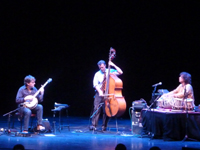
The third was the wondrous Béla Fleck, Zakir Hussain and Edgar Meyer concert at the Barbican. This composition unveils a whole new world in which banjo (Fleck), double-bass (Mayer) and tabla (Hussain) do things together that have never been done before, creating worlds of melody that mesmerise. The picture is from the trio’s London concert (c) Swing 51 Archives. From The Melody of Rhythm (E1 Entertainment KOC-CD-2024, 2010)
Cigánykesemes: Si e dracu suparatu, Az ördög megsértödött, Ungureste rar; Cigánycsárdás; Csingerálás – Gypsy tunes: Lament, Slow Hungarian, Gypsy csardas, Fast csardas – Ökrös
Presciently, the Hungarian traditional powerhouse Ökrös calls on the powerful and plangent voice of Ágnes Szalóki here. She sings the heart out of the opening part of this medley, sings it unaccompanied, before the band joins in. Later you hear some of her other voices.
If you only listen to ten albums of Hungarian folk music your whole life, try and find this revelation. The melodic, rhythmic and time changes on this track alone are an instant conduit to Hungarian music. You probably won’t find it in any shop. ABT produced albums so exquisite in so many ways – artwork, calligraphy and, of course, music – that most are out-of-print. Mind you, if you go truffling in Budapest, you might find the odd ABT CD in some small record shop.
Much of music is theatre. The painter Maggi Hambling distilled a great truth in a couple of sentences in 2009 (in the London edition of Time Out). “You only need to see a shark in a tank once, whereas you can go back and look at a Rembrandt self-portrait thousands of times.” Like art of the greatest kind, this is something Rembrandt-like, worthy of revisiting again and again. From Bonchida, Háromszor – Bonchida, Times Three (ABT005, 1998)
Kaffee und Karin – Element of Crime
It’s hard to explain the literary uplift that Element of Crime delivers to anyone that can’t understand German. They are German chanson personified. Just like people who don’t understand French listen to the chansons of Brel, Brassens and Gainsbourg and melt, maybe one day soon people will listen to Element of Crime and melt to Sven Regener’s voice and lyrics.
The title translates as ‘Coffee and Karin’. Its backdrop is a bistro or café scene. After coffee and beer comes talk, “Deinen Namen hab ich vergessen/Deine Nummer fällt mir nicht ein/Einen Ring hab ich niemals besessen/Und einsam will ich nicht sein” – “I’ve forgotten your name/Your name doesn’t occur to me/I’ve never owned a ring/And I don’t want to be alone.” Sheer Brel. A tip-off from Pankow’s Jürgen Ehle. From Immer Da Wo Du Bist Bin Ich Nie (Universal 2713646, 2009)
Pressure Drop – Toots and the Maytals
Toots Hibbert sings the heart out of the song. The Maytals play it unrelentingly as if it were a looped track done in real time. This version is just the blueprint of other things that came. A reggae song for all time. Did I ever tell you about the time I interviewed Toots? From Funky Kingston Island CCD 9330, undated)
It’s About That Time/Sanctuary – Miles Davis
I only ever saw Miles Davis once and it was at the Isle of Wight Festival on 29 August 1970. The line-up was Davis on trumpet, Gary Bartz on saxes, Chick Corea on electric piano, Keith Jarrett on organ, Dave Holland on basses, John DeJohnette on drums and Airto Moreira on percussion. (Making it the first time I ever saw Airto live.) What a phenomenal line-up.
Listening to It’s About That Time forty years on, I marvel at my receptiveness to what was very strange and angular then. It launched my interest in Miles Davis’ music. Oh, and the drugs did work. From Isle of Wight, part of Miles Davis: The Complete Columbia Album Collection (Columbia Legacy 88697524922, 2009)
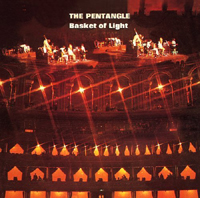 Light Flight – Pentangle
Lavinia Blackwall of Trembling Bells prompted the inclusion of this track. Her merely mentioning it opened a sluice gate of memories. High amongst them were memories of the BBC television series Take Three Girls in the original series of which the actresses Liza Goddard, Susan Jameson and Angela Down played the three girls. Pentangle (only Americans ever called them ‘The Pentangle’) supplied this opening credit music (and sundry incidental music). In his big, two-issue Rolling Stone interview in 1972, the Grateful Dead’s Jerry Garcia name-checked Pentangle and that felt good in a moderately patriotic, steady-on-Carruthers way.
Terry Cox plays trap drums, Bert Jansch and John Renbourn guitars and Danny Thompson double-bass. Jacqui McShee soars (and multi-tracks vocals) over Light Flight’s driving instrumental track. If you want to listen to what went before what is now called ‘acid folk’, ‘psych-folk’, ‘wyrd folk’ or, heavens open and wash the folk infidels away, ‘folktronica’, this consummate piece of folk-jazz or jazz-folk musicianship will really, really help. Such a groove! Ah, strange folk-jazz pleasures. From Basket of Light (Transatlantic TRA 205, 1969 and Sanctuary CMRCD207, 2001)
Qashlarin Kamandir – Kronos Quartet with Alim & Fargana Qasimov
“Your eyebrows are bow-like/Your eyebrows are bow-like and your gaze is stunning/Your words are sweeter than honey and sugar/Please, come to me, sweetheart, you are my flirtatious beauty.” People pay me to listen to such musical sorcery! From Music of Central Asia Vol. 8 – Rainbow (Smithsonian Folkways SFW CD 40527, 2010)
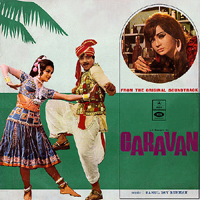 Piya Tu Ab Aaja – Asha Bhosle and Rahul Dev Burman
R.D. Burman had a stack of compositional tricks. It is a sad truth that Mother Nature isn’t always up to the job and Mother Nature’s son has to help out. In film Foley artists are the people that craft the sound effects from sticks of celery and buckets of stones and water. R.D. Burman did his own sound effects (that ol’ Listerine bottle is a classic) but frequently when he was putting together tracks in the studio he relied on the talents of his right-hand man, the multi-instrumentalist Manohari Singh. Born in Calcutta on 8 March 1931, Singh died in Mumbai on 13 July 2010. I cannot remember an LP sleeve (certainly not this one) that ever credited the session or side musicians. Pretty hard and fast as rules go, the credits give the playback singers and the music director/lyricist. Singh was a major asset on the R.D. Burman team. The saxophone interjections on this track are marvellous, if brief. That was one of Burman’s tricks. Leave them expecting more. From Teesri Manzil and Caravan (Saregama CDF 120017, undated)
16. 8. 2010 |
read more...
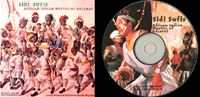 [by Ken Hunt, London] “When I met him,” says Mike Heron of the Incredible String Band of Nazir Ali Jairazbhoy, “he was working at the School of Oriental and African Studies, I think. He was teaching there. How I came across him was that [Elektra record producer] Joe Boyd introduced us to odd songs and things and Robin [Williamson] suggested we might have a sitar player on Mad Hatter’s Song. He actually played on Mad Hatter’s Song credited as ‘Soma’ because he asked not to have his name used, I don’t really know why. He probably had some contractual thing going. It says sitar by Soma but it’s actually him.”
N.A. Jairazbhoy’s nom de sitar – Soma – on the Incredibles’ 5000 Spirits or The Layers of the Onion (1967) derives from a Hindu holy drink and a Hindu lunar deity. If you wish to get obscure about it and the period, Soma in another context was also a track by Dantalian’s Chariot on Chariot Rising (1967) – the UK band that included Zoot Money and future Police guitarist Andy Summers.
Nazir Ali Jairazbhoy, the musicologist, film-maker and musician, who died in Van Nuys, California on 20 June 2009, was more than a session musician. He had a status of sufficient stature to warrant an entry in the New Grove Dictionary of Music and Musicians. He won his inclusion by having established his reputation in ethno-musicological circles through writings, recordings and film. For example, alongside Ravi Shankar’s My Music, My Life (1969), Gopal Sharman’s Filigree In Sound (1970) and Reginald & Jamila Massey’s The Music of India (1976), his book The Râgs of North Indian Music (1971) fed the imagination and intellectual aspirations of connoisseurs of North Indian music and aspirants alike.
Nazir Ali Jairazbhoy was born on 31 October 1927. His father, Cassamally Jairazbhoy, was a published author who, by 1916, was Vice-President of the Moslem League’s Bombay Branch. His mother Khurshid Rajabally Janmohamad reflected a frequently overlooked yet major aspect of the Indian diaspora, having been born in Burma of Indian parents. Whilst his mother was pregnant, his parents were travelling and she gave birth in Clifton, Bristol. As a babe-in-arms he was taken back to Bombay. Over the course of his life, he lived in India, England and North America and taught widely, including stints in Ontario, Delhi and California, retiring from the UCLA Department of Ethnomusicology in 1994.
As a boy there he began tuition in sitar with Madhav Lal. By the time he guested on The Mad Hatter’s Song, he was studying at the University of London’s School of Oriental and African Studies (SOAS) – having already studied at the University of Washington with the eminent Dutch ethnomusicologist Arnold Adriaan Bake, about whom he later contributed an essay in the book Comparative Musicology and Anthropology of Music: Essays on the History of Ethnomusicology (1991).
Jairazbhoy led directly to the Incredible String Band expanding their instrumental palette. At Williamson’s nudging, Heron took up the sitar and took lessons at Jairazbhoy’s Northwood, London home. Although Jairazbhoy himself didn’t appear on Mike Heron’s Smiling Men With Bad Reputations (1971) – a musically catholic beanfeast that included such anointed guests as John Cale, Elton John, Keith Moon, Jimmy Page, Dudu Pukwana, Richard Thompson and Pete Townsend – he did recruit the south Indian musicians for the track Spirit Beautiful.
For The Râgs of North Indian Music (Faber, 1971), he obtained the services of the acclaimed sitar maestro Vilayat Khan for the first edition’s flexidisc recording. Jairazbhoy’s connection with the family was reinforced when, for example, he contributed liner notes to Vilayat’s brother, Imrat Khan’s Surbahar/Sitar (India Archive Music IAM CD 1005, 1991) featuring Raga Puriya Dhanashri.
The scholar also contributed to a number of record releases. In 1955 he recorded the primer Classical Music of India for Folkways Records (which appears to be retitled Nazir Jairazbhoy Explains the Theory of the Classical Hindusthani Music of India in the Smithsonian Folkways catalogue). Lyrichord’s Folk Music of India (Orissa) consisted of recordings he had made himself during 1963-1964 and concentrated on Tribals’ music from, among others, the Bonda, Paraja and Saora). In the case of Nonesuch Explorer’s Classical Music of India Featuring Renowned Soloists (1969), the credit was “Annotations by John Levy and Nazir Ali Jairazbhoy”; incidentally, the “Renowned Soloists” included rudra vina player Zia Mohiuddin Dagar, the jalatarang player Chintamani Jain and the bamboo flute player Devindra Murdeshwar.
Jairazbhoy was a pioneer in the use of film technology when documenting folkways. As early as 1973, he was arguing that Bollywood film was worthy of serious academic scrutiny and study, hardly a commonly held view. He produced all manner of publications – whether print and/or audio and video – about the culture of the subcontinent. The subjects included Pakistani folk music, Rajasthani puppet theatre, the music of the Sidi people (an African diaspora people settled in India, especially in the state of Gujarat) and filmed biography about the South Indian classical violinist T.N. Krishnan amongst others.
Rather than presenting his cases as straightforward ethnomusicology, he also blurred factual and fictive elements in Hi-Tech Shiva and Other Apocryphal Stories: an Academic Allegory (1991) and in the fake documentary film Retooling A Tradition (1994). Much of his work appeared on his and his third wife, Amy Catlin-Jairazbhoy’s Apsara Media for Intercultural Education.
10. 8. 2010 |
read more...
[by Ken Hunt, London]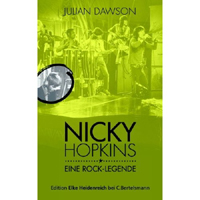 Swing 51‘s Giant Donut Discs® column gathered musical snapshots from all manner of people. These were Julian Dawson’s GDDs as published in Swing 51 issue 13/14 with annotations and updates. This is one in our series of Donuts from the vaults. For information about Julian’s musical activities, visit his official website at the bottom of his Donuts. (And how frequently does a writer get to write that?) In April 2010 the German-language edition of his biography of the pianist Nicky Hopkins appeared. Its title is Nicky Hopkins – Eine Rock-Legende (Elke Heidenreich) – a justifiable title for a studio musician for The Beatles, The Rolling Stones, The Who and The Kinks (whose 1966 album Face to Face included Session Man about him) and, transplanted to American soil, player with Quicksilver Messenger Service, the Steve Miller Band, Harry Nilsson, Jerry Garcia and Jefferson Airplane.
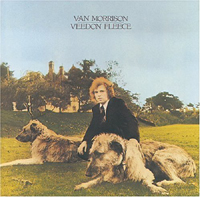 Streets of Arklow – Van Morrison
From Veedon Fleece.
Ken Hunt: This one needs little amplification. Track 4 of Van Morrison’s 1974 album for Warner Brothers.
Cash On The Barrelhead – The Louvin Brothers
Ken Hunt: In Britain it was getting easier to track down the Louvin Brothers’ recordings by the end of the 1980s. The US musician Gram Parsons’ influence was a big impetus in this respect.
End Of The Rainbow – Richard & Linda Thompson
Ken Hunt: The lyrics went, you may remember: “Life seems so rosy in the cradle/But I’ll be a friend I’ll tell you what’s in store/There’s nothing at the end of the rainbow/
There’s nothing to grow up for anymore.” Good bracing stuff.
Sources at www.richardthompson-music.com/song_o_matic.asp?id=52
Let’s Burn Down The Cornfield – Randy Newman
From 12 Songs.
Ken Hunt: Another of those pesky songs where the lyrics say it all.
I Found Out – John Lennon & The Plastic Ono Band
Ken Hunt: It wasn’t the obvious track from Lennon’s first solo album – Mother and Working Class Hero copped the plaudits but choosing the obvious was never on the cards or in the game plan when inviting people to pick their Giant Donut Discs.
So What – Miles Davis
From Kinda Blue.
Ken Hunt: Jazz marbled people’s Donut choices from the off and that was fine and to be expected and encouraged. The general coverage of the magazine did not condition in any way what people picked.
Ain’t That Good News – Sam Cooke
Ken Hunt: The song originally appeared on Ain’t That Good News, the last album to be appear before Cooke’s death in December 1964. The album would subsequently be overshadowed by another song on it called A Change Is Gonna Come.
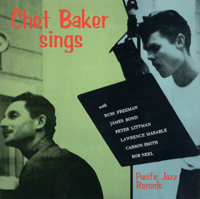 But Not For Me – Chet Baker
From the 1954 album, Chet Baker Sings.
Ken Hunt: More jazz. Chesney Henry ‘Chet’ Baker Jr. had died in Amsterdam in the Netherlands in May 1988 after falling from a hotel window. There is a plaque in his memory outside the Prins Hendrik hotel at Prins Hendrikkade 55 in Amsterdam. Corregium: the album was actually released in 1953.
All The King’s Horses – Aretha Franklin
Ken Hunt: A song combining nursery rhyme and fairy tale.
Tenor Madness – Toots Thielemans
From Toots Live.
Ken Hunt: Julian Dawson always had a thing about harmonica.
Julian is now resident at www.juliandawson.com
(c) 1989, rejuvenated 2010 Swing 51
17. 7. 2010 |
read more...
[by Ken Hunt, London] The Benares-style tabla artist Chandrakant Shantaram Kamat was one of the mainstays of radio and recital in Pune. Between 1956 and 1991 he was an All India Radio (Pune) staff musician and he also did 50 years’ service at the Sawai Gandharva festival. Over the course of his career, he accompanied successive generations of top-notch principal vocalist, instrumentalist and dancers.
17. 7. 2010 |
read more...
 [by Ken Hunt, London] This time around on the desert island’s solar powered phonogram we have Trembling Bells, Buddhadev Das Gupta, Andy Cutting, Maggie Holland, Polkaholix, Jackson Browne, Shirley & Dolly Collins, Eliza Carthy and Norma Waterson and The Bells of St. Margaret’s, Westminster (under Tower Captain George Doughty). Plus for a limited period on the internet, July 2010’s special offer, a bonus donut from David Lindley and Wally Ingram.
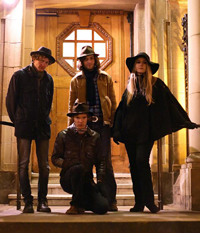 I Listed All Your Velvet Lessons – Trembling Bells
Trembling Bells are the most refreshing and impactful band of a folk hue that I can recall since Last Forever and Bellowhead. Listening to them can be like having a flicker book of boldly worn musical influences and resonances riffling in front of your ears. The Glasgow-based quartet uses the studio and the mixing desk really well. And the mixes and Alex Neilson’s songs give up their secrets reluctantly.
That might entail fresh discoveries nearly every pass. It helps to concentrate on one ‘voice’. Maybe Lavinia Blackwell’s keyboard lines running through When I Was Young or I Listed All Of The Velvet Lessons on their debut album Carbeth. Or on this particular track, I Listed All Of The Velvet Lessons, the use of brass. The song has a touch of the Blakes and Dolly Collinses about it. OK, I’m exaggerating there. But it really is memorable. From Carbeth (Honest Jon’s HJRCD43, 2009)
Chhaya – Buddhadev Das Gupta
There is no point in trying to choose any sliver or stage of this notable 77-minute performance over another. This is not the interpretation to single out some aria-like passage or the big finale from. This Donut is the entire performance of this seldom heard raga. One of the reasons it’s rare is because it is devilishly difficult to establish its clear identity from ‘neighbouring’ ragas. Like pesky neighbours, they can be intrusive.
Buddhadev Das Gupta is not a member of any hereditary musician family (although his brother, Dilshad Khan, also became a professional classical musician). His livelihood was in engineering for much of his life. But while working as an engineer, he was studying music with Radhika Mohan Maitra and developing a phenomenally empathetic style as a sarod player. He calls himself an “old style” sarod player and there is everything to embrace in that description.
Chhaya is proof aplenty of that attitude of his and his application of mind. And, if Radhika Mohan Maitra schooled him so ably, so beauteously, it is a tragedy that few will have heard his guru play. Lyle Wachovsky’s India Archive Music recorded this mighty performance in November 1994. Everything about this CD from the quality of the recording to the quality of the booklet notes sings the India Archive Music approach with its lavish attention applied to this release. Samir Chatterjee accompanies on tabla. From Sarod (India Archive Music IAM CD 1038, 1999)
 Uphill Way – Andy Cutting
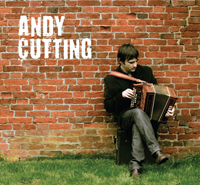
The squeezebox maestro Andy Cutting’s talent first blossomed in these ears in the late 1980s during his time with Blowzabella (a dance band that helped shape many talents). He later spent time with Chris Wood, Nigel Eaton and as a mainspring with the bands of June Tabor and Martin Simpson, with Fernhill, Kate Rusby, John McCusker, Chumbawamba and Pete Morton. If judging someone by the company they keep counts, Andy Cutting moves in exalted English folk circles.
Andy Cutting’s first solo album, from which this track comes, took from 2001 to 2008 to make and that seems about right. You can knock out cheap and cheerful wine but the more rounded ones, maybe even the ones that might turn out to be vintage, take time and time to get to know them.
Uphill Way is from the opening sessions, captured by Oliver Knight in May 2001.It gets its name from Cutting looking out of the car on London’s A406 or North Circular Road whilst stuck in traffic on a crammed driving course. Looking out, he clocked a street by the same name. The tune is a wonderful piece of Englishness. Those with time on their hands can test their googling skills to guess exactly where inspiration struck. From Andy Cutting (Lane Records LANECD01, 2010)
More information at www.andy-cutting.co.uk
S.C.H.E.I.D.U.N.G. – Polkaholix
Polkaholix spell out Scheidung (‘divorce’) in a sort of warped take on the Bobby Braddock and Curly Putman song D-I-V-O-R-C-E, made gold by Tammy Wynette. They do it in much the same fond manner as Andrew Lloyd Webber and lyrics by Richard Stilgoe’s U.N.C.O.U.P.L.E.D. in Starlight Express. It’s about the division of property and chattels and the fall-out after the end of a marriage. Dance to a the pain of d.i.v.o.r.c.e. Auf deutsch that’s S.C.H.E.I.D.U.N.G. From Polkaface (Monopol Records 940833, 2010)
www.polkaholix.de/phx
Take it Easy/Our Lady of the Well – Jackson Browne
The last few years Jackson Browne has introduced a twitchy cuteness before playing Take It Easy on stage. It was one of the early hits that propelled The Eagles into whatever tier of freezing hell they propelled themselves into. Browne’s version of the song that he co-wrote with The Eagles’ Glenn Frey has the added bonus of segueing into one of his ‘lost’ songs, Our Lady of the Well.
Its artistic unity is made all the more manifest by Sneaky Pete’s trippy pedal steel. Micky McGee’s drum part on Take It Easy is slinky while Jim Keltner’s drums are something to dream about. David Lindley is all over both tracks, as is Doug Heywood on electric bass.
Basically though, this is a plea for and to Our Lady of the Well. In the last verse he sings,
“If you look for me, Maria
You will find me in the shade
Wide awake or in a dream
It’s hard to tell –
If you come to me, Maria
I will show you what I’ve made
It’s a picture for our Lady of the Well.”
(c) Jackson Browne, Swallow Turn Music
Our Lady of the Well adds the cool and shade of an enclosed courtyard with a well in its middle, probably set somewhere in colonial California. Or the setting could just as well be a well in Jaipur or Jalandhar. If you think that sounds fanciful, listen to the lyrics. Find and replace Maria with Durga Ma or Devi Talaab to get a measure of the song’s transferability. From For Everyman (Asylum 243 003, 1973) And yes, For Everyman, as of 2010, is overdue a proper re-mastered edition.
 A Place Called England – Maggie Holland
Maggie Holland distils so much about England in this song. She isn’t a hugely productive songwriter but since she wrote A Place Called England, Perfumes of Arabia and Change In The Air plus A Proper Sort of Gardener and Living A Lie with Jon Moore that does not matter one iota.
This version of A Place Called England is a re-recording and an album bonus track. In the notes she writes how it was first recorded on Irregular’s Getting There in 1999. “It had taken 5 years worth of journeys up and down between Scotland and England staring out of train windows to write.” It is such an outstanding piece of Englishness out to remind what a mongrel race the British are. That was probably part of its appeal when it came to June Tabor covering it. From Bones (The Weekend Beatnik WEBE 9044, 2007)
www.weekendbeatnik.com and www.maggieholland.co.uk
Death and the Lady – Shirley & Dolly Collins
You just do not get the quality of songs at funerals nowadays. All that “Wish me luck as you wave me goodbye” jolliness and “Always look on the bright side of life” irony. Shirley and Dolly Collins originally nailed down the coffin lid with this one in 1970. Try to bribe Death in order to get an extension on the blessed mortal coil. It’s that same deal going down the tube that Oh Death conjures when Ralph Stanley sang it. Only his take manages a jauntiness absent in the Collins Sisters’ bone-cold song.
Shirley Collins’ delivery is perfect. Dolly Collins’ arrangement is bare bones. This is a Seventh Seal beach party song. As Shirley Collins told me in a recent interview: “It’s so fascinating when people think they can challenge Death.” From Love, Death & the Lady Fledg’ling Records FLED 3039, 2003)
May Morning Dew/The Snows They Melt The Soonest – Garcia
Notions of purist authenticity have blighted many a chap’s appreciation of folk music. Certainly that applies, mea culpa, to periods of my time in folk music. Garcia, the Hispanic resonances of their name notwithstanding, is a Czech band and Katerina Garcia is their lead vocalist on this recording.
To go Czech, the band’s core line-up is Kateřina Garcia on vocals, whistle and acoustic guitar, Luboš Malina on banjos, whistle, tárogató and kaval, Petr Košumberský on acoustic guitar and Adam Stivín on bass. If this fine performance is typical of the calibre of their music-making, batten down the hatches because they serve up lashings of the Irish tradition superbly. And more delicately than more acts than I dare think of. A real poke in the eye for purists. But better still, a real treat for anyone enamoured of Irish music. PS The performance is followed by a cover of Donal Lunny’s Tribute To Peadar O’Donnell. From Woven Ways (Supraphon SU 5827-2, 2007)
www.myspace.com/katerinagarcia and www.facebook.com/pages/Garcia-cz/103944399638948?filter=1
Ukulele Lady/(If Paradise Is) Half As Nice – Eliza Carthy and Norma Waterson
I have no problems with silliness, especially if it’s dressed up in a hula gal grass frock like Ukulele Lady. What’s more, marvels like this Hawaiian-paradisiacal pairing come along all too rarely. Eliza Carthy and her mother Norma Waterson sing, Martin Carthy (respectively father and husband to the aforementioned) and Aidan Curran play guitars, Danny Thompson throbs along on double-bass and Roger Williams pulls out something special around 3:10 from his magic sack of trombone mutes. From Gift (Topic TSCD579, 2010)
Stedman Caters – The Bells of St. Margaret’s, Westminster under Tower Captain George Doughty
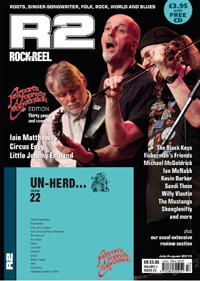
For the July/August issue of R2 (issue 22) Fairport’s Simon Nicol and I talked about church bells. In 2007 the parish church near to the Fairport Cropredy Convention festival in Cropredy, Oxfordshire – Saint Mary’s – gained two new bells bringing the tower’s total to eight. Hitherto, its tower had never been fully equipped, because bells cost a lot and, at the risk of stating the obvious, the village was and is small.
“Because the village has gained from the association with the festival over the previous thirty years,” Simon told me, “the two bells were made and they were named for two separate dedications. We were chosen as one of the recipients of this honour. There is a ‘Fairport Festival Bell’ – that’s what it has got written on it – hanging in the church tower now alongside its 400-year-old predecessors/brothers. It’s an amazing thought that that bell will be there, whether the festival survives or not. It will certainly be there as long as the building stands.”
As I was writing about the bells of Saint Mary’s, bellish associations and memories kept pouring in unbidden. Like the Sunday sounds of church bells from childhood and church bells from communities in India. And then, with thoughts of the blessed Saint Vivian (Stanshall) and bellish thoughts in mind, well, tie me to a tree and call me Brenda, Ring Forth! Westminster arrived. The narration of the stage, television and film actor Nicholas Smith (Royal Shakespeare Company, The Avengers, Dr Who, Are You Being Served?, Wallace & Gromit: The Curse of the Were-Rabbit amongst others) binds the story of the Bells of the Abbey and Palace of Westminster together. (For details of order, hundredweights and quarters for the bells, the booklet notes are to be recommended.)
Track 11 here gives Smith’s redolently voiced history of the Bells of St. Margaret’s, Westminster – sometimes known as the parish church of the House of Commons – before it leads into the ten bells being rung out. For me, the complexity of the way they interlock melodically and rhythmically over nine minutes is as eye-opening as when I first listened to Ravi Shankar and Alla Rakha. With thanks to Stephen Mitchell, bell-ringer of that parish. From Ring Forth! Westminster (Cantate Music CBC032, 2005)
www.cantatemusic.co.uk
For more about Simon Nicol and bells, go to: www.fairportconvention.com and/or www.rock-n-reel.co.uk
July 2010’s Special Bonus Donut
Bonus Track – David Lindley Y Wally Ingram
The cover proclaims “Studio Album! Overdubs! Special Guests!” Were a listener so disposed, well, Bonus Track, an alternative taksim-opening Turkish take on National Holiday (the album’s fourth track) might be supposed to have Jimmy Stewart on lead vocals. It is, however, but one of Lindley’s many voices. And, yes, Lindley did meet the Hero of Harvey. Would that nice Jimmy Stewart really have turned “aftershave” (National Holiday version) into “leather slave” (Bonus Track version)? Thrice nay! From David Lindley Y Wally Ingram’s Twango Bango II (no label, no number, no date)
www.davidlindley.com
17. 7. 2010 |
read more...
[by Ken Hunt, London] This time around on the desert island phonogram we have Amira Medunjanin and Merima Ključo, Dave Swarbrick, Bea Palya, Elizabeth Cotten, Leonard Cohen, Marlene Dietrich, Vishwa Mohan Bhatt & Matt Malley, Kraftwerk, Jerry Garcia, Leonard Cohen, and Illa Arun, Sapna Awasthi & Kunal Ganjawalla.
 Kradem Ti Se – Amira Medunjanin and Merima Ključo
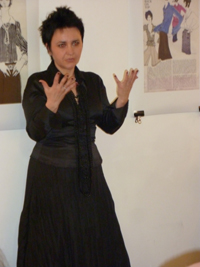
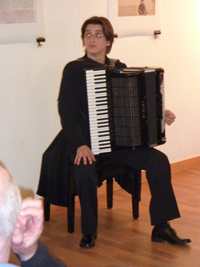
On 27 May 2010 Amira Medunjanin and Merima Ključo – respectively voice and piano accordion – played St. Etherburga’s Centre for Reconciliation & Peace on Bishopsgate in London. The night’s repertoire consisted of the 14 tracks that make up their album and after playing the album they had to revisit one for their encore. The duo represents something special in contemporary Bosnian music – a merging of the traditional, the contemporary and the future. This is the opening track of the duo’s inspirational debut album. It throbs with tension and the yearning of sevdah. From Zumra (Gramofon GCD1017, 2008 and World Village 450012, 2010)
For more information visit www.amira.com.ba and www.merimakljuco.com
The Fair Haired Child – Swarbrick
Dave Swarbrick has made some corking solo albums down the decades. The one from which this piece of music comes is amongst his very finest. Time may well show it to be his finest. It will take time to digest and savour it fully. Because if something like a film that is fixed and immutable – let’s ignore directors’ cuts and all that old malarkey – can reveal new things with repeated viewings, then how much more open to changing responses and insights is recorded music where imagination forces to run movies and patterns in our heads?
The Fair Haired Child, he credits it to Edward Bunting’s first, 1796 edition of The Ancient Music of Ireland, finds Dave Swarbrick as a member of a four-piece. On it he plays fiddle in the company of Beryl Marriott (piano), Kevin Dempsey (guitar) and Maartin Allcock (bass guitar). There is such great joy in the ensemble playing this Irish harp tune, a joie de vivre no less. One might speculate why. Probably it boils down to Dave’s appreciation of the gift of life, given his scrapes with near-death. Britain’s National Health Service – it has its faults but speak to anybody who survived the nation’s previous, private medicine regime for inklings of how it was before – and the transplant team at the Queen Elizabeth Hospital in Birmingham get thanked. Raison d’etre, ‘reason for being’ indeed. Rarely has a title worked so well. One of the albums of 2010 by anyone’s definition of British folk. From raison d’etre (SHIRTY 1, 2010)
Part-time Lover – Bea Palya
You never quite know with some book reviews, do you? You don’t know whether the reviewer has homed in on the salacious details to keep the casual reader titillated or the customer satisfied. From Robert Sandall’s review in Sunday Times‘ Culture section of Mark Ribowsky’s biography Signed, Sealed, and Delivered: The Soulful Journey of Stevie Wonder, it sounded as if a lot had gone down, supplying grounds for reappraising this song of Stevie Wonder’s.
Hitherto, Wonder’s song Part-time Lover sounded like an overlap with songwriters Dan Penn and Chips Moman’s Dark End of the Street. Palya’s version takes Wonder to uncharted Hungarian territory. From Én leszek a játékszered – I’ll be your plaything (Sony Music Entertainment 88697642232, 2010)
www.palyabea.hu/en/
Freight Train – Elizabeth Cotten
Long before the world knew about Elizabeth Cotten, thousands upon thousands of people knew Freight Train. The song is like one of those pebbles on the beach that are rounded with the rough edges smoothed away, much like traditional songs that have been sung and handed on. Only Libba Cotten had composed it. The first version of this song most people will have heard was probably one of the cover versions. For example, the Chas McDevitt Skiffle Group, featuring Nancy Whiskey, took it into the UK singles chart in 1957. Ramblin’ Jack Elliott, Peggy Seeger, Jerry Garcia & David Grisman are among the acts that covered Libba Cotten’s song.
Libba Cotten’s version, recorded by Mike Seeger is the one which I treat as the benchmark. Listening to her work again came about because of a commission to write about her Shake, Sugaree. Sometimes all it takes is a little gentle reminder. Freight Train was already a Donut before Chas McDevitt sang it during the Diz Disley Memorial Concert at the Half Moon in Putney in South London on 26 May 2010. From Freight Train and Other North Carolina Folk Songs and Tunes (Smithsonian Folkways SF CD 400009, 1989)
 Ain’t No Cure For Love – Leonard Cohen
Great song. Great arrangement. Excellent introduction, too. There is something about this song’s world-weary love of life. It’s a song to remind you of all the best people that set you on the path. Like Leonard Cohen says to Sharon Robinson, Charley Webb and Hattie Webb, Tell it, angels. From Live In London (Sony Music 88697405022, 2009)
Ich bin von Kopf bis Fuss auf Liebe eingestellt – Marlene Dietrich
Friedrich Hollaender’s song began life and notoriety in the 1930 film Der blaue Engel (‘The blue angel’ or ‘The drunken angel’ for lovers of wordplay) and it spawned many parodies. In English it became Falling In Love Again. Marlene Dietrich’s German-language interpretations (there were many) are the interpretation to which I boomerang. There is something about Dietrich’s sultry delivery that is sensuous rather than sexy. She really was the skeleton key to this song. There are several versions on many anthologies. From The Essential Marlene Dietrich (EMI CDP 7 96450 2, 1991)
Sleepless Nights – Vishwa Mohan Bhatt & Matt Malley
The title track of their album. Arguably its highlight. The combination of Matt Malley’s growling electric bass and the upper sonorities of Vishwa Mohan Bhatt’s Mohan vina – a modified, Indianised guitar – combine beautifully. And strangely the bass and keyboard sonorities arc over into Kraftwerk if you squidge your eyes really tight until you see shapes and colours. From V.M. Bhatt & Matt Malley’s Sleepless Nights (World Village 468097, 2009)
Autobahn – Kraftwerk
In 1974 Autobahn was a piece of music that distilled and defined something, as if for the first time. Autobahn captures the mood of travelling long-distance on West German motorways. The German-language lyrics are intentionally prosaic. There are lines about the grey of the road, white lines and green edges, switching on the radio and the loudspeakers intoning “We’re driving on the autobahn” like a loop. It captures the boredom of the motorway as kilometres pass beneath the tyres. It is the miscreant Teutonic equivalent of Jackson Browne’s Running On Empty without that song’s romance and the road lore of US highways.
Autobahn is one of the great transcontinental travelling songs. Even if you don’t speak German, you can just pick up on its “Wir fahr’n auf der Autobahn” (‘We’re driving on the motorway’). It lasts over 20 minutes in its ‘LP version’ while the keyboard melody line about 15 minutes in is the musical equivalent of spying something different in the topography on a boring motorway journey. Best experienced on a German Autobahn. From Autobahn (CDSTUMM 303, 2009)
www.kraftwerk.com
The Wheel – Jerry Garcia
The Wheel was one of the highlights of Jerry Garcia’s debut solo album in 1972 and its closing track. Garcia actually played all the instruments on the album, bar drums, for which he brought in the Grateful Dead’s drummer Bill Kreutzmann to do the honours. It starts itchy and jittery, like a continuation of Eep Hour, earlier in the running order. Then in comes Garcia’s pedal steel to calm things down.
How you interpret Robert Hunter’s lyrics is down to you. The possibility of karmic inevitability is one that has stood the test of time well. As the song progresses and moves forward, that pedal steel soothes. Its sing-song quality puts you, lulls you, the listener, into a place of security, no doubt just before the rug gets pulled out from under your feet and you get your karmic comeuppance. From Garcia (Rhino R2 78063-A, 2004)
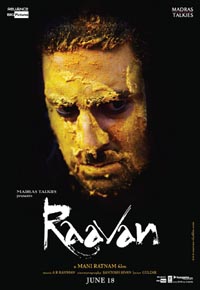 Kata Kata – Illa Arun, Sapna Awasthi and Kunal Ganjawalla
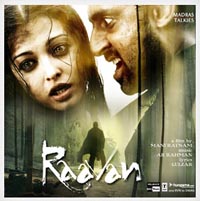
Like in the old days when the box-office success of a Hindi commercial film could be given an extra boost by the early release of its soundtrack LP, the A.R. Rahman-Gulzar score for Raavan was released in May 2010, a month ahead of the film’s official release date. The music sounds big with lashings of Rahman’s trademark melodic and rhythmic touches. It also reunites him with director Mani Ratnam, the man who launched his career with the 1992 Tamil film Roja.
Kata Kata opens with a nagaswaram fanfare and uses the South Indian shawm as a recurring effect. What sets Kata Kata apart is the way it plays with preconceptions of what lead vocalists ‘should’ sound like in blockbuster films. Not to be confused with the Tamil-language version of the film – Raavanan – with its score by Rahman-Vairamuthu. From Raavan (T-Series SFCD 1-1575, 2010)
Small print: Amira Medunjanin and Merima Ključo photographs are (c) Ken Hunt 2010
21. 6. 2010 |
read more...
[by Ken Hunt, London] Lucy Loes, the well-known Ostend dialect folksinger and the so-called ‘Queen of the Fisherman’s Song’ (‘de Koningin van het Visserslied’) died on 17 June 2010 in Bredene in the Belgian province of West Flanders at the age of 82. She was born on 24 January 1928 in Ostend (Oostende) on the Belgian coast where she grew up imbibing the local songs sung in the local dialect. The region had yet to become the hub of the tourism or a major Channel ferry port with fishing as a major local industry.
21. 6. 2010 |
read more...
« Later articles
Older articles »