Articles
 [by Ken Hunt, London] Vienna is a hothouse of regional musical idioms. And Trude Mally, who died on 4 June 2009, aged 81 in the Austrian capital, mastered two of the Vienna region’s three principal indigenous and typically Viennese folk forms. She sang Weanalieder (Wienerlieder in standard German, literally ‘Viennese Songs’ or songs sung in Viennese dialect) and Dudler, namely, the Viennese variant of yodelling. The third form, incidentally, is Schrammelmusik, an instrumental and vocal form named after the family that originated it.
She was born Gertrud Barbara Mally on 21 January 1928 in Neukettenhof – nowadays absorbed into Vienna’s southeastern suburban sprawl – and took to singing and playing the piano whilst still a child. She was something of a child prodigy and was performing on stage with her Dudlerin aunt Ady Rothmayer (1893-1975) – the word Dudlerin is the female form for a Dudler – by the age of ten.
During the Second World War Rothmayer was assigned to engagements and she took along her niece to sing a mixture of folksongs and Wienerlieder in an Austrian equivalent of Vera Lynn-style morale-boosting concerts for Axis troops in Norway, on the Russian Front or in field hospitals. After the war came to a close, Mally was singing for radio, on the musical programmes at cinemas – this was the era in which live music was a normal part of a cinema presentation along with (pre-television-in-every-room) newsreels – and touring with the likes of Hans Moser. She even appeared as a featured vocalist in films. By 1951 her life had aligned with the Matauschek Family – a family associated with Wienerlieder – whose son Fritz (1917-1977) she was married to between 1953 and 1960.
Mally’s career continued onwards and upwards, notably with the musician Karl Nagl (1922-1994) with whom she turned the so-called ‘Nagl-Stüberl’ into a major centre of the Viennese vernacular music arts. She went on to broadcast and record extensively. For many her fleeting, almost ghost appearance on Chris Strachwitz and Johnny Parth’s Folk Music of Austria (Arhoolie CD 454/455, 2009) singing Unterm Lindenbaum (‘Under the Linden Tree’) might be their introduction to her art. I hab di gar so gern (‘I love you so much’) Fischrecords 013, 2008) arguably serves her the best. Partially recorded at her 80th birthday bash on 21 January 2008, it is fleshed out with archival live recordings made between 1948 and 2003
Christina Zurbrügg’s out-of-print book Orvuse on Oanwe – Dudlerinnen in Wien. Die Lebensgeschichten von Poldi Debeljak, Luise Wagner und Trude Mally sowie der singenden Wirtin Anny Demuth (1996) and the documentary film spin-off, the Christina Zurbrügg- und Michael Hudecek’s film (and DVD) «Orvuse On Oanwe» Die letzten Dudlerinnen Wiens (1998) tell the tale.
More information in German at www.fischrecords.at
25. 1. 2010 |
read more...
 The “greatest sarod maker” – sarod maestro Amjad Ali Khan
[by Ken Hunt, London] The Indian instrument maker and repairer Hemendra Chandra Sen died at his south Kolkata (Calcutta) home on 2 January 2009 at the age of 87. From apprentice to master craftsman, over the course of more than sixty years he made tanpuras, sitars and sarods for many of the most illustrious Hindustani instrumentalists of the age. He also bridged the generations. Although a sitar player himself, he became especially associated with the sarod, the short-necked, fretted lute.
His customers included the sitar and surbahar player Annapurna Devi, her brother, the sarodist Ali Akbar Khan and their cousin, the sarodist Bahadur Khan, the sitarist Ravi Shankar, the sarodist player Rajeev Taranath, the sarodist Amjad Ali Khan and Amjad Ali Khan’s sarod-playing sons Amaan Ali Bangash and Ayaan Ali Bangash. He was working at his trade until hours before his death, working into the night on an instrument before suffering a fatal cardiac arrest the next morning.
Hemendra Chandra Sen had been based in Calcutta since the 1940s and it was natural that the customers for his instruments included the cream of the generation of fiery young Bengali instrumentalists then making names for themselves. In time, his shop cum workshop, Hemen & Co in the Deshapriya Park area of south Kolkata became a place of nigh-pilgrimage for musicians bringing in instruments for repair and servicing or arriving to commission new beauties that Sen made to measure to suit the client’s build and tastes.
The family connection with Amjad Ali Khan was especially important. Just as the US blues musician BB King named his guitar Lucille, the sarodist has long had the habit for naming his instruments. He named his favourite, completed by Sen in 1976, Ganga (Ganges). Others included Saaz and Brahmaputra. All three are pictured in Amaan Ali Bangash and Ayaan Ali Bangash’s biography of their father Amjad Ali Khan (Roli Books, 2002). In honour of his father, the sarod pioneer Hafiz Ali Khan, Amjad Ali Khan inaugurated the Hafiz Ali Khan Award in 1985. The Indian Prime Minister Atal Bihari Vajpayee presented the award to Sen in Gwalior in 2003.
Hemendra Chandra Sen is survived by two sons and two daughters. His sons Tapan and Ratan are following the family trade.
12. 1. 2010 |
read more...
[by Ken Hunt, London] Who said most months’ Giant Donut Discs reflect deadlines and commissions with a pinch of music for pleasure? This month’s reflects twinges of pain as well. A little pain goes a long way. This time around, we feast on Davy Graham, Wenzel, Llio Rhydderch and (Fernhill’s) Tomas Williams, Achim Reichel, Sonu Nigham & Madhushree, Billie Holiday, The Fisher Family, Los Lobos, Shirley Collins and Big Brother & The Holding Company.
She Moved Thru’ The Bizarre/Blue Raga – Davy Graham
 Davey Graham died on 15 December 2008, days before I was due to journey to India. That was why I missed his funeral. He would have approved of that – an excursion trip to India trumping a funeral trip. In the days before travelling I wrote his obituary for The Scotsman. Then whilst travelling in India I wrote his German-language obituary for Folker! (since then the magazine has dropped the exclamation mark) between Agra, Jaipur and Jalandhar. This is the way I wish to remember him: as a friend and a musician who at his best and at his various peaks made the rafters ring. He could be infuriating and could be infuriatingly good too. As here. When he recorded this he was Davy, by the way. From the Dave Suff-compiled anthology A Scholar and a Gentleman (Decca 532 263-1, 2009)
Ken Hunt’s obituary in The Scotsman dated 18 December 2008: http://news.scotsman.com/obituaries/Davey-Graham-Guitarist-composer-multiinstrumentalist.4803436.jp
Arschgeweih – Wenzel
It’s saucy. He’s naughty. And Wenzel is a Liedermacher‘s Liedermacher, a songwriter’s songwriter. He twists like an eel. He writes eely songs that sit around like time-bombs a-ticking away which you can never guess when they might ‘fully’ make sense. They come drenched in allusion and allegory. Arschgeweih! As a title, in the English ‘Arse Antlers’ works even better. There are no subtitles but, admit it, it is a hoot of a title to hook the unwary.
It opens with the potty mouth/barber’s invitation “Das Schamhaar kurz rasiert.” or “Public hair shorn short.” and from that opening gambit it just gets better and better because he’s not bothered. Plus who could resist offerings from a record company whose name translates both as “Sailor blue” or “Drunk as a sailor? If this is what a boy from the German interior can do, imagine what he could have done if he had grown up on Hamburg’s Reeperbahn or in Rostock! From König von Honolulu (Matrosenblau //08, 2009)
Bedd f’ anwylyd (My Lover’s Gone) – Llio Rhydderch and Tomas Williams
It’s not a perfect take but the combination of Rhydderch’s triple-strung harp and Williams’ trumpet captures another dimension of Welsh vernacular music. It’s an apple with blemishes but, that said, many of the tastiest apples will never get on a supermarket shelf. It also says oodles about what’s happening in Welsh arts nowadays. From the Various artists’ Blodeugerdd – Songs of the Flowers (Smithsonian Folkways SFW CD 40552, 2009)
Die Gedanken sind frei – Achim Reichel
Achim Reichel is one of the defining musicians of Hamburg’s music scene. A contemporary of whatever the Beatles were called in their Reeperbahn days, he survived Hamburg’s little-white-pills-and-Pils beat scene era and went on to create a body of work that bottled Hamburg’s very essence with shanties and folksongs (Volxlieder is a corruption of Volkslieder or folksongs).
One of the most enjoyable conversations – as opposed to interview – I ever had with a musician during the Noughties was with Achim Reichel. It lapsed into Hamburg dialect and Platt. This old song about thoughts being free, as in cannot be controlled, is one of most haunting songs of the German condition. Ougenweide’s Frank Wulff lays his mojo hand on this studio recording like a Hamburg whore to healing superb effect. From Volxlieder (Tangram 69532, 2006)
Inn lamhon ke damaan mein – Sonu Nigham & Madhushree
 Watching Jodhaa Akbar in a freezing apartment in Jalandhar in the depths of winter in January 2009 summoned unbidden the opening words of T.S. Eliot’s poem The Journey of the Magi: “A cold coming we had of it/Just the worst time of the year.” Elliot’s lines carry echoes of an Anglican sermon preached on Christmas Day 1622 and unless you have experienced a Punjabi winter they may sound out-of-place. The snakes and the frogs are tucked away hibernating even though, no doubt, the daytime winter temperatures were far milder than England in the early 1600s. But winter in Punjab is a different sort of cold to the ones westerners are used to.
Even before the heating finally kicked in and before the film’s images took hold or Hrithik Roshan (Akbar) and Aishwarya Rai (Jodha) wove their cinematic magic, A.R. Rahman’s OST was already on the way to dispelling the cold. It’s difficult to call an A.R. Rahman soundtrack underrated nowadays. Jodhaa Akbar deserves to be better known, not least of all – mirroring Rahman’s life – it blends Muslim and Hindu elements so cleverly and with such integrity. The soundtrack from which this song comes is masterly, a major piece of quality work. Javed Akhtar is the lyricist. The song itself is a typical Rahman composition in the sense that it could only come from him or one of his copyists – copycats if you wish. If anyone wants to hear what Bollywood was like in the second half of the first decade of the Twenty-first Century C.E., listen to Sonu Nigham & Madhushree. And be prepared for mood, tempo and rhythmic shifts, anchored in a marvellous melody.
Furthermore, the CD itself is a superlative piece of packaging, of the sort explains why the artefact can add value to the ‘product’. (Like that of Rab ne bana di jodi (YRM-CD 90050, 2008) since you ask.) From the soundtrack to Jodhaa Akbar (UTV 88697 23373 2, 2007)
Gloomy Sunday – Billie Holiday
It’s not the best version of the Hungarian suicide song but it was the one that introduced me to the masterpiece. Teddy Wilson & His Orchestra accompany. It was recorded in 1941 and finds its new lend-lease life here as part of Bob Dylan’s radio show entitled President’s Day (no. 68). From Theme Time Radio Hour – Season 2 (Ace CDCH2 1225, 2009)
Joy of my Heart – The Fisher Family
 This track was recorded by Bill Leader in 1965. There was no room in the house so Joe Boyd slept in the car. It’s a wonderful affirmation of life. Norman Buchan’s notes said, “This Gaelic song is full of praise for the beauty of the Western Isles, and many have been translated into English – not always successfully – by Marjorie Kennedy-Fraser and others. This one reverses the process. It was written in English by Hugh S. Roberton to the Gaelic tune Leannon Mo Ghaoil. It has been translated into Gaelic by John Bannerman.”
The Fisher Family on this recording are Archie, Cindy, Joyce, Priscilla (later Cilla) and Ray. For its joy of life. From The Fisher Family (Topic 12T137, 1966, reissued in Japan on the British Folk Paper Sleeve Collection VSCD-834, 2002)
Kiko And The Lavender Moon – Los Lobos
 The performance is here because it’s magical and moreishly sinister.
“He plays and plays/Still playing till he/Goes off to sleep.”
The source’s artwork is so bland and puny that it’s going to be shamed but mercifully not named here. So there!
A Denying: The Blacksmith – Shirley Collins
Folk poetry is a rare thing and this is rare by any standard. A version appeared on Shirley Collins’ EP Heroes In Love. That was how I first heard it. Having heard it, I went ferreting out England’s folk heritage that no manner of Cecil Sharp-inspired singalongs or country dancing in school had ever prepared me for. Hearing that EP helped make it make sense. Hearing Anne Briggs’ The Hazards of Love reinforced the wonder of a tradition I had never suspected existed or indeed had ever existed. Those two EPs were the first two folk record purchases I ever purchased. That is about as high as it gets in my opinion. I got more than lucky with those two sweet little mysteries of life.
This version is the second variant Shirley Collins recorded, though. It is the one from her Anthems in Eden song cycle that begins:
“Oh, a blacksmith courted me, I loved him dearly.
He played upon his pipes both neat and trimly,
With his hammer in his hand he strikes so steady
He makes the sparks to fly all round the smithy.”
A Blacksmith Courted Me is a sublime tale of love and desertion – the way pain can be sublime. And Shirley Collins’ performance on her and her sister Dolly’s version on their magnum opus captured an additional facet of this superlative piece of folk poetry. Shirley’s voice doesn’t rant or rail: it captures the bewilderment of abandonment. Folk poetry in its highest state. From Anthems in Eden (EMI Harvest SHVL 754, 1969)
I Need A Man To Love – Big Brother & The Holding Company
 A choice brought on by guitarist James Gurley’s death at the age of 69, a couple of days before his seventieth birthday. It brought back memories of Big Brother & The Holding Company and the birthing pangs of their Cheap Thrills album, on which this song was originally released.
Agreed, the smart money would be on the Cheap Thrills version. This one’s slightly shorter in length yet still not what you’d call succinct. The song is a new introduction to their repertoire in April 1968 and is still being played in.
The group shot in the cover artwork is by Baron Wolman and was taken at the Palace of Fine Arts in San Francisco in 1969. Left to right: up front, Janis Joplin, Dave Getz, James Gurley, Peter Albin and Sam Andrew. From Live At Winterland ’68 (Columbia Legacy CK 64869, 1998)
Valerie J. Nelson’s obituary of James Gurley from the Los Angeles Times of 24 December 2009 is at http://www.latimes.com/news/obituaries/la-me-james-gurley24-2009dec24,0,1577562.story
Baron Wolman’s website http://www.fotobaron.com/
Big Brother & The Holding Company’s website: http://www.bbhc.com/
2. 1. 2010 |
read more...
 [by Ken Hunt, London] The doom and gloom of recession and depression, inflation and deflation affected people’s lives enormously during 2009. Some say it put dampeners on life. Musically though, on balance it was a year of hope, despite losses.
New releases
Aruna Sairam / Divine Inspiration / World Village
Damien Barber & Mike Wilson / Under The Influence / Demon Barber Sounds
Szilvia Bognár / Semmicske énekek/Ditties / Gryllus
Kaushiki Chakrabarty / Live at Saptak Festival / Sense World Music
Leonard Cohen / Live in London / Columbia/Sony Music
Gwenan Gibbard / Sidan Glas / Sain
Robb Johnson / The Ghost of Love / Irregular
La Musique D’Issa Sow / Doumale / Home Records
Amira Medunjanin and Merima Ključo / Zumra / Gramofon/ World Village
Cass Meurig and Nial Cain / Deuawd / fflach:tradd
Bea Palya / Egyszálének/Justonevoice / Sony Music (Hungary)
Madeleine Peyroux / Bare Bones / Decca
Martin Simpson / True Stories / Topic
Matt Turner, Peg & Bill Carrothers / The Voices That Are Gone / Illusions
Wenzel / König von Honolulu / Matrosenblau
Wihan Quartet / Beethoven Late String Quartets / Nimbus Alliance
 Historic releases, reissues and anthologies
Alistair Anderson / Steel Skies / Topic
Jesse Fuller / Move On Down The Line / Fled’gling
Davy Graham / A Scholar and a Gentleman / Decca
Grateful Dead / Road Trips Vol. 2 – Carousel 2.14.68 / Grateful Dead Productions
Louis Killen / Ballads and Broadsides / Topic
Various artists / 50 Years of Folk Music in Newcastle / Ceilidh Connections
Various artists / Blodeugerdd – Song of the Flowers / Smithsonian Folkways
Various artists / Onder De Groene Linde / Music & Words
Various artists / Theme Time Radio Hour, Season 2 / Ace
Various artists / Three Score & Ten / Topic
 Events of 2009
Aruna Sairam / Darbar International South Asian Music Festival 2009 / Purcell Room, London / 3 April 2009
F. Wasifuddin Dagar / Nehru Centre, London / 8 April 2009
Brass Monkey / The Goose Is Out! DHFC, East Dulwich, London / 15 May 2009
Iva Bittová / Purcell Room, London / 10 June 2009
Leonard Cohen / Mercedes-Benz World, Weybridge, Surrey / 11 July 2009
Richard Thompson / Fairport’s Cropredy Convention, Oxfordshire, England / 14 August 2009
Ridina Ahmedová / Palác Akropolis, Prague / 9 September 2009
 Martin Simpson & Big Band / Queen Elizabeth Hall, London / 17 September 2009
June Tabor / Queen Elizabeth Hall, London / 18 September 2009
Vishwa Mohan Bhatt & Salil Mohan Bhatt / Great Hall, Kensington Town Hall, London / 29 November 2009
Bahauddin Dagar / Lecture Room, Victoria & Albert Museum, London / 18 December 2009
Images: Smile (possibly a Banksy) (Ken Hunt), Three Score & Ten (courtesy of Topic Records) and Aruna Sairam and Bahauddin Dagar (Santosh Sidhu).
2. 1. 2010 |
read more...
 [by Ken Hunt, London] Most months’ choices reflect work. This is no exception. As ever, there is no particular order. These selections lodged in the cranium for various reasons. In the main, they reflect events and associations. Inara George came from nowhere. Matt Turner, Peg Carrothers & Bill Carrothers came from reviewing and talking to Patrick Humphries about a BBC radio programme. Mhuri yekwa Muchena and Louis Killen came from continually looking to where we come from as opposed to not looking back – and Griselda Sanderson from cross-connecting. Tom Constanten and Vishwa Mohan Bhatt came from concerts. Robb Johnson came from winter tales of the Hounslow expatriate kind. But they all join together here.
Thorneymoor Woods – Louis Killen
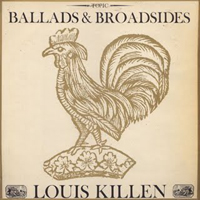 Louis Killen recorded this poaching song with a twist during his sessions with the premier recordist of Britain’s Folk Revival, Bill Leader from 1964 into 1965. The song Thorneymoor Woods was one of the nine tracks that appeared on Ballads and Broadsides (Topic 12T126, 1965), one of the era’s most important examinations of English or Anglo-Scottish folksong. The song was, to some extent, overshadowed by Killen’s ‘big song’ of the period, The Flying Cloud. Mind you, most of his repertoire was overshadowed by that tale of buccaneering and slaving and final come-uppance.
Thorneymoor Woods is lighter. Frankly, beside The Flying Cloud nearly anything short of an incest ballad or a bit of infanticide would have qualified as light. Consequently, it played an important role in Killen’s live repertoire. It provided balance and light and shade, a chance for the audience to recover from being racked and ruined.
 Thorneymoor Woods is a variant of The Nottinghamshire Poacher. It takes place far from where Louis Killen grew up – Tyneside – but in the same county in which Anne Briggs was raised. She sang in some ways the better-known version of the song on her LP Anne Briggs Topic (Topic 12T207, 1971). (That, incidentally was the album on which her Blackwater Side appears – the yarn out of the Minotaur’s den that leads to Led Zeppelin song of a similar name.)
Better-known version? Well, Killen’s Ballads and Broadsides went out of print and for decades was unavailable with copies changing hands for goodly sums on the second-hand market. The album’s reissue in 2009 reinforced how powerful an interpreter of traditional song he was. This song and his performance indicate why. From Ballads and Broadsides (Topic Records TSCD 126, 1965/2009)
Basant – Gangubai Hangal
“Men will be ustads and pandits. Bais will be bais.” – Gangubai Hangal, on ustads being Muslim masters/teachers, pandits Hindu masters/teachers and bais always just females until attitudes change.
Gottfried Düren made this recording in May 1991 at the Sangeet Natak Akademi in New Delhi. It may seem impertinent to say this but I shall anyway. Any singer or admirer of Hindustani classical song could do far, far worse than listen to this album of hers every so often in order to recalibrate the senses and sensitivities. She was one of a kind and her treatment of Basant, the seasonal raga that translates as ‘Spring’, is gorgeous. Top up your reality levels, springtime or otherwise.
The loss of Gangubai Hangal in July 2009 was a major blow. She was an old-school singer for whom superlatives and descriptions frequently failed and will always fail. (‘Always’ is a big word but justified in her case.) She represented a generational handing-over of one specific vocal tradition amid many Hindustani vocal traditions to another generation. Her interpretations took a simpler path, not that her interpretations were simple. She told her stories without prettifying them yet added ornamentations exquisite enough to curl the toes.
Down to earth, she asks in the booklet notes to this recording that insightful question: “Where is the need for new ragas when we can’t master even half the number of our old ragas?” From The Voice of Tradition – Vocal Music from North India (Haus der Kulturen der Welt/Wergo SM 1501-2, 1991)
Reginald Massey’s obituary ‘Gangubai Hangal – Acclaimed Hindustani classical vocalist beset by caste prejudice’ from the Guardian posted on Sunday 23 August 2009 is at
http://www.guardian.co.uk/music/2009/aug/23/gangubai-hangal-obituary
Ken Hunt’s obituary ‘Gangubai Hangal: Singer who rose above her low caste status to become a grand dame of the Kirana school’ in the Independent of 15 October 2009 is at:
http://www.independent.co.uk/news/obituaries/gangubai-hangal-singer-who-rose-above-her-low-caste-status-to-become-a-grand-dame-of-the-kirana-school-1802616.html
Oh! Susanna – Matt Turner
Matt Turner (cello), Peg Carrothers (voice) and Bill Carrothers (piano, voice) have approached the songs of Stephen Foster (1826-1861) in a wholly unusual fashion. Or in a series of wholly unusual fashions, to be more accurate, because the trio’s treatments – various and several – are so different.
It’s hard to impossible to choose one track from this work but Oh! Susanna brings much of what they do into sharp focus. The project is a limited-edition (2000-copy) release. Get it while you can from: Illusions, 4 Passage d’Enfer, 75014 Paris, France. From Matt Turner’s The Voices That Are Gone (Illusions, ILL 313003, 2008)
www.illusionsmusic.fr
The Recruited Collier – Anne Briggs
Because Anne Briggs continues to inspire year in, year out after her supposed ‘vanishing’. From Anne Briggs – A Collection (Topic TSCD 504, 1999)
Fairytales In Feltham – Robb Johnson & The Irregulars
Years down the line, years after coupling a bunch of songs together and adding new ones, Robb Johnson has knitted together a winter suite of songs with Christmas as the denouement. This opens the debacle. It is a soap opera/social commentary set in the hallowed London Borough of Hounslow. Hard to choose one from the suite, so here’s Johnson’s opening gambit. From The Ghost of Love – A Christmas Song Cycle (Irregular Records IRR076, 2009)
http://www.irregularrecords.co.uk
Marenje – Mhuri yekwa Muchena
Raindrops from Heaven delivered by two mbiras. The album is credited to Traditional Mbira Musicians and the Kevin Volans Ensemble. This music was in my mind when I was writing the notes to the Kronos Quartet’s Pieces of Africa album, released in 1992. And this month – for reasons unknown – the overwhelming urge came to listen to World Network’s Zimbabwe – Mbira volume and the Mhuri yekwa Muchena (Muchena Family) recordings. And this track got stuck on repeat. It is very good. From Zimbabwe – Mbira (World Network 52.990, 1991)
The Magpies And The Wolf – Griselda Sanderson
This track is a mood piece for nyckelharpa, Hammond organ and percussion that reminds me of Pieces of Africa. A wonderful introduction from John Crosby. From Harpaphonics (Waulk WAULK3. 2008)
www.grissanderson.com
http://twitter.com/johncrosby1950
‘Hichki’ – Vishwa Mohan Bhatt and Musicians of Rajasthan
At Vishwa Mohan Bhatt’s concert with his son Salil and Sanju Sahai on tabla on Sunday 29 November 2009 at Kensington Town Hall – Note Asia’s inaugural concert – he played this Rajasthani folksong about hiccoughs (‘hichki’) that summons images of similar folk superstitions about, say, sneezing, as an instrumental.
Desert Slide was one of the finest albums I have ever been party to. Hichki hinges on a Rajasthani folk belief or superstition. When a person thinks of somebody from whom they are separated – the one he or she is missing – they are said to get the hiccups. My grandmother spoke of sneezes and surprises. The narrator here has got the hiccups. In Rajasthan the song is set in what is commonly called Bhairavi but it is truer to Kirvani from the South Indian Hindu heartland.
It’s about sadness or melancholy, pain and pangs of separation. An emotional cocktail. From Desert Slide (Sense World Music 085, 2006)
http://www.noteasia.org/
http://www.senseworldmusic.com
Mountains of the Moon/Dark Star – Tom Constanten
 Likely as not, Tom Constanten’s name produces a kneejerk reaction through his connection with the Grateful Dead. Paradoxically, he has played more gigs with Jefferson Starship’s various packages than his gig count with the Dead. This recording from Karlsruhe in Baden-Württemberg in southwest Germany reinforces how exceptional he is at tickling the ivories.
Their late 2009 European tour brought Tom Constanten, Gary Duncan (formerly Quicksilver Messenger Service), Dave Freiberg (Quicksilver Messenger Service and Jefferson Starship) and Paul Kantner (Jefferson Airplane and Jefferson Starship) to Britain. Whilst in London, Constanten suggested a preference for the Hamburg concert’s performances from the 2005 tour over the Karlsruhe concert. No matter, Karlsruhe or Hamburg this time as opposed to Hamburg over Karlsruhe every other time.
Mountains of the Moon/Dark Star segues into People Are Strange – that old-time toe-tapper from the Doors. Importantly, as this recording shows, he’s still improvising, still keeping himself and his audiences on their toes. From Mick’s Picks Volume Three – Substage, Karlsruhe 06/16/05 Bear Records bearvp103CD, 2008)
Photo: Gary Duncan and Tom Constanten, fresh graffiti at the 100 Club, London, November 2009 (c) 2009 Ken Hunt/Swing 51 Archives
http://www.tomconstanten.com/
Trouble – Inara George
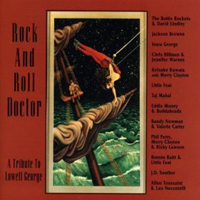 “Well, I’ll write a letter and I’ll send it away/And put all the trouble in it you had today.” Lowell George’s daughter, Inara George interprets this Little Feat jewel here. It’s heartfelt; it’s got Van Dyke Parks producing; and it summons the stunned memory of how I felt when I learned about her father’s death from the cover of Melody Maker outside Sutton station in July 1979. Broke, I sloped off nevertheless to the Robin Hood to mull over Lowell George’s life and music, to mourn and nurse a solitary pint of Young’s Special. His death became a short-lived model for small celebrations of people’s lives. Later, I went to the Bishop Out Of Residence in Kingston to reflect on the lives of Jerry Garcia and Peter Cook. Still later, I mourned the demise of Young’s elsewhere in a Fuller’s pub.
Decades of work as an obituarist have largely robbed me of that immediate time for grieving. Inara George’s recording of Trouble connects me and wafts me back. “Well I’ll write a letter and I’ll send it away/And put all the trouble in it you had today.” Sometimes I can’t help but change the pronouns in my head. From Rock And Roll Doctor – A Tribute to Lowell George (CMC International 06076 86242-2, 1997)
5. 12. 2009 |
read more...
 [by Ken Hunt, London] In 1959 the impresario Albert Grossman told the journalist Robert Shelton, “The American public is like Sleeping Beauty, waiting to be kissed awake by the prince of folk music.” Who he meant if not himself is moot. That year the black folk-blues artist Josh White terminated his management contract with Grossman. Bob Dylan, whom he managed from 1962, was still stuck in Minnesota with the Minneapolis blues, yet Grossman was set on changing things in the folk business. A few years on, Grossman had his fingers stuck in many pies, folk, blues and beyond.
Months before contractually adding Peter, Paul and Mary – Peter Yarrow, Noel ‘Stook’ Stookey and Mary Travis – to his roster in January 1962, he predicted they were going to be “one of the top commercial groups”. Grossman was right.
Mary Allin Travers, who was born in Louisville, Kentucky on 9 November 1936. Her parents were politically progressive journalists. Shortly after her birth, they moved to Albany, NY. With war impending, her father joined the US merchant marine (merchant navy) and mother and daughter moved to the Lower Manhattan district of Greenwich Village. As a girl, she attended the Sunday children’s concerts at the Village Vanguard and saw Josh White and musician and social activist Harry Belafonte.
As a teenager she gravitated to nearby Washington Square where folkniks and undesirable bohemian and racial types mingled by the fountain to sing and fraternise. Her voice carried her into the Song Swappers and singing on several 1955 Folkways releases – although the fine detail of personnel credits was absent – and twice performing at Carnegie Hall. In April 1958, as Mary Allin Travers, she appeared in the folk-singing cast of the short-lived Broadway musical The Next President.
Mary Travers was one of the most physically striking figures launched onto the US – and international – folk scene during the 1960s. Now, without resorting to cliché and heedful of beauty, while Brigitte Bardot had cornered the international male-sighing market with her Gallic blonde looks during the 1950s, Mary Travers had a Nordic blondeness that was the opposite of Joan Baez’s jet-black hair – though similarly/no less arresting.
The trio’s début entitled Peter, Paul and Mary (1962) topped the US Billboard pop album chart from 20 October to 30 November 1962 generating two US Top 40 hits with Lemon Tree and If I Had a Hammer (The Hammer Song). The LP Moving (1963) included the Top 5 hit Puff (The Magic Dragon), a pension plan for life for its writers, Leonard Lipton and Yarrow. By July 1963 Peter, Paul and Mary’s latch-lifting, smooth-harmony cover of Dylan’s Blowin’ In The Wind had sold over a million copies and with the Byrds introduced his writing to a domestic and, importantly, an international audience. It topped the Billboard Easy Listening chart and reached no. 2 in the Billboard all-genre Hot 100. It and Don’t Think Twice, It’s All Right – another Top 5 hit – spurred that year’s LP In the Wind to the top spot and helped that third album win a Grammy in 1964. I Dig Rock and Roll Music and John Denver’s Leaving On A Jet Plane from one of their finest albums, Album 1700 (1967), were Top 10 hits in 1967 and 1969 respectively. They were a folk phenomenon.
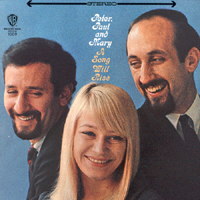 PP&M’s performances entered the Anglophone popular consciousness and became karaoke staples to this day. In Britain Blowin’ In The Wind reached the Top 20 in 1963, Tell It On The Mountain and The Times They Are A-Changin’ the Top 50 in 1964 – earning them an appearance on the UK’s foremost TV programme of the day, Ready, Steady, Go! (way cooler than the BBC’s Top of the Pops) – and Jet Plane the UK Top 5 in 1970. Paradoxically, their best-known song Puff (The Magic Dragon) never did chart in Britain, yet it remains a continual source of parody and cartoon. Marlene Dietrich ducked Mary Travers’ high-soaring notes on her languid Paff, der Zauberdrachen – rechristened because in German Puff means brothel – but the song remains the same.
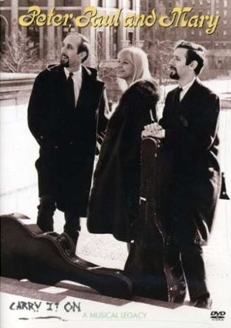 “I never wanted to be a professional singer,” Travers told Barry Alfonso in an interview for PP&M’s boxed set Carry It On (2003). “To me, folk music was more a social thing you did. It was great fun to sing, but it was not something I wanted to do for a living.” In mid 1960 Grossman signed Yarrow initially with a view to him performing as a soloist before convincing Yarrow that in the right group he would have immediate success. Visiting Izzy Young’s Folklore Center early in 1961, Grossman and Yarrow clocked Travis’ picture and, even before hearing her astonishing voice, decided she was right.
At this point Travis was on the way to divorcing her first husband – a writer whose name has been struck from the historical record – with a tiny daughter and living on Greenwich Village’s MacDougal Street. When Yarrow finally met her at her apartment things did not click personally or musically. Early in 1961 Grossman had tried to interest the stand-up comedian and musician Noel ‘Stook’ Stookey in joining this vision of a group he was attempting to put together – ‘manufacture’ would not be too strong a word. Stookey turned the idea down flat, only to have it reactivated about three months later when Travis rang to ask if she could bring somebody over to sing. Harmonizing on Mary Had A Little Lamb they discovered a vocal chemistry and that was how the trio’s ‘Paul’ came to complete the line-up.
After a few months’ rehearsals, they did a one-off public appearance at Folk City, then an extended engagement at the Bitter End club. Gambling, Grossman brokered a no-advance contract with Warner Bros. Records in January 1962 and by March 1962 their album was in the shops. Reviewing that eponymous début in the UK monthly magazine Gramophone, Charles Fox called them “a very well-drilled group” “sounding closer to the conventional close-harmony trio than to a folk ensemble. [T]he group must be praised for not spoiling the songs with gimmicks or jokes – as, for instance, the Kingston Trio are inclined to do.” Peter, Paul & Mary’s In Concert (1964) redressed any such omission by including Stookey’s stand-up routine, PaulTalk.
 That “run-of-the-mill LP” sold over two million copies and became their calling-card. In 1963 they sang for JFK’s inauguration anniversary and at the Lincoln Memorial prior to Martin Luther King giving his I Have A Dream speech. (“We knew we were listening to history,” she said later. The trio toured incessantly, championed Dylan’s work, played civil rights bashes and anti-war and pro-peace benefits, received bomb threats and abusive letters. Nevertheless, gradually rifts appeared, professionally and personally, leading to the decision to split in October 1970.
Stookey had become a born-again Christian in 1967 and, to the other two members’ annoyance, had taken to preachifying his glad tidings from the stage. Musically, Yarrow was into “music as a vehicle for stopping the [Vietnam] war” and in March 1970 pleaded guilty to “taking immoral and indecent liberties” with a 14-year-old girl. “Terrible for the image,” Travers said archly in a 1978 interview. The trio went its own ways.
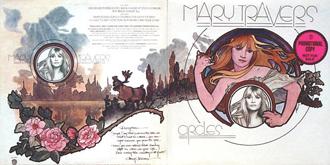
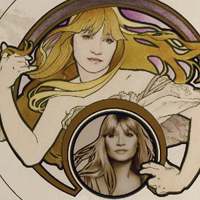
Between 1970 and 1978 – when PP&M reformed – Mary Travers made five solo albums, most notably the first Mary (1971) and Circles (1974), the latter with a post-Alfons Mucha cover. After 1978 when PP&M reunited, she sang with them until 2006 when ill-health stopped her performing.
Travers’ marriages to “a writer”, the photographer Barry Feinstein and next National Lampoon and Spy publisher Gerald Taylor ended in divorce. “They weren’t mistakes, but attempted relationships,” she drolly admitted. Her daughters Erika and Alicia are from her first two marriages. In 1991 she married Ethan Robbins. She died in Danbury, Connecticut on 16 September 2009.
Paul Vitello’s obituary of Barry Feinstein in The New York Timesof 21 October 2011 is at: http://www.nytimes.com/2011/10/21/arts/music/barry-feinstein-photographer-of-defining-rock-portraits-dies-at-80.html?ref=obituaries
3. 12. 2009 |
read more...
[by Ken Hunt, London] On 6 October 2009 Punjab’s Chief Minister Parkash Singh Badal announced that the State Government would pay for the medical expenses of the Punjabi poet, lyricist, singer and man of letters Inderjit Singh Hassanpuri. It is a feature of the Indian state’s policy of recognising people who have made outstanding contributions towards the promotion of Punjabi culture. In Hassanpuri’s case, it was for his contributions to language and literature in particular. Two days later, on 8 October 2009, he died in the Ludhiana hospital to which he had been admitted.
2. 11. 2009 |
read more...
“When a society is afraid of its poets, it is afraid of itself. A society afraid of itself stands as another definition of hell.” – Lenore Kandel
 [by Ken Hunt, London] The Beat poet and counter-culture activist Lenore Kandel died on 18 October 2009 aged 77 in her adopted home town of San Francisco. There is a lazy default setting to think of the Beat movement as being primarily a male preserve. Yet women were also actively involved not only as muses but also as writers and activists. Kandel was doubly important in that regard because she was part of California’s Beat movement and its hippie movement.
She was born in New York City on 14 January 1932; she was taken as a babe-in-arms to California where her writer father busied himself writing fiction and Hollywood screenplays. (Amongst others, Aben Kandel was responsible for the 1957 horror I Was A Teen-Age Werewolf – and therefore was possibly indirectly responsible for The Cramps’ I Was A Teen-Age Werewolf as well.) With a handful of slim books of poetry to her credit, Lenore Kandel went north to San Francisco to visit in 1960 and never quite left – although she did waver between San Francisco and Hawaii at certain points.
In San Francisco she fell in with the poetry scene centred in the North Beach district of the city, meeting the likes of Gary Snyder and Kerouac – who put her into his 1962 novel Big Sur under the alias Romana Swartz. There he described her as “a big Rumanian monster beauty of some kind I mean with big purple eyes and very tall and big (but Mae West big)” before going on, clearly captivated by her intelligence and urbanity, to describe her non-physical attributes.
Her physical attributes and mind brought her lovers and into contact with the poetry demi-monde of San Francisco. Her unique selling point was the mysticism and unabashed erotic nature of her poetry. Reading her poetry now, its likelihood to shock is plain. Or arouse. Yet presciently she also wove in elements of South Asian and Asian mysticism and belief systems.
When her limited-edition, four-poem, eight-page chapbook The Love Book (1966) appeared it became a target for censorship. 1966 was the year that Ronald Reagan was tilting for power as Governor of California and was righteously calling down showers of brimstone on student protesters, welfare wastrels, society’s undesirables and suchlike ‘politically’ soft targets. He worked the stage so well or well enough for him to be elected in 1967. This, after all, was the actor who recorded Ronald Reagan Speaks Out Against SOCIALIZED MEDICINE (1961) – the capitals are from the record’s artwork, not this author’s – for a handful of shekels from the right side of medicine.
The Love Book‘s poems celebrated sexuality and eroticism – more importantly in some cases the divine nature of sexuality – and did not stint on using words of no ambiguity whatsoever. That explicit language was its downfall, for in the process her poetic candour was treated as pornographic. It occasioned what became the then-longest running obscenity trial in San Franciscan history. When found guilty it went to appeal. The California Supreme Court upheld the obscenity ruling in 1967. The book effectively disappeared. In fact it had considerable merit and was before its time in addressing the erotic through alternative and contemporary prisms.
Between writing poetry that was about to be banned and poetry readings, Kandel was also an early member of San Francisco’s Diggers – a loose-knit organisation that was there in San Francisco to dispense free food, poetry, non-party community politics and anarchy to the district’s drop-out influx when the Summer of Love occurred in 1967. The Diggers also engaged with the up-and-coming bands like Jefferson Airplane and the Grateful Dead to play for free. Kandel continued writing, having Word Alchemy published in 1967.
Quite how her poetry would have changed or was changed is speculative, for in 1970 she was involved in a motorcycle accident that changed her life. The crash left her with a crushed spine and even though she continued writing she never had another book published. She did, however, continue to give poetry readings – at least until 2007 when she read at the Jewish Cultural Center in San Francisco – and through Sore Dove Press published a signed broadside poem as part of the Meat/Beat Broadside project. The lack of further books of poetry is a shortcoming apparently to be remedied, for a collected works-like volume containing The Love Book, Word Alchemy and hitherto unpublished poetry has long been under way.
2. 11. 2009 |
read more...
[by Ken Hunt, London] An Echo of Hooves represented a career milestone for the English folksinger June Tabor. In February 2004 its Hughie Graeme was named ‘Best Traditional Track’ and she received the accolade of ‘Singer of the Year’ in the BBC Radio 2 Awards. That though is transitory, foreign stuff, for her album An Echo of Hooves was a summation of decades spent learning how to work with, and work out the emotions contained in Anglo-Scottish balladry.
 An Echo of Hooves was a culmination of decades of running ballads through the filter of her grey cells. “I’ve been singing ballads ever since I discovered traditional music,” she says. “You’ll find ballads, even if it’s just one, on most of the albums. For some reason, and I couldn’t even tell you what it was now, I wondered whether it would be possible to make an album entirely of ballads that would reflect all the different qualities of the ballad. And, yes, it was possible and I did it and there you have it in An Echo of Hooves.”
Her initial collision with traditional balladry – it does have an impact – came, like that of many people, through the school library and treasuries like Arthur Quiller-Couch’s The Oxford Book of Ballads (originally published in 1910). “The traditional ones were always at the front of the anthologies under ‘anon’. Of course, then you find ones further on like The Highwayman which is a cracking story but something written by one person [Arthur Noyes]. Whereas with ‘the ballads’ you just don’t know [about authorship]. I certainly came across them through school.” The next step, however quaint it may sound, was discovering that the words on the printed page were sung. In 1968 she went to study what basically became a French literature course at Oxford and got involved in the university folk society. It led to investing in her own set of Francis Child’s English and Scottish Popular Ballads. “I bought those when I was at Oxford. I went into Blackwell’s Music Shop and bought myself the whole set. Although the folksong society – Heritage – had a library, which was kept in a suitcase, and it had a full set of Child and all the volumes of Bronson that had been published at that time. I’ve always had my set of Childs as a reference tool. I discovered that there was an abridged version of Bronson in one volume, which was ferociously expensive over here, but on one of my trips to America I got it at McCabe’s. They may have ordered it in for me, but that’s how I acquired that. Bronson also has more modern variants of some of the ballads that aren’t in Child because, obviously, Child was working in the nineteenth century and Bronson very much in the later part of the twentieth century. That’s very much the librarian in me, see? I have to have these things! It’s when I think, ‘I wonder if.’ and I go to the shelf. I haven’t got as many books as I would like to have of a musical variety.”
 Ballads of whatever hue, nationalistic or border-crossing, are full of archetypes and tales of dark deeds and sturdy steeds. Asked what their direct appeal is, she exclaims, “Oh! it’s just the strength of the storylines. It is narrative poetry in its most extreme form, very stark, no extraneous, superfluous details. It’s great deeds and small ones. Sometimes it can be the minutiae or just like a snapshot. That’s one of the great things about the ballads: they do come in different shapes and in sizes from three verses to however many you’d like to name in unexpurgated versions. But it’s getting a story to move so it just sweeps you along or else it’s one ‘frame’ from the story which leads you to use your imagination or to pick up the clues in the song as to what went before and what’s going to happen next.”
Talking more specifically, she says, “An example of that is Bonnie James Campbell where you get this ‘moment’ when the horse comes back without him and the reaction of the women. I see that song so clearly. I had to sing it. It was one of those ones that had ‘Sing me’ written all over it. Just three verses but so much wealth in implied detail. At the other extreme is Sir Patrick Spens – one hell of a story with very simple language, but so graphic. It’s formulaic, the same verses crop up in other songs, but that doesn’t matter. That also adds to the appeal of the ballad, that the ballad-maker could, with effectively a very limited vocabulary and with a limited number of devices, as a poet, come up with things that were so strong and each in their own way so different. Just as the classic playwrights of the seventeenth century used very limited vocabulary, in Racine for example, but at their best came up with amazing poetry and emotional content from very simple building material. That’s what really appeals to me about the ballads. And they’re good stories too; that’s the other thing.”
Of course, societies nowadays groan with good stories of the cliff-hanging variety from high-flown cinema and highbrow biography to potboilers and soap operas. Ballads are different. “It’s not,” she concludes, “‘I went to the shops and I didn’t see that girl that I fancy from over the road, so I went home and cried a bit.’ There’s probably at least three murders that have happened between here and the newsagent’s! The lives and deaths described are very real and very present somehow. It’s the way that the ballad-maker or -makers, whoever they were, plied their craft. You’re straight inside the story, as soon as you’re into verse one. There’s no messing about. You’re in there and you’re swept along by the song and you’re left somewhat bedraggled at the end.”
June Tabor: An Echo of Hooves (Topic Topic TSCD543, 2003)
A version of this article appeared in the Canadian magazine Penguin Eggs in its Summer 2004 issue. Ken Hunt also wrote the booklet notes and did the interviews for her career overview boxed set Always (Topic TSFCD4003, 2005).
2. 11. 2009 |
read more...
Most months’ choices reflect deadlines and commissions with a pinch of music for pleasure. This month’s choices are Wenzel & Band, Martin Carthy, Javed Bashir, Sophie Harris and Ian Belton, Carol Grimes, Bob Dylan, Wasifuddin Dagar and Bahauddin Dagar, Alistair Anderson, Kaushiki Chakrabarty and Jackson Browne. As ever, they are in no particular order. Their only link is that none of them would go away. This month’s selections deliberately sidestep the Best of 2009 polls, even though it is that time of the year for such musings for December and January titles.
2. 11. 2009 |
read more...
« Later articles
Older articles »