Articles
 [by Ken Hunt, London] India has a long tradition of music festivals of the classical kind – often called music conferences – to compare with few places on the planet. Harballabh Sangeet Sammelan showed off everything that is typical and revealing about Indian audiences’ attitudes, including their waywardness, to its art music traditions. The December 2008 festival was its 133rd gathering in an unbroken sequence since 1875. The annual festival takes place in deepest winter. There were few concessions to comfort and that sense of musical austerity works brilliantly for a festival grounded in dhrupad – one of the more austere forms of Hindustani art music. People come wrapped in shawls, untold layers of clothing and carrying snacks. Tellingly, it is still a free festival.
Over the course of its life since it was first held, Harballabh Sangeet Sammelan has grown considerably. As the musician and writer Sheila Dhar explained once upon a time, it is something along the lines of “the musical promised land, the ultimate criterion of true worth in music, a synonym for commitment and purity”. For years it has been a badge of honour to perform at the festival.
 The standard of the music-making was frankly astonishing. Too good to pick at anything less than, if you get my drift, targeted random. Faiyaz Wasifuddin Dagar set the bar high with his recital of dhrupad music on Christmas Day, the first day of the gathering, The second day delivered an exceptional vocal recital by Sangeeta Sangeeta Bandyopadhyay (pictured). The third produced a North-South jugalbandi (duet) between the santoor player Satish Vyas and bamboo flute player Shashank. The final day was hallmarked by a wondrous sitar recital by Manju Mehta (pictured), a senior disciple of Ravi Shankar (and sister to Shashi Mohan Bhatt and Vishwa Mohan Bhatt). Her playing is totally stamped in the Maihar school of playing but she totally ‘sang’ in her own voice. On a blown-away Richter scale however, the first day’s duet between Ronu Majumdar on bamboo flutes and Kadri Gopalnath on alto saxophone seared itself into the brain, far outstripping their Sense World Music album. That said, there wasn’t one bad performance that I witnessed. Musicians were clearly on their mettle.
The one galling sadness revolved around the disruptions and distractions caused by the inappropriate, ill-timed, inconsiderate admission of dignitaries, sponsors and sundry VIPs. They were admitted without any sort of acknowledgement that anything special was happening on stage. At its worst – when Punjab’s Chief Minister popped in – it created a media circus with camera crews vying to do their business. It betokened a disrespect that would not be countenanced in Europe or North America.
Above all it was the music that remains lodged in the cranium. That and the opportunities Harballabh Sangeet Sammelan granted to listen to world-class musicians who will probably never reach Europe and the next generation of musicians bringing new hope to the continuity of old traditions. If you are going to throw yourself into the pool, dive into the deep end with four days of music like this. With the likes of vocalist Ajoy Chakrabarty, tabla maestro Pooran Maharaj and singer Sangeeta Bandyopadhyay in attendance, this was everything that hard-core classical music is about. Sublime. In a word.
See also Aparna Banerji’s piece from The Tribune at http://www.tribuneindia.com/2009/20090102/jplus1.htm
30. 1. 2009 |
read more...
Ken Hunt
2008 was one of the greatest music years of my life, full of fresh discoveries and confirmations of vision and talent still shining brightly.
New releases
Bellowhead / Matachin / Navigator
Szilvia Bognár, Ágnes Herczku and Ági Szalóki / Szájról szájra / FolkEurópa
Arun Ghosh / Northern Nameste / Camoci
Barb Jungr / Just Like A Woman / Linn
Sultan Khan and Manju Mehta / Umeed / Sense World Music
Mariza / Terra / EMI
Beáta Palya / Adieu Les Complexes / Naive Sony/BMG (Hungary)
Alim and Fargana Qasimov / Spiritual Music of Azerbaijan / Smithsonian Folkways
Zoe & Idris Rahman / Where Rivers Meet /Manushi Records
Kala Ramnath and Ganesh Iyer / Samaya / Sense World Music
Márta Sebestyén / Nyitva látám mennyeknek kapuját / SM
Peggy Seeger / Bring Me Home / Appleseed Recordings
Historic releases, reissues and anthologies
Don Cherry, Nana Vasconcelos, Collin Walcott / The Codona Trilogy / ECM
Robbie Basho / “Bonn Ist Supreme” / Bo’Weavil
Peter Bellamy / Fair England’s Shore / Fellside
Fotheringay / 2 / Fledg’ling (also in a vinyl edition on Stamford Audio)
French, Frith, Kaiser, Thompson / Live, Love, Larf & Loaf / Fledg’ling
The Fugs / Don’t Stop! Don’t Stop / Fugs Records/Ace
Grateful Dead / Rocking The Cradle – Egypt 1978 / Rhino
Grateful Dead / From Egypt With Love / Grateful Dead Productions
A L Lloyd / Ten Thousand Miles / Fellside
Makám / Orient-Occident / Z Paraván Kiadó
Chris McGregor Septet / Up To Earth / Fledg’ling
Mihály Vándor, János Vándor, János Zerkula and others / Gyimes 1977-1978 / FolkEurópa
Various Artists / Vetettem gyöngyöt / I Sowed Pearls / Etnofon Records
Events
Laurie Anderson and Band, Barbican Centre, London
Café Tacuba (pictured), Barbican Centre, London
Indo-Jazzwise Festival, Pizza Express Jazz Club, Soho, London
Ari Babakhanov & Ensemble, Tanz&FolkFest Rudolstadt, Rudolstadt, Germany
Billy Bragg, Tanz&FolkFest Rudolstadt, Rudolstadt
Mariana Sadovska and Borderland, Tanz&FolkFest Rudolstadt, Rudolstadt
Sprjewjan, Tanz&FolkFest Rudolstadt, Rudolstadt
“The Imagined Village”, Tanz&FolkFest Rudolstadt, Rudolstadt
Bea Palya Quintet, Linbury Studio Theatre, Royal Opera House, London
Kronos Quartet & Alim Qasimov and Ferghana Qasimova, Barbican Centre, London
Bang On A Can & Iva Bittová, DeSingel, Antwerp, Belgium
Zoe & Idris Rahman, Purcell Room, London
Szilvia Bognár, Ágnes Herczku and Ági Szalóki, H’ART Festival, Centre of Contemporary Art, Glasgow, Scotland
Kadri Gopalnath and Ronu Majumdar, Harballabh Sangeet Sammelan, Jalandhar City, India
Manju Mehta, Harballabh Sangeet Sammelan, Jalandhar City
Sangeeta Bandyopadhyay, Harballabh Sangeet Sammelan, Jalandhar City
Petr Dorůžka
In 2008 I was lucky to see some of the best concerts of my life, so maybe that explains why I didn’t have that much time for CDs…
Albums / alphabetical order 
Buena Vista Social Club / At Carnegie Hall / World Circuit
Djivan Gasparyan / The Soul Of Armenia / Network Medien
Kries / Kocijani / Kopito
Various / Zegar Zivi / Cloud Valley
Events / chronologically
Iva Bittová, Ida Kelarová, George Mraz and band, Lucerna, Prague
Mesechinka, Dutch Blend, Rotterdam
Linna Gong, Babel Med, Marseille
Sergei Starostin Family, Sayan Ring Festival, Siberia
Hazmat Modine, Folk Holidays, Czech Republic
Ale Möller Band, Glatt und Verkehrt, Krems
Mimmo Epifani and band (pictured), Alessano, La Notte della Taranta
Longital, Region Conference, Budapest
Chava Alberstain with Czechomor members, Strings of Autumn Festival, Prague
A Filetta, Womex, Sevilla
Miguel Poveda, Womex, Sevilla
30. 1. 2009 |
read more...
How New York City was seized by the East European invasion
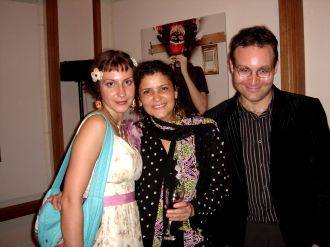 [by Petr Dorůžka, Prague] New York is a cosmopolitan city with very rich musical landscape. Do you think there is something special the Russian, East European, or Slavic musicians living in New York can offer that musicians from elsewhere lack?
Absolutely. In the folk scene, New York arguably has amongst its citizens the best Slavic/Balkan/Russian musicians that I’ve ever met. Not only are they strong as performers, they are incredibly open as musicians, adapting the Western musical styles in much more genuine and honest ways than happens in the East. There’s a great symbiotic relationship that happens all the time – the American players learn from the Eastern, and vice versa. We all go to each other’s performances, learn the tunes, and sometimes play in each other’s bands, feeding off each other like vampires. It’s a small world.
In larger context, the most spiritual contemporary music comes from the former Soviet territory, like Arvo Pärt, Giya Kancheli, Sofia Gubaidulina, do you feel related to these artists?
There’s a hushed silence in Pärt and Kancheli’s works, which I greatly appreciate and relate to. (I haven’t listened to enough of Gubaidulina’s works to comment, alas!) Silence is harder to come by in American works, perhaps. Aside from silence, I’d say that our language and background is quite different – Pärt and Kancheli’s being more inspired by religious and classical music, mine being more inspired by jazz + folk. For me, even the slow, nostalgic moments are always in a dance.
You also worked with Petr Kotik, how was it playing together?
I have been performing as violist with Petr Kotik’s “Orchestra of the S.E.M. Ensemble” for approximately 12 years, from my first years as a student at Juilliard. Some of this work has also lead to touring with the baritone Thomas Buckner.
It is always a thrill to work with Petr Kotik. Despite the cold, barren feel his music may emanate on first listen, his in-person energy is truly whacky and childlike, his music always spiritual and unpredictable.
You’ve also worked with another Czech born musician living in New York City, the singer Marta Töpferová, how did that happen?
It was meant to be. I met Marta the same evening I met Lucia Pulido, approximately 8 years ago. While on my way home from a John Zorn improv jam at Tonic, I looked into the Living Room Café, to see who was playing that night. On stage were Lucia Pulido, Marta, and Satoshi Takeishi, performing incredibly complex music from Colombia. I was instantly in love with the whole group, and kept in touch. Over the next few years, I occasionally sat in with Marta’s (now-defunct) group, the Acustilocos, and recorded tracks for an album with her band mate, Angus Martin. When Marta asked me to record on her album, I was excited to my ears. I’m thrilled with the way the track turned out.
Yet there is another side to the NYC East European heritage, the gypsy-punk of Eugene Hütz, does this kind of music have any value for you?
I love Eugene, his depth and energy, and have played many gigs with Sergey [Ryabtsev, their violinist] and Yura [Lemeshev, the accordionist] over the years. I love their Gypsy quality, but am not a big fan of Punk – my childhood was an overwhelmingly happy one, and I rebelled through free improvisation. As such, I admire their great success from the side, and hope that one day my music will also reach this kind of frenetic boiling point – but on its own terms.
You are a classically trained musician who spent his formative years playing 20th century music. How easy or difficult is it to switch to the warm spectrum of roots styles as you do on the album Mnemosyne you recorded with Kontraband?
Actually, I don’t really consider it to be a switch at all, and I have little to no consciousness whatsoever of changing styles, roots or otherwise. When we play with the Kontraband, we reflect on our experiences of playing in more “rootsy” ensembles over the years, but we do not aim to intimate (or imitate) any particular style except our own. Maybe after the recording is complete, I can recognize in hindsight that this or that solo is more reflective of this or that style, but during the moment of performance, there is no such thought.
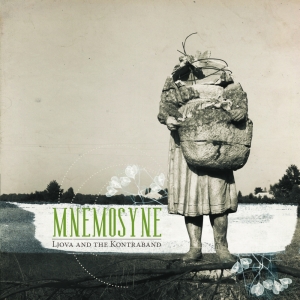 The album’s cover features a photo of a headless concrete statue, probably built during the Stalin era and partly destroyed later. While the man built monuments decay, the trees in the skyline flourish. But, what is the real story behind the picture?
As you know from the press release and elsewhere, the title of the album is Mnemosyne, which is the title of Stickney’s poem, and in Greek is the name for the Goddess of memory. For the CD cover, I spent some time looking at paintings and photographs of women, and other things which could conjure up an image of Mnemosyne. Memory is often unjustly wicked, and sometimes wrong. When, at long last, I found Rena’s photograph, I was struck by the beauty and the serenity of the scene, as well as by how and where the statue was broken. It looked like Mnemosyne was shot in the face, but still standing proudly…
As a parallel to this, I included another possible portrait of Mnemosyne, also by Rena, looking at herself ghost in the mirror, inside the CD booklet.
Koyl, one of the songs from the album, comes originally from the collection of Moshe Beregovski, an Ukraininan-Jewish ethnomusicologist, who spent part of his life in Gulag. How did his collection survive the Stalin era?
Unfortunately, I do not know off hand… but according to a YIVO institute newsletter from 2002: “Beregovski [1892-1961] served as head of the Department of Musical Folklore of the Institute for Jewish Culture at Kiev where he amassed a vast archive of recorded folk, instrumental and Hasidic music. Under the then-Soviet policy of anti-Semitism and eradication of Jewish culture, Beregovski was arrested in 1950 and deported to a labor camp in Siberia, where he was confined for seven years. Upon his release, he prepared a volume featuring parts of his collections, which appeared posthumously in 1962.” It is a wonderful collection, my wife and I often get inspired by reading and singing its many magical tunes.
What is your personal story?
I was born in Moscow in 1978, and moved to New York with my parents when I was 11. My father, Alexander Zhurbin, is Russia’s foremost composer of works for musical theatre, though he has also written several operas, symphonies, concerti, as well as over 60 film scores and hundreds of songs across many genres. He studied with Shostakovich and Khachaturian at the St. Petersburg Conservatory. In 1975, he wrote the first Russian rock-opera, Orpheus & Eurydice, which sold millions of records and continues to play in the same theatre in St. Petersburg to this day. Presently, most of my father’s musicals are in the repertoire of theatres across the country. Amongst his latest works is an opera based on Shakespeare’s King Lear (called Liromania).
My mother, Irena Ginzburg, is a poet, writer, and translator. Her father (my grandfather), Lev Ginzburg, translated many centuries of German poetry into Russian, and wrote books on contemporary German history. My mother continued his mission by introducing many Germany Women Poets to Russian readers, poets such as Annette von Droste-Hülshoff and Ingeborg Bachmann.
When we moved to New York, my father became the Composer-in-Residence at the 92nd Street Y [ed: 92nd Street Young Men’s and Young Women’s Hebrew Association]. Soon after, he founded the Russian-American Musical Theatre, and later, the New York Festival of Russian Films.
After 11 years in New York, my parents returned to Moscow, and live most of the year there. In addition to endless stream of commissions to write music for all mediums, my father is now the host of two TV programs and a radio show. He’s also published three books of articles, thoughts, and recollections. My mother has recently published an acclaimed book of memoirs about growing up in Moscow, and is working on her second.
My parents have always been their best and worst collaborators, writing and performing songs together. At last, they are finally recording an album.
How did the family influence you?
Growing up in a household where both parents are highly intellectual and artistic, we’ve always had plenty of music, words, and important people floating in and out of the house. I didn’t meet many doctors or lawyers when I was growing up, so that was never on my mind as a profession (until it was too late, that is). I had access to an endless wall of books, closets full of hard-to-get recordings. When we moved to New York, I “lived” part-time at the Library of the Performing Arts in Lincoln Center, digging up modern curiosities.
I grew up with an interesting contrast: whereas my father is completely open in terms of genre and style, my mother always keeps to a highly personal range of material, about which she’s very passionate. In my own work, I try to be both – open to outside ideas, but mostly using them to reflect my own light.
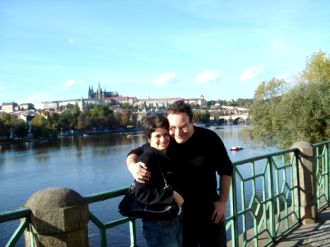 My wife, Inna Barmash, is another contrast – she is an incredible folk singer, born into a family of engineers. As enigmatic as she is pragmatic, she will begin working as an attorney at a big corporate law firm this October. Like my parents before us, we are also writing songs together, and will record them with my ensemble, Ljova and the Vjola Contraband, later this year [2008].
How are you involved with Yo-Yo Ma and the Silk Road project?
I began arranging for Yo-Yo Ma and the Silk Road Ensemble several years ago, at the recommendation of my cousin, Jonathan Gandelsman (a violinist with the ensemble), and the composer Osvaldo Golijov. I have also performed with the ensemble at Carnegie Hall, and recorded on their Silk Road Journeys: Beyond the Horizon CD for Sony Classical. At first, they had asked me to arrange a set of Roma pieces from the repertoires of Taraf de Haiidouks, and also from the soundtrack to Tony Gatlif’s film Latcho Drom. Several months later, I was asked to arrange Azeri, Chinese, Indian, Iranian and Moldavian music for the ensemble’s performances, as well as for the soundtrack to the Japanese NHK-TV network’s documentary series, The Silk Road. Most recently, I have collaborated with the great Iranian kemanche master, Kayhan Kalhor, on his composition The Silent City, and with the brilliant Chinese pipa performer Wu Man, on her Red, Blue and Green suite. Working with the Ensemble is a lot like flying – I have my complete discretion as to the artistic direction of the arrangements, and they generally love whatever I do. Yo-Yo Ma is without a doubt one the most open-minded and nurturing musicians in the world. I hope they will come to play in Prague soon.
Did you work on arrangements for Kronos, and which?
My relationship with Kronos is a bit different, in that their preference now is to have exact transcriptions of the source material, and then to arrange it themselves. As part of this, I’ve transcribed quite a list of music from different countries, including Iraq, Iran, Sweden, as well as several tracks for their release with Asha Bhosle, You’ve Stolen My Heart: Songs from R.D. Burman’s Bollywood, collaborations with Matmos, and Clint Mansell’s score to Darren Aronofsky’s “The Fountain”, featuring Kronos and Mogwai. On commission from the Los Angeles Philharmonic, I also worked with Kronos on a concert with the Moroccan Cantor Emil Zrihan, fleshing out arrangements for Kronos and Emil’s ensemble.
Also you thank indirectly Lucia Pulido, and Asha Bhosle, could you please explain why?
Both of these voices have been incredibly inspiring in developing my tone, my music, and my personality. I’m hopeful you can hear this on the album’s performances (Lucia’s influence on Middle Village, and Asha’s on Crosstown).
Several years ago, while working on the Kronos & Asha Bhosle album, I had a chance to speak with Asha & David Harrington (Kronos’s first violinist and founder) on the phone. I was sitting in a Bangladeshi café in Tribeca, in between watching films at the Tribeca Film Festival. Asha’s voice was being heard in the café’s CD player, and also in my phone. Short of my mother’s, it was arguably the sweetest voice I’ve ever heard.
You mention collaboration with the Iranian master musician and composer Kayhan Kalhor. As his instrument is kemenche, was the notation somehow respecting its wider timbre range, compared to Western violin?
Over the past few years, most of my arranging work has revolved around composers from different cultures and traditions than my own. I’ve arranged music from China, India, Iran, Iraq, Sweden, Tanzania… But my approach to these arrangements is essentially similar — first and foremost, I take stock of any technical considerations/limitations, and then think of the best way to express myself in the work. I try to re-interpret the original work as much as possible, and make something of my own. If I steer to close to the original, I feel that I’m cheating the listener from having a fresh, personal perspective.
In The Silent City specifically, I arranged only the latter half of the composition, from a single-line sketch by Kayhan Kalhor. Kayhan guided me simply by allowing the greatest freedom, and requesting that I be as dissonant as I wanted to. I went with my instincts, much like the composition itself, never looked back.
http://www.ljova.com/
31. 12. 2008 |
read more...
 [by Ken Hunt, London] One of the former German Democratic Republic’s most notable and most famous rock musicians, guitarists and bandleaders Peter ‘Cäsar’ Gläser died in Leipzig on 23 October after a long illness. Gläser was born in Leipzig on 7 January 1949 and came to people’s attention as a member of the Klaus Renft Combo. Having joined them as a founding member in 1967, he was called up soon after to do national service in the army and he rejoined them afterwards in 1969. Peter ‘Cäsar’ Gläser (the nickname says a great deal) might be described as Renft’s shadow. After Renft effectively got banned for social criticism in 1975 (helped along by singing the lyrics of Gerulf Pannach who found himself exiled to the West), Gläser co-founded the splinter band Karussell. In 1976 it was largely seen as the legitimate successor of the Klaus Renft Combo. Gläser finally gave up the Karussell ghost in 1983, worn down by balancing fans’ expectations and trying not to cross the Stasi and state authorities. He became part of the Amiga Blues Band.
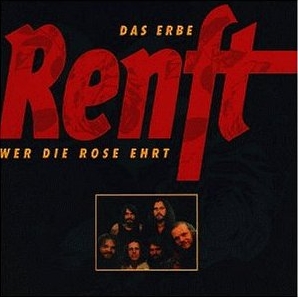 The “Amiga” part of their name was a nod towards the VEB’s pop, rock and folk record label. Essentially there was no other game in town in the GDR. Either one recorded for Amiga or for nobody; similarly for overseas acts – whether Phil Collins or Billy Bragg, Paul Robeson or Ravi Shankar – Amiga was the only conduit through which their recordings could appear. It should be pointed out that the GDR’s other record labels such as the classical music label Eterna and the literary and spoken word label Litera were merely subsidiaries of the VEB monopoly.
Before the political changes – the Wende in German, that earth-shattering period from the autumn of 1989 to the spring of 1990 – Gläser founded his first band with Cäsar in the name, with Cäsars Rockband in 1984. A succession of various line-ups and variant names with the word ‘Cäsar’ in them followed over the years. He also led other combinations with Spieler (Players) in their name and worked with his musician sons. He gave his last concert in December 2007 but in his final performance days he also gave readings from his 2007 autobiography Wer die Rose ehrt (‘Whoever honours the rose’). Fittingly, the title came from one of the Renft-era’s biggest hit songs.
5. 12. 2008 |
read more...
 [by Ken Hunt, London] The German writer Peter Maiwald died on 1 December in Düsseldorf. Born in Grötzingen in the West German state of Baden-Württemberg on 8 November 1946, he gravitated to the left. He moved to Munich in 1968 before moving to Neuss in 1970. During this period he was establishing himself as a freelance writer before going on to co-found the magazine Düsseldorfer Debatte. Parenthetically, one has only to think of the Putney Debates during the English Revolution for a sense of the meaning of debate.
Maiwald’s writings were in part under the sway of the Brechtian model and he wrote agitprop poetry, songs and lyrics for Kabarett ensembles such as the Düsseldorf-based Kom(m)ödchen and Stuttgart’s Renitenz-Theater. Over the subsequent years he would produce a body of work that expanded to include translation, screenplays, essays and plays and talks for radio. The turning-point came with Maiwald’s Balladen von Samstag auf Sonntag (‘Ballads from Saturday till Sunday’, 1984). On its publication Marcel Reich-Ranicki, the important literary critic of the Frankfurter Allgemeine Zeitung, heaped praise on it calling it nothing short of an “event” (Ereignis) as well as hailing him as belonging to the year’s first rank of poets.
From 1975 until the end of his life Maiwald was responsible for a score or so of books, amongst them Geschichten vom Arbeiter B. (‘Stories from Worker B.’, 1975), Wortkino (‘Word cinema’, 1993), 100 Geschichten (‘100 Stories’, 2004) and a book of poems for children co-authored with Hildegard Müller von Hanser, Die Mammutmaus sieht wie ein Mammut aus (‘The Mammoth Mouse looks like a Mammoth’, 2006).
5. 12. 2008 |
read more...
 [by Ken Hunt, London] On 27 February the best-disguised Russian superhero Ivan Rebroff, a singer and star of stage, film, musical and television died. Rebroff kept his origins a closely guarded secret but he had been born Hans-Rolf Rippert in the Spandau district of Berlin on 31 July 1931. He created, to go faux-designer, a huge peasant chic and Cossack bravado that became his trademark for the friendly face of Russia during the Cold War era. It is impossible to estimate what he did for rapprochement during the period. “I brought Russian soul to Germany,” he said once. Controversially and fittingly, Rebroff and the Balalaika Ensemble Troika got to play at the 1967 Burg Waldeck Festival in West Germany – a byword for cultural integrity. Their work, collectively and alone (in the case of the Balalaika Ensemble Troika), appears on the ten-CD boxed set Die Burg Waldeck Festivals 1964-1969 (Bear Family, 2008).
Comrade Rebroff’s albums had evocative titles like Kosaken müssen reiten (‘Cossacks Must Ride’) (1970), Na Sdarowje (1968) named after the Russian drinking toast and logically therefore an album to do with alcoholic imbibing, Kalinka (1971) named after the folksong, Meine Reise um die Welt (‘My Journey Around The World’) (2000) and Zwischen Donau und Don (‘Between the Danube and the Don’) (1971) with the Croatian singer Dunja Raijter.
His success was truly international. To give but two examples, he had a best-selling Afrikaans album Ivan Rebroff Sing Vir Ons (‘.Sings For Us’) (1971) and, reflecting his enormous popularity in Australia, the Live In Concert, Sydney – Australia DVD from his sold-out 2004 tour. There is no knowing how many units he shifted but he had 50 or so gold or platinum discs across five continents, starred as Tevye in Un violon sur le toit (as Fiddler On The Roof was called in France) and brought Ah! si j’étais riche (‘If I Were A Rich Man’) to the French public’s notice and he set and broke box-office records everywhere he went. Not bad for a fake Russian superstar.
1. 12. 2008 |
read more...
H’ART Festival, Centre of Contemporary Art, Glasgow, Scotland, 8 November 2008
 [by Ken Hunt, London] Szilvia Bognár, Ágnes Herczku and Ági Szalóki’s album Szájról szájra – first released in Hungary in 2007 but invisible to the outside world until early in 2008 – ranks as one of the benchmark albums to emerge from the pan-European folk scene this decade. It is a master-class in the subtlety and power of interwoven voices as well as being a torrent of lessons on how to draw on traditional folk music and make it both now and timeless. But the wondrousness of Szájról szájra only really comes across in live performance when you match lips to sound. Revealing how they do it was nothing less than awe-inspiring in the way that seeing the Watersons – when Lal Waterson was with them – brought home the otherness of talent and intuitiveness. Furthermore, Szájról szájra‘s UK premiere at the H’Art Festival – subtitled ‘Celebrating Hungarian Culture in Scotland’ – revealed how it was almost as much a visual work as a musical one.
Szájról szájra translates as ‘From mouth to mouth’. The H’ART Festival translated it as ‘hearsay’ – inappropriately to this mind (with its sub-primitive Hungarian leanings) because, instinctively, the sense beyond the literal words is all to do with passing something on from voice to voice. Or if big words help, the ‘oral process’.
In the trio’s case they draw primarily, but not exclusively, on regional Hungarian and Transylvanian music. However, in their repertoire and singing, as Ági Herczku mentioned afterwards in conversation, they have taken a dictum of Béla Bartók’s to heart, namely how by drawing on a continuum of neighbouring folk cultures one comes to appreciate and understand one’s own native folkways better. Like some Bartókian field expedition, the Szájról szájra project touches on Bulgarian music while instrumentally, under its musical director Gábor Juhász’s watch, it delves into Hungarian folk music, jazz and Eurocentric folk roots.
Now, Hungarian is a gnarly language. For outsiders, where Hungarian is concerned sense goes out the window – or, pardon the Czech image, gets defenestrated. Bognár, Herczku and Szalóki create such a heady concoction of sound that no knowledge of the language is needed. It is enough to luxuriate in Szájról szájra‘s sound and glory.
The concert order in Glasgow departed from the album’s track order beginning instead with Sem eső/No Rain Falls. Once Ági Herczku came in on Sem eső, it was clear straightaway that the concert performance was bound to outshine the ‘artefact’. László Mester’s viola took on a greater prominence in the mix; Mester’s brácsa was bedded in Hungarian village music but it strayed – proof that infidelity can have good results. Miles more relaxed and lived in than the album’s renditions, it was plain from the off that, though the ensemble might be re-presenting the album that this was going to be a performance with impromptu touches, not a faithful rehash of the album. Sem eső laid out the rules. As on the album, Juhász played a delicious solo guitar bridge that linked Sem eső to Tűzugrás/Fire Jumping. As with most of the material that followed, they kept close to the album arrangements but the ensemble’s playing and the trio’s singing eclipsed the studio versions.
Touring the material, it was evident, had made the performances both tauter and tighter, looser and more limber. A lot of air and space had entered the arrangements. Somogyindia (it gets no translation on the album) was a case in point with its full-strength unison and overlapping vocal onslaught and hand-clapped rhythmicality. And keeping to the project’s folk-jazz spirit, bassist Zoltán Kovács and drummer/percussionist András Dés each had opportunities to solo towards the end.
What became plain was how powerful its suites – or mini-symphonies – were. Betlehem/Bethlehem, with its prominent nylon-strung guitar from Juhász and gadulka (bagpipes) from Nikola Parov, emerged as an ace in the Szájról szájra band’s hand. Compared to the concentration required to sing the interwoven vocal pyrotechnics that is Lidlidli (the bagpipe song that followed Betlehem), Betlehem seemed like a sea of tranquillity and contemplation. They held back its counterpart religious piece Paradicsom/Paradise until the very end and then as their only encore. The Szájról szájra repertoire is not easy to sing or accompany. One pre-gig pálinka for the nerves and the whole thing could unravel.
What remains uppermost in my mind is how Szilvia Bognár, Ágnes Herczku and Ági Szalóki construct their vocal parts. While one of them might be singing the lyric, the other two might be adding nothing whatsoever vocally or contributing tight-knit vocal parts that constituted little more than stressing a syllable or adding a vocal shiver, effect or embellishment. Herczku’s final sigh on Édes kicsi galambon/Sweetest Little Dove of Mine, for example, was pure theatricality. It worked much better than on the album, proving that practice makes perfect. Szilvia Bognár’s singing on the introduction to the knee-knotting Elmegyel/I’m Leaving reminded why she has the consummate touch. Similarly, Ági Szalóki showed how commanding she is vocally on Jólesik/It Feels Good. Uppermost in the mind must remain how, in my experience, when they join forces the trio can create vocal fireworks quite unlike any ensemble on the planet.
The eighth of November was a great day for music in Glasgow. That afternoon five kilted bagpipers busked at the other end of Sauchiehall Street and did a bagpipe version of ‘'Okey Cokey complete with moves and movements, with skirls and twirls that was nothing less than a street music sensation. That evening Aztec Camera’s Roddy Frame had a sold-out concert at Òran Mór on the Great Western Road; the Wolfetones were at Barrowland at Gallowgate; and, a hop, skip and a jump downhill from the Centre of Contemporary Art on Sauchiehall Street, the Fleet Foxes were at the ABC. But Szilvia Bognár, Ágnes Herczku and Ági Szalóki’s concert was where the creative juices really flowed. It was a privilege to witness something so inspirational.
Photograph: c 2008 Ken Hunt
Further listening:
Szilvia Bognár, Ágnes Herczku and Ági Szalóki: Szájról Szájra FolkEurópa Kladó FECD035 (2007)
Szilvia Bognár:
Enek őrzi az időt/Song preserves the heartbeat of time Gryllus GCD 057 (2006)
Szilvia Bognár and István Kónya: Rutafának sok szép ága (2008)
Ágnes Herczku: Arany és kék szavakkal/In gold and blue Fonó (2003)
Ági Szalóki: Hallgató / Lament FolkEurópa FECD020 (2005)
13. 11. 2008 |
read more...
 [by Ken Hunt, London] To declare an interest, Tom Constanten and I are addicts of bilingual punning and are old friends. Indeed we started our correspondence when I lived in Sutton, a town that I have no reason to return to in many years. As opener for Jefferson Starship, the audience got a magic show of multivalenced allusion, illusion and wordplay from the former keyboardist of the Grateful Dead during their wonderful experimental period as a septet in the late 1960s that produced Anthem of the Sun, Aoxomoxoa and Live Dead.
His curtain raiser was Jorma Kaukonen’s Embryonic Journey which dissolved into Bonnie Dobson’s anti-/post-nuclear holocaust hymn Morning Dew before finishing on a sight-gag piece of theatre with his right hand falling off the keyboard whilst reaching for the non-existent ‘last note’. In a parallel musical universe Constanten developed a variant of Humphrey Lyttelton’s radio panel game ‘One song sung to the tune of another’ into something infinitely spaceier.
The audience got his syphilis-to-salvation take on Amazing Grace to the tune of House of the Rising Sun topped with Robert Burns’ Auld Lang Syne. Another was Dylan’s All Along The Watchtower sung to the tune of Warren Zevon’s Werewolves of London. And indeed the wind began to howl. Friends of the Devils got a Mountains of the Moon into Dark Star segueing into the Doors’ People Are Strange – as a sung entity – into his take on the Dead’s Turn On Your Lovelight, the vehicle for his old friend Ron ‘Pigpen’ McKernan. One day Dose Hermanos – his sometime duo with Bob Bralove – will tour in Europe and then we will see what happens when musical and visual spontaneities go bilingual as the music feeds on the visual and vice versa.
4. 11. 2008 |
read more...
[by Ken Hunt, London] The vocalist Mahendra Kapoor, who died at home in Mumbai (Bombay) on 27 September 2008 at the age of 74, has been painted in the outpouring of obituaries at home and abroad as something of a one-trick pony or beast of burden. One claim in the good, old-fashioned Indian way to be taken with a pinch of salt is that he sang some 25,000 songs. Such figures have long since been discredited. While Kapoor was primarily known as a playback singer in Indian film – the vocalists who pre-record songs for actors to ‘sing’, that is mime to – Kapoor’s career reveals that a versatility way beyond playback singing.
28. 10. 2008 |
read more...
[by Ken Hunt, London] On 16 June 2003 the Arab-speaking world and the Arab diaspora lost one of the great names in music. Born in 1921 in Hama, the Syrian composer, vocalist and multi-instrumentalist – and especially oud player – Mohammed Najib al-Sarraj never achieved the success of many of his contemporaries yet proof of his standing came from none other than one of Egypt’s national treasures, the composer Mohammed Abdel Wahab. He self-referentially and humorously nicknamed him “Syria’s Abdel Wahab”.
11. 10. 2008 |
read more...
« Later articles
Older articles »