Articles
[by Ken Hunt, London] Ola Brunkert is probably the strongest contender for the drummer you’ve heard the most whose name you don’t know. The Swedish drummer played on nearly every Abba recording from 1972 to their dissolution in 1982. Born in Örebro in Sweden on 15 September 1946, Brunkert’s musical background was primarily blues and jazz.
2. 4. 2008 |
read more...
[by Ken Hunt, London] The Jamaican musician, record producer, DJ and broadcaster died 15 March 2008. Especially during the 1980s he bridged the gap between reggae and punk, notably through his work with The Clash on their 1980 Bankrobber single, the US album Black Market Clash (1980) and their marvellously sprawling, spiky and self-indulgent Sandinista! (1989)
2. 4. 2008 |
read more...
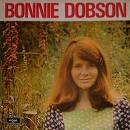
[by Ken Hunt, London] In 1969 the Toronto-born Canadian folksinger and guitarist Bonnie Dobson arrived in England and never really left. She settled in London, raised a family and eventually largely dropped out of making music. Part of the first wave of Canadian folksingers that made their names down south, she had established her name in the United States and once in England chose to disappear off the radar after 1989. More or less. Because every so often – well once in 2007 and 2008 – she has put her head above the parapet. When she sings you go, even if it is a dimly lit, out of the way place above a pub in Chalk Farm.
Time and geography have draped a veil over much of what she did in the early 1960s. It was extremely hard to track down her early recordings outside in Europe in those heady Cold War days of the early to mid 1960s. Her Prestige-era albums largely remained a secret outside North America. Meaning, as a generalisation, only people of a certain generation or disposable income got to hear them in Europe. Though she slipped deliberately into a form of anonymity, her songs did not, most notably in the case of her 1962 song Take Me For A Walk, better known as Morning Dew. As Take Me For A Walk it appeared on The Best of Broadside 1962-1988 (Smithsonian Folkways, 2000). As Morning Dew it was much covered. And contested, since Tim Rose took advantage of her financial innocence by claim-jumping part of her royalties. She lived to rue Mr Rose.
Bonnie Dobson established herself in Britain, recording a new phase of her life in song. She got a steady stream of radio work, singing folksongs in English and French, putting her own stamp on Ian Tyson and Gordon Lightfoot material. And she kept writing songs, ones that reflected her newfound land and identity. Frequently sassy, regularly overt panegyrics to gender equality and affirmations of life, the best of Dobson’s songs have stood up extremely well. Gradually she slipped out of the limelight, though she never quite disappeared, even if after 1989 that near as damn it applied.
Bonnie Dobson re-emerged in June 2007 as one of the Lost Ladies of Folk at London’s Queen Elizabeth Hall. The concert presented her as the last of six acts, the de facto headliner. Her voice had deepened, was less agile than on the old albums but that voice, her presence and her sheer professionalism stole the show. But a return to the fray was not on the cards. Which was why it was surprising to learn that she was going to dust down the Martin and sing in public at an acoustic music club off Haverstock Hill in north London. At the other end of Haverstock Hill, trivia hounds, to where in the dreadful winter of 1962 Dylan asked nicely if he could have a go with Martin Carthy’s samurai sword to chop up a dead piano for firewood.
The impetus for Bonnie Dobson’s public appearance was to raise funds for a humanitarian organisation founded in 1999 called Hope and Aid Direct. (It provides aid for poor and displaced people in the Balkans.) She played to a packed house in the upstairs room at Monkey Chews. The sightlines were not good but from where I stood it felt as if it would have been hard to shoehorn many more people into the room. Not bad for an unadvertised gig that wasn’t mentioned anywhere in print or internet to my knowledge. It was the low-key gig she wanted.
She opened with wonderful authority with one of her calling-cards of old. Many will be more familiar with Someday Soon from Judy Collins’ version than Bonnie Dobson’s but Ian Tyson’s song is something that both can equally claim as theirs. (Dobson’s version is available on Bonnie Dobson, originally released in 1972 and reissued on CD in 2006.) She proceeded to run through a set that embraced French-Canadian terroir in folksong, local geography (her squadron leader song referred to waving the Union Jack on nearby Primrose Hill, nowadays a sleb-haven but long up-market), the embitterment of love gone bad and, naturally, her personal account of the Apocalypse called Morning Dew.
In the club atmosphere she could talk more easily than at the Queen Elizabeth Hall. She led into one song saying “I was raised by Pete Seeger, I can’t help this.”, raised the spectre of bygone comparison with Joan Baez but of the “tits and arse” variety (“You never wanted me.” she started singing) and evoked how a song haunted by nuclear apocalypse can adapt to transferable meaning and pertinence, thanks to climate change and other manmade visions of the Apocalypse. As Ratdog’s Bob Weir (once of the Grateful Dead) told me in 2007, “It was another of those tunes where you could almost make your meaning or just sit there and dream while you were listening to it.” That was certainly the case at Monkey Chews. She projected wonderfully well for somebody no longer used to singing in any place other than her home.
It is impossible to predict what may come next. Bonnie Dobson always had a splendid ear for a superior song. She took to Ewan MacColl’s First Time Ever I Saw Your Face early, becoming the first person to interpret it on record, unless I am much mistaken, in North America. It was, she told me in 2007, “a very explicit song for its time” and even if time has chipped away at its explicitness, its poeticism remains intact. Dobson’s treatment of the song Peter Amberley furnished the Haverstock Hill Samurai Warrior with the melody for I Pity The Poor Immigrant on John Wesley Hardin. (Listen to her 1962 Philadelphia Folk Festival performance on The Prestige/Folklore Years, Volume Four (1995) for proof positive, though Dylan apparently coughed to it at some point.) Why this history and mention of songs not sung? Well, Bonnie Dobson has a superb track record and can still sing the heart out of a song. Cross your fingers and click your little heels and hope that, to misquote Ian Tyson, someday when she sings in public again.
14. 3. 2008 |
read more...
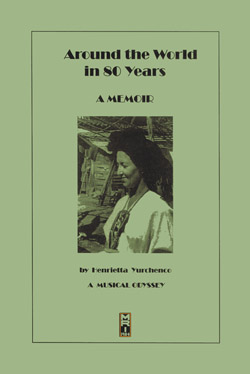
 [by Ken Hunt, London] The folklorist, folk and ethnic music collector, author, radio broadcaster and producer Henrietta Yurchenco died in Manhattan on 10 December 2007 at the age of 91. She was one of the great links between the racially integrated and progressive-minded US folk scene of the 1930s and 1940s and the folk boom of the 1950s and 1960s, Over the course of her long life in music – the title of her autobiography Around the World in 80 Years (2003) was apt – she was a shaping influence in what people understood by folk music and a kingpin of ethnomusicology and world music.
Born Henrietta Weiss in New Haven, Connecticut on 22 March 1916, her parents – Yitzak (Edward) and Rebecca Weiss – were immigrants from the Ukraine. Both of them sang and her father played mandolin, so there was music in her genes. Growing up during the Depression politicized her. At the Yale School of Music she studied piano and seemed set to pursue a career as a concert pianist. She met her husband-to-be Boris Yurchenco at a John Reed Club meeting. (The John Reed Club was an association named after the author of the book Ten Days That Shook The World (1920) about Lenin and the Bolshevik Revolution.) Boris Yurchenco, an Argentine-born painter, was a kindred spirit politically. The year they married – 1936 – the Yurchencos left New Haven for New York, her base of operations for most of her life. Before they left New Haven she was arrested for demonstrating against an Italian brass band with connections to the Mussolini-era fascist dictatorship. It would be the first of many occasions when protesting got her arrested.
 In New York City the Yurchencos hooked up and mingled with people in the arts and of similar political persuasions. One thing that happened soon after arriving in NYC was her decision to opt for a post with station WNYC rather than follow a classical piano future (though she continued to play piano for the rest of her life). At WNYC rather than become one of the ‘backroom boys’ or an anonymous continuity voice, she became a name broadcaster. She presented Adventures in Music, a show dedicated to broadcasting the likes of the Almanac Singers, Woody Guthrie, Aunt Mollie Jackson, Huddie ‘Leadbelly’ Ledbetter, Pete Seeger and Josh White. “All of them,” she recalled, “with the exception of Leadbelly, were politically conscious.” Leadbelly was no doubt shrewd enough to keep what politics he had to himself. He certainly had cause enough in a, politically speaking, carcinogenetic era.
Generally these folksingers performed live over the airwaves and, given the nature of such things, that music existed only for that moment and in listeners’ memories. Once transmitted, that was that. We can perhaps get a little of the flavour of how Yurchenco’s programmes might have sounded from one non-WNYC set that did survive. Woody and Marjorie Guthrie’s The Live Wire, a wire recording from Newark, New Jersey in 1949 eventually released commercially in 2007, bottles the Zeitgeist. It captures Guthrie’s spontaneity as he sings and adlibs into the microphone with a naturalness generally lacking in his commercial recordings. Its Tom Joad, 1913 Massacre and Talking Dust Bowl Blues recall songs in the firm flush of their youth, still malleable, not like frozen moments on a record. During the autumn of 1940 WNYC, with Yurchenco in the producer’s chair, began running Leadbelly’s own unscripted radio show Folksongs of America. “Everything was improvised. Each song was preceded by stories of his life in the South,” she recalls in Charles Wolfe and Kip Lornell’s The Life and Legend of Leadbelly (1993). “We went on live, and whatever happened during that fifteen minutes happened.”
In NYC the Yurchencos’ circle of friends and acquaintances wasn’t restricted to folksingers. It grew to include the composers Béla Bartók (“one of the pioneers of folk music research,” as she describes him in her autobiography) and Aaron Copland, the painter Frida Kahlo, the conductor Otto Klemperer and the Chilean writer Pablo Neruda. Nevertheless, she was in a unique position and uniquely placed to champion the rise of folk music in the city. Just as she championed the generation of Guthrie, Leadbelly and Pete Seeger, a generation on she would later encourage the likes of Bob Dylan and Janis Ian. She straddled the generation gap.
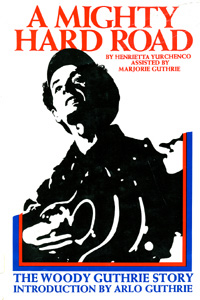
 Her 1970 book A Mighty Hard Road, an important addition to the folk music literature, would be Guthrie’s first major biography. (“When I was writing my biography of Woody Guthrie [.] I asked permission to use [Dylan’s] Song To Woody featured on his first album,” she wrote. “It took six months before I received an answer. He granted permission, but only after reading my manuscript.”) Her perspective and experience meant she became an important participant in the historical discourse. She and Pete Seeger are to be seen on film, for example, reminiscing about the folksinger and folk music collector Alan Lomax in Rogier Kappers’s superb documentary Lomax: The Songhunter (2005).
US folk music, it turned out, was but one primary colour on her palette. She took her first steps into the ethnographical wilderness at the age of 21. It ushered in the next important chapter in her life. The Yurchencos lugged their state-of-art portable recording equipment – some 400-600 kg of Presto K recorder, aluminium and steel acetate discs, batteries and so on – to places in Mexico where tribal peoples were cut off from mainstream Mexican society by geography, topography and time, where radio did not reach. Her 1942-1946 Mexican and Guatemalan field recordings from Mexico and Guatemala saw commercial release on the Library of Congress’ Folk Music of Mexico (1948) and Indian Music of Mexico (1952), though Folkways’ front cover artwork had the credit ‘Urchenco’. She returned to Folkways only in 1968 with her Latin American Children’s Game Songs Recorded in Puerto Rico and Mexico. (The hiatus had nothing to do any spelling mistake.) In the meanwhile, Nonesuch Explorer had released The Real Mexico (1966), her best-known and most commercially successful album. Yurchenco’s peyote ritual recordings predate the better-known ones captured by Harry Smith, the acclaimed oddball compiler of the Anthology of American Folk Music.
Over time, she branched out into other ethnomusicographical territory. One of the most significant areas of interest for her – and the listening public – was her work in the field of Sephardic Jewish traditional music and folklore. Folkways released her Ballads, Wedding Songs and Piyyutim from the Sephardic Jews of Morocco (1983), a collection of spoken and sung poetry. The piyyutim of the title are Hebrew-language religious poems handed down from the Judaic poet-philosophers of the Middle Ages. (It was a subject to which she returned in her last book In Their Own Voices: Women in the Judeo-Hispanic Song and Story.) Other recordings would appear on, amongst others, Colombia, Decca, Elektra, Mercury, Monitor, Odyssey and Vanguard.
Henrietta ‘Chenk’ Yurchenco’s legacy is scattered over many journals and record labels. She came to be seen as one of the world’s most respected ethnomusicologists, recording social and ritual, traditional and so-called primitive music in many countries. Amongst her collecting forays were trips to Mexico and Guatemala (1942-1946), Mexico (1964-1966, 1971-1972, 1981, 1988 and 1992), Puerto Rico (1967, 1969) and Ecuador, Spain and Morocco (1953-1956), Galicia (1990) and Ireland (1973-1974). She even visited Romania, the German Democratic Republic and Czechoslovakia.
Further reading: Around the World in 80 Years: A Memoir (Music Research Institute, MRI Press, 2003)
14. 3. 2008 |
read more...
[by Ken Hunt, London] Buddy Miles was best known as a powerhouse drummer, most famously for his work with Jimi Hendrix on Band of Gypsies – the ensemble with bassist Billy Cox – that followed the Jimi Hendrix Experience. It was a short-lived band and the 1970 album, drawing on a New Year’s live set recorded on the cusp of 1969-1970, polarised opinion. The memory most people will have of him was his sound-turned-machine drumming on Machine Gun on Band of Gypsies. Thanks to Coppola’s Apocalypse Now, the sound of helicopter rotor blades…
29. 2. 2008 |
read more...
 [by Ken Hunt, London] The Australian folklorist, illustrator, author and one of the pioneers of the Australian Folksong Revival Ron Edwards died on 5 January 2008. He wrote and published extensively over his lifetime on folksong, bushcraft, story telling and linguistics. Simply put, he was a hugely important and influential figure for Australian folk music and anthropology. From 1984 until 2007 he was president of the Australian Folklore Society and edited the Australian Folklore Society Journal. He also wrote widely about Australian folkways, whether Australian folksong, bushcraft or the aboriginal cultures of Australia and the Torres Straits. A skilled painter, he illustrated many of his books himself
Edwards was born in Geelong, Victoria on 10 October 1930. He was raised in an almost pre-industrial, pre-mechanised agricultural and fishing community. People made their own amusement, singing songs, doing recitations, visiting neighbours.
Amongst his books about the folklore and customs of the Torres Straits – situated between Australia and New Guinea – are Songs from Coconut Island, Songs from Darnley Island, Songs from Dauan Island, Songs from Murray Island, Songs from Saibai Island, Songs from Stephen Island, Songs from Wararber Island and Songs from Yorke Island. You get the picture.
Others included jointly credited works, with Anne Edwards, like An Explorers Guide to Kubin, An Explorers Guide to St Pauls, Moa Island and Children of the Torres Strait. The Torres Straits hold a particular vibrancy in British ethnomusicology. The earliest wax cylinder recordings were recorded there, ushering in a new generation of field recording, one no longer reliant on pen and paper. They are now amongst the 3000 or so surviving wax cylinders held in the British Library Sound Archive. The earliest in the collection are those made by Alfred Court Haddon on his anthropological expedition in 1898-9 to the Torres Straits.
Probably his most important work will prove to be The Big Book of Australian Folk Song (1976). It contained 308 songs and was about seven centimetres thick. But he exceeded even that with the 12-volume Australian Folk Songs. Thankfully this limited edition also went into a read-only CD-ROM edition.
For more about his contemporary Edgar Waters (1925-2008) on this site, visit http://kenhunt.doruzka.com/index.php/edgar-waters-1925-2008/
21. 2. 2008 |
read more...

“I have seen fear and convenience/I have never glimpsed romance.”
[by Ken Hunt, London] Thao Nguyen’s We Brave Bee Stings And All, produced by Tucker Martine (The Decemberists, Mudhoney and Sufjan Stevens), is one of those fine vehicles that hurtle down the turnpike causing the listener to do a double take or three. On a casual listening or initially you’ll get carried along with a banjo-driven song like Swimming Pools without taking in the lyrical context. But then a line like “We splash our eyes with chemicals” drops like bait. And in introducing ideas of The Beauty Myth kind, it plants a tiny barb securely in your mouth before reeling you in.
Instrumentally and vocally, The Get Down Stay Down – Frank Stewart on guitars, piano and organ, Adam Thompson on bass, piano and a beastie called marxaphone and Willis Thompson on kit drums and percussion – support her voice, guitar, banjo and piano well. (Everyone has a jolly good time clapping hands.) What raises the music above the sum of those parts is the interesting, unprepossessing colour instrumentation. A couple of examples should suffice. Steve Moore’s swirling trombone on Fear And Convenience or Wayne Horowitz’s Hammond B3 on Travel may not be virtuosic performances – that is not the point of their presence – but the trombone powers up Fear And Convenience and the Hammond B3 has a comfy safety net feel to it the way Garth Hudson’s solid chordal playing made it clear that in his hands everything was safe in The Band’s Music From Big Pink arrangements.
 The backstory goes something like this. Thao Nguyen – evidently of Vietnamese stock -took up the guitar around the age of twelve. She began playing in a high school band and writing songs. Her debut release, an EP called Like The Linen (2005), appeared while she was at college in Williamsburg whilst she was attending William & Mary College. She gigged and kept on writing songs. Down the line she came to the attention of the drolly-named Kill Rock Stars. It led to her appearing on the label’s anthology Sound The Hare Heard (2006). Each singer-songwriter, regardless of how well known – or not – they were, was rationed to one performance. Thao Nguyen’s contribution was Feet Asleep (also on We Brave Bee Stings And All). Feet Asleep appeared alongside Sufjan Stevens’ Adlai Stevenson, Laura Veirs’ Cast A Hook At Me and Simone White’s The American War. And then she began recording We Brave Bee Stings And All.
Don’t be deceived by the name. If you go in search of overt Vietnamese influences, you’ll search in vain. This is music from a United States that gets elbowed out of too many commentaries. This is American music that some call folk or country or folk-rock though it actually is planted firmly in the singer-song tilth. The wit of Thao’s lyrics in Bag of Hammers and Big Kid Table – the stand-out tracks for me right now – and the lyrics’ and the music’s examination of the American condition elevate it above its milieu. Meaning, there are too many songs on the planet lacking originality of any kind and we get afflicted with them. Thao Nguyen is a worthy baton carrier in the tradition of Victoria Williams. Williams’ takes on the world in song are similarly marvellously, refreshingly quirky. Odd insights, as in insights of the odd kind, shoal on We Brave Bee Stings And All too, suggesting a similar promise to the one that Williams’ breakthrough work suggested. Goodness knows where Thao Nguyen’s music is going to go when she really kicks in. We’ll be there to follow it though.
Thao We Brave Bee Stings And All (Kill Rock Stars KRS481 (2008).
Kill Rock Stars’ website is a one-stop shop for connecting with Thao’s activities: www.killrockstars.com
21. 2. 2008 |
read more...
 [by Ken Hunt, London] Hungary is one of Europe’s most productive hothouses for truly revelatory female singers. Once upon a time in Western Europe Márta Sebestyén was all we knew of Hungarian singers. She was our Hungarian sun and moon, earth and horizon. Mind you, starting at the top was not necessarily a bad thing. But it was only getting the chance to see her fly vocally in concert that it truly hit home how world-class a singer she was. In my experience, it is in the live situation that Hungarian music truly reveals its depth and its heights. That applies to most music with a living, beating heart. Despite the generational gap and the apparent differences in their music and approaches, Sebestyén Márta and Szalóki Ági are names fit to speak in the same breath.
With the political changes of the late 1980s and early 1990s, it became possible to appraise the Hungarian music scene more accurately, more objectively. Hearing a woman with such a distinctive voice as Irén Lovász led to seeking out Szilvia Bognár, Bea Palya and Ági Szalóki. And later Nóri Kovács. Their music opened up new vistas of song. In early 2006 while working on assignments in Hungary’s capital, Budapest, whilst engrossed in research and drowning in dictionaries and booklore, my host slid a striking new voice under my guard. Losing a battle against the angels of the devilish Magyar language was compensated for. The Hungarian folk-jazz of Ági Szalóki’s second solo album Hallgató / Lament (2005) utterly derailed my concentration. That is why two years on, I find myself seeing her in London, not singing with Besh o droM, Makám or Ökrös but fronting her own band. To find myself seeing her, not on some massive stage or singing at London’s Pulse Festival with Besh o droM, but in the genteel setting of the Hungarian Cultural Centre (HCC) in London’s Covent Garden district is a dream. What a difference two years make!
 More salon than venue, the HCC is intimate. Skilled Hungarians can probably sardine, sorry, sit 50 or 60 people and a side-plate of neck-craning snappers into the room. It is therefore also intimate in the sense of small. So, to finally see Ági Szalóki sing in such surroundings had to be a rare privilege. It was different, not like her albums. She came with a stripped-down, three-piece version of her band – József Barcza Horváth on double-bass and two electric guitarists, Gábor Juhász on Fender Stratocaster and Dávid Lamm on a Heritage model. (The Heritage is a Gibson splinter firm out of Kalamazoo, Michigan, I googled later.) This salon soirée line-up heightened the intimacy inordinately. The room also suited her petite, waif-like physicality and her voice admirably. Hearing her sing without a microphone is a priority on my Hungarian wish list.
Despite having gigged as featured or guest vocalist with Besh o droM, Makám and Ökrös or having played on stages like those of Budapest’s Szigetfesztivál, the Théâtre de la Ville in Paris, the Montreal and Ottawa Jazz Festivals and Glasto (that’s the Glastonbury Festival for any reader who isn’t a music journalist) and London’s Barbican Centre, she considers herself a népdalénekes – ‘folk singer’ – and is proud to label herself that way on her business card. That she chooses népdalénekes as her job description speaks volumes. In that respect she is like Szilvia Bognár – one of the three singers along with Ágnes Herczku on Szájról szájra (‘From Mouth To Mouth’). Like Szilvia Bognár, her business card also says népdalénekes. Folk does not have to be a dirty word and népdalénekes testifies to the power and cachet of folk music in the Hungarian belief system – something I wholeheartedly approve of myself.
In the HCC programme booklet the evening was billed lumpenly as “Ethno Jazz”. Partway through, she offered the better title of “My Favourite Songs” as an alternative before launching into a fiery Jewish Bulgarian song in Ladino. The Hungarian-ness of her repertoire though was a constant. Whatever the idiom or musical inflection, the result was Hungarian and an exceeding of expectations. Sprinkled throughout the set were announcements – in English, sometimes with a Hungarian coda – of this or that being, say, a Hungarian folksong from Transylvania. Or translations of an opening verse into English from her or Lamm to her left. She sang torch songs associated with Katalin Karády (1910-1990) – Hungary’s diva supreme, a cultural icon to rival, in national cultural terms only a few. Edith Piaf in France or Marlene Dietrich in Germany being examples. (To point fingers, not Celine Dion.) She touched on Hungarian literature with a setting of poet, author and literary translator Sándor Kányádi’s Napszállatja, napnyugta. She sang Gypsy material. And tapping into a strange place in the Hungarian psyche, she even sang a fado – a borrowing with a history that includes Misia and a little YouTube. It prompted the realisation that, over a couple of slugs of pálinka (plum brandy), the Portuguese and Hungarian temperaments could fold into one. And extrapolating from that line of thought, furthermore Ági Szalóki’s next step could be singing fado in Hungarian translation or singing Szomorú Vasárnap (Gloomy Sunday) in Portuguese as a fado. Think Hungarian twist on the Czech singer Iva Bittová singing Szomorú Vasárnap in an English translation in the film The Man Who Cried. As a reviewing coda, she also got audience participation of a kind familiar to anyone who has ever attended a British folk club but the audience singing the chorus was an ’embassy first’ for me.
 Instrumentally, the musicians stuck close to the sung word. On Holnap (Tomorrow) she sang an unaccompanied medium tempo overture – with lines in Hungarian like “Who knows if you’ll see me tomorrow” – before the band, cued in, boosted the tempo. A highlight was the evening’s parting glass. She sang Napszállatja, napnyugta with just double-bass accompaniment. The title’s literal meaning, in the Hungarian language’s standard agglutinative (non-philologically speaking, “arse about face”) manner, is “Sun flies down, sun goes down”. “But,” the HCC’s Zsuzsa Kalmár explained to me afterwards, “it sounds better in Hungarian” – and she was spot on. Its revelations worked both as sound-poetry and emotionally for Hungarian illiterates (like me) in the audience. Ági Szalóki’s way of singing and the way the band accented metrical beat, syllable and linguistic stress guaranteed that a sense of poetry-in-song shone through. This concert was a dream ticket to the magic theatre. And that was why seeing Ágnes Szalóki finally singing live in a ‘solo setting’ was such a musical treat. I cannot imagine the blast Hungarian speakers must have got.
For permission to use photos, we thank the Hungarian Culture Centre for the posed group shot taken after the concert (left to right: Gábor Juhász, Ági Szalóki, Dávid Lamm and József Barcza Horváth) © 2008 Hungarian Cultural Centre; FolkEurópa for the use of the portrait from the © 2005 Hallgató / Lament photoshoot; and © 2008 Ági Szalóki and www.szalokiagi.hu for the use of the live shot from her Christmas 2007 show.
27. 1. 2008 |
read more...
 [by Ken Hunt, London] London’s embassies regularly host exhibitions, talks, artist showcases and recitals. Generally speaking, these events are free. The Czech Embassy situated on the leafier fringe of London’s Notting Hill district is no exception. Its showcase featuring the classical violin maestro Pavel Šporcl stands out in my memory. But British Sea Power launching their new album Do You Like Rock Music? on embassy grounds? It neither conformed to embassies promoting their own nation’s artists, nor, on the face of it, did it seem the likeliest venue.
I approached reviewing British Sea Power’s album launch gig in a way seldom possible for a full-time freelance journalist. I treated it and them as a blank canvas and deliberately went with, as near as possible, no preconceptions of any kind. Aside from a vague memory of one British Sea Power track on a freebie giveaway CD once, I had never consciously heard them. I did my ‘non-homework’. In the spirit of non-preparation all background listening or reading research was banned. I went with several blank sheets of paper for notes and that was that.
 What had filtered through was that British Sea Power were East Sussex-based, around Brighton, down the coast from Rottingdean and that consequently there had been a Copper Family connection at some point in their past. And, lastly that they were an indie rock band. Here I must confess to not quite knowing what ‘indie rock’ really means. But, by way of perspective, nothing like the confusion and bewilderment that my music journalist mate Joel McIver generates when he talks metal and reels off brain-numbing metal subgenres and names like Killswitch Engage, Avenged Sevenfold and Audioslave. The one useful contamination of my innocence came from the Embassy itself telling me that Do You Like Rock Music? had been partly recorded in the Czech Republic.
If ever there was a European nation capable of laughing off Britain’s much-vaunted historical sea power, surely the landlocked Czech lands must be way up the list. But Czechs today know a good deal about tabloid xenophobia, job losses and economic protectionalism. And how that applies at home and abroad. An Evening Standard abandoned on the homeward train after the gig listed British Sea Power at the Czech Embassy as its ‘Don’t Miss’ gig of the day. Its preview began, “Alarmed by the News of the World‘s anti-Eastern European immigrants rhetoric, young indie-rockers British Sea Power decided to make a stand. Having ‘always liked that part of the world’, they recorded an ode to European expansion, Waving Flags, as their latest single.” The Evening Standard may well have got it right when hailing it London’s ‘Don’t Miss’ gig of the night. (Comparison is, of course, impossible.) It was a truly great night. For me, Waving Flags stood head and shoulders above most of the evening’s songs – all unknown to me, remember. Only No Lucifer, probably because of its chanted chorus of ‘Easy!’ (repeated over and over again) lodged more forcibly in the cranium.
I went a British Sea Power virgin and came out a convert, certainly a convert to their energy. But most importantly curious about what the albums sounded like. To be honest, Do You Like Rock Music? afterwards turned my head far more than the gig itself. The gig has been raw, directed energy, a silhouette of body with a guitar bodysurfing, lyrics mostly AWOL in the overall sound, images of Abi Fry’s bow moving on some songs but her viola’s voice indiscernible in the mix. Do You Like Rock Music? reveals them playing outside the rock cliché field, certainly lyrically speaking. And their Open Season (2005) carries the dedication, “For Robert Copper of Rottingdean”. (And there is the good possibility that there will be a further Copper overlap in 2008). Next time I see British Sea Power play I will be better equipped to appreciate what the band does. But how often do you get to go in cold to a baptism of fire?
Photographs: (c) 2008 Santosh Sidhu, Swing 51 Archives
27. 1. 2008 |
read more...
[by Ken Hunt, London] A native Californian, the singer and songwriter and one-time member of the Kingston Trio folk group, John Stewart was born in San Diego on 5 September 1939. Stewart’s album California Bloodlines (1969) and Cannons in the Rain (1973) were major additions to a literature of America in song. Major milestones too. His Mother Country typifies the reflective nature of his finest songs. Like the work of the Canadian songwriter Ian Tyson, Mother Country…
27. 1. 2008 |
read more...
« Later articles
Older articles »