Articles
[by Ken Hunt, London] The cult filmmaker Perry Henzell’s The Harder They Come (1972) was, and shall ever remain, iconic. Mind you, in Jamaica and in Britain both, the film had a hard start. In Jamaica, it caused riots when frustrated audiences couldn’t get into cinemas to see it. In Britain, when it was first screened, it met with apathy even in Brixton in London, SW9, the spiritual heartland of the expat Jamaican community. It took word-of-mouth recommendations for Henzell’s fictional story combining reggae studio hard knocks, hard times in Kingston and righteous criminality of a post-Robin Hood kind to take off. It hit the spirit of the times head-on.
8. 11. 2007 |
read more...
[by Ken Hunt, London] On 16 October 2007, the powerful singer-songwriter Lucky Dube was murdered in cold blood in Johannesburg, South Africa, shot dead in what had all the hallmarks of a botched carjacking, in what many commentators portrayed as the current crime-wave. Lucky Dube had had two careers in music. Initially he had risen to become a major mbaqanga musician. Mbaqanga, he told me in one of our interviews, was “Zulu soul music”. Although his definition may have lacked musicological precision, it captured the music’s essence. Then, in a switch of careers, he changed his focus to reggae – Afro-reggae, as it was often called – and had an even more successful career in music, this time on the international stage.
8. 11. 2007 |
read more...
 [by Ken Hunt, London] There can be little doubt about the impact the Indian subcontinent’s music has had abroad. Indeed, the tale is too big for one book, even Peter Lavezzoli’s remarkable Dawn of Indian Music in the West – Bhairavi. He names the usual, vital suspects like Ravi Shankar, Ali Akbar Khan, John Coltrane, John McLaughlin, Trilok Gurtu, Yehudi Mehuhin, David Crosby, Roger McGuinn, George Harrison, Mickey Hart and Zakir Hussain.
Wisely, the author steers well clear of the far-from-plain tales of Raj-era India and its influences on the Western mind through music and philosophy, as illustrated by certain compositions by, say, John Foulds and Gustav Holst in Britain. In any case that part of the story is covered by Gerry Farrell’s Indian Music And The West (1997) – a book that The Dawn of Indian Music in the West complements well. Lavezzoli’s focus is on how the subcontinent’s two classical music systems affected jazz and rock in the United States after the 1950s. And how they hybridised.
Original interviews, coupled with some astute analysis, provide the foundation of Lavezzoli’s tale. To give a flavour, the drummer and percussionist Mickey Hart comments incisively, if slightly mystically for anyone unfamiliar with the maestro, “…when I listen to Ali Akbar Khan, when he disappears, and the music disappears, I’m there. When I’m not listening to the ‘great guru,’ then I know he’s done his job. No disrespect to Khansahib, but when Khansahib disappears, that’s when he’s Khansahib.”
Without reviewing what isn’t in the book – as opposed to what is – certain things must be stated. To generalise, the book concentrates on Indian – as opposed to Indo-Pakistani influences – so no Nusrat Fateh Ali Khan into Massive Attack or Fun^da^Mental. It covers Indian classical music’s energising of the Beatles and Byrds and touches on Traffic, yet its treatment of the music’s wider impact outside the USA is perfunctory. Omitting the raga rock of New Zealand’s 40 Watt Banana or the enthusiastic reception Indian musicians received in Japan is understandable, but surely excluding the impact of Indian film music – India’s greatest musical export – on the global mind is curious.
One thing that needs improvement is the patchy, less-than-diligent index. You will find Charlie Mariano, Steve Winwood and David Harrington but not Embryo (or Dissidenten), Traffic or the Kronos Quartet. It weakens the book’s usefulness. That aside, The Dawn of Indian Music in the West joins the required reading list for anybody moved by, or interested in the subject. And between it and Farrell’s Indian Music And The West the ground is well covered.
Peter Lavezzoli – The Dawn of Indian Music in the West – Bhairavi Continuum, ISBN 0-8264-1815-5
21. 10. 2007 |
read more...
[by Ken Hunt, Prague] It’s a home truth that the more you understand your own culture, the better equipped you will be potentially to understand other cultures in this brave new (ever re-inventing itself) world. The television composer Ronnie Hazelhurst, who died in St. Peter Port on Guernsey in the Channel Islands on 1 October 2007, is a name most of Britain’s population – connoisseurs of screen credits excluded – would hesitate over. But to be British was to be able to name that tune of his in a trice. As Christopher Hawtree wrote in Hazelhurst’s obituary in The Guardian, “The fate of most television composers is to be heard by millions and unknown by all.”
21. 10. 2007 |
read more...
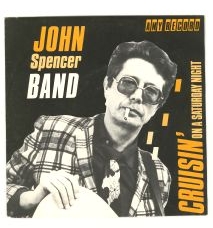 [By Ken Hunt, London] The papers and paraphernalia on the songwriter, guitarist, bandleader, novelist and occasional record producer John B. Spencer’s desk spoke volumes about his life and interests. Constructed out of recovered Victorian hardwood floorboards, his desk would be strewn with the debris of recent conversations and idea-swapping about crime and mystery fiction, the stuff of allotment keeping and that season’s seed catalogue from Marshalls (“The Fenland Vegetable Seed Company”). Alongside these would be a scattering of demo cassettes (some with the family budgerigar cheepin’ in the background as the proverbial chick singer), handbills for art exhibitions and notebooks detailing ideas, overheard conversations and, sadly he related, real-life incidents too implausible to be used and ever believed in either his novels or his songs.
Spencer was blessed with one of the most unmistakeable voices in British popular music. That applied as much to his untrained, gruff vocals as the acuity, wit and verbal drolleries that marbled and ran through his songs. Of him, the folkie, ‘singer-wongwriter’ ((c) 2007, Phil Sutcliffe), actor and general all-rounder, John Tams observed to me, “I don’t know of any other writer, maybe Richard Thompson to a certain extent, who can compete.” In the Penguin Encyclopedia of Popular Music (1998), Spencer’s songs were described as ones written while God was looking the other way. It was a very good line. If I were less modest, I wouldn’t tell you I wrote it. Or that he used it in his publicity.
 The son of Thomas (1906-1988) and Edith Spencer (1909-1991), John B. Spencer was born in Hammersmith, in West London, on 5 June 1944. He used to crack the joke that he was born in the fast lane because they demolished his birthplace and built a flyover where the street had been. (The standard and, indeed, appropriate riposte substituted ‘bus lane’ before throwing in gratuitous vulgarity.) He got saddled professionally with his middle initial – it stood for Barry – for the usual showbiz/royalties reasons. Another John Spencer had beaten him to his own name.
After leaving Clement Danes Grammar School in 1962, it looked as if his future was Morocco bound, as the Bob Hope and Bing Crosby song puts it so sweetly. The year before he had stacked shelves at the newsagent chain, W.H. Smith’s Holborn branch. The part-time experience would have been altogether forgettable but for the factlet that, as his eldest son Tom put it, “banging books together to keep the shelves dust-free” with him was a character called Brian Jones, shortly to embark on a bright, firefly career with the Rolling Stones. After the last school bell rang for him, Spencer went into the book trade. He joined Panther and progressed through its ranks, interrupted by a year-long diversion to Penguin.
In February 1966 he married Lou who was the subject of so many of his songs, though he also broke into verse (and worse) about his three boys, Tom, William and Syd. Around 1967 – it was the Sixties and some dates get woozy – Panther purred him back to be head of production. In 1970 he founded the Young Artists agency. Young Artists represented great, young illustrators such as Jim Burns and Gordon Crabb. Spencer maintained his interest in pictorial art and graphic design his whole life long. When the Tate Britain ran its William Blake exhibition from November 2000 to February 2001, he came away marvelling to me about how small the reconstruction of Blake’s work space had been and enthusing about the expansiveness of Blake’s visions in cramped physical surrounds.
Throughout his publishing sojourns, Spencer longed to make music as well. All that artistic stuff satisfied him but in 1980 he sold the agency (the present-day Arena agency) to concentrate on making music and writing fiction. Beginning in 1975 he saw seven of his novels published and a batch of other writings anthologised. What Spencer captured in his novels was the pungency of human frailty and humanity’s ability to overcome. Beginning with The Electronic Lullaby Meat Market (1975), he loved viewing lives through distorted prisms. The futuristic, Philip K Dick-ish A Case for Charley (1984) and Charley Gets The Picture (1985) followed. Quake City (1996), Perhaps She’ll Die (1996), Tooth And Nail (1998) and Stitch (1999) completed the seven published during his lifetime. More remained unpublished at his death, for, as Spencer would have guffawed into a Guinness at the Old Pack Horse at Chiswick Green, Grief remained outstanding. (The superbly named publishing house Do-Not-Press published it in 2003.) Peculiarly for somebody who rubbed shoulders with so many people in the public eye, during one of our monthly or so meetings, he confided that the nearest he ever got to “fan collywobbles” was when he went up to Steve Bell – the Guardian cartoonist – in the Tate Modern restaurant (Spencer held a season ticket for the Tate) – to thank him for his cartoons. Spencer had a strongly developed love of the absurd and Bell tickled that sensibility – and his fancy – enormously.
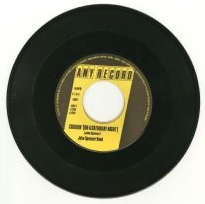
From 1978 onwards, over more than a dozen albums and a handful of singles released on a variety of British and European labels, Spencer threw himself into the recording business. His music never sold anything like the numbers that his old shelf-stacking workmate’s group would, but Spencer made his mark on the British music scene, though Jerry Williams took Cruisin’ (On A Saturday Night) into the Swedish Top 10. As John Collis wrote in 1996, Spencer retained “a faithful constituency of followers” but increasingly that following included name musicians. The scene that nurtured and sustained his songwriting blurred folk, blues, R&B, punk and pub rock. His songs were grounded in the sterling examples of Woody Guthrie, John Lee Hooker, Leadbelly and any number of people who had dealt a good three-chord trick. Interpreters such as Home Service, Augie Meyers, Martin Simpson, Norma Waterson and Jerry Williams took his songs into the wider world. Likewise, the actress Susan Penhaligon, with whom he did poetry and music performances that brought his name to still different audiences. Fast Lane Roogalator – sons Syd and Tom with a little bit of Will Spencer – made an album of twelve of their father’s songs, including Drive-In Movies (about his love-hate relationship with the USA), Only Dancing (power chords reign) and One More Whiskey (one of Spencer’s great parting glasses). Fast Lane Roogalator (2004) was produced by Graeme Taylor, incidentally.
Between 1974 and 1978 he gigged and recorded with his group, the Louts, with Chas Ambler, Johnny G. (Gotting) and Dave Thorne. “It was a pretty anarchic band,” he told me, “but the LP doesn’t reflect that: it’s full of pretty songs. The live gigs were something else. It preceded punk by about four years. In fact just as we were breaking up we were starting to get a few punks arriving at our gigs figuring that as we were called the Louts we were a punk band. We weren’t a punk band: we were an anarchic band. Each gig was either diabolical or fantastic. There was no middle ground.” Spencer later fondly remembered an incident at a Louts’ gig at the Half Moon at Putney as defining the band’s attitude. He had it on tape. “You hear this American voice keep calling out, ‘Haul ass, Spencer! Haul ass!’ Eventually Johnny G. behind the drums shouts back – he didn’t have to shout because he had a mike – ‘We got your money, fuck off!’ To which this American from the back cries out, ‘You didn’t get all my money. I got in for half-price.’ To which Johnny G. shouts back, ‘Then you should have fucked off half an hour ago!’ That summed up the Louts live.” The Half Moon of yore also saw the soon-to-be Elvis Costello open for him. Or maybe it was them – the Louts – because that is what the passage of the years does to people’s memories and I can’t check with Spencer now and Costello isn’t answering my calls.
In 1980, Spencer fell in with members of a collective of musicians based at the National Theatre. Effectively one of the NT’s main house bands, the collective would emerge from the shadow of the Albion Band and its temporary name of the First Eleven – very cricket, very big band – to become the Home Service. (Spencer would team up with three members of its early line-up – the bassist Malcolm Bennett, drummer Michael Gregory and guitarist Graeme Taylor.) The Home Service represented the next major development in folk-rock, the overdue progression away from Fairport Convention, Steeleye Span and the Albion Band. As time and other commitments allowed, a new ‘parallel offshoot’ of the Home Service came into being. It was known as the John Spencer Alternative (or variations on that name theme). Graeme Taylor’s signature Fender Stratocaster lead electric guitar would act as an eloquent foil to Spencer’s Telecaster rhythm guitar for many years.
While the Home Service and The Mysteries went from success to success, Spencer and Johnny G. made the album Out With A Bang (1993). It kept the pressure on. As he explained it, “I had an idea to go back to my early liking for skiffle, Big Bill Broonzy, Leadbelly, down home music, away from the more sophisticated rock format that I’d since developed.” And however secure work in the National Theatre made life for the musicians in the Home Service and the trilogy of plays they appeared in, The Mysteries brought them to the theatrical public, they found themselves missing that particular engagement that brings a band and a hall of concert-goers together. Distanced, one might say. They were a band of power and majesty – no exaggeration – indeed and they missed playing gigs. Spencer had never missed that face-to-face contact but when John Tams did one of his trademark disappearing acts, Spencer was shanghaied as the only fool in town who could do lead vocals with the Home Service. That is, without comparison with Tams or the band’s other, erstwhile vocalist Bill Caddick. Jon Davie, the band’s bassist – who made such a mark in the John Spencer Alternative (or variants thereof) after replacing Malcolm Bennett – recalled with great amusement how Spencer memorised the lyrics from the CD booklet on the way to the Sidmouth festival, periodically slugging from a bottle of scotch. It took three sorts of courage – London, Scotch and Dutch – to walk on stage depping for one of the greatest deliverers of a lyric the British folk scene ever nurtured – John Tams. Spencer had it. He also performed with Martin and Jessica Simpson in Flash Company as a sideman cum featured spotlight hog. In 1990 Spencer formed a semi-acoustic line-up called “Parlour Games” (with double quotes for some reason) that recorded several albums for Round Tower. It was an excellent band and a natural development for Spencer. He spent his musical career balancing the sensibilities of Buddy Holly and Big Bill Broonzy with the power of the Telecaster.
When it comes to acute observations, Spencer was up there with Richard Thompson in terms of quality and output. Neither was prolific but neither ever let up. Several things come across in Spencer’s songs. One is his wonderfully acerbic sense of humour. Crooked-smile observations adorn his songs. In All On The Road Tonight on one of his (inevitably) cassette releases he yelps, “Jesus Christ, they’re all on the road tonight/Perfect strangers out to take my life”. In his song about poverty knocking, Funny Honey, he squints, “Got a gallon of petrol in my tank/Earns interest for the local bank”. At other extremes, he wrote one of the most telling couplets about the Falklands Oil War of 1982: “What do we learn?/We learn aluminium burns”. That song, Acceptable Losses, released on Out With A Bang (1993), ranks as one of the most insightful songs about the South Atlantic debacle written in English, up there with Shipbuilding and Company Policy. Spencer adopted plenty of sides in his songs. Whiteboy on his undated Break & Entry CD (1989) is still one of the better observations on the Irish situation. Spider On A Log on “Parlour Games” (but the old cassette was better) is a song of leave-taking brought on by a fear of flying and a streak of pigheadedness while his body of relationship songs such as Crazy For My Lady, Gingham, White And Blue and Alone Together is nothing short of haunting. Even his backward glance at The London I Knew when neighbours were family and people gave up their seat on the tube looked at how people conduct themselves with friends or strangers. Even some of his apparently most straightforward songs had unwritten subtitles. One More Whiskey, a song that the Home Service made their own (it appears on their live album Wild Life (1992)), is a road song, a much over-subscribed to source of ‘inspiration’ for album filler, not a drinking song. As road song twists go, it rivals Robb Johnson’s Supporting Chumbawamba (At Whitehaven Civic Hall) as an alternative insight into life as a touring musician. To this day, it tends to be the old cassettes that he sold at gigs that I play.
JBS died of endocarditis aged 57 at Charing Cross Hospital, not so far from the flyover they built over his birthplace, on 25 March 2002. In a friendship that straddled three decades, John and I never exchanged a single cross word. To be honest, the worst thing I can think about John was his horticultural hypocrisy. It was a shared joke. When penning one of my favourite lines in one of my favourite songs of his, Forgotten The Blues, he sings – or Martin Simpson – the line “sweet as fresh-cut coriander”. Spencer was an unashamed parsley man when it came to growing the green herb; it was a gauntlet to a coriander grower like me. Actually, it was more banter and shared joke than anything else. Life is fed, watered and made hospitable by boon companions. John Spencer was one. I miss him tremendously.
Written in John’s local, The Old Pack Horse, Chiswick, August 2002, updated in the same borough, October 2007
17. 10. 2007 |
read more...
 [by Ken Hunt, London] Lal Waterson, who died in September 1998 aged 55, was a founding member of the Watersons, the Hull-based folk group. Elaine, to use her proper name, was the youngest of the three siblings that eventually lent their name to one of the English Folk Revival’s most influential and utterly inimitable voice-based groups. People called her the Quiet One. And there was a sliver of truth to that. Leastways while her defences were up and she was sounding you out, getting your measure. Still, without getting into the realms of cod-psychology about youngest children and their chatterbox tendencies, she had few problems when it came to talking, just difficulties whilst under the spotlight and getting asked to talk about herself and her songs. Lal Waterson was a very visual songwriter. She wrote as she saw things and what she wrote often rode roughshod over the rules of song or poetic form. She kept her cards close to her chest when talking about what she was revealing – or hiding – in her songs.
How prolific Lal Waterson was as a songwriter is open to speculation. Her brother Mike, with whom she made Bright Phoebus (1972) with an assortment of England’s finest including Martin Carthy, Bob Davenport, Tim Hart, Ashley Hutchings, Dave Mattacks, Maddy Prior, Richard Thompson and Norma Waterson in tow, summed it up nicely. She would bring a song to him to get his feedback and comments. Then off she would go and return with an entirely different song. Rather than tweaking a rhyme or allowing a seeded idea to germinate, she would cultivate yet another song while claiming it to still be the same original song. It was rather like getting three songs for the price of one. Or would have been if he had logged all three.
In 1996 Topic put out Lal and her son Oliver Knight’s Once In A Blue Moon. The posthumously released A Bed of Roses (1999) followed. Save for archived (if not too grandiose a word) paper and demo tapes, that was that. Oh, and the Shining Bright compilation of 2002. In which a cast of notables revisited the Bright Phoebus material or went into other territory, such as Norma Waterson interpreting the very personal recollections within Song for Thirza, a song about the woman who helped raise them after the death of their parents. “You were brought from the work house to live with us,” it begins. Lal’s own singing of Song for Thirza captured as an early 1970s demo would wait in the wings until its appearance on the Watersons’ retrospective boxed set Mighty River of Song in 2003. Jo Freya revisits the song on Lal in a wholly touching way, in one that makes the specific universal in a way I would never have imagined possible from knowing or talking to Lal, Mike or Norma. That is Art with a capital A.
The Lal Waterson Project boasts an illustrious assembly that draws on the No Master’s Co-operative, of which Lal was an early collective member. Aside from Jo Freya (vocals, tenor and soprano saxophones), Lal draws on the talents and experience of Chumbawamba’s Jude Abbott (vocals, trumpet), Coope, Boyes & Simpson’s Jim Boyes (voice, acoustic and electric guitars), Chumbawamba’s Neil Ferguson (vocals, bass and acoustic guitars), the Old Swan Band and Jo Freya’s sister Fi Fraser (vocals, electric violin, alto sax, clarinet), the Sex Patels’ Harry Hamer (cajon, tabla) and The Poozies’ Mary Macmaster (vocals, acoustic and electric harp). (Macmaster’s harp on Flight of the Pelican is a marvel.) To which should be added the string quartet of Sarah Matthews and Bella Hardy on violins, Rachel Lawrence on viola and Gill Redmond on cello that boosts the elegiac Migrating Bird, the album’s concluding song.
Jo Freya herself worked with Lal Waterson, guesting on both Lal Waterson and Oliver Knight albums. The most memorable of her contributions appeared on Altisidora on Once In A Blue Moon – an intertwined voice and clarinet dance that is both a peak in empathetic communication and a short-listed desert island disc. Having worked with Lal undoubtedly helps Lal‘s overall success, but, for me, the reason why Jo Freya’s Lal Waterson Project works so especially well boils down to two things. When it comes to the material already in the public domain, the Project avoids the temptation to stick to the material’s ‘stock’ arrangements. Nothing warmed over, nothing réchauffé in the French. Midnight Feast gets a backbeat – admittedly not a big step for Humankind. Yet even though Party Games draws on the familiar Bed of Roses arrangement that Freya and trombonist Alice Kinloch worked up, here it is a springboard, not a replication. As far as I am concerned, the main reason for the Project’s success is down to timbre.
When singing solo – as opposed to singing with the family firm – Lal sang in her natural register, expressing things in her own, everyday voice and own idiomatic Yorkshire English. Jo Freya’s natural timbre matches Lal’s speaking and singing voice beautifully. Yet interestingly, while certain flattened vowels in The Bird are pure Lal, the vowels surfacing in May Butterfly are Jo Freya’s and clearly out of county or indeed Riding.
The thing is this: Lal’s songs were like nobody else’s in my experience. Gleaning local or private knowledge helped you glimpse pinpricks of light in the rolling fog. When she or Jo Freya sing “Spent all last night in Wilson’s Arms” in her song Wilson’s Arms, then it helps to know a bit about Yorkshire geography and moorland. And toping topography. The Wilson’s Arms was a pub up the road from where she lived – everywhere is up the road from Robin Hood’s Bay – but there again the printed lyrics blow – give away – the sung pun. When in Flight of the Pelican talk turns to the pelican, it helps to know that Lal Waterson served time as a heraldic artist in her youth and was well aware of the pelican’s self-sacrificing and caring, heraldic symbolism. Heraldry hones the cutting edge in this song despising Thatcherite values. Likewise Some Old Salty recalls the jive and bop of the Humber riverboat cruises of the 1950s. Still, what is there not to get when Bath Time and its evocation of parenthood, bath and bed time? Jo Freya knows these things and that is why, in my opinion, her interpretations really get under the skin of Lal’s idiosyncratic missives masquerading as songs and cast them in new light. A masterpiece of re-examination of a true original.
Ken Hunt is responsible for Lal Waterson’s entry in the Oxford Dictionary of National Biography and the fulsome biographical and song notes in the booklet accompanying the Watersons’ Mighty River of Song.
Lal No Masters Co-operative Ltd NMCD27 (2007) For more information visit /a>- http://www.nomasters.co.uk/
8. 10. 2007 |
read more...
“It said more about pop than a year of Top of the Pops.” – Observer, 1968 television review
 [by Ken Hunt, London] The 1960s were a peculiar time for popular music in Britain. On the one hand, there was this enormous explosion of pop music (that was increasingly being called rock music) with a phenomenal coverage in periodicals and on the radio – especially pirate radio. On the other hand, British television barely bothered to cover the phenomenon, making at most feeble attempts to treat what was happening as worthy of serious treatment on television. It was a world of pop dominated by weekly programmes like Top of the Pops and Ready, Steady, Go. A hangover of a world extolling the importance of the Top Ten, when by the late 1960s the single charts were increasingly becoming the domain of bean-counters and teenies.
It was only really with Tony Palmer’s All My Loving in 1968 that things began looking up. It is the period’s one and only television documentary about pop music that burned its way into my memory – even from a one-time only viewing. Watching it again, many things jump out retinally and intellectually. The focus is rock music, mostly British – Jimi Hendrix broke through as a British phenomenon – but touching on the US scene, notably through Frank Zappa’s edgy observations. Palmer’s editing is relentless at times, especially during the fast montage sequence at the end. Still, there is a line in the documentary about “this time of instant global communication” that will raise wry smiles. Another generation would point to the internet and all that malarkey. Anyone who lived through the period, however, will remember the sheer paucity and inaccessibility of information about this music – or about folk, or Indian classical music or whatever – at the time. The weekly pop press, primarily Disc & Music Echo, Melody Maker and New Musical Express, had largely signed their own death warrants, though some would survive years before the overdue executions took place. In their place a wave of low-budget, devotion-driven magazines sprang up, the one that we remember the most fondly being Zigzag, steered by the estimable Pete Frame. Usually they were called fanzines, but that was an expression better reserved for the one-act homage magz that followed.
All My Loving was an intelligent, sometimes a wry or wall-eyed look at this new world of music. It is firmly in the stamp of the times. It has its share of popsters talking to camera, the likes of Eric Burdon, Paul McCartney, Pete Townshend and Frank Zappa. It also includes people in the business such as the Beatles publicist Derek Taylor, the Who’s manager Kit Lambert and EMI’s hot-shot producer and fifth Beatle George Martin. Casting aspersions, you get the author Anthony Burgess (Clockwork Orange), though he delivers a throwaway line accepting of cannabis as a not necessarily bad thing like a seasoned pro. Best of all, you get Eddie Rogers, a seasoned trouper with a comedian’s timing and delivery, straight out of Tin Pan Alley who brings a lifetime of experience about the business to bear on the subject. Not jaundiced or mentally wizened, more like utterly simpatico, he pops up throughout the documentary to deliver insights and memories. Like the time the singer Tommy Steele won first place in a poll as ‘Best Guitarist’ – an instrument he got others, notably, Bert Weedon, to play on his sessions. Ah, innocent times! When it comes to the participating musicians, the one who shines above everybody else is the acerbic Frank Zappa, with Paul McCartney as runner-up. Palmer’s editing is well paced and balanced, allowing the talking heads to have their say without editorial interjections of the kind we get continually in music documentaries nowadays. Burgess whinges about “pop prophets”; Zappa talks archly about “carefully packaged classical music at budget prices” and the “culture boom”. By way of setting the context, early on in the proceedings, McCartney puts the cat amongst the pigeons, saying, “Pop music is the classical music of now.”
1968 was the year of the Paris upheavals, the Vietnam War, the Soviet invasion of Czechoslovakia. Consequently, the style of the documentary is to intercut music footage – commentary or performance sequences from the post-Animals Eric Burdon, the Beatles, Cream, Donovan, Hendrix, Pink Floyd or the Who – with film of contemporary political events whether the Civil Rights Movement in the States (allowing for comments on the stylistic development of Hendrix’s playing style) or the Vietnam War and footage of the Shoah and Nazi Germany. The fascist sequences work less well, pressing the wrong buttons. They come across as something approaching forced or contrived. Images of concentration camp and the Vietnam War victims, notably the summary execution of a Vietcong suspect by a single shot to the head in a street in broad daylight, arc across the years. Yet Palmer doesn’t, for example, make any musical connections, say, with the Comedian Harmonists during the Nazi era and the political events. (Mind you, in 1968 the Comedian Harmonists would have been a real blast from the past and we had to wait nearly three decades for the likes of Eberhard Fechner to untangle their history.) From memory, from memories of a less questioning time, in 1968 in England, it seemed relevant. In 2007 the Second World War footage seems gratuitous and typical of history seen through the distorted prism of history documentary channels that regurgitate the Second World War in all its splendour, diversity and neverendingness daily.
That quibble in no way detracts from this marvellous documentary about the nascent rock scene, about a time when pop grew wings. All My Loving is a blueprint for how film-makers should approach contemporary music of any genre whatsoever at the time with context, commentary and, above all, music. The point is to think about what is presented here. What is. Not what is outside its purview. The extras are a good, illuminating interview with Palmer from January 2007 and a series of music-related collage-cartoons by the British cartoonist Ralph Steadman that take Dylan, Judy Garland, the Beatles, the Stones, the Who and that hard-core rocker Tiny Tim as their inspirations (and which could have been far better reproduced). All My Loving is a major item restored to the consciousness and marketplace.
All My Loving Voiceprint TPDVD101 (2007) – for more information visit www.voiceprint.co.uk
24. 9. 2007 |
read more...
 [by Ken Hunt, London] Their marital relationship hitting the buffers by the beginning of the next decade was years away when Richard and Linda Thompson made these live recordings. Hindsight of that nature adds nothing to the frissons that In Concert 1975 delivers. After all, living a year of your life in no way compares to the way a year or three gets ‘telescoped’ for the purposes of biography. And in any case between 1974 and 1982 the couple released a sequence of jointly credited duo albums that count amongst the finest to come out of Britain during the period in terms of songcraft and performance. This is them at their peak, though they were soon to duck out of this life to pursue other, non-musical paths in a Sufi community.
When John Wood recorded this material for Island at concerts in Oxford, Swindon and Norwich in November 1975, Richard and Linda Thompson were promoting their third album Pour Down Like Silver – the second of two albums released in 1975. They were on a roll and were an act that had my highest respect, if not always my hard-won shekels. Back then, I had to choose continually between the live experience and the artefact. It was one or the other, in other words. ‘Keep music live’ might have been the Musicians’ Union car sticker in my father’s car but what it meant for me was fiddling the tube fare in order to get to the club or venue and also walking a few miles before and after the gig. Every gig attended meant the week’s penury. England swang like pendulums do. Or whatever that American fellow said.
The band on In Concert 1975, in addition to the Thompsons – Linda on vocals, Richard on guitar and vocals -, consists of John Kirkpatrick on Anglo-concertina, accordion and vocals, Dave Mattacks on drums and Dave Pegg on bass guitar. I have no clear memory of seeing this line-up at this point, though, as their I Want To See The Bright Lights Tonight (1974), Hokey Pokey (1975) and Pour Down Like Silver (1975) were part of the period’s sound palette, I presume I did. Those three albums provide In Concert 1975‘s core repertoire with such material as Hard Luck Stories, Jet Plane In A Rocking Chair, Hokey Pokey (The Ice Cream Song), Streets of Paradise and For Shame Of Doing Wrong. Adding the Morris Medley comes across as a bit token, but given the personnel at their disposal it is no surprise that the instrumentalists revisit something from the 1972 Morris On project. Far better is the Fairport flashback with Thompson and Dave Swarbrick’s Now Be Thankful.
These fifteen tracks date from a period when musical frissons abounded – as opposed to personal frictions during contract fulfilment appearances when the couple’s unhappiness was manifest on stage. In Concert 1975 is a new artefact, nothing revamped, not one of those bonus track-enhanced affairs that come with this year’s copyright year on them, yet never quite date by year what came before. Having said that, two cuts on In Concert 1975 – Calvary Cross and It’ll Be Me – are identified as having previously appeared on Richard Thompson’s 1967-1976 anthology (guitar, vocal) and as “alternative mixes”. They are specifically identified as performances from the Oxford Polytechnic gig from 27 November 1975; nothing else here gets that precision. The album sticker calls this release, “Their complete 1975 live show with encores” – though it is in fact a composite concert, so to speak, and when it came to encores the Thompsons’ gigs drew on a big pool of covers., one of their great attractions because you never knew what they were going to let rip with at the end of the evening.
Vocally, Richard Thompson’s singing voice has a way to go. It lacks the muscularity of his later solo work, though Streets of Paradise has pre-echoes of how his voice would develop. Still, he did have Linda Thompson singing her heart out on stuff like A Heart Needs A Home or For Shame Of Doing Wrong. But even in its comparative frailty, for example, when supporting Linda’s lead vocal on For Shame Of Doing Wrong, Richard’s shadowing vocal is opening doors by the song’s mid-point. And then his string bending gets under way.
Night Comes In, at nearly eleven minutes, is still, for my money, Richard Thompson’s finest, clearest-eyed, Sufi-inflected song. Its clarity, at the risk of sounding a paradox, is its opaqueness. Where other of their so-called Sufi-period songs used Rumi-inspired imagery – such as the reed – Night Comes In uses images of the Beloved, wine and dance, permitting multi-levelled interpretation. Thompson’s guitar revels in its frrreedom to expand, like a child allowed out on the swings and roundabouts, playing truant from parental supervision. Philosophically speaking, its Judeo-Christian counterpart is Calvary Cross, the longest performance. It hits the 14-minute mark here, with Kirkpatrick’s squeezebox doing folk things that had never been heard in a rock context before. Mattacks’ drumming is clear metrically yet the beat is never the big deal. He underscores Thompson’s lead melody line. Together, Mattacks and Pegg complement Thompson wordless vocal lines, accenting syllables, adding accents, building tensions. The parts are so entwined, intertwined and intuitively of one that Calvary Cross repays repeated listenings, just to tease out what individuals are playing and doing.
This, though, is an album of vocal and instrumental togetherness. Amongst the finest song performances are Hank Williams’ Why Don’t You Love Me (Like You Used To Do). Ostensibly it’s a vehicle for Linda Thompson’s vocals. Yet it parallels when David Lindley accompanies Jackson Browne instrumentally. Voice and guitar combine to tell a story. The couple’s concerts had made a trademark of going into covers territory when encore time came around. Like here with Buck Owens’ Together Again or the choicest example here, Glen D. Hardin’s song Things You Gave Me. But I could be wrong about it being the choicest example. I’ve been wrong before. And I’ll be wrong again.
�
14. 9. 2007 |
read more...
 Queen Elizabeth Hall, London 22 July 2007
[by Ken Hunt, London] Transformative is probably the most appropriate word to describe the influential Northern Indian rhythmist, composer and teacher, Alla Rakha Qureshi, and how his music affected people. Ustad in the concert’s title is the Muslim counterpart of Hinduism´s more familiar words pandit and guru. Certainly, Alla Rakha educated many, many people. The default-standard tale is that the West turned on to Indian music through the sitar. There is no denying the inherent truth, if hackneyed, of that proposition. But it was never the whole story, never the truth, the whole truth. For many people, the neon, flashing sign over the entrance to appreciating Hindustani music didn’t come with Ravi Shankar or Ali Akbar Khan, the Beatles, the Byrds and their kind. It came, heresy of Hindustani heresies, through clicking with taal (rhythm cycle). In other words, for many people, rhythm came before raga.
The musician responsible for handing out the skeleton keys to Hindustani rhythmicality was the once A R Qureshi of the Bombay film industry reborn as the Alla Rakha of Hindustani art music. Assuming you had any musical wit, once you heard him, rhythm took on new, multiple levels of meaning. You would be changed forever after. Seeing him play was an experience you could liken to what Burns conjures in his poem Ae Fond Kiss (One Fond Kiss): for to see him was to love him. Seeing him perform live you couldn’t but be seduced by the power and depth of his art and artistry. The facial grimaces and body levitations were pretty special too.
Since his death in February 2000, the Allarakha Foundation, run by his daughter Khurshid and her husband Ayub Aulia, has kept the flame burning. Over the years the tribute concerts’ mood has changed, going, as is proper, from the emotional to the celebratory. In 2001 Sultan Khan singing his friend to sleep with a Rajasthani sarangi and vocal lullaby was a dam burst of emotion. It is no exaggeration to say that most of the London audience was openly tearful, unashamedly declaring in public what Alla Rakha’s loss represented and meant to them. This 2007 concert hit a more celebratory note than that first death anniversary tribute but it was just as memorable. Alla Rakha’s oldest son Zakir Hussain Qureshi – let’s include the Qureshi for once – provided the link to family, pedigree and gharana – a school or style of performance. The illustrious Hindustani flautist Hariprasad Chaurasia headlined.
The honour of opening the concert fell to a trio, as yet without a name. They consisted of Kishon Khan on piano, the Swiss bassist Patrick Zambonin on six-string electric bass and the Cuban percussionist Oreste Noda on congas and percussion. The first piece, unnamed as they played it, named For Zakir by the intermission – thanks to the mind-focussing prospect of PRS income – opened alap-like with Khan’s piano. For Zakir flitted in and out of modality. It never went where, say, Adnan Sami went with Hussain on his now barely remembered, enfant terrible-period calling card, The One And Only from 1990. (Whilst London correspondent for the El Cupertino-based Keyboard I was, having caught him on British television, the first correspondent to champion Sami as something special in the United States – years before his reinvention as a Bollywood music director or composer.) Or the historic raga-to-keyboard work of Jnan Prakash Ghosh and V. Balsara. The trio’s worldview is different. The Bangladeshi-Cuban connection was best revealed on the second of their two numbers. Called Manush Guru, it was based on a piece by Lalan Shah, also known as Lalan Fakir, whose Sufi poetry suffuses the subcontinent’s mystical philosophies. Lalan Shah touched on Bhakti Hinduism (Reformation devotional) and Sufism (mystic Islam). Most especially, his work was revealed in that to-be-marvelled-at, syncretic philosophy practised by the Bauls in which godhead is reduced to the Man of the Heart or that which lies within each of us, a philosophy that superannuates the sky pilots’ favourite chum. After a skip-beat pause, the trio spun into Sapasa (named after its opening notes sa and pa in Indian sol-fa) with Noda’s congas playing pseudo-tabla. Why devote so much space to an opening act that played two pieces? Because they were worth it.
Zakir Hussain appeared next with harmonium accompaniment from Fida Hussain and Surjeet Singh playing lehara patterns on sarangi – melody supporting rhythm in other words. Hussain announced it as a peshkar, as a homage to the ones that have gone before, and a way of announcing pedigree and guru. His spoken interjections provided context. Sometimes the context was biographical as he talked about his father or his father’s Punjabi tabla style. Sometimes he told tales in rhythm, with typical Hussain verbal quirkiness (“life is good, TV’s on – plasma”), as when he announced two tabla notes as characters in a story. Minimalism personified, imagine Prokofiev’s Peter And The Wolf characters reduced to a note rather than an instrument. He interposed spoken insights that illuminated the Punjabi style of tabla playing and percussion composition. Like the one about an age when a percussion composition might be handed on as a dowry item. A consummate performance and display of virtuosic musicianship.
The honour of concluding the concert fell to the bansuri (bamboo flute) maestro Hariprasad Chaurasia with Sunil Avachat playing second bansuri, Hussain on tabla and the concert promoter Gilda Sebastian on tanpura, the stringed drone instrument. Chaurasia played a new composition of his own devising with a light dhun or folk air touch to it. Called Brindavni Malhar, it evoked both geography in Brindava – a place associated with the flute-playing Lord Krishna – and weather since Malhar is a rainy season raga. Passages evoked the pitter-patter of rain and, it seemed, the repetitive simplicity and carrying power of woodland birdcall. Unbeknownst to Chaurasia, Britain was suffering extensive flooding. At times Hussain played with a lightness of touch and deft understatement I can only compare in my experience to his restrained accompaniment while accompanying the bansuri virtuoso G S Sachdev at Ali Akbar Khan’s eightieth birthday bash in Marin County, California in 2002. That time, he was on his mettle, a perfect accompanist and beyond exceptional in his invisibility. But his accompanying Hariprasad Chaurasia’s three raga performances warranted high praise indeed. Every so often you go to a concert and it is so extraordinary you scarcely dare to believe your senses. A Tribute to Ustad Alla Rakha fell into that rare category.
�
13. 8. 2007 |
read more...
 15-29 July 2007, Krems, Austria
Krems is a beautiful and peaceful town on the river Danube in Austria, known for its Riesling wines and – in past years – also for the Glatt und Verkehrt festival. The name literally means a knitting style that changes between two types of stitches, the “smooth” and “inverted”. This is actually a good definition of the programming, which includes some well known local traditions in an unusual setting, like the Indian guitarist extraordinaire Amit Chatterjee performing with the Austrian yodelers Broadlahn, an idea which dates back to times when Amit was a regular member of Joe Zawinul’s syndicate.
 Or imagine a “voices triangle” from three very different corners of world. The Norwegian yoiker Inga Juuso stands on the left, an Alpine trio with Gretl Steiner, looking like a good-hearted Granny who just escaped from a fairytale, in the center. The right side of the stage is occupied by Ayarkhan, consisting of three astonishing ladies in Yakutian fur costumes with shining metal bonnets, doing their Horse Spirit songs and a striking voice-through-jew’s-harps performance. While staging a mega jam session would the obvious idea, the programme director Jo Aichinger took a more sensitive approach, and for most of the set focused on the visual and sonic contrast of separate performances.
But also you can create a momentum by mixing contrasting ingredients of the same culture. The Antchis Chati Choir from Georgia revived the “krimanchuli” polyphonic style, more rhythmical and raw than the polished recordings of better known choirs like Rustavi. After their drinking songs of innocence followed the turbo-performance of The Shin, “pan-Georgian” ensemble which includes duduk, bagpipe, dancer, and almost flamenco-sounding guitar.
On the other hand, the performance of the Kurdish singer Aynur stood like a monolith on its own, not related to any other pieces of the programme. I was stunned by the power of Aynur’s voice and percussive intensity (most of her band members switch between percussion and melodic instruments) on her breathtaking showcase at Womex in 2006, so this was time to explore the subtle details, like the classical Ottoman style of the violin lady Neriman Günes Akalin, who is also a long time member of the Turkish multicultural band Kardeş Türküler.
 For many, the programme climax came with a project labeled Colombian-Austrian Encounter, led by Lucía Pulido, who is not exactly a household name, but thanks to her sensitivity, taste and vocal capacities, has developed almost a cult position in the New York Latino scene, adding a spiritual level to Colombian rural songs. Since this spring, as an artist-in-residence she rehearsed with the principal Austrian electronic wizard Patrick Pulsinger, trumpet player Franz Hautzinger and others. Despite the result seemed to be more like a work in progress than a finished opus (the musicians plan to meet again in Colombia), following it was highly rewarding and enjoyable, like climbing a risky road that leads to a panoramic summit. If you plan to go to Mercat de Música Viva de Vic in Spain this September, be sure not to miss Lucía Pulido with another mixed project, Benjamim Taubkin’s América Contemporânea.
12. 8. 2007 |
read more...
« Later articles
Older articles »