Articles
 [by Ken Hunt, London] A long strange time with much written, little posted, too much heartache, death and separation. In other words: the usual. The backfill will appear. Work influences are, no apologies, rampant in these choices. It begins with Neil Young solo. It includes Mary Ann Carolan, Five Hand Reel, Paul Brady, Sakar Khan, Sam Lee & Friends, June Tabor, Barkatullah Khan, It’s A Beautiful Day and Wilson & Swarbrick.
This is a revised version which includes the full version of the Wilson & Swarbrick comments, dropped in on 4 October 2014.
 Needle of Death – Neil Young
Neil Young previewed this track at a sold-out concert at London’s Royal Festival Hall (RFH) called ‘A Celebration of Bert Jansch’ in December 2013. (BBC 4 televised highlights in The Genius of Bert Jansch: Folk, Blues and Beyond in March 2014.) We didn’t know it was preview though. Young wasn’t at the RFH bash but he did send a video of him performing this song of Bert Jansch’s. It was screened during the concert.
Young was a rock for Bert and Loren Jansch leading up to their deaths a month apart at the end of 2011. I did the last two major interviews of Jansch’s life, visiting them at home either alone or with Anne Briggs. Young booking Bert to open for him on North American tours during 2010 and 2011 was an act of rarest generosity and graciousness. Both Bert and Loren knew that their days were numbered, getting insurance to travel in North America was daunting and keeping their heads above water financially preyed on their minds. Those tours supporting Neil Young meant an enormous amount to them.
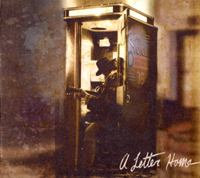
This is a song about narcotics. It was genuinely shocking when it appeared on Jansch’s self-titled debut LP in 1965. Young’s version was cut – the appropriate word – in Jack White’s restored Voice-O-Graph recording booth. It adds to the song’s grittiness. From A Letter Home (Reprise 9362-49399-5, 2014)
Arthur McBride And The Sergeant – Paul Brady
Andy Irvine and Paul Brady made their duo LP on the rebound from Planxty in 1976. It is that overused word: classic. Planxty had gone sour, they were shagged out and they needed the sort of musical succour that downsizing might provide. Off the treadmill the duo created one of the greatest folk albums that ever came out of Eire.
The story is excellent. Their version rings true. It is an Irish-located, anti-war polemic of a strength and kind that leaves an indelible mark of the sort that imprints where you first heard it. That strong a performance. Insert exclamation mark if you wish. My first brush with the album was at 70 New Oxford Street in London in a record shop called Collet’s. From Andy Irvine Paul Brady (Mulligan LUN CD 008, undated)
Further information at: http://www.andyirvine.com/albums/AndyPaul.html
 Laugh And Daft Half – Mary Ann Carolan
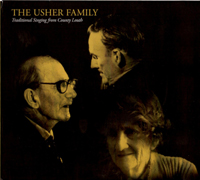
The Usher Family was a House of Usher of a different kind. County Louth is where the North’s Ulster Scots meets the South’s Anglo-Irish (as opposed to Irish Gaelic). Dónal Macquire made the recordings that appear on this CD in August 1974. The Usher Family on this album is Mary Ann, Pat and Petey (also rendered Petie sometimes). In 1966 the Irish folklorist and collector Seán Corcoran had met the family and, won over, spread the word about them and the family’s extraordinary repository of music. Other collectors followed.
Surely a song with “She talks like a parson/She sings like a nightingale” must whet the appetite. Mary Ann Carolan was a major Irish song-carrier and the Ushers just sang what moved them or they liked, as opposed to what the folklorists deemed was folk or not. The Usher Family just sang and, as this superlative collection makes plain, they did not give care whether what they sang was folksong, music hall, Child ballad, a John Sheil composition or songs of murky provenance. From The Usher Family’s Traditional Singing from County Louth (Rossendale Records MUS010, 2014)
Further information from rossrecords at talk21 dot com
A Man’s A Man For A’ That – Five Hand Reel
I only saw Five Hand Reel play once. It was at the time of their solitary LP release for Topic, in a venue close to Victoria Station in London. This song lent its name to their second LP for RCA released in 1977. It was an interesting period for folk rock. This song of Burns is a declaration of egalitarianism. Also known as Is There for Honest Poverty (grammatically it isn’t a question and hence no question mark is needed), Burns wrote it in the temper of the times – 1795 – and it anticipates later political developments. The Scots idiom ‘for a’ that’ – short for ‘for all that’ – means ‘in spite of that’. A Man’s A Man For A’ That started out as listening research for an article about Dick Gaughan. It stuck around well after the article was published. From Five Hand Reel/For A’ That/Earl O’ Moray (BGO Records BGOCD712, 2006)
Further information at: http://www.bgo-records.com/
Hindoni – Sakar Khan
Rajasthan is a wondrous place. If you get away from the tourist places and sightseeing haunts, it has so much to offer. It combines modernity, ancient suavity and traditions that go back to a time of tolerance when Hindu and Muslim societies co-existed as if normalcy had nothing to do with faith or caste divides. That may be an outsider slightly romanticising matters.
Sakar Khan (1938-2013) was a Manganiyar, one of Rajasthan’s two principal Muslim hereditary musician clans. (The Langas are the other.) Although he was a master of the kamancha or kamaicha (other variants are available), it was largely only after his death that he came to wider recognition. This was despite him having appeared as one of the ten Rajasthani musicians and dancers who took part in the From the Sitar to the Guitar concerts in November 1995 that Yehudi Menuhin and Ravi Shankar put together in Brussels. (The DVD of the same name came out in 2006.) Menuhin sounded me out in some detail about the concerts, our having already worked together on a project. Twenty years on I have no memory why we didn’t follow up the conversation.
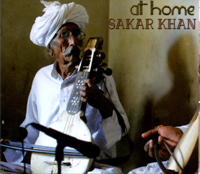
Kamancha is one of Rajasthan’s major bowed stringed instruments. It has a sound box generally covered with goat hide, three primary playing strings made of gut and 14 metal sympathetic strings. This track, on which Sakar Khan also sings, is a love letter from the past to the future. From At Home (Amarrass AMAR 006, 2012)
(An in-depth review of the album from which this comes is due to appear in issue 125 (Summer 2014) of Pulse) http://www.pulseconnects.com/
Further information at: http://www.amarrass.com/ UK distribution is through Harmonia Mundi.
Andrew Buncombe’s obituary of Sakar Khan from The Independent is at: http://www.independent.co.uk/news/obituaries/sakar-khan-musician-who-worked-with-shankar-menuhin-and-harrison-8810142.html
Rāg Bhupali – Barkatullah Khan
Barkatullah Khan of the Jaipur Senia Gharana is a name that rang no bells when I stumbled upon him. A gharana is in essence a school and style of playing rooted in a particular geographical location with prescribed approaches and specific characteristics which grew into a musical ideology through historical isolation. He was a sitarist that died in 1930 and this recording is said to be his only recording. He studied under Rajasthan’s acclaimed Jaipur Senia sitar player Amrit Sen (1813-1893). That is about the extent of my knowledge about him.
One of the consistently fascinating aspects of early recordings is how musicians adapted to, and coped with the limitations of, and new vistas offered by technology. It is a process that continues. It did not stop. It has not gone away. Listening to Hindustani musicians distilling the essence of a rāg into the time available can throw up remarkable insights. Barkatullah Khan’s Bhupali lasts around two minutes and twenty seconds and he isn’t finished playing before the cylinder runs out. It’s like a postcard turning up 100 years after posting. For more erudite material than this on the bigger subject, may I recommend some reading material? Try Timothy Day’s A Century of Recorded Music – Listening to Musical History (Yale University Press, 2000). This recording is something I would like to share with you. From http://india.tilos.hu/english_gh_jaipur.html (1904)
Further information about the gharana is at Steven Landsberg’s website: http://ragascape.com/
 Airdog – Sam Lee & Friends
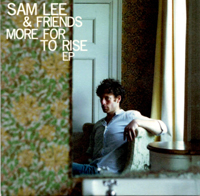
This is one of the four tracks on a ‘holding’ EP before Sam Lee makes his second CD. The song is learned from his de facto guru, Stanley Robertson – the Scots Traveller nephew of Jeannie Robertson. Stanley Robertson was very kind to me when I wrote his aunt’s entry for the Oxford Dictionary of National Biography. Traveller genealogies would fry the brains of anyone – sane or not.
 Airdog is such an unlikely title, given its context. It sounds like ‘hare dog’ (‘are dog) ought to fit better there. If this is a portent of what is to come, then that sounds jolly good. After all, a song that slip-slides so well between hunting imagery and sleeping all night in a tinker’s arms has to have depths to plumb. From More For The Rise EP (Nest Collective TNCR002CD, 2014)
While Gamekeepers Lie Sleeping – June Tabor
One of the first tranches of CD updates from Topic’s vinyl catalogue and originally released in 1976 this was an album that helped to cement her reputation. It is hard to express what she did to the British folk scene. She shook it up and afterwards it was never the same. She had a certain physicality that appealed but more pertinently she had an intellectual wherewithal that really engaged. Long, long before CD boxed sets were a twinkle in their daddies’ eyes (always a man always a man), I claimed first dibs when it came to writing the notes for her boxed set. And thus it came to pass. It is impossible to imagine the British folk revival without her. And this performance is one of the reasons why. From Airs And Graces (Topic Records TSCD 298, 1989)
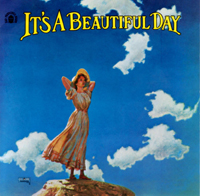 White Bird – It’s A Beautiful Day
This was the opening track of this San Francisco-based rock group’s debut LP from 1969. The song, co-written by Linda LaFlamme and David LaFlamme, captures a mood, just as its cover artwork did. Its artwork was designed by George Hunter while Kent Hollister’s cover painting supposedly was a lift from an old US housekeeping magazine. No matter what the deal was when it came to inspirations or lifting ideas, the LP cover tapped into fantasies of sunshine, blue skies and Californian misses. The vocal-violin-led performance stands up well.
The violinist Vanessa-Mae covered it years later but it felt like a managerial choice. From It’s a Beautiful Day (San Francisco Sound SFS 11790 DA, undated)
Red Rose Medley – Wilson & Swarbrick
I got a preview of this track during a break during an interview with Dave Swarbrick in August 2010. It combines Bob Burns’ My Love Is Like A Red, Red Rose’ and Rob Marley’s No Woman No Cry. It was a wow moment for its audacity. His and Jason Wilson’s vision is one that has only increased in stature. One of the most delightful aspects of this arrangement is that the Bevvy Sisters (in their then line-up of Lindsay Black, Heather Macleod and Kaela Rowan) do the I-Trees in most sumptuous and sensuous ways.
In a conversation with me, Swarbrick recalled Wilson approaching him: “I had an email from this guy called Jason Wilson – I’d never heard of him – and would I be interested in doing a fiddle on Matty Groves. He was putting together an album and wanted to do Matty Groves. I thought this all sounded a bit iffy. I get one or two requests like that and they’re never really very good. But when he sent me the track, I was completely and utterly devastated because I thought it was absolutely fantastic.
“One thing led to another and he asked if I’d come over and perform it in Toronto. By this time I was hooked. I thought he was a magical musician and magical arranger and I thought the whole band was fantastic. He said he wanted to arrange some things of mine and it just so happened that he picked the very first track on the very first album that I ever made. Just accidentally.” Wilson’s project turned into the Juno-winning album The Peacemaker’s Chauffeur (2008). Red Rose Medley was also a CD-single in 2011 but no bugger told me at the time. From Lion Rampant (Shirty SHIRTY4, 2014)
The copyright of all images lies with the respective photographers, companies and image-makers. The photograph of Sam Lee is © Santosh Sidhu/Swing 51 Archives.
31. 5. 2014 |
read more...
 [by Ken Hunt, London] In person Pete Seeger was, much like you’d imagine, physically pretty spindly, pretty lanky but with a muscularity. Born on 3 May 1919 in Manhattan, he had an air of another era about him. He had a personable gentlemanliness quality, if it doesn’t sound too foolish, a real Pete Seeger-ness to him.
The obituaries will rightly talk about his lion-heartedness facing down the House Un-American Activities Committee in 1955, blacklists and censorship, principles and running the gauntlet because of his involvement in the Civil Rights movement, his antiwar stance, his ecological activities and so on. There will be talk of songs such as Where Have All The Flowers Gone, Turn! Turn! Turn! (To Everything There Is A Season), We Shall Overcome and his antiwar parable Waist Deep In The Big Muddy. There was also the matter that he married Toshi, a woman of Japanese-American extraction, in 1943, at a time when the United States was beset with anti-Japanese fever.
In 1998 he was at a wedding in upstate New York. He had hunkered down with his banjo and John Herald had his guitar and they were leading a rough-and-ready jam session in the small marquee. The temperature dropped and a downpour came and the tent thinned out. A young man with a guitar sat facing Pete and he played something. Pete paused him, complimented him and asked him to show what he had just played. The young man with the guitar practically levitated with pride afterwards, like it was one of those tell-the-grandchildren experiences. That was Pete Seeger-ness personified. He radiated kindness, energy and engagement. He showed another side as the rain continued. When Toshi called him in, in a ‘Yikes!’ moment, he cocked a deaf ear and pretended he couldn’t make out what she was saying. And played on.
He died at the not-for-profit, non-sectarian New York-Presbyterian Hospital on 27 January 2014. Toshi Seeger died on 9 July 2013.
5. 2. 2014 |
read more...
 [by Ken Hunt, London] It started off as a slow year, especially in terms of concerts or talks that stood out. Disquietingly slow. Then it just got better and better, particularly when it came to concerts, and less so in terms of fees.
 New releases
Iva Bittová / Iva Bittová / ECM
Brass Monkey / The Best of Live – 30th Anniversary Celebration / Park Records
Katy Carr / Paszport / Deluce Recordings
Chumbawamba / In Memoriam: Margaret Thatcher / [no label]
The Furrow Collective / At Our Next Meeting / Furrow Records
Arun Ghosh / A South Asian Suite / Camoci
Kayhan Kalhor & Erdal Erzincan / Kula Kulluk Yakışir Mı / ECM
Lisa Knapp / Hidden Seam / Navigator
Laura Marling / Once I Was An Eagle / Virgin Records
Leyla McCalla / Vari-colored Songs / Dixie Frog
Quercus / Quercus / ECM
Martin Simpson / Vagrant Stanzas / Topic
Jyotsna Srikanth / Call of Bangalore / Riverboat Records
Jody Stecher / Wonders & Signs / own label
Simon Thacker’s Svara-Kanti / Rakshasa / Slap The Moon Records
The Ex & Brass Unbound / Enormous Door / Ex Records
Linda Thompson / Won’t Be Long Now / Topic Records
Marta Topferová & Tomáš Liška / Milokraj / Animal Music
Noëmi Waysfeld & Blik / Kalyma / AWZ Records
Duncan Wood & Guests / Swarbtricks – A Collection of New Melodies Purposely Composed for the Violin & Mandolin by David Swarbrick / Beechwood
 Historic releases, reissues and anthologies
Eliza Carthy / Wayward Daughter / Topic
Country Joe & The Fish / Electric Music for the Mind and Body / Vanguard
Grateful Dead / Sunshine Daydream – Veneta, Oregon, 8/27/72 / Grateful Dead Productions/Rhino
Paul Horn / In India/Cosmic Consciousness – Paul Horn In Kashmir / BGO Records
Ravi Shankar / The Living Room Sessions Part 2 / East Meets West Music
Dave Van Ronk / Down In Washington Square / Smithsonian Folkways
Lal Waterson / Teach Me To Be A Summer’s Morning / Fledg’ling
Young Tradition / The Young Tradition/So Cheerfully Round/Galleries/Chicken On A Raft EP / BGO Records
Young Tradition / Oberlin 1968 / Fledg’ling
 Events of 2013
Shirley Collins: ‘The Outskirts of Culture’ (talk) / Purcell Room, London / 2 February 2013
Milokraj featuring Marta Topferová & Tomáš Liška, Green Note, London / 10 April 2013
Martin Simpson & Ariev Azhar / Alchemy Festival, Purcell Room, London / 17 April 2013
Rory McEwen / Art exhibition – The Colours Of Reality / Kew Gardens / 11 May to 22 September 2013
Iva Bittová, David Dorůžka, Aneta Majerová and Peter Nouzovský / Libeňská synagoga, Praha 8 – Libeň / 31 May 2013
Landfall – Laurie Anderson & Kronos Quartet / Barbican Hall, London / 28 June 2013
Noëmi Waysfeld & Blik / Tanz&FolkFest Rudolstadt, Stadtkirche / 6 July 2013
Mariana Sadovska / Tanz&FolkFest Rudolstadt, Theater / 7 July 2013
 Sam Lee & Friends / Tanz&FolkFest Rudolstadt, Burgterrasse / 7 July 2013
David Lindley / Tanz&FolkFest Rudolstadt, Heidecksburg / 7 July 2013
Jyotsna Srikanth and Dr. V. Krishna (performance/talk) / Nehru Centre, London / 30 August 2013
Arun Ghosh featuring Zoe Rahman – ‘A South Asian Suite’ launch / PizzaExpress Jazz Club, Soho, London / 29 September 2013
Sudha Ragunathan / Darbar Festival, Purcell Room, London / ADD
Bright Phoebus Revisited / Barbican Centre, London / 11 October 2013
Martin Carthy & Dave Swarbrick / Turner Sims Hall, Southampton / 19 October 2013
Robb Johnson + Roy Bailey + Barb Jungr + Jude Abbott + Jenny Carr + John Forrester – Gentle Men: A family history of the First World War / The Tabernacle, Notting Hill, London / 7 November 2013
A Celebration Of Bert Jansch / Royal Festival Hall, London / 3 December 2013
 Ten music projects that returned to haunt
Martin Carthy & Dave Swarbrick / Prince Heathen / Topic Records
The Chieftains / 4 / Claddagh Records
Shirley Collins / Within Sound / Fledg’ling
Pannalal Ghosh / The Great Heritage / Saregama
Fraunhofer Saitenmusik / Das Album – 1978-1998 / Trikont
Dick Gaughan / Handful of Earth / Topic Records
Home Service / Alright Jack / Fledg’ling
Louis Killen / Ballads and Broadsides / Topic Records
Yusef Lateef / Eastern Sounds / Prestige
Kamalesh Maitra / Tabla Tarang – Melody on Drums / Smithsonian Folkways
Images: Smile x 2, September 2013 © Samita Vakani/Swing 51 Archives; Noëmi Waysfeld images at TFF Rudolstadt © Santosh Sidhu/Swing 51 Archives; Iva Bittová at Libeňská synagoga and John Tams of the Home Service at the Half Moon © Ken Hunt/Swing 51 Archives; Lal Waterson from Teach Me To Be A Summer’s Morning courtesy of © Fledg’ling.
Smile is now attributed to Banksy, according to an article in the Evening Standard of 20 August 2007. See http://www.standard.co.uk/goingout/exhibitions/smile-please-its-a-banksy-6607227.html
31. 12. 2013 |
read more...
 [by Ken Hunt, London] Noëmi Waysfeld & Blik’s Kalyma is an anthology of songs driven by enforced exile. Kalyma‘s springboard was a vinyl LP of songs derived from prisoners in the Siberian gulags in her parents’ record collection. Dina Vierny, the muse and model of the sculptor Aristide Maillol (1861-1944), whom he appointed executor of his estate, became a wealthy art dealer and patron of the arts. Those latter roles granted her access to the Soviet Union.
Ergo the album Chants des prisonniers sibériens d’aujourd’hui (‘Songs of Siberian Prisoners of Today’) eventually released in 1975 on Pathé Marconi in France.
 Noëmi Waysfeld & Blik’s interpretations of those Yiddish- and Russian-language songs formed the core of her performances in the festival’s church venue – and, the next day, in the open air on the castle terrace. As in mainly the case with Kalyma, she sang to accompaniments by Thierry Bretonnet on piano-accordion, Florent Labodiniére on acoustic guitar and oud and Antoine Rozenbaum on double-bass. Kalyma‘s key songs came out. These included the up-tempo title track, ‘And You, You Laugh’ – a prisoner’s imagining of their other half’s faithlessness beyond the barbed wire – and ‘Shnirele perele’ (‘String of Pearls’), for which she blanked the Messianic Yiddish lyrics and extemporised in German with her accompanists winging it behind the changed line lengths and stresses.
A fairy-dusting of coming projects slid in. She sang three self-composed, Yiddish-language re-poetisations of Portuguese fado songs from Amália Rodrigues’ repertoire. A signpost to what is coming. Noëmi Waysfeld & Blik proved themselves beyond superb.
All photographs © Santosh Sidhu/Swing 51 Archives.
21. 10. 2013 |
read more...
 [by Ken Hunt, London] This month’s selection is the product of one of most intense periods in career terms for several years . There was so much that could have reflected this month’s listening but for many reasons this is what, let’s say, is going to emerge. John Reilly, Robb Johnson, Leyla McCalla, The Home Service, Sam Lee, William Kimber, David Crosby & Graham Nash, John Coltrane and the Chumbas are, let’s call them, the chosen ones…
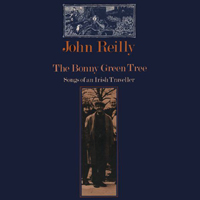 The Well Below The Valley – John Reilly
The Well Below The Valley tells a tale of deception, incest and infanticide. This particular performance – and a most remarkable one it is at that – was collected from the Irish Traveller John Reilly by the Irish folklorist Tom Munnelly. It originally appeared The Bonny Green Tree (Topic 12T359, 1977). One of the most intense songs ever to run through my little head. From O’er His Grave the Grass Grew Green – Tragic Ballads (Topic TSCD653, 1998)
Ken Hunt’s now-anonymised obituary entitled ‘Tom Munnelly: Irish folk music and folklore collector, singer and social historian’ published in The Scotsman is at http://www.scotsman.com/news/obituaries/tom-munnelly-1-918632
Be Reasonable – Robb Johnson
This is the opening track on this double CD. A commission came in about writing an article about political song in Britain and the album’s yellow spine sat winking at me like a little monkey. It is a full-tilt version of one of Robb Johnson’s most popular, rabble-rousingest songs. It has a catchiness, a singability that doesn’t take long for newcomers to the song to grasp and a message. In the album notes, Johnson adds some detail about the song: “Based on a good old Situationist slogan from Mai 68. I just translated ‘réaliste’ as the more English ‘reasonable’.” The idiom works marvellously.
Joining in on the anti-capitalist fun are Jim Woodland, Leon Rosselson, Frankie Armstrong, Ian Saville, Roy Bailey, and Reem Kelani. From Celebrating Subversion – The Anti-Capitalist Roadshow (Fuse Records CFCD 099, 2012)
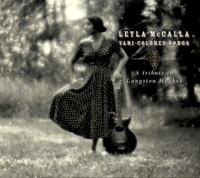 Too Blue – Leyla McCalla
Leyla McCalla first came to my attention as the cellist of the Carolina Chocolate Drops (with whose vocalist Rhianon Giddens she did a UK tour in early October which, alas I was unable to get to see because of the pressure of deadlines and life’s cookie jar – or as the British call it the biscuit tin – of conspiracies. To my mind, Vari-colored Songs is remarkable. McCalla mixes the poetry of Langston Hughes, Haitian folksongs (such as the Haitian Creole Kamèn Sa Fè? gleaned from Alan Lomax In Haiti 1936-1937 and the recording Ago Fixè’s Bal Band) and her own material. She creates music that is wholly hers and out there. Out there? Well, I don’t remember anything like this. This is way beyond The Secret Life of Bees (2008) in terms of cello – at the risk of sounding silly.
On this particular track she sings and plays tenor banjo. Luke Winslow-King accompanies on guitar and Cassidy Holden bass. From Vari-colored Songs – A tribute to Langston Hughes (Dixie Frog DFGCD 8752, 2013)
A Lincolnshire Posy – The Home Service
I lived through the recording of this album, the Home Service’s masterpiece. This is their take on Percy Grainger’s suite of songs that he gleaned from folksong collecting in Lincolnshire the the first decade of the Twentieth Century. A phenomenal piece of music. Cannot listen to it without thinking of their wind man Howard Evens ever. From Alright Jack (Fledg’ling FLED 3015, 1997)
 The Ballad of George Collins – Sam Lee
People can swagger, they can puff out their chests to outpoppingjay, er, poppingjays but if there is one thing to ground them, a good old-fashioned dose of something contagious is likely to do it. Life is a yet another sexually transmitted disease and traditional folksong got there well before the soundbites, as Sam Lee reminds with this song. (With apologies to William Kimber who follows…) From Ground of its Own (The Nest Collective Records TNCR001CD, 2012)
 Country Gardens – William Kimber
This is a piece of music made famous by Percy Grainger. Generations of eager young musicians have played his setting of this morris tune, perhaps without even realising that it is morris tune, let alone a handkerchief dance, and a tune made for dancing and dancing to.
William Kimber (1872-1961) is one of the father figures of the first English Folk Revival. It was on account of Cecil Sharp seeing him play with the Headington Quarry Morris Dancers on Boxing Day 1899 that Sharp had his epiphany about England’s folk music and dance. This particular recording of Country Gardens was cut by the concertina player on 1 June 1948. HMV released it in August 1948, according to the excellent notes. From Absolutely Classic: The Music of William Kimber EFDSS CD 03, 1999)
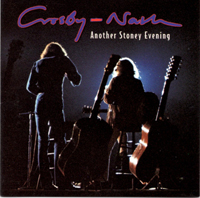 Laughing – Crosby-Nash
Bill Halverson made this recording in October 1971 at the Dorothy Chandler Music Center in Los Angeles. Stephen Barncard revisited the tapes in March 1997. This song was first released in 1971 on Crosby’s If I Could Only Remember My Name…. Crosby’s voice here is full of vigour and Nash adds some off-the-wall and/or plaintive harmonies. I reviewed the album this comes from in Mojo 1998 / 53, so the internet tells me. From Another Stoney Evening (Grateful Dead Records GBCD 4057, 1998)
Karuna Sevai – Sudha Ragunathan
Pāpanāsam Sivan (1890-1973) is one of the finest of Hindu hymnodists, renowned for his lyrics set to rāgam. This particular kriti – a form of Hindu hymn – is set in Hamsaddhwani. Sudha Ragunathan’s interpretation sails even if you have no notion of even which language she is singing in. From Pāpanāsam Sivan Kritis (Amutham Music Private Limited WS 014, 1999)
Ken Hunt’s The review for Pulse’s Winter 2013 issue of Sudha Ragunathan’s Darbar festival performance ‘Iconic Sitar to Mesmerising Carnatic Ragas’ is at http://www.pulseconnects.com/content/DarbarIconicSitarMesmerisingCarnaticRagas
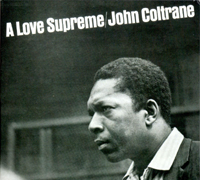 Part 1 – Acknowledgement – John Coltrane
Some music just arrives in your life and remains there embedded but slides into your life and cranium in a way that leaves no trace. When and how A Love Supreme arrived is lost. Actually it should be the flow of the three parts that make up A Love Supreme. From A Love Supreme – Deluxe Edition (Impulse! 314 589945-2, 2002)
Introduction → So Long, So Long – Chumbawamba
Oh, go on, go on, go on, lest we forget Margaret Thatcher’s death… From In Memoriam: Margaret Thatcher (no label, 2013)
The copyright of all images lies with the respective photographers, companies and image-makers. The photographs of Sam Lee are © Santosh Sidhu/Swing 51 Archives
31. 8. 2013 |
read more...
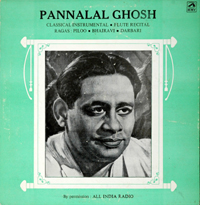 [by Ken Hunt, London] M.S. Gopalakrishnan, Barbra Streisand, The Byrds, Barbara Dickson, Martin Simpson, The Ex & Brass Unbound, Paul Horn, Duncan Wood & Guests, Pannalal Ghosh and the Grateful Dead provide the work- and life-related materials this month. Updated 21 October 2013.
Janani Ninnuvina – M.S. Gopalakrishnan
This is a composition by Subaraya Sastri. His pedigree as a composer-musician is unmatched as far as I know. (More informed readers than I, please correct if wrong.) He was the son of Syama Sastri (1762-1827), one of the Holy Trinity of Karnatic saint-composers and he also studied with the Trinity’s other two saint-composer Muthuswami Dikshitar (1776-1835) and Tyagaraja (1767-1847). This kriti or Hindu devotional hymn seeks the protection of the mother goddess.
A recording from 1978 taken from the NCPA Archives – the National Centre of Performing Arts in Bombay in July 1978. Kutralam Visvanatha Iyer accompanies on mridangam, the preeminent South Indian double-headed barrel hand drum. From M S Gopalakrishnan From The NCPA Archives (Sony Music (India) 88697 95855 2, 2011)
Ken Hunt’s obituary entitled ‘MS Gopalakrishnan: Revered Southern Indian violinist’ of 29 July 2012 in The Independent is at http://www.independent.co.uk/news/obituaries/ms-gopalakrishnan-revered-southern-indian-violinist-8501679.html
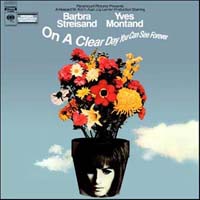 On A Clear Day (You Can See Forever) – Barbra Streisand
In this 1970 film Barbra Streisand plays the role of a young woman called Daisy Gamble. She has powers. The film’s opening sequence while the credits roll includes time-lapse film of flowers coming into bloom. You may well start thinking that this is all very good in a sub-David Attenborough sort of way. It emerges that Daisy can accelerate plant growth. She has other powers, including foreseeing when a telephone is going to ring, as Dr. Marc Chabot, played by Yves Montand, discovers when she goes to him in an attempt to break her nicotine habit through hypnosis.
Never having seen the film before, the notion had never crossed my mind that the title song feeds into the undercurrent about rebirth that emerges. It was a case of being too accustomed to this Alan Jay Lerner/Burton Lane song. Without any specific context, it had just washed over me. All that lodged was the central consolidation: “On a clear day/Rise and look around you/And you’ll see who you are/On a clear day/How it will astound you/That the glow of your being outshines ev’ry star.”
That and the ending lyrics: “On that clear day…You can see forever…And ever… And ever…And ever more!” ending, that whole context and drive of the song had never occurred to me. Getting disabused and having to reconsider a position (however tenuous, entrenched, pukka or inaccurate) once further context is supplied is one of life’s great joys and blessings. As much as anything, this is about reconsidering, re-evaluating or re-contextualising something that you thought you knew. From On A Clear Day You Can See Forever (1970)
Tribal Gathering – The Byrds
In January 1967 Golden Gate Park in San Francisco had its Gathering of the Tribes, something celebrated in this song by David Crosby and Chris Hillman. The song, recorded in August 1967, is of the moment, yet transcends its immediate birthplace and circumstances of its birth. It combines a West Coast jazz feel and a West Coast folk sound.
Over June and July I was doing interviews and writing an article about Rory McEwen for R2 and its September/October 2013 issue. The subject of the 1965 Keele Folk Festival, organised by Rory McEwen, had to be part of the narrative. It was a turning-point. McEwen fashioned a festival that truly was a gathering of the tribes, bringing together British traditional and revivalist musicians. The ‘gathering of tribes’ image had been in the article from before the day the article was commissioned.
Then two things happened.
A bunch of music critics were jawing about songs about childhood. The Notorious Byrd Brothers had this Goffin/King song on it, supposedly cut in solidarity with Dusty Springfield and her anti-apartheid stance. It is one of the most evocative songs about childhood. Then sitting in a pub proofreading the day’s copy and escaping the tyranny of the word machine Wasn’t Born To Follow from the same album came on. Out of this triad of connections came Tribal Gathering. From The Notorious Byrd Brothers (Columbia/Legacy 486751 2, 1997)
Baker Street – Barbara Dickson
This is the opening cut on Barbara Dickson’s 13-track project dedicated to the songs of Gerry Rafferty. The Scottish singer-songwriter Gerry Rafferty (1947-2011) came to a kind of prominence – in a low-key folk sort of way – as a member of The Humblebums with Billy Connolly between 1969 and 1971. Although I saw The Humblebums perform in 1970, no memory of their set whatsoever remains.
Between 1972 and 1975 Rafferty was one half of Stealers Wheel with Joe Egan. Thereafter his career came to a standstill temporarily, stranded in a legal desert with litigation vultures circulating. The breakout came in 1978 with City to City, produced by his old cohort Hugh Murphy. Its major song was Baker Street. It was an enormous hit and a staple of a certain kind of radio programming.
Barbara Dickson ran into Rafferty, she writes, “in the late 1960s, one Saturday, in the Scotia Bar in Glasgow”. Produced by Troy Donockley, the arrangement ingeniously replaces Raphael Ravenscroft’s distinctive alto saxophone solo on Rafferty’s original with low whistle – not that any saxophonist would attempt to replicate that solo. Barbara Dickson’s take on the song is a gem and really quite, quite original. From To Each & Everyone (Greentrax CDTRAX378, 2013)
Will Atkinson – Martin Simpson
This song of Martin Simpson’s tells the story of Will Atkinson (1908-2003), a remarkable traditional music-maker from the North-east of England. He put his stamp on Northumbrian music. In the notes to the song, Simpson reminds that he was still playing whilst he was in hospital two days away from dying. Atkinson also added to the tradition. One composition was Alistair Anderson’s Fancy, a reel named after one of the region’s finest.
Simpson’s songs were very much on my mind and casting my eyes across his albums, True Stories sprang to the forefront. Will Atkinson is one of Simpson’s finest songs musically; it is very English and lyrically a marvellous tribute to an inspirational musician who, for much of his life, music was a hobby and passion before it was a secondary income, however marginal. From True Stories (Topic Records TSCD578, 2009)
Further Simpsoniana at http://www.martinsimpson.com/
 Last Famous Words – The Ex & Brass Unbound
If I had to propose a list of the ten rhythmists that most keep me engaged and thinking, then, no sweat (on my behalf), Katherina Bornefeld would be in there like a shot. Her solutions to rhythm keep me on my toes. She challenges – please excuse that swelling cliché of a word. Her abilities to infuse songs with drum patterns are just extraordinary. She is a one-off. This, the first track on The Ex’s Enormous Door album, does it for me.
Last Famous Words – nice inversion – is one of those marvellously perfect pieces of music with the sort of wartiness which The Ex specialise in. The Ex are Kath Bornefeld (drums, vocals), Arnold de Boer (vocals, guitar, sampler), Terrie Hessels (guitar, baritone guitar) and Andy Moor (guitar, baritone guitar). Mats Gustafsson (baritone saxophone), Roy Paci (trumpet), Ken Vandermark (tenor and baritone saxophones, clarinet) and Wolter Wierbos (trombone) are Brass Unbound. This album was recorded in Posada Negro Studios in Lecce, Italy in June 2012. One of my most played albums of 2013 thus far. From Enormous Door (Ex Records EX138D, 2013)
More information at www.theex.nl
Raga Tilang – Paul Horn
Born in 1930 in New York, the flautist Paul Horn was one of the musicians that came together to play with Ravi Shankar on his Portrait of Genius (1964). This take on Tilang appeared on Paul Horn in India, subtitled “Ragas for flute, veena and violin”. From In India/Cosmic Consciousness – Paul Horn In Kashmir (BGO Records BGOCD1104, 2013)
More information at http://www.bgo-records.com/
Passchendaele/The Crow Steps Reel – Duncan Wood & Guests
Dave Swarbrick produced many of these new compositions in a flurry of creative energy. He had done a gig at the Edinburgh folk Club with Duncan Wood and Cathal McConnell and it led to a compositional jag. The 17 tracks and 36 compositions on this album are all tradition-based.
This particular composition opens with a 2/4 military march in a Scottish pipe vein. The title of the second piece, a reel, refers to the Scottish architectural feature called crow-stepped gables. This is a stair-step-like design at the triangular gable-end of a building, also known as a stepped gable or corbie step. (Corbie is Scots for crow.) From Swarbtricks – A Collection of New Melodies Purposely Composed for the Violin & Mandolin by David Swarbrick (Beechwood SWB121117, 2013)
October 2013 Coda: Dave Swarbrick asked me about this album after the Martin Carthy & Dave Swarbrick concert at Turner Sims Hall in Southampton on 19 October 2013. I started rabbiting and I cited this track. He looked blank when I mentioned the title. I thought I had fumbled it and went into apologies. Then he explained he was crap at titles – he cited one working title for a tune of this album as “Droopy Drawers” – and that Wood had weaved magic of another kind.
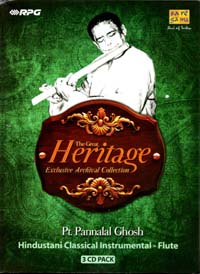 Kajri – Pannalal Ghosh
Pannalal Ghosh (1911-1960) is the Hindustani flautist who transformed the appreciation and status of the bansuri or bamboo flute. Kajri is the name of a folk form from the Indian region of Uttar Pradesh and is particularly associated with the city of Varanasi or Benares. This short piece closes the first disc of this triple set. This triple-CD set is the soundtrack to my article in Autumn 2013 issue of Pulse. From The Great Heritage (Saregama CDNF 150997-999, 2011)
Ken Hunt’s article about Pannalal Ghosh is in the Autumn 2013 issue of Pulse. More information at http://www.pulseconnects.com/
Turn On Your Lovelight – Grateful Dead
“And leave it on!” In memoriam: Bobby ‘Blue’ Bland (1930-2013). From Live/Dead (Warners, 1969)
The copyright of all images lies with the respective photographers, companies and image-makers.
PS Thank you for the feedback. Whatever else you may think – and what the troll-ridden comment corners that several newspaper propagate like Petrie dish cultures – many music critics in my experience operate in a response-free zone.
31. 7. 2013 |
read more...
 [by Ken Hunt, London] Oh, the wind, the rain and sun. This month Jyotsna Srikanth, Allman Brothers Band, Simon Thacker’s Svara-Kanti, Dunaj & Iva Bittová, Jefferson Airplane, Rosalie Sorrels Véronique Sanson, Joan Jeanrenaud, Martin Simpson, Fraunhofer Saitenmusik supply the umbrellas and the parasols.
 Brovabarama – Jyotsna Srikanth
This is the centrepiece of one of the finest Karnatic albums to cross my path thus far in 2013. Jyotsna Srikanth plays South Indian-style violin and this particular track is imagination distilled. From Call of Bangalore (Riverboat Records/World Music Network TUGCD1072, 12013)
Ken Hunt’s review of the album is in the online sampling of CD reviews in the summer 2013 issue of fRoots magazine at at http://www.frootsmag.com/content/issue/reviews/
Mountain Jam – Allman Brothers Band
In Prague, it turns out, under certain meteorological and optical conditions something strange happens. From the south, say from Braník, looking towards Hradkany – the castle – a mountain may heave into view just to the right of Hradkany. Ordinarily it isn’t there, isn’t visible. Yet the mountain is real and it has a name: Milešovka.
It is some seventy or so kilometres away. On being told this tale – and how rare it is to see it – Donovan’s There Is A Mountain immediately sprang to mind. It is a song that got referenced by both the Grateful Dead and the Allman Brothers Band in jams. “First there is a mountain…” and then there isn’t. That sort of stuff. And that transmuted into the Allman Brothers’ take on the song from 1971. And that is why Milešovka figures here in an aural form because during a break in the torrential rains that caused, amongst others, the Vlatava, Elbe, Danube and Saale to rise and flood, the air cleared and then there was a mountain. From Eat A Peach (Island Def Jam Music B0006795-02, 2006)
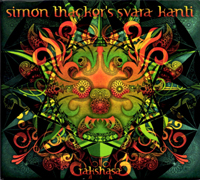 SwarAmant – Simon Thacker’s Svara-Kanti
Rakshasa, the Simon Thacker’s Svara-Kanti’s debut, succeeds on many counts and levels. They are a four-piece consisting of Japjit Kaur (vocals), Sarvar Sabri (tabla), Jacqueline Shave (violin) and Simon Thacker (classical guitar). What it weaves, it weaves with a dexterity and surefootedness that is astounding. It has an abundance of surprises to spring in its ability to wrong-foot expectations and paint smiles on listeners’ faces.
Its core musical fabric is spun from art music influences from the South Asian subcontinent, a little from the Far East and a pleasing amount from contemporary Western classical elements. The best exemplar for that last one is the US composer Terry Riley’s SwarAmant for guitar, violin and tabla. It is a nuanced composition to compete with Riley’s 2004 composition, The Cusp of Magic that the Kronos Quartet and the pipa player Wu Man recorded.
A review proper of the album appears in the August 2013 issue (177) of the London-based magazine Jazzwise. From Rakshasa (Slap The Moon Records STMRCD02 2013)
Loads more information at http://www.simonthacker.com/svara-kanti.htm
Dunaj – Dunaj & Iva Bittová
Dunaj means ‘Danube’ in Czech. Watching the Vlatava brought thoughts of the Danube and the flooding going on in Budapest. The energy of this track connected with images of the Danube in full spate. This record was first released in 1988. From Dunaj & Iva Bittova (Pavian Records PM0064-2, 2012)
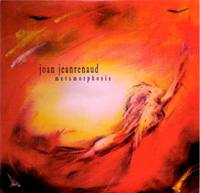
 Escalay – Joan Jeanrenaud
This is a composition that translates as ‘Water Wheel’. Its composer is Hamza El Din, one of the musicians who revolutionised my mind. The Kronos Quartet have done a similar job on my head. This composition, here arranged for celli, figures on the Kronos album Pieces of Africa (1992), for which I wrote the CD booklet notes. It proved to be a project that opened people’s minds in ways that were totally unimaginable whilst putting together its music.
As part of the project I interviewed Hamza El Din (1929-2006) and we stayed in touch afterwards, with me writing about him in various places thereafter, up to and after his death. I wrote a UK national newspaper obituary about him.
Joan Jeanrenaud was the cellist on the Pieces of Africa recording. On Metamorphosis she revisits the composition. Over more than 17 minutes, she retells the story of Hamza’s water wheel from her own perspective. It is a candid performance to be put on replay and drunk like water from the well. From The Metamorphosis (jj23556, 2002)
Pretty As You Feel – Jefferson Airplane
This was a single for Jefferson Airplane in October 1971. It was one of the highlights of that year’s ho-hum album Bark. After their former drummer Joey Covington died on 4 June 2013, this was the first piece of music of theirs that got played. It is still taut and tense but shorter than remembered. Papa John Creach’s fiddle still thrills. From Jefferson Airplane Loves You (RCA 61110-2, 1992)
More at http://www.rollingstone.com/music/news/joey-covington-jefferson-airplane-drummer-dead-at-67-20130605
 Jackie and Murphy – Martin Simpson
This is song by Martin Simpson about Jack Simpson Kirkpatrick (1892-1915), a donkey called Murphy and the Dardanelles. Jackie was a medical orderly, a volunteer with the 3rd Field Ambulance. Together with Murphy the donkey, he brought the wounded in. He died at Gallipoli and was nominated for a Victoria Cross for bravery. As Martin Simpson relates, the honour was turned down “because he was nominated ‘under the wrong category of heroism‘ [his italics]”. I first listened to this song whilst driving but there was no chance to pull over to read what Martin Simpson had written about the song’s inspiration, so I kept repeating the song, letting the song wash over me. The song came about as a thematic suggestion from June Tabor. From Vagrant Stanzas (Topic TXCD589, 2013)
Ragweed Ruth – Rosalie Sorrels
This song has a Ken Kesey lyric at its heart. It’s a song with a lot of words and Rosie Sorrels negotiates them well. Accompanying her vocal are Barbara Higbie on piano, Laurie Lewis on fiddle, Mitch Greenhill on guitar, Bruce Barthol on bass and Brent Rampone on drums. Another interesting song-story. On this occasion its choice was prompted by an ignoramus’ boorish and drunken rant about subjects he knew nothing about but felt quite prepared to snap out dismissive judgements about. He had never heard of Ken Kesey but that did not stop him. From Borderline Heart (Green Linnet GLCD 2119, 1995)
Bernard’s Song – Véronique Sanson
This is the opening track from the French singer Véronique Sanson’s fifth album released in 1977, in the middle of the period during which she was married to Steve Stills – that is, from 1973 to 1979. It has a US vibe and the sort of groove that Little Feat conjure (though it is not them backing her).
Bernard’s Song (Il est de nulle part) cheerfully breezed back into my life, courtesy of Channel 21 travelling through the Ardennes. Giant Donut Discs aren’t necessarily meant for forever. From Hollywood, 1977)
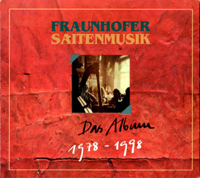 All mein Gedanken – Fraunhofer Saitenmusik
The news that Fraunhofer Saitenmusik’s co-founder Heidi Zink had died on 23 June 2013 struck me particularly hard. Heidi played several instruments but her main one was the Hackbrett, a variety of hammer dulcimer. She elevated the instrument to new heights. I truly believe that.
This particular piece – it translates as ‘All my thoughts’ – is a traditional song from 1460, according to notes to this career overview. This rendition has Richard Kurländer on harp and Heidi on Hackbrett is a throwback to the band’s earliest days when they were a duo performing in Munich venues under the name of »Heidi und Richard«. As Heidi Zink’s commentary on the track explains the arrangement has little to do with 1460. The performance is suffused with a romanticism as envisioned by its arranger Walter Götze. Exquisite. From Das Album 1978-1998 (Trikont US-0254, 1998)
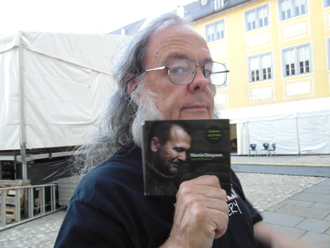
The copyright of all images lies with the respective photographers, companies and image-makers. The Martin Simpson clutcher is David Lindley, July 2013 © Santosh Sidhu/Swing 51 Archives.
30. 6. 2013 |
read more...
 [by Ken Hunt, London] Noëmi Waysfeld & Blik, Marta Töpferová & Tomáš Liška, Bob Marley & The Wailers, The Weavers, Ali Akbar Khan, Škampa Quartet, Imani Winds, Z.M. Dagar & Z.F. Dagar and Lucy Ward, Bella Hardy, James Findlay and Brian Peters.
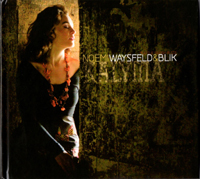 Shnirele Perele – Noëmi Waysfeld & Blik
One of those rare, very rare pieces of music that on first pass made the hair on the back of my neck stand up. The Yiddish of the title translates as ‘pearl necklace’ or, to go Glenn Miller, ‘string of pearls’. Both Noëmi Waysfeld & Blik and the album that this comes from were totally unknown quantities to me when work brought them to my attention. Once heard, never forgotten, this track got ‘unfairly’ stuck on repeat before moving through the rest of Kalyma.
Noëmi Waysfeld’s vocal register – quite different from much of her singing elsewhere on the album – and intonation fit the theme beautifully. This particular performance finds Noëmi Waysfeld & Blik augmented with David Krakauer’s clarion blasts and underpinnings on klezmer-style clarinet. This is a totally thrilling piece of music. An evocation or memory of good times.
Furthermore, this masterpiece’s packaging reinforces why the physical artefact can do things that a download never will. From Kalyma (AWZ Records CW895634, 2012)
More information at http://www.noemiwaysfeld-blik.com/
Single Girl – Hedy West
An unapologetic choice that requires the declaration of an interest. This reissue is the one for which I am most proud of having written the contextual notes in recent years. I listen to Hedy West (1938-2005) and am continually wowed by her performances. Single Girl is typical. It has a clarity and a vision to it. Her banjo is just right. Of the tradition, but just that little bit different without getting too modernistic. My most played album of 2012. Listen to this asserting of a woman’s rights and swoon. From Hedy West/Volume 2 (Vanguard VCD 79124, 2012)
PS Should any reader know the whereabouts of Hedy’s daughter Talitha, please do get in touch with me.
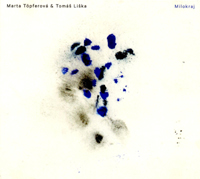
 Jabloň zapomněni – Marta Töpferová & Tomáš Liška
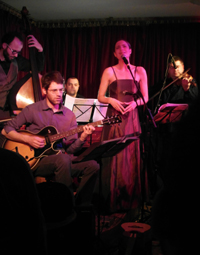
Marta Töpferová (lead vocals, cuatro), Tomáš Liška (double-bass), Stano Palúch (cimbalom), Marcel Comendant (violin) and David Dorůžka (guitars) did a few gigs in England in April 2013. They bowled me over. Truly one of the most impressive roots-based bands to emerge from the Czech Republic in a decade.
This particular tale – they translate the title as ‘The Apple Tree of Forgetting’ – took on a new form in concert and showed the prospect of new life. Tonally, it summons images from the Slovak-Hungarian border. Milokraj is pronounced something like ‘mi-lo-cry’. From Milokraj (Animal Music ANI 034-2, 2013)
Lively Up Yourself – Bob Marley & The Wailers
Just one of those connections that come out of somewhere. In May 2013 on the way to an interview I found myself driving down streets between Brixton and Denmark Hill on the border of the London postal districts SW9 and SE5 that I had known well in the early 1970s and had previously only walked back then. The Irish composer Seán Ó Riada died in King’s College Hospital in Denmark Hill on 3 October 1971.
The Wailers were still largely a Jamaican deal then. Catch A Fire, with its make-believe Zippo cigarette lighter cover, came out in 1973. But the music that was coming out of the tower blocks and terraced streets were their Jamaican recordings. I would hear them playing in nearly every street I walked down. What the streets rang with were the 45s from a record shop within Brixton’s covered market. That’s where you got directed. It was a phenomenal time to get into reggae. The streets were alive with the sound.
And then in May 2013 at the SE5 end of Coldharbour Lane Lively Up Yourself entered my head unbidden. From Natty Dread (Island, 1974)
Kisses Sweeter Than Wine – The Weavers
One of the most historic and finest of all live folk releases. It was recorded on 24 December 1955 at New York’s Carnegie Hall. The Weavers were Pete Seeger (tenor vocals and banjo), Ronnie Gilbert (alto vocals), Lee Hayes (bass-baritone), and Fred Hellerman (baritone and guitar).
It was an album that never touched me in the scheme of things. Ray Fisher reminisced fondly about it and the Australian composer Peter Sculthorpe wove a snatch of its melody into one of his string quartets that the Kronos Quartet released around 1982 on a cassette release. The combination of Fisher and Sculthorpe keeps returning me to this piece. Plus Jackson Browne and Bonnie Raitt revisited the song on Where Have All The Flowers Gone – The Songs of Pete Seeger (1998) and they are very good eggs.
The version up above is from an album that deserves and needs a proper, fully documented reissue. From At Carnegie Hall (Vanguard VMD-73101, 1988)
Pilu Baroowa – Ali Akbar Khan
A piece and a performance that insists on never leaving me. So, I’m not arguing with the inevitable. From Then And Now (AMMP CD9507, 1995)
Excerpts from The Rite of Spring – Imani Winds
The explanation says, “May 23, 2013 Imani Winds’ members play David to Igor Stravinsky’s imposing Goliath, as they shrink the massive Rite of Spring down to size in a rendition for just five wind instruments.”
The wind quintet presents a series of “Selections” from the ballet. They run, in order, Introduction; Augurs of Spring; Dances of the Young Girls; Ritual of Abduction; Spring Rounds; Dance of the Earth; and Sacrificial Dance: The Chosen One, all in arrangements by Jonathan Russell. A highly recommended, instructional and entertaining setting for clarinet (Mariam Adam), flute, piccolo (Valerie Coleman), bassoon (Monica Ellis), French horn (Jeff Scott) and oboe (Toyin Spellman-Diaz).
Read more, view and download it here: http://www.npr.org/event/music/186033005/imani-winds-tiny-desk-concert
From Imani Winds: Tiny Desk Concert, 2013
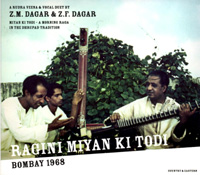 Miyan ki Todi – Z.M. Dagar & Z.F. Dagar
The death of Zia Fariduddin Dagar on 8 May 2013 brought home the importance of the Dagar Family’s lineage. On this particular release, recorded in Bombay in February 1968 by Bengt Berger, the founder of the Swedish label, Country & Eastern, he duets with his elder brother Zia Mohuddin Dagar in a vocal and rudra vina dialogue.
This particular performance of the variant of râg Todi attributed to Miyan Tansen of the court of the Mughal Emperor Akbar. It is a popular piece but also demanding in its way – a senior musician’s performance piece, as it were. This duet approaches an hour in duration. Note by note, syllable by syllable they tease out the composition’s delights. The performance is the equivalent of slow food rather than fast food with the ingredients – note and syllable and word – added like master chefs. One of the greatest recorded interpretations of Miyan ki Todi. From Ragini Miyan ki Todi (Country & Eastern CE19, 2011)
String Quartet No. 1 – Škampa Quartet
There I was sitting in Zürich Airport bridlimg at the usurious, retina-detaching prices charged for a beer or a coffee. After the first injury to the wallet, there was no chance that there would be a second occurrence. So, I settled down to listening to Pavel Fischer’s String Quartet No. 1. And a spirit of Moravian good vibes settled upon me and all was good in the world, except for Swiss usury. From Morava (Supraphon SU 4092-2, 2012)
 The Moon Shines Bright – Lucy Ward, Bella Hardy, James Findlay and Brian Peters
The album from which this song comes is subtitled “A Selection of Songs from The New Penguin Book of English Folk Songs (2012). This book is a successor to one of crucial books about English folksong: The Penguin Book of English Folk Songs (1959), edited by Ralph Vaughan Williams and A.L. Lloyd. The 2012 selection is courtesy of Steve Roud and Julia Bishop. In the wake of the publication of the 1959 book came a succession of recordings and The Liberty To Choose approaches the 2012 book in like manner.
This song is from Emily Bishop of Ledbury in the English county of Herefordshire (another county, like Somerset – Coates used to declare in their adverts – where the cider apples grow). Peter Kennedy recorded her in the 1950s. Brian Peters explains in the notes how “this New Year carol includes verses common to many May Day songs. The church seemed reluctant that people should celebrate the seasons without a strong does of ‘memento mori’ – a message found also in songs like The Life Of A Man [not on The Liberty To Choose] – but this is a pretty song, nonetheless, with which to close.”.
Theirs is a marvellous unaccompanied rendition of a song that acts as a reminder to remember one’s place. After all, Death is peeping just around the corner. From The Liberty To Choose (Fellside FECD257, 2013)
The copyright of all images lies with the respective photographers, companies and image-makers. The image of Marta Töpferová and the band is © Ken Hunt/Swing 51 Archives.
18. 6. 2013 |
read more...
 [by Kate Hickson, Powys, Wales] These remembrances remain in a state of flux as news comes in, details get corrected, information emerges and useful weblinks appear.
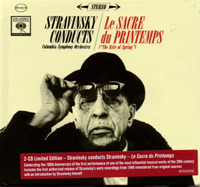
23 May – On this date in 1913, Le Sacre du printemps (‘The Rite of Spring’) received its premiere at the Théâtre des Champs-Élysées on the avenue Montaigne in Paris’ 8th arrondissement. Its music is by Igor Stravinsky: its choreography by Vaslav Nijinsky: its performers the Ballets russes company under Serge Diaghilev. It was the sensation of the company’s 1913 season.
25 May – The Tamil playback singer T.M. Soundararajan , born on 24 March 1922 in Madurai in the Madras Presidency, died aged 91 in Chennai.
30 May – Proinsias Ó Conluain, the RTÉ broadcaster, documentary-maker (subjects include the singer Eddie Butcher and the folksong collector Capt. Francis O’Neill, among others) and folksong collector (notably from the singer Róise Bean Uí Ghrianna) died at the age of 93.
15. 6. 2013 |
read more...
 [by Kate Hickson, Powys, Wales] These remembrances remain in a state of change as and when updates arrive, details get corrected, information emerges and useful weblinks appear. Updated 12 June 2013.
7 April – The US film-maker Les Blank died at the age of 77 in the Berkeley Hills area of the San Francisco Bay. Born on 27 November 1935 in Tampa, Florida, he made film portraits of Clifton Chenier, Mance Lipscomb and Lightnin’ Hopkins among other subjects.
The Guardian published Les Blank’s obituary in its edition of Friday, 10 April 2013: http://www.guardian.co.uk/film/2013/apr/12/les-blank-dies-documentary-music
11 April – The Oakland, California-born violinist Sue Draheim died aged 63 in Berea, Kentucky.
The Independent published Ken Hunt’s obituary in its edition of Wednesday, 29 May 2013: http://www.independent.co.uk/news/obituaries/sue-draheim-widely-admired-folk-violinist-8635048.html
17 April – One of the breakthrough female vocalists of Zanzibar Bi Kidude died. Graeme Ewens’ Guardian obituary of her, ‘Bi Kidude, one of Zanzibar’s greatest singers, dies – Enigmatic performer of taarab music and one of the first Zanzibari women to sing in public’ is recommended reading: http://www.guardian.co.uk/music/2013/apr/17/bi-kidude-dies
15. 5. 2013 |
read more...
« Later articles
Older articles »