Giant Donut Discs ® – January 2011
3. 1. 2011 | Rubriky: Articles,Giant Donut Discs
[by Aparna Banerji, Jalandhar City] My delightful 10 this month are Canned Heat, Aarti Ankalikar, Raghubir Yadav and Bahdwai Village Mandali, Javed Ali and Chinmayi, Satinder Sartaaj, Farida Khanum, Silk Route, Udit Narayan and Alka Yagnik, Pandit Hariprasad Chaurasia and, lastly, Pandit Birju Maharaj, Kavita Subramanium and Madhuri Dixit.
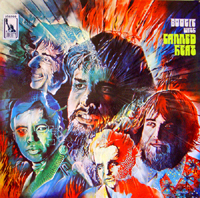 On The Road Again – Canned Heat
Much of the trickle of American popular music I have fell in my lap by default. Except for the few glitzy pop icons that MTV and Channel V introduced me to, I just stumbled upon most of the other guys through compilations by record labels that I picked up, on impulse, at local music stores. I had my share of disasters and disappointments, but chancing upon gems like this has made my life.
I didn’t have any clue about the history, status or popularity of the band that created this when I first heard this song (though now I think that was a blessing ’cause it helped me form an unbiased opinion). Everything about it – music, lyrics, especially the voice – hit me hard. It’s the 1968 Boogie with Canned Heat Liberty Records version and made me build my own little story around it.
I connected with the guy who sung it and thought of him as this little, free-spirited, dumb-wise, lonely guy who hates strangers. I wanted to join him on the road he was walking down on and tell him things are gonna be OK. And I thought he’d probably punch me in the nose the first time I do that, but eventually we might become friends.
Years later, I read about the band and smiled. I was happy that the whole world loved the song but was a bit disappointed too. They were too big to match my little guy illusion.
I love the way Al Wilson sings “out” and “long old lonesome road”. I try to ape the way he does it sometimes when I’m in the mood. I think no other voice can do as much justice to the character of the guy this song talks about. Bob Hite (harmonica), Henry Vestine (lead guitar), Larry Taylor (electric bass), Fito de la Parra (drums) and Wilson himself on slide guitar lend the on-the-road rhythm and feel to the song.
The Floyd Jones lyrics and composition which Wilson adapted to create this classic say: “My dear mother left me when I was quite young/She said, ‘Lord have mercy on my wicked son’.” From The Best College Classics Album in the World Ever (Virgin Records, 2001)
Chali pee ke nagar – Aarti Ankalikar
In the 1996 film Sardari Begum, this is the song that the daughter of Sardari Begum, the courtesan and thumri singer, hums to her dying mother on her request. It’s the most intimate mother-daughter moment that the two share in the movie. It is also one of my favourite on-video moments.
Based on Rāg Sindhi Bhairavi, the song talks about a bride who is parting with the land she was brought up in. The Sardari Begum context lends it so much irony and sadness. The composition itself is bittersweet and suggests tragedy and loss in spite of the fact that it talks about a bride.
Aarti Ankalikar lends her voice to the soundtrack version. Her vocals are mellow and soothing and at the same time filled to the brim with the force that is characteristic of Indian classical music. Vanraj Bhatia’s brilliant composition and with Ankalikar’s extraordinary voice make it one of the best classical vehicles that Bollywood ever doled out.
Javed Akhtar gives us the lyrics which say:
“Chali pee ke nagar
saj ke dulhan.”
(The decked up bride goes to the town of her husband.)
“Jhoole, peepal, amva, chanv
panghat, mele, galiyan, gaanv
babul, maiya, sakhiyan, angna
sab chor ke gori jaavat hai.”
(Swings, peepal trees, mangoes, shade/Wells [the word panghat means the place, usually the well, where women used to gather to fill their water pots], fairs, streets, villages/Father, mother, friends, courtyards/The fair bride leaves it all behind as she goes.) From Sardari Begum (Sony Music 504452 4, 2001)
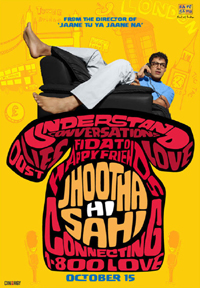 Maiya Yashoda (Jamuna Mix) – Javed Ali and Chinmayi
India’s so big on Krishna sensibilities. He’s everywhere. Still there are some things I thought he could never fit with. If someone gave me the words of this song on paper and told me they were gonna give some solid techno treatment to it, I would have called the person a fool to their face. I thought all previous pieces of music which attempted to digitalise Krishna sounds, miserably failed. After hearing this I changed my stance; I lacked imagination.
A. R. Rahman comes out with another masterpiece. I would have bet this is bhajan or thumri material but he makes an immensely successful dance floor number out of it. Nowhere does it feel contrived or forced. It’s a pretty complex and imaginative tune and yet it sounds so simple. Rahman loves doing that.
To be fair, the song’s not over the top techno but an Indian sort of techno. It mixes the dandia and digital dance floor flavours in such an immensely beautiful manner that one’s left awestruck and wondering whether he/she should swing to the melody or groove to the beats. I even think there’s a folk tinge to the song.
The amazing, laughing and equally complex vocals are by Javed Ali and Chinmayi. The sitar (Asad Khan) and flute (Naveen Kumar and Navin Iyer) portions are also lovely. The deep, layered lyrics by Abbas Tyrewala, the director of the movie that this song comes from, say a lot more than what they actually say.
The gal says:
“Maiyya Yashoda mori gagri se Jamuna ke pul par maakhan, haan koi, re maakhan chura le gaya
ho maiyya yashoda kaise jaaun ghar Jamuna ke pul par maakhan haan koi, re maakhan chura le gaya
mori baanh modi, natkhat re,
kare dil ko jodi, natkhat re,
mori gagri phooti, natkhat re,
main bojh se chhooti, natkhat re,
mori thaame kalai us kinare le gaya.”
(Mother Yashoda, out of my earthen pot, on the bridge across [the River] Yamuna’s, the butter, yes, someone stole the butter/Mother Yashoda, how do I go home?/On the bridge across the Yamuna, the butter, yes. someone stole the butter/Twisted my arm, mischievous him/Bound heart with me, mischievous him/My earthen pot broke, mischievous him/I was relieved of the burden, mischievous him/Grabbed my wrist and took me to that shore.)
The guy replies:
“Maiya Yashoda sach kehta hoon, main Jamuna ke pul par maakhan ki gagri se maakhan bachane gaya.”
(Mother Yashoda, I talk truth, I went to the bridge across the Yamuna to save the butter from the earthen pot that held the butter.) From Jhootha Hi Sahi (Saregama India Ltd. CDF 112325, 2010)
Sapnay – Silk Route
This is one band that I have ‘always’ liked for its rich music and visuals (videos). Their work has always been path-breaking. Their music smells of hills and mists. It says simple things, simply but the mood they create always spills on to you. Leaves me mellow for hours, even after I have switched the music off.
This one, from their second album Pehchaan (2000), especially, gives me goose bumps. Mohit Chauhan does the vocals, guitar and haunting harmonica. Kem Trivedi’s on keyboard. Kenny Puri’s on percussion and drums.
It says:
“Sapnay hain sooni ankhen
jaane kyon kho gaye
socha tha sahil pe milega
thehra sa ek pal.”
(Dreams in empty eyes/Don’t know why they got lost/Had thought on the shore we’d meet/A moment that stands still.) From Boyz to Men (BMG Crescendo (India) Ltd. 51250, 2001)
Kuch Kuch Hota Hai – Udit Narayan and Alka Yagnik
The ultimate happy-go-lucky Bollywood fare. Reminds me of Archie comics and the time I used to hang movie posters in my room.
Love the ghada (earthen pot) percussion in this eternal love song which says:
“Kya karun haaye
kuch kuch hota hai.”
(Oh what do I do/Something something happens [literally: “that’s how it sounds”].)
Udit Narayan and Alka Yagnik in their sweet Bollywood voices sing Jatin Lalit’s composition and Sameer’s lyrics. From Kuch Kuch Hota Hai (Sony Music 491740 4, 1998)
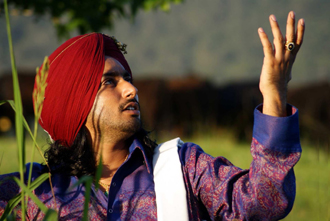 Paani Panjan Daryawan Wala – Satinder Sartaaj
This is from the guy who brought hope back to the Punjabi music industry. He stepped in at a time when the ‘thinkers’ were growing exceedingly sick of the multitude of cheesy duets and other tired fare that had dwarfed the soul sounds which Punjab has always been so proud of.
Sartaaj walked in, dressed in salwar kurta and a turban tied over open hair like the Sufis. He usually performed seated on the floor and usually to hushed concerts (a rarity in Punjab). His songs talk about Punjab, Love and God. They respect life and urge others to do so. They are soft and soulful. This one’s no exception. It worries about Punjab and its youth, about artificiality and feuds.
It says:
“Pani panjan daryawan wala nehri ho gaya
munda pind da si shehar aa ke shehari ho gaya
O yaad rakhda vaisakhi ohne vekheya hunda je
rang kankan da hare ton sunehri ho gaya.”
(The water of the five rivers now flows in canals/The guy from the village went to the city and turned urban/He would have remembered Baisakhi [Punjab’s harvest festival] if he’d seen/The colour of the wheat crop turn from green to golden.)
“Tera khoon thanda ho gaya ai khaulda nahi e
ji eho virse da masla makhaul da nahi e
tennu aje nai khayal pata odon hi lagguga
jadon aap hatthi choya shehad zehri ho gaya.”
(Your blood has grown cold, it doesn’t heat up anymore/This matter about heritage isn’t something to be laughed at/You don’t give it a thought now but you will realise things/When honey that your own hands drew turns to poison.)
The lyrics are by Sartaaj and the music’s by Jatinder Shah. From Sartaaj (Moviebox Records Pvt. Ltd. Sr No. 1162, 2010)
Rāg Jait (Vibhas Ang) – Hariprasad Chaurasia
As a kid, when some koel used to call out sitting on some tree near my home, I used to call out after it, aping it. If the koel responded, I used to be very happy. I used to keep calling out to it until it got bored of me. It mostly did before I did. There was something beckoning, pleading, conversational about the way it called out. As if it said, “yes”, “what?”, “I’m here”.
Hariprasad Chaurasia’s flute reminds me of that koel. His flute talks, beckons, asks me to listen, tells me tales and does it all so sweetly. He does it in Rāg Jait (Vibhas Ang) using the pa, ga, re, sa combination, which is common to the Purvaangs (first halves) of both the Jait and Vibhas ragas, with just a tanpura for accompaniment. (The only difference between Jait and Vibhas is that Jait uses dha shudh and Vibhas uses dha komal. But Panditji uses dha shudh so he sticks to the basic Jait combination. From Hariprasad Chaurasia (HMV STCS 850135, 1982)
 Mehngai Dayain – Raghubir Yadav and Bhadwai Village Mandali
Everything, every single thing about the movie that this track comes from – and its soundtrack – is awesome. It’s one of the most unlaboured (seemingly) and yet chilling ways in which Bollywood has ever dealt with big issues and the irony hanging over them. I would love to, but can’t talk about it all, so, for the moment, I choose Mehngai Dayain.
The track is a folksy take on inflation and the most effective that I’ve ever come across. When it came to folk, Raghubir Yadav had always been one of my personal favourites. I had heard him hum little somethings as an actor in the film Rudali (as Sanichari’s elusive son Budhwa) and in Maya Memsaab (as the crazed street-beggar). He kept making appearances as a vocalist in large and small chunks on some sound tracks too. On every occasion he loaded the track or moment with the village wisdom in his voice.
But somehow it felt he was never taken as seriously as a vocalist, as he should have been. This, however, is different. He makes himself heard (thanks to the film crew for that too) and his rendering is immensely satisfying. This song is a proof of his musical wit. The village guys that he collaborates with – The Bhadwai Village Mandali – are, like him, masters in their art. The song has been written and composed by them. They are a group of part-timers who do music on festive occasions in the village, using traditional instruments, as the CD notes tell me. The song’s devoid of pretence and gets us nostalgic in the delightful way it gets village sounds and words flooding in. Like the old days. Raghubir Yadav and the Bhadwai Village Mandali sit in the shade of a tree in the village square (the recording was done on sync sound as the film crew shot) and sing:
“Sakhi saiyan to khoob hi kamaat hain
mehangayee dayain khaaye jaat hai.”
(Lady friend, my husband earns a lot but the inflation witch eats it all up.)
“Soyabeen ka kabe haal
garmi se pichke hain gaal
gir gaye patte, pak gaye baal
aur makka – ji-ji-ji-bhi kha gayee maat hai
mehngai dayain khaye jaat hai.”
(What does one say of soya beans?/The cheeks have sunk with the heat/The leaves have fallen, the hairs have ripened/And corn, yes, corn has lost the battle too/The inflation witch eats it all up.) From Peepli Live (Super Cassettes Industries Ltd. SFCD 1-1600, 2010)
Kahe Ched Mohe – Birju Maharaj, Kavita Subramaniam and Madhuri Dixit
All things classical are writ large over this song. It starts with aroused sarangi and forceful tabla bols (mouth percussion based on the matras – beats – of the tabla), followed by the soul stirring voice of Pandit Birju Maharaj adulating a woman’s beauty. The song is in Rāg Puriya Dhanashree and brims over with the rhythmic genius that is largely responsible for the drama and aggression that marks Indian classical dance. And since it is served on the Bollywood platter, the drama gets to a whole new level.
Krishna’s an integral element in this one too (told you). Kavita Subramaniam (Krishnamurthy) soon arrives on the scene asking him why he teases her. In the interplay between percussion and Subramaniam’s melodious vocals, Madhuri Dixit renders her conversational, lyrical interludes from time to time.
The song’s composition and lyrics are by Pandit Birju Maharaj. He is also the choreographer for the video version of the song where Chandramukhi, the courtesan, dances to a melancholy Devdas. I love it most for Pandit Birju Maharaj’s voice in the beginning. I wish there was more of him in it.
It says:
“Kahe ched mohe garwa lagaye
Nand ko lal aiso dheeth
barbas mori laaj leenhi
binda Shaam manat naahi
kaase kahun main apne jiya ki, sunat nahi, maayi.”
(Why does he tease me? He embraces me/Nand’s son is such a rogue/He robs me of my honour/Wicked Shaam doen’t pay heed/How do I say what’s in my heart? he doesn’t listen, mother.) From Devdas (Universal Music 6337 333, 2002)
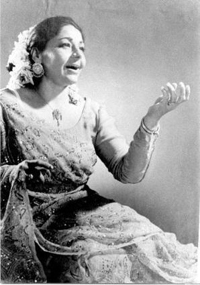 Gulon ki baat karo – Farida Khanum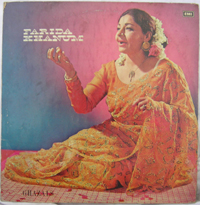
Ghazals are one of the reasons I wonder if I had a past life. The atmosphere they create does something intense to me. An I-was-there feeling. I have been listening to this one since I was a kid. My mother played it on tape along with many other of Farida’s precious songs. I love its composition. It’s about nostalgia and class.
It says:
“Gulon ki baat karo
gul rukhon ki baat karo
bahaar aayi hai
guncha labon ki baat karo.”
(Talk about flowers/Talk about flowering trees/Spring has come/Talk about blossoming lips.)
The music’s by Farida and Akhtar Hussain. Faiz Ahmed Faiz gives us the words. From The Best of Farida Khanum (HMV HTCS 04B 4480, 1992)
The copyright of the images lies with the respective photographers, companies and image-makers. The copyright of the lyrics lies with the associated copyright holders.