Giant Donut Discs® – June 2010
21. 6. 2010 | Rubriky: Articles,Giant Donut Discs
[by Ken Hunt, London] This time around on the desert island phonogram we have Amira Medunjanin and Merima Ključo, Dave Swarbrick, Bea Palya, Elizabeth Cotten, Leonard Cohen, Marlene Dietrich, Vishwa Mohan Bhatt & Matt Malley, Kraftwerk, Jerry Garcia, Leonard Cohen, and Illa Arun, Sapna Awasthi & Kunal Ganjawalla.

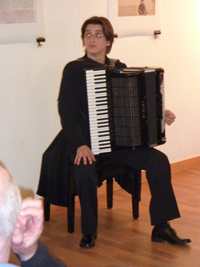 Kradem Ti Se – Amira Medunjanin and Merima Ključo
On 27 May 2010 Amira Medunjanin and Merima Ključo – respectively voice and piano accordion – played St. Etherburga’s Centre for Reconciliation & Peace on Bishopsgate in London. The night’s repertoire consisted of the 14 tracks that make up their album and after playing the album they had to revisit one for their encore. The duo represents something special in contemporary Bosnian music – a merging of the traditional, the contemporary and the future. This is the opening track of the duo’s inspirational debut album. It throbs with tension and the yearning of sevdah. From Zumra (Gramofon GCD1017, 2008 and World Village 450012, 2010)
For more information visit www.amira.com.ba and www.merimakljuco.com
The Fair Haired Child – Swarbrick
Dave Swarbrick has made some corking solo albums down the decades. The one from which this piece of music comes is amongst his very finest. Time may well show it to be his finest. It will take time to digest and savour it fully. Because if something like a film that is fixed and immutable – let’s ignore directors’ cuts and all that old malarkey – can reveal new things with repeated viewings, then how much more open to changing responses and insights is recorded music where imagination forces to run movies and patterns in our heads?
The Fair Haired Child, he credits it to Edward Bunting’s first, 1796 edition of The Ancient Music of Ireland, finds Dave Swarbrick as a member of a four-piece. On it he plays fiddle in the company of Beryl Marriott (piano), Kevin Dempsey (guitar) and Maartin Allcock (bass guitar). There is such great joy in the ensemble playing this Irish harp tune, a joie de vivre no less. One might speculate why. Probably it boils down to Dave’s appreciation of the gift of life, given his scrapes with near-death. Britain’s National Health Service – it has its faults but speak to anybody who survived the nation’s previous, private medicine regime for inklings of how it was before – and the transplant team at the Queen Elizabeth Hospital in Birmingham get thanked. Raison d’etre, ‘reason for being’ indeed. Rarely has a title worked so well. One of the albums of 2010 by anyone’s definition of British folk. From raison d’etre (SHIRTY 1, 2010)
Part-time Lover – Bea Palya
You never quite know with some book reviews, do you? You don’t know whether the reviewer has homed in on the salacious details to keep the casual reader titillated or the customer satisfied. From Robert Sandall’s review in Sunday Times‘ Culture section of Mark Ribowsky’s biography Signed, Sealed, and Delivered: The Soulful Journey of Stevie Wonder, it sounded as if a lot had gone down, supplying grounds for reappraising this song of Stevie Wonder’s.
Hitherto, Wonder’s song Part-time Lover sounded like an overlap with songwriters Dan Penn and Chips Moman’s Dark End of the Street. Palya’s version takes Wonder to uncharted Hungarian territory. From Én leszek a játékszered – I’ll be your plaything (Sony Music Entertainment 88697642232, 2010)
Freight Train – Elizabeth Cotten
Long before the world knew about Elizabeth Cotten, thousands upon thousands of people knew Freight Train. The song is like one of those pebbles on the beach that are rounded with the rough edges smoothed away, much like traditional songs that have been sung and handed on. Only Libba Cotten had composed it. The first version of this song most people will have heard was probably one of the cover versions. For example, the Chas McDevitt Skiffle Group, featuring Nancy Whiskey, took it into the UK singles chart in 1957. Ramblin’ Jack Elliott, Peggy Seeger, Jerry Garcia & David Grisman are among the acts that covered Libba Cotten’s song.
Libba Cotten’s version, recorded by Mike Seeger is the one which I treat as the benchmark. Listening to her work again came about because of a commission to write about her Shake, Sugaree. Sometimes all it takes is a little gentle reminder. Freight Train was already a Donut before Chas McDevitt sang it during the Diz Disley Memorial Concert at the Half Moon in Putney in South London on 26 May 2010. From Freight Train and Other North Carolina Folk Songs and Tunes (Smithsonian Folkways SF CD 400009, 1989)
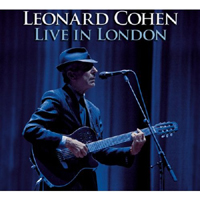 Ain’t No Cure For Love – Leonard Cohen
Great song. Great arrangement. Excellent introduction, too. There is something about this song’s world-weary love of life. It’s a song to remind you of all the best people that set you on the path. Like Leonard Cohen says to Sharon Robinson, Charley Webb and Hattie Webb, Tell it, angels. From Live In London (Sony Music 88697405022, 2009)
Ich bin von Kopf bis Fuss auf Liebe eingestellt – Marlene Dietrich
Friedrich Hollaender’s song began life and notoriety in the 1930 film Der blaue Engel (‘The blue angel’ or ‘The drunken angel’ for lovers of wordplay) and it spawned many parodies. In English it became Falling In Love Again. Marlene Dietrich’s German-language interpretations (there were many) are the interpretation to which I boomerang. There is something about Dietrich’s sultry delivery that is sensuous rather than sexy. She really was the skeleton key to this song. There are several versions on many anthologies. From The Essential Marlene Dietrich (EMI CDP 7 96450 2, 1991)
Sleepless Nights – Vishwa Mohan Bhatt & Matt Malley
The title track of their album. Arguably its highlight. The combination of Matt Malley’s growling electric bass and the upper sonorities of Vishwa Mohan Bhatt’s Mohan vina – a modified, Indianised guitar – combine beautifully. And strangely the bass and keyboard sonorities arc over into Kraftwerk if you squidge your eyes really tight until you see shapes and colours. From V.M. Bhatt & Matt Malley’s Sleepless Nights (World Village 468097, 2009)
Autobahn – Kraftwerk
In 1974 Autobahn was a piece of music that distilled and defined something, as if for the first time. Autobahn captures the mood of travelling long-distance on West German motorways. The German-language lyrics are intentionally prosaic. There are lines about the grey of the road, white lines and green edges, switching on the radio and the loudspeakers intoning “We’re driving on the autobahn” like a loop. It captures the boredom of the motorway as kilometres pass beneath the tyres. It is the miscreant Teutonic equivalent of Jackson Browne’s Running On Empty without that song’s romance and the road lore of US highways.
Autobahn is one of the great transcontinental travelling songs. Even if you don’t speak German, you can just pick up on its “Wir fahr’n auf der Autobahn” (‘We’re driving on the motorway’). It lasts over 20 minutes in its ‘LP version’ while the keyboard melody line about 15 minutes in is the musical equivalent of spying something different in the topography on a boring motorway journey. Best experienced on a German Autobahn. From Autobahn (CDSTUMM 303, 2009)
www.kraftwerk.com
The Wheel – Jerry Garcia
The Wheel was one of the highlights of Jerry Garcia’s debut solo album in 1972 and its closing track. Garcia actually played all the instruments on the album, bar drums, for which he brought in the Grateful Dead’s drummer Bill Kreutzmann to do the honours. It starts itchy and jittery, like a continuation of Eep Hour, earlier in the running order. Then in comes Garcia’s pedal steel to calm things down.
How you interpret Robert Hunter’s lyrics is down to you. The possibility of karmic inevitability is one that has stood the test of time well. As the song progresses and moves forward, that pedal steel soothes. Its sing-song quality puts you, lulls you, the listener, into a place of security, no doubt just before the rug gets pulled out from under your feet and you get your karmic comeuppance. From Garcia (Rhino R2 78063-A, 2004)
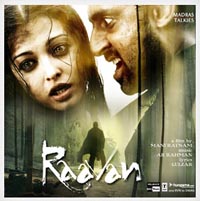
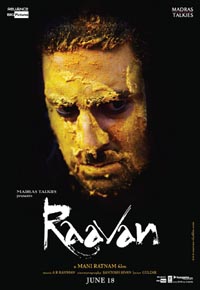 Kata Kata – Illa Arun, Sapna Awasthi and Kunal Ganjawalla
Like in the old days when the box-office success of a Hindi commercial film could be given an extra boost by the early release of its soundtrack LP, the A.R. Rahman-Gulzar score for Raavan was released in May 2010, a month ahead of the film’s official release date. The music sounds big with lashings of Rahman’s trademark melodic and rhythmic touches. It also reunites him with director Mani Ratnam, the man who launched his career with the 1992 Tamil film Roja.
Kata Kata opens with a nagaswaram fanfare and uses the South Indian shawm as a recurring effect. What sets Kata Kata apart is the way it plays with preconceptions of what lead vocalists ‘should’ sound like in blockbuster films. Not to be confused with the Tamil-language version of the film – Raavanan – with its score by Rahman-Vairamuthu. From Raavan (T-Series SFCD 1-1575, 2010)
Small print: Amira Medunjanin and Merima Ključo photographs are (c) Ken Hunt 2010