Giant Donut Discs® – March 2010
11. 3. 2010 | Rubriky: Articles,Feature,Giant Donut Discs
 [by Ken Hunt, London] March’s stuff and nonsense comes from Mickey Hart and chums, Joni Mitchell, The Carolina Chocolate Drops, Bob Bralove and Henry Kaiser, Wajahat Khan and the Medici String Quartet, The Six and Seven-Eights String Band, Jo Ann Kelly, Dillard & Clark, Farida Khanum and Sohan Nath ‘Sapera’.
Rolling Thunder/Shoshone Invocation into The Main Ten (Playing In The Band) – Mickey Hart
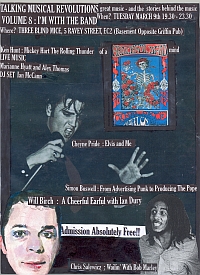
In 1972 I clapped eyes on Kelley/Mouse’s Rolling Thunder cover artwork in a record rack in the tiny Virgin record store at Notting Hill Gate. It shone out that in some way it was Grateful Dead-related. It turned out that it was the Dead’s absentee drummer Mickey Hart’s solo debut. The opening track sequence draws on and draws in so many threads. Shoshone shaman Rolling Thunder, marimbas from Mike and Nancy Hinton, tabla from Alla Rakha and Zakir Hussain, the whole Calif rock caboodle participating on The Main Ten – John Cipollina and Bob Weir on electric guitars, Stephen Stills on electric bass guitar, Hart on drums, Carmelo Garcia on timbales and the Tower Of Power Horns. That’s why I opted to talk on the subject of Mickey Hart when my fellow writer friend Gavin Martin invited me to talk about anything I wanted at Talking Musical Revolutions 8. From Rolling Thunder (GDCD 4009, 1972)
Help Me – Joni Mitchell
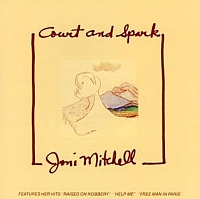 A long-running email dialogue with a rather special vocalist planted Help Me in my head and then the song kept rattling around. Potentially, Help Me is ghazal-like in its layered ambiguity. On hearing Help Me at the time of its release, it had seemed very much a woman’s song. Then under the influence of Iqbal Bano and Farida Khanum and a nazm here and a ghazal there, I got to thinking about how gloriously open to re-interpretation Help Me could be, once going beyond the tale of one of Joni Mitchell’s romances that failed to work out. And more importantly, how it might be twisted to reveal new facets and ambiguities with a further turn or two.
The arrangement begins with trademark Mitchell guitar chords (those tunings that always caused a double-take or two) before the band storms in. Her voice on this recording is as smooth as a silken scarf being run through a gold ring. As songs go, it is both as sheer as silk and barbed. As Help Me exits in one channel, in comes Free Man In Paris (another fine song) in the other. One day Joni Mitchell’s Asylum-era is going to get the treatment and sound it deserves. (What is it with the CD’s flat, gated (?) drum sound?) From one of her greatest works Court & Spark (Asylum 7559-60593-2, 1974)
Snowden’s Jig (Genuine Negro Jig) – Carolina Chocolate Drops
It’s always gratifying for the year to start with a humdinger of a concert that really sets the bar high. The Carolina Chocolate Drops did that with their Bush Hall, Shepherds Bush, London at the beginning of February 2010. I was born with two-left feet but when I hear something like Snowden’s Jig I really do wish for some sort of painless transplant that would enable me to do the soft-shoe shuffle. From Genuine Negro Jig (Nonesuch 7559-79839-8, 2010)
Red Queen – Bob Bralove and Henry Kaiser
During his tenure with the Grateful Dead until they folded their hand following Jerry Garcia’s death in 1995, keyboardist-composer Bob Bralove’s role gradually evolved. He and guitarist Henry Kaiser have taken as their starting points on this album an assortment of improvisations that Bralove fashioned in Grateful Dead concerts.
Explaining the project for this here website, Bralove lifts the latch to say, “Ultraviolet Licorice was a recording that was inspired by the back-up material I did for the drums and space parts of GD shows. By the end of the GD I was playing tracks and playing live as segues between drums and space. I recorded all of those performances isolated from the band. I could record just what I was playing to inspire the band to improvise. Henry and I looked at that material which was recorded during the last six years of GD shows and said, ‘Why don’t we use this to inspire us?’ So we went into Fantasy Studios in Berkeley, CA in July of 2008, dropped all of those recordings onto the multi-track and recorded live to them. On that session I played acoustic piano (Steinway Concert Grand) and Henry played electric and acoustic guitars. It was a one day session and a wonderful time.”
Red Queen differs from much of the material on Ultraviolet Licorice. It could almost be a throw-back to Paul Kantner’s Blows Against The Empire. At 2:28, it is the shortest piece on the album and therefore closer in length to Bralove’s Quicksilver Rain, Wind Before The Storm, Urban Twilight and the Bralove/Tom Constanten composition Cowboy Sunset on Bralove’s solo piano album, the delightful Stories in Black and White (BLove 1001, 2007).
Today, the Red Queen conjured in my mind is the Red Queen of Through The Looking-Glass. Tomorrow, she may be a character in a card game. The day after that, who knows? From Ultraviolet Licorice (BLove no number, 2009)
For more information about its participants go to http://bobbralove.com/music.html and http://www.henrykaiser.net/
Raag Desh – Quintet for Sarod and String Quartet – Wajahat Khan and the Medici String Quartet
Desh, also known as Des, is a late evening raga. It is very popular, it is much performed and, personally speaking, it is one of my favourites for the vistas it opens up. The sarodist Wajahat Khan, one of maestro Imrat Khan’s sons, places Desh (it means ‘country’ twinned with ‘homeland’) in a very different landscape to the ones that most interpreters have placed it in. The reason for that is simple: Paul Robertson (violin), Stephen Morris (violin), Ivo-Jan van der Werff (viola) and Anthony Lewis (cello). Collectively, the Medici Quartet. There is such sensitivity apparent here. Khan breaks the performance into four movements: Prayers of Love, Monsoon Memories, Romantic Journey and Celebration. The effect is pastoral and elevates the suite to amongst the highest achievements in East-West classical collaboration. From Wajahat Khan and the Medici String Quartet (Koch 3-6996-2, 2000)
Clarinet Marmalade – The Six and Seven-Eights String Band
The Carolina Chocolate Drops’s gig jolted me into revisiting my past. I thank them for that. The Six and Seven-Eights String Band of New Orleans, though from a parallel tradition to the one the Drops are exploring so ably, could be their godfathers. They are probably more or less forgotten now. More’s the pity. Apparently string band jazz was popular around 1910-1925 in New Orleans but little of it was ever recorded. The Six and Seven-Eights date from that era. They were long gone when that marvellous mandolin maestro David Grisman alerted me to the existence of their solitary Folkways album. Like Dave Apollon, they became part of my back-education.
There is a total joie de vivre – surely the right expression for a New Orleans-based band of such character – to their music. Credits: William Kleppinger (mandolin), Frank ‘Red’ Mackie (string bass), Bernie Shields (steel guitar), Dr. Edmond Souchon (guitar); produced by Frederic Ramsey Jnr and Samuel Barclay Charters. Smithsonian Folkways will do you a copy as part of the archival service. From The Six and Seven-Eights String Band of New Orleans (Smithsonian Folkways Recordings FA 2671, 1956)
The downloadable liner notes are at: http://media.smithsonianfolkways.org/liner_notes/folkways/FW02671.pdf
Black Rat Swing – Jo Ann Kelly
 It is strange how things can happen. Jo Ann Kelly (1944-1990) was, to my mind, the finest and most natural female blues artist that England ever produced. Her self-titled Epic album was reviewed in one of the first issues of Rolling Stone that I ever saw. She was somebody I would have loved to have interviewed and learned from. We never talked to each other. The irony was that we were frequently tens of yards apart during our lives.
After she died in October 1990 there was a bash to commemorate her in a pub – the Royal Oak maybe – close to Clapham North tube station in London. The following Sunday I visited my parents in Mitcham on the north Surrey-south London border. As usual, I relayed what I had been up to and mentioned reviewing a musical wake for Folk Roots for a blues singer who had died way too early called Jo Ann Kelly. My mother commented that one of her neighbours five or so doors down had also been called Jo Ann, had been a musician and that she too had died recently. My mother continued that Jo Ann’s partner was called Pete Emery and talked about Jo Ann cycling off with her daughter on the ‘dickey seat’ – a Hunt family joke from my mother’s family’s Singer car’s pannier seat days (sorry about the Saxon genitive mouthful) – of her bicycle, taking her to school. At that point we realised that we were talking about the same person, doors down on the street that I had left two decades before. Never managed to find Pete Emery in afterwards when I knocked. Then when my mother’s illness caused me to move back in, events overtook. It never happened then either.
One of the people I met at Jo Ann’s farewell bash was John Pilgrim, master of the Viper-ish washboard, whip-speed anecdote and quip alike. If I could bottle Pilgro’s recollections and finagle a monopoly on incontinence pads, I would be a very rich man. John plays washboard on Black Rat Swing, a Soho pick-up (honest, it’s a great story) and pre-Pentangle Mike Piggot plays fiddle, the lass sings and Pete bubbles away on electric guitar. It is an epitome of groove. From Do It & more (Hatman 2023, 2008)
www.manhatonrecords.com
The Radio Song – Dillard & Clark
Dillard & Clark – Doug Dillard and Gene Clark – were an act that never achieved their full potential yet what they delivered on their two albums – The Fantastic Expedition of Dillard & Clark (1968) and Through The Morning, Through The Night (1969) – was truly spectacular. The warmth of the harmonies and the strength of the musical support conjure glowing memories. The Radio Song is a performance that I associate with a visit to Collett’s in New Oxford Street at the time of the album’s UK release. Hans Fried – who, with Gill Cook, was one of the lurking presences in that record shop – and I got stuck into good-natured banter about Dillard & Clark and the Flying Burrito Brothers.
The interwoven strands of Dillard & Clark’s voices, the chop-chord and burbling mandolin, steady rhythm guitar and the sly introduction of bowed string bass create the sort of combination you can spend hours – and years – unpicking. From The Fantastic Expedition of Dillard & Clark/Through The Morning, Through The Night (Mobility Fidelity Sound Lab MFCD 791, undated)
Read more about Dillard & Clark at Crawdaddy!‘s online presence:
http://www.crawdaddy.com/index.php/2010/02/02/the-fantastic-expedition-of-dillard-and-clark/?utm_source=NL&utm_medium=email&utm_ca mpaign=100209
Bale Bale – Farida Khanum
Farida Khanum is a Punjabi treasure. That assessment should apply to both sides of the Wagah Border. Regrettably, there is a really unfortunate snootiness on the border’s Indian side towards Pakistan-based artists. This is a piece of Punjabi tradition, praising the gait of Punjabi womankind. Talking the walk, if you prefer. “Bale Bale” – maybe “bole bole” comes closer for Anglophone ears – means, “Say, say”, “Tell, tell”, that sort of thing in the scheme of Punjabi-ness. No doubt there are better recordings of her doing this staple in her repertoire but I really do not care one iota. Don’t be put off by the la-la-la introduction.
There is an ambience and presence to this recording (and her other seven performances on it) that distils so much. This version, the (untranslated) French notes state, comes from the film Pardesi (‘Stranger’ or ‘Foreigner’) after an idea by Martina Catella. It’s a simple song with harmonium, hand-drum and handclap accompaniment. In its simplicity it says so much about the Punjabi character and the perils of division. It’s a very optimistic song. From Pakistan – Musiques du Pendjab, Vol. 2 – “Le Ghazal” (Arion ARN 64301, 1995)
Phagan Ka Lehra – Sohan Nath ‘Sapera’
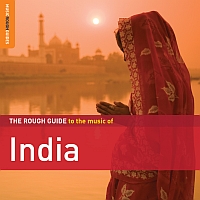 I should apologise for this choice but I’m jolly well not going to. Advance copies of my Rough Guide to India arrived and, like one does, I played it. This piece of Punjabi folk music taps into Ludhiana’s Rajasthani migrant worker influx – think Mexican bracero field workers at whatever picking time in California in particular to get a US parallel – and consequential cultural cross-fertilisation.
Shefali Bhushan’s Beat of India from which this snake-charmer music derives is one of the truly great labels promoting India’s folk arts. If there is one more active when it comes to promoting India’s folk music, pray tell. This is music with dirt under its nails, not folkloristic park entertainment or ‘gentrified’ folklore. From The Rough Guide to the music of India (World Music Network RGNET1231CD, 2010)
Context from Aparna Banerji at http://www.tribuneindia.com/2010/20100117/spectrum/book6.htm