Giant Donut Discs ® – May 2013
18. 6. 2013 | Rubriky: Articles,Giant Donut Discs
 [by Ken Hunt, London] Noëmi Waysfeld & Blik, Marta Töpferová & Tomáš Liška, Bob Marley & The Wailers, The Weavers, Ali Akbar Khan, Škampa Quartet, Imani Winds, Z.M. Dagar & Z.F. Dagar and Lucy Ward, Bella Hardy, James Findlay and Brian Peters.
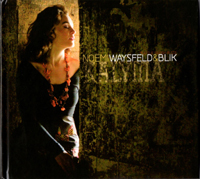 Shnirele Perele – Noëmi Waysfeld & Blik
One of those rare, very rare pieces of music that on first pass made the hair on the back of my neck stand up. The Yiddish of the title translates as ‘pearl necklace’ or, to go Glenn Miller, ‘string of pearls’. Both Noëmi Waysfeld & Blik and the album that this comes from were totally unknown quantities to me when work brought them to my attention. Once heard, never forgotten, this track got ‘unfairly’ stuck on repeat before moving through the rest of Kalyma.
Noëmi Waysfeld’s vocal register – quite different from much of her singing elsewhere on the album – and intonation fit the theme beautifully. This particular performance finds Noëmi Waysfeld & Blik augmented with David Krakauer’s clarion blasts and underpinnings on klezmer-style clarinet. This is a totally thrilling piece of music. An evocation or memory of good times.
Furthermore, this masterpiece’s packaging reinforces why the physical artefact can do things that a download never will. From Kalyma (AWZ Records CW895634, 2012)
More information at http://www.noemiwaysfeld-blik.com/
Single Girl – Hedy West
An unapologetic choice that requires the declaration of an interest. This reissue is the one for which I am most proud of having written the contextual notes in recent years. I listen to Hedy West (1938-2005) and am continually wowed by her performances. Single Girl is typical. It has a clarity and a vision to it. Her banjo is just right. Of the tradition, but just that little bit different without getting too modernistic. My most played album of 2012. Listen to this asserting of a woman’s rights and swoon. From Hedy West/Volume 2 (Vanguard VCD 79124, 2012)
PS Should any reader know the whereabouts of Hedy’s daughter Talitha, please do get in touch with me.
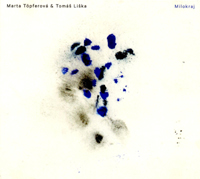
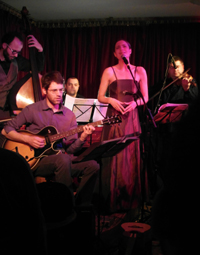 Jabloň zapomněni – Marta Töpferová & Tomáš Liška
Marta Töpferová (lead vocals, cuatro), Tomáš Liška (double-bass), Stano Palúch (cimbalom), Marcel Comendant (violin) and David Dorůžka (guitars) did a few gigs in England in April 2013. They bowled me over. Truly one of the most impressive roots-based bands to emerge from the Czech Republic in a decade.
This particular tale – they translate the title as ‘The Apple Tree of Forgetting’ – took on a new form in concert and showed the prospect of new life. Tonally, it summons images from the Slovak-Hungarian border. Milokraj is pronounced something like ‘mi-lo-cry’. From Milokraj (Animal Music ANI 034-2, 2013)
Lively Up Yourself – Bob Marley & The Wailers
Just one of those connections that come out of somewhere. In May 2013 on the way to an interview I found myself driving down streets between Brixton and Denmark Hill on the border of the London postal districts SW9 and SE5 that I had known well in the early 1970s and had previously only walked back then. The Irish composer Seán Ó Riada died in King’s College Hospital in Denmark Hill on 3 October 1971.
The Wailers were still largely a Jamaican deal then. Catch A Fire, with its make-believe Zippo cigarette lighter cover, came out in 1973. But the music that was coming out of the tower blocks and terraced streets were their Jamaican recordings. I would hear them playing in nearly every street I walked down. What the streets rang with were the 45s from a record shop within Brixton’s covered market. That’s where you got directed. It was a phenomenal time to get into reggae. The streets were alive with the sound.
And then in May 2013 at the SE5 end of Coldharbour Lane Lively Up Yourself entered my head unbidden. From Natty Dread (Island, 1974)
Kisses Sweeter Than Wine – The Weavers
One of the most historic and finest of all live folk releases. It was recorded on 24 December 1955 at New York’s Carnegie Hall. The Weavers were Pete Seeger (tenor vocals and banjo), Ronnie Gilbert (alto vocals), Lee Hayes (bass-baritone), and Fred Hellerman (baritone and guitar).
It was an album that never touched me in the scheme of things. Ray Fisher reminisced fondly about it and the Australian composer Peter Sculthorpe wove a snatch of its melody into one of his string quartets that the Kronos Quartet released around 1982 on a cassette release. The combination of Fisher and Sculthorpe keeps returning me to this piece. Plus Jackson Browne and Bonnie Raitt revisited the song on Where Have All The Flowers Gone – The Songs of Pete Seeger (1998) and they are very good eggs.
The version up above is from an album that deserves and needs a proper, fully documented reissue. From At Carnegie Hall (Vanguard VMD-73101, 1988)
Pilu Baroowa – Ali Akbar Khan
A piece and a performance that insists on never leaving me. So, I’m not arguing with the inevitable. From Then And Now (AMMP CD9507, 1995)
Excerpts from The Rite of Spring – Imani Winds
The explanation says, “May 23, 2013 Imani Winds’ members play David to Igor Stravinsky’s imposing Goliath, as they shrink the massive Rite of Spring down to size in a rendition for just five wind instruments.”
The wind quintet presents a series of “Selections” from the ballet. They run, in order, Introduction; Augurs of Spring; Dances of the Young Girls; Ritual of Abduction; Spring Rounds; Dance of the Earth; and Sacrificial Dance: The Chosen One, all in arrangements by Jonathan Russell. A highly recommended, instructional and entertaining setting for clarinet (Mariam Adam), flute, piccolo (Valerie Coleman), bassoon (Monica Ellis), French horn (Jeff Scott) and oboe (Toyin Spellman-Diaz).
Read more, view and download it here: http://www.npr.org/event/music/186033005/imani-winds-tiny-desk-concert
From Imani Winds: Tiny Desk Concert, 2013
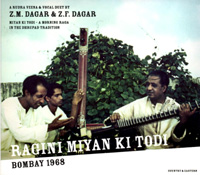 Miyan ki Todi – Z.M. Dagar & Z.F. Dagar
The death of Zia Fariduddin Dagar on 8 May 2013 brought home the importance of the Dagar Family’s lineage. On this particular release, recorded in Bombay in February 1968 by Bengt Berger, the founder of the Swedish label, Country & Eastern, he duets with his elder brother Zia Mohuddin Dagar in a vocal and rudra vina dialogue.
This particular performance of the variant of râg Todi attributed to Miyan Tansen of the court of the Mughal Emperor Akbar. It is a popular piece but also demanding in its way – a senior musician’s performance piece, as it were. This duet approaches an hour in duration. Note by note, syllable by syllable they tease out the composition’s delights. The performance is the equivalent of slow food rather than fast food with the ingredients – note and syllable and word – added like master chefs. One of the greatest recorded interpretations of Miyan ki Todi. From Ragini Miyan ki Todi (Country & Eastern CE19, 2011)
String Quartet No. 1 – Škampa Quartet
There I was sitting in Zürich Airport bridlimg at the usurious, retina-detaching prices charged for a beer or a coffee. After the first injury to the wallet, there was no chance that there would be a second occurrence. So, I settled down to listening to Pavel Fischer’s String Quartet No. 1. And a spirit of Moravian good vibes settled upon me and all was good in the world, except for Swiss usury. From Morava (Supraphon SU 4092-2, 2012)
 The Moon Shines Bright – Lucy Ward, Bella Hardy, James Findlay and Brian Peters
The album from which this song comes is subtitled “A Selection of Songs from The New Penguin Book of English Folk Songs (2012). This book is a successor to one of crucial books about English folksong: The Penguin Book of English Folk Songs (1959), edited by Ralph Vaughan Williams and A.L. Lloyd. The 2012 selection is courtesy of Steve Roud and Julia Bishop. In the wake of the publication of the 1959 book came a succession of recordings and The Liberty To Choose approaches the 2012 book in like manner.
This song is from Emily Bishop of Ledbury in the English county of Herefordshire (another county, like Somerset – Coates used to declare in their adverts – where the cider apples grow). Peter Kennedy recorded her in the 1950s. Brian Peters explains in the notes how “this New Year carol includes verses common to many May Day songs. The church seemed reluctant that people should celebrate the seasons without a strong does of ‘memento mori’ – a message found also in songs like The Life Of A Man [not on The Liberty To Choose] – but this is a pretty song, nonetheless, with which to close.”.
Theirs is a marvellous unaccompanied rendition of a song that acts as a reminder to remember one’s place. After all, Death is peeping just around the corner. From The Liberty To Choose (Fellside FECD257, 2013)
The copyright of all images lies with the respective photographers, companies and image-makers. The image of Marta Töpferová and the band is © Ken Hunt/Swing 51 Archives.