Giant Donut Discs ® – May 2014
31. 5. 2014 | Rubriky: Articles,Giant Donut Discs
 [by Ken Hunt, London] A long strange time with much written, little posted, too much heartache, death and separation. In other words: the usual. The backfill will appear. Work influences are, no apologies, rampant in these choices. It begins with Neil Young solo. It includes Mary Ann Carolan, Five Hand Reel, Paul Brady, Sakar Khan, Sam Lee & Friends, June Tabor, Barkatullah Khan, It’s A Beautiful Day and Wilson & Swarbrick.
This is a revised version which includes the full version of the Wilson & Swarbrick comments, dropped in on 4 October 2014.
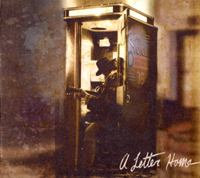 Needle of Death – Neil Young
Neil Young previewed this track at a sold-out concert at London’s Royal Festival Hall (RFH) called ‘A Celebration of Bert Jansch’ in December 2013. (BBC 4 televised highlights in The Genius of Bert Jansch: Folk, Blues and Beyond in March 2014.) We didn’t know it was preview though. Young wasn’t at the RFH bash but he did send a video of him performing this song of Bert Jansch’s. It was screened during the concert.
Young was a rock for Bert and Loren Jansch leading up to their deaths a month apart at the end of 2011. I did the last two major interviews of Jansch’s life, visiting them at home either alone or with Anne Briggs. Young booking Bert to open for him on North American tours during 2010 and 2011 was an act of rarest generosity and graciousness. Both Bert and Loren knew that their days were numbered, getting insurance to travel in North America was daunting and keeping their heads above water financially preyed on their minds. Those tours supporting Neil Young meant an enormous amount to them.
This is a song about narcotics. It was genuinely shocking when it appeared on Jansch’s self-titled debut LP in 1965. Young’s version was cut – the appropriate word – in Jack White’s restored Voice-O-Graph recording booth. It adds to the song’s grittiness. From A Letter Home (Reprise 9362-49399-5, 2014)
Arthur McBride And The Sergeant – Paul Brady
Andy Irvine and Paul Brady made their duo LP on the rebound from Planxty in 1976. It is that overused word: classic. Planxty had gone sour, they were shagged out and they needed the sort of musical succour that downsizing might provide. Off the treadmill the duo created one of the greatest folk albums that ever came out of Eire.
The story is excellent. Their version rings true. It is an Irish-located, anti-war polemic of a strength and kind that leaves an indelible mark of the sort that imprints where you first heard it. That strong a performance. Insert exclamation mark if you wish. My first brush with the album was at 70 New Oxford Street in London in a record shop called Collet’s. From Andy Irvine Paul Brady (Mulligan LUN CD 008, undated)
Further information at: http://www.andyirvine.com/albums/AndyPaul.html
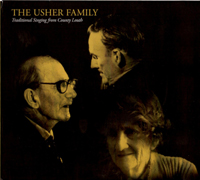 Laugh And Daft Half – Mary Ann Carolan
The Usher Family was a House of Usher of a different kind. County Louth is where the North’s Ulster Scots meets the South’s Anglo-Irish (as opposed to Irish Gaelic). Dónal Macquire made the recordings that appear on this CD in August 1974. The Usher Family on this album is Mary Ann, Pat and Petey (also rendered Petie sometimes). In 1966 the Irish folklorist and collector Seán Corcoran had met the family and, won over, spread the word about them and the family’s extraordinary repository of music. Other collectors followed.
Surely a song with “She talks like a parson/She sings like a nightingale” must whet the appetite. Mary Ann Carolan was a major Irish song-carrier and the Ushers just sang what moved them or they liked, as opposed to what the folklorists deemed was folk or not. The Usher Family just sang and, as this superlative collection makes plain, they did not give care whether what they sang was folksong, music hall, Child ballad, a John Sheil composition or songs of murky provenance. From The Usher Family’s Traditional Singing from County Louth (Rossendale Records MUS010, 2014)
Further information from rossrecords at talk21 dot com
A Man’s A Man For A’ That – Five Hand Reel
I only saw Five Hand Reel play once. It was at the time of their solitary LP release for Topic, in a venue close to Victoria Station in London. This song lent its name to their second LP for RCA released in 1977. It was an interesting period for folk rock. This song of Burns is a declaration of egalitarianism. Also known as Is There for Honest Poverty (grammatically it isn’t a question and hence no question mark is needed), Burns wrote it in the temper of the times – 1795 – and it anticipates later political developments. The Scots idiom ‘for a’ that’ – short for ‘for all that’ – means ‘in spite of that’. A Man’s A Man For A’ That started out as listening research for an article about Dick Gaughan. It stuck around well after the article was published. From Five Hand Reel/For A’ That/Earl O’ Moray (BGO Records BGOCD712, 2006)
Further information at: http://www.bgo-records.com/
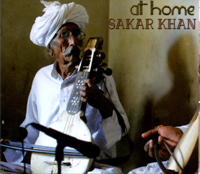
Hindoni – Sakar Khan
Rajasthan is a wondrous place. If you get away from the tourist places and sightseeing haunts, it has so much to offer. It combines modernity, ancient suavity and traditions that go back to a time of tolerance when Hindu and Muslim societies co-existed as if normalcy had nothing to do with faith or caste divides. That may be an outsider slightly romanticising matters.
Sakar Khan (1938-2013) was a Manganiyar, one of Rajasthan’s two principal Muslim hereditary musician clans. (The Langas are the other.) Although he was a master of the kamancha or kamaicha (other variants are available), it was largely only after his death that he came to wider recognition. This was despite him having appeared as one of the ten Rajasthani musicians and dancers who took part in the From the Sitar to the Guitar concerts in November 1995 that Yehudi Menuhin and Ravi Shankar put together in Brussels. (The DVD of the same name came out in 2006.) Menuhin sounded me out in some detail about the concerts, our having already worked together on a project. Twenty years on I have no memory why we didn’t follow up the conversation.
Kamancha is one of Rajasthan’s major bowed stringed instruments. It has a sound box generally covered with goat hide, three primary playing strings made of gut and 14 metal sympathetic strings. This track, on which Sakar Khan also sings, is a love letter from the past to the future. From At Home (Amarrass AMAR 006, 2012)
(An in-depth review of the album from which this comes is due to appear in issue 125 (Summer 2014) of Pulse) http://www.pulseconnects.com/
Further information at: http://www.amarrass.com/ UK distribution is through Harmonia Mundi.
Andrew Buncombe’s obituary of Sakar Khan from The Independent is at: http://www.independent.co.uk/news/obituaries/sakar-khan-musician-who-worked-with-shankar-menuhin-and-harrison-8810142.html
Rāg Bhupali – Barkatullah Khan
Barkatullah Khan of the Jaipur Senia Gharana is a name that rang no bells when I stumbled upon him. A gharana is in essence a school and style of playing rooted in a particular geographical location with prescribed approaches and specific characteristics which grew into a musical ideology through historical isolation. He was a sitarist that died in 1930 and this recording is said to be his only recording. He studied under Rajasthan’s acclaimed Jaipur Senia sitar player Amrit Sen (1813-1893). That is about the extent of my knowledge about him.
One of the consistently fascinating aspects of early recordings is how musicians adapted to, and coped with the limitations of, and new vistas offered by technology. It is a process that continues. It did not stop. It has not gone away. Listening to Hindustani musicians distilling the essence of a rāg into the time available can throw up remarkable insights. Barkatullah Khan’s Bhupali lasts around two minutes and twenty seconds and he isn’t finished playing before the cylinder runs out. It’s like a postcard turning up 100 years after posting. For more erudite material than this on the bigger subject, may I recommend some reading material? Try Timothy Day’s A Century of Recorded Music – Listening to Musical History (Yale University Press, 2000). This recording is something I would like to share with you. From http://india.tilos.hu/english_gh_jaipur.html (1904)
Further information about the gharana is at Steven Landsberg’s website: http://ragascape.com/
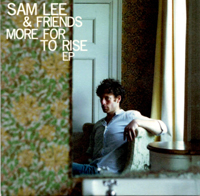 Airdog – Sam Lee & Friends
This is one of the four tracks on a ‘holding’ EP before Sam Lee makes his second CD. The song is learned from his de facto guru, Stanley Robertson – the Scots Traveller nephew of Jeannie Robertson. Stanley Robertson was very kind to me when I wrote his aunt’s entry for the Oxford Dictionary of National Biography. Traveller genealogies would fry the brains of anyone – sane or not.
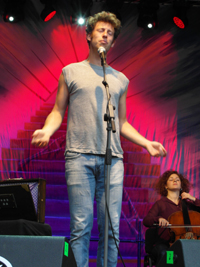 Airdog is such an unlikely title, given its context. It sounds like ‘hare dog’ (‘are dog) ought to fit better there. If this is a portent of what is to come, then that sounds jolly good. After all, a song that slip-slides so well between hunting imagery and sleeping all night in a tinker’s arms has to have depths to plumb. From More For The Rise EP (Nest Collective TNCR002CD, 2014)
While Gamekeepers Lie Sleeping – June Tabor
One of the first tranches of CD updates from Topic’s vinyl catalogue and originally released in 1976 this was an album that helped to cement her reputation. It is hard to express what she did to the British folk scene. She shook it up and afterwards it was never the same. She had a certain physicality that appealed but more pertinently she had an intellectual wherewithal that really engaged. Long, long before CD boxed sets were a twinkle in their daddies’ eyes (always a man always a man), I claimed first dibs when it came to writing the notes for her boxed set. And thus it came to pass. It is impossible to imagine the British folk revival without her. And this performance is one of the reasons why. From Airs And Graces (Topic Records TSCD 298, 1989)
 White Bird – It’s A Beautiful Day
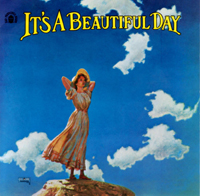
This was the opening track of this San Francisco-based rock group’s debut LP from 1969. The song, co-written by Linda LaFlamme and David LaFlamme, captures a mood, just as its cover artwork did. Its artwork was designed by George Hunter while Kent Hollister’s cover painting supposedly was a lift from an old US housekeeping magazine. No matter what the deal was when it came to inspirations or lifting ideas, the LP cover tapped into fantasies of sunshine, blue skies and Californian misses. The vocal-violin-led performance stands up well.
The violinist Vanessa-Mae covered it years later but it felt like a managerial choice. From It’s a Beautiful Day (San Francisco Sound SFS 11790 DA, undated)
Red Rose Medley – Wilson & Swarbrick
I got a preview of this track during a break during an interview with Dave Swarbrick in August 2010. It combines Bob Burns’ My Love Is Like A Red, Red Rose’ and Rob Marley’s No Woman No Cry. It was a wow moment for its audacity. His and Jason Wilson’s vision is one that has only increased in stature. One of the most delightful aspects of this arrangement is that the Bevvy Sisters (in their then line-up of Lindsay Black, Heather Macleod and Kaela Rowan) do the I-Trees in most sumptuous and sensuous ways.
In a conversation with me, Swarbrick recalled Wilson approaching him: “I had an email from this guy called Jason Wilson – I’d never heard of him – and would I be interested in doing a fiddle on Matty Groves. He was putting together an album and wanted to do Matty Groves. I thought this all sounded a bit iffy. I get one or two requests like that and they’re never really very good. But when he sent me the track, I was completely and utterly devastated because I thought it was absolutely fantastic.
“One thing led to another and he asked if I’d come over and perform it in Toronto. By this time I was hooked. I thought he was a magical musician and magical arranger and I thought the whole band was fantastic. He said he wanted to arrange some things of mine and it just so happened that he picked the very first track on the very first album that I ever made. Just accidentally.” Wilson’s project turned into the Juno-winning album The Peacemaker’s Chauffeur (2008). Red Rose Medley was also a CD-single in 2011 but no bugger told me at the time. From Lion Rampant (Shirty SHIRTY4, 2014)
The copyright of all images lies with the respective photographers, companies and image-makers. The photograph of Sam Lee is © Santosh Sidhu/Swing 51 Archives.