Giant Donut Discs® – October 2010
7. 10. 2010 | Rubriky: Articles,Giant Donut Discs
 [by Ken Hunt, London] As summer slides into mellow fruitfulness, what better batch of lifesavers on a desert island could one wish for than these? Let’s start with Dusty Springfield and her wicked way with telling a delicious tale about forbidden love. You’ll have to look for taboo subjects amongst the choices by Ahmad Sham Sufi Qawwali Group, Little Feat, Martin Carthy & Dave Swarbrick, Ralph McTell, Los Lobos, Joe Ely, Jerry Garcia, Bonnie Dobson and Dave Swarbrick. You might well find one or two sins hidden here.
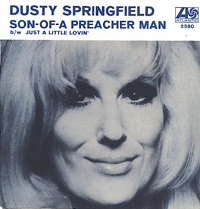 Son of a Preacher Man – Dusty Springfield
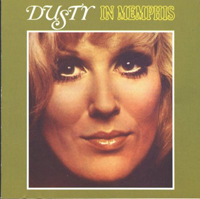
Dusty Springfield (1939-1999) had established herself as one of the quintessential voices of British popular music by the time her Dusty In Memphis (1969), on which this track appeared, came out. After the break-up of the Springfields, she put out I Only Want To Be With You (1963), an immediate hit, Her hit-making continued with stuff like You Don’t Have to Say You Love Me (1966). This song, written by John Hurley and Ronnie Wilkins, was in another league. Son of a Preacher Man first appeared as a single in November 1968. There was something about its groove and her delivery that catapulted it into the popular imagination. Let’s face it, it’s a great story.
Underpinning this tale of breaking society’s rules is the headiness of its Jerry Wexler, Tom Dowd and Arif Mardin production. It hooks you from the first musical phrase, even before she opens her mouth. Centre stage, of course, is that voice. Oh, the soul of that voice! Yet one of the minor miracles of the song is the melodic development of the bassline. The bassist, incidentally, is Tommy Cogbill. In the United States it appeared on Atlantic. Elsewhere it appeared on Philips. A song to crow about. Her voice and that pulse of Memphis funk is recommended to blow away mental cobwebs. From Dusty In Memphis (Mercury 063 297-2, 2002)
Sovay – Martin Carthy & Dave Swarbrick
This Sovay is the result of yet another periodic revisiting of the work of guitarist Martin Carthy and fiddler Dave Swarbrick and seeing them at Kings Place in London in September 2010. At the time of this live recording’s release in 1990 Carthy observed that Sovay had been a part of their core repertoire during their first term together between 1966 and 1969. It was with 1969’s Prince Heathen that everything clicked into place. It is still a peak in Britain’s folk revival’s mountain chain. Sovay, though, was where it all began for M&S. Despite knowing this song so well, it still catches me off-guard every so often. This was one of those occasions. From Life and Limb (Special Delivery SPDCD 1030, 1990)
A Kiss In The Rain – Ralph McTell
Ralph McTell’s take on the relationship between Anne Briggs and Bert Jansch begins with the line, “In my mind l see Annie and Bert wandering free.” This song takes them and Blackwaterside as its inspiration. It is true to its inspiration, if shaky on historical fact in places. That matters not one jot. This is a song, not biography. From Somewhere Down The Road (Leola Music TPGCD31, 2010)
Jupiter Or The Moon – Los Lobos
Sometimes with Los Lobos it is the vibe of the recording that gets and ensnares you even before you have engaged with what they are talking to you about. This is one of those songs of theirs. Big drum sounds as opposed to big drums. “If I could/make stone into gold/You know I would,” may sound pretty humdrum but the band turns David Hidalgo and Louie Pérez’s song into something exquisite. Plus it has a great in-house production from the band. (Like they need incomers.) And the way the guitar creates a pianistic quality is very, very beguiling. Likewise the song’s allusions and nods. From Tin Can Trust (Proper PRPCD0065, 2010)
 Rae Maykhana O Masjid – Ahmad Sham Sufi Qawwali Group
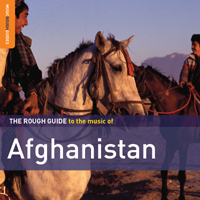
Rather like being in a place you know fairly well and just trusting to the deities of discovery and taking the path untrod, surely one of the finest things about music is the chance encounters and new delights discovered on the journey. The Rough Guide to the Music of Afghanistan is one of those journeys and is full of wayside attractions and diversions. Simon Broughton of Songlines put the anthology together and, as is World Music Network’s wont, the first pressing has a bonus disc. This track opens that disc.
The Ahmad Sham Sufi Qawwali Group is based in Kabul. Long established, they have toured abroad, performing in India, Russia, Tajikistan and even Scotland. Rae Maykhana O Masjid is translated in the notes as ‘The Way To The Mosque And The Wine-house’. (Quite why tavern and mosque are inverted, I don’t know.) Mir Ahmad Sham and second vocalist Zia Mohammad deliver a Sufi meditation. It pivots on a semantic conundrum about where the wine (that is, ‘knowledge’) of love is served. That wine leads to spiritual intoxication. The twist is that the singer is on the outside, too lowly to enter either wine-house or mosque. The flute – possibly an uncredited Zalai Paktia – is a choice addition to the ‘standard’ qawwali party instrumentation of percussion, hand percussion and harmonium. Flute conjures images of Rumi’s Song of the Reed. From The Rough Guide to the Music of Afghanistan (World Music Network RGNET1237CD, 2010)
Me And Billy The Kid – Joe Ely
This is one of the finest songs that Joe Ely ever spat into the face of an audience. Once heard, never forgotten. Not having one of those iPod thingees, it is a song that went on mental music shuffle. The key to understanding it lies in its opening line: “Me and Billy The Kid, we never got along.” Well, and then the second line might indicate a grudge coming down the track. “I didn’t like the way he cocked his hat and he wore his gun all wrong.” Their relationship goes downhill right away.
Without giving away the story, tips to note in the narrative might include “we had the same girlfriend”, “she had a cute little Chihuahua” (italics mine) and “But it was me she loved”. A tale about getting even. The understated steel guitar from Lloyd Maines works really well. From Live @ Antone’s (Rounder 3171, 2000)
Banjo run – Jerry Garcia
The death of the Seattle-born actor Kevin McCarthy on 11 September 2010 triggered a sequence of memories that led to this piece of blink-and-you’ll-miss-it music. McCarthy played the male lead, Dr. Miles J. Bennell in Don Siegel’s original Invasion of the Body-Snatchers. Released in 1956, it is a science-fiction story set in small-town America. The town is being taken over, its citizens duplicated by an extra-terrestrial beings. These human replicas are emotionless but have a nice line in herd instinct. Twenty-some years on Philip Kaufman re-made the film and set it in San Francisco. The film might be said to have shifted from feeling like the product of Sen. Joseph McCarthy’s era – yes, apparently Joseph and Kevin were related – to opening up to interpretations of conformity. Either way, the plot hinges on the dramatic device of sleep and staying awake. You snooze, you lose.
Garcia, the banjoist with Old And In The Way (and Grateful Dead stalwart), plays the banjo run at one point as Harry the homeless person’s dog scampers by with his master’s face adorning its head. It is a nicely menacing touch, the sort of shock-horror trick that American pulp comix specialised in during the 1950s and 1960s. It must have tickled Garcia’s childhood ghoul sense of humour. As I read Kevin McCarthy’s obituary, this burst of banjo ran through my head. It’s not even a track. Or like Garcia’s tail-end banjoistic device that the Grateful Dead employed at the end of the Dark Star single. From Philip Kaufman’s Invasion of the Body-Snatchers (1978)
Un Canadien Errant – Bonnie Dobson
This song has grown into a Canadian classic and a wellspring of Canadian-ness. The title translates as ‘A Wandering Canadian’. That is exactly what Bonnie Dobson became, though she put down roots in England. Her delivery of this song, accompanied by her own guitar, is memorable. She was the first Canadian to go south of the border and make a mark in the States. Out in California she penned a song of no little familiarity, triggered by the film adaptation of Nevil Shute’s apocalyptic novel On The Beach. That Cold War anthem was Morning Dew. Un Canadien Errant was first released on her Mercury album, For The Love of Him (1964). For me, it is as emblematic of Bonnie Dobson as Morning Dew. Do not translate the title as ‘A Mistaken Canadian’. She is bang on the money here. From Viva La Canadienne (Bear Family Records BCD 16720 AH, 2010)
Sweet Alban – Dave Swarbrick
This is one of the pivotal compositions on Dave Swarbrick’s raison d’être. That album was eight years in the making. A bit of life and death intervened in the making of what I fervently believe to be his finest ‘solo’ album. On 20 April 1999 he came round to be acquainted with the fact that he was in that day’s Daily Telegraph obituary column. (There’s more about this unwished-for recruitment into the ranks of those who have got to read their own obituary in the November/December 2010 issue of R2.)
The bearer of these ‘glad tidings’ was the woman to whom this marvellous composition is dedicated. It’s for Jill Swarbrick, whose middle name is Alban. When you listen to Dave Swarbrick’s contemplative bow strokes and swoops and Kevin Dempsey’s rich chords on guitar, bear that inspiration in mind. From raison d’être (Shirty no number, 2010)
 The Fan – Little Feat
Little Feat’s performance at Fairport Convention’s Cropredy on 13 August 2010 followed the death of the band’s first drummer – Richie Haywood – the previous day in Canada. On the way to the festival, Feats Don’t Fail Me Now was playing. It is still one of the most genuinely exciting rock albums ever to emerge from California in the 1970s. Haywood’s taut drumming had a great deal to do with the band’s magic and generating the excitement that was Little Feat. But he was one component. Little Feat had a lyrical signature that set them aside, that was central to the band being so different.
The Fan has an arrestingly unsavoury opening gambit. In Britain there was no lyric sheet with the LP, so, back in the day, the words had to be teased out of the mix. The more painstaking disciples of such weaknesses had a fuller picture of sleaze revealed. Verse 1 sets the scene and grabs the attention with, “Heard you got an infection/Just before your lewd rejection/Wait’ll the shit hits the fan/You couldn’t turn him down.”
This particular Lowell George/Bill Payne song led a whole series of lives. The Hotcakes & Outtakes (2000) version, originally on the 1981 Hoy-Hoy! compilation, is pretty good. But the Feats Don’t Fail Me Now version is still it by a long chalk. And Little Feat did their fallen comrade proud at Cropredy. From Feats Don’t Fail Me Now (Warner Brothers BS-2784, 1974)
The image of Little Feat from Croppers is © Santosh Sidhu/Swing 51 Archives. The copyright of all other images and lyrics lies with the respective photographers, companies and image-makers.