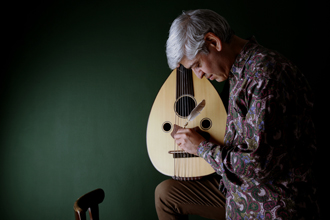
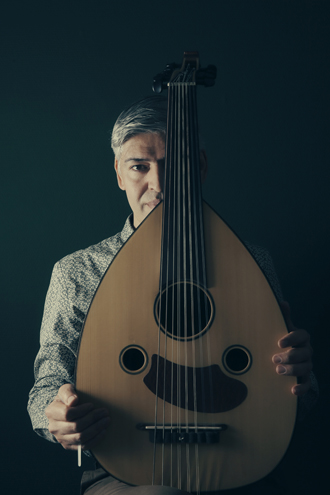
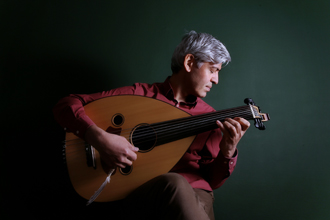
Amsterdam-based ud player Mehmet Polat studied Indian and Turkish music. He makes music with both Turkish and Western players
[Petr Dorůžka, Praha] The ud, one of the most common instruments in the Middle East, is considered to be the forerunner of a whole host of stringed instruments, including the European guitar. Unlike the guitar, it does not have frets and therefore is not limited by European scales. Besides Arab countries, a number of excellent players live in Turkey, Israel or Armenia and, thanks to the migration in recent decades, also in Europe. The instrument has gained respect in jazz thanks to musicians as Anouar Brahem from Tunisia, who records for ECM, or Rabih Abou-Khalil from Lebanon.
In addition to its musical role, the instrument also functions as a cultural symbol, linking the Middle Eastern traditions with Western genres like jazz, flamenco or acoustic music. Mehmet Polat’s music draws inspiration from this ever-changing area. His concerts are an exceptional experience. Polat and his bandmates lead their audience to the open musical landscape, where the art of listening to others is the rule, rather than promoting one’s ego.
Polat recorded his latest album, Embodied Poetry, with Bulgarian drummer Martin Hafizi, Dutch pianist Mike Roelofs, bassist Daniel van Huffelen, and guest players on trumpet [Gijs Levelt], duduk [Vardan Hovanissian] and ney [Şükrü Kirtiş].
Mostly with Turkish Alevi music and folk music at home and in my village. My father had a beautiful voice, a great musical memory, all my siblings and cousins were highly musical. I started playing Turkish baglama when I was around 5 years old. I continued till my age of 18, and then switching to ud.
What kind of Western pop music influenced you?
I was listening to Turkish pop music on TV and radio, and I have never been an active listener of Western pop music. Inactively I was hearing it everywhere.
Was there any formative moment in your youth that changed your view on art and music?
When I was 18, I saw a 12-year-old boy playing Paganini caprices. This gave me an amazing motivation to work harder.
Do you come from a musical family?
My brothers play Turkish baglama, my mother and father sing. I was the first one from my family who chose music as a profession, studied in the conservatories and performed internationally. My niece Fazilet Polat has followed my path. She plays Western classical music on flute, she plays in the Istanbul Opera Orchestra.
Were you born in the Netherlands or in Turkey? How and for what reason did your family moved to Europe?
I was born and raised in a village in suburbs of Urfa, Turkey in 1980’s. In 1998 I moved to Istanbul for my studies, in 2007 I have moved to the Netherlands. I came to the Netherlands for studying master degree at Rotterdam Conservatory’s Indian Music department. Since then I have been living here in Amsterdam.
At Rotterdam Conservatory, what made you choose Indian music?
Initially recordings of Ravi Shankar, Hariprasad Chaurasia, Zakir Hussein, Shakti. This music was the first reason why I wanted to learn Indian Music, it was so familiar but also different.
During your studies at the Rotterdam Conservatory, were you playing Indian music on the ud, or some Indian instrument?
Yes I was learning it on the ud. There were more students who were learning on sax or even darbuka.
Your latest album is called Embodied Poetry. Interpretations of the title can be diverse. I read it as “stories stored in our physical bodies”. Maybe you have a more personal explanation?
I see this album as an outcome of lots of stories about life experiences that came to my life as birth, death, survival, love, struggle, balance, perseverance and motivation for going on, diverse emotions and lessons (both life and for artistic development: I have followed jazz lessons by guitarist Mark Tuinstra, I have learned jazz standards, jazz timing, improvising on chords etc.).
You explain that 2 pieces are directly based on Indian ragas, Yaman and Charukeshi. Can you explain why did you choose these two? Just because of the musical content, or also because the emotional level, time-of-day they are related to?
I love those ragas, both because or their musical content and also they are part of my emotional world. I can relate them, they can speak out my inner world through my melodies and ud.
Do you consider Turkey as your second home? Do you travel there often to explore your roots?
Initially yes, Turkey could be my second home, but social, cultural and economic obstacles withhold me somehow. Anyhow approximately once in a year I go visit my family. I’d love to perform there as well. About my roots, I think I have brought them with me to Amsterdam. Every phrase I play sounds a bit Turkish to me. Even I find it good to get disconnected from my roots, for opening up for new cultures. I am not afraid of that.
How did you study music, at school? Or did you also have a private teacher?
I have started with Turkish baglama at the age of 5, I have learnt it from my brothers and other players in my village. After that till my conservatory years I had various private teachers and courses.
The Netherlands is known for it’s advanced educational system in non-Western musics, was this helpful?
I have studied at CODARTS, it was super helpful for me. Next to my studies in Indian music, I could also interact with musicians from Latin, flamenco and even tango departments.
Do you remember your first public performance?
I was 7 years old, playing Turkish baglama and singing at a national day (23 April) celebration at my school.
Once you told me you are Alevi. What does this mean to you, in a practical way, and in a spiritual way?
Coming from an Alevi village and family has helped me to get a humanistic perspective, respecting others, gender equality, secularism, being open minded in life and opening ourselves up for art forms as music, poetry and dance. I am grateful for this. But further now I live just a secular life without any spiritual feeling or belonging any group of beliefs.
Is Polat common name between Alevis? I am asking this, because the previous interview in the magazine was with Meral Polat, so some readers will be curious if there is any relation.
Polat means ‘steel’ in Turkish, Persian and Arabic. It’s originally a Persian word. So written Polat is one of the most common surnames or names in Turkey. Meral is a friend of mine but we are not related. Just a beautiful coincidence.
I suppose there is a large Turkish Gastarbeiter diaspora in Netherlands and even bigger in Germany. But do these people come to see Mehmet Polat concert? If not, what do they listen to?
A small percentage of gastarbeider diaspora come to my concerts here. Those are usually from Kurdish, Alevi or other minority groups, or their grandchildren. A small group of the diaspora has become world citizens, left thinking, open minded and don’t belong to any ethnic of religious group. They also come to my concerts.
But unfortunately more than 60% of the diaspora here watches only Turkish TV and get their cultural and political inputs from there.
Your label is Aftab – does it have a meaning? Is it a common name in Muslim world, any relation to the Pakistani singer Arooj Aftab?
Aftab means ‘sun’ in Persian. I love it. By living in Netherlands I am missing the presence of the sun sometimes for weeks.
How difficult it is to survive with music that is NOT mainstream, and is also NOT part of any widely accepted genre like jazz?
It’s true that it’s not an easy task, it requires some extra work to help the audience listen and feel & understand it. And at the end it’s my responsibility to get my music heard, by audience. In bigger cities we usually have audience for my ‘multicultural jazz’ music. Recently, on June 22 2023, we have played in Bimhuis. Although it was a Thursday evening on summer, the hall was full.
But also you do other things, a programme called Heimwee naar vertewith Joke Hermsen and Maryana Golovchenko.
This show is about homesickness. Amazing philosopher Joke Hermsen has initiated this project. The project has started with Joke’s new book ‘Onder een andere hemel’ (under a different sky). Myself and the great Ukrainian singer Maryana Golovchenko will make music about the subjects, Joke will combine her lecture with our music.
Do you have any concerts in the Middle East, Turkey, Morocco, Israel?
I have been in Morocco, Egypt, Jordan and Turkey for concerts. And I would love to go there again and discover other countries from the region.
Have you ever worked with a singer? Any recordings?
Yes I did. Aynur, Mikail Aslan, Cemil Qocgiri, Mircan Kaya, Flip Noorman, Naomi Inez, Karima el Fillali. I am also teaching a Classical Turkish Music Choir in Amsterdam. Check these links
Ottoman Music was well developed in the court. Next to its artistic aesthetic it was also used for healing people.
How much it was improvised?
Ottoman Music was based mainly on makams (a concept of melodicity which is based on tonality and certain route/rules the melodies must follow). Most known makam improvisations are called ‘taksim’ and ‘meyan’. Taksim is a free improvisation with or without any accompaniment. Meyan is a melodic or rhythmical improvisation on an ongoing groove during the pieces.
There was just 1 melodic voice and no harmony, like in Indian music?
Exactly.
Did the genre evolve continually until present time, or was there some turning point when the Ottoman rule ended, that is seen like the end of the “classical” period?
Song forms and instrumental forms are still being composed, performed and listened. But classical forms (for example beste, yuruk semai, agir semai etc) are not being so much composed. Especially after television was invented, the classical forms have started to vanish.
Did notation at some point enter the music system? And was improvisation of the greatest masters written down on paper, a process that can be seen as a parallel to works of European composers? Cemil Bey could be an example?
I am sure Turkish music historians can tell a lot more about it. But yes, notation came later. Afterwards the greatest masters have written their compositions on notation. Today we are using Western notation in French system (do-re-mi..) with extra accidentals for microtones. Also for each specific pitch we have older names as well, like rast, zirgule, dugah, kurdi, segah etc.
Is there any direct relation between Turkish makam and Indian raga system?
Yes, especially when we play certain scales and follow certain rules, makam and raga systems are similar.
The ud
What it takes to bring new ideas on instrument like ud? Is it just technique, or also incorporating ideas from non-Eastern cultures?
It is a combination of having a good technique, being open to different cultures, having a broadened vision and a good taste. Ud was mostly seen as a traditional instrument which must accompany vocals. But I use it as a solo instrument, for that I have developed an advance technique based on spreading my fingers wide, transposing all the makams in every half tone. For doing that I have practised average 10 hours during my first years of learning, 25 years ago.
Why transposing is so important?
Since Turkish Music is mostly vocal music, every vocalist may want to sing the songs in the range of their voice. In this case the instrumentalists must to adapt to singers’ voice’s range, and that means we must transpose instantly. But transposing makam scales – especially to the half tones – could be ultra challenging. Because you have to keep the intervals correct, accommodate the embellishments, make your instruments sound good. Mostly the instrumentalists avoid that and play just on the keys which works on mainly open strings. But I embraced this challenge and learned from it.
How did ud playing evolve in 20 century?
Serif Muhittin Targan (1892-1967) had a big influence on developing ud in Turkey and in the Arabic world. He was also a good cellist, he could apply all his technical capabilities on the ud. Had a wide perspective and brought ud to an advance level. Targan had a lot of Western influences.
In what sense was Munir Bashir so influential? Did his studies in Hungary bring any Western ideas?
Munir Bashir was a student of Serif Muhittin Targan. Of course his studies in Hungary brought Western Ideas.
Rabih Abou-Khalil studied in Beirut, besides ud also a flute, with the Czech professor Josef Severa, did this also bring some Western influences?
Yes it did.
And Anouar Brahem made many albums for ECM, for Western ears his music still sounds Eastern, but I am sure listener from the Middle East hears many Western elements, can you name some?
Anouar Brahem has a good taste, subtle playing, broadened vision and interesting ideas which I like. I like his albums with unusual bands with for example bass clarinet, accordion, sax and more.
Are there several parallel “schools” how to play ud, like Syrian, Egyptian, Iraqi, Israeli, Turkish, or is it now just a huge melting pot?
Yes, characteristic differences of the local cultures are definitely affecting the style of the ud. I want to add also Iran, Azerbaijan, Armenia, Greece and North African countries on this list. All play the ud in their styles and even with different tuning systems. I believe that the instrument is just a tool, music is in your brains and heart. You externalise what you know and feel at the end, no matter what instrument you play. If a Japanese folk musician plays ud, I am sure the ud will sound more Japanese.
You also designed an ud with two extra bass strings to broaden the range and function of his instrument. Do you use it on regular basis?
Yes I do, especially in projects without bass player and bass needed, I play the bass lines with my ud. Also during my solo shows I loop bass lines to improvise on top of it.
East and West
For Europeans Eastern music seems a mystery, most of the intervals sound “wrong”, with no links to human emotions in a way major or minor scales work in Europe. Maybe listeners from the East have same feeling from Western music?
Actually not. In Eastern music we have substitute makams/scales for Western major and minor. For major we have mahur and cargah in Turkish music. In Arabic Music that’s called ajam, Persian Music mahoor etc. And for minor we have nihavend, buselik and its variants.
Or maybe, the feeling is not “wrong”, but for Eastern ears the Western melodies are trivial, simplistic, lacking ornaments and the mystery of microtonal intervals?
Actually in Western modern music there are examples with microtones and larger irregular rhythms. Also in Baroque and Renascence times there were ornaments. I am sure musicologists can say way more about that. Also it is more more than just East and West. We have many cultures and traditions in the world like North & South America, Asia, Afrika etc. I would consider them also as good sources to get influenced with.
Once I asked the Israeli ud player Yair Dalal about the differences between Eastern and Wester scales, and he explained that the most important thing is the “neutral third”, which is exactly between the major and minor third. I had to agree that “neutral third” is for Europeans a factor that immediately sounds Eastern, but is it really that simple?
I would say, that depends on makam. In some makams third note is important or with microtone. In others that could be fourth (f.e. neva), or fifth (f.e. huseyni) or sixth (f.e. Turkish acem) and so on.
[Petr Dorůžka, Praha] Shaun Williams started to explore East European music as a humanitarian volunteer in Ukraine 15 years ago. Currently he is working on Roma music in his doctoral thesis, and as an accordionist he formed an ensemble with Romanian singer Corina Sîrghi. The full name of their group is Corina Sîrghi și Taraful Jean Americanu.
Williams was aware that his American origin could confuse listeners or even create a barrier, so he appears in the group under the nickname Jean Americanu, which he got from his Romanian bandmates. A unique figure is the cimbalom (hammered dulcimer) player of the group, Marian Șerban. When Romani music was discovered by Western audiences after the fall of communism, he moved to Italy, where he participated in dozens of important projects. He played with the group Aquaragia Drom and with the Neapolitan saxophonist Daniel Sepe, accompanied the English rocker Elvis Costello on an Italian tour and contributed to a soundtrack by the film composer Ennio Morricone. In the following interview, first Corina and then Shaun talk about their musical lives.
Corina, what kind of music you were growing up with?
I grew up listening to the radio and the traditional music of the Dobrogea region where I was born. No one in my family sang and there was no passion for music around me. But I sing. I don’t know how it happened.
In many East European countries, the folk music tradition was corrupted as a propaganda tool, Soviet type mega ensembles were created and the young generation hated them. How was the situation in Romania? And how did you fall in love with the Taraf music?
Young people still associate the traditional music with the music of that period and I don’t know if we are ever going to move past it. I don’t think there is a big interest in it, somehow the folk music still goes on, but I dislike it, it’s kitch. I don’t know how I managed to navigate all that ugly music and make it to the taraf music, I really don’t have an answer to that. It was my luck.
How did you start your band? What was the initial setup?
Shaun and I started the band and it all happened very quickly. We meet on the internet, we sang a few songs and that was it. We grew like a bread.
How easy was it to convince Marian Șerban to join the band? He must be very busy and sought-after musician?
Actually it was very easy. He trusted and supported us every step of the way. And he became like a father to us.
What are your plans for the new album with the Taraf?
The new album is also our first album and I am not sure how it’s going to sound. We are going to add some new stuff, of course, and maybe one or two original compositions.
When you were working with Shaun from the beginning, was there any barrier between him and local musicians because he is Gadjo and foreigner? How did he break the ice? What was the moment when he was accepted?
Meeting Shaun was the second beautiful thing that happened to me, the first was my dog. I’ve learned and I am still learning a lot from him. Although he didn’t grow up here, he is more knowledgeable than me when it comes to this kind of music and he is respected for it.
And also, in your case, because probably you are not of Romani origin, did you have to deal with any prejudices?
Maybe I will be judged for this, but I think music is for everyone. I am not trying to sing like a Roma person, I sing like me.
-x-x-x-x-x-x-x-x-x-x-x-x-x-x-x-x-x-x-x-x-x
Shaun, after your time in Ukraine, when and how did you decide to settle in Romania?
When I went to Ukraine as a Peace Corps volunteer in 2008, I already had the idea to someday study ethnomusicology, and my experience in Ukraine helped me to make that decision. When I finished my service in 2012, I began my doctoral studies at the department of Folklore and Ethnomusicology at Indiana University.
How did you start your band? What was the initial setup?
The band started quite unexpectedly. I was in my first year of field research in Bucharest and had organized some jam sessions with lăutari in the city. Corina must have seen a video from one of these events and wrote to me on Facebook asking if I’d like to try playing accompaniment on some traditional songs. We started out performing on the street as a duo when she had a break from her job at a coffee shop, and soon people were asking to hire us for weddings and parties. We performed for a few months as a duo, then invited cimbalom player Marian Șerban to join us, and after another year we added the violin and contrabass.
You studied art history in Germany, how important was it for your East European explorations?
My time abroad as a young student in Germany was important to my development as a person, but not necessarily as a musician, though the first time I saw a Balkan or Klezmer band it was on the streets of Berlin.
Your great-grand mother comes from south Transylvania, did her musical/cultural memories somehow influence your grandmother or you?
I never met my great-grandmother, who emigrated from Sebeș, Transylvania to Ohio, USA in 1920. But I grew up with frequent visits to my grandmother’s house where there were decorations in German and depictions of Transylvanian shepherds on the walls. Nobody ever talked about Transylvania though, and I assumed my ancestors were from Germany. It was only in 2007, when I made my first trip to Romania to study the cimbalom, that my grandmother told me “Oh you know my mother fled from Romania. Why on earth would you want to go there?”
How easy was it to convince Marian Șerban to join the band? And also to join Volekh? He must be a very busy and sought-after musician..
We were lucky to meet Marian in 2017 when he had just moved back to Bucharest after nearly 30 years in Italy, when he wasn’t yet in a lot of bands. My cimbalom teacher and mentor, Nicolae Feraru, suggested we talk to his nephew Marian because he was looking for people to play with, and we’ve since become great friends. When I formed Volekh Quartet in 2019, I immediately thought of Marian because he’s a very versatile musician with years of experience playing Yiddish theatre music in Italy.
How is Volekh Quartet doing? This band looks like a supergroup of busy people (Mihai Balabaș, a multi-instrumentalist who plays with numerous international groups), Benjy Fox-Rosen (bassist and composer as well as conductor of the Vienna Stadttempel Choir), Marian Șerban (a master of the cimbalom, including collaborations with Ennio Morricone, Ute Lemper and Elvis Costello) and Shaun Williams. So probably live performances are rare? Do you have a next gig planned?
Volekh Quartet was a victim of the pandemic; we premiered our live score for the 1925 silent film “Manasse” at the Europalia 2019 festival in Brussels, and then a few months later the artistic world was shut down and all of our performances were cancelled. Now we’re starting to gain some momentum again, with a performance at TIFF Cluj [TIFF Transilvania International Film Festival] in June and another at TIFF Oradea scheduled for October 1st 2023.
What are your plans for the new album with the Taraf?
Our album plans were also affected by the pandemic, but we’re hoping to finally hit the studio in winter 2023-24, with a release in the spring.
Do you find the Taraf tradition also elsewhere in Balkans? Illiterate self taught musicians playing for the aristocracy?
I take issue with this depiction of lăutari; many have studied at music colleges and conservatories, and the understanding of music theory is at a very high level, regardless of the fact that it’s still mostly an oral tradition. But yes, the phenomenon of Romani musical families persists throughout the Balkans and also in Ukraine and Moldova, where there were often mixed Romani-Jewish musical families.
In electronicbeats.ro you said: “Part of my research is to promote this music, to have a higher status. People watch this music like on Etno TV, somehow the fiddle is seen (wrongly) as kitsch music for grandparents, and it’s a shame that it’s not appreciated.” That is the same what Ross Daly said one generation ago. As a foreigner, he helped the Greeks to re-evaluate their own folk music, can you see any parallels in your role?
I don’t want to inflate my role or my potential influence. I’d say that I only hope I’m able to give back at least as much as I take from this music that has so greatly enriched my life.
Does your position as a foreigner, Americanu, allow you to see the local culture more valuable, contrary to the view shared by locals, who often see it as something inferior, and who are fascinated by American culture instead?
I don’t think so; most people who listen to our music assume that I’m a (Romani) lăutar, since the name is a play on the common culture of nicknames in muzica lăutărească and manele (ie. Marian Mexicanu, Jean de la Craiova, etc).
The role of “outsiders” discovering local music is much wider. Joe Boyd and Muzsikas, Michel Winter, Stephane Karo and Taraf de Haidouks. Also, Gadjos do musicology studies, while gypsies play the music. In European classical music the artists and academics come from the same pool, in Balkans it is different. Any simple explanation?
There are plenty of Romani musicians in the classical, jazz, and pop music worlds, as well as Romani anthropologists, sociologists, and ethnomusicologists. I’m wary of my role as a “Gadjo” outsider who came to Eastern Europe to study the Other, but that is a reality of the imperialistic roots of Anthropology/Ethnomusicology that I’m still grappling with; I hope that what I am doing is not exploitative but rather beneficial to the communities and artists with whom I collaborate.
Your priority concept of your band is a serious performing ensemble for festivals and concerts, not a wedding band pleasing the guests at any cost. But, what about a “selective” wedding band? What if Johnny Depp would ask you to play at his wedding, would you decline?
The reality is that the majority of our performances are private (weddings, baptisms, parties), and we enjoy playing for such events. The difference is that at weddings we don’t get to perform the dark, melancholy repertoire that (in my opinion) makes muzica lăutărească so special.
Dark songs? You mean the doina laments?
I mean a much larger pallete of genres. People typically only want party music at their wedding– that is, sîrbas, horas, manele, drinking songs/table songs. But that excludes whole genres of traditional rural and urban folklore whose traditional listening contexts have disappeared: cântece de jale (sorrowful songs), cântece de blestem (curse songs), cântece de ocna (jail songs), cântece de șmecheri (gangster songs), to name a few. “Lume, lume”, “Cine iubește și lasă” (curse song), and “Lasă mă, nevastă-n casă” recorded by Maria Tănase and many of the epic songs and cântece de jale recorded by Taraful din Clejani (later Taraf de Haidouks) and falsetto crooners like Dona Dumitru Siminica fall into this category of songs without a place in modern society.
In Romania, you have the lăutari tradition and also manele. While lautari is the authentic, virtuoso style, manele represents the pop side, with cheap keyboards? But also the great singers Gabi Luncă and Romica Puceanu are considered as manele. Maybe you can correct me if I am wrong?
First of all, I don’t think it makes sense to frame this question in terms of “authenticity” or “virtuosity”; manele and lăutărească can be authentic and inauthentic, with varying degrees of virtuosity. Some might say that our band is inauthentic because I’m an American and didn’t grow up with this music.
The “manea” rhythm (Çiftetelli in Greek and Turkish) is a part of the shared musical heritage of the post-Ottoman space. In Romanian music, this kind of improvisational dance music (traditionally danced exclusively by women) was performed by lăutari and constituted only a small part of the wedding repertoire. The great singers of the “Golden Age” of muzica lăutărească all had a few manele in their repertoires, but it wasn’t until the 1980s-90s that this dance became a genre of its own, influenced greatly by the arrival of the synthesizer and melodies from other Balkan countries (but also Israel and the Levant). Nowadays there is pop lăutăreasca (see Viorica and Ionița de la Clejani) as well as pop manele, but the manele genre has provided particularly fertile ground for fusion— most of what is called “manele” today is actually closer to reggaeton, trap, and R&B than it is to the traditional Çiftetelli. It’s also important to note that the majority of manele performers come from a lăutar background and were well versed in this virtuosic tradition before migrating to the pop-manele world which generally provides greater opportunities for fame and fortune.
Stelian Frunză said: I can’t consider a Gadjo to be a lăutar because they don’t play with the same “fire”, as we say, that makes the audience jump out of their seats. So, how did you break the ice? What was the moment when you were accepted?
I don’t agree with Stelian here. There are a few (Romanian) Gadje who have been accepted as lăutari and are great performers. I don’t know if I’ll ever play with that degree of virtuosity, but making the audience feel something is not all about virtuosic playing.
Your blog, beyondkarpaty is a wonderful source of information, will there be a book?
Haha, my blog has been woefully neglected for years, but I’m glad it can still serve as a resource. There will be a book, but it’ll be my doctoral dissertation on Romani music and activism in Romania.
[by Martha Hawley, Haarlem] The Fira Mediterrània was held in October 2023 for the 26th time, in celebration of Catalan traditional and popular culture, accompanied by performance and artistic contributions from around and across the Mediterranean. The pace of the festival is determined by the topography of its base in the hills north of Barcelona, in Manresa, all on an incline, very appealing to this visitor from the Lowlands. Performance venues are spread out all over town, in and around commercial and residential zones, in small theatres, even smaller cafés, and in large tents wherever an empty square allows.
There are many performing dancers on stages, but the music inspires visitors to just spontaneously break into action on the street.
Manresa’s main theatre is the Kursaal, where the opening night spectacle was held, featuring Italian singer Maria Mazzotta, music and production by Catalonia’s well-known musician and producer Raúl Refree, and the female Plèiade Choir. Mazzotta’s voice was a dynamic, penetrating pan-Mediterranean timbre for opening the festival, and Plèiade impressed with their sound.
Catalan music itself is one of the oldest unbroken musical traditions in Europe; musicians and artesans furthering the old arts are present on the stretches of outdoor festival grounds in the center of town.
Among the traditional instruments undergoing revival are the bagpipes, banned, as were all popular sounds, languages and compositions, under the Franco dictatorship. Recovery of local culture began 40 years ago, but the Catalan, Italian and Turkish pipers in the “Mediterranean Bagpipes Company” met just a few months ago. This was clearly a fortuitous meeting, as their exuberant sound drew joyous listeners and dancers out onto the public square.
Fusion from around the Mediterranean is a familiar sound at the Fira, but Catalan sounds hold their own throughout the programming. Vocalists, solo musicians and theatre companies abound, not to mention the Cobla, often played as dance music for the beloved Sardana. This year, the “Cobla Lluisos de Taradell” brought a female teller of legends, backed by traditional Cobla musicians, to enthrall the young crowds, and it seemed a very celebratory way of sharing the old culture with the new generation.
As affirmed by the Fira’s Artistic Director Jordi Fosas, it is one of the festival’s challenges to pass on traditional culture to the youngest listeners, while taking into account the changing demographics in Catalonia. New residents come from all over Spain, Latin America and North Africa, and the concept of “popular culture” must change and expand with the local population.
Mediterranean-rim countries are already there, with, as mentioned above, Italy’s Puglia leading the opening night. France’s “Les Mécanos” explored French and Occitanian traditional song in glorious a capella formation. Turkey was also represented, with the exquisite sounds of the “Ali Dogan Gonultas Trio”. The melodic and emotional delivery left a deep impression on the audience.
Old-style arts get reworked at the Fira. The “Compañia Carmen Muñoz”, uniting Andalucia with Catalonia, gave us modern jazz dance with flamenco postures and more that picked up speed as the electronic accompaniment increased its volume. The dancer narrated as she whirled forcefully, recalling John Cage and philosophies of space, movement and time. This at times overwhelming performance was given in an empty brick factory, up a hill and down a few back alleys, which the city of Manresa makes available on occasions like this. As challenging as it was to listen, this seemed an apt metaphor for certain aspects of cultural change nowadays in Catalonia – the old structure housing the new. I will look forward to what’s there next.
[by Ken Hunt, London] Intensive treatment for cancer prevented me working much on Prince Heathen – The Age of Carthy and England’s Folksong Revival for most of 2022. I resume work on Martin Carthy’s biography in 2023. The upside was spending much of the year thinking about and challenging what I had already written. The downside was that for months I managed to to read or write for 10 to 30 minutes a day before needing to rest.
There were hardly any live concerts and no street music to speak of. In tiny windows of opportunity, I did get to see one photographic exhibition, Gli Isolani (The Islanders) of mainly Sardinian and Sicilian pagan and pre-Christian folklore at Hackelbury Fine Art. I went along with Barry Pitman who specialises in photographing England’s morris and folklore.
Little Feat / Electrif Lycanthrope – Live At Ultra-Sonic Studios, 1974 / Rhino
Grateful Dead / Dave’s Picks Volume 43, Family Dog At The Great Highway, San Francisco, CA (11/2/69), McFarlin Memorial Auditorium, Southern Methodist University, Dallas, TX (12/26/69); Family Dog At The Great Highway, San Francisco, CA (11/2/69) / Rhino
Hamish Imlach / Ballads of Booze/Old Rarity/Fine Old English Tory Times/Murdered Ballads /
BGO https://www.bgo-records.com
The Watersons / Frost and Fire / Topic Records https://www.topicrecords.co.uk
Events of 2022
Squeezed in four live concert performances (all reviewed in RnR) and one photographic exhibition. All four concerts stood out musically and planting seeds of thought. As did Gli Isolani (The Islanders) photos of “festivities and celebrations in Sicily, Sardinia and islands of the Venetian lagoon”.
Peggy Seeger & Calum MacColl / The Stables, Waverdon / 2 March 2022
Martin & Eliza Carthy / Kings Place, London / 12 March 2022
Yorkston-Thorne-Ghatak / Kings Place, London / 18 May 2022
One of my two reviews is online at: http://www.pulseconnects.com/yorkston-thorne-ghatak
Alys Tomlinson / Gli Isolani (The Islanders) / Hackelbury Fine Art / 19 October 2022 https://hackelbury.co.uk/alys-tomlinson-gli-isolani-the-islanders/
Angeline Morrison & The Sorrow Songs Ensemble / Cecil Sharp House, London / 20 October 2022
Books reading of 2022
Nature abhors a vacuum and books elbowed out film and television for my time. The ten new, old or returned-to books which left the greatest mark during 2022 were…
Ten past music projects released before 2022. Some are newly discovered. Others ones revisited or returned to inspire or entertain.
The Bonzo Dog Band / Cornology / EMI, 1992
Coope, Boyes & Simpson / In Flanders Fields / No Masters, 2014
Jerry Garcia David Grisman / Shady Grove / Acoustic Disc, 1996
Ranjana Ghatak / The Butterfly Effect / Own Label, 2020
Los Lobos / KIKO Live / Floating World Records / 2012
Nitty Gritty Dirt Band / Will the Circle be Unbroken / Capitol / 2002
Al O’Donnell / Ramble Away Collection: Live & Studio / All Media Entertainment / 2008
Robert Plant & Alison Krauss / Raise The Roof / Warners / 2021
Django Reinhardt / Rétrospective 1934-53 / Saga / 2003
Jean Ritchie / Mountain Hearth & Home / Rhino Handmade / 2004
[by Ken Hunt, London] Another strange year spent thinking, living, breathing and writing about Martin Carthy and his approved biography, Prince Heathen. All I shall say on the subject is to say that Alan Garner’s Treacle Walker came out in October 2021. He crams into 150-some pages a lifetime of writing and many years of ideas and imagination. It took Alan a fair few years to write it and it was worth the wait. (A link to my Swing 51 interview Alan Garner: Read more ) A quote of his in the FTWeekend Magazine of 18/19 December 2021 caught my eye and imagination and will be in Prince Heathen and will serve to explain much. I hope. Enough about Prince Heathen.
In part this Best of 2021 reflects reviewing commissions from RnR and Jazzwise. Incidentally, for over ten years I have written a political music column called RPM in RnR; each issue homes in one piece of music ranging from the Plastic People of the Universe, Woody Guthrie and the Kronos Quartet to Robert Burns, Joe Strummer & The Mescaleros and Bonnie Dobson. As I have for over twenty years I have been adding new musical entries to the Oxford Dictionary of National Biography. The Dictionary of National Biography is Britain’s standard work of reference on notable figures who have coloured British history and culture. Its first edition was published in 1885. I joined the team for the Millennium edition and have now added more new folk music-related entries than any individual contributor in its entire history. I’d love to tell you the next ones I’ve written for 2022 but that is the way it works. https://www.oxforddnb.com/
Little of the 2021 assembly may on the face of it look as if it has anything to do with Martin’s biography. Much of it doesn’t: much of it does.
A total highlight of 2021 was seeing Tom Constanten perform with Live Dead ’69. Tom is now the longest postal correspondent of my life. In 2022 we breach our fifth decade of sending postcards, letters and those flimsy blue things, aerogrammes to each other. What with Coronavirus test results coming back and all that jazz, Tom and I only squeezed in 90 minutes sequestered alone to talk. Oh boy! Isn’t mortality amazing!
This Best of… was, as always, written and added to over the course of the year. The final stages of this 2021 appraisal were written to the accompaniment of the Grateful Dead’s Cornell 5/8/77 (2017) and Melody Gardot’s My One And Only Thrill (2009). On the cover of which a sticker says, “The Holy Grail of Dead shows”. Especially, compact disc 3. Still blows me away years after reviewing it in Jazzwise. Play it.
Before you read on, a tip. Boys and girls, do remember when you shower to come out with three good ideas and do remember get them down real quick before they dry.
New releases aka Playlist
Angrusori / Live at Tou / Hudson Records
Bellowhead / Reassembled / Hudson Records ↑
Iva Bittová / Pro Radost // For Joy / Indies
Norman Blake / Day By Day / Smithsonian Folkways
Nora Brown / Sidetrack My Engine / https://jalopyrecords.bandcamp.com/
Peter Case / The Midnight Broadcast / Bandaloop Records
Dose Hermanos [Bob Bralove and Tom Constanten] / Persistence of Memory / Blotter Brothers Publishing
Samantha Ege / Fantasie Negre – The Piano Music of Florence Price / Lorelt
Ian King / Inebriate of Air – Songs for Emily –/ http://fledglingrecords.co.uk/
Various / Deutschfolk: Soundtrack zum Volksliedrevival in der BR[D]DR / NoEthno
Various / Roy Bailey Remembered / Towersey Festival
Various / The Electric Muse Revisited / https://www.gooddeedsmusic.com/
Various / The Village Out West – The Lost Tapes of Alan Oakes / Smithsonian Folkways ↑
Various / Working River – Songs and Music of the Thames / Folkfree Recordings
Events of 2021
Once again Covid-19 reduced a healthy diet of live music to starvation rations. Squeezed in four concerts stood out musically and/or for planting seeds of thought.
Love Letters, Anoushka Shankar / Royal Festival Hall, London / 30 May 2021 Read more
Eddi Reader / Kings Place, London / 1 October 2021 Read more
Paul Novotný Trio / Ta Kavárna, Na Topolce, Praha 4 / 6 October 2021
Live Dead ’69 / Under The Bridge, London / 12 November 2021
If you’d like to visit a bunch of Ken Hunt’s reviews in Pulse pop along to:
Films of 2021
Nature abhors a vacuum and film and television filled part of stimulus void left by the poverty of live concerts. Nine outstanding films that left the greatest marks during 2021 were… [Sound of envelope being opened]
Wayne Blair / Top End Wedding / 2019
Pippa Ehrlich and James Reed / My Octopus Teacher / 2020
Marleen Gorris / Within the Whirlwind/Stalin – Reign of Terror / 2009/2018
Byron Howard and Jared Bush / Encanto /2021
Mimi Leder / On the Basis of Sex / 2018
Gillies MacKinnon / The Last Bus / 2021
Alan Rickman (director) / A Little Chaos / 2014
Jessica Swale(director) / Summerland / 2020
Chloé Zhao (director) / Nomadland / 2020
A baker’s dozen of past music projects released before 2021 whether newly discovered or revisited ones which returned to inspire over the course of the writing year.
Breghde Chaimbeul / The Reeling / River Lea, 2019
Chieftains / 4 / Claddagh, 1973
Paul & Liz Davenport / Spring Tide Rising / Hallamshire Traditions, 2011
Jerry Garcia / Jerry on Jerry – The Unpublished Jerry Garcia Interviews / Hachette, 2015
Grateful Dead / Cornell 5/8/77 / Rhino, 2017
Jablkoň / Devátá Vlna (‘Ninth Wave’) / Panton 1988, expanded edition Supraphon, 2003
Udo Lindenberg / Live aus der Hotel Atlantic – Unplugged / Warner Music Group, 2011 https://www.udo-lindenberg.de
Mighty Baby / At A Point Between Fate and Destiny – The Complete Recordings / Grapefruit 2019 Paul Novotný, Aliaksandr Yasinski and Petr Tichý /Jazz Gypsy N Tango / 2019 www.paulnovotny.eu
Peggy Seeger / Live Nelson, New Zealand / 2012
Various / The Real Bahamas in Music and Song / Polydor Special, 1969
Various / World Library of Folk and Primitive Music, Volume V: Yugoslavia / Rounder, 1999
The Watersons / Mighty River of Song / Topic, 2003
Hedy West / Serves ‘Em Fine / Fontana, 1967
[by Ken Hunt, London] Even as she juggles an extensive repertoire and audience expectations, Eddi Reader is the sort of performer who gives one-off performances. The concert tour celebrated four decades as a professional musician. Reeling back the years the concert focused on her time as solo headliner and years as the lead vocalist in the successful Scottish group Fairground Attraction. (Even further back she sang for her supper singing with the Eurythmics (check out the YouTube footage singing ‘Sweet Dreams (Are Made of This)’ on Top of the Pops) with fellow Scot Annie Lennox) and as a session singers in the London studios. What she delivered at Kings Place was bespoke for the occasion and drew on an astoundingly diverse and impressive trove of material, traditional, original and covers.
She hit the London concert on her 40 Years Live tour wearing a silver-glitter Covid mask creation that would set any Frozen fan’s heart aflutter. And then removed it, da-da-dah-dah-ing David Rose’s ‘The Stripper’. A fair proportion of the audience stayed masked. Her set had allusions harkening back to her London days. As she frequently does, she adjusted lyrics from the opening ‘The Right Place’ changed to the predictable improvisation “I’m in the Kings Place now.” Throughout Reader sprinkled anecdotes and banter in her introductions and sometimes partway through the songs. She had not lost the knack. A notable stream of consciousness intro for, it turned out, ‘Baby’s Boat’, began in her busking days in France with Mark Wright. She leapt forward to visiting him at Winchelsea on the East Sussex coast. A boatload of refugees landed on the beach and the authorities were there to ‘receive’ them. Families with small children and cuddly toys stepped onto dry land. The people in the shoreline pub they were in had an impromptu whip-round of twenty pound notes to buy them hot food – chips (pommes frites) and the like – and blankets.
That is my homeland, not the septic isle Britain’s Home Secretary, the diehard Eurosceptic Priti Patel has championed – while conveniently ignoring how her expelled Ugandan-Gujarati family benefited from another kind of British attitude to refugees before she was born. Eddie Reader’s preamble gave no clues that ‘Baby’s Boat’ from her 2013 Vagabond album was coming. Even though, the connection with its introduction was tenuous, it didn’t matter a jot.
Accentuating the one-off-ness of the concert, good-naturedly she poked fun the southern English accents on the ‘Charlie Is My Dahling‘ chorusing. Totting the Fairground Attraction quota up afterwards – remember, Burns’ ‘Ae Fond Kiss’ was anthologised in their bits and bobs collection of the same name before her 2013 career milestone Sings the Songs of Robert Burns – was a surprise. Her dad, a devotee of “St. Elvis of Presley” she quipped, had even done a mass when ‘Perfect’ reached the top of the charts. The concluding Maryhill tenement party routine of the evening – already there before lockdown – came with added zip because her sister Jean the younger was in the audience. Quite the little actress, Reader flicked imaginary Embassy Regal cigarette ash at a Maryhill tenement party, play-acting Jean the senior being coaxed to sing. Father Ted‘s Mrs Doyle’s “Go on, go on, go on.” left my lips. She ended perfectly with a make-believe party flow during which she sang ‘Second-Hand Rose’ and ‘Moon River’. Reader’s mezzo soprano range matched only, in my experience, that of the Czech singer Iva Bittová and Germany’s Scarlett ‘O (Seeboldt). She and her band flew.
Eddi Reader sang and delivered as if her entire life and art belonged on that Kings Place stage, not that she was back in it for the money. Seeing that joy from such an remarkable artist exceeded the inspirational. Seeing her pour her heart out on stage brought tears of happiness.
[by Ken Hunt, London]What was the last live gig you saw before Covid-19 brought live music in front of audiences juddering to a standstill?
Mine was Yorkston Thorne Khan’s London concert on 11 March 2020. It was the start of their tour promoting their third album, Navarasa: Nine Emotions. YTK are James Yorkston on nyckelharpa (Swedish keyed fiddle), 6-string guitar and vocals, Jon Thorne on double-bass, 6-string guitar and vocals, and Suhail Yusuf Khan on sarangi and vocals.
Watching how they have developed their unique blend of north-western Indian and Anglo-Scottish literary and musical traditions, with a strong jazz bass underpinning, has proved delightful. They appeared on the bill on the Rudolstadt Festival in 2017 confirmed how promising they were. Seeing the stream of new, original material develop since then has been revelatory. Here the Scots traditional ballad ‘Twa (‘two’) Brothers’ and Robert Burns’ ‘Westlin Winds’ were exceptional examples of how to blend, respectively, the Anglo-Scottish ballad tradition and bols (Hindustani rhythm syllables), and Sufi poetry and Burns.
One of the great things about YTK has been seeing repertoire items sown, grown, blossoming and coming to fruition live – and how the concert versions of what they play eclipse studio versions. Their London concert reinforced that many times over. Plus there were the spoken drolleries (Yorkston: “Most people think of me as only a clothes horse” and the like). And the profundities, typified by their 2015 collaborative debut Everything Sacred‘s ‘Broken Wave (A Blues For Doogie)’ and its ‘And I am sleepless/And terrified.‘ which has swelled in resonance and stature.
Post-Covid hindsight screams about the injustice of YTK not really having the chance to have gone out and properly promoted Navarasa: Nine Emotions. Kings Place proved to one of the few and last concerts on their truncated tour. Afterwards, we spoke to them and I talked about having returned from Zürich days before and having read with growing alarm about how day to day the Swiss-German broadsheets had been plotting the spread of Covid from canton to canton. It now feels like an interlude of lightheartedness before something terrible like a war descends.
Postscript
Afterwards Suhail Yusuf Khan spent time in Britain. He interviewed me about Hindustani music. That was an unusual inversion.
[by Ken Hunt, London] 2020 will go down as the first year of Covid-19. It was the strangest year for making music and writing about it many of us have ever experienced. In late February I was working in Gaienhofen on the German bank of Lake Constance on a radio script for my contributions to Ulrike Zöller’s Pandit Ravi Shankar 100th birth anniversary event for BR-Klassik (Bavarian Radio’s classical station): https://www.br-klassik.de/programm/radio/ausstrahlung-2058660.html
I spent time drafting and testing phrases and sentences while gaining insights into what ordinary people who had never listened to Indian music understood made of what I said. I re-drafted my script with ordinary radio listeners in mind who were listening in their kitchen or sitting room or while driving. One aspect of the musician I knew I wished to communicate was his sense of humour. We laughed a lot together.
Afterwards it was the Stein am Rhein train back to Zürich. The hotel was close to, and handy for the city’s main station. One time crossing its concourse – ShopVille-Zürich Hauptbahnhof – on 1 March 2020 there was a white-clad ensemble playing, engaging with passers-by. They were exquisite. They stuck in my mind and I wish I knew who they were. Please let me know if anyone knows. I would love to know more about them.
Reading the Swiss broadsheets, I watched the daily Covid-19 infections springing from canton to canton. I went into lockdown when I got back to London at the very beginning of March. Days later, before the official lockdown had started, we saw our last live music of 2020 in a physical venue. I was commissioned to review the Yorkston Thorne Khan concert at King’s Place in London. Sod’s Law, one magazine pulled out of running a review. Pulse did not. Doubly pleased to have gone because YTS were magnificent and their Navarasa : Nine Emotions is spectacularly good.
That gig ended the year’s usual spate of discoveries through live performances at festivals, in folk clubs and concert halls.
Lockdown gave and took. Martin Carthy and I did a batch of interviews face to face in February for his approved biography, Prince Heathen. My stereo stopped talking to me – and couldn’t be repaired until July – meaning no access to old vinyl releases I needed to listen to. But isolation gave me the chance to get stuck into Prince Heathen while unfortunately without access to libraries and galleries. The stuff we used to take for granted! Much of the year was spent tracking down and buying research materials to continue working on the book.
New releases aka Playlist
Najma Akhtar / Five Rivers / LM Productions
Steffen Basho-Junghans / The Dancer on the Hill / Architects of Harmonic Rooms & Records https://architectsofharmonicroomsrecords.bandcamp.com
Burd Ellen / Says The Never Beyond / [Own label] www.burdellen.com
Katy Carr / Providence / Deluce Recordings
Shirley Collins / Heart’s Ease / Domino www.dominomusic.com/uk
Harp & A Monkey / The Victorians / [Own label] www.harpandamonkey.com
David A. Jaycock / Murder, And The Birds / Triassic Tusk https://www.triassictuskrecords.com/
Peter Knight’s Gigspanner Big Band / Natural Invention / [Own label] www.gigspanner.com
Kronos Quartet & Friends / Long Time Coming / Smithsonian Folkways
Lo’Jo / Transe de Papier / Yotanka https://www.yotanka.net/fr/home/
The Magpie Arc / EP1 / [Own Label] https://themagpiearc.com/
Thomas McCarthy / Comfort / Deafear Productions [no website]
Scarlett O’ / ob Du mich lieb hast? / Electrocadero
Jackie Oates & John Spiers / Needle Pin, Needle Pin / [Own label]
Romanovská Tichý Hrubý / Bylo To Právé / It Was Right At / Hevhetia http://www.hevhetia.sk/Hevhetia/
Anoushka Shankar / Love Letters / MercuryKX
Jack Sharp / Good Times Older / From Here Records https://jacksharp.bandcamp.com/
Martin Simpson / Home Recordings / Topic Records https://www.topicrecords.co.uk/
Trolska Polska / Eufori / GO’ Danish Folk Music https://folkshop.dk/
Historic releases, reissues and anthologies
The Band / The Band – 50th Anniversary Edition / Capitol
Commander Cody & His Lost Planet Airmen / Found In The Ozone / Owsley Stanley Foundations https://owsleystanleyfoundation.org/
The Dubliners / The Dubliners, In Concert, Finnegan Wakes, In Person, Mainly Barney and More of the Dubliners / BGO https://www.bgo-records.com/
Grateful Dead / Workingman’s Dead – 50th Anniversary Deluxe Edition / Rhino
Andy Irvine / Old Dog Long Road Vol. 2 1961–2015 / [Own Label] www.andyirvine.com
Joni Mitchell / Joni Mitchell Archives – Vol.1: The Early Years (1963–1967) / Rhino
Richard and Linda Thompson / Hard Luck Stories (1972–1982) / Universal
Trees / Trees (50th Anniversary Edition) / Earth Recordings https://earthrecordlabel.com/
Various / How the River Ganges Flows – Sublime Masterpieces of Indian Violin [1933–1952] / Third Man Records https://thirdmanrecords.com/
Various / Working River – Songs and Music of the Thames / Folktree Recordings https://folktreerecordings.bandcamp.com/album/working-river-songs-and-music-of-the-thames
Events of 2020
Covid-19 reduced a healthy diet of live music to a starvation one by March. Three gigs stood out musically and/or for planting seeds of thought – which is pretty much a prerequisite for me.
Martin Carthy & John Kirkpatrick / Cecil Sharp House / 16 January 2020
Martin Carthy / Kalamazoo Club, London / 14 February / 2020
Yorkston Thorne Khan / Kings Place, London / 11 March 2020
Read more www.pulseconnects.com/yorkston-thorne-khan
A baker’s dozen of past music projects, released before pre-Covid (2020), either newly introduced journeys of exploration or ones which returned to inspire over the course of writing this year.
Martin Carthy / Prince Heathen / Fontana, 1969
Dillard & Clark / The Fantastic Expedition of Dillard & Clark / Through The Morning, Through The Night / A&M / Mobile Fidelety Sound Lab, n/d
Snooks Eaglin / New Orleans Street Singer / Smithsonian Folkways, 2005
Davey Graham / After Hours at Hull University, 4th February 1967 / Roller Coaster, 1997
Los Lobos / Acoustic en vivo / Los Lobos Records, 2005
Lisa O’Neill / The Wren, The Wren / River Lea Recordings, 2019
Carlos Paredes / Concerto en Frankfurt / Polygram, 1993
Jean Ritchie / Mountain Heath & Home / Rhino Handmade, 2004
Paul Simon / Graceland – 25th Anniversary Edition / Sony Legacy, 2012
Sutari / Osty / Unzipped Fly Records, 2017
Various / Songs from ABC Television’s “Hallelujah” / Fontana, 1966
Various / Stick In The Wheel present From Here: English Folk Field Recordings / From Here Records, 2016
Various / The Trallaleri of Genoa / Alan Lomax Collection, Rounder, 1999
[by Ken Hunt, London] Another year of writing, though ever fewer outlets didn’t bother me unduly. 2019 still meant masses of musical discoveries, reaffirmations and new historic explorations. The last quarter of the year turned golden with the prospect of concentrating more or less exclusively on the approved Martin Carthy biography Prince Heathen in 2020. I returned to Venice to work on the book in the spring of the year and managed to pick up a little Italian and vèneto in side-moments.
2019 saw me once again writing, reading and researching at U Zavěšenýho Kafe (‘At the Hanging Coffee’) in Prague. This July’s visits (with the Rudolstadt Festival as the sandwich filler in the middle) coincided with the birth of Franz Kafka (1883-1924) and I went prepared. I was not prepared, however, for the phenomenal bilingual Czech/German Čechy Sasko/Böhmen Sachsen (‘Bohemia Saxony’) art exhibition at the nearby National Gallery Prague, Sternberg Palais across from the castle. I finished Jeremy Adler’s Kafka (Penguin, 2001) there, now pretty familiar with Prague compared to not knowing the city at all when I devoured most of Kafka’s works in German in Schleswig-Holstein in the early 1970s. I had started re-reading Die Verwandlung only for it to be set aside to read the Čechy Sasko/Böhmen Sachsen exhibition book, flipping between its German and Czech text.
When the year began I had no conscious memory of ever hearing – or needing – words like prorogation and prorogue or spaff. No matter the outcome of Brexit and the general election of 2019, I shall remain proudly mongrel European till the end of my days.
Two years now into tweeting mainly about music, the arts and the natural world. Catch up and follow, if you fancy: @KenHunt01
New releases aka Playlist
Jan Kučera/Epoque Quartet / [same] / Radioservis
Laurie Anderson Tenzin Choegyal Jesse Paris Smith / Songs from the Bardo / Smithsonian Folkways Recordings
Iva Bittová Paolo Angell / Sul Filo / ReR MEGACORP/Morphius Records
Kapela Brodów / Polski, Polonez, Chodzony / www.fundacjamemo.pl
Eliza Carthy / Restitute / originally a 1500-copy release on own label www.eliza-carthy.com later Topic
Josienne Clarke / In All Weather / Rough Trade
Rhiannon Giddens with Francesco Turisi / There Is No Other / Nonesuch
Bruce Hornsby / Absolute Zero / Zappo
Kayhan Kalhor Rembrandt Frerichs Tony Overwater Vinsent Planjer / It’s Still Autumn / Kepera Records
Kronos Quartet & Terry Riley /Sun Rings / Nonesuch
Lankum / The Livelong Day / Rough Trade Records
Amira Medunjanin & Trondheimsolistene / Ascending / Croatia Records
Ralph McTell / Hill of Beans / Leola Music
‘Let Nature Sing’ / RSPB
Mozaik with Chrysoula Kechagloglou / The Long and the Short of It / Own Label (www.andyirvine.com)
Novotny Yasinski Tichý / Jazz Gypsy N Tango /
Johnny Óg Connolly / Fear Inis Bearachain / Cló Iar-Chonnacht
Lisa O’Neill / The Wren, The Wren / River Lea
Martin Simpson / Rooted / Topic Records
June Tabor & Oysterband / Fire & Fleet – A Tour Memento / Running Man
Trio Dhoore / August / TRAD Records
Marry Waterson & Emily Barker / A Window to Other Ways / One Little Indian
James Yorkston / The Route to the Harmonium / Domino
Historic releases, reissues and anthologies
Gene Clark / No Other – Limited Deluxe / 4AD
Grateful Dead / Aoxomoxoa 50th Anniversary Deluxe Edition / Rhino
Grateful Dead / Dave’s Picks Vol. 30 Fillmore East 1/2/70 / Grateful Dead Productions
Grateful Dead / Dave’s Picks Vol. 32 The Spectrum, Philadelphia 3/24/73 / Grateful Dead Productions
Andy Irvine / Old Dog Long Road Vol. 1 / Own Label (www.andyirvine.com)
Christy Moore / Magic Nights / Sony Music (Ireland)
June Tabor / Airs and Graces / Topic
John Tams / The Reckoning / Topic
Various / Music from Turkey / Caprice Records
Various / Rudolstadt Festival 2019 / Heideck
Various / Strings That Nimble Leap / Fylde/Fellside
Hedy West / Untitled / Fledg’ling
Events of 2019
A very good year for the roses, golden raspberries and live music. As in years past, these are listed in chronological order. These are the ones that stood out both for the music and also for planting seeds of thought.
Eliza Carthy / Cecil Sharp House, London / 14 February 2019
Live Dead ’69 / Under The Bridge, London / 29 March 2019
Marry Waterson & Emily Barker / Hall One, Kings Place, London / 4 April 2019
Olivia Chaney / Cecil Sharp House, London / 7 March 2019 Plays the Ray Davis Songbook / Ben Crosland Quintet / 606 Club, Chelsea / 23 April 2019
John Kirkpatrick / TwickFolk, The Cabbage Patch / Twickenham / 28 April 2019
Kapela Brodów / Ethno Port Poznań, Castle Courtyard / 14 June 2019
Lankum / Ethno Port Poznań, Castle Courtyard / 16 June 2019
Gaizca Project / Rudolstadt Festival, Heidecksburg / 5 July 2019
A Tribute To Márkos Vamvakáris / Rudolstadt Festival, Heidecksburg / 5 July 2019
Ivan Vilela / Rudolstadt Festival, Neumarkt / 6 July 2019 Spooky Men’s Chorale / Markt, Rudolstadt Festival / 6 July 2019
Café Charbons / Tanzzelt, Heinepark, Rudolstadt Festival / 7 July 2019 Čechy Sasko/Böhmen Sachsen (‘Bohemia Saxony’) art exhibition / National Gallery Prague, Sternberg Palais / July 2019 Sight Machine / Kronos Quartet & Trevor Paglen / Barbican Centre / 11 July 2019
Richard Thompson and Guests / 70th Birthday Concert, Royal Albert Hall / 30 September 2019
Kala Ramnath / Darbar Festival, Minton Hall, Barbican, London / 19 October 2019
Read more → www.pulseconnects.com/tabla-grooves-and-kala-ramnath-darbar-festival
Len Graham / Return To London Town Festival, Musical Traditions Club, The King & Queen, London / 25 October 2019
Bruce Hornsby / O2 Shepherds Bush Empire, London / 3 November 2019
Oysterband and June Tabor / Union Chapel, London / 14 November 2019
Martin Simpson / Cecil Sharp House, London / 30 November 2019 Purcell Sessions / Anoushka Shankar / Purcell Room, Southbank, London / 4 December 2019 Read more → www.pulseconnects.com/purcell-sessions-anoushka-shankar
Ralph McTell / Royal Festival Hall, London / 13 December 2019
A baker’s dozen of past music projects, released before 2019, either newly introduced journeys of exploration or ones which returned to inspire in the course of writing this year.
Why thirteen albums is very simple. A healthy annual musical diet, just like what we stick in our stomachs, should be varied, full of fibre and seasonal
Sara Cleveland / Ballads & Songs of the Upper Hudson Valley / Folk Legacy, 1966
Phil & June Colclough / Players from a Drama / Celtic Music, 1991
Peter J. Conlon / The Genius of Peter Conlon / OldTime Records, 2012
Lowell George / Thanks I’ll Eat It Here / Friday Music, 2014
Len Graham / In Full Flight / 2008 www.storyandsong.com
The Kinks / Something Else By The Kinks /Sanctuary, 2011
Andrew Manze and Royal Philharmonic Orchestra / Vaughan Williams Symphony No. 5 and Symphony No. 6 / Onyx, 2018
Ökrös / Bonchida, Háromszor / Bonchida, Times Three / ABT, 1998
Karine Polwart / Laws of Motion / Hudson Records, 2018
Anoushka Shankar / Land Of Gold / Deutsche Grammophon, 2016
Škampa Quartet / Václav Kaprál, String Quartet in C minor; Vítězslava Kaprálová, String Quartet op.8; Bohuslav Martinů, String Quartet no.5 / Český rozhlas, 2012
Various / East Anglia Sings / Snatch’d From Oblivion Records / undated
James Yorkston / When The Haar Rolls In / Domino, 2008
[by Ken Hunt, London] The year went very well indeed with masses of musical discoveries and reaffirmations. For decades I have written in U Zavěšenýho Kafe (‘At the Hanging Coffee’) in Prague 1. The image is of me at its previous site when it was on Úvoz with Jakub ‘Kuba’ Krejčí’s mural of Czechoslovak historical and literary figures behind me. Now at Loretánská 13 I still write and hold meetings there.
 [Petr Dorůžka, Praha] The ud, one of the most common instruments in the Middle East, is considered to be the forerunner of a whole host of stringed instruments, including the European guitar. Unlike the guitar, it does not have frets and therefore is not limited by European scales. Besides Arab countries, a number of excellent players live in Turkey, Israel or Armenia and, thanks to the migration in recent decades, also in Europe. The instrument has gained respect in jazz thanks to musicians as Anouar Brahem from Tunisia, who records for ECM, or Rabih Abou-Khalil from Lebanon.
 The Netherlands is known for it’s advanced educational system in non-Western musics, was this helpful?
 How much it was improvised?
IoanaCirli2.jpg) [Petr Dorůžka, Praha] Shaun Williams started to explore East European music as a humanitarian volunteer in Ukraine 15 years ago. Currently he is working on Roma music in his doctoral thesis, and as an accordionist he formed an ensemble with Romanian singer Corina Sîrghi. The full name of their group is Corina Sîrghi și Taraful Jean Americanu.
[Petr Dorůžka, Praha] Shaun Williams started to explore East European music as a humanitarian volunteer in Ukraine 15 years ago. Currently he is working on Roma music in his doctoral thesis, and as an accordionist he formed an ensemble with Romanian singer Corina Sîrghi. The full name of their group is Corina Sîrghi și Taraful Jean Americanu.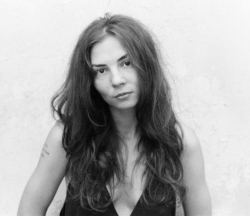
FlorinBondrila.jpg) Shaun, after your time in Ukraine, when and how did you decide to settle in Romania?
Shaun, after your time in Ukraine, when and how did you decide to settle in Romania? Do you find the Taraf tradition also elsewhere in Balkans? Illiterate self taught musicians playing for the aristocracy?
LiviuDrangu-2017.jpg) I mean a much larger pallete of genres. People typically only want party music at their wedding– that is, sîrbas, horas, manele, drinking songs/table songs. But that excludes whole genres of traditional rural and urban folklore whose traditional listening contexts have disappeared: cântece de jale (sorrowful songs), cântece de blestem (curse songs), cântece de ocna (jail songs), cântece de șmecheri (gangster songs), to name a few. “Lume, lume”, “Cine iubește și lasă” (curse song), and “Lasă mă, nevastă-n casă” recorded by Maria Tănase and many of the epic songs and cântece de jale recorded by Taraful din Clejani (later Taraf de Haidouks) and falsetto crooners like Dona Dumitru Siminica fall into this category of songs without a place in modern society.
I mean a much larger pallete of genres. People typically only want party music at their wedding– that is, sîrbas, horas, manele, drinking songs/table songs. But that excludes whole genres of traditional rural and urban folklore whose traditional listening contexts have disappeared: cântece de jale (sorrowful songs), cântece de blestem (curse songs), cântece de ocna (jail songs), cântece de șmecheri (gangster songs), to name a few. “Lume, lume”, “Cine iubește și lasă” (curse song), and “Lasă mă, nevastă-n casă” recorded by Maria Tănase and many of the epic songs and cântece de jale recorded by Taraful din Clejani (later Taraf de Haidouks) and falsetto crooners like Dona Dumitru Siminica fall into this category of songs without a place in modern society.

 [by Ken Hunt, London] Intensive treatment for cancer prevented me working much on Prince Heathen – The Age of Carthy and England’s Folksong Revival for most of 2022. I resume work on Martin Carthy’s biography in 2023. The upside was spending much of the year thinking about and challenging what I had already written. The downside was that for months I managed to to read or write for 10 to 30 minutes a day before needing to rest.
 Squeezed in four live concert performances (all reviewed in RnR) and one photographic exhibition. All four concerts stood out musically and planting seeds of thought. As did Gli Isolani (The Islanders) photos of “festivities and celebrations in Sicily, Sardinia and islands of the Venetian lagoon”.
 [by Ken Hunt, London] Another strange year spent thinking, living, breathing and writing about Martin Carthy and his approved biography, Prince Heathen. All I shall say on the subject is to say that Alan Garner’s Treacle Walker came out in October 2021. He crams into 150-some pages a lifetime of writing and many years of ideas and imagination. It took Alan a fair few years to write it and it was worth the wait. (A link to my Swing 51 interview Alan Garner:
  New releases aka Playlist
 Chris Barber / A Trailblazer’s Legacy /
  Events of 2021
 Paul Novotný, Aliaksandr Yasinski and Petr Tichý /Jazz Gypsy N Tango / 2019
  Even as she juggles an extensive repertoire and audience expectations, Eddi Reader is the sort of performer who gives one-off performances. The concert tour celebrated four decades as a professional musician. Reeling back the years the concert focused on her time as solo headliner and years as the lead vocalist in the successful Scottish group Fairground Attraction. (Even further back she sang for her supper singing with the Eurythmics (check out the YouTube footage singing ‘Sweet Dreams (Are Made of This)’ on Top of the Pops) with fellow Scot Annie Lennox) and as a session singers in the London studios. What she delivered at Kings Place was bespoke for the occasion and drew on an astoundingly diverse and impressive trove of material, traditional, original and covers.

 What was the last live gig you saw before Covid-19 brought live music in front of audiences juddering to a standstill?

 [by Ken Hunt, London] 2020 will go down as the first year of Covid-19. It was the strangest year for making music and writing about it many of us have ever experienced. In late February I was working in Gaienhofen on the German bank of Lake Constance on a radio script for my contributions to Ulrike Zöller’s Pandit Ravi Shankar 100th birth anniversary event for BR-Klassik (Bavarian Radio’s classical station):
  Reading the Swiss broadsheets, I watched the daily Covid-19 infections springing from canton to canton. I went into lockdown when I got back to London at the very beginning of March. Days later, before the official lockdown had started, we saw our last live music of 2020 in a physical venue. I was commissioned to review the Yorkston Thorne Khan concert at King’s Place in London. Sod’s Law, one magazine pulled out of running a review. Pulse did not. Doubly pleased to have gone because YTS were magnificent and their Navarasa : Nine Emotions is spectacularly good.
 New releases aka Playlist
 Historic releases, reissues and anthologies
 Events of 2020
 Martin Carthy / Prince Heathen / Fontana, 1969
 The latest installment in the People’s Republic of Hounslow’s very own Banksy. ‘Smile’ is on the wall of what used to be a pub. This is the hugely distressed ‘Smile’ in December 2020. Unless otherwise stated, © Ken Hunt/Swing 51 Archives.
 [by Ken Hunt, London] Another year of writing, though ever fewer outlets didn’t bother me unduly. 2019 still meant masses of musical discoveries, reaffirmations and new historic explorations. The last quarter of the year turned golden with the prospect of concentrating more or less exclusively on the approved Martin Carthy biography Prince Heathen in 2020. I returned to Venice to work on the book in the spring of the year and managed to pick up a little Italian and vèneto in side-moments.
 Jan Kučera/Epoque Quartet / [same] / Radioservis
 Gene Clark / No Other – Limited Deluxe / 4AD
 A very good year for the roses, golden raspberries and live music. As in years past, these are listed in chronological order. These are the ones that stood out both for the music and also for planting seeds of thought.
 Spooky Men’s Chorale / Markt, Rudolstadt Festival / 6 July 2019
 A baker’s dozen of past music projects, released before 2019, either newly introduced journeys of exploration or ones which returned to inspire in the course of writing this year.
 [by Ken Hunt, London] The year went very well indeed with masses of musical discoveries and reaffirmations. For decades I have written in U Zavěšenýho Kafe (‘At the Hanging Coffee’) in Prague 1. The image is of me at its previous site when it was on Úvoz with Jakub ‘Kuba’ Krejčí’s mural of Czechoslovak historical and literary figures behind me. Now at Loretánská 13 I still write and hold meetings there.