19. 7. 2009 |
Categories: Articles,Live reviews

The golden-throated bird on the Hogarthian wire
[by Ken Hunt, London] Say you woke up one morning and the smell wasn't coffee but the stench of something having gone off. What would you do? It happened to Leonard Cohen while he was on retreat at the Mount Baldy Zen Center in southern California's San Gabriel Mountains. With a sheaf of law suits behind him, Cohen's remedy was to hit the road, drumming up new interest by touring and giving audiences what they wanted. He picked himself up, brushed himself down and started all over again - sensibly chronicling the process with the revenue-injecting CD and DVD Live in London from the O2 venue in London in July 2008.
In July 2009 the nearest he got to London was Brooklands, near Weybridge - an outdoor venue on the site of the world's first [...]
read more...
6. 7. 2009 |
Categories: Articles,CD reviews
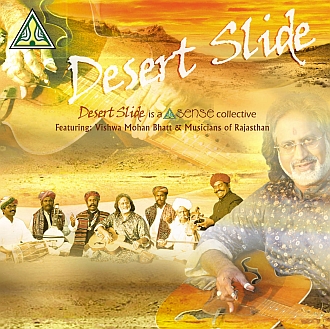
[by Ken Hunt, London] Even by repute, people who have never been to Rajasthan and only ever saw photographs or artwork, view Rajasthan popularly as a region saturated with colour. In its Great Thar Desert, soil, sand and salt lakes offer a palette of yellows, browns and reds. In its deciduous woodlands dhok and dhak - the tree known as the 'flame of the forest' - provide the seasonal mosaics of the forest canopy and forest floor and then there is the vibrancy of bougainvillea everywhere whether on the highways or streets. In its street markets full of chillies, mangoes, bananas and spinach, Rajasthan offers an abundance of saturated colours - and watery contrasts. Then factor in whether through raga or folk dance or mela (festival) how musically Rajasthan is affected by what is all around [...]
read more...
15. 6. 2009 |
Categories: Articles,Feature

"Nusrat Fateh Ali Khan's music is not national at all. It's become international. It's become global. That's what I would also like to reach." - Alim Qasimov in conversation with Ken Hunt (1999)
[by Ken Hunt, London] In 1998 Alim Qasimov appeared at Tanz&FolkFest Rudolstadt. He was pretty much an unknown quantity. His recordings were little known outside the Azerbaijani domestic market or France and Switzerland. Qasimov truly was a Francophone find. Queuing outside the Landestheater the German Liederdichter - poet-songwriter - Christof Stählin and I got to talking and he recommended Alim Qasimov's concert at the town church in a way that brooked no dissent. Once again, I must credit Christof with one of the musical discoveries of my life.
Jeff Buckley (1966-1997) fell for Alim [...]
read more...
5. 6. 2009 |
Categories: Articles,Live reviews

[by Phil Wilson, London] Dr. Ralph Stanley - as he's proud to be called these days - isn't someone you'd necessarily describe as '82 years young', but he's still in great form. There was a precautionary chair on stage at the Barbican, but he only draped his jacket over it, and even for the band members' solo numbers and the instrumentals he remained standing and merely stepped back to allow them the spotlight.
Most of the musicians - Dewey Brown on fiddle, Steve Sparkman on banjo and James Shelton on guitar/vocals - have been with Stanley for at least 15 years, so there's a camaraderie on stage that softens any well-oiled routines. Long-time bass-player Jack Cooke was absent with pneumonia but Audey Ratliff slotted in nicely although Ralph was also clearly missing the presence of his [...]
read more...
5. 6. 2009 |
Categories: Articles,CD reviews

[by Ken Hunt, London] Whilst writing the essay about the history of Call of the Valley back in those days when the internet was in its infancy and before mobile phones, it took months to obtain the right phone number for G.N. Joshi - or one that worked. The way things sometimes go, I finally made direct contact only to learn that he had died days before.
G.N. Joshi (6 April 1909-22 September 1994) wrote three books in total, beginning in the late 1970s with his Marathi-language account of his life Swar Gangechya Teeri - he translated it as 'On The Banks of Swara-Ganga' - and explained that in the title the Ganga (Ganges) stands as "the sacred River of Melody".
He used the material contained in his Marathi autobiography to create a new work. Namely, his fascinating English-language [...]
read more...
1. 6. 2009 |
Categories: Articles,CD reviews
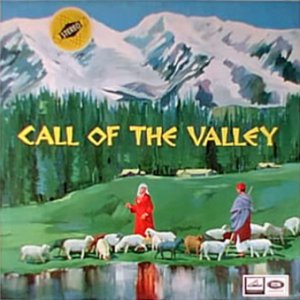
[by Ken Hunt, London] Key works that open doors to reveal unsuspected possibilities are fewer and farther between than press releases and other fictions would lead us to believe. On the basis that a little hyperbole goes a long way, glib judgements get bandied around with frightening frequency and lightning strike effect. For many people Call of the Valley opened up the skies, was a revelation. Its impact could be likened to revealing a new colour in the spectrum, for it was directly responsible for bringing Hindustani classical music - as Northern Indian classical music is known - to new audiences all around the globe. Its three soloists would go on to internationally acclaimed careers. But all that lay in the future. For countless listeners the first time they would hear the consummate [...]
read more...
1. 6. 2009 |
Categories: Articles,CD reviews

[by Ken Hunt after G.N. Joshi] Picture a hamlet, as G.N. Joshi wrote in the original sleeve notes to Call of the Valley, nestling in the shelter of a Kashmiri valley. The story begins as sunrise approaches. Guitar signals dawn's arrival. Santoor, the very epitome of the Kashmiri soundscape, joins in to play the early morning râg Ahir Bhairav, the first movement of the suite.
Swarmandal - a zither-like instrument - ripples usher in the second movement, Nat Bhairav. The day advances. The sun begins its climb with Joshi imagining Kashmir's scenic splendour. Set to ektāl, tāl or taal meaning a rhythmic cycle, in this case one of 12 beats, the scene takes on colour and form. The sun's rays dance off snowy peaks, their perpetual snow contrasting with the greenery of the wooded lower [...]
read more...
18. 5. 2009 |
Categories: Articles,Live reviews

"Folk returns to East Dulwich - but not as you knew it!"
[by Ken Hunt, London] Brass Monkey was a band that unfurled before my eyes. Or so it seemed. From their varied beginnings consolidating in the trio of Martin Carthy, Howard Evans and John Kirkpatrick that performed from January to December 1980 to the establishment of the powerhouse acoustic quintet, Brass Monkey proper, in January 1981 of Carthy, Evans and Kirkpatrick with Martin Brinsford and Roger Williams, their impact was never less than revelatory.
For one thing the Metal Monkey's instrumental alchemy was like no other band's on the English folk scene. They summoned wood and wire (Martin Carthy), squeeze and button instruments (John Kirkpatrick), brass (Howard Evans and Roger Williams) and, thanks to Martin Brinsford, [...]
read more...
13. 5. 2009 |
Categories: Articles,Lives

[by Ken Hunt, London] The Scots composer and musicologist David Johnson died on 30 March 2009 at the age of 66. Born David Charles Johnson in Edinburgh on 27 October 1942, his focus both as a composer and a musicologist was profoundly shaped by Scottishness.
Over the course of his life he composed over 50 works, amongst them five operas. Two of them were inspired by so-called Border ballads, namely his All There Was Between Them (1969) and Thomas the Rhymer (1976). Others drew on other Scottish elements including Music For Hallowe'en (1960) and Piobaireachd (1976) - piobaireachd is the traditional pipe music of the Highlands of Scotland also known as Ceňl Mňr -, both works for solo recorder. Literary influences also informed his composing. The Mortal Memory drew on Robert Burns while [...]
read more...
27. 4. 2009 |
Categories: Articles,Lives

[by Ken Hunt, London] John Pearse died on 31 October 2008 in Besigheim in Germany aged 69. A wine lover - he wrote the book Cooking With Wine (1987) - it was wine that crooked its little finger at him and brought him to that Swabian wine region where he died. Born John Melville Pearse in Hook in the East Riding of Yorkshire on 12 September 1939, he grew up in the north Welsh seaside torn of Prestatyn in Denbighshire where the family ran a hotel.
Pearse supposedly took up the acoustic guitar in 1957, the clincher being getting fired up by Big Bill Broonzy - the US bluesman who toured the UK that year as part of a European tour and whose tour excited a whole generation of folk musicians including Pearse's fellow Yorkshire musicians, The Watersons.
Pearse was a musician and inventor of any [...]
read more...
« Later articles
Older articles »