21. 4. 2009 |
Categories: Articles,Interviews

[by Petr Dorůžka, Prague] The Karachi born, New York City based jazz guitarist Rez Abbasi comes to Europe for a ten day tour which includes two gigs in Czech Republic - 23 April he plays in the Prague Reduta club, and on 27 April at Jazzfest in Brno. He is joined by his Indian wife Kiran Ahluwalia, who is a well known singer on her own right.
Rez, you left Pakistan when you were 4 years old. Did you come back to rediscover your roots?
Rez: Yes, I of kind took a backwards approach. But I am fortunate in that I've been able to perform a lot with Indian musicians of various styles. That's the best way to learn in the long run. So the music I compose and conceive is very much coming out of the spirit of sharing ideas with jazz musicians and Indian musicians.
You also studied tabla with [...]
read more...
16. 4. 2009 |
Categories: Articles,CD reviews
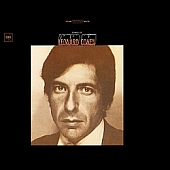
[by Ken Hunt, London] On its release Cohen's Songs Of Leonard Cohen (1967) was more than a strained-voice recapitulation of what we already knew through Judy Collins, the song interpreter who had done so much to introduce the Canadian songwriter on her In My Life (1966) and Wildflowers (1967). Cohen's delivery on his debut's ten-song album was so much more world-weary, more experienced, more laconic, more droll. (Listen to Teachers and One Of Us Cannot be Wrong for serious drollery, the sort of humorous insight that bedded any number of muses). His voice would never match Collins's dexterity, so he made a virtue of his limitations. On his Suzanne, So Long, Marianne and Sisters Of Mercy, Cohen seemed experienced in sensuous ways that would have made Judy Collins or Pete Seeger blush. Cohen [...]
read more...
1. 4. 2009 |
Categories: Articles,Lives

[by Ken Hunt, London] Uriel Jones was one of the largely unsung heroes of popular music. His drumming added the muscle and sinew to many of the great hits that came out of his birthplace and hometown, Detroit, for he was a leading member of the Motown house-band, the Funk Brothers. He played on sessions that became international hits including Marvin Gaye's I Heard It Through The Grapevine, Stevie Wonder's For Once In My Life, the Temptations Ain't To Proud To Beg, I Can't Get Next To You and Cloud Nine, Marvyn Gaye & Tammy Terrell's Ain't No Mountain High Enough and Smokey Robinson & The Miracles' I Second That Emotion during a period when Motown was an essential element in the soundtrack to people's lives.
Born in Detroit, Michigan on 13 June 1934, it looked as if he would choose the [...]
read more...
22. 3. 2009 |
Categories: Articles,Lives

[by Kate Hickson, Berriew, Wales] In the 1980s Swing 51 magazine would occasionally receive small packages from the United States containing cassette tapes merely identified as 'Citizen Kafka'. It felt like the sort of deception the musical prankster Hank Bradley might perpetrate. However, Bradley's looked and sounded different. Infuriatingly, the sender's mailing address was missing and the US postal service was clearly in on the wheeze because every postmark came smudged to illegibility by bureaucracy. It felt a bit like a twofold conspiracy at the time. Prague folk might call it bonus Kafka-esque.
Citizen Kafka, it finally emerged, was an alias of one Richard Shulberg. He also rejoiced in the noms de télégraphie - wireless or radio aliases - Sid Kafka and The Citizen. As Johnny 'Angry [...]
read more...
22. 3. 2009 |
Categories: Articles,CD reviews

[by Ken Hunt, London] Lest we forget, Hungary was directly responsible for the ultimate Fall of the Berlin Wall in 1989 and, likewise, lest we forget, Hungary's strong and vibrant folk and roots music scenes have had a huge influence on Europe's folk and world music scenes for longer still. My first brushes with Hungarian music came through having my ears turned and recalibrated by LPs on the Soviet-era state record company Hungaroton and UK releases on Joe Boyd's Hannibal label. Things have got continually better. With musicians of the calibre of Szilvia Bognár in the vanguard of developments and consolidations, it is no wonder that Hungary's roots music scene is in such fine fettle. Szilvia Bognár's Semmicske énekek is what Hungary sounds like right now and it is spectacular.
Alas I am [...]
read more...
12. 3. 2009 |
Categories: Articles,Lives
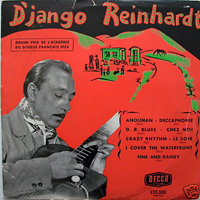
[by Ken Hunt, London] One of the great European jazz musicians of the Twentieth Century died at the age of 81 on 20 February 2009 in Hoei (Huy in French) in the western Belgian province of Luik (Liege). The Belgian multi-instrumentalist, arranger and composer Sadi, actually Sadi Lallemand (he took Sadi as his name because he didn't like something about the sound of his surname), linked many post-war developments in jazz and popular music.
Born in Ardenne in the northwestern Belgian province of Namen on 23 October 1927, he was drawn to jazz through hearing Louis Armstrong on record as a boy circa 1938 and, his musicality stirred, he took up the vibraphone, the instrument with which he was particularly associated, in 1941. During the German Occupation he built up his playing and was good [...]
read more...
12. 3. 2009 |
Categories: Articles,Feature
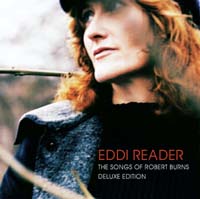
[by Ken Hunt, London] Oh, he was a one!
"Jamie, come try me,
Jamie, come try me,
If thou would be my love
Jamie, if thou would kiss me love
Wha [who] could deny thee
If thou would be my love, Jamie?"
Wilily the writer is putting his words onto a woman's tongue, the woman he wishes to get to know better. Or, in plainer talk, seduce. Thus when Eddi Reader flirts entreating the man - the very author of the words pulsating on her lips - to try her, there is a delicious, besotted undercurrent of contrary sensuality in flow. That is Eddie Reader and Robert Burns for you.
On Eddie Reader's lips - even with the Royal Scottish National Orchestra, as on The Songs of Robert Burns blasting away in support - that song, Jamie, Come Try Me, is a song of sensuality, seduction and ambiguity. Ambiguity, [...]
read more...
3. 3. 2009 |
Categories: Articles,Feature
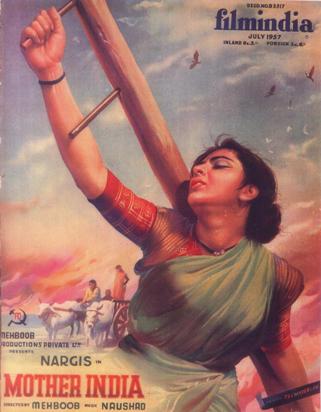
[by Ken Hunt, London] Wherever there is a successful film industry, like the penumbra to the klieg lights, film magazines will mushroom in order to feed people's apparently insatiable appetite for news - planted or otherwise - and tittle-tattle. In the Anglophone world, from Picture Show (when 'picture' was the British Empire equivalent of 'movie') to the "Hollywood girls and gags!" of Movie Humor, cinema was well served from the silent era onwards. But India's was, is and shall ever remain a special case.
India has long been home to the world's biggest film industry. Numerically and in terms of cultural penetration it outstrips Hollywood. Yet it is more than Bollywood. It includes the other major cine-woods - notably Kollywood (the Kolkata-based, Bengali equivalent), Mollywood (the [...]
read more...
24. 2. 2009 |
Categories: Articles,Live reviews

[by Ken Hunt, London] One of high-flyingest jugalbandis (duets) in Indian music it has ever been my utter pleasure to witness took place on 25 December 2008. It occurred on the opening day of the 133rd Harballabh Sangeet Sammelan in Jalandhar City in the northwest Indian state of Punjab. It was a North-South jugalbandi. The North was represented by the transverse bamboo flute or bansuri maestro Ronu Majumdar and the tabla virtuoso Ram Das Palsule. The South was represented by the alto saxophonist Kadri Gopalnath and Hari Kumar on the South's double-headed barrel drum, mridangam. The whole performance was a concatenation of revelations that told the rag's story marvellously. It also revealed the frankly heroic breath control techniques of the two wind players
The two principal musicians [...]
read more...
14. 2. 2009 |
Categories: Articles,Feature

[by Ken Hunt, London] Chancing upon the final-cut premiere of Alex Reuben's film Routes was kismet. Alex Reuben is a DJ and filmmaker - British out of Ukrainian Jewish stock - with shorts like Big Hair (2001) and A Prayer From The Living (2002) to his credit. "I was a DJ so that's how I started making films," he tells me in Prague "Through the money I made DJing, that's how I made films. All of the films are related to DJing in some way. More in the method I make them, though."
Routes is the eye-catching offspring of Harry Smith and Les Blank. Picaresque, without spoken commentary, it is a fly-on-the-wall, fly-on-the-windscreen road movie about dance encountered on a journey through the Southern States of America. Reuben's focus is dance, down-home and urban, dance steeped in tradition [...]
read more...
« Later articles
Older articles »