14. 2. 2009 |
Categories: Articles,Feature

[by Ken Hunt, London] Chancing upon the final-cut premiere of Alex Reuben's film Routes was kismet. Alex Reuben is a DJ and filmmaker - British out of Ukrainian Jewish stock - with shorts like Big Hair (2001) and A Prayer From The Living (2002) to his credit. "I was a DJ so that's how I started making films," he tells me in Prague "Through the money I made DJing, that's how I made films. All of the films are related to DJing in some way. More in the method I make them, though."
Routes is the eye-catching offspring of Harry Smith and Les Blank. Picaresque, without spoken commentary, it is a fly-on-the-wall, fly-on-the-windscreen road movie about dance encountered on a journey through the Southern States of America
read more...
14. 2. 2009 |
Categories: Articles,Feature
[by Ken Hunt, London] It is October and the time of the season that has nothing of the Zombie or indeed Golem about it. Sitting in U Zavěšenýho, one of Prague's minor miracles of a watering hole a stone's throw from the castle, I am writing up notes about Prague's MOFFOM (Music on Film Film on Music) festival. Loquacious as ever, I get into conversation with a French student from Grenoble. She is studying cinema in the city and studying film in this city makes total sense. Learning that I am working at the festival, we exchange viewing plans. Half an hour vanishes just talking about film and Prague's cinemas. Her boyfriend has come from France to partake too. I
read more...
30. 1. 2009 |
Categories: Articles,Live reviews
[by Ken Hunt, London] Bang On A Can (BOAC) is an ensemble that blurs the boundaries between rock, the avant-garde and contemporary composition. Their concert in the Blauwe Zaal ('Blue Room') at DeSingel - a modernistic complex, founded, so to speak, on the deal that art is the basis and concrete of a culture - featured in its second half the headlining Czech vocalist-violinist Iva Bittová on her own or performing with BOAC. Note the hyphen because she does both at once and sometimes creates a third voice from the two elements in a manner that has to be seen in order to believe.
read more...
30. 1. 2009 |
Categories: Articles,Live reviews

[by Ken Hunt, London] India has a long tradition of music festivals of the classical kind - often called music conferences - to compare with few places on the planet. Harballabh Sangeet Sammelan showed off everything that is typical and revealing about Indian audiences' attitudes, including their waywardness, to its art music traditions. The December 2008 festival was its 133rd gathering in an unbroken sequence since 1875. The annual festival takes place in deepest winter. There were few concessions to comfort and that sense of musical austerity works brilliantly for a festival grounded in dhrupad - one of the more austere forms of Hindustani art music. People come wrapped in shawls, untold layers of clothing and carrying snacks. Tellingly, it is still a free festival
read more...
30. 1. 2009 |
Categories: Articles,Best of Year,Feature

Ken Hunt
2008 was one of the greatest music years of my life, full of fresh discoveries and confirmations of vision and talent still shining brightly
read more...
31. 12. 2008 |
Categories: Articles,Interviews
How New York City was seized by the East European invasion
[by Petr Dorůžka, Prague] New York is a cosmopolitan city with very rich musical landscape. Do you think there is something special the Russian, East European, or Slavic musicians living in New York can offer that musicians from elsewhere lack?
Absolutely. In the folk scene, New York arguably has amongst its citizens the best Slavic/Balkan/Russian musicians that I've ever met. Not only are they strong as performers, they are incredibly open as musicians, adapting the Western musical styles in much more genuine and honest ways than happens in the East. There's a great symbiotic relationship that happens all the time - the American players learn from the Eastern, and vice versa.
read more...
5. 12. 2008 |
Categories: Articles,Lives
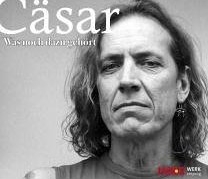
[by Ken Hunt, London] One of the former German Democratic Republic's most notable and most famous rock musicians, guitarists and bandleaders Peter 'Cäsar' Gläser died in Leipzig on 23 October after a long illness. Gläser was born in Leipzig on 7 January 1949 and came to people's attention as a member of the Klaus Renft Combo. Having joined them as a founding member in 1967, he was called up soon after to do national service in the army and he rejoined them afterwards in 1969. Peter 'Cäsar' Gläser (the nickname says a great deal) might be described as Renft's shadow. After Renft effectively got banned for social criticism in 1975 (helped along by singing the lyrics of Gerulf Pannach who found himself exiled to the West), Gläser co-founded the splinter band Karussell. In 1
read more...
5. 12. 2008 |
Categories: Articles,Lives

[by Ken Hunt, London] The German writer Peter Maiwald died on 1 December in Düsseldorf. Born in Grötzingen in the West German state of Baden-Württemberg on 8 November 1946, he gravitated to the left. He moved to Munich in 1968 before moving to Neuss in 1970. During this period he was establishing himself as a freelance writer before going on to co-found the magazine Düsseldorfer Debatte. Parenthetically, one has only to think of the Putney Debates during the English Revolution for a sense of the meaning of debate.
Maiwald's writings were in part under the sway of the Brechtian model and he wrote agitprop poetry, songs and lyrics for Kabarett ensembles such as the Düsseldorf-based Kom(m)ödchen and Stuttgart's Renitenz-Theater. Over
read more...
1. 12. 2008 |
Categories: Articles,Lives

[by Ken Hunt, London] On 27 February the best-disguised Russian superhero Ivan Rebroff, a singer and star of stage, film, musical and television died. Rebroff kept his origins a closely guarded secret but he had been born Hans-Rolf Rippert in the Spandau district of Berlin on 31 July 1931. He created, to go faux-designer, a huge peasant chic and Cossack bravado that became his trademark for the friendly face of Russia during the Cold War era. It is impossible to estimate what he did for rapprochement during the period. "I brought Russian soul to Germany," he said once. Controversially and fittingly, Rebroff and the Balalaika Ensemble Troika got to play at the 1967 Burg Waldeck Festival in West Germany - a byword for cultural integrity
read more...
13. 11. 2008 |
Categories: Articles,Live reviews

H'ART Festival, Centre of Contemporary Art, Glasgow, Scotland, 8 November 2008
[by Ken Hunt, London] Szilvia Bognár, Ágnes Herczku and Ági Szalóki's album Szájról szájra - first released in Hungary in 2007 but invisible to the outside world until early in 2008 - ranks as one of the benchmark albums to emerge from the pan-European folk scene this decade. It is a master-class in the subtlety and power of interwoven voices as well as being a torrent of lessons on how to draw on traditional folk music and make it both now and timeless. But the wondrousness of Szájról szájra only really comes across in live performance when you match lips to sound. Revealin
read more...
« Later articles
Older articles »