19. 7. 2008 |
Categories: Articles,Lives

[by Ken Hunt, London] Peter Kameron was a man who straddled many fields of the arts and entertainment. He was born in New York City on 18 March 1921 and went on to become the personal manager for a number of US music acts in the 1950s and the 1960s, signally amongst them, the Weavers and the Modern Jazz Quartet.
He broadened his approach and built on his expertise and experience to become part of the management team around The Who. They were a rather promising rock group whose Pete Townshend nevertheless made no bones about pitching songs to the folk scene to. (Something forgotten in the accounts.) Kameron was there when The Who set about establishing Track Records (1967-1978), headed by Kit Lambert, Chris Stamp and Pete Townshend. Kameron's precise role in all this is ill-defined and [...]
read more...
26. 6. 2008 |
Categories: Articles,Live reviews

[by Ken Hunt, London] Don't you just love the thrill of unpublicised gigs? So long, that is, that the act delivers music worthy of the buzz and you attend. This nicely semi-secret Green Ray gig ticked all the boxes and more. The Dog House announcement just promised "psychedelic West Coast sounds" and an unnamed "special guest guitarist - all the way from San Francisco, the man who played Monterrey and Wood Stock Festivals". Yup, two spelling mistakes in 18 printed words. The Green Ray are still improvising and pursuing that ol' psychedelic Grail. Were they an American band they'd probably get saddled with the description 'jam band'.
To say that the gig was unpublicised is bending the truth. A little. Its 'publicity' had a word-of-mouth or -email samizdat feel to it, worthy of the Plastic [...]
read more...
16. 6. 2008 |
Categories: Articles,Live reviews
[by Ken Hunt, London] The literature in the Barbican's foyer called it "An evening of Ragas with legendary sitar player Ravi Shankar and his daughter Anoushka." But it was far more than that. It also said, "Ravi Shankar - Farewell to Europe tour." The sadness lay in the leave-taking. It meant that a good number of people attending in the audience were there to be able to say - at some stage later - that they had seen him in concert. It happens. It happened with Frank Sinatra and it happens with Bob Dylan and the Rolling Stones.
Philosophically as in stoically speaking, that stuff doesn't bother me too much. We all have to board the figurative musical train at some station or other on its journey. As somebody who has been on the Ravi Shankar train for many decades, I truly count myself a [...]
read more...
14. 6. 2008 |
Categories: Articles,Live reviews

[by Ken Hunt, London] Well before the first of Jazzwise's sequence of Indo-Jazz-related pieces began running, before the first interview was done, the idea of delivering more than column inches formed part of the discussions. And it happened, thanks also to the concert promoters, Serious. "Dedicated to the new directions in Indo-jazz ," as Jazzwise's editor Jon Newey put it from the stage, it happened over two house-full nights, on 29 and 30 May 2008 in the cavern-like rather than cavernous basement of a pizza chain's Soho jazz den. Each of the four acts, namely the Stephano D'Silva Band and Andy Sheppard and Kuljit Bhamra - both appeared on the Friday - and The Teak Project and the Arun Ghosh Sextet - who appeared the next night - represented and revealed the vitality of difference [...]
read more...
14. 6. 2008 |
Categories: Articles,Lives
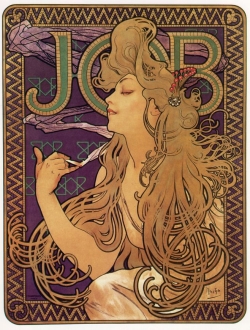
[by Ken Hunt, London] San Francisco's graphic artist, painter and poster and collage artist, Alton Kelley died at his home in Petaluma, California on 1 June 2008 at the age of 67. It would be hard to over-estimate him as one of San Francisco's foremost psychedelic artists and his impact on that scene's rock music in visual and graphic terms. He was central to that blossoming of great handbill, poster and album art that people associate with San Francisco. Kelley blazed happy trails as part of the so-called Great Five - Rick Griffin, Victor Moscoso, Randy Tuten and Wes Wesley - with the signal difference that while the other four pursued their Muse largely through solitary activities, he shaped his unique vision usually in the glad company of Stanley 'Mouse' Miller - though Kelley and [...]
read more...
27. 5. 2008 |
Categories: Articles,Book reviews

[by Ken Hunt, London] The German protest movement, in which song was a mightily important element, first truly broached my consciousness in 1971. Formative experiences included attending anti-nuclear protests of the ring-around-the-plant kind and sitting at trestle tables with beer, bread and Bockwurst and with old (well, they looked old to me) comrades singing Kampflieder ('songs of struggle') and spouting Kampfsprüche ('jingles') at rallies that seemed to last for days. But all that was politics and protesting often in almost a carnival atmosphere, despite the constant presence of the camera-wallahs busily snapping away. Next steps, log car registration plates, match face to identity card and so on - quite enough to take you out of the paradoxical.
More important, if shallower (in a [...]
read more...
12. 5. 2008 |
Categories: Articles,Lives
[by Ken Hunt, London] The Kirana gharana - or school of playing - seated in Kirana, near Saharanpur in India's state of Uttar Pradesh, is one of the major styles of performance in Hindustani music. Kirana is particularly noted for the quality of its vocalists. Historically, it was associated with great maestros such as Abdul Karim Khan and Sawai Gandharva. In more recent times it was associated with singers who carried the torch on such as Bhimsen Joshi, Roshan Ara Begum (the daughter of Abdul Karim Khan's younger brother Abdul Haq), Hirabai Barodekar (the daughter of Abdul Karim Khan himself), Prabha Atre, Gangubai Hangal and Firoz Dastur.
Firoz Dastur died on 4 May at the age of 89 in Mumbai (Bombay) after a long illness. He had been a student-disciple of Sawai Gandharva. He was little [...]
read more...
8. 5. 2008 |
Categories: Articles,Lives

[by Ken Hunt, London] Like Ron Edwards (1930-2008), the Australian folklorist and folk recordist, folk journalist and archivist Edgar Waters was a pioneer in the field of Australian folksong and folklore. In 1947 he co-authored Rebel Songs with Stephen Murray-Smith, a booklet for the A.S.L.F. - a slim volume similar to the Workers' Music Association booklets that were being published in Britain.
Waters was working in Britain by the mid 1950s and assisted Alan Lomax on his Folk Songs of North America (1960) before returning to Australia. It was an era of small specialist record companies worldwide, many of which operated on a shoestring. Australia's version of, say, Topic Records in Britain, was the Sydney, NSW-based Wattle company (1955-1963). Waters fell in with Wattle's founder Peter [...]
read more...
4. 5. 2008 |
Categories: Articles,Lives
[by Ken Hunt, London] The sitarist, composer and teacher Shashi Mohan Bhatt began what might be called a family tradition: that of taking Pandit Ravi Shankar as their guru. His son Krishna Mohan Bhatt and his sister Manju Mehta (her married name) - both of whom played sitar - and his younger brother Vishwa Mohan Bhatt - who played a modified acoustic guitar he named Mohan vina player - would all go on to study with the sitar maestro Ravi Shankar. Shashi Mohan Bhatt, however, was one of Shankar's first shishyas (pupil-disciples). Nobody was quite sure, least of all Ravi Shankar, but Shashi Mohan Bhatt was definitely one of the first three. Shankar told me in 1993 that Shashi Mohan Bhatt and he had crossed paths in Delhi "around the '49 period". In 1994 Vishwa Mohan Bhatt added more detail: [...]
read more...
4. 5. 2008 |
Categories: Articles,Live reviews

[by Ken Hunt, London] Goldfrapp's fourth album Seventh Tree (2008) was reviewed in several places in the British press along the lines of it being "psychedelic folk". Reviews came with a sprinkling of words such as "pastoral approach" and, oh the joys of semi-accurate quotations, "middle of the public bridleway". It was the dangled carrot of talk about psychedelic folk that attracted me. Sort of. Not because I am an acolyte of psychedelia's darker folk arts. I had a decade when editors told me how important every twee and fey, post-Wicker Man manifestation of "psychedelic folk" was. It drove me up the wall and "psychedelic folk" still turns me itchy-twitchy. Goldfrapp was another gig visited not out of revenge for others' past sins. But again in the spirit of non-preparation, blank-canvas [...]
read more...
« Later articles
Older articles »