4. 5. 2008 |
Categories: Articles,Live reviews

[by Ken Hunt, London] Goldfrapp's fourth album Seventh Tree (2008) was reviewed in several places in the British press along the lines of it being "psychedelic folk". Reviews came with a sprinkling of words such as "pastoral approach" and, oh the joys of semi-accurate quotations, "middle of the public bridleway". It was the dangled carrot of talk about psychedelic folk that attracted me. Sort of. Not because I am an acolyte of psychedelia's darker folk arts. I had a decade when editors told me how important every twee and fey, post-Wicker Man manifestation of "psychedelic folk" was. It drove me up the wall and "psychedelic folk" still turns me itchy-twitchy. Goldfrapp was another gig visited not out of revenge for others' past sins
read more...
19. 4. 2008 |
Categories: Articles,Lives
[by Ken Hunt, London] On 15 April 2008 Mahinarangi Tocker, the Maori musician, songwriter, feminist, gay and lesbian rights activist and political campaigner, died in Auckland, New Zealand. She was one of New Zealand's most conspicuous song-makers and bore comparison with Joan Armatrading and Tracy Chapman. Born in 1956, she was of mixed bloodlines. She was of Ngati Maniapoto, Ngati Raukawa and Ngati Tuwharetoa - Ngati is a Maori tribal prefix -, Jewish and European stock, hence the title of one of her albums..
read more...
6. 4. 2008 |
Categories: Articles,Live reviews
Folk Roots New Routes
Queen Elizabeth House, Southbank Centre, London 25 March 2008
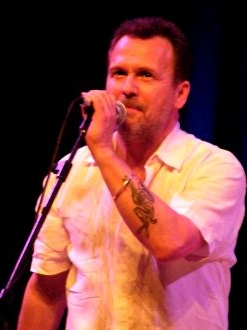
[by Ken Hunt, London] You'd be hard-pressed to find a finer and more authoritative curator for a programme of folk music than Shirley Collins. After all, she is one of the singers who poured ideas into Britain's second Folk Revival. Under the banner Folk Roots New Routes (a title lifted from her and Davy Graham's 1964 duo album), she curated the five-day season of folk-themed concerts at London's Southbank. And, if she is no longer singing in public and on stages, quite frankly that is an irrelevance because she needs to prove nothing, having created so much of such outstanding worth already
read more...
2. 4. 2008 |
Categories: Articles,Lives
[by Ken Hunt, London] Ola Brunkert is probably the strongest contender for the drummer you've heard the most whose name you don't know. The Swedish drummer played on nearly every Abba recording from 1972 to their dissolution in 1982. Born in Örebro in Sweden on 15 September 1946, Brunkert's musical background was primarily blues and jazz.
read more...
2. 4. 2008 |
Categories: Articles,Lives
[by Ken Hunt, London] The Jamaican musician, record producer, DJ and broadcaster died 15 March 2008
read more...
14. 3. 2008 |
Categories: Articles,Live reviews
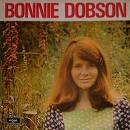
[by Ken Hunt, London] In 1969 the Toronto-born Canadian folksinger and guitarist Bonnie Dobson arrived in England and never really left. She settled in London, raised a family and eventually largely dropped out of making music. Part of the first wave of Canadian folksingers that made their names down south, she had established her name in the United States and once in England chose to disappear off the radar after 1989. More or less. Because every so often - well once in 2007 and 2008 - she has put her head above the parapet. When she sings you go, even if it is a dimly lit, out of the way place above a pub in Chalk Farm.
Time and geography have draped a veil over much of what she did in the early 1960s
read more...
14. 3. 2008 |
Categories: Articles,Lives

[by Ken Hunt, London] The folklorist, folk and ethnic music collector, author, radio broadcaster and producer Henrietta Yurchenco died in Manhattan on 10 December 2007 at the age of 91. She was one of the great links between the racially integrated and progressive-minded US folk scene of the 1930s and 1940s and the folk boom of the 1950s and 1960s, Over the course of her long life in music - the title of her autobiography Around the World in 80 Years (2003) was apt - she was a shaping influence in what people understood by folk music and a kingpin of ethnomusicology and world music.
Born Henrietta Weiss in New Haven, Connecticut on 22 March 1916, her parents - Yitzak (Edward) and Rebecca Weiss - were immigrants from the Ukraine
read more...
29. 2. 2008 |
Categories: Articles,Lives
[by Ken Hunt, London] Buddy Miles was best known as a powerhouse drummer, most famously for his work with Jimi Hendrix on Band of Gypsies - the ensemble with bassist Billy Cox - that followed the Jimi Hendrix Experience. It was a short-lived band and the 1970 album, drawing on a New Year's live set recorded on the cusp of 1969-1970, polarised opinion. The memory most people will have of him was his sound-turned-machine drumming on Machine Gun on Band of Gypsies. Thanks to Coppola's Apocalypse Now, the sound of helicopter rotor blades..
read more...
21. 2. 2008 |
Categories: Articles,Lives

[by Ken Hunt, London] The Australian folklorist, illustrator, author and one of the pioneers of the Australian Folksong Revival Ron Edwards died on 5 January 2008. He wrote and published extensively over his lifetime on folksong, bushcraft, story telling and linguistics. Simply put, he was a hugely important and influential figure for Australian folk music and anthropology. From 1984 until 2007 he was president of the Australian Folklore Society and edited the Australian Folklore Society Journal. He also wrote widely about Australian folkways, whether Australian folksong, bushcraft or the aboriginal cultures of Australia and the Torres Straits. A skilled painter, he illustrated many of his books himself
Edwards was born in Geelong, Victoria on 10 October 1930
read more...
21. 2. 2008 |
Categories: Articles,CD reviews

"I have seen fear and convenience/I have never glimpsed romance."
[by Ken Hunt, London] Thao Nguyen's We Brave Bee Stings And All, produced by Tucker Martine (The Decemberists, Mudhoney and Sufjan Stevens), is one of those fine vehicles that hurtle down the turnpike causing the listener to do a double take or three. On a casual listening or initially you'll get carried along with a banjo-driven song like Swimming Pools without taking in the lyrical context. But then a line like "We splash our eyes with chemicals" drops like bait. And in introducing ideas of The Beauty Myth kind, it plants a tiny barb securely in your mouth before reeling you in
read more...
« Later articles
Older articles »